The Wisdom Of Owls

Theodore Dalrymple reflects on the creature:

The first owl of my life was Owl in Winnie the Pooh. I think he had a delayed effect upon my intellectual development, or perhaps I should say upon my Weltanschauung. Owl held himself to be intellectually the superior of every other character in Pooh: in fact he was the intellectual among them, and took himself very seriously, as the embodiment of knowledge and wisdom. But he wasn’t very good at spelling (he signed himself WOL) nor were his thoughts always of the most brilliant. He put a notice up outside his home in a tree asking visitors to ‘PLEZ CNOKE IF AN RNSR IS NOT REQID.’ Of course, I delighted as a child in the absurdity of this: why would anyone go to his door if he did not want an answer (notwithstanding the fact that I sometimes rang doorbells myself and ran away).

So Owl gave me the first intimation in my life that all are not wise who claim to be learned. And Owl was a hint also that the clever could be the most foolish of all.

(Photo by Hans Splinter)

Intervene In Syria? Just Say No, Ctd

Mike Crowley addresses the growing concerns that al-Qaeda may seize Assad’s chemical weapons and use them abroad:

The reality in Syria is more complicated. The prospect of Assad’s weapons falling into anti-American hands is real enough for the U.S. to be watching very, very closely. But it’s probably not threatening enough–at least not yet–to justify the kind of full-scale ground invasion that might be required to secure Syria’s chemical arsenal. …

[T]here’s no guarantee that the radical jihadists of al Nusra won’t overtake a chemical site, especially if the Assad regime and its military infrastructure should collapse. Fortunately, Syria’s stockpile was designed for large scale military use–particularly for missile or bomber attacks on Israel–and not for the portability and simplicity that would appeal to terrorists. “You can’t just run down the street and throw it into a building,” says WINEP’s White. Many of Syria’s weapons are ‘binary,’ or stored as two separate ingredients which must be combined before lethal use. A nerve gas shell, for instance, typically features two compartments which break open from the force of the shell’s firing; the shell’s rotation then mixes the ingredients into a sinister cocktail. Without special training and equipment it would be exceedingly difficult to extract chemicals from such weapons and put them to effective use.

Marc Lynch’s two cents regarding the “red line” talk over chemical weapons:

I have little to add to the thousands of essays already published on this, beyond what I’ve already argued. I might add that defending American “credibility” is always a bad reason to go to war. The reputation costs of not enforcing a red line are minimal, and will evaporate within a news cycle; military intervention in Syria will be the news cycle for the next few years. The United States should act in Syria in the way that it believes will best serve American interests and most effectively respond to Syria’s horrific violence, not because it feels it must enforce an ill-advised red line.

In other news, Syria’s entire Internet shut down yesterday, undoubtedly by Assad. Recent Dish on Syria here, here and here.

How To Get Noticed After Nerd Prom

In Mike’s defense, it looks like he was just sitting at a table when someone glamorous walked by. I’d say he was photobombed, unless I’ve misunderstood the concept entirely. Marin Cogan looks at the photobomb phenomenon among Beltway types:

The Washington elite are usually the subjects of these photos, but they can sometimes be photobombers, too—like this picture of Missouri Senator Claire McCaskill photobombing Tennessee Republican Bob Corker (a rare foreground photobomb, a la the famous photobombing seal). Or this picture of former president Bill Clinton rubbernecking to check out Kelly Clarkson at the inauguration this year, or this one of House Speaker John Boehner miraculously photobombing himself. Once a year, at the White House Correspondents Dinner, Hollywood and Washington elites tangle with such intensity that it’s impossible to tell who’s photobombing whom (see, for example, the photograph actress Elizabeth Banks tweeted this weekend of herself and Cantor).

This being Washington, the photobomb isn’t always just a joke; it can also be a status marker, especially among aides and advisors.

In the White House, where everyone is subtly angling to be photographed in the proximity of the president, the photobomb is the goal. Because the POTUS is trailed by a photographer wherever he goes, “and the photo office hangs the latest and greatest shots on the walls, there’s a heightened awareness that today might be your day to look heroic and/or important as a supernumerary,” says Reid Cherlin, a former White House spokesman who is definitely not embarrassed by this photo of him clapping behind the president as the administration’s health care reform was passed into law. “I think that, as a general principle, most people in politics—whether on the staff side or the media side—harbor doubts about their proximity to actual power. Having a photograph of you and the newsmaker is proof, as much for yourself as for anyone else, that for a moment, at least, you were in the center of things,” he says, “even if really you were just coming out of the bathroom at the wrong time.”

How Much Of A Threat Are Syria’s Missiles?

Not as ominous as many hawks are suggesting:

Israel may have attacked targets in Syria — and risked a wider war — to stop ballistic missiles from falling into the hands of Islamic extremists. But current and former Israeli missile defense officials insist that if Hezbollah militants ever got the Fateh-110 weapons, Israel could shoot the missiles out of the sky. “We are now able to cope with all the missiles that are threatening Israel right now, including the longer-range missiles in Iran and in Syria,” Arieh Herzog, the former director of the Israel Missile Defense Organization, tells Danger Room. …

Which begs the question: Why chance a broader war in order to stop the weapons?

Because Netanyahu is scrambling to find a way to launch a non-covert war against Iran? Because he’s taunting them? I don’t know – but I wouldn’t put that past him. Meanwhile, this passage from Dexter Filkins’ must-read strikes me as central to any debate about military intervention in Syria:

Assad’s chemical arsenal is spread across the country, much of it in populated areas; an effective military strike against it would need to be huge, and meticulously coördinated, to make sure that no toxins were released into the air or into enemy control. Samore told me, “It’s really a nightmare military scenario.’’ As the regime has traded ground with the rebels, some of Assad’s chemical weapons have been moved, and it is not clear where all of them are. “The intelligence people told us that their visibility is basically zero on some of these weapons, that we’re not going to know until after they have been used—if then,’’ the Senate aide told me.

How is that in any way a solvable problem? Militarily or any other way?

From The Annals Of Chutzpah

“When we were there, on our watch, we were always ready on 9/11, on the anniversary. We always anticipated they were coming for us, especially in that part of the world. I cannot understand why [members of the Obama administration] weren’t ready to go. … [It was] a failure of leadership,” – Dick Cheney on the Benghazi consulate attack.

You’d think that someone who presided over the mass murder of 3,000 individuals – despite being warned in advance by the CIA of an imminent attack – might be a little more circumspect when dealing with a sudden attack on an under-manned embassy. But this is Dick Cheney, a war criminal and a total douche.

Yes, Of Course It Was Jihad, Ctd

John Knefel casts doubt on the concept of Internet-inspired jihad, as well as the policies that such thinking leads to:

“Nobody watches YouTube or reads Inspire and becomes a terrorist. It’s absurd to think so,” says John Horgan, director of the International Center for the Study of Terrorism at Pennsylvania State University. “YouTube videos and reading Al Qaeda magazines tends to be far more relevant for sustaining commitment than inspiring it.”

Knefel reports that it’s most often a variety of motivations that converge to make a terrorist:

“I have found that many young home-grown al-Qaeda terrorists are not attracted by religion or ideology alone – often their knowledge of Islamist theology is wafer-thin and superficial – but also the glamour and excitement that al-Qaeda type groups purports to offer,” [notes Jamie Bartlett, head of the Violence and Extremism program at the think tank Demos.] When it comes to why someone chooses to engage in terrorism, Horgan says, “there are the bigger social, political and religious reasons people give for becoming involved” – for instance, anger over government policies or a foreign occupation. But that leaves out a key part of the story. “Hidden behind these bigger reasons, there are also hosts of littler reasons – personal fantasy, seeking adventure, camaraderie, purpose, identity,” adds Horgan. “These lures can be very powerful, especially when you don’t necessarily have a lot else going on in your life, but terrorists rarely talk about them.”

Those are certainly part of the mix. And I don’t think Inspire made Tamerlan a Jihadist. From the evidence we have of his religious epiphany, it was not out of a magazine. But did the online Jihadist network encourage, train and make his act of Jihadist violence more likely? Duh. Meanwhile, apparently the online jihadi community has been unimpressed and even annoyed by the Tsarnaev brothers:

[This] is unusual and borne of several reasons. The first is that al Qaeda attacks in the West are typically characterized by high casualty rates and widespread panic. The death of three civilians and the quick demise and arrest of the perpetrators is, for supporters, something of a comedown.

The second reason is that al Qaeda and the global jihad movement have become far less concerned with the West since the dawn of the Arab Spring. Jihadists are instead now looking back to the Muslim world, where the contours of power still are far from settled in Mali, Libya, Egypt, Yemen, and, most dramatically, Syria. “Why should we waste our time on this?” Hamil al-Mask, a member of the Ansar forum, asked. “Lone wolves will always be part of our cause so let’s say Allah Akbar and move on.”

That strikes me as one more reason to stay out of Syria – if a brutally realist one. To turn George W Bush’s phrase around: if they’re fighting each other over there, they’re less likely to fight us over here.

Read the whole ongoing discussion thread here.

Hawking Boycotts Israel

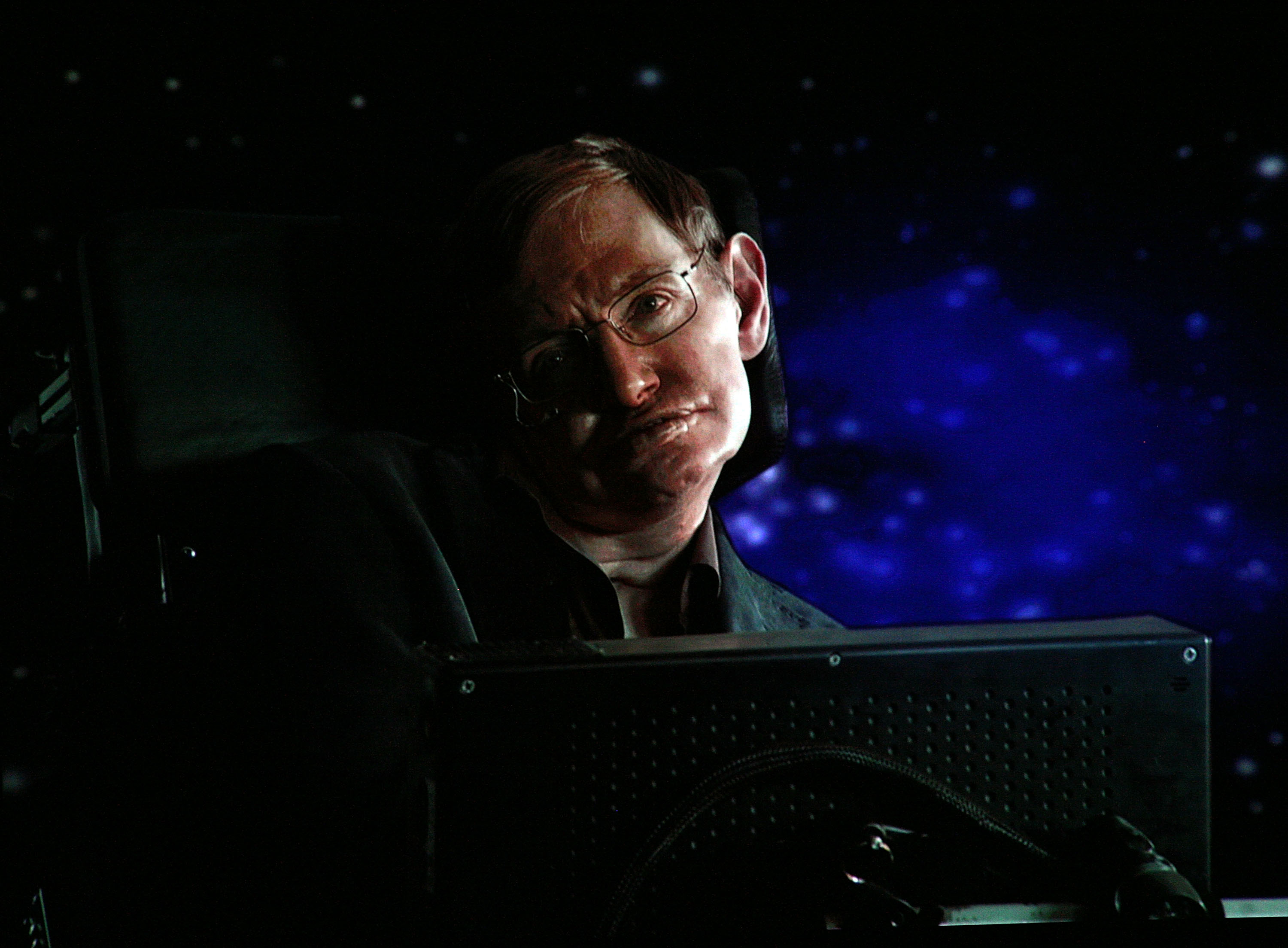
2010 Winter TCA Tour - Day 6

It seems to me to be a major blow to the forces for settlement construction on the West Bank – and a sad sign of the country’s continuing international isolation. What’s more striking to me is that Hawking was once very much prepared to visit both Israel and the Palestinian territories as recently as 2006. Why has he changed?

Hawking has visited Israel four times in the past. Most recently, in 2006, he delivered public lectures at Israeli and Palestinian universities as the guest of the British embassy in Tel Aviv. At the time, he said he was “looking forward to coming out to Israel and the Palestinian territories and excited about meeting both Israeli and Palestinian scientists”.

Since then, his attitude to Israel appears to have hardened. In 2009, Hawking denounced Israel’s three-week attack on Gaza, telling Riz Khan on Al-Jazeera that Israel’s response to rocket fire from Gaza was “plain out of proportion … The situation is like that of South Africa before 1990 and cannot continue.”

Like me, he found the Gaza war – its contempt for human life, its deployment of overwhelming military superiority to terrorize an already ghettoized and displaced population, and its awful civilian toll – to be a turning point. When a new leadership emerged in Washington and the West Bank that Israel could have worked with diplomatically, the country reverted to brute and brutal force. It was an opportunity not so much missed as spat upon.

David had truly become Goliath.

(Photo: Scientist Stephen Hawking of ‘Into The Universe With Stephen Hawking’ speaks via satellite during the Science Channel portion of the 2010 Television Critics Association Press Tour at the Langham Hotel on January 14, 2010 in Pasadena, California. By Frederick M. Brown/Getty Images.)

Quote For The Day II

“People say, ‘Get over it.’ But how would you feel if every spring you went out to ride your bike and someone had stolen your seat? It’s all relative to what you enjoy. But when you work out here, facing Mother Nature, breaking your back to plant, you deserve to see your peonies,” – DC gardener, Linda Blount Berry, whose flowers on her community plot have been repeatedly stolen by Washington’s notorious flower thief.

I think everyone deserves to see their peonies too. Literally and figuratively.