Failed Fronts In The Drug War

Jonah Engle believes that if “Colombia can’t win the war on drugs, no one can”:

As drug-related violence engulfs parts of Mexico and Central America, Washington has touted Colombia as a rare drug war success story. “Colombia has served as a model of success for the entire hemisphere,” says Rafael Lemaitre, communication director for the U.S. drug czar’s office. But up close, Colombia’s drug war successes appear far more meager — and the country’s top politicians are beginning to realize it.

At the end of 2011, President Juan Manuel Santos became one of the first sitting heads of state to come out against the war on drugs. “A new approach should try and take away the violent profit that comes with drug trafficking,” Santos told the Observer newspaper. “If that means legalizing, and the world thinks that’s the solution, I will welcome it. I’m not against it.” Santos’s words have yet to translate into policy changes at home. But they have both reflected and fuelled a growing challenge among Latin American leaders to the cornerstone of U.S. security policy in the Western Hemisphere. By saying what a half-dozen recent Mexican, Colombian, Brazilian, and Chilean presidents waited for retirement to say, Santos broke a taboo — and other politicians soon followed him out of the closet.

Meanwhile, Kathleen Frydl declares the war on drugs in the US to be a “total failure,” and looks for lessons:

One of my takeaways was reinforced when I read Dana Priest’s piece in The Post on Sunday, which is that these complex security regimes, like the war on drugs or the war on terror, have essentially produced their own feedback loops, and we’ve forgotten how to step back and ask “Is this even working?” Priest noted that the very close ties between the U.S. government and the just-ousted Mexican government produced no effect in terms of the production, price or potency of drugs, but U.S. policy officials are bemoaning the loss of those ties nonetheless.

It’s time to step back and look at the forest. In 1968, a dime bag of heroin cost $5 and was about 15-40 percent pure. Today, without adjusting for inflation, it costs $5 and it’s 15-40 percent pure. That’s a crude measure, but that’s the definition of failure, right there. … It’s time to step back and recognize that these expenditures have performed a lot of functions for state, be it policing inner cities or justifying certain kinds of international engagement. But the one thing they have not done is control the price and purity of drug–the reasoning which ostensibly justifies our costly drug war.

Dissent Of The Day

A reader writes:

1) If you buy into this leadership model, recognize that Obama has applied it to budget negotiations. All your exhortations to get behind Bowles-Simpson need to be viewed in the context of Obama’s stated goal of avoiding what Ezra Klein later called the paradox of power – that if the president advocates for something, the opposition must be against it. Thus his restraint in early 2011: “This is not a matter of you go first or I go first,” he said before describing a goal of “everybody … ultimately getting in that boat at the same time so it doesn’t tip over” and now too, as Beutler nicely illustrates.

2) This style of leadership is potentially powerful but does not preclude the need to fight an intransigent opposition by maximizing leverage when you’ve got it. In my view, Obama failed at this. I can’t imagine Clinton signing on to sequestration in the first place, or letting it happen. By constantly postponing showdown Obama has basically lost the budget wars.

I do think his caution with Bowles-Simpson was a terribly wasted opportunity to clarify his essentially centrist position with voters – thereby creating a “permission structure” to get centrist Republicans to back it. It would have been a risk because there are almost no moderate Republicans left, but Obama’s reluctance to take risks – to put some audacity into his hope – has been alternately a strength and a weakness. He has gotten nowhere on long-term debt anyway. Why not put down a rhetorical marker that is easy to understand?

But look: we have an end to torture, the winding down of two disastrous wars, a sea-change on marriage equality, universal healthcare, declining deficits, a real possibility of immigration reform, and a recovery other countries would dream of. And the failure to tackle the revenue crunch and entitlement costs (beyond experiments in cost-control in Obamacare) is not truly a function of the president. Maybe he should have let all the tax cuts disappear on January 1. But that would have been irresponsible.

When one side in a struggle is prepared to be irresponsible endlessly, what’s a president to do? About as much as he has.

Does Anyone Need GLAAD Any More?

That’s a good question asked by Jamie Kirchick. It’s the organization – the Gay Lesbian Alliance Against Discrimination – that polices the mass media for perceived anti-gay slights, awards those pro-gay media outlets who give it money, and occasionally engages in re-education camp rituals for people guilty of saying dumb or even – a worse sin – funny things about gays. Hence the horrifying punishment of a man like Brett Ratner being forced to atone in public – again and again and again – for a stupid joke using the word “fags” in a manner that was obviously not intentionally homophobic. Even the president of GLAAD conceded: “I believe he was never a homophobe, and I value all of his contributions and consider him a friend.” But that was after the forced confession, as part of a fundraising event. It made me physically sick.

As readers know, I cannot stand this pious policing of speech, especially when the culture has moved on so swiftly that it has made this kind of organization increasingly irrelevant. I long for the day when we can end the gay rights movement and get on with our lives, with formal equality under the law. I long for the day when HRC shuts its doors because its task is complete. And I think the last thing any journalist should do is receive an award from a special interest group – especially one that rewards a particular political stance on a divisive issue.

But the article was written by Jamie Kirchick, a young gay conservative whose core passion is the defense of Greater Israel and the stigmatization of those who disagree with him as anti-Semites. By his logic, it’s quite obvious the Anti-Defamation League should be shut down as well. American Jews are far further forward in public cultural acceptance than gays. How about it, Jamie? Tell Abraham Foxman to retire.

Their War Never Ended

IRAQ-POLITICS-UNREST-FUNERAL

Emma Sky, a veteran of the Iraq war, worries that Iraq is “spiraling out of control”:

Following the arrests in December of the bodyguards of Finance Minister Rafi Issawi, Sunnis took to the streets, revealing their widespread sense of alienation in the new Iraq and demanding the end of what they consider a government policy to marginalize them. As with other protests in the Arab world, they were initially driven by legitimate grievances. But against the backdrop of provincial elections, little was done to address the concerns of the protestors — despite calls to do so from the top Shia cleric, Ayatollah Sistani. …

Last week, the Iraqi Army entered Hawija, near Kirkuk, to arrest people accused of attacking Iraqi Security Forces. In the ensuing violence, 200 people were killed. There are reports of desertions from the Iraqi Army. Kurds have moved peshmerga into positions in the disputed territories. Tribes are forming militias to protect themselves from the Iraqi Army. Five Iraqi soldiers were killed in Anbar — and the province has been put under curfew. Ten satellite channels, including al-Jazeera, have been banned, accused of spreading sectarianism. Bombs exploded in Shia towns. The speaker of parliament called for the government to resign and for early elections.

She wonders what the US will do if things worsen:

Will our legacy from the Iraq war be a regional power struggle ignited by the resurgence of Iran, the contagion of sectarianism into Syria, the horrific violence of jihadist groups? Is this in our national interest? Can we not do more to make Iraq a more positive influence in its neighborhood? As the situation deteriorates, I wonder, will the United States proactively develop, articulate, and adopt strategies to engender a better balance of power in the region — or reactively respond to the inevitable fallout with tactical measures.

(Photo: On April 28, 2013 Iraqi soldier stands near a coffin showing the portrait of one of the five soldiers that were killed during clashes between security forces and Sunni Arab protesters. By Ahmad al-Rubaye/AFP/Getty Images)

Unlocking Our E-books

A year after they decided to stop using Digital Rights Management anti-piracy protections in their e-books, fantasy and science fiction publisher Tor Books observes “no discernible increase in piracy on any of [their] titles”:

When we made the announcement there was an immediate reaction from the media. The Guardian explained how ‘Tor rips up the rulebook on digital rights management’ and the BBC featured a long article with arguments from both sides, drawing links with the music industry’s experience of the transition and highlighting that “the key difference with the music business is that the book trade can see what mistakes the record labels made and avoid them.”

But the most heartening reaction for us was from the readers and authors who were thrilled that we’d listened and actually done something about a key issue that was so close to their hearts.

Mike Masnick wonders which publisher will be next:

I’m still amazed that any publisher thinks that DRM is a good idea. Now Tor’s provided more evidence that removing it doesn’t increase infringement rates. So, in one single move, publishers can provide significantly more value and convenience for ebook buyers, and take some of the power away from Amazon without any risk of greater infringement. It’s astounding that publishers aren’t pushing each other aside to make a similar move.

The Wild Pig Menace

Jesse Hirsch warns about the “global explosion of wild pigs destroying natural ecosystems, spreading disease, causing a billion dollars in agricultural damage, and proving themselves nearly impossible to combat.” Why hunting does little good:

For one thing, pigs are much tougher targets than deer. Preternaturally smart (they’ve been called Wild Pigs A Growing Problem In Berlin“dolphins of the land”) and fearful of humans, trying to get a bead on one can be an all-day affair. And if you do shoot a wild pig, you best use a high caliber and know where to aim. Their tough hides and thick skulls provide natural shielding that can be quite challenging to pierce. And a wounded wild pig isn’t something you want to wrangle with.

Outside the inherent difficulties with hunting, consider this counterintuitive thought: legalized hunting is tied to increased wild pig populations. As we’ve seen for the past two decades, hunting incentivizes the very behavior which caused the pig bomb.

Bonus 2013 nugget: yes, there are wild-pig hunting drones:

The duo would never use their drone to kill deer or other non-pig creatures. Brown said it wouldn’t be moral, or legal. But pig hunting is a free-for-all in Louisiana. Besides a few mild restrictions during deer season, you can kill any wild pig, anytime. Even babies. “If you’ve got roaches in your house, you don’t leave the eggs behind because they’re poor innocent eggs,” said Brown. “You kill them all.”

Maybe Sarah Palin really does have a chance at a second career.

(Photo: Wild pigs, part of a herd that one eyewitness reported numbered 26 animals, forage on the edge of a public park in Zehlendorf district of Berlin, Germany on August 19, 2008. By Sean Gallup/Getty Images)

Obama’s Leadership: Power With, Not Power Over

US-POLITICS-OBAMA

Jon Favreau has a must-read in the Beast today. It pushes back against the infantile MoDo notion that the stalemate in Washington is a function of the president’s poor political skills, rather than a completely gerrymandered and dysfunctional Republican House, special interest group abuse of the system, and a nihilist GOP base that has basically decided to give up any thinking about policy in order to rely on opposition to anything the president does as one wing of a losing, bitter culture war struggle.

Favreau also notes the recurring rhetorical theme of this community-organizer president in Obama’s own words:

This campaign can’t only be about me. It must be about us—it must be about what we can do together. This campaign must be the occasion, the vehicle, of your hopes, and your dreams. It will take your time, your energy, and your advice—to push us forward when we’re doing right, and to let us know when we’re not.

There is another factor, I think. The president understands his role differently than his predecessor. He is not the “decider”; he is the catalyst for change that must come from below and from the other branches of government. He is not a legislator. And the Congress is the part of government that is currently failing us – not the president.

The blogger Smartypants also recognizes this:

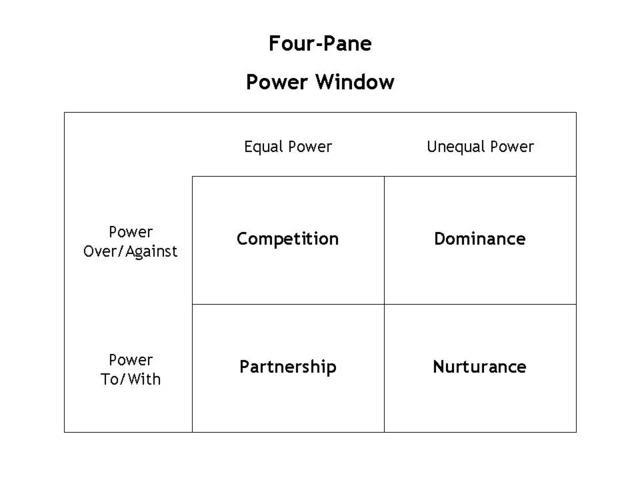
I’ve often talked about the fact that in his days as a community organizer, President Obama studied and taught about power relations. Its clear to me that he has an understanding of the power of partnership PowerWindow2and is constantly calling on us to join him in exercising that power.

Practicing leadership from a position of “power with” requires that you have an independently strong ego and don’t need to dominate in order to prop it up or feed it. And it also requires trust in the people you set out to lead. These are some of the characteristics I most admire about President Obama and ones that are often most misunderstood by his critics on the left and the right.

Its only natural that when people are so used to the power of dominance that they would dismiss the reality of the power of partnership. Its why we so often hear Obama criticized as weak and naive. But history tells us that all of the battles won by the left in this country have been based on a partnership model of power … enough people finally spoke up in ways that couldn’t be ignored. We see that in the battle for civil rights, unions, women’s suffrage, anti-war, etc.

The archetypal achievement of this president in that regard is his deployment of “power with” with respect to gay rights. The power to change came from below – but he masterfully guided it, nudged it, and helped without getting in our way. Ditto universal healthcare when he refused to impose a bill, but demanded that the Congress come up with one along similar lines.

This is the same dynamic with immigration reform. A president is not a dictator or even a decider. He presides and enables, articulates and maneuvers the entire body politic. He can screw up – Toomey and Manchin were not the most connected Senators on Capitol Hill and couldn’t deliver many votes compared with the NRA’s relentless fanaticism. Baucus wasted critical momentum for universal healthcare. But he is emphatically not a legislative dictator in our system. And real conservatives will admire this – not leap to dismiss him as a “lame duck” because of it.

The trouble right now is that a certain narrative is over. It began with the 2000 election, continued with 9/11 and a dubiously legitimate president marching the country into two deeply divisive and disastrously costly wars, trashing the country’s hard and soft power, and wrecking the government’s balance sheet before leaving his successor with the worst recession since the 1930s. Obama was elected to heal that gaping wound. And he has: one war is over, the other winding down; torture is over; alone among Western countries, the US economy is slowly, slowly returning to health – its rebound cramped by spending discipline. Obama’s re-election also cemented a deep social shift: we are now emphatically a multicultural country that celebrates that fact. Latinos and gays are part of the American spectrum. These are profound changes in five short years. And many seem ready now to relax and see his re-election as the end of the central narrative of the 21st Century so far. Hence the difficulty of leading from below today.

You want more from him? Get off your asses and make him and the Congress do it. We’re a republic, not a benevolent dictatorship. And we remain lucky to have such a sane, stable, no-drama pragmatist to marshall the forces we can muster. But without us? He is head of state and not much more.

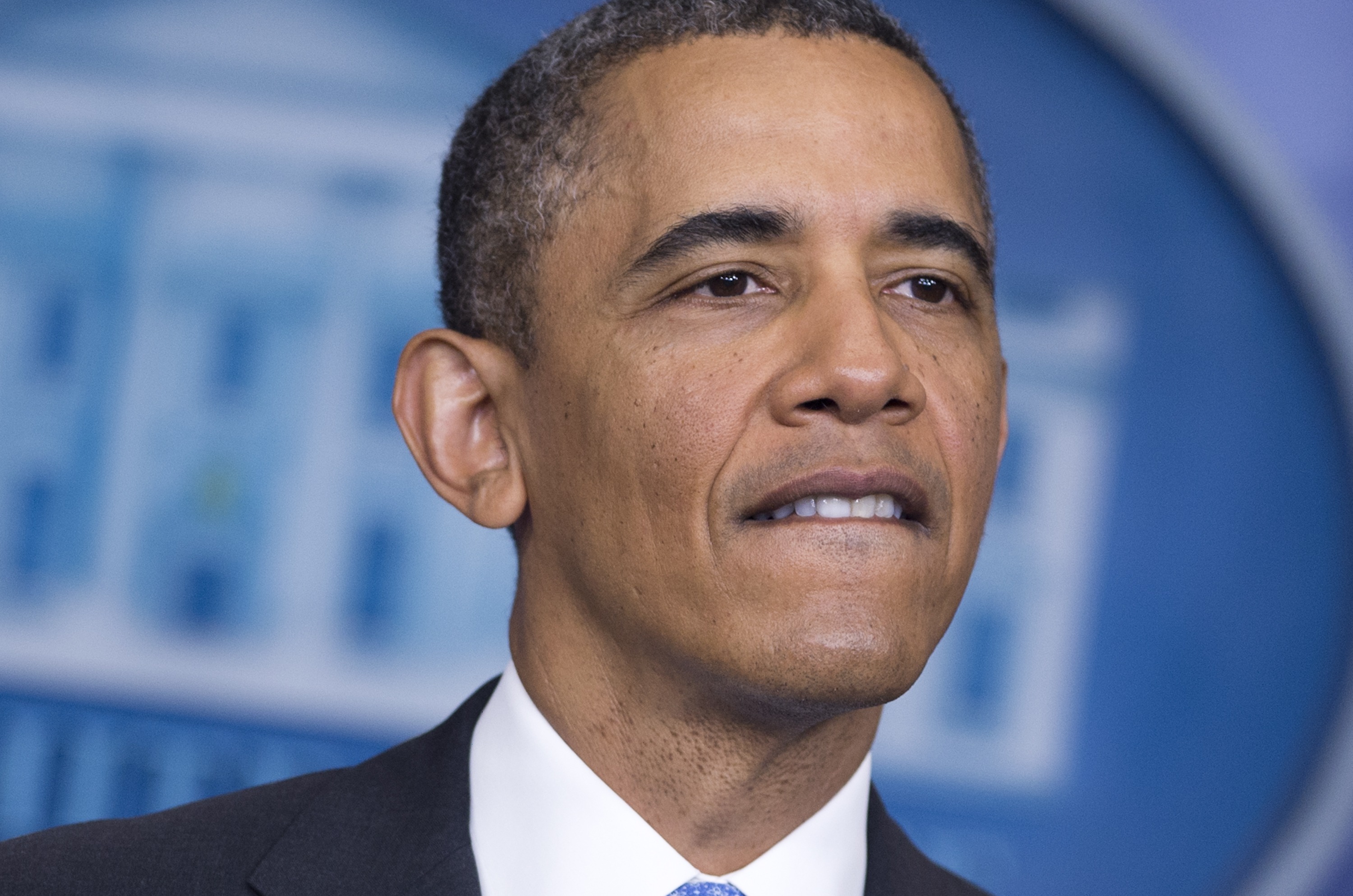
(Photo: US President Barack Obama holds a press conference in the Brady Press Briefing Room of the White House in Washington on April 30, 2013. By Saul Loeb/AFP/Getty Images.)

Anne Frank, Ourselves

A mother in Michigan has complained about the teaching of the Diary of Anne Frank due to one of its less-quoted passages, where Anne explores and describes her vulva. Emer O’Toole thinks it’s actually a key moment that makes the iconic heroine relatable to young girls:

[The mother] is, of course, wrong to call the passages pornographic. Pornography is material intended to arouse sexual excitement, and I very much doubt that was Anne’s intention when she wrote to her imaginary confidant Kitty about her journeys of self-discovery. But the reason [she] gives for complaining in the first place is that the passages made her daughter uncomfortable. I can well believe this. I can imagine that if, age 13, I had been asked to read or discuss the passages in class, I would have felt deeply uncomfortable (my own nocturnal explorations notwithstanding).

Anne is going through puberty, and she describes her changed vagina in honest detail, saying, “until I was 11 or 12, I didn’t realise there was a second set of labia on the inside, since you couldn’t see them. What’s even funnier is that I thought urine came out of the clitoris.” (Oh Anne, we’ve all been there.) She continues: “In the upper part, between the outer labia, there’s a fold of skin that, on second thought, looks like a kind of blister. That’s the clitoris.” It’s beautiful, visceral writing, and it’s describing something that most young women experience.

The “Isolationist” Epithet

Stephen Walt calls out the NYT for a sloppy lead sentence that drew me up short as well:

Americans are exhibiting an isolationist streak, with majorities across party lines decidedly opposed to American intervention in North Korea or Syria, according to the latest New York Times/CBS News poll.

It’s isolationist not to want to get embroiled in a civil war in the Middle East between people we barely understand? It’s isolationist not to go to war with North Korea? Over to Walt:

Genuine isolationism means ending U.S. alliance commitments in Europe and Asia and telling our various Middle Eastern allies that they were going to have to defend themselves instead of relying on help from Uncle Sam. Genuine isolationism would eliminate the vast military forces that we buy and prepare for overseas intervention and focus instead on defending American soil. Real isolationists favor radical cuts to the defense budget (on the order of 50 percent or more) and would rely on nuclear deterrence and continental defense to preserve U.S. independence. And the most extreme isolationists would favor reducing foreign trade and immigration, getting out of the U.N. and other institutions, and trying to cut the United States off from the rest of the world.

The overwhelming majority of people who have doubts about the wisdom of deeper involvement in Syria — including yours truly — are not “isolationist.”

They are merely sensible people who recognize that we may not have vital interests there, that deeper involvement may not lead to a better outcome and could make things worse, and who believe that the last thing the United States needs to do is to get dragged into yet another nasty sectarian fight in the Arab/Islamic world. But many of these same skeptics still favor American engagement in key strategic areas, support maintaining a strong defense capability, and see some U.S. allies as assets rather than liabilities.

I’d put myself in that camp, right now, rather than the one Walt calls “isolationism”. But the logic of history in the decades since the end of the Cold War seems to me to point toward an eventually much reduced role in global policing for the U.S. – if only because we cannot afford it – and to prioritize the regions most important to us (see: Asia rather than the Middle East). Bear Braumoeller thinks the term has outlived its usefulness:

“Isolationist” is a term that, by virtue of its persistent imprecision, obscures more than it reveals. By blurring the line between a lack of desire for a certain kind of action and a lack of desire for any kind of action, it distorts our descriptions and skews our inferences. We are far better off utilizing a range of questions to determine, not whether the public is internationalist or isolationist in general, but rather, what costs they would be willing to bear to achieve a particular foreign policy objective and how easy or difficult they think it would be to achieve it.

Matt Duss likewise suspects the word has lost all meaning:

Yes, Senator Paul proposes a more restrained foreign policy than that favored by the American Enterprise Institute. But that’s like saying I favor a more restrained approach to music than Slayer. … Yes, Americans support downsizing our country’s role abroad from radical post-9/11 levels. But it’s dishonest to pretend there is no middle ground between “Let’s invade more countries” and “Let’s pull up the drawbridge.” Despite the warnings of hardline interventionists, the U.S. remains deeply engaged with the international community across a range of issues, and through a range of organizations – economic, humanitarian, cultural, and military.