Wilfred McClay finds America’s collective self-understanding as the “redeemer nation” in more than just our foreign policy crusades:
What would American political culture look like without its pervasive moral dramas of sin and redemption, sometimes expressed in forms lofty and noble, but at other times resembling nothing so much as the smarminess and vulgarity of soap opera? One thing can be said for certain: We are not only intensely fascinated by these episodes of political theater, but fully in the grip of them, as far more than mere onlookers. For an allegedly secular society, the United States seems to be curiously in thrall to ideas, gestures, emotional patterns, nervous tics, and deep premises that belong to the supposedly banished world of religion. These habits of heart and mind are evident everywhere we look, and they possess a compulsive and unquestioned power in contemporary American life. It is as if the disappearance of religion’s metaphysical dimension has occasioned a tightening hold of certain of its moral dimensions, particularly so far as these relate to guilt and absolution.
Among other examples, he finds this dynamic at the heart of Jimmy Carter’s post-presidential career:
[R]edemption clearly has been on the mind of ex-president Jimmy Carter for the past 33 years. Carter has never gotten over the stern rebuke administered by voters in 1980, and the harsh judgment of many observers that his was a failed administration. In his case, a craving for redemption has animated an energetic, sometimes admirable, but often clumsy and self-seeking post-presidential career. In group photographs of president-elect Barack Obama and his four living predecessors at the White House, it was noticeable that Carter stood apart from the others, seemingly weighed down by a lingering sense of failure. One might think that his Christian beliefs would make him more at peace about how he is regarded in this world, given the priority his faith accords to the next one. But very few of us, and least of all the kind of man who wants to be president, can be genuinely indifferent to how we are regarded by others, and by history. And Carter is a proud man, in all the best and worst senses of that word. Redemption in the here and now, in the eyes of others, would be too sweet a vindication for him not to seek it; but it will likely elude him, because of the conspicuous pride that has motivated his quest for it. Who would be exalted must first be humbled.
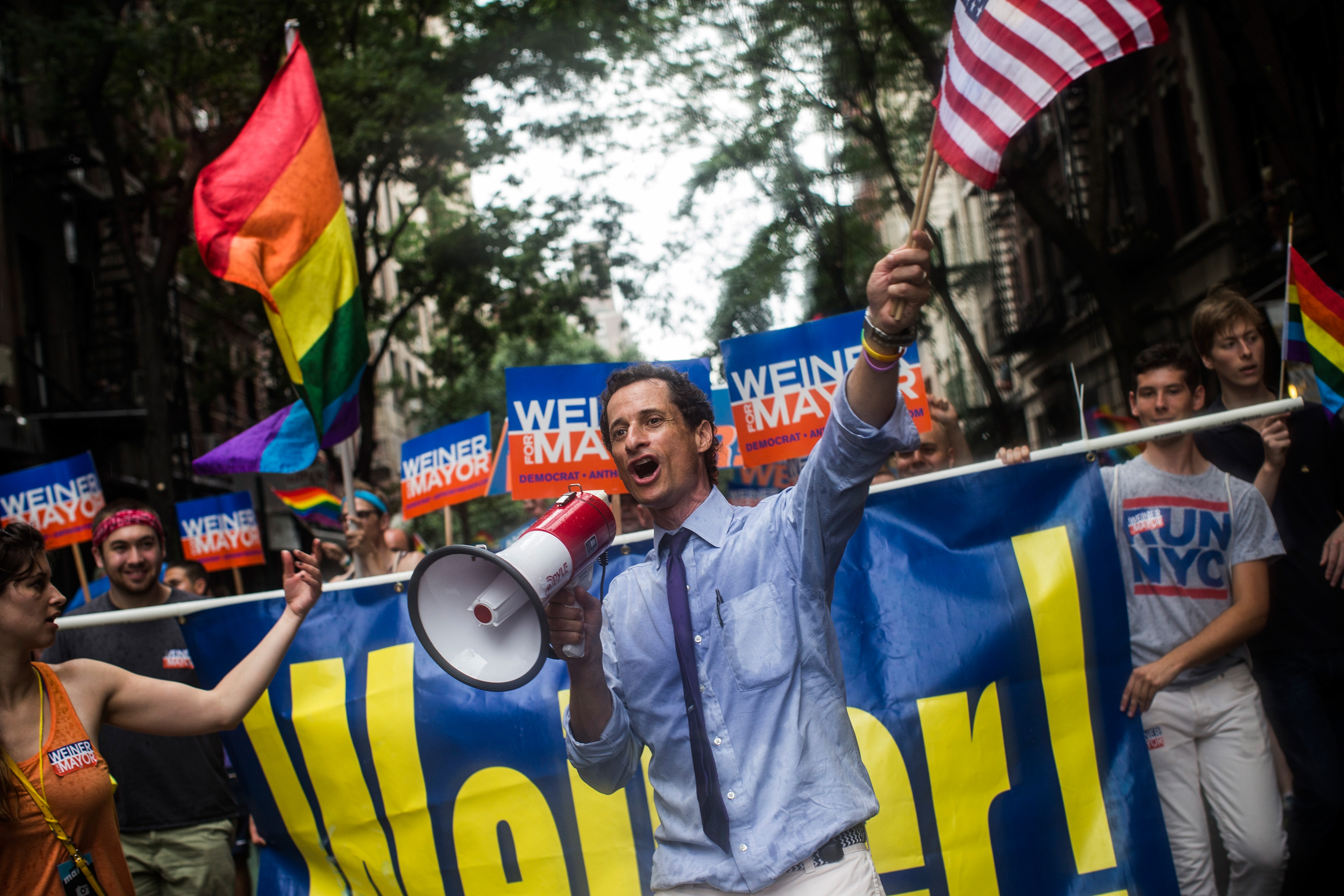
(Photo: New York City mayoral candidate Anthony Weiner marches in the New York Gay Pride Parade on June 30, 2013 in New York City. Weiner has been polling neck-and-neck with long-time frontrunner Christine Quinn. By Andrew Burton/Getty Images.)

