
How Wonder Works

Canyon

Jessa Gamble explores the mechanics of awe:

Last year, Stanford consumer behaviour researcher Melanie Rudd was able to define and measure awe, the kind architecture can evoke through soaring vaulted ceilings of cathedrals. What makes cathedrals and canyons awe-inspiring is partly their physical vastness. We marvel over the sheer scale of what we are seeing, and that helps to produce awe. But the 20th time we walk into the same cathedral, it may not have the same effect. That’s because awe is not just the experience of vastness. We have to be so surprised by the vastness that we don’t feel we fully grasp it. We stand at the edge of a cavernous space and marvel at its boundless capacity. We want to understand, but it’s hard to hold the mammoth volume in our minds.

Awe has two key components: perceptual vastness and what’s called the “need for accommodation”. The latter involves a desire to interpret that vastness by learning more about the world. The builders of Oxford’s dreaming spires clued in to this effect in Medieval times, and more centres of learning could stand to take their cue.

(Photo by Flickr user Al King)

Taken By A Name

Lauren Markoe interviews Cameron Partridge, a lecturer at Harvard and chaplain at Boston University who, “[a]fter college…graduated from Harvard Divinity School, married her girlfriend, became an Episcopal priest, changed her name — and changed her gender.” The whole exchange is worth reading, but his description of choosing a new name stands out:

In a way, the name chose me. I was at a point in my life when my previous name (which I prefer not to publicly disclose) felt like it no longer fit. I wanted a name that conveyed some sense of gender complexity, since I consider gender in general and my own in particular to be less than straightforward.

At the same time, I had no desire to totally jettison the history — including the thoughtfulness of my parents — caught up in my birth name. Then one day when I was getting sushi takeout, the person behind the register “misheard” my old name as Cameron.

It was a bolt from the blue. I thought, “I think I’ll take that to go too, thanks.” Eventually I looked it up. It turned out to mean something slightly askew: bent nose, crooked stream, or craggy rock. Years earlier I’d bought a button from a queer bookstore that said, simply, “bent.”

And I recalled being struck by a line from Ecclesiastes that I once heard the former Episcopal presiding bishop, Frank Griswold, preach in connection with the scandalous quality of the Christian gospel: “Consider the work of God: Who can make straight what God has made crooked?”

In a profile of Partridge published earlier this year, Becky Garrison emphasized the impact of Partridge being trans on his ministry:

Partridge does not feel his transgender status has hindered his role as a chaplain; if anything, it has helped him connect with students. “In one sense, my being trans doesn’t matter,” he said. “In another way, I’m able to have certain conversations about the complexities of human identity with college students, who are figuring out their own identities.”

The Spiritual Facts Of Life, Ctd

The Dish recently highlighted German philosopher Peter Sloterdijk’s idiosyncratic take on religion. In an in-depth exploration of the thinker’s oeuvre, Adam Kirsch elaborates:

One of the most appealing things about Sloterdijk’s philosophy is that, like literature, it leaves itself vulnerable. It does not attempt to anticipate and to refute all possible objections. And the objections to You Must Change Your Life, as with Bubbles, are not far to seek. For one thing, by conceiving of religion as an elite training regimen, Sloterdijk implies that a religion is justified only by its saints. Anyone who is not a saint is insignificant, and so the average person’s experience of religious meanings—whether metaphysical doctrine or spiritual consolation or tradition or identity or communion—is dismissed out of hand. This is false to the lived reality of religion for most people, and shows how tendentious Sloterdijk’s equation of religion with “practice” really is.

The Chastity Fallacy

Tim Challies thinks evangelicals are making a mistake in obsessing over virginity:

The obsession manifests itself in the pre-marriage course where the young man who burned up his teens and early twenties staring at tens of thousands of pornographic images somehow thinks he holds the moral high ground over the young woman who had sex one time with one boyfriend. After all, he is a virgin and she is not. She is the one who ought to seek his forgiveness for giving to someone else what was rightly his.

It manifests itself in young people who ask questions about “technical virginity” like doing these sexual acts, which stop short of full-on sexual intercourse, are somehow less serious or less morally significant than going all the way. “It’s okay, I’m still a virgin!”

This obsession with virginity measures so many of the wrong things, asks so many of the wrong questions, delivers so many of the wrong answers.

The Context Of Kink

Lisa Miller wonders where sexual idiosyncrasies stem from. First she looks to childhood:

There is hardly a transvestite—defined in the literature as a straight man whose sexual arousal depends on wearing women’s clothes—who doesn’t remember being dressed up in his older sister’s bras and panties. Enema fetishists, for whom the ultimate erotic act is to be splayed across someone’s lap with a rubber hose in their rectum, are rarer than they used to be, says Lehne, but those that do exist tend to be older Jewish men of Eastern European descent whose mothers used enemas to force the issue when their little ones didn’t poo on cue. The Other Side of Desire contains the story of a man with a foot fetish so overpowering that he found it difficult to listen to the weather report in winter; just hearing the words feet of snow could make him hard. He confided to a therapist that in second grade, ashamed that he could not read, he looked down at the floor to avoid being called on. There, he saw his classmates’ feet.

On to society:

What you find sexually titillating probably depends as much on where you live and when you live there as it does on whether an amputee librarian taught you how to use the Dewey decimal system. Hairless genitals are the thing right now, whether you call them a taste or a fetish; but in the first part of the twentieth century, an earthy abundance of pubic hair was preferred. Foot fetishes increase during sexually transmitted disease epidemics, Ohio State researchers found in 1998; the Brits have raincoat fetishes; and the Japanese, for whatever reason, have a predilection for used schoolgirl underpants. In Israel, according to a survey by PornMD, porn surfers search prostate most of all; in the ­Palestinian territories, family; and in Syria—go figure—aunt.

Drinking And Drafting

Blake Morrison ponders why so many acclaimed writers have been drawn to the bottom of the bottle:

There’s a window between the first and second drink, or the second and third, when the unexpected sometimes happens – an idea, an image, a phrase. The problem is getting itdown before it’s lost; if you’re in company, that means disappearing with your notebook, which takes resolve or self-regard. The Amis principle – a glassful to relax with at your desk when most of the writing has been done – is fine for those with will power. But there’s the cautionary dish_hemingwayexample of Jack London, who used to reward himself with a drink when he’d done half his daily quota of 1,000 words, then found himself unable to get started without one. The man takes a drink, then the drink takes the man. Liberation becomes stupor. “Write drunk; edit sober” is Hemingway’s much-quoted advice. But the rat-arsed aren’t capable of writing. After a point, the crutch becomes a cudgel.
Why do writers drink? Why does anyone drink? From boredom, loneliness, habit, hedonism, lack of self-confidence; as stress relief or a short-cut to euphoria; to bury the past, obliterate the present or escape the future. If Olivia Laing’s entertaining book fails to come up with a simple answer, that’s because there isn’t one. To the literary biographer, binges and benders are a godsend – a chance to recount lurid anecdotes under the guise of earnest psychoanalytic enquiry. But for the rest of us, the words on the page are what matter. And most of them get there despite the drinking, not because of it. “Drank like a fish, wrote like an angel,” would make a pleasing epitaph. “Drank like a fish, wrote like a fish” is more likely.

Previous Dish on drinking and writing here and here.

(Photo: Ernest Hemingway, via Wikimedia Commons)

Everybody Poops For The World Of Sex”

Ashley Fetters appreciates how the new film The To Do List disrupts standard teenage sex tropes:

[The film] presents a less common kind of story about a girl having sex for the first time. Brandy loses her virginity to Rusty — who’s clearly not the guy she’s “meant to be with” — then has a moment of thoughtfulness before meeting up with her best friends right in time to announce her recent banging of Rusty Waters and then catch the rest of Beaches. When Brandy’s dad (a hilariously anal-retentive Clark Gregg) discovers what’s happened and races to her rescue, a calm Brandy reassures him, “I’m fine, Dad. I’m OK.”

By sidestepping the “emotional-trauma-after-virginity-loss” construct and replacing it with giddy detail-spilling among friends, The To Do List sends up both a female onscreen teen-virginity trope and a male one: The “late-blooming virgin loses it to generically hot rando, comes away with high-five-worthy story to tell buddies” theme crops up more often in stories about teenage boys. (See: American PieSixteen CandlesAlmost Famous, Porky’sRoad Trip, Losin’ It — and Superbad, kinda.) And perhaps more importantly, it provides a positive alternative outlook on what happens to girls who “give away their flower” or don’t “guard their carnal treasure“: Sometimes, they’re pretty much fine.

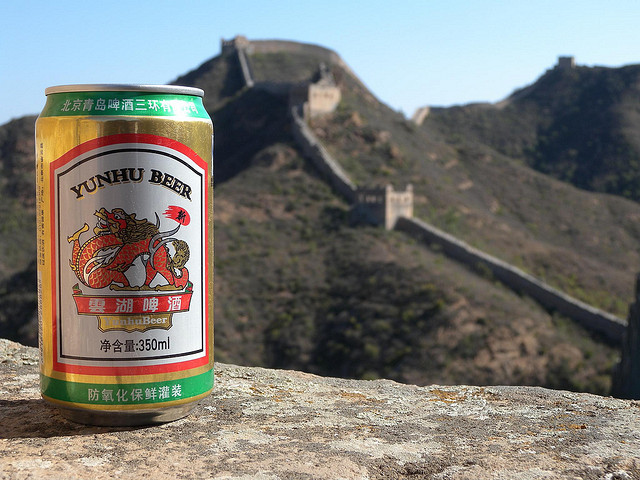
The Great Microbreweries Of China

dish_beerinchina

Great Leap Brewing co-founder Carl Setzer explains how he’s cultivating a niche customer base in China, the world’s biggest beer market:

One of the … reasons why our product appeals to Chinese consumers on a base level is because it incorporates Chinese cultural elements in the beers themselves and also incorporates Chinese literature and historical references in the naming and branding of the beers. Two good examples of this would be our Iron Buddha Blonde Ale and our Little General IPA. The Iron Buddha Blonde uses tie guan yin wu long tea during the brewing process, which gives the beer a floral note at the end. The name “Iron Buddha” is one way to translate the tie guan yin (铁观音), or the iron goddess of mercy.

The Little General IPA, on the other hand, is a “purity law beer,” meaning it contains only malted barley, hops, yeast and water, but the name is unique because it is an homage to Zhang Xueliang (张学良), a patriotic hero for both mainland China and Taiwan. The nickname “Little General” is a reference to his father (张作霖), a notorious warlord in China’s Northeast region. Zhang Xueliang grew from a spoiled brat with an opium habit into a symbol of China’s future unity against the Japanese during the occupation when he kidnapped Chang Kai-Shek and convinced him to join the KMT’s strength with that of the Communist forces. Upon Chang Kai-Shek’s agreement with this plan, Zhang Xueliang immediately surrendered to Chang’s personal guard and spent the better part of his adult life under house arrest with Chang’s forces in both mainland China and Taiwan. He was released as an old man and relocated to Hawaii to live with relatives in peace. He died at 99 years old, never having returned to mainland China nor Taiwan after his release.

(Photo: Ryan McFarland)