Can The GOP Double-Down On The White Vote? Ctd

Sean Trende seems to think so. Nate Cohn is skeptical:

Last November, Romney did extremely well among white voters, reaching about 60 percent of the white vote—the best Republican performance since 1988. Over the longer term, white voters have indeed shifted against Democrats: Obama did worse among white voters than Kerry, who did worse than Gore, who did worse than Clinton. As a result, Trende thinks it is “touchy to assume that the GOP will max out at 60 percent of the white vote,” which Romney scored last November, and he doesn’t “see a compelling reason why these trends can’t continue.”

But the GOP’s gains among white voters aren’t national. They’re almost exclusively among southern and Appalachian voters. Outside of the South, there’s no clear trend. And Democrats might have even made gains among whites outside of the South, both absolutely and with respect to the national popular vote.

Cohn argues that, to further increase its share of the white vote, the GOP will need to tweak its platform:

There is indeed room for the GOP to improve among white voters, but there’s no reason to think it won’t be painful, too. If Republicans don’t want to compromise on immigration reform, they will probably need to do something else to make up ground. It could be moderating on social issues or economics—or a little bit of both. Either way, the GOP will have to pick its poison.

The Right Cools On Rubio

Rubio Support

Micah Cohen discovers that the Florida senator is losing support:

Mr. Rubio led in an average of the first few 2016 Republican primary polls released after the 2012 election, but support for him has faded in more recent 2016 primary surveys. In the four national surveys conducted in January, an average of 20 percent of Republicans said they would support Mr. Rubio for the party’s nomination in 2016. That number dropped to an average of 11 percent in the four primary polls conducted in June.

Rubio is considering sponsoring a bill that would ban abortions after 20 weeks. Nora Caplan-Bricker sees this as a ploy to win back the far right:

It’s painfully obvious why Rubio might want to spend a few months as the anti-abortion movement’s most visible cheerleader. After supporting a path to citizenship in the immigration bill, the Tea Party golden boy has become, in the words of Sarah Palin and the eyes of many former fans, the contemporary embodiment of Judas Iscariot. By attaching his name to the abortion issue, Rubio can endear himself to miffed conservatives and patch up any vulnerabilities on his right flank. And, he can do it at relatively low risk: Aides to Majority Leader Harry Reid have said he won’t allow the bill to reach the floor, and President Barack Obama has promised to veto the bill if it somehow passes, meaning the whole episode will be ancient history by 2016. As Democratic strategist Maria Cardona told MSNBC, “Any blowback will be early blowback. He will be able to look back in 2016 and say ‘look what I did in 2013’ and he won’t necessarily have to talk a lot about the issue.”

Allahpundit chimes in:

The risk of him stepping on a landmine a la Todd Akin is, or should be, small. If he wants to be the new Great Communicator, there’s no better way to ace the degree-of-difficulty portion of the competition than by taking on abortion.

Another GTMO Suicide

The Miami Herald got the details of the prisoner, Adnan Latif, who finally killed himself, nine years after he was cleared for release:

A 79-page report, released Friday under the Freedom of Information Act, showed the “standard operating procedures,” or SOP, governing the U.S. Army Military Police required soldiers to regularly check on captives kept in solitary cells at Camp 5, Guantánamo’s maximum-security lockup. Troops didn’t do it for at least two shift changes before Yemeni captive Adnan Latif was discovered dead on the floor of his Camp 5 cell at the U.S. Navy base in southeast Cuba on Sept. 8, 2012.

As usual at GTMO, no accountability for anything and little credibility to the investigation:

While the report found troops failed to follow their own procedures, no soldier or sailor at the detention center was disciplined or relieved of duty as a result of the investigation, said Army Col. Greg Julian, the Southcom spokesman… David Remes, a lawyer who won Latif’s unlawful detention suit in federal court but saw it overturned on appeal, dismissed the report Friday as “a whitewash.” He noted in particular that investigators failed to interview any of the other prisoners held on the same disciplinary block at the time Latif died.

I don’t really know how to explain this under Obama – except to say it reveals the callousness of this country’s policies toward innocent prisoners, callousness regularly endorsed by the Congress and the polls. Over a hundred prisoners are now on hunger strike. If I were in their shoes, I’d try to starve or overdose myself to death as well.

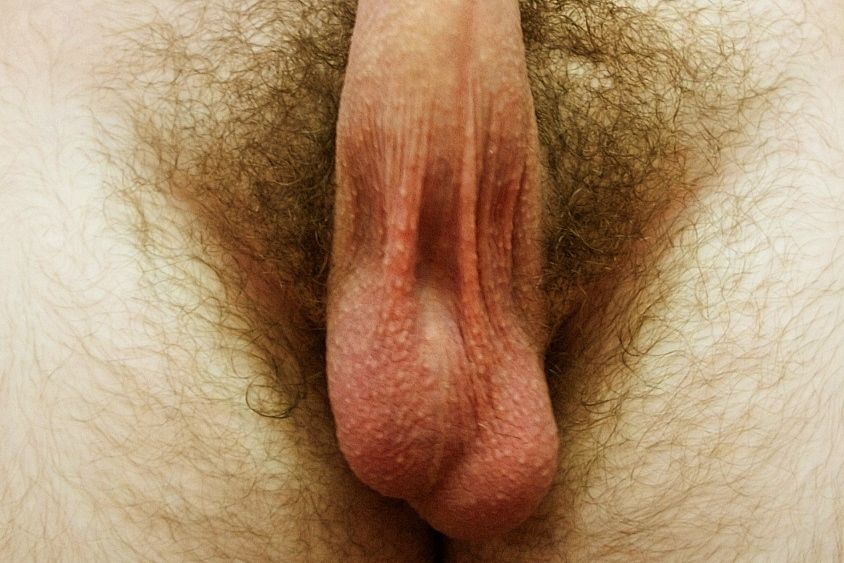
Whence The Scrotum?

Liam Drew gropes for a better understanding of the evolutionary reason for external testicles, unsatisfied by the widely-cited “cooling hypothesis”:

Heat disrupts sperm production so effectively that biology textbooks and medical tracts alike give cooling as the reason for the scrotum. The problem is many biologists who seriously think about animal evolution are unhappy with this. Opponents say that Scrotum_warm_and_coldtesticles function optimally at cooler temperatures because they evolved this trait after their exile. If mammals became warm-blooded 220 million or so years ago, it would mean mammals carried their gonads internally for more than 100 million years before the scrotum made its bow. The two events were hardly tightly coupled.

The hypothesis’ biggest problem, though, is all the sacless branches on the family tree. Regardless of their testicular arrangements, all mammals have elevated core temperatures. If numerous mammals lack a scrotum, there is nothing fundamentally incompatible with making sperm at high temperatures. Elephants have a higher core temperature than gorillas and most marsupials. And beyond mammals it gets worse: Birds, the only other warm-blooded animals, have internal testes despite having core temperatures that in some species run to 108 degrees.

(Photo: a scrotum in a warm state by Brallion, via Wiki)

Who Blames The Victim?

Abigail Rine points to research suggesting that “beliefs about gender roles are more predictive of a victim-blaming mentality than the gender of the research participant”:

In other words, men blame at higher rates not because they are more susceptible to misogyny or misandry, but because they are more likely to endorse traditional views of masculinity and femininity. This holds true for victim-blaming that stems from “hostile sexism,” which refers to the denigration of a rape victim who violates gender expectations. Both men and women, however, are equally inclined toward “benevolent sexism,” or reserving one’s sympathy for those who fulfill gender ideals.

A study published just this year in the Journal of Sexual Aggression lends further support to the gender transgression hypothesis. Unlike previous experimental studies of samples from the United Kingdom and United States, this study analyzed a Swedish population. In this instance, victim-blaming attitudes were found to be scarce, as participants of both sexes overwhelmingly blamed the rapist for the attack, and, in a divergence from other studies, male participants did not victim-blame more than their female counterparts. Sweden, one of the highest-ranked countries in the world in terms of gender equality, appears to have significantly lower rates of victim blaming.

Broadcasting The Call To Prayer

Lydia Tomkiw reports on a change to Channel 4’s late-night broadcast schedule:

[T]he British broadcaster Channel 4 has announced that it will be airing the call to prayer, or adhan, live every morning throughout Ramadan (an autoplay version will also be available on its website five times daily). … Writing for Britain’s Radio Times magazine, Channel 4’s head of factual programming, Ralph Lee, called the decision “a deliberate ‘provocation’ to all our viewers in the very real sense of the word,” noting that the broadcaster expected to be “criticized for focusing attention on a ‘minority’ religion.” Lee went on to point out that nearly five percent of the country will be participating in Ramadan. “[C]an we say the same of other national events that have received blanket coverage on television such as the Queen’s coronation anniversary?” he asked.

Shelina Zahra Janmohamed supports the move:

For Muslims, this is an opportunity to have showcased what is important to them in a nuanced manner. But perhaps more significant is that British Muslim culture and faith is being integrated into and reflected back from mainstream culture. For me, this makes it a turning point.

Jehangir Malik calls it “doubly positive”:

It’s positive for Muslims, of course, for our faith to be taken seriously by a mainstream broadcaster rather than demonized. But it’s also positive for a wider audience to have the opportunity to look beyond media stereotypes and gain a better understanding of mainstream Muslims and our way of life.

James Bloodworth is less enthusiastic:

[Channel Four] actually wants to “provoke” the wrong sorts of people for the purposes of publicity, much like when it made the atrocious decision to broadcast an ‘alternative message by the Holocaust-denying Iranian President Mahmoud Ahmadinejad–although in the case of the latter it would have been wrong not to be provoked. … Personally, I would like to see a lot less religion on television. But that doesn’t mean I’m the sort of person who is going to be “provoked” by four minutes of Muslim prayer each day for a single week. You should probably worry about anyone who is.

Sam Harris, the avowed atheist, recently wrote, “Despite my antipathy for the doctrine of Islam, I think the Muslim call to prayer is one of the most beautiful sounds on earth.” Listen to it above.

The Best Of The Dish Today

I tried to make sense of the modernity vs fundamentalism struggle, from America to Egypt, Turkey and beyond. Readers pushed back against the inhumanity of forced feeding here and here. We hailed the badass flight attendants of Asiana 214, while readers explained the process of letting old dogs go. And Bill Kristol – surprise! – came out against immigration reform.

The most popular post of the day was A Redder And Bluer World; followed by those amazing flight attendants. I loved the MHB between two ferns (see above) and finding this photo of two ultimate fighters (especially the caption).

In the last month, our top referrers have been search engines, Twitter and Facebook, in that order, followed by HuffPo and Drudge. In the same period, we directed the most traffic toward Slate and the Atlantic, in that order. We sent 39,000 people to Slate and 32,000 people to the Atlantic; they sent us 66 and 1,100 in return, respectively.

See you in the morning.

Murdoch Faces A Police Inquiry

It stems from a secretly recorded meeting with staffers, which the police now want to review. Here’s why:

Murdoch told the journalists that the culture of paying police officers for stories “existed at every newspaper in Fleet Street. Long since forgotten. But absolutely”, and had existed long before Sun journalists had been arrested. Murdoch also criticised the “incompetent” police investigation that has led to the arrest of so many of his staff.

In one clip broadcast by Channel 4 News, a journalist asks Murdoch: “I’m pretty confident that the working practices that I’ve seen here are ones that I’ve inherited, rather than instigated. Would you recognise that all this predates many of our involvement here?” Murdoch replies: “We’re talking about payments for news tips from cops. That’s been going on a hundred years, absolutely. You didn’t instigate it.”

The possible charge against him personally? According to the Guardian: “conspiracy to commit misconduct in public office”. Extracts from the tape here.

Through The Eyes Of The Beholder

Birth_of_Venus_detail

Maria Popova plumbs Nancy Etcoff’s Survival of the Prettiest for insight into how we experience beauty:

Although the object of beauty is debated, the experience of beauty is not. Beauty can stir up a snarl of emotions but pleasure must always be one (tortured longings and envy are not incompatible with pleasure). Our body responds to it viscerally and our names for beauty are synonymous with physical cataclysms and bodily obliteration — breathtaking, femme fatale, knockout, drop-dead gorgeous, bombshell, stunner, and ravishing. We experience beauty not as rational contemplation but as a response to physical urgency.

And don’t forget “crush”. Popova also seizes upon Etcoff’s summary of the fascinating work of anthropometrist Leslie Farkas, who compared survey responses to photographs with the “conventions of the classical beauty canon” and concluded there’s no formula for attractiveness:

The canon did not fare well. Many of the measures did not turn out to be important, such as the relative angles of the ear and nose. Some seemed pure idealizations: none of the faces and heads in profile corresponded to equal halves or thirds or fourths. Some were inaccurate—the distance between the eyes of the beauties was greater than that suggested by the canon (the width of the nose). Farkas’s results do not mean that a beautiful face will never match the Renaissance and classical ideals. But they do suggest that classical artists might have been wrong about the fundamental nature of human beauty. Perhaps they thought there was a mathematical ideal because this fit in a general way with platonic or religious ideas about the origin of the world.

Take it away, Dustin Hoffman:

(Detail from Sandro Botticelli’s The Birth of Venus, 1485, via Wikimedia Commons)

Writers On Failure, Ctd

William Faulkner viewed The Sound and the Fury as a story he couldn’t get right:

I had already begun to tell the story through the eyes of the idiot child, since I felt that it would be more effective as told by someone capable only of knowing what happened, but not why. I saw that I had not told the story that time. I tried to tell it again, the same story through the eyes of another brother. That was still not it. I told it for a third time through the eyes of the third brother. That was still not it. I tried to gather the pieces together and fill in the gaps by making myself the spokesman. It was still not complete, not until fifteen years after the book was published, when I wrote as an appendix to another book the final effort to get the story told and off my mind, so that I myself could have some peace from it. It’s the book I feel tenderest towards. I couldn’t leave it alone, and I never could tell it right, though I tried hard and would like to try again, though I’d probably fail again.

And he had this to say about Hemingway’s fear of failure:

I thought that he found out early what he could do and he stayed inside of that. He never did try to get outside the boundary of what he really could do and risk failure. He did what he really could do marvelously well, first rate, but to me that is not success but failure…failure to me is the best. To try something you can’t do, because it’s too much [to hope for], but still to try it and fail, then try it again. That to me is success.

Recent Dish on the theme here.