Why Did A Small Town in Quebec Explode This Weekend?

At least five people were killed in Lac-Mégantic, Quebec on Saturday when an unmanned tanker train derailed and destroyed much of the city center. Monique Muise considers the catastrophe in the context of the North American shale boom:

Even if the disaster in Lac-Mégantic prompts more stringent oversight, the sheer volume of crude oil traveling along Canadian railways means that future accidentsboth large and smallmay be inevitable. According to the Railway Association of Canada, approximately 230,000 barrels of oil are transported by rail in North America every day. In Canada, the amount of crude oil being moved in this manner has skyrocketed since 2010, feeding an increasing demand for fuel across the country and abroad. As industry executives, governments and environmental groups have waged war over pipelines, the railways have picked up the slack. In the past two years, the volume of crude chugging along Canadian tracks has reportedly quadrupled. The traffic is only expected to increase in the coming decade with the development and expansion of oilfields in both North Dakota and Alberta.

Marianne Lavelle details why crude producers have turned to rail transport as an alternative to pipelines:

North America’s new hot oil production centers, the Bakken shale in North Dakota and the oil sands of western Canada, aren’t well tied into [the existing] pipeline network. The price of crude oil is now high enough that the additional cost of paying to transport it by train has not been a hindrance for the oil industry in North Dakota, the U.S. State Department said an extensive market analysis related to the decision whether to approve the controversial Keystone XL pipeline from Canada to Texas.

Rail transport of oil has been slower to develop out of Canada’s oil sands. But State Department analysts foresee it growingone of the key reasons they concluded that the Keystone XL, if built, would have minimal impact on greenhouse gas emissions. The carbon-intensive oil of Canada’s tar sands will get to market, with or without the pipeline, they argued; it will move by rail.

But Alec MacGillis argues the Lac-Mégantic disaster might turn public opinion against rail and new pipelines:

The environmentalist opponents of Keystone argue that the pipeline should be blocked so that high-emissions tar sands oil stays in the ground in Alberta rather than being burned and thereby exacerbating climate change. The pipeline’s boosters have countered that the tar sands will be developed and exported regardless of whether the pipeline is built or not—whether by pipelines crossing British Columbia for export to oil-hungry China, or by rail to the Atlantic or Gulf Coast. That was the gist of the State Department assessment that found that Keystone would not significantly increase emissions compared with other routes of export.

That basic claim—that the tar sands will make it out no matter what—has taken some hits of late, though. An in-depth Reuters analysis in April challenged the State Department assessment, raising serious questions about the economic feasibility of transporting large quantities of tar sands oil by rail. Then came word last month that the provincial government of British Columbia had, on environmental grounds, rejected a proposed pipeline to carry tar sands oil to ports for export to China.

And now comes the dreadful spectacle in Quebec, which puts another damper in the notion that it’s going to be a breeze to export vast quantities of tar sands by rail. It’s increasingly becoming clear that the reasons that the Canadians are pushing so hard for Keystone is because they, well, really need Keystone.
The Female Cartel

Andrea Castillo analyzes sexual restrictions such as prostitution laws, porn censorship, and slut-shaming from an economic perspective:

Sex is a female resource. While both genders certainly enjoy and depend on the act, natural constraints on female sexuality create scarcity—and value. The high costs of female fertility—in terms of time, mental and physical health, and opportunities forgone—impel women to act as suppliers in the sexual market. Male sexuality, on the other hand, is ubiquitous and cheap. What’s more, men tend to place a higher value on sexual gratification than do women. Men, therefore, comprise the demand for sex.

To consume their desired quantity of sex, men must offer women something of equal subjective value in return. The aggregate supply of willing women and aggregate demand for a roll in the hay in a given market will converge to an equilibrium “price” for sexual access. The price need not be literal, as is the case with prostitution. Historically, this bundle of goods offered to women included resources for child-rearing, material comfort, and protection for their families. When the supply exceeds the demand, the price drops, and women’s producer surplus declines. When men seek more sex than women are willing to supply, producer surplus increases, and women rule the roost. …

Slut-shaming, prohibitions against paid sex work, censorship of pornographic images, and gender segregation are all tools that restrict supply in the sexual market. Anxieties and incentives cause women facing sexual competition to psychologically exhibit similar, although uncoordinated, cartelistic behaviors. Thrill-seekers and erotic entrepreneurs that buck the sexual syndicate find themselves at the mercy of moral indignation and exclusion. A review of the literature on sexual suppression [pdf] suggests that the evidence is more consistent with the female cartel theory than the patriarchy theory: Periods of sexual restraint coincide with sellers’ markets. Although men historically enforced sexual norms, female self-interest shapes them.

Map Of The Day

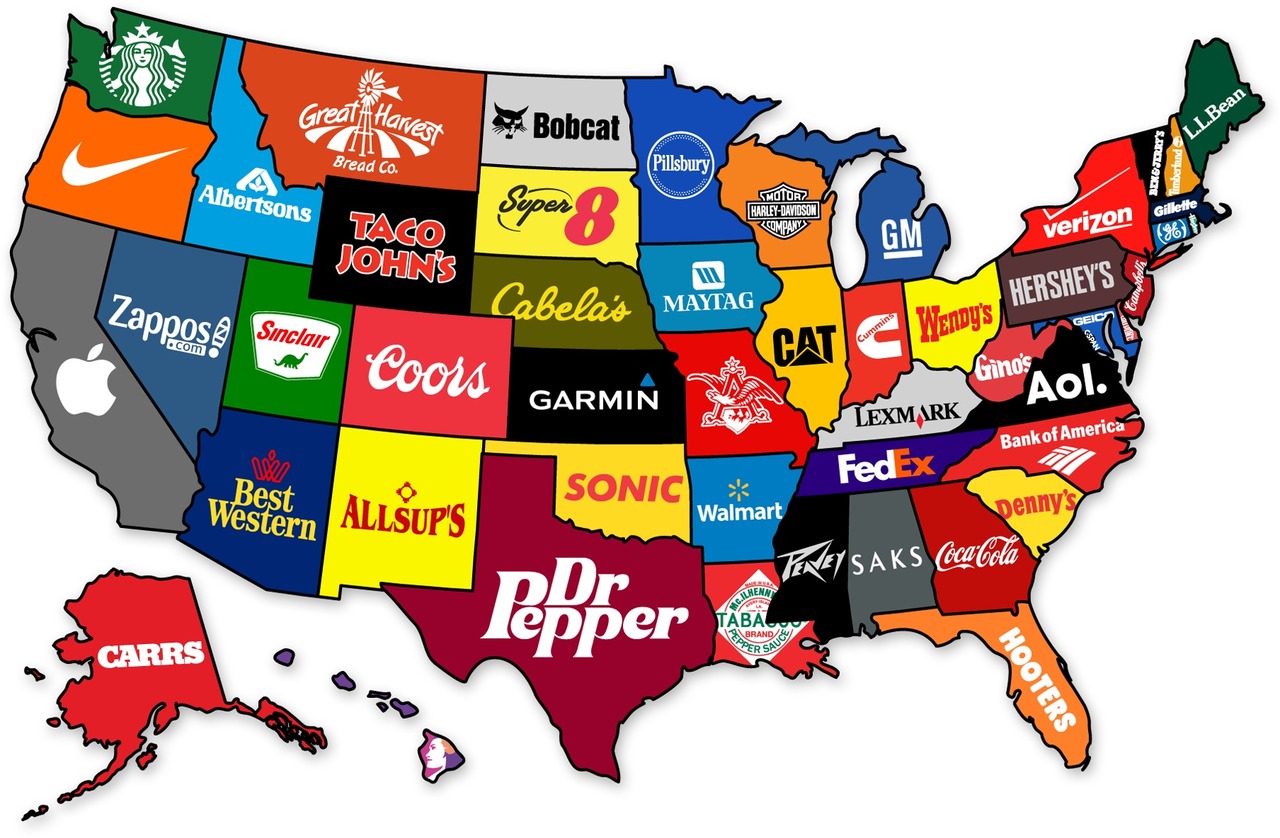
dish_usmapbrands

Kevin Hartnett highlights it:

At a glance it’s just eye candy: Steve Lovelace of Dallas has created a map of the United States, where each state is filled with the logo of a corporation that originated there. Gillette for Massachusetts, Anheuser-Busch for Missouri, Apple for California, L.L. Bean for Maine. On his website Lovelace acknowledges that his choices are subjective, based on his judgment about which well-known corporations best represent the states they originated in, rather than objective criteria like choosing state’s biggest employer or most valuable company. Some of his choices were a given (Starbucks for [Washington], General Motors for Michigan), others were inspired (Pillsbury for Minnesota, Garmin for Kansas), while a few have a whiff of irony about them (Saks for Alabama, for instance).

Lovelace lists the featured companies by state here. It’s not as great as this video though.

Quit For America?

Chicago educator Katie Osgood implores Teach For America (TFA) recruits to leave before the school year starts:

TFA claims to fight to end educational inequality and yet ends up exacerbating one of the greatest inequalities in education today: that low-income children of color are much more likely to be given inexperienced, uncertified teachers. TFA’s five weeks of Institute are simply not enough time to prepare anyone, no matter how dedicated or intelligent, to have the skills necessary to help our neediest children. This fall, on that first day of school, you will be alone with kids who need so much more. You will represent one more inequality in our education system denying kids from low-income backgrounds equitable educational opportunities.

She notes that Chicago, where Teach For America places a corps of 500, recently shuttered 50 schools:

As a result, we have thousands of displaced teachers looking for jobs, we have dozens of quality schools of education producing certified teacher candidates-many from the neighborhoods they hope to teach in-all looking for work in Chicago and other urban centers around the country. Just yesterday, I spoke with a fully-qualified new teacher who reported that she will likely have to take substitute positions or do after-school tutoring as there are no full-time jobs being offered in the Chicago Public Schools. Like so many other cities (New York City, Detroit, and Philadelphia to name a few) we have no teacher shortages. We have teacher surpluses. And yet, TFA is still placing first year novice corps members in places like Chicago. To put it bluntly, the last thing our students undergoing mass school closings, budget cuts, and chaotic school policy need is short-term, poorly-trained novices. Teach for America is not needed in Chicago. Teach for America is not needed in most places.

Michael Noll pushes back:

[T]he average classroom experience for U.S. teachers is one year–as per Diane Ravitch, who is no TFA fan. The larger point is that teachers all over the country, regardless of region, are leaving the profession almost immediately after entering it. Partly, they’re leaving because of the lack of union support. But they’re also leaving because schools are, by and large, not supportive environments, either intellectually or professionally or financially. Low-income schools are, of course, hit hardest by this trend. TFA may have imperfect means, but the intentions, I believe, are pure. If teachers leave after two years, that means they spend one more year in the schools than the average U.S. teacher.

Recent Dish on education here, here, and here.

The Plastered Economy

Hangover Costs

Derek Thompson calculates the economic cost of hangovers:

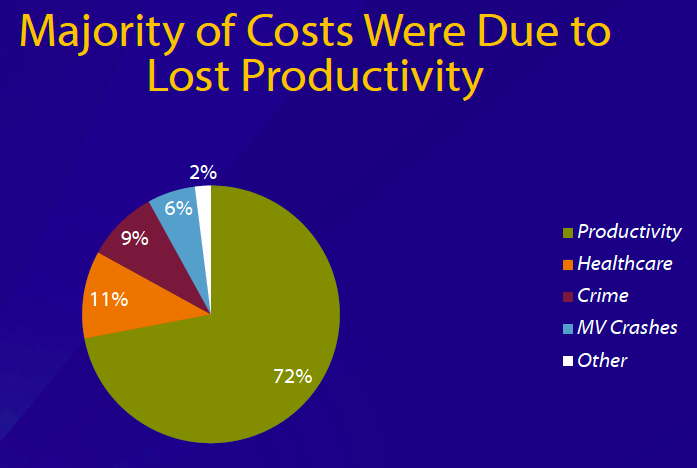
Excessive drinking costs the economy more than $220 billion — or about $1.90 per drink, according to the Center for Disease Control and Prevention, which studies the negative externalities of alcohol consumption each decade. Seventy-two percent of the costs came from lost workplace productivity, according to the 2006 survey, which suggests that the economic drag from hangovers is about $160 billion  (… also the total cost of natural catastrophes in 2012.)

Brad Plumer is suspicious, noting that “when you add up all the different studies on lost workplace productivity over the years, it starts to seem like a miracle the United States even has a functioning economy”:

[M]any of these estimates are outright silly. The idea that coffee breaks or or a little Internet browsing cost billions in lost productivity is highly questionable. As Jack Shafer pointed out back in 2010, many people are likely to waste time during the workday no matter what. The fact that they might do so by playing fantasy football rather than, say, taking a leisurely trip to the water cooler doesn’t seem terribly important. …

[N]o one’s ever done a rigorous analysis of all these supposed productivity-killers. The findings are usually just large numbers tossed around to draw attention to pet issues. A new study finding that spam or yawning or picking your nose costs billions of dollars in lost productivity might make for good headlines. But it rarely tells us anything useful about the economy.

Who Will Pay Egypt’s Bills?

Evelyn Gordon focuses on the country’s economic problems:

If you think last week’s revolution was primarily a revolt against the Muslim Brotherhood’s undemocratic behavior, then you’ll think the West’s main goal should be “supporting the Egyptian people in their aspirations to democracy and inclusive governance,” as EU foreign policy chief Catherine Ashton put it last week–for instance, by helping them draft a new and improved constitution. But if you realize that the revolution was primarily about economic distress, then you’ll understand the West’s main goals should be arranging short-term aid and pushing long-term economic reforms needed to stabilize the economy–because without economic improvement, even the best constitution won’t prevent another coup next year. Desperate people can’t afford to wait for the next election to bring about policy changes.

Drezner suspects that Egypt will have to ask the IMF for more money:

Please bear all of this in mind as you read about the alleged decline of U.S. influence in the region. There’s a difference between declining salience and declining influence. Because if I’m reading this correctly, Egypt will have no choice but to go back to the IMF — and the United States still has a wee bit of influence within that international organization.

Recent Dish on the subject here.

Macho Men

Nicole Pasulka delves into the history of the Village People and the YMCA:

At the Y, a spiritual man was a well-built, muscular man. The organization’s leadership positioned the regional branches as destinations that could protect newcomers from “negative” influences. It was here that many young guys had their first homosexual experiences. So [Village People members] Jacques Morali and Randy Jones were part of a history that included both diligent Christian bodybuilders and men cruising for “trade”—straight-identified, masculine men. According to John Donald Gustav-Wrathall’s meticulous history of male-male relationships within the organization, homosexual cruising and weight lifting went hand in hand. Though the organization condemned homosexual sex as “immorality” or “perversion,” by emphasizing fitness, the Y didn’t just make sex between men possible, it “shaped same-sex sexual desire.”

The astonishing scene above is from one of my favorite bad movies of all time: Can’t Stop The Music. Steve Guttenberg’s neck veins and Bruce Jenner’s exposed midriff – combined with absurd disco choreography and manically coked up acting – it’s a classic. Back to Pasulka, on the 1978 hit single “Macho Man”:

[Producer Henri] Belolo says the title track was meant to appeal to “the ego of all the people… going to the health club building muscles.” Somewhere along the way, that came to include millions of straight people.

In 1979, [musician Jacques] Morali told Rolling Stone, “When Macho Man came out, I did it believing that the gay audiences were going to like it very much. But the straight audiences liked the song much more, because straight guys in America want to get the macho look.” As the producers were learning, they didn’t have to specify their target. “Macho Man” made it to number twenty-five on 1978’s Billboard Hot 100 chart and hit platinum. Either the Village People had found an audience beyond the gay discos or a lot of people were pumping up their disco tits.

In fact, both were kind of true. While gay men in the Village had been bulking up, slowly trading angora for ripped T-shirts and pegged pants for Levi’s, straight men had registered that the “macho” look was en vogue in stylish cities like New York, Los Angeles, and San Francisco. Some straight men even started wearing bandannas in their back pockets—a method gay men used to signal their preference for different kinds of sex. Though they were oblivious to the code, straight men had figured out this was the “in” look.

Everyone In Egypt Needs A Voice

Pro-Morsi Supporters Killed In Shooting Incident Outside Presidential Guard Barracks

Steve Negus wants Egypt to adopt a parliamentary system:

The new electoral law should increase incentives for compromise, for example, by increasing the power of parliament and of the prime minister over that of the president. Parliamentary systems are better for encouraging negotiation and limiting the ‘winner takes all’ mentality that is so risky in democratic transitions, and if political rules are being revisited, the parliamentary model is one that should seriously be considered. A blocked political order in which temporary winners exclude their opponents is one that the last two years have shown us the importance of avoiding.

Laura Dean hopes that the Muslim Brotherhood will be given a place at the table:

As we have seen time and again in this part of the world, it is impossible to stamp out ideas by censoring them. In so doing you only push them underground and legitimize their most radical elements. Even the Brotherhood spokesman, Wael el Karim, who is more diplomatic than most said, “Now we see the only path to power in Egypt is by force.” Only by bringing them into the political fold and treating them like the political losers that they are, rather than like criminals, which they are not, can that rift be healed and can they begin to develop into the mainstream political player, among many players, that they could be.

My fear is that the army just overplayed its hand – and made all this far more difficult. This video (featured in our Tweet reax earlier) is the most dispositive I’ve seen yet: a soldier just picking off civilians from a rooftop as if he is hunting for game. Then this:

Dish coverage of this possible turning point in Arab history here, tweet reax here, expert analysis here, and the Arab world’s response here. Stay tuned for updates.

(Photo: A man reacts after seeing the body of a slain protester at the Liltaqmeen al-Sahy Hospital in Cairo’s Nasr City district, allegedly killed during a shooting at the site of a pro-Morsi sit-in in front of the headquarters of the Egyptian Republican Guard on July 8, 2013 in Cairo, Egypt. By Ed Giles/Getty.)

Quote For The Day

“It’s very important for people not to be overly critical of someone else until you’ve examined your own heart,” – former president George W Bush, when asked what he meant when he responded to a question about marriage equality thus:

I shouldn’t be taking a speck out of someone else’s eye when I have a log in my own.