The Science Of Being A Southpaw

by Matt Sitman

Maria Konnikova reviews shifts in the scientific understanding of left-handed people:

In 1977, the psychologist Theodore Blau argued that left-handed children were over-represented among the academically and behaviorally challenged, and were more vulnerable to mental diseases like schizophrenia. “Sinister children,” he called them. The psychologist Stanley Coren, throughout the eighties and nineties, presented evidence that the left-handed lived shorter, more impoverished lives, and that they were more likely to experience delays in mental and physical maturity, among other signs of “neurological insult or physical malfunctioning.” Toward the end of his career, the Harvard University neurologist Norman Geschwind implicated left-handedness in a range of problematic conditions, including migraines, diseases of the immune system, and learning disorders. He attributed the phenomenon, and the related susceptibilities, to higher levels of testosterone in utero, which, he argued, slowed down the development of the brain’s left hemisphere (the one responsible for the right side of the body).

But over the past two decades, the data that seemed compelling have largely been discredited. In 1993, the psychologist Marian Annett, who has spent half a century researching “handedness,” as it is known, challenged the basic foundation of Coren’s findings. The data, she argued, were fundamentally flawed: it wasn’t the case that left-handers led shorter lives. Rather, the older you were, the more likely it was that you had been forced to use your right hand as a young child. The mental-health data have also withered: a 2010 analysis of close to fifteen hundred individuals that included schizophrenic patients and their non-affected siblings found that being left-handed neither increased the risk of developing schizophrenia nor predicted any other cognitive or neural disadvantage. And when a group of neurologists scanned the brains of four hundred and sixty-five adults, they found no effect of handedness on either grey or white matter volume or concentration, either globally or regionally.

She goes on to note research that found numerous cognitive benefits associated with being left-handed, including studies that connect it to greater creativity.
Pynchon In Profile

by Jessie Roberts

Boris Kachka assembles a brief, detailed biography of the famously reclusive Thomas Pynchon:

There’s an apparent randomness to his public excursions, but mostly they hinge on ordinary personal connections. Take his decision to write liner notes for—and then do an Esquire interview with—a pretty good indie-rock band called Lotion.

Around the time his father died, in 1995, Pynchon went on an alumni tour of his old high school. He and Rob Youngberg, Lotion’s drummer, happened to be visiting the same music teacher. Dr. Luckenbill had taught them 25 years apart. Then Pynchon ran into Youngberg’s mother in an Oyster Bay bank, and she pressed Lotion’s new album on him. Pynchon dug it, and soon he was in their recording studio, taking notes and ­rattling off obscure facts about ribbon microphones.

“I just remember being amazed at how fluidly funny he was,” says Youngberg. His bandmate Bill Ferguson was copy chief at Esquire; the magazine pitched an interview, and, to everyone’s surprise, he agreed. The Q&A ran beneath text so strange Pynchon must have written it: “The reclusive novelist loves rock and roll, and its name is, well, Lotion. He wanted to play ukulele, so the band gave him an interview.” Ferguson was impressed by Pynchon’s knowledge, humor, and intensity—but also the skittish, mercurial quality of the interaction: “He’s somebody who just—you see him and he sees you. The thing I have in my head is Robert De Niro in Brazil. He knows the truth but he’s got to get out of here now: ‘Keep doing what you’re doing, I won’t be here long.'”

The Symphony’s Self-Sabotage

by Brendan James

Philip Kennicott complains that the classical music industry has lost its way, stricken by a lack of confidence in what contemporary audiences want:

Many in the managerial class, especially those who first trained as musicians, care deeply about the rich, variegated, and complex history of classical music, but can find no practical way to offer that history to like-minded patrons. Instead they work with a caricature of the audience, dividing it into two classes, one made up of younger, adventurous listeners willing to try anything, and the other composed of older, problematic ones, who want only Beethoven’s Fifth night after night.

But the serious listener, who is adventurous and critical, open and discriminating, does not fit into either of these categories.

Among the most worrisome signs for the orchestra is how little concern there is for listeners who care deeply about the infinite variety of orchestra music—Mozart, Mendelssohn, or Lutosławski—but have little use for syncretic hybrids. As always, there is an economic explanation for the marginalization of the serious listener: interesting repertoire takes more time to rehearse, it is difficult to market, it cannot be repeated with the frequency of more popular fare. And serious listeners are resistant to the basic ideological sleight-of-hand behind so much programming: they do not believe that trivial music is worth the same investment as the core repertory, and so they vote with their feet and stay home. This gets them marked as fickle supporters of the civic institution.

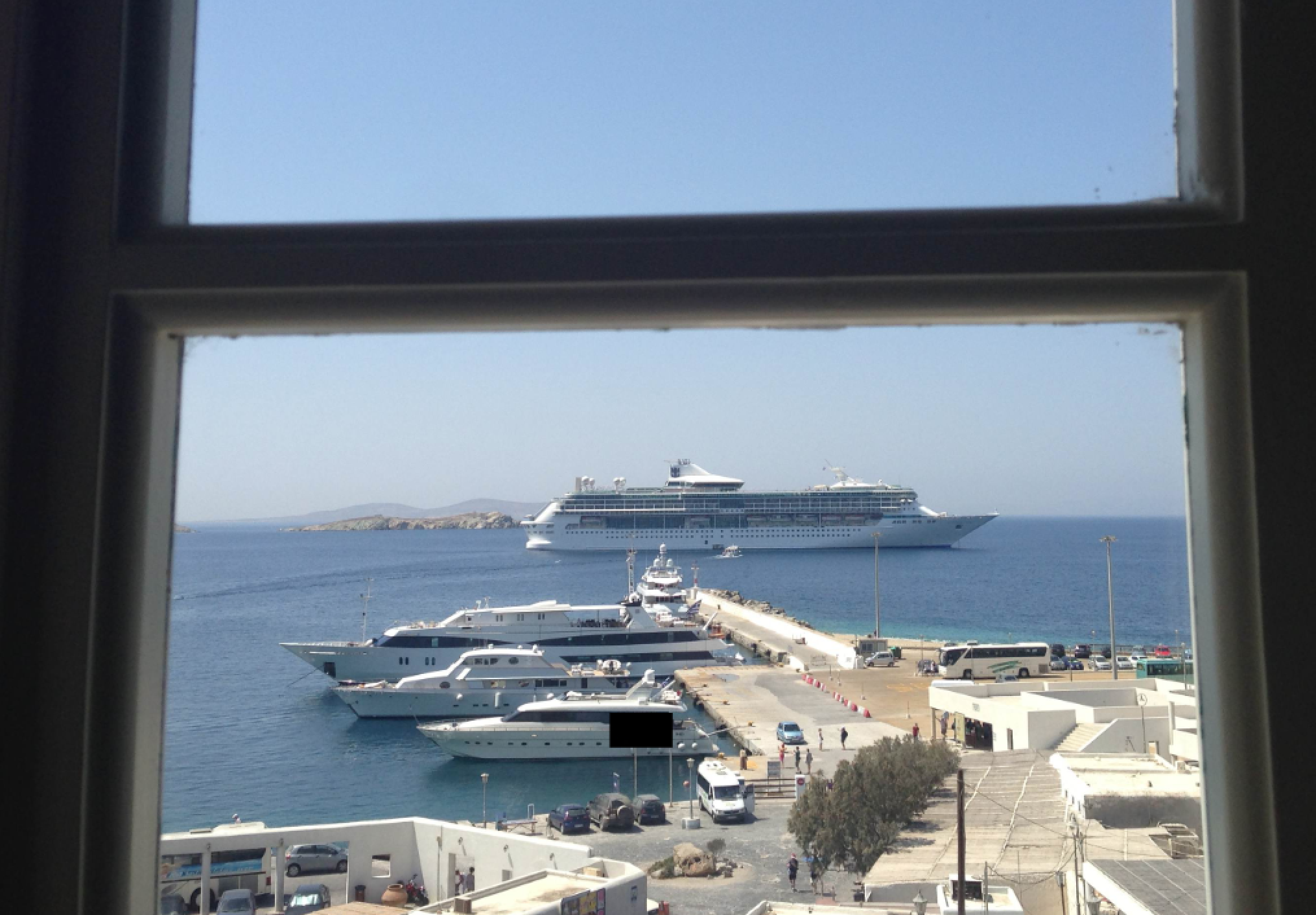
The View From Your Window Contest

Screen Shot 2013-08-31 at 11.27.12 AM

You have until noon on Tuesday to guess it. City and/or state first, then country. Please put the location in the subject heading, along with any description within the email. If no one guesses the exact location, proximity counts.  Be sure to email entries to contest@andrewsullivan.com. Winner gets a free The View From Your Window book or two free gift subscriptions to the Dish. Have at it.

The Brunch Not Eaten

by Tracy R. Walsh

Neal Pollack has united the greatest poets of the 19th and 20th centuries with the greatest crowdsourced-review site of the 21st:

https://twitter.com/nealpollack/status/371286632306987008

https://twitter.com/nealpollack/status/371300619929133056

Other writers are joining in:

(Hat tip: Chase Hoffberger)

A Poem For Saturday

by Alice Quinn

The supreme poet Seamus Heaney passed away yesterday in a Dublin Hospital at age 74.

No one alive wrote more eloquently about the art and the poets who meant the most to him: George Herbert’s “daylight sanity and vigor,” “the pure consequence of Elizabeth Bishop’s style,” “the bareface confrontation of Patrick Kavanagh’s,” “the crystalline inwardness of Emily Dickinson, ” “the visionary strangeness of Eliot,” Frost loved for “his farmer’s accuracy and his wily down-to-earthness,” Gerard Manley Hopkins “for the intensity of his exclamations, which were also equations for a rapture and an ache I didn’t fully know until I read him…”

Most of these quotations are drawn from his Nobel acceptance speech so characteristically titled “Crediting Poetry,” in which he wrote “I credit it because credit is due to it, in our time and in all time, for its truth to life…To begin with, I wanted that truth to life to possess a concrete reliability, and rejoiced most when the poem seemed most direct, an up-front representation of the world it stood in for  or stood up for or stood its ground against.”

“The redressing effect of poetry,” he wrote, “comes from its being a glimpsed alternative, a revelation of potential that is denied or constantly threatened by circumstances… Its projections and inventions should be a match for the complex reality which surrounds it and out of which it is generated.”

We’ll be posting poems by Seamus Heaney in tribute to him today and in the days ahead, beginning with the first poem, “Digging,” from his debut volume, Death of a Naturalist, published in 1966:

Between my finger and my thumb
The squat pen rests; snug as a gun.

Under my window, a clean rasping sound
When the spade sinks into gravelly ground:
My father, digging.  I look down

Till his straining rump among the flowerbeds
Bends low, comes up with twenty years away
Stooping in rhythm through potato drills
Where he was digging.

The coarse boot nestled on the lug, the shaft
Against the inside knee was levered firmly.
He rooted out tall tops, buried the bright edge deep
To scatter new potatoes that we picked
Loving their cool hardness in our hands.

By God, the old man could handle a spade.
Just like his old man.

My grandfather cut more turf in a day
Than any other man on Toner’s bog.
Once I carried him milk in a bottle
Corked sloppily with paper.  He straightened up
To drink it, then fell to right away
Nicking and slicing neatly, heaving sods
Over his shoulder, going down and down
For the good turf.  Digging.

The cold smell of potato mould, the squelch and slap
Of soggy peat, the curt cuts of an edge
Through living roots awaken in my head.
But I’ve no spade  to follow men like them.

Between my finger and my thumb
The squat pen rests.
I’ll dig with it.

(From Opened Ground: Selected Poems 1966-1996 © 1996 by Seamus Heaney. Used by kind permission of Farrar, Straus & Giroux)

Trend Lit In Higher Ed

by Jessie Roberts

dish_books

Ashley Thorne co-authored Beach Books: What Do Colleges and Universities Want Students to Read Outside Class? (pdf), an analysis of the summer reading 309 American colleges assigned their incoming first-year students during the 2012-2013 academic year. The major findings:

1. Ninety-seven percent of colleges and universities chose books published in 1990 or later.
2. The most popular book by far was The Immortal Life of Henrietta Lacks.
3. Politically-themed books abounded.
4. Very few of the colleges with common reading programs chose classics.

The top two subject categories were Science and Multiculturalism/Immigration/Racism, and the top genres were memoir and biography. Some book types were notably missing from common reading assignments. Classic texts and books published before 1990 were scarce, and fiction was far outpaced by nonfiction. There were no classics of history; no biographies of, nor autobiographies, speeches, or writings by, American political leaders; no works by ancient philosophers; no works of the Enlightenment; no classical works of Christian, Jewish, Muslim, Hindu, Buddhist, or Confucian thought; and no scientific classics.

Thorne elaborates on the study:

The faculty and administrators who devise these programs seem to think that unless the living author can stroll into the classroom and explain what she had for breakfast this morning, the students will be unable to “relate” to her written words. … Defenders of the choices say they want “accessibility” and “relevance”. Mark Twain, Charles Dickens, and even Zora Neale Hurston just don’t make the cut when it comes to relevant social issues. In response to critics, some of the colleges say that the books they pick are likely to be the “classics of the future”, but the turnover among the choices from year to year suggests either that we are due for an unprecedented avalanche of new classics or that most of these hunches are off the mark. …

The choice of a recent book that is often the only book students will have in common with one another points to the death of a shared literary culture. To the extent that colleges want to approach that culture, they display willful selfishness in confining their sights to the present. Contemporary books are worth reading, but their richness is many times increased by the knowledge of what came before. That knowledge is evanescent.

(Photo by Flickr user shutterhacks)

Reimagining The Tabloids

by Chris Bodenner

Allison Yarrow fills us in on a new form of Internet literature:

Thousands of young writers are playing god with the real lives of the famous and the notorious in an outgrowth of fan fiction called real person fiction (RPF). Most stories build complex plots 849954-256-k134741around actors or pop stars, including the members of One Direction, Chris Brown and Selena Gomez, and can attract tens of millions of readers to a new genre that melds fan fiction with tabloid news. And while fan-fiction writers rework hit novels — extending Harry Potter’s wizarding long after the books ended, or uprooting Alice from Wonderland and introducing her to Dorothy in Oz — RPF reinterprets the escapades of celebrities, culling inspiration and plotlines from Twitter, rumor and news. This fictional frontier is exploding online, boosted by the massive growth of user-friendly blogging platforms over the past three years.

In previous decades, sexual fantasies about leading men, like David Cassidy or Kirk Cameron, were relegated to private diaries, racy fan mail or intimate whispers among friends. Now, young women can live sex, dating and rejection scenarios out loud online, and draw instant comments. These authors cast themselves as Taylor Swift’s bestie or Justin Bieber’s girlfriend, reimagine the volatile Chris Brown as a gentle hero and transform the accused murderer Tsarnaev into a paramour.

(Image: The cover of Oh My Love (A Chris Brown Love Story), a RPF by 17-year-old Adriana Brooks, who “recasted Brown – who pled guilty in 2009 to a felony assault of his then girlfriend and fellow pop star, Rihanna – as a savior who rescues Audri (Brooks’ fictional stand-in) from her abusive boyfriend Kyle.”)

How Do We Define Love?

by Jessie Roberts

Maria Popova spotlights E.B. White’s thoughts on love and passion:

Even after one has experienced love, one finds difficulty defining it. Likewise, one may define it and then have all kinds of trouble experiencing it, because, once having defined it, one is in too pompous a frame of mind ever again to submit to its sweet illusion. By and large, love is easier to experience before it has been explained — easier and cleaner. The same holds true of passion. Understanding the principles of passion is like knowing how to drive a car; once mastered, all is smoothed out; no more does one experience the feeling of perilous adventure, the misgivings, the diverting little hesitancies, the wrong turns, the false starts, the glorious insecurity. All is smoothed out, and all, so to speak, is lost.

The Best Of The Dish Today

by Chris Bodenner

In Syrian coverage, we looked at the implications of the UK’s refusal to get involved, wondered where the anti-war protesters are, gawked at the Obama administration’s bumbling of the crisis, and underscored how decisively the American public wants the president to go to Congress. Brendan’s two cents on the looming war here.

Two other big stories we covered were the Treasury’s decision to treat all same-sex couples equally and the DOJ’s decision to stay out of the way of Washington and Colorado on cannabis. Readers chipped in more on childhood classics and Chinese tourists. And the many faces of an incoming baseball surged on Facebook.

Andrew will be back on the blog Tuesday. Have a great Labor Day weekend.