While Rouhani repeatedly claimed that he has unfettered authority to solve the diplomatic impasse with the U.S., attacks [against Rouhani by Iranian hardliners] on him upon his return home indicate that Khamenei wants to keep his options open. The outlines of a deal on the nuclear issue have more than once been floated by Iranian regime’s past or present officials: continue enrichment at three to five percent, stop enrichment at twenty percent, allow international control of Iran’s stockpile of twenty percent enriched uranium, and finally accommodate more intrusive inspections of all nuclear sites in return for lifting of sanctions. At the same time, for Khamenei, a sine qua non is his ability to sell the deal to the Iranians as a “victory.” The call was the first direct attempt by Rouhani to make the deal. It is as much folly not to celebrate it as something of a milestone, as it is premature to declare it a historic watershed. Only real, not imagined or promised, actions and changes determine watershed events.
Fallows describes what is happening on the Hill as “a ferocious struggle within one party, between its traditionalists and its radical factions, with results that unfortunately can harm all the rest of us — and, should there be a debt default, could harm the rest of the world too”:
As a matter of politics, this is different from anything we learned about in classrooms or expected until the past few years. We’re used to thinking that the most important disagreements are between the major parties, not within one party; and that disagreements over policies, goals, tactics can be addressed by negotiation or compromise.
This time, the fight that matters is within the Republican party, and that fight is over whether compromise itself is legitimate. Outsiders to this struggle — the president and his administration, Democratic legislators as a group, voters or “opinion leaders” outside the generally safe districts that elected the new House majority — have essentially no leverage over the outcome. I can’t recall any situation like this in my own experience, and the only even-approximate historic parallel (with obvious differences) is the inability of Northern/free-state opinion to affect the debate within the slave-state South from the 1840s onward. Nor is there a conceivable “compromise” the Democrats could offer that would placate the other side.
Josh Marshall’s related thoughts on the extremism of the GOP:
For all the ubiquity of political polarizing and heightened partisanship, no honest observer can deny that the rise of crisis governance and various forms of legislative hostage taking comes entirely from the GOP. I hesitate to state it so baldly because inevitably it cuts off the discussion with at least a sizable minority of the political nation. But there’s no way to grapple with the issue without being clear on this single underlying reality. …
Many people say that the danger is that the Democrats, reasonably enough, will adopt the same tactics once they are back in a comparable position. I worry about that too. But not that much. I think the reality is that they won’t because the sociology and mores of the parties are just different.
It has become so pervasive that I believe it’s lost on many of us just how far down the road of state breakdown and decay we’ve already gone. It is starting to seem normal what is not normal at all.
If Iran is willing to cut a deal that effectively provides a guarantee against a weaponization of its nuclear program, and that deal is acceptable to the president of the United States of America, why would Netanyahu not take yes for an answer?
The reason lies in Netanyahu’s broader view of Israel’s place in the region: The Israeli premier simply does not want an Islamic Republic of Iran that is a relatively independent and powerful actor. Israel has gotten used to a degree of regional hegemony and freedom of action — notably military action — that is almost unparalleled globally, especially for what is, after all, a rather small power. Israelis are understandably reluctant to give up any of that.
Israel’s leadership seeks to maintain the convenient reality of a neighboring region populated by only two types of regimes. The first type is regimes with a degree of dependence on the United States, which necessitates severe limitations on challenging Israel (including diplomatically). The second type is regimes that are considered beyond the pale by the United States and as many other global actors as possible, and therefore unable to do serious damage to Israeli interests.
Israel’s leadership would consider the emergence of a third type of regional actor — one that is not overly deferential to Washington but also is not boycotted, and that even boasts a degree of economic, political, and military weight — a deeply undesirable development.
Robert Costa and Jonathan Strong report on the debate within the GOP House:
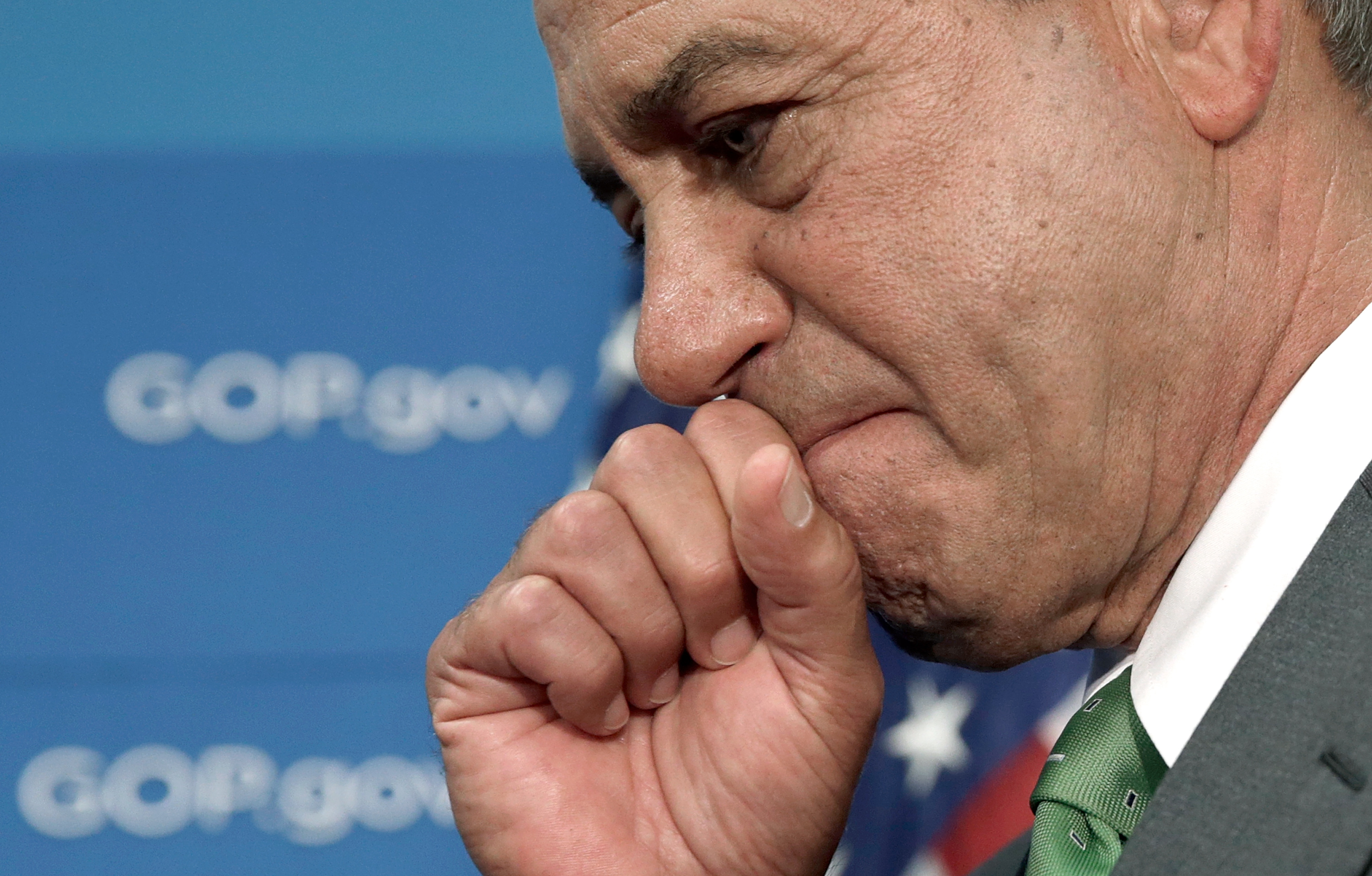
The leadership … is worried about the likely public takeaway from any shutdown: Leaders fear that national press would harp on Republicans’ supposed intransigence rather than the Senate’s responsibility. Boehner’s contingent seems almost resigned to the mutual suspicion between the leadership and a group of about 30 conservative members. Sources say distrust is as high as it’s been since Republicans won the House in 2010, and they predict that a sizable bloc would obstruct any watered-down plan.
That aura of Republican infighting will create an interesting dynamic if Tuesday morning comes without an accord. While Boehner and other leaders will be defending the GOP’s position in front of the cameras, there may be a subtle effort to use the episode — and what many expect to be its disastrous political results — as a means of discrediting the hardliners who give the speaker headaches. Conservatives, meanwhile, will try to show that the tactic is helping focus public attention on Obamacare.
Noam Scheiber expects the GOP to lose the shutdown because “unrelenting criticism from fellow Republicans and conservatives is inevitable in these episodes, and it is completely crippling”:
Some commentators have pointed to the fact that, in the weeks leading up to the likely shutdown, Republicans senators and pundits have already been scathing in their opposition to the Tea Partier strategy—Senate conservatives like Tom Coburn and Richard Burr, among others, have been deriding it as idiotic. If this didn’t dissuade the House Republicans, these commentators argue, it’s hard to imagine them being dissuaded post-shutdown.
To which the proper response is: Are you kidding? As 2011 showed, the pre-showdown and post-showdown worlds bear almost no resemblance to one another. Before the two parties plunge into an all-out confrontation, the story mostly resides inside-the-Beltway, followed primarily by well-informed, politically engaged voters. These are the people who would know that Republican Senators like Coburn and Burr (and their reliably anti-Tea Party colleagues, like John McCain and Bob Corker) have been critical of House conservatives. But once the battle is joined—once we’re officially into the payroll tax standoff or the shutdown—the media covers it breathlessly, and like a national story, not a political one. It leads the evening news (both national and local); it seizes newspaper headlines across the country; it works its way into late night talk-show routines. The amount of damage you sustain when members of your own party are sniping at you amid this sort of media glare is simply impossible to imagine beforehand.
Josh Green is rooting for a shutdown. One of his reasons why:
One powerful driver of Washington dysfunction is the certainty among partisans of both camps that Americans secretly agree with them and would rally to their side during a shutdown. In April 2011, when Republicans first demanded concessions to pass a continuing resolution, many hoped for a shutdown because they thought the Tea Party movement that had rebuked Democrats in the midterm elections would rise up once again. Today, many Democrats want a shutdown because polls show Republicans would be blamed. Some Republicans disagree. “I think Americans would side with the people who are fighting against a law they know is unfair,” says Heritage Foundation President Jim DeMint, the godfather of the “defund Obamacare” movement … A shutdown would make clear who is right and who is wrong, removing the temptation for another showdown.
CNN’s latest polling finds that, should a shutdown occur, Americans are more likely to blame House Republicans:
According to the poll, which was conducted Friday through Sunday, 46% say they would blame congressional Republicans for a government shutdown, with 36% saying the president would be more responsible and 13% pointing fingers at both the GOP in Congress and Obama.
Frum feels that the GOP has suffered a “breakdown in the party’s ability to govern itself”:
Even when pressed to do something overwhelmingly likely to end in disaster, as this shutdown looks likely to do for Republicans, the party has no way to stop itself. It stumbles into fights it cannot win, gets mad, and then in its anger lurches into yet another fight that ends in yet another loss.
Republicans who want to fight smarter are called squishes; Republicans who wish to fight less are called RINOs—and both have been hunted pretty near to extinction. Instead of effective opposition, we see those doomed spasms. And out of these spasms, Obamacare looks sturdier than ever—and any hope of negotiating to fix its worst elements seemingly further out of reach than ever.
Suderman also expects a shutdown to do serious damage to the GOP:
Republicans have said over and over that they are determined to fight Obamacare, and reduce the debt, and hold down government spending. But by opting for meaningless talk and poorly chosen, poorly planned showdowns, they have actually committed themselves to losing.
I suspect the worst backlash won’t actually come from uninsured or under-insured people who actually buy coverage on the new exchanges. Backlash will come from people with pretty crummy jobs who hear that their hours are cut back. Backlash will come from people with limited employer-based coverage who face higher premiums or encounter other changes such as disliked wellness provisions. Some will look across the fence at decent plans on the new exchanges, only to discover that they can’t receive subsidies if they spurn their employer’s coverage.
Thousands of employers will blame “ObamaCare” for whatever unpopular moves they impose their workers. It’s the obvious play. In many cases, this blame will be mostly or entirely misplaced. Other times, the blame will be justified, reflecting glitches or unintended consequences of the new law. Either way, many workers will believe what their employers tell them. Millions of workers with relatively modest incomes will see their lives getting a little worse when they were hoping that health reform would make their lives a little better. Other people—I suspect many more—will see their lives getting a little or a lot better. Some of the most deserving people will seek benefits and medical care–only to discover that no help is forthcoming because their states rejected Medicaid expansion. Republicans had better hope that this is a disorganized and politically marginal group.
America’s most cherished programs evolved over time: Social Security famously left out agricultural and domestic workers, and didn’t provide the support it does today. Obamacare, as enacted, has similar deficiencies. The minimum coverage that the law guarantees everybody is not that generous, which means even some people with insurance will face high out-of-pocket expenses.
But the relevant comparison is to what those people have now—frequently even less protection, or no protection at all. And that’s the standard by which to assess all of the law’s side-effects. Are employers squeezing retirement health benefits? Yes—but they’ve been doing that for years, long before Obamacare came along. Are some part-time workers losing hours? Yes—but part-time work was rarely stable and at least now all part-timers can get health insurance. Will people trying to buy insurance on the new online marketplaces sometimes find the process difficult and frustrating? Yes—but buying individual coverage is even more complicated and nightmarish now. As a recent Kaiser Foundation briefing notes, the standard applications for insurance in Wisconsin and Illinois include five pages of questions on medical history alone. Under Obamacare, insurers won’t be asking those questions at all.
A charming and concise illustration of Hawking’s theories on black holes:
Popova praises the video but worries that “the visual equivalent of the art of the soundbite” may diminish deeper learning:
Though undeniably delightful, I can’t help but wonder whether such quick visual syntheses of the life’s work of boundless genius might be our era’s version of the aphorisms that Susan Sontag worried commodify wisdom. But let’s go with optimism and hope that, rather than exercises in reductionism, formats like this are, as Neil deGrasse Tyson said of the soundbite, triggers for interest which “set a learning path into motion that becomes self-driven.” In other words, let’s hope this gets more people to read A Brief History of Time…
Collender wonders whether “a government shutdown could be the point that historians one day point to as the beginning of the end for the tea partiers in Congress”:
[G]iven that Gingrich and congressional Republicans were far more popular in the mid-1990s than the tea party is today, and in light of the fact that the tea party and not House Speaker John Boehner (R-OH) or Senate Minority Leader Mitch McConnell (R-KY) is most likely to bear the blame if a shutdown occurs, there’s a good reason to think that at least some of the [Tea Party’s] supporters will find themselves cursing the tea party’s name very soon, especially when the shutdown begins to affect them negatively.
This group will still agree with the tea party’s goals, just not with its tactics. But the tea party will alienate its more intense supporters if it moderates those tactics. Either way, at least some of its base will be lost.
John Bellinger wants the Tea Party to “remember that the United States remains a country at war, not only in Afghanistan, but with al-Qaida and its affiliates around the world”:
Republicans should take no solace in the likelihood that much of DHS, DoD, the FBI, and the intelligence community will remain in place as “essential personnel” during a shutdown. The rank-and-file who work long and stressful hours protecting the country may technically remain on the job, but they and their leaders (including agency heads) already are having to spend much of their time dealing with the distractions of the coming shutdown. Do Tea Party Republicans want the leaders of our intelligence and security agencies focused on protecting the nation, or managing the shutdown of their agencies?
In short, if there were another attack against the United States or its facilities around the world (such as an Embassy), Tea Party Republicans and the American people would not be able to blame the Executive branch — and call for Benghazi-like investigations — for failing to keep the country safe. Members of Congress who had forced a government shutdown would themselves be blamed.
The veil has been rightly described as ‘ghetto walls that a person wears’. It often inhibits normal social interaction – that, after all, is its very purpose – and may preclude those who wear it from integrating into society. But the numbers wearing the burqa are tiny. The French government estimates that fewer than 2000 women wear a niqab or burqa. In Holland some 500 women in a Muslim population of one million do so, in Denmark the estimate is fewer than 200 out of 170,000 Muslims. There has not been, as far as I am aware, a comparable survey in Britain, but there is no reason to imagine that the figures are much different. Given these numbers, the burqa or niqab can hardly be held responsible for creating a sense of social separation.
There is, in other words, no argument for a blanket state-enforced ban on wearing the burqa or niqab in public, such as that imposed in France. The state should no more determine that a woman cannot wear the burqa than it should insist that she must. The fact that a blanket state ban is wrong does not mean, however, that bans are wrong in all circumstances. Issues of security in banks or airports, or of practicality in hospitals, schools or shops may all, as I have already suggested, require specific regulations about facial coverings. So does the issue of justice in a courtroom.
Viceinterviews a few British Muslim women on what it’s like to wear the veil in the UK:
So people not being able to see your face hasn’t changed anything?
It changes the way some people respond to me, as they’re initially disconcerted by my face covering. But I just work extra hard on those ones and grin like mad so that they can see my eyes smiling. But it’s more one’s demeanour that puts people at ease, isn’t it? After all, there are people who are “normally” dressed whose body language or attitudes are intimidating. A person wearing a niqab doesn’t have the same advantage as someone whose face is visible, I admit that, but you could say that someone with tattoos or piercings or an unconventional haircut is similarly disadvantaged, couldn’t you?
I guess so. What do you think of the idea that it’s inappropriate to wear the niqab in some situations, like in court or if you’re teaching children?
As a teacher and as a Muslim, I would like to know that I am not disadvantaging my students in any way. If my covering my face is clearly doing that, I will do one of two things: reconsider my decision to cover, or reconsider my position. That being said, I have conducted workshops in schools with my face covered, but I made sure to let my personality shine through so that I could engage the kids. And I would find a way to “flash” the girls, if possible. But seriously, the question is this: who gets to decide when wearing the niqab is appropriate or not?

 The Dish