How Not To Friend And Influence People

Ann Friedman casts a critical eye on LinkedIn:

[I]t’s always been a little tough to figure out what LinkedIn is for. The site’s initial appeal was as a sort of self-updating Rolodex—a way to keep track of ex-coworkers and friends-of-friends you met at networking happy hours. There’s the appearance of openness—you can “connect” with anyone!—but when users try to add a professional contact from whom they’re more than one degree removed, a warning pops up. “Connecting to someone on LinkedIn implies that you know them well,” the site chides, as though you’re a stalker in the making. …

You can try to lie your way through this firewall by indicating you’ve worked with someone when you haven’t—the equivalent of name-dropping someone you’ve only read about in management magazines. But odds are, you’ll be found out.

I’d been confused, for instance, about numerous LinkedIn requests from publicists saying we’d “worked together” at a particular magazine. But when I clicked through to their profiles, I realized why they’d confidently asserted this professional alliance into being: the way to get to the next rung is to pretend you’re already there. If you don’t already know the person you’re trying to meet, you’re pretty much out of luck.

This frenetic networking-by-vague-association has bred a mordant skepticism among some users of the site. Scott Monty, head of social media for the Ford Motor Company, includes a disclaimer in the first line of his LinkedIn bio that, in any other context, would be a hilarious redundancy: “Note: I make connections only with people whom I have met.” It’s an Escher staircase masquerading as a career ladder.

Meanwhile, a Dish reader flags a new development from the networking site:

I’ve really enjoyed your ongoing coverage of the spread of sponsored content throughout online media. Well here’s a screen shot from new updates to the LinkedIn Privacy Policy / User Agreement:

1C038680

The third bullet point reads:

We’re introducing sponsored content in the LinkedIn feed. This new feature gives LinkedIn’s advertising partners the opportunity to serve designated content that our members can like, comment, and share.

And just when I thought the LinkedIn feed articles couldn’t get any worse …

Cool Ad Watch

Copyranter considers it “the only 9/11 ad to ever get it right”:

It’s not an ad in the traditional sense, but it is an ad, make no mistake— but you can call it “branded content,” if it makes you feel better. And granted, it’s a lot easier to be classier with a ballet 9/11 ad than say, a 9/11 ad for smartphones.

But, as a New Yorker, this video hit me hard. It is beautiful. It is moving. It is New York. “New Beginnings” features NYCB principal dancers Maria Kowroski and Ask la Cour performing on the 57th-floor terrace of Four World Trade Center in lower Manhattan, according to Adweek. The music is part of Christopher Wheeldon’s “After the Rain” pas de deux — signifying new beginnings in New York City. The video was posted at sunrise on 9/12/13.

When Your Pen Pal Is A Terrorist

Terrorism expert J.M. Berger reflects on the death of 28-year-old American jihadist Omar Hammami, who once live-tweeted an attempt on his life. Berger forged a mutual respect with Hammami, who was based in Somalia and eventually murdered by al-Shabab as a heretical foreign fighter:

I wanted to know more about why al-Shabab was trying to kill him, but I didn’t want to promote his clearly pro-al Qaeda Twitter account by engaging with him in front of the world. So I sent him a direct message (DM) using Twitter’s system for private communication and asked him to email me. His reply was the start of something — exactly what wasn’t clear at the time, and to some extent, still isn’t. Omar – and it was Omar, although he would not admit it for endless months – was suspicious at first. “You are too far on the dark side, buddy” was the subject line of his first email. …

Our conversations turned more ideological, pushing and pulling over terrorism and the intentional targeting of civilians, the significance of the Arab Spring, and Omar’s belief that the United States was oppressing Muslims around the world. We sparred over whether America had a national security interest in the establishment of an Islamic caliphate, one of his pet obsessions. He argued that the United States feared the caliphate; I argued that we wouldn’t much care as long as terrorism wasn’t the method for its establishment. Just when the conversation would start to get interesting, he would pull back. …

My complicated feelings about our relationship had been on a slow boil for some time. I continued to try to convince him to give himself up to U.S. authorities. He didn’t want to spend life in prison, he said. I told him he might be able to get a better deal than that, but he wasn’t interested. At one point, he said the only way he would come back to the United States was “in a body bag.”

The Best Of The Dish Today

This was a day the new Pope proved how remarkable he is – simply for speaking the way Jesus spoke. No ideologies, no rigid certainties, committed to community, engaged with the margins, speaking of mercy, mercy, mercy. Readers will, I hope, forgive me for some of the gushing. But those 12,000 words – after such a long, dark period of rigid enforcement of orthodoxy, after the hideous conflation of the great truths of the Church with the political agendas of the far right, after an American hierarchy obviously more interested in control than in love – came like a shower in the desert. All the intimations we had seen since his papacy began, the hints and guesses, emerged in language as powerful as it was accessible.

My immediate reflections are here; my parsing of the text is here. Responses from others can be found here. A Mozart piece by the Pope’s favorite pianist, Clara Haskill, is above.

Some tempers flared over the terrible tragedy of Matthew Shepard; and a new front opened quite clearly in Syria – now a war between Assad, the Free Syrian Army and the most brutal of Sunni Jihadists. John McCain’s stunt in the Russian online media was as buffoonish as it was deeply unhelpful to resolving the question of Syria’s chemical stockpiles. And Stephen Colbert had the last laugh on me in the editing room.

The most popular post of the day was “The Rebirth of Catholicism.” The second most popular was “This Extraordinary Pope.”

See you later tonight at 10 pm on AC360 Later and in the morning.

A Pope For The Millennial Generation

Michael O’Loughlin, a young gay Catholic, feels the impact Francis is already having on his peers:

At first, I found it odd, though admittedly pleasing, how the secular media covered Pope Francis with such obvious admiration. Reddit and BuzzFeed both featured the pope, often in a positive light, unusual for sites geared toward younger, agnostic-ish crowds. NPR and the New York Times were reporting on what the bishop of Rome had to say the economy, peace, and other issues of importance on a regular basis. MSNBC suggested he was the best pope ever. Even John Stewart couldn’t help but be moved.

But at second glance, it’s all so obvious. Pope Francis is so revolutionary, so engrossing, because he is living out Gospel values of love, mercy, and compassion. These values are often antithetical to those of the world, so it moves us when people in power embody them.

People sometimes ask how I can remain in the church when it’s so hostile to gay people. I explain that the church is simply an instrument I use to understand and attempt to live out the Gospel. Pope Francis recognizes this.

My initial thoughts on the Pope’s remarkable interview here; my longer take here. A roundup of reaction around the web here. An elegant response from a reader here.

The Danger Of Drone Assassins

Angela Merkel’s recent encounter with an UAV (seen above) was a bit of harmless political theater from Germany’s Pirate Party, but Sean Gallagher is worried:

While Merkel smirked off the drone in Dresden, even a small explosive charge or grenade aboard a similar drone would have been catastrophic—and defending against such attacks is difficult at best.

Unmanned Aerial Vehicle (UAV) researchers from TNO Defense Research, an organization in The Netherlands, recently showed the real risk of that sort of attack, demonstrating that terrorists and insurgents could effectively use current commercial and do-it-yourself drones as weapons in a number of scenarios, including one much like the Dresden event. … Because of their size, their low flying altitude, and their relatively low speed, mini-UAVs are particularly hard to detect—especially in an urban environment, the researchers found. Even if they are detected, identifying whether they’re a threat or not is still an issue, because it’s difficult to determine whether they’re armed or just carrying a camera.

And Gallagher notes that “just shooting down drones in a crowded urban environment could cause more damage than the drones themselves.”

Related To The Original

In an interview, the Hungarian writer László Krasznahorkai, whose novel Seiobo There Below is about to be released in English, describes how he views translation:

The translated work, in my opinion, is in no way to be identified with the original in a different language. That is an absurdity. The translated work is the work of the translator, not the author. The author’s work is that which comprises the story as written in the original language. The translated work is a new work in the language deployed by the translator, a work of which the translator is the composer, and resembles – more or less, as members of a family resemble each other – the original work. The author simply looks on and reads: the text is familiar, occasionally very familiar, to him and he is delighted when it looks good, and rages when it looks bad.

Mission Accomplie?

MALI-FRANCE-POLITICS-DIPLOMACY

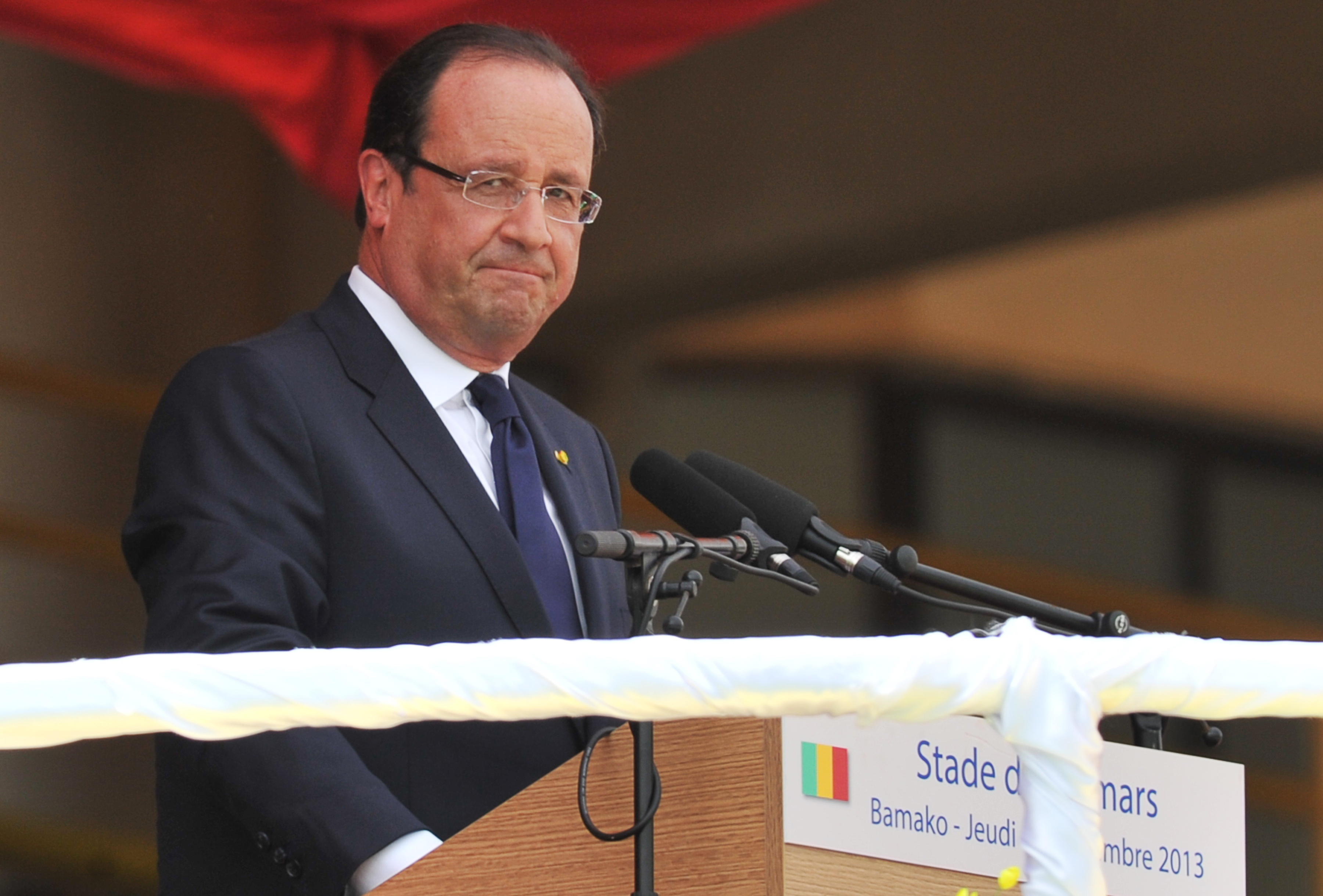
Hopefully Hollande didn’t just pull a Dubya, proclaiming, “We have won this war; we have chased out the terrorists” in Mali:

France has begun withdrawing some of the 4,000 troops it deployed to Mali last winter, and plans to pull more out as a U.N. peacekeeping force increases its presence in the country. Hollande is certainly winding down his war. But is it won, as he claimed today?

The jihadi rebels in Mali seem to have disappeared as much they were defeated. Some fled into the Central African Republic, where they’re accused of committing massacres. Others have fled to Niger, Algeria, and Libya, leaving behind weapons caches buried in the Sahara. “They absolutely refuse to fight us,” a French soldier told the Wall Street Journal. Now those combat-veteran jihadists are waiting in the wings, still staging occasional attacks — like the one that occurred right after FP’s Yochi Dreazen left Mali, when a roadside bomb killed two Malian soldiers in Gao — and waiting for their moment to stage a comeback.

(Photo: President Francois Hollande of France delivers a speech during the inauguration of Mali’s new president, on September 19, 2013, at the March 26 stadium in Bamako. Leaders from across Africa and France watched the inauguration of Mali President Ibrahim Boubacar Keita in front of thousands of his supporters today as the nation entered a new era of democracy after months of political chaos. By Issouf Sanogo/AFP/Getty Images)

Washington In Reruns

Waldman vents:

What … can I add about the latest twist in the pending government shutdown? How many different ways are there to say that the Tea Party Republicans are both crazy and stupid? How often can you point out that John Boehner is pathetically weak, quite possibly the most ineffectual Speaker in the history of the House of Representatives? How many times can you remind people of all the awful things that would happen if the government shuts down and/or we don’t raise the debt ceiling? How many times can you scream at Republicans that they are never, ever, ever going to repeal the Affordable Care Act so they should just give it the hell up already? How many times can you cry that this would be an insane way to run a junior-high student council, much less the government of the mightiest nation on earth?

The Rebirth Of Catholicism, Ctd

VATICAN-POPE-AUDIENCE

A reader responds to the incredible interview with Pope Francis released today:

After reading the Pope’s remarkable interview, I noticed that James Martin, an editor at America and himself a Jesuit priest, had a short companion piece about preparing the interview for publication. This comment jumped out at me:

Our review process was somewhere between editing and spiritual reading.  One editor said that it was the first time she ever found herself in tears over a galley.

What a testament to the power of the Pope’s words – “in tears over a galley.” I felt much the same way reading it, disarmed from the very start by the sincerity of his own declaration of sinfulness, and moved by how clearly he feels the mercy of Jesus in his own life. You can tell this was not a perfunctory concession, like saying, well, nobody is perfect. His humility, his hesitation to judge, his approach to the life of the Church – all stem from the posture established in the first question: “Who is Jorge Mario Bergoglio?” His reply? “I am a sinner whom the Lord has looked upon.”

There is so much to say about this interview – who knew he loves Dostoevsky and Hopkins? – but this passage in particular struck me as worth noting:

“I see clearly … that the thing the church needs most today is the ability to heal wounds and to warm the hearts of the faithful; it needs nearness, proximity. I see the church as a field hospital after battle. It is useless to ask a seriously injured person if he has high cholesterol and about the level of his blood sugars! You have to heal his wounds. Then we can talk about everything else. Heal the wounds, heal the wounds…. And you have to start from the ground up.

“The church sometimes has locked itself up in small things, in small-minded rules. The most important thing is the first proclamation: Jesus Christ has saved you. And the ministers of the church must be ministers of mercy above all.

There is so much suffering in the world, so much pain – not just because of war and poverty, but through depression and loneliness, broken homes and strained families. The message of forgiveness and mercy brought by Jesus, the simple words, “God is Love,” seem more needed, more fresh and powerful, than ever. The pain I feel at seeing the Church, and Christianity more broadly, turned into an adjacency of the culture wars and mainly understood as the purveyor of backwards, spite-filled moralizing, is because, as Francis argues, the Church should be “a field hospital after battle.” The Church should be a refuge, a place for the walking wounded to stumble into and receive love and mercy and care, without preconditions or expectations. As he puts it, you heal wounds, then you can talk about everything else. You lead with love, not legalism. I imagine Francis, smiling as he does, holding his arms open and saying, “Jesus has saved you, you are loved, come join us!” People need to know that when they walk through church doors, they are loved unconditionally. That it is a safe place, a place where there only is grace, where they are met exactly where they are, joined not by their moral superiors, but by fellow sufferers and sinners – people as much the casualty of the battled called life as they are.

The world needs Christianity, the message of Jesus, more than ever. You can see and feel it everywhere – people, young people especially, are hungry for meaning, are desperate for kindness in a world of strife. I’m amazed at how Pope Francis has met this moment, has felt and responded to this need. I don’t know when, or if, the Church will shift its position on, say, homosexuality. I think the Church will change, and I think Francis knows you can’t change your rhetoric about the issue this drastically without eventually changing substance, too — the cognitive dissonance is just too great. But that, really, is a secondary issue. “We can talk about everything else.” Or, as Francis said, “You have to start from the ground up.” What is that ground? Jesus himself, Love incarnate, friend to the sinner and outcast. That is the real story of Francis – his recognition that first things must be put first, that if the Church becomes a hospital for the wounded, a place of love and healing, then everything else will come in time. How Francis beautifully puts it:

I dream of a church that is a mother and shepherdess. The church’s ministers must be merciful, take responsibility for the people and accompany them like the good Samaritan, who washes, cleans and raises up his neighbor. This is pure Gospel. God is greater than sin. The structural and organizational reforms are secondary—that is, they come afterward. The first reform must be the attitude. The ministers of the Gospel must be people who can warm the hearts of the people, who walk through the dark night with them, who know how to dialogue and to descend themselves into their people’s night, into the darkness, but without getting lost.

This is a man with his priorities straight – and the powerful response to that so far shows us, I think, just how much the message of Jesus, the “pure Gospel,” continues to fascinate and resonate, meeting human beings at the places of their deepest longings, needs, and hopes.

(Photo: Pope Francis smiles after his weekly general audience in St Peter’s square at the Vatican on June 12, 2013. By Alberto Pizzoli/AFP/Getty Images)