See how much early ’90s TV you can take:
Month: September 2013
Pulling Out All The Stops
Ann Friedman surveys women who are using the pullout method as their primary birth control:
These women describe a deliberate transition from the pill to the pullout. They buy organic kale and all-natural cleaning products, and so can’t quite get down with taking synthetic hormones every day. They are more driven by sexual pleasure — they see orgasms as a right, not a privilege — and hate the feel of condoms. They wouldn’t call themselves porn aficionados or anything, but they don’t think it’s demeaning to have a man come on them. They’re sick of supposedly egalitarian relationships in which they bear the sole responsibility for staying baby-free. They’re scared to stick an IUD up there, no matter how many rave reviews the devices get. And despite the fact that non-hormonal contraceptive options remain frustratingly limited, there are new tools at their disposal: With period-tracker apps, charting your menstrual cycle is no longer the domain of hippies and IVF patients. They know when to make him put on a condom. Plus, they can keep a packet of Plan B on hand at all times, ready and waiting should anything go awry.
Marcotte points to another reason for coitus interruptus:
Not everyone is decisive when it comes to knowing when to start having kids—or, if you want more than one kid, when the time is right to try for another. For some, it becomes easier to just be inconsistent with contraception or switch to less effective methods and let fate make the decisions for you. We all know a lot of people who say they’re not trying to have a baby exactly, but they’re not not-trying either—basically carving out emotional space to consider starting a family without having your mom start emailing you the names of fertility doctors if it doesn’t happen right away. Switching to the pullout method in particular allows men and women to choose, in the heat of the moment, to throw caution to the wind and maybe just get pregnant.
Of Poetry And Porn
CockyBoys CEO Jake Jaxson, whom Justin Abraham Linds dubs “the Walt Whitman of gay porn,” directs films that he terms “erotic documentary”:
Jaxson initially wanted to include Whitman’s poetry in “[A Thing of] Beauty” because of what the poet meant to him as a young boy growing up in New Orleans, looking for any mention of “gay” in the library. “I remember reading ‘We Two Boys’ over and over and over trying to squeeze the sexuality out of it.” Jaxson is not clear about whether his films are intentionally taking up Whitman’s call to exalt human sexuality or the soul as lover, but intentional or not, Jaxson does at times speak like a Whitmanite; for instance, “When I am engaged sexually, I try and connect those same moments to real things in my life.”
Now, it might just be because my introduction to Michael Warner’s “The Portable Walt Whitman” is underlined and starred and full of exclamation marks, but when Jaxson says things like that, I can’t not hear Warner’s assertion that Whitman treats sex as an instinct that “restores a primordial, undifferentiated self, fully embodied and in contact with the world.” What’s more, when Jaxson explains that he is “really trying to create a guilt-free porn experience,” it resounds as a modern demonstration of Warner’s claim that, “Whitman sees it as his task to invert hierarchies of judgment, giving full recognition to those stigmatized by official morality.”
The Color Of Lust
Adam Alter describes the effect of red on our sexual impulses:
Yes, red seems to derive much of its power from its association with blood. When we’re attracted to someone, our blood vessels dilate and our skin blushes red—but red clothing, lipstick, rouge,
and other forms of reddening make-up also subtly convey the message that we’re romantically interested. Lower order animals show the same effect—the dominant members of many bird and ape species have particularly red faces or especially striking red feathers or facial features. …
[T]here’s plenty of evidence that men and women find potential mates more attractive when those people are wearing red—or even when they appear in a photograph with a red border. Men indicate that they’ll be more willing to spend more on a date when the women in the picture is wearing red than when she’s wearing a shirt of another color. In one experiment, female hitchhikers were more likely to be picked up by male drivers, but not female ones, when they were wearing red t-shirts rather than shirts of one of several other colors.

(Photo of Amsterdam’s Red Light District by Trey Ratcliff)
Drinking And Drafting, Ctd
Andrew O’Hagan considers the connection:
George Best once said that the greatest disaster of his life was that everybody he met wanted to buy him a drink. You might say, in defence of a well-meaning public, that the disaster was compounded by Best’s inability to refuse. But drinking is in many ways a selfish art, and I say that as someone who likes drinking and who used to love it. There’s a world of difference between the drinker who always wants a companion and the drinker who yearns to drink alone. I’ve always been in the first category and that to me felt like an achievement: my family was riddled with people who died of drink or whose lives were totally unmanageable because of their addiction. They used to say it was an Irish thing or a Glasgow thing, but in fact it was a sad life thing, as if being numb was simply the best option.
Things that rely on disinhibition (dancing, charades, karaoke and fucking) can be improved with drink. But anything that relies on precision (fighting, writing) must be done cold, as Hemingway put it. There are writers who feel quite strongly that disinhibition is the essence of writing, that writing is a form of running naked through the streets. (Put it away, Allen Ginsberg.) My view would be that writing fiction is a form of inhibition made dense and technical. Other people might be freed by it, for a while, but the author is unlikely to be, and God help him if he isn’t sober for the time it takes to get the thing down.
Mental Health Break
Dizzee Rascal blends 21st century GIFs with 18th century aristocracy:
Flying At Forty
Natasha Vargas-Cooper revisits Erica Jong’s Fear of Flying four decades after its publication:
[The] myopia of privilege and puerile rebellion afflicts the character of Isadora and her epic quest for the “zipless fuck,” the now duly canonized term for no-strings-attached sex—a notion that also belongs to another era, when sexual liberation had not yet uncoupled itself from aesthetics. “The zipless fuck is absolutely pure. It is free of ulterior motive. There is no power game. The man is not ‘taking’ and the woman is not ‘giving.’ No one is attempting to cuckold a husband or humiliate a wife. No one is trying to prove anything or get anything out of anyone.” But after this idealized litany of its effortless virtues, Isadora concedes that a zipless fuck “is rarer than a unicorn.”
No shit. That’s mainly because the idea that nobody has anything to prove in a zipless fuck simply isn’t true.
Indeed, the female partner is trying to prove a very specific point: that she can fuck just like a man, without the specters of rape, murder, pregnancy, or abortion lurking somewhere in her brain. The quite ideological point of the encounter is, in other words, to unburden herself from all the hang-ups that are so specific to the female experience in the sexual arena.
Meanwhile (and far more predictably), the male partner is trying to showcase his own sexual prowess; otherwise, why bother? Sex with strangers, sex without intimacy, once the first rush of new smells and hands wears off, is not an uplifting experience. It usually leaves a residue of shame and horror—that’s partly what makes it so thrilling at the time.
So for today’s readers of Jong’s novel, Isadora’s “problem” might well be restated as something like this: Why should a woman go through such emotional acrobatics to prove such a minimal and depressing point? That she can fuck like a man? That her orgasm, if she has one, is free from emotional attachment? Great! Now, darling, tell us how your orgasm will close the wage gap between men and women. The orgasmic economy of the ’70s is null in 2013. Jong recognizes that there’s a war between men and women, but she chooses the wrong weapon in the struggle.
The View From Your Window
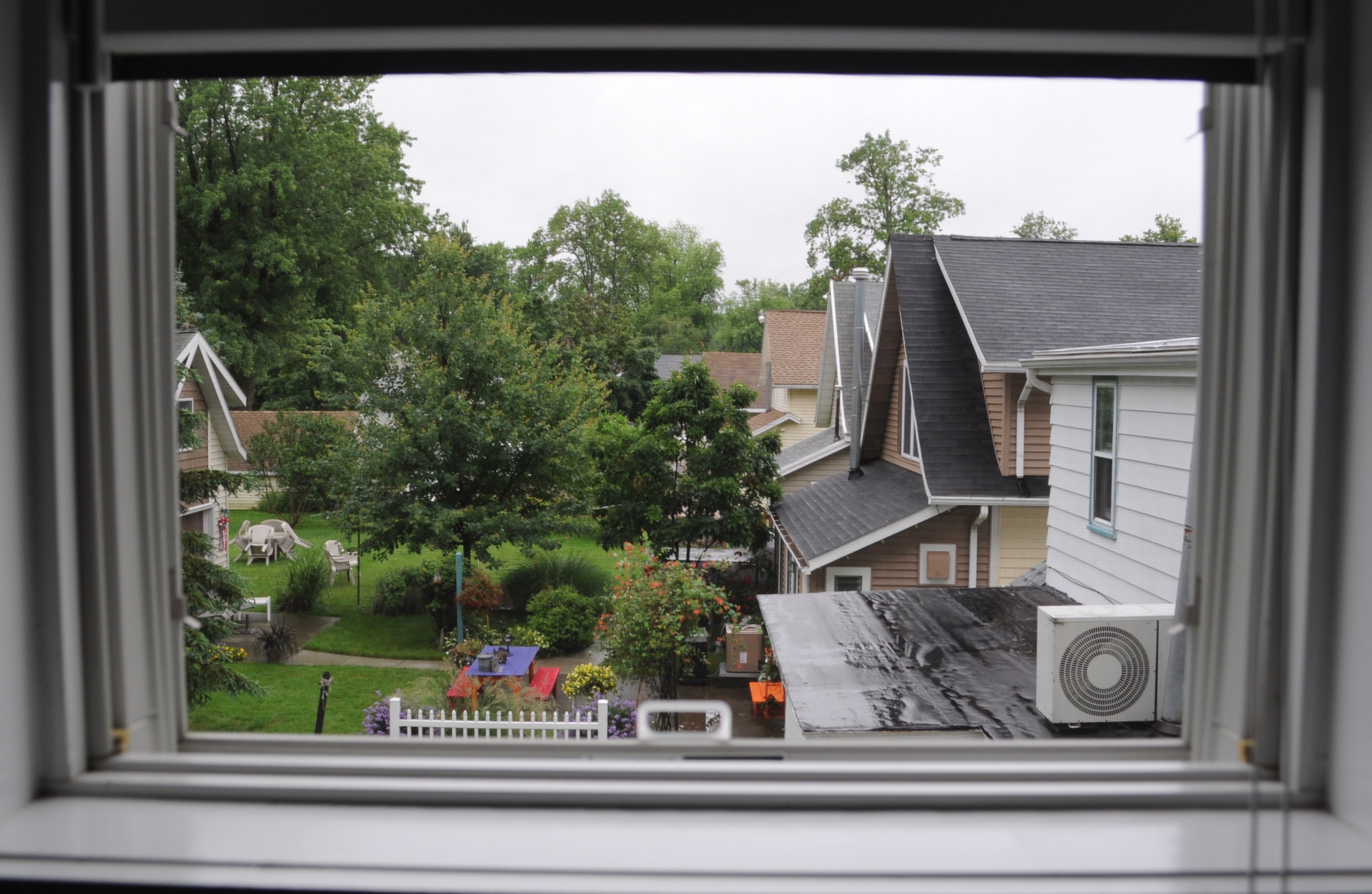
Silver Creek, New York, 9.08 am
Not Supporting “Support Our Troops” Ctd
Readers bolster a recent thread:
Please don’t perpetuate the myth that Americans who opposed the Vietnam War treated servicemembers with disrespect, unable to tell the difference between supporting the war and supporting the troops. I’m a former Air Force officer, and this popular rewrite of history is bad for the military and bad for America. The myth is so convenient and seductive. It fosters military resentment against civilian society. It can be brought out at any time to curb dissent, because no one wants to be lumped in with the mythical protester who spits on troops.
The opposite of this myth is much closer to the truth: the people who turned their backs on Vietnam veterans were those who supported the war but not the troops. Vietnam veterans were shunned by older veterans, men who had served in WWII and the Korean War who made up the core of veterans organizations like the VFW and the American Legion. They strongly supported the Vietnam War, but they treated the new generation of service members as unworthy of the brotherhood. To the older guys, they were losers and long-hairs.
Consider the founding motto of the Vietnam Veterans of America: “Never again will one generation of veterans abandon another.” This would be a very odd founding motto if the real problem was disrespect from anti-war protesters or Americans in general. Jerry Lembcke’s 1998 book The Spitting Image debunks the whole myth about how Americans treated returning Vietnam vets. Another good book on this popular misunderstanding is A More Perfect Military: How the Constitution Can Make Our Military Stronger.
Update from a reader:
You do know that Jack Shafer [here, here and here], Jim Lindgren, and others have demolished Lembcke’s work, right? In fact, Lembcke himself has even backtracked on many of the claims in his book when confronted by Lindgren’s evidence.
Another update from a defender of Lindgren:
He has never claimed that spitting never happened. One can not prove a negative, and, as Lembcke readily acknowledges, it is entirely likely that in the Vietnam era someone, somewhere has been spat upon. His point is that such incidents were rare, isolated, and could not have occurred nearly as often as people seem to think they did. Everyone has heard these stories. Forty years after the war they still turn up in newspaper articles every week – which is Lembcke’s point, that a handful of unconfirmed reports have passed into widely accepted myth and now serve to cast soldiers as victims, scapegoat the anti-war crowd, and assuage our collective guilt over a stupid war.
Another testifies to the generational divide among veterans that the first reader touched upon:
I demonstrated against the war when I was in college, then dropped out and eventually enlisted in the Marines from ’73-’75 (Ooo Rah!). Afterward, I went back to school on the GI Bill and had a work-study with the VA to do veteran outreach. Whenever I tried to contact organizations like the American Legion and the V.F.W. in order to bring them together with the Vietnam vets or to solicit their political clout to take up issues that were important to the vets (Agent Orange, extending the period to use VA bennies), I got a blast of anger and disdain.
By that time, vets looked like other students, so the older vets from previous wars wanted no part of the “long-haired, dope smoking, treasonous losers.” They wouldn’t even buy anyone a goddam beer. More than once, I heard that the Agent Orange issue was “Commie bullshit” and the Vietnam Memorial design was denounced as a “black gash of shame.”
All of this taking place against a backdrop of TV and film portrayals of Vietnam vets as bitter, crazed loners with guns made sure that the returning troops had nowhere to turn except inward for any support or pride. Most went onto productive and happier lives, but the suicide, alcoholism, homelessness and ruined lives of some of those honorable men and women belongs to the whole of America, not to any one group. I am glad that troops today are respected for what they do. It would have made a world of difference to those who went before them.
Another notes:
Yes, there were no “Welcome Home” parades, but that was based in part on the characteristics of the Vietnam-era tours of duty, in which soldiers were rotated into units, and then rotated out after their time was up, arriving in and departing from the theater of war individually.
A veteran speaks to his personal experience of returning home:
I served three tours in Vietnam (1967–1971) and never encountered or heard first-hand from anyone I know any negative behavior towards veterans. In my last duty station before my enlistment ended, I was able to attend a local university part-time, often in my uniform, and no one cared. In fact, the only three times I was discriminated against or mistreated were instances in which the scorn came from older, conservative types in towns San Diego, CA and Racine, WI, with local histories of thinking of enlisted men as scum. The young people I met everywhere realized we were just also young people.
A lot of that victimization hype, I think, was driven by people who were gung-ho military and patriotic about Vietnam realized that they had been duped. It was easier for them to make up stories about public mistreatment to gain victim status from liberals a hippies – even though they had actually been victimized by the government and military.
An older veteran of two wars also shares his experience:
I was just 21 when I returned from Korea in 1954. We arrived in Bremerton, WA, processed through and caught a train to Minneapolis/St Paul. The overall reception I received on that train was like a returning warrior. My meals were paid for by the others in the dining car and the club car was like a “coming home party. I felt like a million bucks!
The only negative encounter I had regarding my return from Vietnam was in the SEA-TAC air terminal where a half dozen or so of us, USAF and Army, encountered peaceniks who shouted “baby killers” at us as we walked to our respective gates. The most positive incident was when my wife and I visited old friends in Memphis in 1989 and were invited to attend a 4th of July celebration with them. Very emotional and all veterans of Vietnam received a standing ovation.
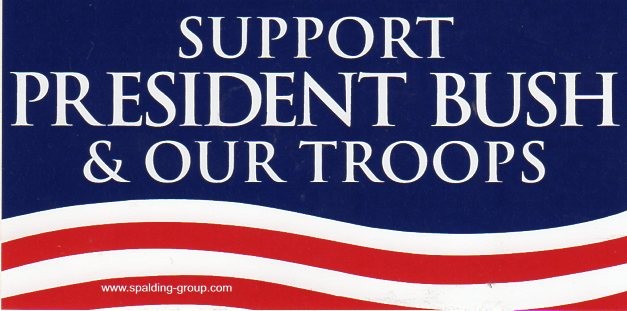
I believe Republicans used “Support our Troops” primarily in conjunction with the invasion of Iraq and then hi-jacked certain parts from post-Vietnam to further “pacify” the public. For example, when it was discovered and publicized that the returning war dead were being “shuttled” from Andrews AFB to awaiting hearses with no press coverage allowed, they, the Bush White House, put more emphasis on the slogan.
One more reader:
Generally, the people who treat our returning vets poorly is our own government; and we’re doing it right now by ignoring current science on PTSD and foot-dragging on rape in the military. As the 2008 nominee, John McCain opposed the 21st century GI Bill because it was too generous; he introduced his own legislation designed to keep troops from leaving the military for college.
When Doctors Were Their Own Guinea Pigs

Alicia Puglionesi revisits the 19th-century homeopathic movement, which expected physicians to “prove” the safety of their remedies by trying them first. Some treatments were more fun to test than others:
[T]he Provers’ Union [in 1859] was testing cannabis indica, a variety of pot known today for producing an even-keel “mellow” sensation rather than a hallucinatory or ecstatic high. Provers reported “disinclination to physical labor,” “excessive sleepiness,” “sound sleep with melancholy dreams.” Hashish being widely recognized for its dubious moral effects, moral symptoms received special consideration, and included “great anguish and despair,” “tendency to blaspheme,” and “laugh[ing] immoderately.” As always, there were some bad trips: “[he] fancies, upon opening his bedroom door, that he sees numberless diabolical imps…he thinks he will suffocate…suddenly, one of the imps begins playing on a hand-organ…” Other hazards: “Constantly theorizing”; bloodshot eyes; “ravenous hunger, which is not decreased by eating enormously,” “excessive venereal appetite with frequent erections during the day.”
(Image: Excerpt from the American Provers’ Union’s 1859 Provings of Cannabis Indica, courtesy of the U.S. National Library of Medicine)
 The Dish