Scarface finally gets the laugh track it deserves:
A reader writes:
Regarding your canned laughter thread; it’s likely that only those who live in California’s Central Valley will remember that Fresno, the mini-series starring Carol Burnett, was aired twice, originally in 1986 without a laugh track and again in 1989 with canned laughter “added so that the audience would know Fresno was supposed to be funny”, as mentioned on Wikipedia. I remember the talk at the time was that the original broadcast was too dry and people outside Central California didn’t realize it was a parody of Dallas and meant to be funny. I thought it was hilarious as originally aired and felt uneasy about the added laughter in the 1989 version, since it was obviously not filmed in front of a studio audience. The entire four-and-a-quarter hours without the laugh track is here. (You might enjoy a young Gregory Harrison as Torch, since he didn’t wear a shirt in any scene.)
Another:
Apparently when they were taping Seinfeld (an actual, honest-to-goodness funny show), they ran in to a related problem: too much laughter.
As the series progressed, the scripts began to fill more and more of the 22 minutes (later episodes of the show omit Jerry’s lead-in stand-up bits) and were precise enough they couldn’t afford much time for laughter. Apparently, according to the DVD, Larry David was especially annoyed when the audience would laugh too much – or cheer Kramer upon his first appearance, which went on for more than a season – and therefore take up his valuable comedy time. (Of course, Larry David gets annoyed at pretty much everything.)
Another:
The problem of canned laughter extends well past TV sitcoms. A few years ago my wife and I took in the revival of “Promises, Promises” with Kristen Chenowith and Sean Hayes on Broadway, and the audience was the worst audience I’ve ever seen. They too laughed at nearly every line, conditioned to do so by years of TV viewing. My suspicion is that the TV stars in the cast, Hayes and Chenowith, attracted a TV-familiar audience who believed that they were part of the show.
The worst moment, however, was when Hayes’s character discovers that Chenowith, with whom he has been in love, is having an affair with his boss. The audience collectively gasped. It’s not a subtle moment in the production. The affair has been building to this point and anyone paying attention, or anyone who has seen earlier productions, knows what is going on and what’s about to happen. Yet the audience seemed to be stunned by the revelation.
It was like sitting in the movie theater with the cliched woman yelling at the actors on screen not to go into the basement.

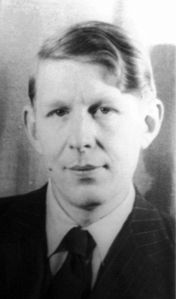 One of the delights of reading Auden is that however much his language is recognisable, his tone is mercurial. Auden tried on styles like hats, finding only a couple too trivial to salvage. His poetic inventiveness and intellectual restlessness invites reels of criticism;though that is not to say that anything goes. The words of a poem are not the sum of its parts; and Auden’s poetry rarely yields its meaning quite as easily as its perfectly light verse would suggest. In fact, one of the masterful tricks of his poetry is that it’s quite often saying the opposite of what the reader has decided to hear. Ever alive to the limitations— and fundamental frivolity—of art, Auden’s greatness lies in believing at once in the power of art to enchant, while allowing irony to do its duty.
 The Dish