The Down’s Spectrum, Ctd

A reader elaborates on the themes broached by the earlier one:

I have seen things like that video promoting the upside of a child with Down Syndrome before, but a mildly affected child isn’t the reality for most parents. Between 3 to 12% of children with Down’s are profoundly mentally handicapped and unable to do much without assistance. Another 25% are severely afflicted and 55% are moderately so. Only about 13% are mildly impaired, and they are the ones who have the best shot at some degree of independence as adults. But people with Down’s are never truly independent, and by middle age evidence of memory loss and reduced cognitive function begins to set in as they are prone to early Alzheimer’s, in addition to other physical issues.

My 62-year-old cousin has Down Syndrome. While he has never been independent, he has been able to live in group homes at different points of his life and has held jobs through various programs for the mentally disabled. But now he has behavior issues and is showing signs of dementia. His older siblings don’t want the responsibility of his care, so my 88-year-old uncle is still his sole caregiver. I know his siblings well enough to know that not one of them will step up should my uncle be unable to care for him anymore, and my uncle, while healthy, isn’t going to live forever.  I wonder what will happen to my cousin.

Going ahead with a pregnancy when you know the baby is going to need life-long care is not just a decision you make for yourself and the child, but it obligates other siblings and family members as well. That’s something that potential parents should take into consideration.

Another shares some raw honesty:

I’ve been reading your thread on Down Syndrome with interest. My 17-year old son does not have Down’s, but he does have multiple disabilities including developmental delay, cerebral palsy and visual impairments, due to complications at birth. He is a happy, joyful young man and my husband and I love him to bits and have done our best to ensure he has a loving and happy life.

However, it is an exhausting and thankless existence, resulting in no respite, decreased career prospects and pay (due to being only available for part-time work). We fear about our son and our future when we get older. Knowing what I know now about raising a severely disabled child, in my heart of hearts I know if I was given the option today of raising such a child or terminating our pregnancy, I would choose abortion.

Asked for the source of her statistics, the first reader follows up:

This pdf is where I found the percentages. They were not easy to ferret out and maybe you can find better stats somewhere else. Most of the medical stuff I found seemed reluctant to lay out hard numbers and kept things very general. It reminded me of the difficulty of finding information on outcomes for extremely premature infants, which is also not as rosy as it’s generally painted to be. I don’t remember if I mentioned it, but there is now evidence that between 10 and 15% of Down’s children are also autistic, and it’s not particularly hard to find articles listing the numerous health issues of Down’s adults or the fact they seem to age prematurely (which probably is why they experience dementia symptoms at such a young age).

I never spent much time with my cousin as a child. He was a teen and his behavior with girls in particular was … inappropriate. So my siblings I weren’t around him much and usually supervised when we were.

I admire my uncle. He has been a good father. His step-children and his grandchildren adore him. But, according to my mother who recently visited him, his quality of life is suffering a bit now. He has vision issues himself and the stress of dealing with my cousin’s health issues on top of his own takes a toll. He is fortunate to have one step-daughter who helps out, but she is unable to take her brother’s care on completely – mostly because of his behavior issues. An extended network of friends and a girlfriend help him a bit as well, but most of the work falls on him. My cousin is quite set in his routine and is violently opposed to being care for by other than his dad.

Update from a reader:

When I initially read the words of the reader with the 62-year-old cousin with Down Syndrome whose 88-year-old father still cares for him, I was blind with rage. The view of this reader, supported by his EPA (?!) PDF is extremely antiquated.

But then I looked again at the age of the people in the story. The cousin was born in 1952. The father and mother who raised him did not choose to institutionalize their child, as was the norm at that time. That was very brave. Even so, back then, this child was most certainly not educated with his peers and the technologies did not exist for elevating him to his full potential. As a result, this reader (and many others of a generation too) has formed an impression of who and what Down Syndrome is.

And for the record, “inappropriate behavior with girls” is not a trait of DS. It occurs to me that this family did not have the ability or resources at that time to educate and/or train this child. His dependence today on his father as his sole caregiver is probably another result of inadequate resources and support. However, at that time the only other option was to lock him up. There was no good choice for this father and mother.

That is the bad news.

The good news is that nowadays in our society we educate all of our children. We have the skill and technology to teach EVERYONE, even the mentally disabled. That is why we now have these excellent stories of people with Down Syndrome and other handicaps living happy productive lives in our society. Even better, because of this, we all have the opportunity to interact with people with different abilities. We don’t need to be afraid of them and we don’t need to let the stories of years gone by make us afraid to bring our babies into the world.

I have a 9-year-old son with Down Syndrome. I learned of his disorder before he was born. I was very afraid of the future, mostly because I had never been friends with or interacted with anyone with Down Syndrome. I had always averted my eyes and avoided contact on the very rare occasions in which I encountered someone with DS. I was born in the early ’60s. At that time babies with DS and other disorders were still being institutionalized and they were rarely seen in daily life. I never considered terminating my pregnancy though; I knew my fear was irrational. I wanted a child to raise and a sibling for my older son. I had a family and community around me to support my decision and to be enchanted by my boy.

The reader’s story is a tragic one. But it is not a story of the bad news of Down Syndrome. It is a story of societal exclusion of the mentally disabled. There are similar stories out there of aging people who were institutionalized 50 years ago for what we consider to be manageable behavioral problems today. I have a friend whose 60-year-old cousin was institutionalized at age 5 for eating dirt. He is still there, forgotten by most of his family. I hope that the reader, the cousin, the father and the rest of this family will find comfort and resolution somehow.

Parents to be: Please don’t let this story shadow the outlook for your child. We don’t live in that world any more. Your baby will be as beautiful and lovable as any other, and full of potential. Being a parent will be the ride of your life no matter what the diagnosis is. You can’t predict what it will bring. Nobody can.

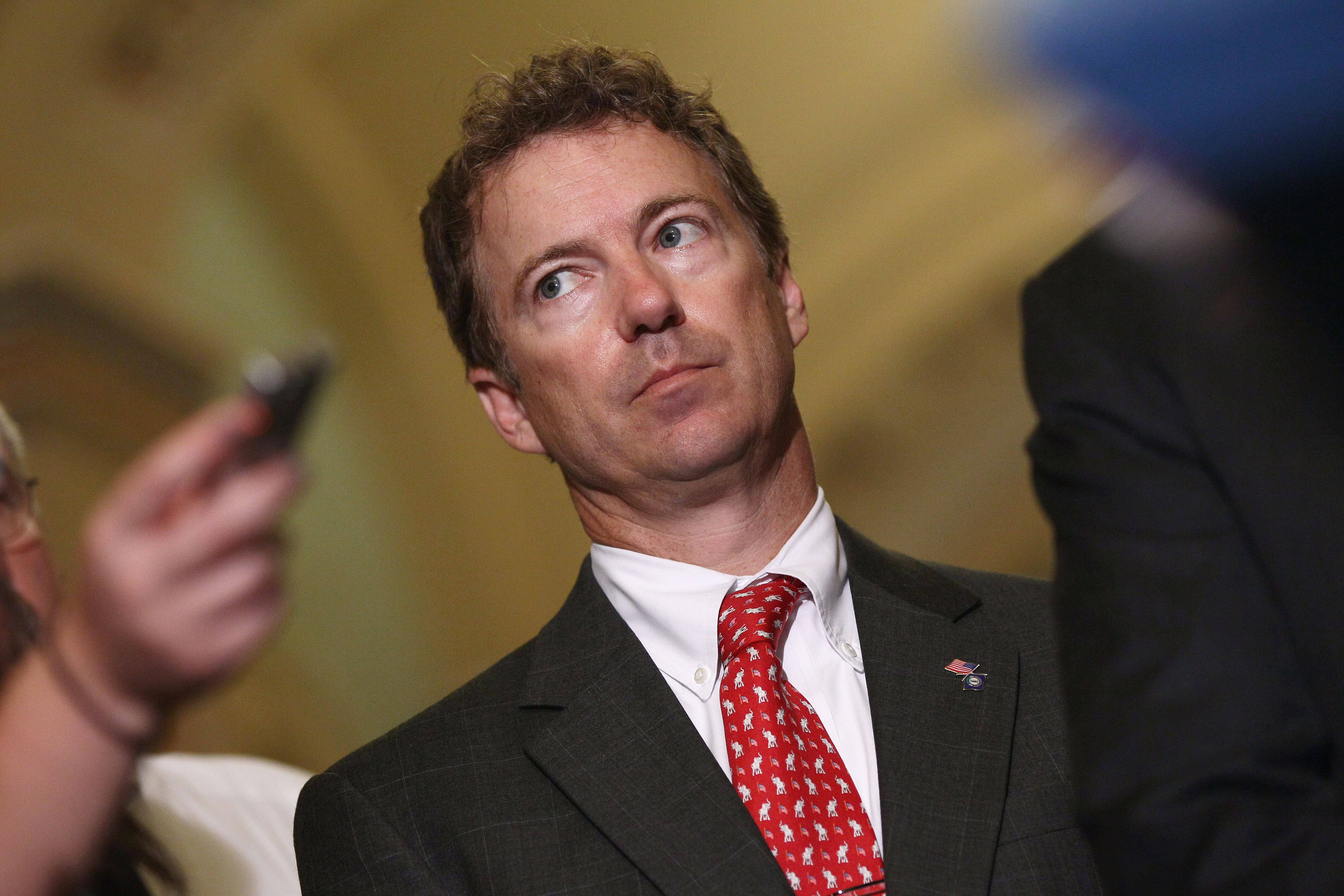
Chart Of The Day

gun-chart

Olga Khazan sticks up for Vivek Murthy, the president’s choice to be the next surgeon general, whose confirmation is being held up based on pressure from the NRA:

One of the NRA’s sticking points … is that Murthy once tweeted, “Guns are a health care issue.” It’s not immediately clear what Murthy means by that. The NRA claims that guns are used more than 2 million times a year for self-defense (though social scientists think it’s closer to 100,000 times.) And it’s healthy to want to defend yourself. Murthy has already said that he plans to use his office to work on obesity, not guns.

But looking at the instances in which firearm use ends in death, it becomes clear that there’s a health case to be made for gun control, too. Guns are far more likely to be used in suicides than in killing assailants.  According to the CDC, 19,392 people committed suicide with a gun in 2010, the latest year for which data are available. That same year, meanwhile, the FBI recorded only 230 justifiable homicides (the legal term) in which a private citizen used a firearm to kill a felon during the commission of a felony.

Update from a reader, who makes some important points:

That chart strikes me as an unjustified comparison for considering the overall impact of firearms on health, as it underestimates the positives and overestimates the negatives.

On the positives of gun ownership, surely we aren’t interested in the number of people justifiably killed by them, but rather the number of murders and violent assaults deterred by them. The answer may not be the 100,000 instances of self-defense estimated my social scientists, but it’s surely a lot higher than the 230 justifiable homicides.

On the negatives, it is impossible to take seriously the notion that all 19,392 people who committed suicide in 2010 wouldn’t have found some other way to end their lives. I am aware of research by Justin Briggs and Alex Tabarrok finding that gun ownership encourages suicide, but if I’m reading their tables correctly, they find that about half of suicides by firearm would have occurred through some other method if a firearm was not available.

Turkey Kills Twitter, Ctd

After last week’s largely ineffectual ban drew criticism and ridicule, Erdogan intensified his crackdown on the site within Turkey. Steven Cook calls the country “a case study in the reversal of political reforms, especially in the area of freedom of expression”:

The recent ban on Twitter is the logical next step in a process that has unfolded during the last few years in which the Turkish government has sought to intimidate and thereby silence critical journalists, academics and other observers. Erdogan, who is both paranoid and calculating, has sought to frame his offensive against freedom of expression as a fight against foreign plots to dishonor Turkey and undermine its recent prosperity and diplomatic influence.

Jenna Krajeski argues the ban “only serves to demonstrate how tone-deaf the A.K.P. has become in its zeal for message control”:

The move against Twitter looks desperate and, given how accessible the service remains, futile – the sort of clumsy measure that authoritarian leaders often take as they witness their power draining away. (The last time I woke up to news of Twitter being blocked was three years ago, in Cairo, when it was ordered by Hosni Mubarak.) But the ban also highlights a disturbing trend in Erdogan’s attitude toward the opposition, and signals that the authoritarian tendencies that surfaced during last year’s Gezi protests are only growing stronger.

But, writing elsewhere, Cook argues that Erdogan is playing a “shrewd and cunning” game:

Here is how it goes: He plays to his base, frames the issue as a plot among various outside and inside forces to bring Turkey to its knees, declares that he will not allow that to happen, and then emphasizes everything he and the Justice and Development Party (A.K.P.) has done for Turkey in the last eleven years. Erdogan’s message in Turkey’s profoundly polarized political environment is a way to ensure that the bulk of his base never accepts his or the A.K.P.’s culpability for anything. The fact that the prime minister is contributing to what seems to be a deep divide among Turks is all the better for Erdogan and his electoral prospects.

Aaron Stein also examines Erdogan’s political calculus:

Erdogan has championed the ballot box as the final arbiter of all that ails Turkish politics. Yet, in doing so, Erdogan is practicing majoritarian politics in an increasingly polarized political climate. Thus, as Turks prepare to vote in local elections this March, an AKP victory in key cities like Ankara and Istanbul could spark further anti-government protests. To counteract such a possibility, the government is certain to take more steps to ensure that the right to peaceful protest is further encroached upon.

And, when paired with the likely leaking of more recordings, Erdogan is sure to deem it necessary to further increase his hold over the government bureaucracy. Thus, even while Erdogan appears to have calculated that increased political polarization is the key to electoral success, it has come at a steep price for Turkish democracy.

Meanwhile, Shadi Hamid suggests Erdogan “fell victim to his own success”:

With each election, his party’s share of the vote only increased, culminating in the 2012 elections, where it received an unprecedented 49.8 percent of the vote. Winning nearly 50 percent of the vote in a parliamentary democracy is no small feat, and Erdogan interpreted it as a mandate to reshape the constitution, the political system – and ultimately the Turkish republic – in his own image and according to his nearly insatiable ambition. Now, he finds himself struggling for political survival, as opposition mounts not just in the usual quarters but among erstwhile allies and within his own party.

Previous Dish on the political situation in Turkey here, here, here, and here.

Quote For The Day

“I think, I mean, that we have very gravely underestimated the damage that apartheid inflicted on all of us. You know, the damage to our psyches, the damage that has made — I mean, it shocked me. I went to Nigeria when I was working for the World Council of Churches, and I was due to fly to Jos. And so I go to Lagos airport and I get onto the plane and the two pilots in the cockpit are both black. And whee, I just grew inches. You know, it was fantastic because we had been told that blacks can’t do this … And we have a smooth takeoff and then we hit the mother and father of turbulence. I mean, it was quite awful, scary.

Do you know, I can’t believe it but the first thought that came to my mind was, “Hey, there’s no white men in that cockpit. Are those blacks going to be able to make it?” And of course, they obviously made it — here I am. But the thing is, I had not known that I was damaged to the extent of thinking that somehow actually what those white people who had kept drumming into us in South Africa about our being inferior, about our being incapable, it had lodged somewhere in me,” – Archbishop Desmond Tutu.

What’s A Bisexual Anyway? Ctd

[vimeo 68623752 width=580]

Benoit Denizet-Lewis has an extensive essay (NYT) on the efforts of the American Institute of Bisexuality to counter myths and stigmas surrounding bisexuality. Below he outlines the latest scientific efforts by Northwestern’s Michael Bailey, who led – and subsequently corrected – a controversial study in 2005 suggesting that “identity and arousal didn’t appear to match” among bisexual men (the study and followup study are described by Dan Savage in the above video, starting at the 2:20 mark):

[Bailey] went into an explanation of his proposed study, which I was surprised to hear wouldn’t include any actual bisexuals. Instead, he planned to test the arousal patterns of 60 gay-identified men. “We’re interested in the role that sexual inhibition can play in people’s sexuality, in ways that might be relevant to sexual identity or capacity,” he began. “There’s evidence from prior studies that if you start with a stimulus that might turn on a gay guy — say, two guys [being sexual] — and then add a woman to the scene, some gay men are going to be inhibited by that and feel less aroused, while others won’t see their arousal decrease. A subset of bisexual-identified men might be explained by that.”

“How so?” I asked. Carlos Legaspy, an A.I.B. [American Institute of Bisexuality] board member from Chicago, tried to clarify: “There’s some indication that what makes a bisexual person may be less about what they’re strongly attracted to and more about what they’re not averse to.”

Denizet-Lewis also calls me out for this post:

Though a number of famous women have said they’re bisexual (including Drew Barrymore, Anna Paquin, Megan Fox and Azealia Banks), few big-name men have followed suit. And because [Clive] Davis was 80, it would be difficult for skeptics to dismiss his declaration as one of a confused young man who would surely grow out of his bisexual phase, as the gay writer Andrew Sullivan suggested months later about the 19-year-old British diver Tom Daley.

Daley had said in a YouTube video that he was happily dating a man but was still interested in women. Sullivan predicted that Daley would “never have a sexual relationship with a woman again, because his assertion that he still fancies girls is a classic bridging mechanism to ease the transition to his real sexual identity. I know this because I did it, too.”

Sullivan’s logic is particularly frustrating to Sylla and other bisexual activists. Though they agree that many gay men use bisexuality as a transition identity — sometimes as a way to soften the blow of coming out to parents — “gay men seem to have a hard time fathoming that someone might have an honestly different trajectory,” Sylla said. (Gay men aren’t the only ones. In an episode of “Sex and the City,” Carrie Bradshaw dates a bi guy and suspects that he’s just on “a layover on the way to Gaytown.”)

Bisexual activists told me that much of what gay and lesbian people believe about bisexuality is wrong and is skewed by a self-reinforcing problem: because of biphobia, many bisexuals don’t come out. But until more bisexuals come out, the stereotypes and misinformation at the heart of biphobia won’t be seriously challenged. “The only ‘bisexual’ people that many gays and lesbians know are the ones who ended up gay,” a bisexual woman in Columbus, Ohio, told me. When she tells her gay and lesbian friends about studies showing that bisexuals outnumber them, “they look at me funny and say, ‘That’s strange, because I don’t know any bisexual people.’ ”

I take the point. But I am not backing down on my Daley prediction. Dan in the above video shares my observation about the bi bridging mechanism among many gay men. Mark Joseph Stern ponders the piece by Denizet-Lewis:

Is bisexuality the ability “to fall in love with people regardless of their gender,” as Denizet-Lewis’ bisexual friend states? Or is it, as others insist, the ability to fall in love with both men and women in part because of their genders? Each of these stances is really quite distinct; the former ignores (or transcends) gender, while the latter embraces both genders equally. Yet both of them wind up shoehorned into the umbrella category of “bisexuality.”

Of course, all this questioning is in some ways a political trap—the end-goal of the LGBTQ movement as a whole could be described as a world in which the interrogation of individual (consenting adult) desires is no longer a cultural pastime. That said, as a thought experiment, it’s interesting to consider the black hole at the center of Denizet-Lewis’ piece: Is bisexuality even an identity, in the way that homosexuality is?

Read the long Dish thread on bisexuality here.

Planning Your Digital Detox, Ctd

The 5th annual National Day of Unplugging was earlier this month. Casey Cep throws cold water on the idea, claiming that “we’ve focussed our collective anxiety on digital excess, and reconnecting with the ‘real’ world around us represents one effort to control it”:

[T]he “real” world, like the “real” America, is an insidious idea. It suggests that the selves we are online aren’t authentic, and that the relationships that we forge in digital spaces aren’t meaningful. This is odd, because some of our closest friends and most significant professional connections are people we’ve only ever met on the Internet, and a third of recently married couples met online. It’s odder still because we not only love and socialize online but live and work there, too. Is it any less real when we fall in love and break up over Gchat than when we get fired over e-mail and then find a new job on LinkedIn?

Lindsay Holmes pushes back:

Now don’t get me wrong, I love technology just as much as the next person and I see the immense value of it (after all, I do work for an online media company). I also agree with Cep when she argues that it connects us with others in ways we were never able to before. But there are extreme advantages to going off the grid for a while — and there’s science behind it that can’t be ignored. Studies have shown that being constantly plugged into our devices can make us feel more lonely, less likely to engage in prosocial behavior, can severely mess with our sleep and can even cause weight gain.

And it’s not just ourselves we’re protecting by being mindful of technology — it’s future generations. Now more than ever, children as young as 2 have their eyes fixated on screens — and it’s negatively affecting their growth. Children’s excessive technology use has the potential to cause attention, brain and behavioral problems. When I think back on my childhood, I think about playing jump rope outside and going swimming. The only faint recollection I have of technology is the grating sound of dial up. When the next generation gets older, what will be the source of their nostalgia? Angry Birds over the real birds they’d hear if they were playing outside?

Recent Dish on digital detoxing here.

Police With A Free Pass For Prostitutes

For more than 40 years, officers have been allowed to solicit prostitutes while on duty. And they’re lobbying to keep it that way:

The state law that exempts police officers, which has been on the books since 1972, attracted attention in Hawaii earlier this month when legislators were considering a bill to toughen the state’s laws on prostitution and some other crimes. The new bill didn’t include the exemption for law enforcement officers. That’s when the Honolulu police lobbied to have the exemption put in. The measure subsequently passed by the state House included it.

Sullum rolls his eyes:

Since an entire chamber of the state legislature agreed to this request, the cops must have had a pretty persuasive argument. Here it is, as summed up by Jason Kawabata, captain of the Honolulu Police Department’s Narcotics/Vice Division:

As written, this bill would nullify the exemption if the officer agrees to pay a fee for sexual penetration or sadomasochistic abuse. This would limit the type of violations law enforcement officers are able to enforce. Even if the intent of the amendment is merely to limit actual conduct by the officer, we must oppose it. Codifying the limitations on an officer‘s conduct would greatly assist pimps and prostitutes in their efforts to avoid prosecution.

In other words, if it were generally known that police are not allowed to engage in sexual penetration or sadomasochistic abuse with prostitutes, suspicious hookers might insist that undercover officers do so to show they are not cops. … That scenario seems rather implausible, since a person commits the offense of prostitution as soon as she “agrees or offers to engage in sexual conduct with another person for a fee.” For Kawabata’s fear to be realized, a prostitute would need to have sex first to make sure her customer was not a cop, then negotiate payment afterward, which does not seem like a very good business strategy.

Rebecca Rose is incredulous:

What policies are in place to prevent officers from using this exemption to have sex with people who are being forced into this lifestyle? (Is that even a consideration or concern for Hawaii law enforcement?) How exactly would they even know what someone’s situation is before the bust them? And what about underage sex workers? If a young girl is working as prostitute, what’s to stop an undercover from engaging in a sexual act with her under this exemption?

The bill exempts police officers from the rules governing “solicitation of a minor for prostitution,” although as Mark Memmott notes, it doesn’t address “sexual relations with someone under the age of 18.” Marcotte zooms out:

There’s a heated debate in feminist circles about how best to deal with the issue of sex work. Some feminists support sex work and want to decriminalize it, while others see sex workers as victims but want to focus criminal penalties on the pimps and johns who exploit vulnerable women. These two camps fight a lot, but they do tend to agree on one thing: that prostitutes are too often abused by the police. This bill, which increases penalties for johns and pimps while keeping the selling of sex at a misdemeanor level, suggests the influence of the latter group, but all that could be dramatically undermined if the state continues to give police the authority to have sex with prostitutes and then turn around and cuff them.

Rand Paul’s Weak Spots

Joshua Green thinks he’s “too sensitive.” One example:

Rand Paul has always seemed annoyed by questions about his dad. When I interviewed him last year, Senators Discuss Balanced Budget Amendmenthe waved off that line of inquiry and focused on dead Fed chairmen. Now Paul is attempting to put the subject officially off limits. Via Slate’s Dave Weigel, Paul declared yesterday that he has “quit answering” questions about his father. “I’ve been in the Senate three years, and I have created a record of myself,” he said. “And I have my opinions.”

As Weigel points out, this is a laughable double standard, since Paul recently tried to associate another politician-with-a-record—Hillary Clinton—to a family member’s “predatory behavior.”

The bigger problem for Paul is that this is like putting up a flashing neon sign that reads “Controversy Guaranteed!” to the political press corps. If there’s one thing reporters are great at, it’s asking the same question over and over again until a politician flips his lid. Paul’s history suggests it may not take very long. If he doesn’t develop a way to answer questions about his dad, his time among the top tier of GOP presidential hopefuls won’t last long, either.

Tomasky points out that, despite some millennials’ libertarian leanings, the divide between them and Paul is immense:

Paul opposes same-sex marriage. So how’s he going to talk about that to voters of the generation that supports it to the tune of 68 percent. He is against marijuana legalization and even backs a bill that recently passed the House that would allow Congress to sue the president for failing to faithfully enforce federal laws. This is aimed in part at states that have legalized pot. The problem for Paul is that 69 percent of Millennials back legalization. Paul is against abortion in virtually all cases, but 56 percent of Millennials say it should be legal “in all or most cases.” And finally, Paul has been against immigration reform, and 55 percent of Millennials favor legal status and a path to citizenship (again, they’re the only group above 50 percent).

In sum, on issue after issue, Paul is not merely at odds with Millennials. He’s about eight or nine area codes away.

(Photo from Getty)

An Acid Test For Francis, Ctd

Barbie Latza Nadeau is optimistic about Pope Francis’ appointees to a new commission designed to deal with sex abuse in the Catholic Church:

The more surprising members of the group are the female members. Marie Collins is a married Irish woman who was raped at the age of 13 by a priest. She is an activist for child safety within the Catholic Church and has been vocal about how she was snubbed by her local parish and told to “protect the priest’s good name” when she accused him.

The eight-person commission includes four women and five lay people, a development Collins described as “encouraging.” Still, the committee’s mandate remains unclear: its first responsibilities are “determining the commission’s structure, outlining its duties, and putting forward names of other candidates who might join its work.” John Allen has a cautious analysis:

[N]aming people to a commission is not, in itself, reform. It remains to be seen if this group can successfully ride herd on forces in the church still in denial, or help the pope hold bishops and other Catholic leaders accountable if they drop the ball.

If the commission turns out to be a dud, Saturday’s announcement won’t be enough to save the pope from the disillusionment that will ensure. For now, however, the lineup card revealed by the pope not only amounts to a clear statement of seriousness about the abuse issue, but it also shows a deft political touch.