Prison Has Replaced Psychiatric Hospitals

Imprisioned Mentally Ill

Stephanie Mencimer passes along some depressing statistics:

According to a new report from the Treatment Advocacy Center (TAC), a nonprofit advocacy organization, the United States has fully returned to the 18th-century model of incarcerating the mentally ill in correctional institutions rather than treating them in health care facilities like any other sick people. In 2012, there were roughly 356,268 inmates with severe mental illnesses in prisons and jails, while only 35,000 people with the same diseases were in state psychiatric hospitals.

The numbers of incarcerated mentally ill have been growing, and TAC reports that their treatment in the corrections system is nothing less than abominable. Mentally ill inmates are more likely to become the victims of sexual assault and abuse. They’re also overrepresented in solitary confinement, and they are much more likely than other prisoners to commit suicide.

Sarah Kliff flags the same report and puts it in context:

In 1955, public psychiatric hospitals held 558,992 patients. Over the past 60 years, there’s been a nationwide movement for deinstitutionalization: moving mental health patients out of long-stay psychiatric facilities and into more community-based treatment centers. The main goal of deinstitutionalization, which began in the late 1950s, was to get patients out of large, public institutions where they were largely hidden from public view. Instead, the hope was to give mentally health patients the treatment they needed to integrate into the community, with a support system that encouraged access to jobs and housing.

Why Aren’t Gay Men On The Pill?

The Associated Press – about as mainstream as you can get – has an article out this week about a very marginalized medication:

It’s the Truvada conundrum: A drug hailed as a lifesaver for many people infected by HIV is at the truvadaheart of a rancorous debate among gay men, AIDS activists and health professionals over its potential for protecting uninfected men who engage in gay sex without using condoms.

Many doctors and activists see immense promise for such preventive use of Truvada, and are campaigning hard to raise awareness of it as a crucial step toward reducing new HIV infections, which now total about 50,000 a year in the U.S. Recent efforts range from think-tank forums and informational websites to a festive event at a New York City bar featuring popular drag queens.

Yet others — despite mounting evidence of Truvada’s effectiveness — say such efforts are reckless, tempting some condom users to abandon that layer of protection and exposing them to an array of other sexually transmitted infections aside from HIV. “If something comes along that’s better than condoms, I’m all for it, but Truvada is not that,” said Michael Weinstein, president of the AIDS Healthcare Foundation. “Let’s be honest: It’s a party drug.”

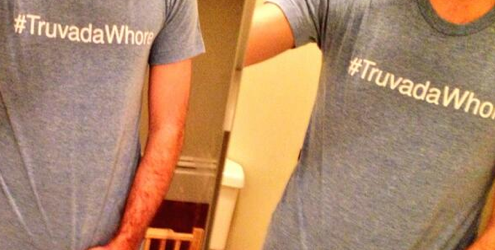
I have to say I’m aghast by that attempt to stigmatize – yes, stigmatize – a medication that could prevent countless men from being infected with HIV. Think about it: if it were 1990 and the news emerged that – just by taking one pill a day – you could avoid ever getting infected with HIV, do you think there would be any debate at all? There would be lines around the block for it, huge publicity campaigns to get the amazing news out, celebrations in the streets, and huge relief for anyone not infected with the virus. Fast forward a quarter century, and those taking this medication are actually demonized as “Truvada Whores“.

Whore? Why are some now channeling Rush Limbaugh’s sex-phobia? I mean: are women who are on the contraceptive pill “whores” as well? All they’re doing is protecting themselves from the consequences of sex in terms of pregnancy. And all gay men on Truvada are doing is protecting themselves from HIV. Why on earth would we want to prevent or marginalize that? As Peter Staley, one of the true heroes of ACT-UP, has put it:

It breaks my heart that the worst of HIV stigma comes from my own community: gay men.

Mine too. The reason, it appears, is that being free from the fear of HIV infection could lead gay men to have lots of sex again with lots of partners. (One study we have examining this did not bear this out.) But here’s some breaking news: for vast numbers of gay men, lots of sex is already the case. Now that HIV is not a death sentence but a chronic disease like diabetes, the terror is long gone. But the virus isn’t. And rates of infection remain stubbornly high, especially in this demographic. Because, well, men are men. Betting against their testosterone in a sub-population without women is a mug’s game. Add to this that fact that for many men – spoiler alert – condoms make sex less pleasurable, less intimate and less intense, and you have the current high rates of infection. Given where we are, we have a choice, it seems to me. We can either use our medical knowledge to prevent infections, or we can allow them to continue.

Screen Shot 2014-04-09 at 11.29.56 AMWhat about side-effects? Yes, they exist with Truvada, as with any drug. But this pill must be prescribed by a doctor who can monitor quickly for any early adverse reaction in the liver and end the drug if necessary. One possible effect on bone-density takes a very long time to occur and again can be monitored and the drug ended if that’s the case. And compared with the side-effects of getting infected and having to take the full spectrum of anti-HIV drugs? Let’s just say your liver prefers Truvada. What about getting people to take it every day? Yes, that’s vital – just like contraception. If you are not taking it regularly, and you get infected, there’s a chance that the virus could mutate in the presence of Truvada to foil similar drugs in a future cocktail. But since the Truvada regimen requires blood work every three months, the resistance is unlikely to go on for long. And there are, mercifully, plenty of other classes of anti-HIV drugs that can replace it in a cocktail if you go on to get infected. So, yes, it might not be the best option for a tiny minority. But for the vast majority? It’s a complete no-brainer.

Can gay men be relied upon to take a pill once a day? Please. Why would they be regarded as less capable of protecting themselves than millions of women? And the cost we have already incurred by not aggressively promoting this drug as a preventative is huge. I wrote about this option as far back as 2006, when it first appeared on the horizon. 400,000 people have been infected since then. Back in 2010, in a thread called “A Massive HIV Breakthrough“, I noted that the trials concluded that the pill was more than 90 percent effective. Truvada was subsequently approved by the FDA in 2012 and continued to have high rates of success in clinical trials. From another Dish thread last summer:

According to the C.D.C., when study results are adjusted to include only participants who took their pills most of the time, the protective effects are 92 percent for gay men, nearly 90 percent for couples in which only one partner is infected, 84 percent for heterosexual men and women, and about 70 percent for drug injectors.

Think of how that can change the dynamic in a sero-discordant couple where one man is negative and the other positive. Think of how it can also help end the barriers between HIV-positive and HIV-negative gay men, with far, far less chance of infecting one another. But, in a felicitous medical coincidence, it also raises the tantalizing prospect of wiping HIV out of the gay community in our lifetime.

If you’re my age and remember the horror and the trauma and the paralyzing terror of the plague, that is not something you can feel indifferent about.

Here’s why it is now perhaps possible in ways that have never existed before. If all HIV-negative gay men are on Truvada, they cannot get infected with the virus. And if all HIV-positive gay men are on retrovirals, then they cannot effectively transmit the virus. Bingo! Epidemiologically, HIV is facing extinction. But is it true that those of us on anti-retrovirals with undetectable levels of virus in our blood and semen cannot infect others? Well, we just got pretty amazing news on that front. A two-year PARTNER study – with more than a thousand sero-different couples, gay and straight – found that no-one was infected with HIV.  (The results are available on aidsmap here.)

The bottom line: if we can get a critical mass of gay men on either Truvada or retrovirals, we could soon reach a tipping point in which this virus could be wiped out in a generation.

When we are still having 50,000 infections a year – and gay men remain a resiliently vulnerable population – this should be an urgent goal. We have a chance our predecessors long dreamed of: to have great and enjoyable sex lives without this paralyzing fear and this dehumanizing stigma. We owe it to them and to ourselves to do all we can to make this scenario possible.

Why on earth are we hesitating?


Update: This post prompted a thread, which you can read here.

A Bug At The Heart Of The Internet

heartbleed

A vulnerability in the Internet’s most common encryption system has compromised personal data:

Some websites running SSL encryption, such as Airbnb, Pinterest, USMagazine.com, NASA, and Creative Commons, among others, were exposed to a major security bug called Heartbleed on Monday. The bug was reportedly discovered by a member of Google’s security team and a software security firm called Codenomicon.

A number of other websites may, according to a list being distributed on GitHub, be vulnerable to the bug as well. … A security patch for the bug was announced on Monday, but many websites are still playing catch up. That’s why websites like the Tor Project are, only somewhat tongue-in-cheek, advising that you stay off the Internet this week if you really care about your security.

Dan Goodin explains why this is such a big deal:

The two-year-old bug is the result of a mundane coding error in OpenSSL, the world’s most popular code library for implementing HTTPS encryption in websites, e-mail servers, and applications. The result of a missing bounds check in the source code, Heartbleed allows attackers to recover large chunks of private computer memory that handle OpenSSL processes. The leak is the digital equivalent of a grab bag that hackers can blindly reach into over and over simply by sending a series of commands to vulnerable servers. The returned contents could include something as banal as a time stamp, or it could return far more valuable assets such as authentication credentials or even the private key at the heart of a website’s entire cryptographic certificate.

Underscoring the urgency of the problem, a conservatively estimated two-thirds of the Internet’s Web servers use OpenSSL to cryptographically prove their legitimacy and to protect passwords and other sensitive data from eavesdropping. Many more e-mail servers and end-user computers rely on OpenSSL to encrypt passwords, e-mail, instant messages, and other sensitive data. OpenSSL developers have released version 1.0.1g that readers should install immediately on any vulnerable machines they maintain. But given the stakes and the time it takes to update millions of servers, the risks remain high.

Matthew Ingram explains what you can do about it:

If you are a web user, the short answer is not much. You can check the list of sites affected on Github, or you could try a tool from developer Filippo Valsorda that checks sites to see if they are still vulnerable (although false positives have been reported), and you should probably change your passwords for those sites if you find any you use regularly.

If you are a network administrator or website manager, then you should already be applying the patch and/or recompiling your version of OpenSSL to remove the vulnerability — and you should also be reissuing your SSL security certificates and getting users to create new passwords. The problem is that doing all of this on every server and for every user and service is going to take some time.

(Image: XKCD)

Is Jeb Too Liberal For The GOP?

In a piece that really makes me miss his reporting, Ben Smith argues that the Jeb Bush bubble needs to be pricked:

The notion that Jeb Bush is going to be the Republican presidential nominee is a fantasy nourished by the people who used to run the Republican Party. Bush has been out of a game that changed radically during the 12 years(!) since he last ran for office. He missed the transformation of his brother from Republican savior to squish; the rise of the tea party; the molding of his peer Mitt Romney into a movement conservative; and the ascendancy of a new generation of politicians — Marco Rubio, Paul Ryan, Scott Walker, Ted Cruz, among them — who have been fully shaped by and trained in that new dynamic. Those men occasionally, carefully, respectfully break with the movement. Scorning today’s Republican Party is, by contrast, the core of Jeb’s political identity.

In that, Jeb is like ex-Republican Mike Bloomberg and like the failed GOP apostate Jon Huntsman: He’s deeply committed to centrist causes — federalized education, legal status for undocumented immigrants — that alienate key Republican groups; and he’s vaguely willing to go along with vestigial conservative issues that Republicans don’t care as much about, like standing up for Wall Street (Jeb was on a Lehman Brothers advisory board before that bank’s collapse, and now sits on a Barclay’s board) and opposing marriage equality, a stance he’s sought to downplay by focusing on states’ rights.

Ramesh disagrees about Bush’s chances:

He’d be the establishment candidate himself (or at least one of them). He’d be trying to win over a different group of voters, who take a more moderate view of immigration. And Bush’s own controversial comment on the topic last weekend — he said illegal immigration was “an act of love” — was also less offensive to Republicans who disagree with him, because he didn’t say that they were heartless but rather that they weren’t viewing the issue the right way.

Bush’s position within the primary electorate, in other words, would be more like that of Senator John McCain — who won the nomination not so long ago, in 2008. Actually, it would be better than McCain’s, as McCain’s record included a lot more deviations from the party line than Bush’s does.

Aw, c’mon. That “act of love” remark – admirably Christian – sank him with the Christianists and the Tea Party. Byron York spots a different problem with Jeb:

The fact that Bush is seriously considering a run indicates he has probably made a lot of money since leaving office in 2007. He didn’t have tons of it before, having spent some of his most productive years in public service. Now, Bush makes a living in the standard post-politician way. He has his own consulting firm, Jeb Bush and Associates, and serves as a senior adviser to Barclays Capital. He also makes paid speeches and sits on several corporate boards. All that will, of course, be scrutinized if he runs.

In the Fox interview, Bush said a campaign should be about “winning the election, not making a point.” Winning, he said, “should be what we’re about.” But the bottom line is that, at least right now, Bush just doesn’t seem like a politician in top fighting shape. It’s not even clear he wants the fight at all. That’s the real question for Jeb Bush.

PM Carptenter reads the signs:

The odds that Jeb Bush will be the next Republican presidential nominee just soared, because Bill Kristol, appearing on Morning Joe, reported on by his own publication, just “made the argument that Jeb Bush will not be the next Republican presidential nominee.”

Has Kristol ever been right? About anything?

Allahpundit peers into a possible future:

Let me paint you a picture. Bush announces he’s running. Soon after, Rubio announces that he isn’t, having concluded that too many of his potential advisors and fundraisers will gravitate towards Jeb. Paul Ryan likewise decides he’ll pass, figuring his best bet at influence is as the next Ways and Means chairman. Bush hits the trail, talking up education reform and ticking off a few well-chosen points of disagreement with his brother’s foreign policy.

Meanwhile, Christie, his main rival for establishment support, is too damaged by Bridgegate and never gathers much momentum. Neither does Jindal, who’s overshadowed by bigger-name candidates both to his left (Bush) and his right (Rand Paul and Ted Cruz) and can’t quite find a niche. Bush, now largely unchallenged in the center and center-right, consolidates their support. Over on the right, Rand Paul and Ted Cruz bash each other’s brains in on foreign policy and the NSA until one of them emerges as the conservative choice. That’s when Bush’s backers launch a ferocious campaign attacking Cruz/Paul as fringe material — government shutdowns! a disarmed military! — who’ll never stand a chance against Hillary.

It works and Jeb sweeps to the nomination, only to lose badly in the general when voters are forced to decide whether they want to return to “the Clinton era” or “the Bush era.”

Hathos Alert

This trailer for an amateur documentary called American Blogger could be renamed Dude In An RV Interviews Hot Chicks Across America. Seriously, every single blogger he films is an attractive woman:

A reader adds:

According to its own voiceover, this is the greatest documentary of all time.

The Drug Developed World

Michael Byrne flags a study on pharmaceutical researchers neglecting the needs of developing countries:

Pursuing drugs benefiting mostly an elderly population is essentially a stand-in for pursuing drugs benefiting a first-world population, where people live a long time and die slowly of things like cancer, COPD, or heart disease (to name the three biggest killers). In the developing world, people die much younger, hit quickly by infectious diseases like cholera, hepatitis, and malaria (or, recently, the Ebola virus). After examining some 4 million different med studies, the Chicago researchers found that for every $10 billion in wealth lost to a disease—found by multiplying a metric known as the local disease burden by a country’s wealth—the number of articles on that disease rose by 3 to 5 percent. Again: not surprising.

What may be startling, however, is that it gets much worse. Research studies are not just concentrated by income, they’re concentrated according to where researchers are located. “Health researchers are sensitive to problems they are treating, to problems around them, to Grandma’s problems,” noted lead author James Evans in a press release. ”Countries want to fund research that burdens their populations. Where this leads to inequality in health knowledge is that the disease burden of rich and poor countries are different, and that rich countries obviously produce much, much more research.”

A Lesser-Known Legend

Peter Matthiessen, the writer and naturalist, died of leukemia on Saturday at the age of 86. Jeff Himmelman profiled Matthiessen in a piece published just days before his death (NYT):

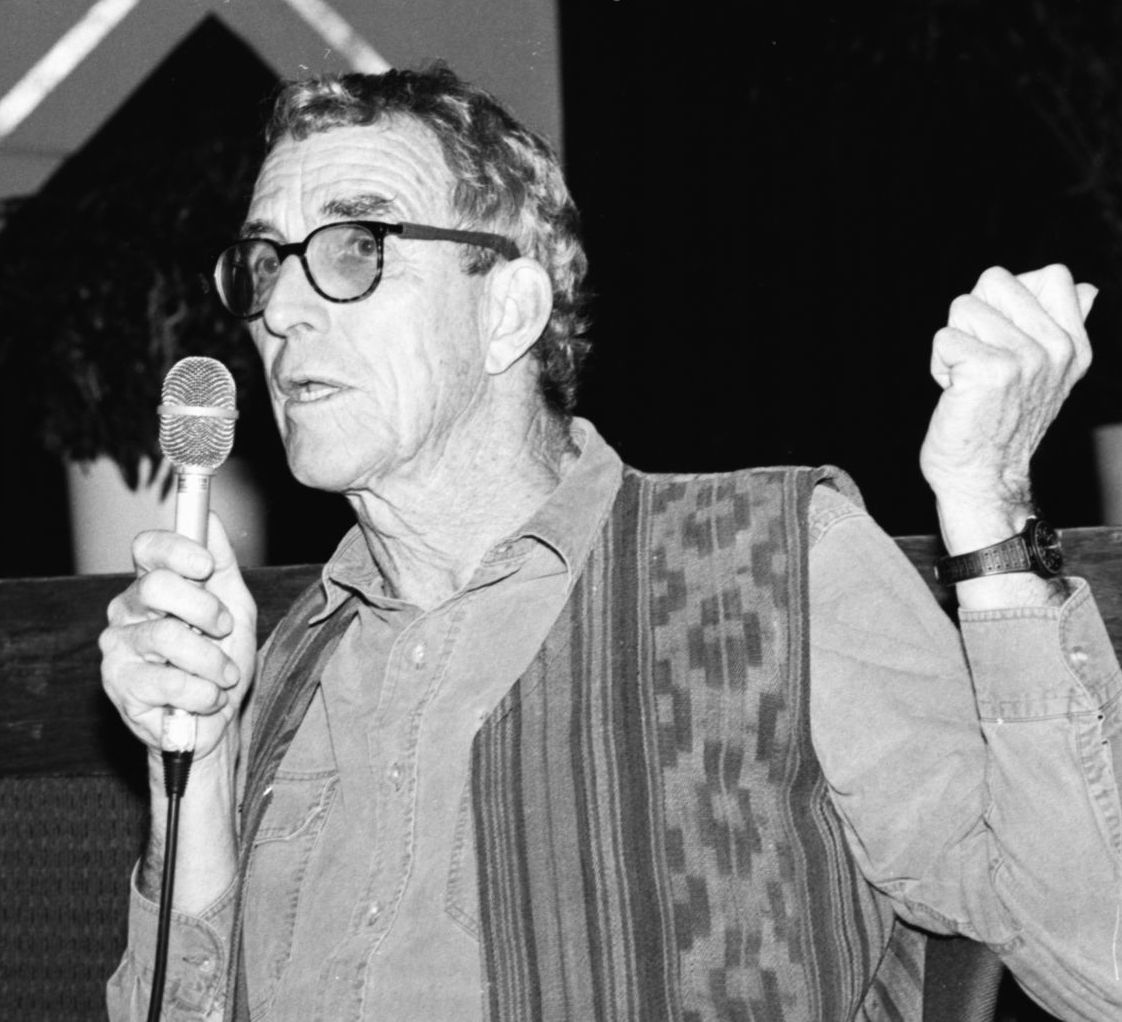
Peter_Matthiessen,_Miami_Book_Fair_International,_1991Though Matthiessen is not as well known as some other names of his generation, you would be hard-pressed to find a greater life in American letters over the last half-century. He is the only writer ever to win the National Book Award for nonfiction and fiction, but it’s not just the writing: Born into the East Coast establishment, Matthiessen ran from it, and in the running became a novelist, a C.I.A. agent, a founder of The Paris Review, author of more than 30 books, a naturalist, an activist and a master in one of the most respected lineages in Zen. As early as 1978, he was already being referred to, in a review in The New York Times, as a “throwback,” because he has always seemed to be of a different, earlier era, with universal, spiritual and essentially timeless concerns.

David L. Ulin distills Mattiessen’s work to “five essential reads” and reviews his final novel, In Paradise, which came out Tuesday:

In many ways, it’s a fitting coda to his career, the story of a meditation retreat at Auschwitz, based on an experience the author had in 1996. On the one hand, that seems antithetical: “In this empty place,” he writes, “… what was left to be illuminated? What could the witness of warm, well-fed visitors possibly signify? How could such ‘witness’ matter, and to whom? No one was listening.” At the same time, where better to look for some sort of human essence than in a landscape that embodies us at our worst?

This is the key message of Matthiessen’s life and writing — that we are intricate, thorny, inconsistent, that the lines between good and bad blur within us, that we are capable of anything. The only choice is to remain conscious, to engage with openness.

Matthiessen gave one of his final interviews to Alec Michaud in February, expressing his philosophy of writing:

Do you think a novel should be about a Big Important Subject?

I think all novels should challenge the establishment — it’s our duty to speak for those who can’t speak for themselves. But if you expect your readership to pay attention, it’s our duty to write as well as we can and to eliminate extra adjectives, adverbs. I keep finding out I’m not one of the so-called top fiction writers and I guess that’s certainly true in terms of public acceptance. But take At Play in the Field of the Lord and Far Tortuga and Shadow Country — not this new book, because I don’t think that’s in the same class as those other books — I’ll put those novels up against just about anybody’s three novels. They take risks, and the risks are interesting, I think. You stick your neck out. It’s no fun to write something you have down to a formula.

Alex Caring-Lobel remembers Matthiessen as a Zen priest:

His Zen training heavily influenced a number of his works, such as Far Tortuga (1975) and The Snow Leopard (1978), but the relationship between Matthiessen’s Zen practice and writing was somewhat ambivalent. He never tried explicitly for dharma insight in his writing, and he began working on Far Tortuga, the novel most impressed, he said, by his Zen practice, before ever sitting zazen. The protagonist of his new novel, In Paradise, which takes place at a “bearing witness” meditation retreat at Auschwitz, is quick to deride what Matthiessen’s root teacher called “the stink of Zen”—self-conscious spirituality and its pretensions.

Malcolm Jones pays tribute as well:

Matthiessen’s generation is almost gone. He was one of the last. But while the dreams and ambitions that drove most of those writers—to write the Great American Novel, to live life on a large and even glamorous scale—now seem old-fashioned, even quaint, Matthiessen endures. His fascination with nature and with the unknowability of reality—and the necessity of articulating that mystery—comes without expiration dates. He taught several generations about the beauty of the wild and how to find a place in it. And generations from now novelists will still be learning from him. In wisely sidestepping the hubristic folly of trying to sum up his own time, he achieved a sort of timelessness.

The New Yorker has assembled a collection of his travel writing here. Matthiessen’s 1999 Paris Review interview, in which he explains why he identifies more as a writer of fiction than nonfiction, is here. Listen to Terry Gross’s 1989 interview with the author here.

(Photo of Peter Matthiessen, Miami Book Fair International, 1991 via Wikipedia)

O Rly?

Gawker’s new editor Max Read, in a memo to his writers last week, laid down the law on Internet slang:

Internet slang. We used to make an effort to avoid this, and now I see us all falling back into the habit. We want to sound like regular adult human beings, not Buzzfeed writers or Reddit commenters. Therefore: No “epic.” No “pwn.” No “+1.” No “derp.” No “this”/”this just happened.” No “OMG.” No “WTF.” No “lulz.” No “FTW.” No “win.” No “amazeballs.” And so on. Nothing will ever “win the internet” on Gawker. As with all rules there are exceptions. Err on the side of the Times, not XOJane.

McWhorter warns Read that he’s probably fighting a losing battle:

As odd as it is to imagine serious people saying FTW (“for the win”) over breakfast in 2050, imagine living in the 1830s and imagine a world in which one regularly hears “O.K,” which started as affectionate initials for Martin Van Buren’s nickname “Old Kinderhook” and got a boost from standing for a hypothetical attempt by unlettered Andrew Jackson to write “all correct,” “oll korrect.” Surely no one then imagined that 185 years later we would be using the word as a synonym for, of all things, “yes.” Even jolly little “amazeballs” might seem less evanescent if we consider that the use of “ass” with adjectives—big-ass, lame-ass—seems to be with us forever, and feels less connected with the gluteal region by the year.

But where Read really risks looking a tad quaint is with his subtler concerns—the idea that “massive” and “epic” are overused rather than simply trending the way words have always done. Read gives a charmingly baroque thesaurus-style list of available synonyms for massive. But is this concern much different from the regret, voiced by eighteenth-century diarist Hester Piozzi, that people were increasingly saying “feeling” instead of “sentiment”? She didn’t much like it—to her, feeling was an action while sentiment was a concept.

India’s Anti-Muslim Leader?

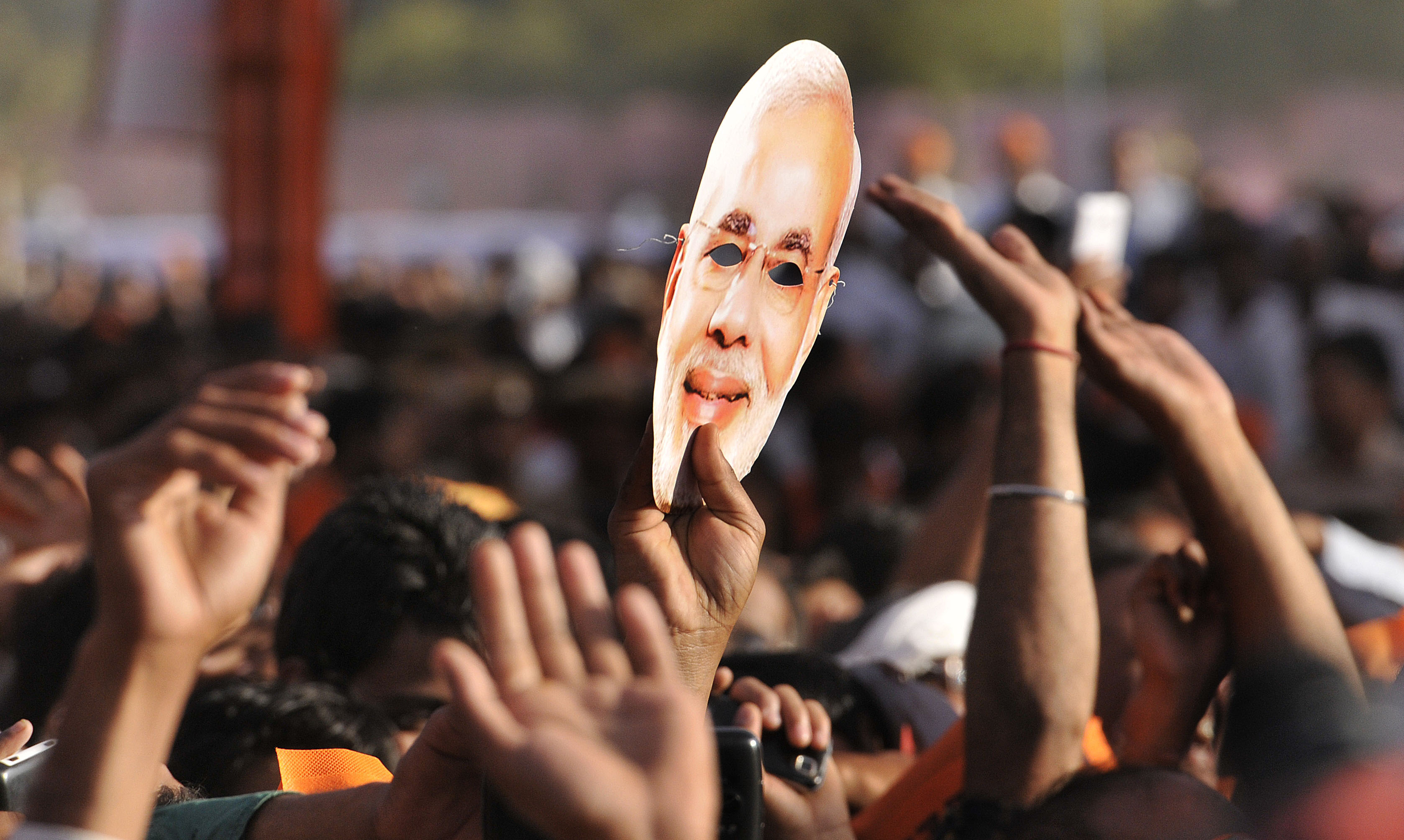
Rally Of  Narendra Modi In Gurgaon

A useful NYT video reviews the troubling record of Narendra Modi, who is likely to be India’s next prime minister. The Economist is against Modi because he never addressed the slaughter of Muslims that happened under his watch:

By refusing to put Muslim fears to rest, Mr Modi feeds them. By clinging to the anti-Muslim vote, he nurtures it. India at its finest is a joyous cacophony of peoples and faiths, of holy men and rebels. The best of them, such as the late columnist Khushwant Singh (see article) are painfully aware of the damage caused by communal hatred. Mr Modi might start well in Delhi but sooner or later he will have to cope with a sectarian slaughter or a crisis with Pakistan—and nobody, least of all the modernisers praising him now, knows what he will do nor how Muslims, in turn, will react to such a divisive man.

If Mr Modi were to explain his role in the violence and show genuine remorse, we would consider backing him, but he never has; it would be wrong for a man who has thrived on division to become prime minister of a country as fissile as India. We do not find the prospect of a government led by Congress under Mr Gandhi an inspiring one. But we have to recommend it to Indians as the less disturbing option.

Vaibhav Vats reports that officials from Modi’s party are stoking anti-Muslim sentiment:

“This election is the election of honor and revenge,” Mr. [Amit] Shah [general secretary of Modi’s Bharatiya Janata Party ] said to Hindus in the sensitive district where clashes between Muslims and Jats, a caste group within Hinduism, claimed more than 60 lives in September. “This is the time to avenge,” Mr. Shah continued. “A man can sleep hungry but not humiliated. This is the time to take revenge by voting for Modi.”

Regardless, Amy Kazmin finds strong support for Modi:

[N]ot since the days of Indira Gandhi – whose landslide 1971 election was followed by her 1975 suspension of democratic freedoms during the Emergency – has India seen such a personality cult created around a single national leader. “If you look at all the symbolism of brand Modi, it’s about him as a personality – a decisive personality that has so much force that it is going to break the incapacity of the last 10 years,” says Dheeraj Sinha, chief strategy officer for South Asia for Grey, the advertising agency.

Earlier Dish on the Indian elections here.

(Photo: BJP supporters gather during an election campaign rally of its prime ministerial candidate Narender Modi in Gurgaon, India on April 3, 2014. India has begun its 9-phase general elections. The results are announced in mid-May. By Sunil Saxena/Hindustan Times via Getty Images)

E-ternal Life

Laura Parker explores the after-death services of the startup Eterni.me, which promises clients a kind of digital immortality:

The service’s defining feature is a 3-D digital avatar, designed to look and sound like you, whose job will be to emulate your personality and dish out bits of information to friends and family taken from a database of stored information. A user will be encouraged to “train” its avatar, through daily interactions, in order to improve its vocabulary and conversational skills. Eterni.me’s co-founder, Marius Ursache, thinks of it as a more advanced version of Siri, who, ten or fifteen years from now, will be able to “respond to questions more naturally, and learn from every conversation you have with her.” …

Developmental psychologists often talk about the importance of leaving a legacy—something tied to who we are that will outlive us. But this is usually something obvious, like having children or writing a novel. An avatar with an approximation of your voice and bone structure, who can tell your great-grandchildren how many Twitter followers you had, doesn’t feel like the same thing.

And what of the period of grief in the days, weeks, and months following a friend or relative’s death? “A post-death avatar goes against all we know about bereavement,” Joan Berzoff, the director of an end-of-life certificate program at the Smith College School for Social Work, in Northampton, Massachusetts, told me.

For the time being, it seems that Eterni.me’s appeal is more philosophical than practical. “A hundred years down the track you might not only be able to talk to your mom who died a year ago, but to your grandmother who died when you were sixteen, and your great-grandmother who died before you was born,” Susan Bluck, a psychology professor at the University of Florida, said. “So it means that we could, in some way, forge relations with ancestors who lived and died well before our own lifetime.”