Moms Deserve Better

Rebecca Mead Elizabeth Weiss blasts the “World’s Toughest Job” viral ad for “selling the myth of the ideal mother”:

In this case, the ad condescends to mothers: the apparent praise, delivered by a smarmy middle-management type, exaggerates the work of motherhood to the point of caricature, ringing insincere. (I’m reminded of the boss who publicly praises his assistant, saying, “She does all the real work!” Then why don’t you pay her the real money?) It also devalues women’s achievements outside the home, suggesting that the proper and natural route to female satisfaction runs through motherhood. Like many ads, it dismisses fathers, whether single fathers, gay fathers, or fathers sharing equally with female partners in childrearing.

This depiction of motherhood isn’t merely annoying. It offers cultural cover for attitudes that do real damage to women, men, and families, reinforcing baseless perceptions of women as less reliable in the workplace, low expectations for fathers at home. (If these are skills specific to moms, dads are necessarily secondary parents; despite some progress, fathers, on average, still spend less time on housework and child care, and more time at leisure, than mothers.)

A Short Story For Saturday

April Ayers Lawson’s “Virgin,” from the Fall 2010 Paris Review, begins this way:

Jake hadn’t meant to stare at her breasts, but there they were, absurdly beautiful, almost glowing above the plunging neckline of the faded blue dress. He’d read the press releases, of course. He recalled, from an article, her description of nursing her last child only six months before her first radiation treatment. Then he noticed she wasn’t wearing a bra.

What did they have inside them: saline or silicone? And how did these feel, respectively? He probably stared too long. (But how could she expect people not to stare when she wore a dress cut like that?)

She’d noticed.

Had his wife noticed? Doubtful. She noticed so little about him these days.

Read the rest here. Previous SSFSs here.

The View From Your Window Contest

VFYWC-204

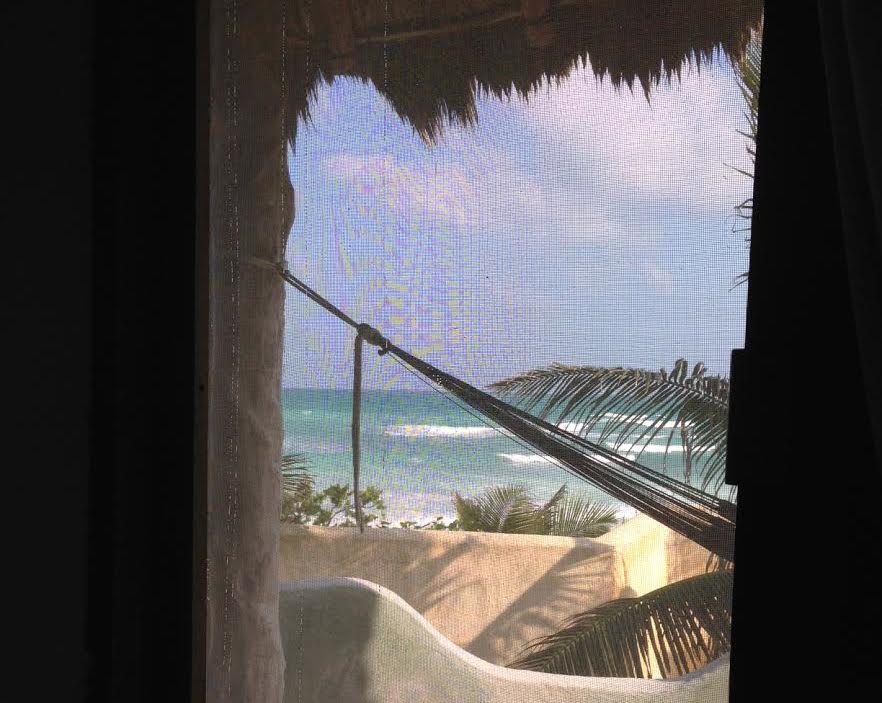
You have until noon on Tuesday to guess it. City and/or state first, then country. Please put the location in the subject heading, along with any description within the email. If no one guesses the exact location, proximity counts.  Be sure to email entries to contest@andrewsullivan.com. Winner gets a free The View From Your Window book or two free gift subscriptions to the Dish. Have at it.

Tweets You Can Trust

TweetCred is a Chrome extension that ranks the credibility of tweets – a handy function for newshounds in event of a crisis. But, in a review of the product, Adrian Chen concludes that improving Twitter’s “credibility will take more than a browser plug-in; it will take a community effort to combat built-in incentives that encourage quick, thoughtless information sharing”:

A relatively small number of verified journalists set the pace for Twitter during breaking news events. Twitter, as part of its lucrative cultivation of media companies, created a two-tiered system to boost the signal of favored users. It stands to reason, then, that Twitter has the justification—some might even argue the obligation—to de-verify users if they recklessly tweet false information. This might be messy in practice, but the judicious de-verification of even one high-profile journalist would probably be enough to send a message to the rest.

There’s one other motivating factor that could ultimately outpace any algorithm: shame. As the worst of the Sandy photos were debunked, Twitter was seized by a giddy spasm of relief and a sort of collective embarrassment. Many of the same users who had just hours before breathlessly shared the photos now shared even more absurdly fake photos with good-humored chagrin. For those who passed along fake photos, the embarrassment from that one turbulent night has stayed thousands of ill-considered tweets and retweets. And, unlike Tweetcred, shame works on every browser.

A Poem For Saturday

Mercurybyhendrickgoltzius

Dish poetry editor Alice Quinn writes:

The jacket copy for J.D.McClatchy’s Plundered Hearts: New and Selected Poems, just published by Alfred A. Knopf, is worth quoting to introduce the three poems of his we’ll be featuring today and in the days ahead: “With his first several books, J.D.McClatchy established himself as a poet of urbanity, intellect, and prismatic emotion, in the tradition of James Merrill, W.H. Auden, and Elizabeth Bishop—one who balances an exploration of the underworld of desire with a mastery of poetic form, and whose artistry reveals the riches and ruins of our ‘plundered hearts.’… All of his poems present a sumptuous weave of impassioned thought and clear-sighted feeling.” Last night, McClatchy read from his new book at New York University’s Vernon House on West 10th Street to an intimate, enthralled audience.

“Mercury Dressing” by J. D. McClatchy:

To steal a glance and, anxious, see
Him slipping into transparency—
The feathered helmet already in place,
Its shadow fallen across his face
(His hooded sex its counterpart)—
Unsteadies the routines of the heart.
If I reach out and touch his wing,
What harm, what help might he then bring?

But suddenly he disappears,
As so much else has down the years . . .
Until I feel him deep inside
The emptiness, preoccupied.
His nerve electrifies the air.
His message is his being there.

(From Plundered Hearts: New and Selected Poems © 2014 by J.D. McClatchy. Used by permission of Alfred A. Knopf, Inc. Detail from Hendrik Goltzius’ Mercury, 1611, via Wikimedia Commons)

Super-Sizing Movie Monsters, Ctd

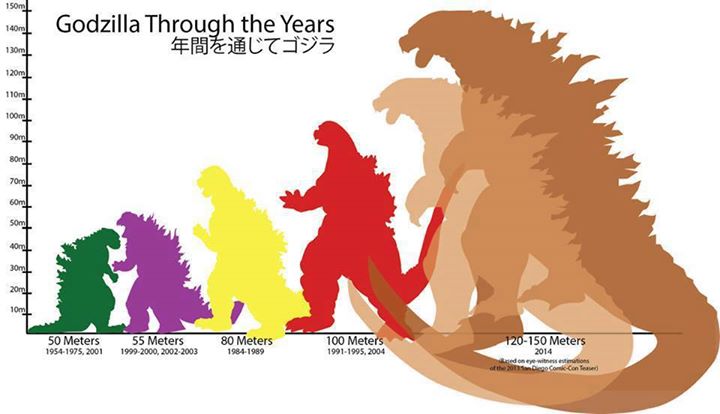
Godzilla keeps getting bigger and bigger:

Godzilla

Brian Merchant’s explanation for this growth:

In the 50s, Godzilla was a single atomic bomb—horrific and deadly, capable of leveling a single city. By the 80s, Godzilla was tapping into Cold War unease; he was big enough to represent a bevy of metropolis-destroying bombs. In the globalizing 90s, he was bigger still. In the film debuting this month, Godzilla is truly massive. He is three times the size of that original lumbering vessel of existential dread. Which is to be expected. Godzilla is no longer just a metaphor for the nuclear destruction, but for the largest-scale environmental disaster of our era. The newest trailer begins with scenes of Hurricane Sandy-like flooding, and models its depiction of destruction on global warming disaster footage.

Earlier commentary on Hollywood’s ever-larger monsters here.

Of Testees And Testosterone

Last week, a study published in Nature revealed that lab mice react differently to their male and female researchers:

Mice, and rats, it turned out, are made especially stressed out by men. One way to watch the rising anxiety and depression of a mouse is to force it to swim. “Mice can swim very well, and they can swim for a long time, but they don’t really like it,” [psychologist Robert] Sorge said. Over a series of experiments, the team determined that even if a female scientist is working with a mouse, “just having a man in a room was similar to three minutes of forced swim.” …

The team determined that the rodents were responding to the scent of men, not the sight. … To confirm the smell theory, Sorge went on, “we’d have the man wear a T-shirt overnight in bed, with no cologne or anything. We’d have him take the shirt, put it in a bag, and drape it over a chair.” Sorge couldn’t detect the smell, though others in the lab could; the stink depends on the dose, he explained.

The team conducted the same musk test with other males—guinea pigs and cats and dogs, fixed and unfixed. (All male mammals, including humans, produce testosterone.) “We just used the bedding,” Sorge said. He brought in the pillow that his daughter’s cat sleeps on. In each case, the masculine scent provoked the same response from the mice. And it wasn’t just the introduction of a strong odor: “We tried vanilla smell. We tried banana—none of them did anything. It didn’t have to do with being a novel smell. It had to do with a testosterone smell.”

Ian Steadman suggests next steps for scientists:

Scientists working with rodents will need to begin acknowledging and studying these further biases that their implicit assumptions introduce to each experiment, or there may be huge bodies of potential knowledge out there that we just will never know. At the very least, scientists could begin reporting the genders of those taking part in experiments with mice subjects, to address the problem of men ruining things with their presence.

GIF-iti

dish_gifiti

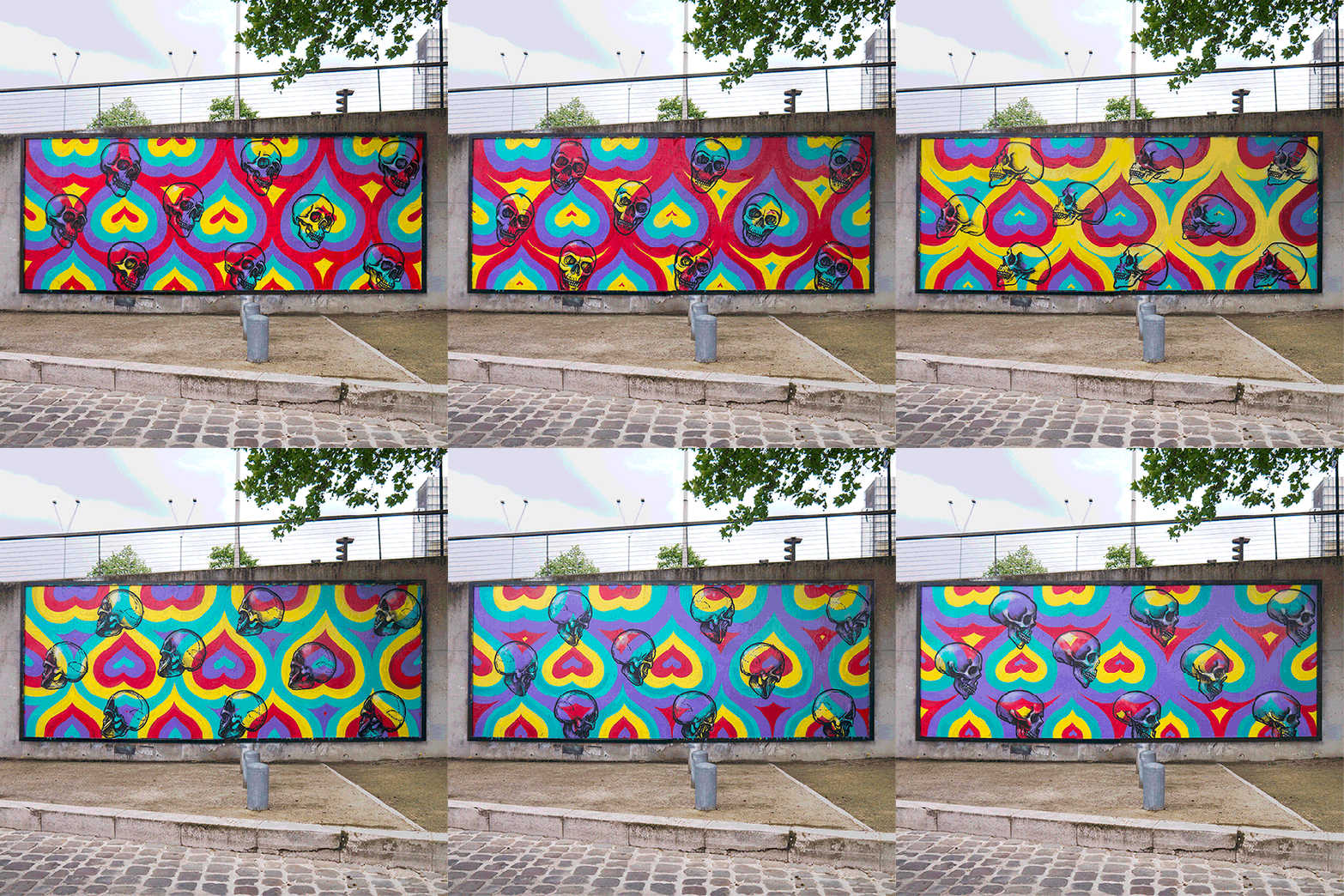
RJ Rushmore highlights a new artform:

INSA’s GIF-ITI is clearly designed for the internet. But what I like about it is that it’s not only for the internet. Blu’s animations look great as a finished product, but they’re not so beautiful if you visit those walls in person long after Blu has left. Some murals photograph well or make sense when you look at them, but they don’t pop or make sense when you see them in person. Others look great in person, but are difficult to photograph. INSA’s GIF-ITI pieces work amazingly well online (certainly better than most still photos) and still looks great on the street. That’s an uncommon combination.

A dizzying close-up after the jump:

dish_gifiti_v2

Remembering A Radical Reporter

This week marked the 150th birthday of Elizabeth Jane Cochran, who wrote trailblazing journalism under the pen name Nellie Bly. Wondering if Bly was “the great American journalist,” Elisabeth Donnelly reviews the first complete collection of her writing, Around the World in Seventy-Two Days and Other Writings, and finds that the “weirdly striking thing about her work is that — and I hate to write this — she sounds a bit like a blogger”:

Here’s why: In Joseph Pulitzer’s day, people read the newspaper for information, sure, but they also wanted perspective and a point of view. Objective journalism wasn’t an idea that came into vogue in American newspapers until about the 1890s, and Bly made her name writing personal, very subjective pieces about her life and her experience. That perspective made her advocacy work, and her “Ten Days in a Mad-House” reads like a good thriller — surprising and moving. She makes the point that the asylum is not just a place for the insane: women are also put there when they have no options. … [I]t is marvelous to read and to see the span and scope of Bly’s writing, as it still feels very contemporary and current, like a friend telling you stories that you need — no, you must— hear.

Popova, also commemorating the occasion, elaborates on Ten Days in a Mad-House:

It isn’t until she witnesses the actual “care” for the insane that she grasps the full scope of the institutionalized brutalities. In the yard, she is faced with a sight she’d never forget, the “rope gang” — a long rope onto which fifty-two women are strung together via wide leather belts locked around their waists; all are sobbing, crying, or screaming, each inhabiting her private delusion in public. The remaining patients — those less visibly delusional or violent, Bly included — are forced to sit on benches from morning till night, scolded and beaten for moving or speaking, and generally treated as mindless automata unworthy of dignity or compassion. An air of helplessness and hopelessness envelops the women, aware that telling the doctors of the brutalities would only elicit more beatings from the inhumane nurses.

Here, Bly makes her most important point:

What, excepting torture, would produce insanity quicker than this treatment? Here is a class of women sent to be cured? I would like the expert physicians who are condemning me for my action, which has proven their ability, to take a perfectly sane and healthy woman, shut her up and make her sit from 6 A.M. until 8 P.M. on straight-back benches, do not allow her to talk or move during these hours, give her no reading and let her know nothing of the world or its doings, give her bad food and harsh treatment, and see how long it will take to make her insane.