
Portland, Oregon, 3.15 pm
Portland, Oregon, 3.15 pm
Map aficionados from the in-tray continue the debate:
As a former cartographer for the Department of Defense, I often heard the following sentiment:
A laptop (or a smartphone) with a bullet hole through it is now a paperweight.
A paper map with a bullet hole through it is still a map.
However, the digital maps of today are much easier to update and distribute, and the Army certainly appreciates not having to bring along a cumbersome printing press when they are deployed. My view is that one can appreciate both the advantages of modern computer map technology while still enjoying the artistry of many of the WWII-era maps.
Meanwhile, a paper partisan makes his case:
If I take reasonable care of the 70-year-old maps in my map collection – they are in a canvas bag that lives on my bookshelf – someone will be able to use them in 100 years. I don’t know if your KML file will be able to do that. Or if the hard-drive analog in your cell phone will still be working.
Another reader suggests that paper maps could have prevented a near-disaster in New Hampshire’s White Mountains:
These morons took a long hike with no maps, but trusty GPS. They were completely unaware of the risks they were taking, proceeded to ignore any warnings they were given and then not only pass the buck to the locals but go out of their way to do so in the largest newspaper in the region and who, at the end of the trip, wound up second-guessing their doctors.
From the article: “When his GPS died, he dug out the spare battery, but because of the cold, it would not turn on.” No one has ever had a map die, and no one has ever been unable to read a map because the map’s battery was too cold.
But another stands up for digital mapmaking:
There are many apps for Android and I-devices that allow one to preload maps, including full-detail topo-maps. From then on, one does not need a cell-phone connection, only GPS, which is available almost everywhere. Maps on a phone (or tablet) have the advantage of showing exactly where one is standing. This is particularly useful when navigating at night. I used to hike in the snow beginning many hours before dawn to get photos at sunrise in the Rockies, and if it weren’t for the maps on my phone my companions and I would have undoubtedly fallen off a cliff. One can also hike the trail in the day, save a record of the path, and then use it another day to hike in the dark.
The only major problem arises if one drops one’s phone into a lake (which I have done.) A lake-soaked map is still usable, whereas a phone, it appears, simply gives up.
Previous Dish on cartographic controversies here, here, and here.
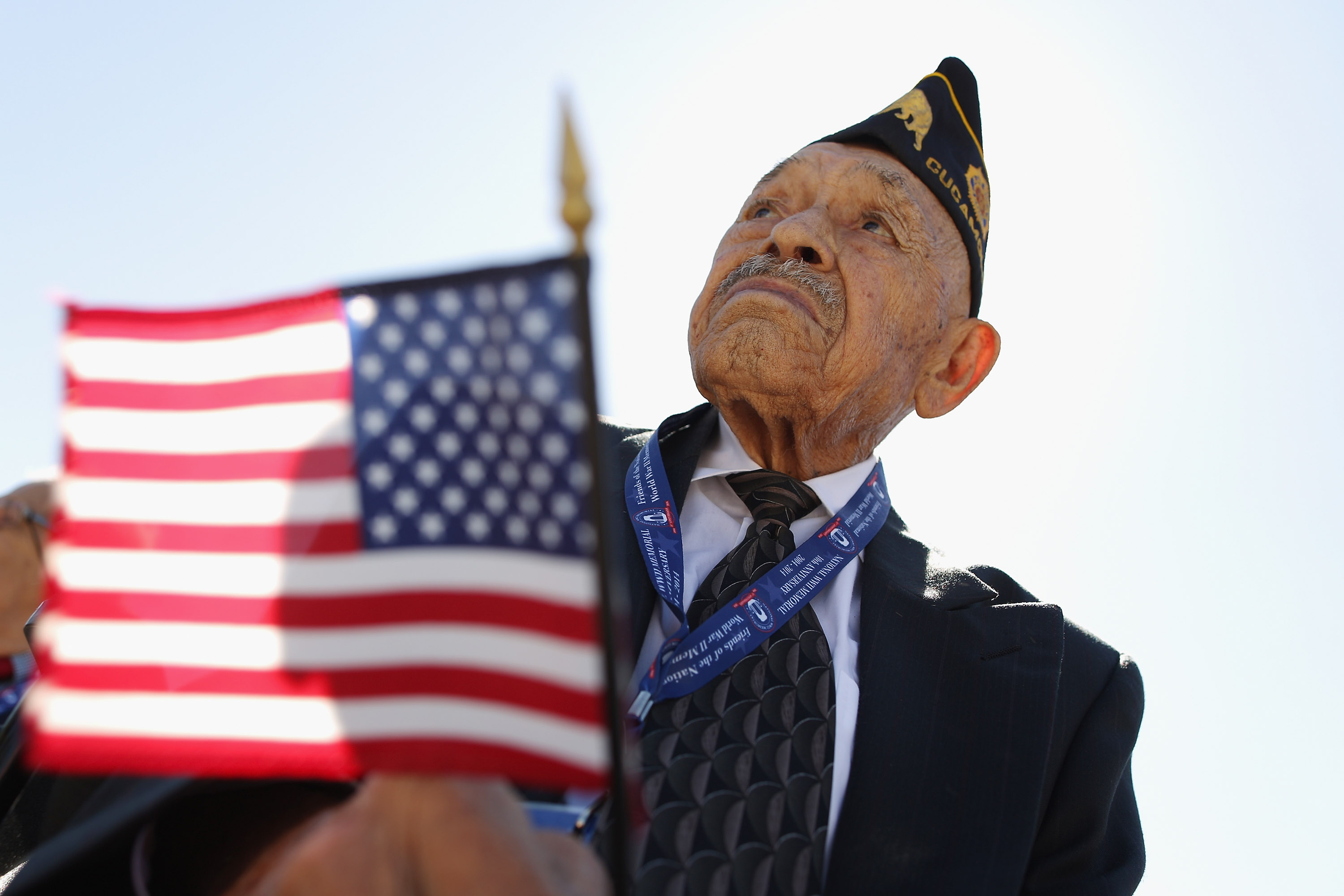
American World War II veteran Henry Mendoza of Rancho Cucamonga, California, participates in the 70th anniversary D-Day commemoration at the WWII Memorial on the National Mall on June 6, 2014. Mendoza was a member of the U.S. Army 9th Air Force and gave air support to the invasion of Normandy by allied troops. By Chip Somodevilla/Getty Images.
It’s rampant:
As a personality trait, procrastination is closely tied to impulsiveness, lack of drive, and poor self-control, and while it has been studied at length in the context of how it affects work, its impact on health is an area that remains ambiguous. Though external factors such as noisy neighbors and snoring are often cited as the reasoning behind an inability to sleep well, [Utrecht University researcher Floor] Kroese’s study is the first to apportion blame to pre-bed procrastination. Twenty-eight percent of American adults report that they sleep for six or fewer hours each night in spite of the recommended amount being between seven and nine. The fact that we decide for ourselves when to hit the hay means we have a greater propensity for just, well, not doing what we’re supposed to.
One of the most interesting things Utrecht’s survey picked up is that while we usually waste time to avoid unenjoyable duties, going to bed does not fall into this category. This separates it from most other forms of procrastination, and lays blame upon our personal levels of self-control, which are deemed to be at their lowest at he end of the day when we go to bed.
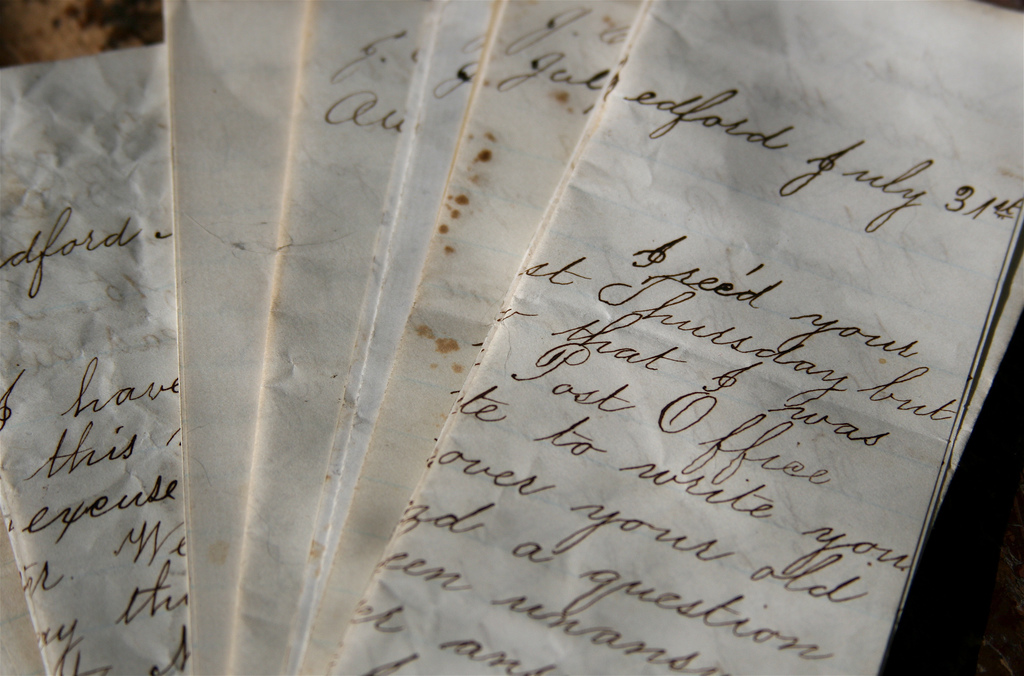
Katherine A. Powers reviews Letters of Note: An Eclectic Collection of Correspondence Deserving of a Wider Audience, a volume that includes a wide-range of “personal letters, memos, telegrams, open letters written chiefly for political purposes, and a couple of form letters.” She notices that love and death stand out as themes in the first category:
Love letters, which I am guessing make up the majority of the personal letters written today (with letters of umbrage running second by a slim margin) are present, and they are, to say the least, fraught.
Emily Dickinson writes passionately to her sister-in-law, and a German woman in a mental hospital writes two words over and over to her husband: “Sweetheart, come.” Zelda Fitzgerald, after a blow-up with Scott, declares that she needs him so badly that she wouldn’t mind if he was “covered in sores like a leper.” Rebecca West, given the hook by that smug bounder H. G. Wells, combines love with acid: “Your spinsterishness,” she informs him, “makes you feel that a woman desperately and hopelessly in love with a man is an indecent spectacle and a reversal of the natural order of things.”
The selection shows again that absence strengthens love, and never more so when brought about by death. Heartfelt letters to dead lovers come from physicist Richard Feynman writing to his wife and Katharine Hepburn to Spencer Tracy. A pregnant sixteenth-century Korean widow implores her deceased husband to come to her in her dreams. In fact, death is all around us in this volume: other suicidal correspondents include a seventeenth-century Japanese woman writing to her slain samurai husband, saying she is going to kill herself to join him. Virginia Woolf writes to Leonard about how she can’t live with her madness, and a kamikaze pilot tells his two young children that he will be watching over them as a god and instructs his five-year-old son to “be an unbeatable person like your father and avenge my death.” Robert Falcon Scott, freezing and starving in the Antarctic, writes a farewell letter to his wife, and someone at the FBI (as it turns out) writes anonymously to Martin Luther King Jr., advising him to commit suicide.
Check out the book’s companion blog, Letters of Note, here.
(Photo by Liz West)
Emmett Rensin exposes it:
The Daily Currant is a fake-news site of a different stripe: one entirely devoid of jokes. Whether this humorlessness is intentional or not—the site’s founder contends his critics don’t have a sense of subtlety—the site’s business model as an ad-driven clickbait-generator relies on it. When Currant stories go viral, it’s not because their satire contains essential truths, but rather because their satire is taken as truth—and usually that “truth” is engineered to outrage a particular frequency of the political spectrum. As Slate’s Josh Voorhees wrote after Drudge fell for the Bloomberg story, “It’s a classic Currant con, one that relies on its mark wanting to believe a particular story is true.” …
The creators of these sites, when they can be identified at all, aren’t talking. With the exception of National Report, these sites don’t have mastheads. When they allow contact at all, it’s through blind submission forms—not always in English—or generic email addresses. Most also use third-party services to mask the identity of the domain owner. Despite attempting to reach out to dozens of sites, I got only two replies. One was from Empire Sports News’s Aaron Smith, who said he was “possibly” willing to talk, but went silent at the first mention of ad revenue. Barkeley, of The Daily Currant, responded to my request for an interview with a brief email that read, “You’re more than welcome to do a takedown piece on our website. But you’ll have to do it without help. Good luck.” He ignored my follow-ups.
Daily Currant editor Daniel Barkeley writes in:
The passages you quoted seem to imply that we aren’t open with the media. That is 100% not true. I have done at least a dozen interviews with major news publications in the past few years. In this particular case, however, the journalist behaved in a manner I did not consider to be professional and wanted no part of the article.
It should be said that the Daily Currant has had some great parodies of Palin over the years – Dish links here and here.
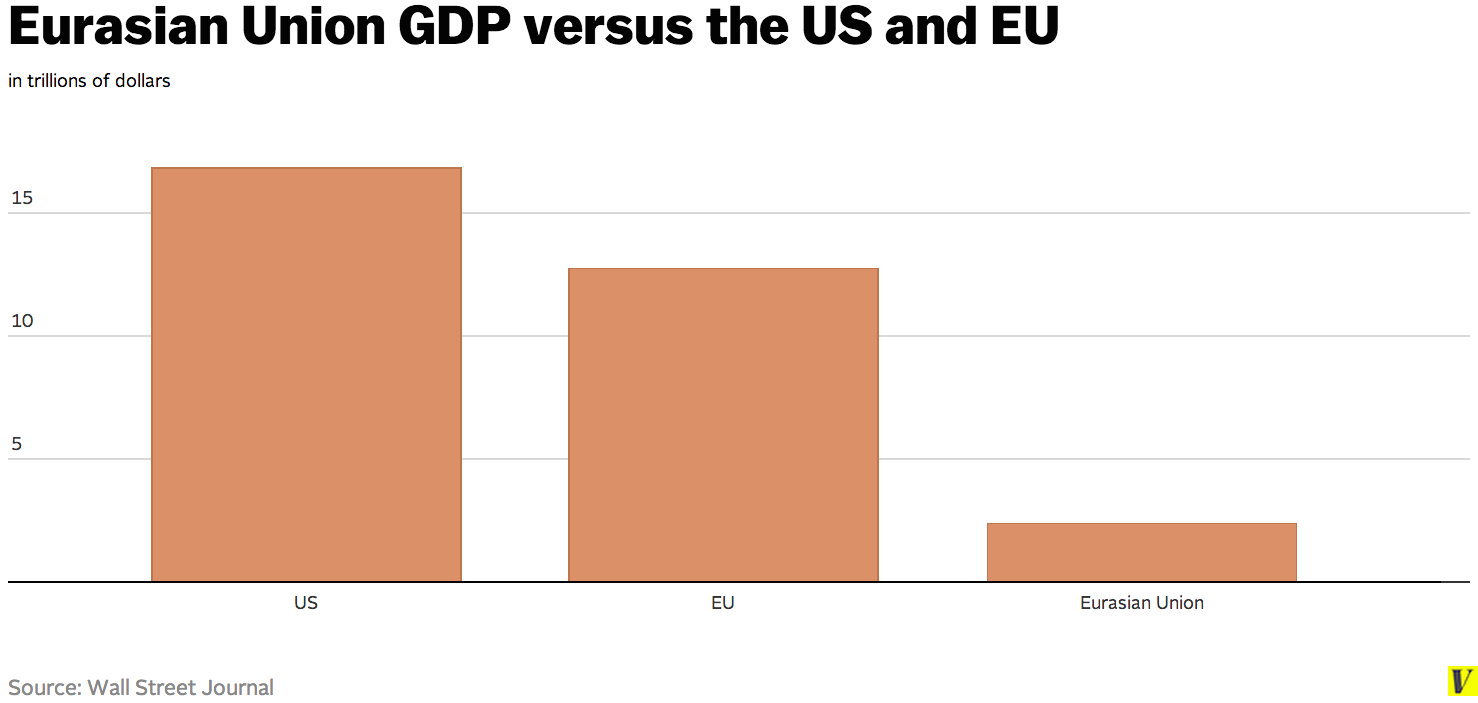
The Eurasian Economic Union was officially founded last week with a treaty signed by Russia, Belarus, and Kazakhstan. Casey Michel doubts the new institution will do much to shake up the world order:
Modeled on the European Union’s economic constructs, the new union will represent a market of 170 million, and will boast a total GDP of nearly $3 trillion. The EEU will serve as the maturation of the current customs union shared by the three nations, and will allow further economic integration — increased free movement of goods, streamlined trade regulation, unified macroeconomic policy — between member states. And the EEU has potential to keep growing. If Putin somehow manages to woo the remaining post-Soviet (non-Baltic) nations, the EEU’s market could jump to some 300 million members and just under $4 trillion in combined GDP.
But that swell is far from plausible. Even before the EEU became official, members had many doubts about its benefits. Kazakhstan, Central Asia’s most dynamic economy, has failed to procure the expected benefit from membership in the customs union, and the EEU looks to continue the trend. Involvement with the current customs union has continued to delay Kazakhstan’s accession to the World Trade Organization, with the WTO citing “discrepancies” surrounding the external tariffs that will continue under the EEU. Meanwhile, Russia joined the WTO on its own, rather than as the bloc originally proposed.
Beauchamp is also skeptical, calling the union “weak and doomed”:
[I]f this is really Putin’s big plan, Brussels can probably breathe easy. The Eurasian Union is weak. It’s not much more threatening than Russia on its own is — which is to say, far less threatening than people seem to think.
Let’s start with wealth, the simplest point. Even including the two countries who haven’t joined yet but plan to — Armenia and Kyrgyzstan — the Eurasian Union mounts about a sixth of the European Union’s GDP. The vast majority of that wealth comes from Russia, so it’s not like Putin is getting access to huge new markets by signing this deal.
What’s more, Russia’s economy is suffering mightily in the wake of its Ukraine adventure: Western sanctions have sent its stock exchange and the value of its currency against the dollar in free fall. There’s just no way an expanded economic relationship with a series of much smaller countries could help Russia weather more economic punishment if it decides to expand its expansionist ambitions in Ukraine or outside of it.
A reader writes:
Regarding your brief reference to Copyranter’s piece on native ads, I’m more than a little shocked you didn’t focus on the other parts of his piece that seem to perfectly validate many of the accusations you’ve made against sponsored content and Buzzfeed’s business model. Here is how Copyranter characterizes the company’s ad strategy (and let’s not forget this is coming from a bonafide ad expert who wrote copy for 20 years):
… BuzzFeed’s native advertising runs directly against what makes a great ad great—an execution that memorably presents a product benefit (or the brand’s image). A great ad stands out and grabs you and entertains and informs you while delivering a message you remember, branding the brand’s name into your brain.
But more and more big brands are robotically onboard the BuzzFeed buzz saw, because they get to attach their commercials at the end of listicle posts that have nothing to do with their product’s benefit and, often, have nothing to do with their product at all (click the Kia ad). But lost-at-sea marketing managers get to show off an online thingamajig to their bosses with their brand name on it that has tens, and sometimes hundreds, of thousands of views. “Look at that viral lift, baby, massive eyeballs!”
And your readers should check out this completely damning personal account regarding Buzzfeed’s professed separation of their editorial and business departments:
But really: How “seriously” does BuzzFeed take the “separation of church and state?” During my 18 months working in their editorial department as an ad critic —what I was hired to be—I (the “state”) was emailed three times by three different staff account reps (the “church”) to “do anything I could” to help promote a new video ad by a then current BuzzFeed client. I was even emailed by Peretti (the “Pope”) to post about a Pepsi ad, where he helpfully included a suggested (positive) editorial direction.
As I was still fairly new at BuzzFeed, I figured I had to do the Pepsi post, right? I didn’t like the ad, I didn’t hate the ad, I would not have reviewed the ad, but the fucking CEO sent it to me! I wrote about it, positively, and posted it.
Later that same day, my post went to the front page, and there it sat, right below a “yellow” “featured partner” ad post about the same Pepsi video—written by a BuzzFeed in-house creative—with the same exact take on the ad. The headlines were even almost identical. Did Peretti know about the in-house ad? I don’t know. Ask him.
Sorry, I didn’t save a screen shot of this rather egregious church/state violation, or the email from Peretti, because I don’t think like a scumbag lawyer when I’m working for somebody. But I did delete my Pepsi post, immediately. It seemed the Mad Men thing to do.
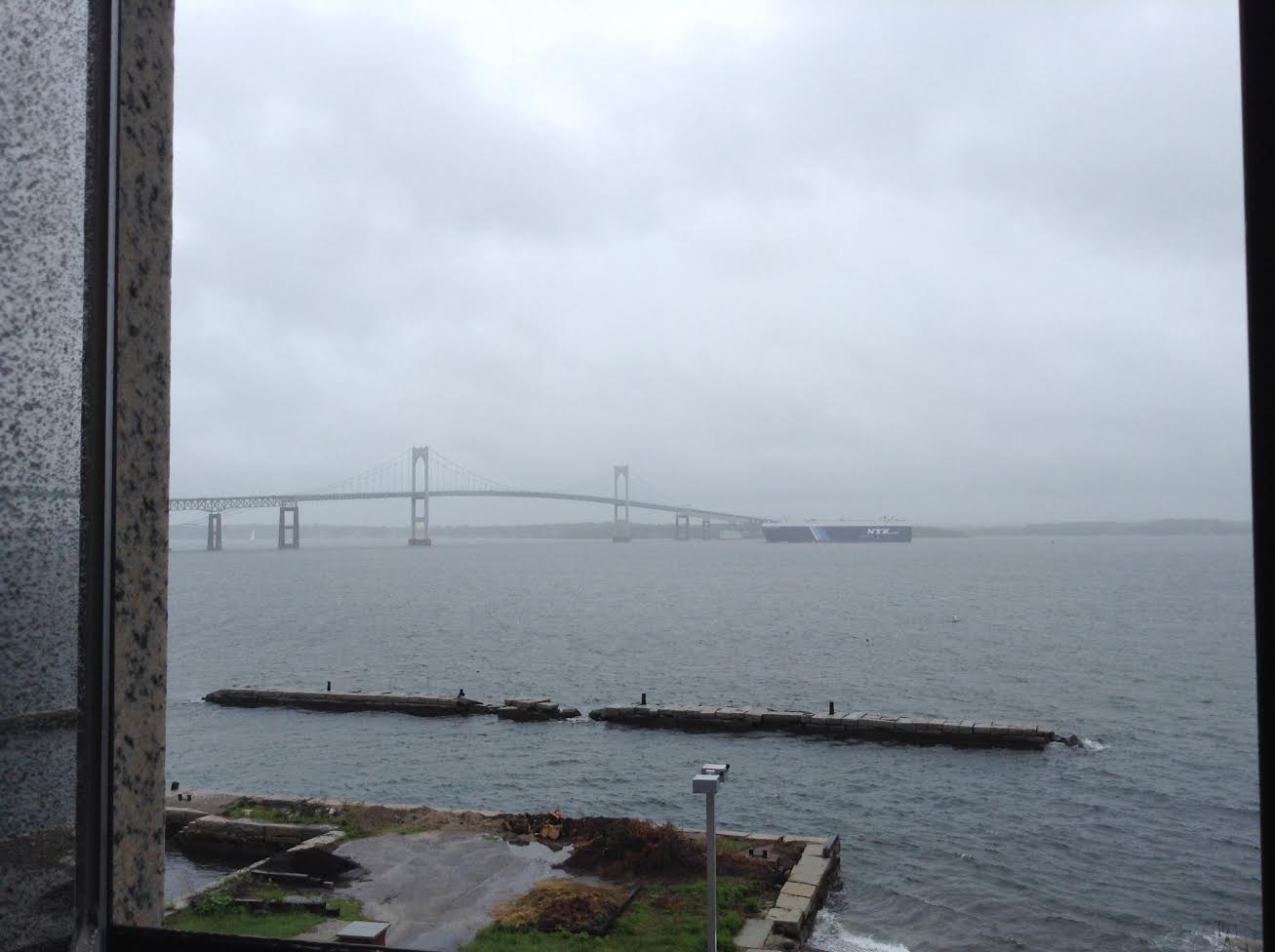
Newport, Rhode Island, 4.22 pm
VICTORY IN WISCONSIN! Marriage ban has been STRUCK DOWN!
— JoeMyGod (@JoeMyGod) June 6, 2014
And DC makes 21. But:
No same-sex couples marrying immediately in Wisconsin, as I detail here: http://t.co/MDMZeCD8Gr
— Chris Geidner (@chrisgeidner) June 6, 2014
Once again RT @ryanjreilly: There are 12 (!) Scalia references in Wisconsin gay marriage decision http://t.co/UsCaZnvwut
— Benjy Sarlin (@BenjySarlin) June 6, 2014
Andrew Sullivan (@sullydish) actually gets three references in Wisconsin gay marriage decision. http://t.co/xx0P2bEy2x
— Ryan J. Reilly (@ryanjreilly) June 6, 2014
Federal judge in #Wisconsin rules for the @freedomtomarry. 15th federal judge in a row.
— Evan Wolfson (@evanwolfson) June 6, 2014
 The Dish