Joshua Ferris shares why he came to prefer the “historically informed, politically conscious, biographically interrogating, socially indicting, and existentially preoccupied” work of Philip Roth to the “idiosyncratic, heightened, elaborately constructed worlds” of Nabokov:
You can hear [a] great American thinker in the rhythms and repetitions of Roth’s prose:
Ralph Waldo Emerson. “I appeal from your customs,” Emerson wrote in “Self-Reliance,” “I must be myself. I cannot break myself any longer for you, or you. If you can love me for what I am, we shall be happier. If you cannot, I will still seek to deserve that you should. I must be myself.”
With uncommon felicity and characteristic lucidity, Roth demonstrates the complex, often fatal consequences of living according to Emerson’s individualist creed. That creed was given legal shelter by the founding fathers, and two and a quarter centuries later, its major dramaturge wrote The Human Stain. Roth dramatizes better than anyone, more so even than Whitman, how Emerson’s elliptical and oracular essays might play out in real life, the consummations and ravages of its single-minded pursuit.
It’s this that I turn to Roth for, which I do now more than Nabokov: for his urgency and relevance, for his argumentation and applicability. He is not as high-minded, nor as metaphysical, nor as sensuous or poetical. But he’s furthering a native tradition of thought that extends through time to this country’s deepest political impulse, namely, the imperial inviolability of the person. There is no higher art than that.
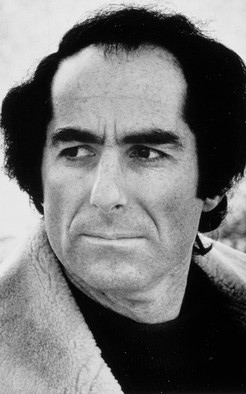
Previous Dish on Roth here, here, and here.
(Photo via Wiki)

