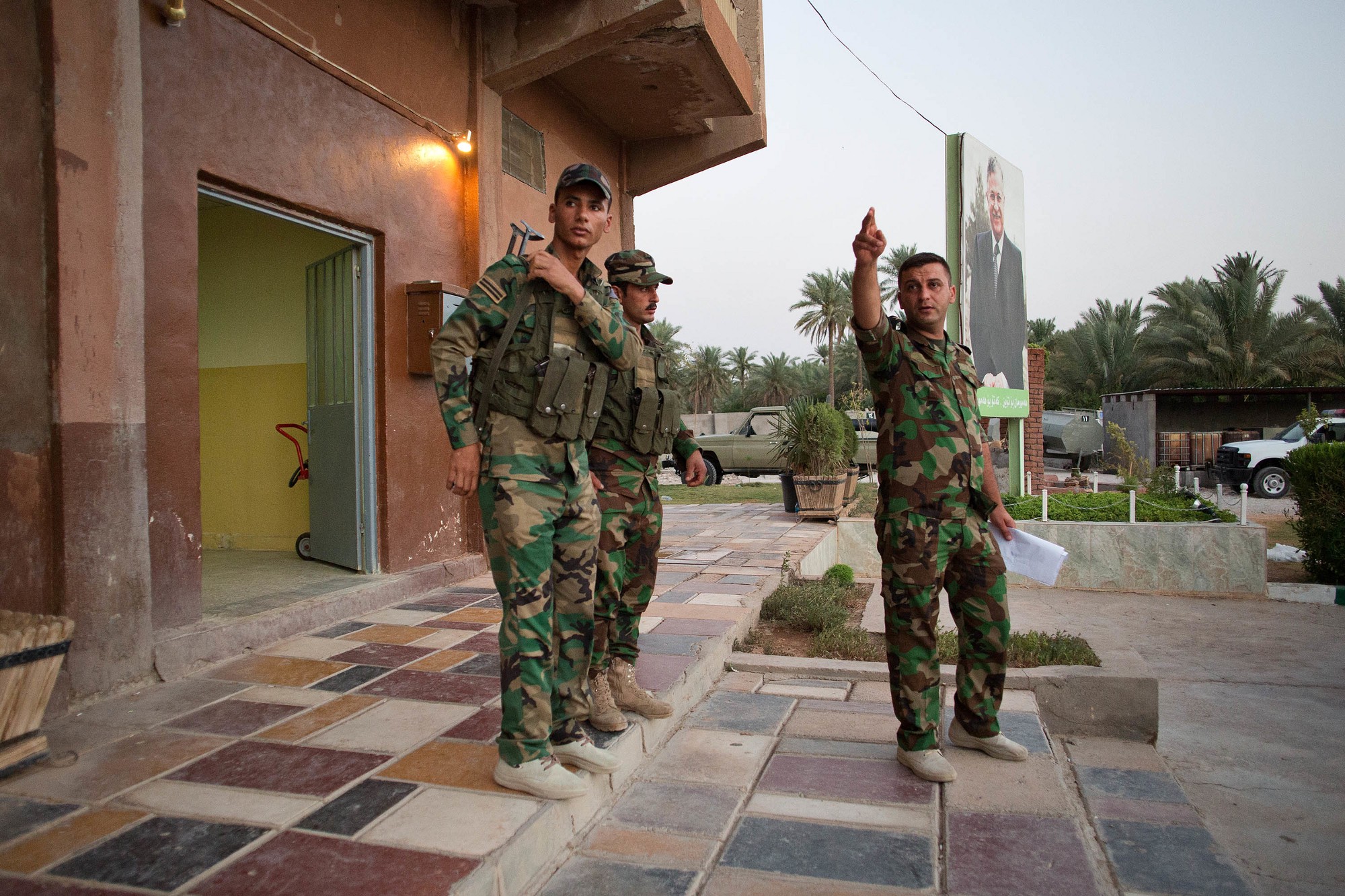
Ranj Alaaldin has the latest on the Kurds, who, in taking and holding Kirkuk against the ISIS onslaught, “may have won a historic battle for what has been described as both the crown jewel and Jerusalem of Kurdistan”:
It can now secure its economic independence from Baghdad. Control of Kirkuk also means the Kurds have the economic lynchpin for an independent state, should that be a desired option in the future.
Arab Iraq may still try to retake the province, but it is too focused on turning Baghdad and the Shia south into a fortress. Its preoccupation with Isis and the broader Sunni Arab insurgency means that, at best, Arab Iraq can hope the Kurds will still settle the status of Kirkuk through Article 140 of the Iraqi constitution, which provides for a referendum on the status of the province. That would be wishful, as well as futile, thinking. Baghdad not only has a weakened hand, but the demographics in the province and realities on the ground considerably favour the Kurds.
Some might argue that the Kurds no longer share a border with an internationally recognised sovereign state but with a dangerous coalition of jihadists and unpleasant Sunni Arab militant forces. That misses the bigger picture.
The Sunni insurgency is occupied with powerful Shia enemies to the south; their resources are limited; they are divided among themselves and they lack the capacity to fight the experienced Peshmerga. Furthermore, Baghdad was never really in control of the Sunni Arab heartlands that border Kurdistan. Long before recent events, those heartlands constituted a safe haven for militants and jihadist groups. The threat is real, but nothing new for the Kurds.
Simon Tisdall considers how regional actors might respond to Kurdish statehood:
[O]il exports depend largely on a pipeline through Turkey, which opened this year. Faced by political developments in Irbil it dislikes, it would be an easy matter for Ankara to turn off the tap. Turkey has been fighting Kurdish insurgents in its south-east region for decades. It has always been assumed it would oppose Iraqi Kurdish independence, fearing a knock-on effect at home.
But that perception has gradually changed since 2003 amid heavy Turkish commercial investment in northern Iraq. High-level political contacts with the KRG are now routine, while Ankara’s relations with Baghdad have soured. It may be that Turkey will ultimately prefer a stable, friendly new border state free of extremists (of any hue) that is also an energy supplier and trading partner. “If Barzani does push for independence, he’s gambling that the Turks will concede that, one, KRG oil deals are more valuable than KRG statehood is dangerous, and two, that Kurds are still a valuable buffer zone vis-a-vis Iran,” said analyst Lee Smith.
Set against this prospect is the likelihood that, assuming he survives the civil war, Syria’s president Bashar al-Assad will revert to his former anti-Kurdish policies. Iran, similarly fearful of domestic unrest, remains deeply hostile to Kurdish aspirations.
Meanwhile, Dov Friedman and Gabriel Mitchell investigate the sketchy Kurdish-Israeli oil transaction that came to light a few weeks ago:
If Israel received Kurdish oil with the intention of storing it, two scenarios are plausible. In the first, Israeli companies—with government consent—purchased the oil because the price was simply too good to pass up. Currently, Israel receives most of its 280,000 barrels-per-day from Azerbaijan, Russia, and some undisclosed sources. Since Kurdish oil arrived at a substantial discount—due to the Kurds’ eagerness to sell and the shallowness of the market—Israeli companies may have purchased and stored the oil for domestic consumption. If Kurdish oil develops into a reliable source, Israel gains negotiating power in its future energy contracts. And if Kurdistan’s relations with the Iraqi government continue to devolve—or if Iraq continues its descent into violent chaos—the Kurds may substitute access to Basra’s ports for an Israeli route to the Red Sea, via the Trans-Israel pipeline between Ashkelon and Eilat, and onward to the lucrative, energy-thirsty markets of Asia.
In the second scenario, the sale of Kurdish oil may be technically correct yet effectively misleading. Israel may be storing the oil because the Kurds have not yet found an end buyer. The money transferred to KRG accounts at Halkbank would then mean Israel has either informally loaned KRG money or Israel has assumed the liquidity risk of the Kurdish oil shipment. Both scenarios suggest that the Kurdish-Israel relationship has matured significantly.
Previous Dish on the prospect of an independent Kurdistan here.
(Photo: A peshmerga NCO directs soldiers to their guard posts at the headquarters in Khanaqin. By Matt Cetti-Roberts, from this photo essay on the Kurdish fighters.)

