In a review of Lifted: A Cultural History of the Elevator, David Trotter examines how the lift shaped society:
Rich people realised that the stuff they’d always enjoyed doing at ground level was even more enjoyable when done on the top floor; and that being able to do it there at all was a useful display of
the power wealth brings.
In 1930s New York, the twin towers of the new Waldorf-Astoria hotel, which rose from the 29th to the 43rd storey, constituted its unique appeal. ‘Below the demarcation line of the 29th storey, the Waldorf-Astoria, although expensive, was accessible to everyone; above the line began an exclusive region of suites of as many as twelve rooms with private butler service.’ The upper floors of tall buildings, once given over to staff dormitories, had become what [author Andreas] Bernard calls an ‘enclave of the elite’. The Waldorf-Astoria’s express elevators, travelling direct to the 29th floor, were as much barrier as conduit. Such discrimination between elevators, or between elevator speeds, played a significant part in the design of those ultimate enclaves of the managerial elite, the penthouse apartment and the executive suite. In 1965, the penthouse still had enough ‘unheard-of glamour’ to lend its name to a new men’s magazine.
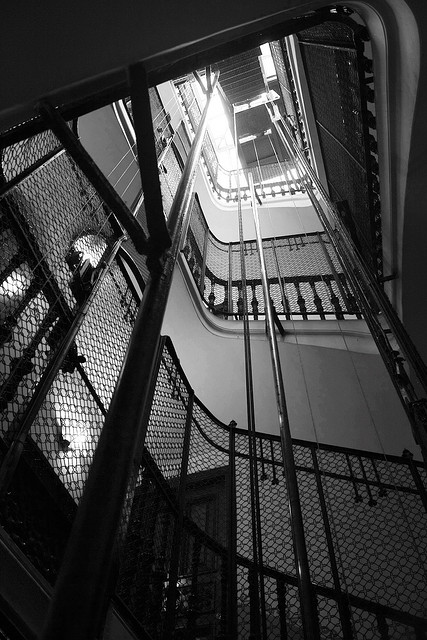
(Photo by Flickr user Gustavo)

