Tim Allen, a professor at the London School of Economics, specializes in researching ethnic conflict, forced migration, and development aid. In an interview, he explains why in-person fieldwork is so crucial to understanding international development efforts. He takes Uganda’s Lord’s Resistance Army as an example:
The external perception is that this is a mad group abducting children, not unlike Boko Haram who may well have learnt some of their methodology from the LRA. Actually, the vast majority of those abducted are young adults who might be trained to fight. There was also an interest in taking prepubescent girls because they were thought not to be HIV positive. Those girls were married, using local idiom, to commanders and were not raped indiscriminately. The most disturbing thing is that most of them were reasonably positive about the experience.
Of course some were severely traumatised, but the idea of abducting women for marriage has deep roots in this society. Many women talk about having been captured by their husbands. I’m not excusing this in any way, but they take a local custom of abducting women into marriage and play upon it. Also, the effects of 19th-century slave-raiding, involving large-scale abductions, still resonate here. Working at the local level reveals all sorts of things.
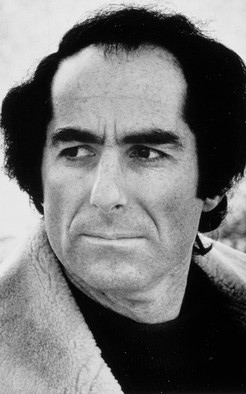
Joshua Ferris shares why he came to prefer the “historically informed, politically conscious, biographically interrogating, socially indicting, and existentially preoccupied” work of Philip Roth to the “idiosyncratic, heightened, elaborately constructed worlds” of Nabokov:
You can hear [a] great American thinker in the rhythms and repetitions of Roth’s prose: Ralph Waldo Emerson. “I appeal from your customs,” Emerson wrote in “Self-Reliance,” “I must be myself. I cannot break myself any longer for you, or you. If you can love me for what I am, we shall be happier. If you cannot, I will still seek to deserve that you should. I must be myself.”
With uncommon felicity and characteristic lucidity, Roth demonstrates the complex, often fatal consequences of living according to Emerson’s individualist creed. That creed was given legal shelter by the founding fathers, and two and a quarter centuries later, its major dramaturge wrote The Human Stain. Roth dramatizes better than anyone, more so even than Whitman, how Emerson’s elliptical and oracular essays might play out in real life, the consummations and ravages of its single-minded pursuit.
It’s this that I turn to Roth for, which I do now more than Nabokov: for his urgency and relevance, for his argumentation and applicability. He is not as high-minded, nor as metaphysical, nor as sensuous or poetical. But he’s furthering a native tradition of thought that extends through time to this country’s deepest political impulse, namely, the imperial inviolability of the person. There is no higher art than that.
In a [new study], Mohamad Koubeissi at the George Washington University in Washington DC and his colleagues describe how they managed to switch a woman’s consciousness off and on by stimulating her claustrum. The woman has epilepsy so the team were using deep brain electrodes to record signals from different brain regions to work out where her seizures originate. One electrode was positioned next to the claustrum, an area that had never been stimulated before.
When the team zapped the area with high frequency electrical impulses, the woman lost consciousness. She stopped reading and stared blankly into space, she didn’t respond to auditory or visual commands and her breathing slowed. As soon as the stimulation stopped, she immediately regained consciousness with no memory of the event. The same thing happened every time the area was stimulated during two days of experiments (Epilepsy and Behavior, doi.org/tgn).
The horrifying kidnapping and almost instant murder of three Israeli Jewish teens was only bested by Bib Netanyahu’s disgustingly Cheney-esque response: “May God avenge their blood.” To have the leader of a democratic country bless the concept of revenge after such an inflammatory event is quite something. It is not something that George W Bush engaged in publicly after 9/11, which was a thousand times more deadly than the foul crime on the West Bank. It is not something any leader seeking to keep his country civil and united would ever do.
So when a sectarian revenge fantasy becomes real – and a young Palestinian teen is burned alive in response – I think the prime minister bears some responsibility. But then he bears responsibility for so much: the relentless settlement of the West Bank, destroying any chance for a two-state solution (by clear design); the sharp deterioration in Israel’s relations with Europe, Turkey, and the United States, as a result; and the devolution of Greater Israel into a situation where sectarian revenge killings are now part of the fabric. It seems increasingly clear to me that Netanyahu should be seen less and less as a democratic figure like a European prime minister, and more like a democratically elected Middle Eastern sectarian figure, like Maliki. With the same potential consequences.
And here, for good measure, are two IDF soldiers beating the 15-year-old American cousin of the murdered Palestinian teen, allegedly caught in a violent protest:
Another video of the beating is here. If it looks like something the basij do in Tehran, you’re not far off. The State Department has issued a statement in response.
You can always leave your unfiltered comments at our Facebook page and @sullydish. 15 more readers became subscribers this weekend. You can join them here – and get access to all the readons and Deep Dish – for a little as $1.99 month.
See you in the morning.
(Photo: Revellers hold up their red handkerchiefs during the opening and the firing of the ‘Chupinazo’ rocket which starts the 2014 Festival of the San Fermin Running of the Bulls on July 6, 2014 in Pamplona, Spain. By Pablo Blazquez Dominguez/Getty Images.)
“Meeting at Night” by Robert Browning (1812-1889):
The grey sea and the long black land;
And the yellow half-moon large and low;
And the startled little waves that leap
In fiery ringlets from their sleep,
As I gain the cove with pushing prow,
And quench its speed i’ the slushy sand.
Then a mile of warm sea-scented beach;
Three fields to cross till a farm appears;
A tap at the pane, the quick sharp scratch
And blue spurt of a lighted match,
And a voice less loud, through its joys and fears,
Than the two hearts beating each to each!
Pondering the strange phenomenon of the super-rich claiming to be a persecuted minority – the venture capitalist Tom Perkins and Kenneth Langone, the co-founder of Home Depot, for example, both “compared populist attacks on the wealthy to the Nazis’ attacks on the Jews” – James Surowiecki looks back to when the one-percent weren’t so obtuse:
A century ago, industrial magnates played a central role in the Progressive movement, working with unions, supporting workmen’s compensation laws and laws against child labor, and often pushing for more government regulation.
This wasn’t altruism; as a classic analysis by the historian James Weinstein showed, the reforms were intended to co-opt public pressure and avert more radical measures. Still, they materially improved the lives of ordinary workers. And they sprang from a pragmatic belief that the robustness of capitalism as a whole depended on wide distribution of the fruits of the system.
Similar attitudes prevailed in the postwar era, as [sociologist Mark] Mizruchi has documented. Corporate leaders formed an organization called the Committee for Economic Development, which played a central role in the forging of postwar consensus politics, accepting strong unions, bigger government, and the rise of the welfare state. … Corporations supported policies that might have been costly in the short term in order to strengthen the system as a whole. The C.E.D. called for tax increases to pay for the Korean War and it supported some of L.B.J.’s Great Society. As Mizruchi put it, “They believed that in order to maintain their privileges, they had to insure that ordinary Americans were having their needs met.”
That all changed beginning in the seventies, when the business community, wrestling with shrinking profits and tougher foreign competition, lurched to the right. Today, there are no centrist business organizations with any real political clout, and the only business lobbies that matter in Washington are those pushing an agenda of lower taxes and less regulation.
Storm photographer Mitch Dobrowner describes his vocation in an interview:
PP: Let’s talk about your storm photography. Why storms? Is it because of the unique light and cloud formations you’re able to capture? Or is it more of a thrill-seeking venture?
MD: Yeah, it’s always about the light. My main focus has always been landscape photography. I have always loved just sitting out in nature, hearing the wind blow and watching the light changing. I study the light and see photography as an exercise in painting with light and shadows. In inclement weather, light and shadows are always changing. … A storm is like a person. It’s born when the conditions are right, at birth it is fragile — it can die — but once it decides it’s going to live it turns unpredictable and can become violent. Eventually it matures and takes form, then ages and dies. No two storms are born in the same exactly way — and no two storms will ever look (or act) the same.
When I’m out there I always hear the mantra spoken by Edward Abbey, “Our job is to record, each in his own way, this world of light and shadow and time that will never come again exactly as it is today.” …
PP: What advice would you have for others who want to photograph storms? What are the tricks of the trade you’ve learned by doing this work?
MD: No tricks, just respect Mother Nature and the people that live in the area in which these storms take place. Oh, and you should try to stay out of the way of lightning.
Rachel Vorona Cote ended a “brief and sad” marriage to her first husband when she was 25. She reflects on how she got over worrying about a second wedding:
[S]omewhere along the way I learned that relationships don’t gain moral strength simply because they have endured. Relationships are too messy for such clean parallels. So much humiliation and self-loathing comes of treating divorce as the dark underbelly of intimacy. We don’t get one shot at long-term monogamy—if monogamy is even what we want. It occurred to me that, whether or not I wanted to remarry—and in the beginning I was not sure—divorce did not render impossible fifty years of mutual love and couch co-habitation.
By the week of my second wedding, I was stunned by the bigness of love surrounding me.
Part of me had feared that the celebration would feel uncomfortably familiar, but it didn’t and it wasn’t. My family and friends gathered around me, affirming our bond. … And while it is true that I love Paul in a way that I did not love my first husband—and that this affection shaped our wedding day—what is most important here is not comparative. I loved my first husband too, in the best way that I could in that moment, and I loved—still love—so much about our wedding. My wedding to Paul had nothing to do with my first; it was an exquisite day in the life of our own romance. The wedding was ours, and if it is not unconnected to the rest of my life, it still claims singularity—in the little particulars and in its celebration of a romance that can only be lived by Paul and me, together.
Jeff Sharlet, author of the new collection Radiant Truths, address that idea in an interview:
Every piece collected here touches on transcendence, but not all are explicitly religious. Reading, I was reminded of friends who say “I’m spiritual, not religious.” You’ve written elsewhere that you’re averse to the word “spiritual,” in the sense that you don’t like seeing your books filed in the Spirituality section of libraries and bookstores. Why is that?
Because I’m a curmudgeon. Here’s this word that millions of people find lovely and liberating — an alternative to all that seems calcified about religion, and what do I do? I complain. I think that in nine out of ten cases “spirituality” is a con — not a con by the person invoking it, but a con on that person. It offers the illusion of individual choice, as if our beliefs, or our rejection of belief, could be formed in some pure Ayn Randian void. For better and worse we make our beliefs and live our beliefs together. That’s what you get with the word “religion,” which means to tie, to bind. You may not want to be bound! I don’t. But we are. We’re caught up in a great, complicated web of belief and ritual and custom. That’s what I’m interested in, not the delusion that I’m some kind of island.
Update from a reader:
I guess I get what Mr. Sharlet means, but some of us don’t see the matter as being one of spirituality “vs.” religion. In the way that I look at it, faith has to be the deepest activity of “religion.”
Faith is that eternal ongoing journey for we mortal beings toward “Truth.” Spirituality can be another way of saying that, without getting bogged down in human prejudices toward particular religions. (If one thinks there might be other conscious life forms “out there” in our vast universe, does one assume they all have the “right” religion, or does one wonder how they approach their own journeys toward the ineffable Light?).
I get what Mr. Sharlet means about human responsibility via practical, proven means of association – aka religion. But religion has also had a lot to answer for over the centuries. Who are the very people who have broken the fundamental and basic promises to God that religious people say they are trying to keep? Often they’re the people who are merely “religious.” They are people who haven’t believed in their own connections to their Creator enough. They tend to be the people who worry about everyone else’s actions first, rather than seeing their challenge as being one of overcoming their own egos -fighting their own spiritual battles with the help of the Grace of God.
Religion can be a great thing if one doesn’t forget the faith that is supposed to live at the core of it. It can be a great thing if it unites the world’s peoples without dividing them. Some of us don’t think this is an impossible dream; it just requires the will to act on these ideals. For this reason, some of us think that focusing on what the various religions might have in common is a good thing: Faith, love, serving humankind (“even” in the form of one’s family and friends), actions that lead toward peace, justice, unity … even, God willing, a big dose of humility now and then.
So I guess while I think that the world would be, on the whole, in trouble without the good that religion (practiced the way it should) imparts, I have no problem discussing the deeper aspects of our relationship to our Creator, and how one lives one’s life, in terms of faith and spirituality – spirituality being another way of talking about “faith” in my view. In my own life, I think I’ve sensed the “Holy Spirit,” aka Love, active in a wide variety of religions; even if those religions might have added some goofy “man-made” ideas. This is why there can be so much confusion with religion – the Holy Spirit doesn’t “care” about man-made boundaries. It “blows” where it will, just as our physical sun shines down on “high” and “low” alike, or on the “good” and the “evil”.




 The Dish