Butch Is Beautiful

by Dish Staff

Kingsporch

And Vanessa Vitiello Urquhart wants the world to know it:

Sometimes a rude question is also a sincere one. Take, for example, an inquiry I hear quite often: Do lesbians really find butch women attractive? As a butch woman, it is impossible to ignore the implication that, for certain people, women like me are the least attractive creatures on the planet. Umbrage-taking aside, however, the question raises the issue of whose standards of beauty apply in a queer female context. And sorry, hetero guys, but they’re not yours.

In fact, butch lesbians often do quite well when it comes to attracting female attention… I myself have felt a strong attraction to some of my fellow butch dykes. There’s a uniquely butch self-confidence, an insouciant swagger that draws my eye when I see butches out in public. This distinctive attitude and its charms may be due, in part, to the fact that every butch knows full well that she doesn’t look the way most people expect women to look, and yet she’s found the confidence to persevere in spite of the side-eyes and the disapproving thin-lipped faces of people marching past, eyes averted.

Previous Dish on butch lesbians here and here.

(Image of the Boston drag troupe All The Kings Men via Wikimedia Commons)

Your Coffee Is Being Cut

by Dish Staff

John Metcalfe shares the grim news:

No doubt about it: there is trouble in coffee land. Drought and the spread of “leaf rust,” a plant disease, has left growers suffering in Brazil, the source of roughly a third of the world’s coffee supply. This one-two punch to the java industry has kicked prices up to their highest point in years and fanned fears of a global shortage (though those worries seem to have been premature). With the future uncertain, some unscrupulous folks in the supply chain have decided to get sneaky. They’re increasing profits by padding ground coffee with filler ingredients, say researchers. These adulterants range from relatively harmless things like chicory and brown sugar to more eyebrow-raising stuff like acai berries, soybeans, and peanuts, which could be problematic for those with allergies. …

Coffee fillers have become visible enough that they’ve attracted the attention of scientists at Brazil’s Universidade Estadual de Londrina, who [Monday] announced they’ve developed a new test to detect non-coffee ingredients. Standard methods now involve peeking at grounds under a microscope or simply tasting the brew; this updated technique, however, uses liquid chromatography and statistical analysis. The researchers believe this way provides a comprehensive view of the coffee’s chemical makeup, while removing any potential biases held by human taste-testers.

It’s OK Not To Feel Anything When A Celebrity Dies, Ctd

by Dish Staff

A reader writes:

Thanks to Elizabeth Nolan Brown for her eloquent essay on Robin Williams.  This reminds me of when Princess Diana died. I found out when I walked to the corner store to buy the newspaper. I read the headline and thought “Shit, that’s too bad” and didn’t give it another thought. Then the worldwide hysteria erupted and it was all Diana, all the time.  I just didn’t understand what the big deal was.  My wife, friends and family thought I was incredibly callous to have almost no reaction to Diana’s death.

Same thing with Robin Williams. I liked him and more than once busted a gut listening to him, but he was an entertainer with no connection to me.  Why should I grieve? It sucks that his demons took him down and I understand why some people are sad, but I just can’t muster it.

A like-minded reader adds:

It is as if Facebook and Twitter reactions to celebrity deaths and tragedies have supplanted going to church as the cultural litmus test for letting the greater community know you are a good person and people are compelled against all reason to participate.

But another relates to Robin:

“If you’re that depressed, reach out to someone. And remember: Suicide is a permanent solution to temporary problems,” – Robin Williams, World’s Greatest Dad (2009)

I was diagnosed with postpartum depression not that long ago.

I reached out, got help, and feel a million time better already. But it took along time. Depression makes you believe that you can’t dig yourself out of the hole you find yourself in. It makes it feel like if you reach out and talk to you someone, they’ll think you’re crazy. One of the main reasons I didn’t talk about my PPD was because I thought my doctor or husband would try to take away my son for fear that I’d hurt him. And that’s where depression twists the knife that is guilt. I felt guilty because I’m a mother! I should love this period of my life! I should be thrilled to have this amazing, perfect, healthy human being that looks at me with such love. But it’s a chemical imbalance. It’s not something I could control.

Mr Williams suicide is the second I’ve heard of in less then two weeks, the first being a former acquittance. We really do need to work on having a more open and honest dialogue about depression in this country.

Another gets honest:

If someone were to die at the age of 63 after a lifelong battle with MS or Sickle Cell, we’d all say they were a “fighter” or an “inspiration.” But when someone dies after a lifelong battle with severe mental illness and drug addiction, we say it was a tragedy and tell everyone “don’t be like him, please seek help.” That’s bullshit. Robin Williams sought help his entire life. He saw a psychiatrist. He quit drinking. He went to rehab. He did this for decades. That’s HOW he made it to 63. For some people, 63 is a fucking miracle. I know several people who didn’t make it past 23 and I’d do anything to have 40 more years with them.

Another gets open:

With regards to the death by apparent suicide of Robin Williams, I want to draw a clear line between Feeling and Mourning in this particular situation. I agree completely with the sort of Yeah, No Duh thesis of your post, and I found myself in the Facebook poster’s camp when, say, that guy from The Fast and the Furious movies died in a fiery car crash. It was tragic and ironic and awful, and I “felt” for his fans and family, I suppose; but I didn’t mourn.

I am deeply mourning the loss of Robin Williams.

I was born in 1969, so I grew up with Mr. Williams on my teevee machine. I obsessed over Dead Poets Society in my early 20s, around the time I realized I would suffer the rest of my life with depression. Aladdin and Mrs. Doubtfire helped me through the miserably dark early ’90s, when my diagnosis shifted to Bipolar Disorder, and I laughed and cried at the tail end of that rotten decade with Good Will Hunting and The Birdcage, both of which I sat up all night last night watching.

And somewhere in there, between Williams as a fat blue cartoon genie and a gay Miami nightclub owner, I laid down in my grungy apartment’s bathtub and made a pitiful, half-assed and obviously unsuccessful attempt at opening my wrists. I didn’t want it enough, so I failed. I still bear the small, pale scars of that day as reminders of what the end might look like. But I made it over. That time.

I am deeply mourning the loss of Robin Williams, because he felt like a friend and fellow-sufferer. He was the classic Crying-on-the-Inside Clown; a man who had everything and an almost universal acclimation as one of the greatest living comics. And yet he didn’t make it over. With all his fame and celebrity and the deep respect of his peers and fans, Robin Williams couldn’t make it over. I mourn for him; I mourn for that inescapable pain that not even his wife and children could help him overcome. I was inconsolable last night not because I’d never see another Robin Williams stand-up act or another in a long line of his mediocre late-career comedies, but because if he couldn’t make it over, what chance do I have?

Yes, it’s fine to feel nothing about this. Be my guest; the last thing the world needs is more faux-sentimentality and rootless hero-worship Because Celebrity. But when you’ve loved a performer since you were 9 years old, and suffered with him and laughed with him and watched him grow and rise and fall and fail and get back up and start all over again, all the while laughing most loudly at himself, you owe yourself a moment of true mourning.

Go here for all our coverage of Robin Williams’ death.

When Bellow Went Green

by Dish Staff

dish_melvilleberkshires

Saul Bellow’s classic novel, Herzog, turns fifty this year. Revisiting the book, Andrew Furman notices an aspect of the plot that had escaped him before – Bellow’s “sensitive evocations of place, particularly green places both within and without the city,” an unexpected turn for a Jewish writer associated with the urban landscapes of Chicago:

The novel opens with Herzog at his dilapidated Berkshires property at the peak of summer, contemplating all that has recently befallen him, primarily the collapse of his second marriage and his academic career. Bellow takes pains during this opening section, and throughout, to dramatize Herzog’s receptivity to the natural world. He sleeps outside many nights, surrounded by “tall bearded grass and locust and maple seedlings.” And “when he opened his eyes in the night, the stars were near like spiritual bodies. Fires, of course; gases—minerals, heat, atoms, but eloquent at five in the morning to a man lying in a hammock, wrapped in his overcoat.”

Critics have generally paid short shrift to such moments of heightened perception, moments that don’t directly involve the people in Herzog’s life, or his big ideas.

But now it seems wrong to separate Herzog’s receptivity to the external world from his insights about his impoverished upbringing, his failures as a father, husband, and son, and his scholarly views. It seems worthwhile, instead, to examine whether he finds, through nature, the exalted state of human perception envisioned by another Massachusetts resident, Ralph Waldo Emerson.

Bellow at least holds out the possibility that Herzog, like Emerson’s scholar or poet, might tap into his highest intuitive powers and realize true insight through his close observations of the animals, plants, and nighttime sky in the New England countryside. “Nature (itself) and I are alone together, in the Berkshires,” Herzog muses late in the novel, “and this is my chance to understand.”

(Photo of Herman Melville’s studio in the Berkshires, where he wrote Moby Dick, via Pablo Sanchez)

Why Intervene In Iraq And Not Syria? Ctd

by Dish Staff

Frederic Hof slams Obama for not arming the Syrian rebels back in 2012:

No doubt the president is sensitive to the charge that his rejection of the 2012 recommendation by his national security team to arm and equip nationalist Syrian rebels robustly has contributed significantly, if inadvertently, to ISIL’s growth in both Syria and Iraq. His comments to Friedman implicitly dismiss the 2012 recommendation itself as a fantasy, but as Secretary Clinton’s Syria adviser I was a member of the administration at that time. The recommendation, in one form or another, was offered not only by Clinton, but by Secretary of Defense Leon Panetta, CIA Director David Petraeus and Chairman of the Joint Chiefs Gen. Martin Dempsey. Yet the president, ignoring decades of universal conscription and mandatory military service in Syria, persists in characterizing the Assad regime’s armed opponents as a hopeless collection of former butchers, bakers and candlestick makers.

What is truly curious, however, is the request to Congress for $500 million to finance what the president deems a fantasy. Indeed, if press reports are true that the United States is already involved in some low-level arming, equipping and training of Syrian rebels, one wonders how many taxpayer dollars have already been spent on something the commander-in-chief deems illusory.

In a post we noted earlier, Marc Lynch explains why arming was a dodgy idea, and remains so today. Larison piles on, starting with a reminder that the exact same outcome that anti-interventionists feared in Syria (jihadists taking control of American weapons intended for “moderate” allies) has come to pass in Iraq. And another thing:

It should also be obvious that groups such as ISIS benefit from collapsing state authority, so it is not clear why an even more activist Syria policy aimed at collapsing the Syrian government would have been bad for that group or one like it.

The bigger problem with the hawkish revisionism on this question points to the inherent absurdity of what they were demanding from the U.S. (and what the administration has more recently agreed to do). Syria hawks wanted the U.S. to arm anti-regime forces for the purpose of overthrowing the government, but they emphasized their desire to arm only the “right” kind of insurgents to distract from the small problem that their overall goal of regime change would inevitably empower jihadist groups. Syria hawks wanted to arm the opposition in the hopes that it would start a process that would bring the Syrian government down, and if that had happened that would have created an even worse chaotic landscape in which jihadist groups would have thrived even more than they already do. Instead of jihadists controlling just part of Syria, it is entirely possible that even more of Syria would have ended up under their control had the administration done exactly what Syria hawks wanted and if things had worked according to plan.

Max Fisher and Amanda Taub list some other reasons why Obama’s choice not to intervene in Syria doesn’t contradict his choice to intervene (reluctantly) in Iraq. Among these reasons is that there’s a difference between intervening to preserve the status quo and intervening to change it:

Obama ordered air strikes against ISIS in Iraq focused on the narrow goal of defending Iraq’s semi-autonomous Kurdish region. Kurdistan had been mostly secure until ISIS began pushing into the territory about a week ago; it’s got a stable, pro-American, oil-producing government. Obama’s strikes are meant to help Kurdistan defend itself, and to preserve the status quo of a secure Kurdistan. The strikes are very clearly not about trying to change the larger ISIS war in Iraq, or to help Iraq retake the vast ISIS-held swathes of territory. In Syria, there is no “good” status quo to defend. Any strikes against ISIS there would be about pushing the group back from Syrian territory it already controls, so that more moderate Syrian rebels could seize it. In other words, the air strikes would be about changing the facts on the ground in Syria, rather than preserving them.

Obama seems willing to use force when he can protect something good — a stable, secure Iraqi Kurdistan — but not to try to fix something bad. He doesn’t want to “own” the outcome, get dragged into a potentially long engagement that could easily escalate, or risk sending the conflict spinning in an unpredictable new direction. So the US approach to Syria and Iraq is consistent in this respect.

Even Allahpundit sees how these criticisms of Obama’s reticence to intervene ignore reality:

It’s easy to say in hindsight “we should have hit ISIS harder before they had time to establish themselves”; in reality, had Obama made that case at the time, he would have been scoffed at by war-weary lefties and righties. And with good reason: There’s simply never been compelling evidence, the way there is with an America-friendly battle-tested force like the peshmerga in Kurdistan, that an FSA armed by Uncle Sam would have been equal to the task of stopping the jihadis, let alone Assad.

Previous Dish on intervention in Iraq vs. Syria here and here.

Face Of The Day

by Dish Staff

UKRAINE-RUSSIA-CRISIS-POLITICS

A woman reacts after shelling in the town of Yasynuvata near the rebel stronghold of Donetsk on August 12, 2014. Shelling on a town just north of Donetsk in eastern Ukraine on Tuesday ripped through blocks of flats and set its central market on fire, killing several in an attack that local residents blamed on Ukrainian forces. By Dimitar Dilkoff/AFP/Getty Images.

Trolling And The Confessional Essay

by Phoebe Maltz Bovy

Alyssa Rosenberg looks at the implications of Jezebel’s troll crisis:

The Jezebel staffers’ complaint [that their parent company isn’t blocking porn-bearing trolls] raises a broader issue. As publications have struggled to figure out what will reliably draw in both readers and advertisers on the Internet, feminist posts have emerged as a clear success story, one that provokes a unique response, both positive and negative. Feminist political commentary, feminist cultural criticism and women’s first-person narratives and personal essays have all done well in this challenging new ecosystem, even as they have inspired a particularly ferocious backlash. Many online publications have been willing to profit from these positive responses, but they have been slow to protect the writers and editors who must deal with ugly responses.

Rosenberg expands on the economics of women-oriented journalism:

One of the attractions of feminist writing is that it can be inexpensive to produce. XOJane, a women’s site that specializes in personal essays and first-person narratives pays $50 for such pieces. Bustle, a women’s site from Bleacher Report founder Bryan Goldberg, garnered derision last year when, on its launch, it advertised a part-time job that would pay the person who landed it $100 a day, at least three days a week, to produce between four and six posts each day.

I’d expand this further still, moving away from the persistent but seemingly blanket spamming Jezebel is evidently facing, and focusing instead on the sort Jessica Valenti and other female writers contend with: Personal insults, often of a deeply personal nature.

It’s not just that, as the Jezebel case indicates, female women’s-topics-type writers aren’t receiving proper support when it comes to the responses their work ends up eliciting. We also need to consider the sort of pieces women are encouraged to write in the first place: The more personal, the better. It’s not simply, here is woman journalist, here is woman’s issue – which is its own concern, but a separate one. The post or article often has to be about the woman. It needs to be about her contraceptive choices, her feelings about her cellulite and oh, perhaps a visual of that cellulite to go with?

Rosenberg’s article hints at the relationship between mandatory overshare and the industry but assumes that the writers who share are doing so readily:

Unfortunately, it sometimes seems like burnout is part of the business model. If one staffer is exhausted by a tidal wave of sexist e-mail and comments, another one will be eager to take her place, confident in her own imperviousness. If a writer becomes uncomfortable with using her own life for material – or, like Hannah Horvath on “Girls,” runs out of life experiences to turn into stories – there will be someone else out there who is invigorated by the possibilities of the personal essay.

We shouldn’t look at this as women simply liking to overshare. This is what gets page-views, and what’s the easiest for the most writers to produce. The desire here is about getting published, not (in most cases) about sharing something personal with the world. Personal sells, but it’s also what attracts the most painful sort of trolling.

The thing is, it’s not so difficult to accept divergent viewpoints from readers, even if the occasional UR WRONG can sting. But a contrarian take on, say, your IUD, your self-image in that bathing suit, is different from the same on birth control or body-image generally.

It’s not any more acceptable for a personal-essay writer to be subject to abuse than for any other sort of writer. The point here isn’t to blame the victim, but rather to question how we’ve even arrived at this hyperpersonal form of women-oriented journalism. It’s been sold to female writers as a sort of liberation. Speak your truth! And it can be just that, but only if the writer is sophisticated enough to handle whichever backlash, and established enough to be adding the personal details intentionally (as I’d assume was the case when Valenti shared the story of her first period), and not trying to trade the story for a professional contact or $50.

Was Dietrich Bonhoeffer Gay? Ctd

by Dish Staff

In a lengthy and absorbing interview, Charles Marsh, whose new biography of Dietrich Bonhoeffer has raised questions about Bonhoeffer’s sexuality, opens up about what he found when researching the German theologian’s life:

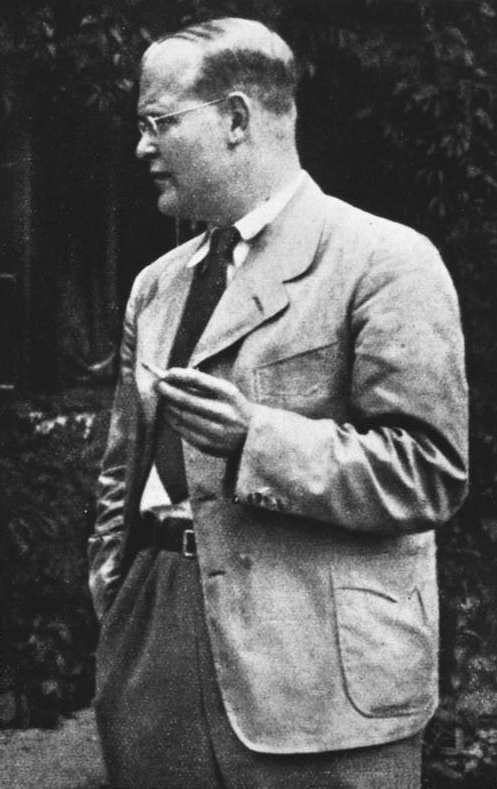
Over the years, I’ve gone to many Bonhoeffer conferences. This subject has been discussed Bundesarchiv_Bild_146-1987-074-16,_Dietrich_Bonhoefferoften over meals and drinks and beers, but it’s never been discussed in an academic session or a lecture. But there’s been conversation among scholars for as long as I can remember. What I had that scholars didn’t have, and do now, is the body of letters that Bonhoeffer and Eberhard [Bethge] exchanged. They wrote when they were apart during those seven years of their partnership. To be sure, I was intrigued when I found in those archives in Berlin a statement from a joint bank account. I did not realize that their partnership had that kind of formality about it as well. So Bonhoeffer and Eberhard began giving gifts together as a pair, Christmas presents and the like. They traveled and shared a room. They were soul mates of a sort. Bethge never reciprocated the intensity of Bonhoeffer’s affections. I don’t think Eberhard was gay; I simply don’t have any reason at all to think that. I think that Bonhoeffer’s love of Eberhard was one that he, Bonhoeffer, wanted to define as a kind of spiritual marriage, but Bonhoeffer’s love of Eberhard was also deeply romantic.

The challenge for trying to narrate this complicated relationship is, on the one hand, it was a chaste relationship. It was a relationship that was centered on their shared love of Jesus and shared devotional practices and it had a kind of liturgical shape to it. And yes, Bonhoeffer also was in love with Eberhard, and wanted in some fashion to secure a spiritual marriage of sorts, and Eberhard could not and did not want to finally accept that.

How Marsh responds to critics who question his portrayal of the Bonhoeffer-Bethge relationship:

[T]his is not my own attempt to sensationalize a relationship. If anything, I tried to capture it and respect it in its uniqueness, and not politicize it or insinuate. It was understood as a unique relationship, a different kind of relationship, in 1935 and 1936. The letters that we have now between Bonhoeffer and Eberhard are love letters, at least Bonhoeffer’s letters to Eberhard. Bethge’s letters back, I should make clear, were always more perfunctory, and the romantic quality, the quality of enthrallment and enchantment, this sort of romantic love, were not part of Bethge’s responses to Bonhoeffer. But for Bonhoeffer, they weren’t just letters, but beautiful love letters.

(Image of Bonhoeffer in 1939 via Wikimedia Commons)

A Slew Of Sketchy Polls

by Dish Staff

Polling Problems

Harry Enten is alarmed by bad pollsters copying good ones:

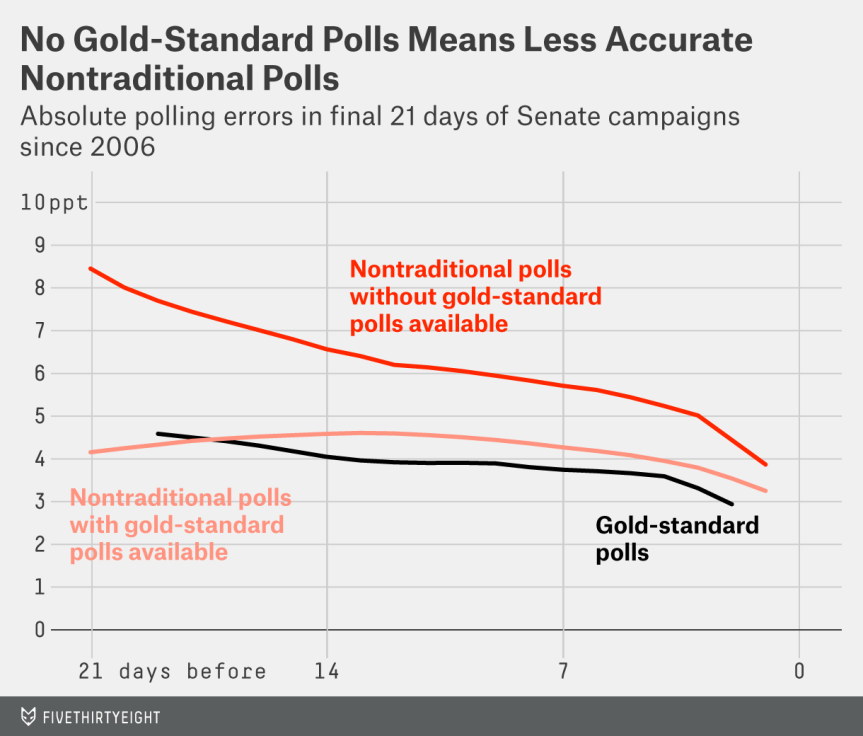
The problem is that many of these nontraditional polls may be cheating, adjusting their results to resemble higher-quality polls. We can see this by looking at polling from the final three weeks of Senate campaigns since 2006: in races without traditional, live-interview surveys (what we’ll call gold-standard polling), nontraditional polls have had significantly higher errors than they’ve had in races with at least one gold-standard poll. Gold-standard surveys appear to be the LeBron Jameses of the polling world: They make everyone around them better.

That’s how it’s supposed to work in basketball but not in polling, and this is a major problem for anyone watching 2014’s races. There hasn’t been a gold-standard poll released to the public at all for Alaska’s Senate race, in three months for Arkansas’s Senate race, in three months for Kentucky’s Senate race, ever in Louisiana’s likely Senate runoff, and in nearly four months for North Carolina’s Senate race. The only polls we can consider in these races were conducted by pollsters who have historically fared considerably worse as a group when the gold-standard pollsters weren’t around.