Anti-Zionism And Anti-Semitism, Ctd

Keating stresses that Europe’s enduring hostility toward Jews is not entirely, or even primarily, in reaction to Israel’s provocations:

recent Anti-Defamation League survey found that 24 percent of the French population and 21 percent of the German population harbor some anti-Semitic attitudes. A recent study of anti-Semitic letters received by Germany’s main Jewish organization found that 60 percent of the hate mail came from well-educated Germans. So this isn’t just a problem with young, disaffected Muslim men.

After all, the two worst recent incidents of violence against Jews in Europe—the killing of three children and a teacher in a 2012 attack on a Jewish school in Toulouse and the shooting of three people at a Jewish museum in Brussels in May—took place during times when there wasn’t much news coming out of Israel. Continentwide statistics on anti-Semitic incidents leading up to the most recent uptick don’t show much of an overall trendin Britain, anti-Semitic violence is becoming less common while online abuse is becoming more frequent—or a correlation with events in Israel and Palestine.

Goldblog, meanwhile, remains fixated (quite understandably) on the genocidal ambitions of Hamas, which he takes very seriously:

In 2011, the former Hamas minister of culture, Atallah Abu al-Subh, said that “the Jews are the most despicable and contemptible nation to crawl upon the face of the Earth, because they have displayed hostility to Allah. Allah will kill the Jews in the hell of the world to come, just like they killed the believers in the hell of this world.” Just last week, a top Hamas official, Osama Hamdan, accused Jews of using Christian blood to make matzo. This is not a group, in other words, that is seeking the sort of peace that Amos Oz—or, for that matter, the Palestinian Authority president, Mahmoud Abbas—is seeking. People wonder why Israelis have such a visceral reaction to Hamas. The answer is easy. Israel is a small country, and most of its citizens know someone who was murdered by Hamas in its extended suicide-bombing campaigns; and most people also understand that if Hamas had its way, it would kill them as well.

Previous Dish on anti-Semitism as it relates to Israel and the Gaza conflict here.

ISIS Gains Ground In Northern Iraq

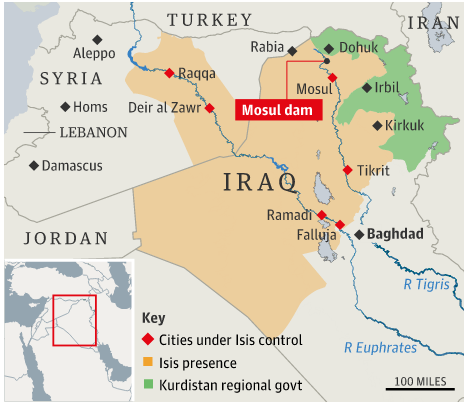
Screen Shot 2014-08-04 at 2.26.16 PM

The Islamic State has taken over the town of Sinjar in the country’s northwest, near the Syrian border. Sinjar is the homeland of the Yazidis, a religious minority that Joshua Landis warns is now in grave danger of persecution:

One of the few remaining non-Abrahamic religions of the Middle-East, the Yazidis are a particularly vulnerable group lacking advocacy in the region. Not belonging to the small set of religions carrying the Islamic label “People of the Book,” Yazidis are branded mushrikiin (polytheists) by Salafis/jihadists and became targets of high levels of terrorist attacks and mass killing orchestrated by al-Qaida-affiliated jihadists, following the instability brought about by the War in Iraq.

Today’s IS assault is already bringing about devastating consequences for Yazidis, who make up about 340,000 of Sinjar’s 400,000 inhabitants (this is a high estimate). Many have fled on foot through the desert, without food or water. Others fleeing in cars for Dohuk have been unable to make a clean escape, due to the inability of the roads to accommodate such a large flux of people. Thousands of cars are currently stranded west of the Tigris River.

Andrew Slater also fears for Sinjar’s religious minorities:

By the afternoon of Sunday, August 4, with ISIS in full control of Sinjar, terrified families from the area began their dangerous exodus. The speed with which ISIS engulfed the entire mountain range attests to the large numbers of fighters they brought to bear for this major offensive. Villagers in the Sinjar area gave accounts of girls and young women from their families being abducted by ISIS fighters and carried away. Countless families fled to the mountains above their villages where they are currently surrounded by ISIS controlled areas and are desperately calling friends and family members who escaped, pleading for help. Pictures of families hiding in the mountains have circulated widely on Iraqi social media.

Besides the Sayyida Zainab mosque, ISIS forces were reported to have blown up the Sharif Al-Deen shrine on the Sinjar mountainside, a holy place for Yezidis. The ISIS flag was also raised over the only remaining church in the Sinjar area. Within 24 hours, Sinjar has been transformed from a bustling community into a string of ghost towns.

In its rampage through northern Iraq, ISIS may also have captured Iraq’s largest dam:

Capture of the electricity-generating Mosul Dam, which was reported by Iraqi state television, could give the forces of the Islamic State (Isis) the ability to flood Iraqi cities or withhold water from farms, raising the stakes in their bid to topple prime minister Nuri al-Maliki’s Shia-led government. “The terrorist gangs of the Islamic State have taken control of Mosul dam after the withdrawal of Kurdish forces without a fight,” said Iraqi state television of the claimed 24 hour offensive. Kurdish officials conceded losses to Isis but denied the dam had been surrendered. A Kurdish official in Washington told Reuters the dam was still under the control of Kurdish “peshmerga” troops, although he said towns around the dam had fallen to Isis.

Meanwhile, jihadists affiliated with ISIS and the Syrian jihadist rebel group Jabhat al-Nusra have taken over the Lebanese border town of Arsal, but Zack Beauchamp assures us that this isn’t as scary as it seems:

ISIS’s actions in Arsal aren’t part of a deliberate expansion of the caliphate into Lebanon. Rather, Lebanese forces picked a fight with ISIS fighters who’d been pushed out of Syria. In purely geographic terms, this interpretation of the fighting makes more sense. … Lebanon, down near Damascus in the west, is really far from ISIS’ bases in north-central Iraq and northern Syria. It would be very, very hard for ISIS control territory far away in Lebanon in the same way it controls the caliphate proper.

That said, ISIS’ presence in Lebanon really could be destabilizing all the same. The Arsal fighting alone has already displaced 3,000 people and killed at least 11 Lebanese soldiers. And while ISIS is not trying to seize territory in Lebanon outright (not yet, anyway), the group is ramping up terrorist attacks there. “They’ve been bombing things, trying to get cells in Tripoli [and] Damascus,” Smyth says. “They’ve tried to use these different cells to bomb Iranian and Hezbollah targets there.”

In any case, Keating remarks that these developments are changing the calculus regarding ISIS’s staying power:

A few weeks ago, it seemed unlikely that ISIS could hold out for that long given the sheer number of regional actors it had picked fights with. But it seems like it’s not only holding out, it’s expanding its activities into new areas and taking on new rivals. It’s hard to imagine how it will be contained unless the various forces fighting it can somehow find a way to coordinate. For now, the center of the conflict seems to be the Mosul Dam. Will the prospect of power cuts or catastrophic flooding be enough to get Maliki’s government to work with his Kurdish rivals?

Siddhartha Mahanta notices that ISIS’s recent gains have prompted the Baghdad government to start cooperating with the Kurds:

That massive setback — which the peshmerga claim is a strategic retreat — reportedly led Maliki to back up the peshmerga with air support, as Reuters reported on Monday. “We will attack them until they are completely destroyed; we will never show any mercy,” a Kurdish colonel told the news agency. “We have given them enough chances and we will even take Mosul back. I believe within the next 48-72 hours it will be over.” So while Maliki is making good on his threat to use legal power to seize Kurd-claimed oil, he’s also sending in the planes to back the Kurds just as the myth of their apparent invincibility takes a potentially serious hit. It’s either a shrewd political move or a truly desperate cry for help. Baghdad and Erbil. These days, theirs is a tale of two frenemies.

And Dexter Filkins argues that we should be helping the peshmerga, too:

The militants in ISIS have swept across much of northern and western Iraq, and there is no sign that they have any intention of slowing down. In a surprising—and encouraging—turn, Maliki has apparently ordered the Iraqi Air Force to carry out air strikes to help the Kurds. That said, the Iraqi Army has proved itself utterly ineffectual in combating ISIS. If the U.S. decided to help the Kurds, there would be no guarantee that the Kurds wouldn’t later use those weapons to further their own interests. But what other choice is there? If anyone is likely to slow down ISIS, it’s going to be the Kurds—regardless of whatever they’re planning to do later on.

The Imaginary War On Whites

On Fox News Sunday, Ron Fournier made the rather banal observation that the GOP “cannot be the party of the future beyond November, if you’re seen as the party of white people.” In response, while talking with Laura Ingraham, Republican Congressman Mo Brooks went overboard:

This is a part of the war on whites that’s being launched by the Democratic Party. And the way in which they’re launching this war is by claiming that whites hate everybody else. It’s a part of the strategy that Barack Obama implemented in 2008, continued in 2012, where he divides us all on race, on sex, greed, envy, class warfare, all those kinds of things.

Fournier defends himself:

I do feel compelled to remind Brooks that nothing I said should surprise him, because his party leaders agree with me. If I am part of a war on whites, so is RNC Chairman Reince Priebus and the 2,600 fellow Republicans interviewed for the “RNC Growth Opportunity Book 2013,” the so-called GOP autopsy.

“If Hispanic Americans perceive that a GOP nominee or candidate does not want them in the United States (i.e., self-deportation), they will not pay attention to our next sentence,” the report reads. “It does not matter what we say about education, jobs, or the economy; if Hispanics think we do not want them here, they will close their ears to our policies.” …

What I said is indisputably, if uncomfortably, true. Unless a broader swath of the GOP community learns to accept and adapt to the fact that the United States will soon be a majority-minority nation, the Republican Party is doomed not to lead it. Finally, sir, bury the straw men: Blanket amnesty and wide-open borders aren’t the price for political relevancy. For starters, let’s try compassion, wide-open minds, and compromise.

Chait snickers at Brooks’ comments:

Brooks is characteristically fuzzy on both the motive and the mechanics of the current War on Whites. On the surface, you might find it silly to imagine that the Democrats would antagonize the majority segment of the American public. Democrats definitely need white people (whites supplied 56 percent of Barack Obama’s vote in 2012; nonwhites supplied just 11 percent of Mitt Romney’s votes). White people have other uses for Democrats, like providing campaign donations, filling cabinet roles and Congressional seats, and so on. From a pure strategic standpoint, launching a war on white people would seem like a bad idea.

Steven Taylor adds:

One thing is for sure:  Brooks does not understand (or does not wish to acknowledge) the way in which certain factors tend to align (such as race, economic status, and policy preferences) and he, like many conservatives of his ilk, have no self-awareness of how the structure of US historical development might have sorted persons by color into certain economic strata.  He certainly lacks a tremendous amount of self-awareness if, in a multi-paragraph manifesto of how there is a “war on whites” he can say “I don’t know of a single Republican who has made an appeal for votes based on skin color.”

In general, I want to say something intelligent and helpful in terms of maybe getting some readers who really don’t get how problematic these views are, but really all I can think are various insults (and the ones in Spanish are the most fun, given the context).

Weigel joins the conversation:

What will the fallout be for Brooks? Nothing—his district, which hugs the Tennessee border, voted by a 2-1 margin for Mitt Romney over Barack Obama. No Democrat bothered to run against him this year. Honestly, there’s less to Brooks’ “war on whites” riff than the headline suggests. Other conservatives, most notably Stanley Kurtz, have described the Obama administration’s urban-focused transportation and energy policies as a “war on the suburbs,” ways to get the people who fled the cities (white people, though that’s not made explicit) to come back in. And the politics of welfare and food stamps have always tracked with opinions about race.

But Brooks wasn’t saying any of that. He tried to coin a phrase—like “war on women”—insisting that accusing Democrats of waging this fight was calling out racism.

Kilgore sighs:

I dunno: it strikes me as entirely consistent with the twisted logic we hear all the time about the only racists being race-card-playing liberals that demonize conservative white folks who are “color-blind” in their hostility to anything black and brown folks deem highly objectionable.

New Shirts: A Big Response From Readers, Ctd

Heads up that we will soon discontinue the highest-quality tri-blend version of the t-shirts, so if you are planning to get one, order now before it’s too late! Full details on all of our shirts here. More satisfied customers keep sounding off:

I bought the lone Howler t-shirt as I agreed with your take on the insider-ness of it … plus it avoids the potential awkwardness of a “secret Dish-shake”, that would logically involve either rubbing noses or sniffing each other’s rear ends.

A very reluctant reader:

I won’t be buying a t-shirt. I need you to know that it’s not you. I do this with just about every online T-shirt merchant these days. We fat people, we exist. I ain’t saying this to get sympathy. I run on the treadmill three times a week and look over and say to myself, damn, I’m a sexy man. Thank God for mirrors at the gym! Suits my inner narcissist, so suppressed everywhere else. And I can rock the Growlr/Scruff circuit with the best of them.

Anyway, us fat people, we exist, and we white-polosometimes like to buy clothing. Shocking, I know, that fat people might want to put on clothes, given how fantastically sexy we are as a collective. Yet for some reason, merchandisers don’t like to provide clothes for us. That “Haters Gonna Hate” t-shirt from BustedTees? I bought the 3X, super excited, only to get a shirt that from other merchandisers would have only been an XL and I now only get to where on Bear Night at Jackhammer, when, you know, I’m trying to be SUPER SEXY.

So, while I’d love to get a Dish shirt for the nights at the club, I won’t be. Because I would like you to know that I encourage people as much as I can to provide me with shirts in sizes I can wear just grocery shopping and not when I’m trying to titillate the chubby chasers. And it breaks my heart that these apparently attractive shirts are being offered in conjunction with a merchandiser that displays zero interest in providing a range of sizes for people with larger bodies. Thanks for all you do, otherwise!

But the two polo shirts – in navy blue and white – actually run larger than the typical shirt, and sizes go up to XXXL. While the reader has concerns over the slimmer flit of BustedTees’ own shirts, which have a similar fit to our American Apparel t-shirts, the polos are made by a different company, Port Authority. We made it so that all sorts of Dish readers – from skinny hipsters to bulky bears, from gym-going millennials to golf-playing seniors – have a shirt option that works for him or her. Speaking of her, a reminder that we have women’s sizes in both t-shirts, rather than the generic “unisex” sizes. And speaking of bears like the one above:

My partner and I recently returned from Provincetown. It was Bear Week. We passed you several times in front of the Wired andrew_howler-teePuppy.  He had just ordered a Dish Shirt, and I asked, “Wouldn’t it be great if there were something we could have worn ‘every day’ during that week that would let all the Dishheads and fellow bears know who we were?”  The tees and polos are a great idea, but we just don’t want to wear the same shirt every day. A hat, on the other hand, with the same logo would be very convenient. Any chance of that happening? We might even buy several.

We’ll consider hats too, but not for a while. Mugs are coming next.

Obama’s Imperial Presidency? Ctd

Yesterday, Eric Posner defended Obama’s legal right to unilaterally legalize large numbers of undocumented immigrants. Reihan counters:

What Posner neglects is that the deferred action contemplated by the Obama administration does in fact represent a departure from current practice, as it would grant a broad class of unauthorized immigrants a work permit. A work permit is a valuable asset that would essentially turn unauthorized immigrants into authorized immigrants for various economic purposes, and it is the desirability of this formal legal status that has served as the impetus for the push for comprehensive immigration legislation.

Very few unauthorized immigrants have access to such work permits. (Seriously, ask anyone: formal legal status in the form of a federal work permit is pretty important to unauthorized immigrants and their allies, and it’s pretty different from de facto non-enforcement. Jessica Vaughan of the Center for Immigration Studies has addressed the extraordinary cases in which deferred action has been used in the past. Think Haitians fleeing the ravages of the 2010 earthquake or foreign students displaced by Hurricane Katrina.) If there were no meaningful difference between today’s semi-official policy towards unauthorized immigrants who don’t commit serious crimes and the status the president (reportedly) intends to offer them, we wouldn’t be having a roiling immigration debate.

I have to say I’m inclined to agree with Reihan on this. Robert Delahunty makes related points:

The White House keeps repeating that the president will be forced to act unilaterally on immigration because of a “do-nothing” Congress. That in itself is an admission the president would be taking action of a legislative kind.

Other presidents have not cast their grants of temporary relief to illegal aliens in such dramatic terms. And Obama himself acknowledged in his first term that he had no constitutional power to take the kind of steps he seems ready to authorize now.

Second, the White House plan will almost certainly include work authorization provisions. But ordering that measure would go beyond mere executive inaction. To confer such legal rights, the president would need a delegation of affirmative authority from Congress. To say that Congress has under-funded its deportation mandates is not enough. Where is this affirmative delegation?

Third and perhaps most important, Posner overlooks a massively obvious fact: a new presidential non-enforcement decision on immigration this campaign season comes against a pattern of repeated refusals to enforce the law in both immigration and other contexts. The administration’s unauthorized postponement last July of the employer mandate in its own health care law is but one of dozens of examples of this pattern.

For me, a critical point is that Obama himself has said before that he did not have the power to do this. It was part of his argument for putting pressure on the Congress. How would he square that contradiction? The legislature does not exist to obey the president – and if not, have him do the work by executive action. I completely understand the temptation. We do not have opposition in Congress; we have de facto nullification of a presidency. Nonetheless, it seems to me that Obama would be giving the GOP a weapon to add a smidgen of credibility to their otherwise absurd case for impeachment. He should resist it.

Andrew Asks Anything: Rich Juzwiak, Ctd

Below is another clip from my conversation with Rich (first sample here). In it, we tackle condoms – why men don’t like them, and why the opportunity to live without fear of HIV and, in some cases, without rubbers is one worth grasping:


A reader writes:

I really enjoyed listening to your insightful conversation with Juzwiak.  Most of my friends, gay or straight, don’t have the patience to read Love Undetectable, but they may be willing to listen to this conversation.  It beautifully distills what it was like to come of age during the plague of the ’90s and of its impact upon our generation’s attitudes towards sexuality, risk, and death.

I deal with a number of grad students/postdocs who are in their thirties, and I am just realizing that their generation has love-undetectablenever experienced anything comparable, and most have never dealt with death.  Recently, one of the grad students died unexpectedly of a rare disease, and it hit some of the other students hard.  I think they were upset that I did not display equal levels of grief.  In response, I told them a bit about my experiences during the height of the AIDS epidemic … about calling a friend in New Orleans to tell him about the death of a mutual friend, and his response was flat and unemotional.  He said, “I’m sorry if I seem cold, but the truth is that I simply don’t have any more tears to shed; I’ve been to thirteen funerals just this month.”

My students simply couldn’t imagine the magnitude of such loss of a social circle, nor realize how it impacted dating, friendships, and having sex.  Now, if they wish to understand, they have something to listen to.

Another dissents:

Perhaps it is a reflection of my sixty plus years, but I had a real visceral negative reaction to your conversation that multiple random sexual hookups constitute a community. In my life I have bed-hopped, bathhouse visited, and anonymously interacted with countless dicks and asses (as well as dick-heads and assholes), but MY Gay community came together when my contemporaries battled the scourge of AIDS, the terrifying unknowns, the constant anxiety of looking for that first red lesion … my history is littered with the names of the fallen, my own personal World War III.

After the terror of HIV subsided just a bit, my community was formed with men and women, of all sexual stripes, who lobbied, battled, organized for equal protections under the law and advanced the reality of same sex marriage and adoption

As a freshman at Georgetown University in 1970, I would tiptoe past the open bar-room door of the first Gay Establishment I had ever known on Wisconsin Avenue. To think in my lifetime I can check into just about any hotel in the world (excluding Russia and Uganda) with a same-sex partner and be shown a room with one bed, is astounding. And that is because we organized to become a political, economic, and religious force that peacefully brought about change

When I think of our Male Gay community, I think of all the brilliant artists, authors, teachers, health care providers, athletes and scientists who excelled in their fields. I don’t think about how many men they hooked up with, furtively or openly, and that is the furthest thing from my mind when I identify with my tribe.

It’s not what I focus on much of the time either. But it’s there and deserves some elucidation given the obloquy directed at it from gays and straights alike. Another adds:

The push for Truvada needs to be tempered with some medical judgment. My doctor took me off it because I had a kidney stone, because he said that if I got another kidney stone and Truvada backed up in my kidneys, it could potentially damage my kidneys. So there needs to be some awareness that Truvada DOES have potential side effects.

Indeed it does, as all drugs do. This blog has addressed the potential side effects many times, namely in our long-running thread, “Why Aren’t Gay Men On The Pill?

The View From Your Window Contest: Winner #216

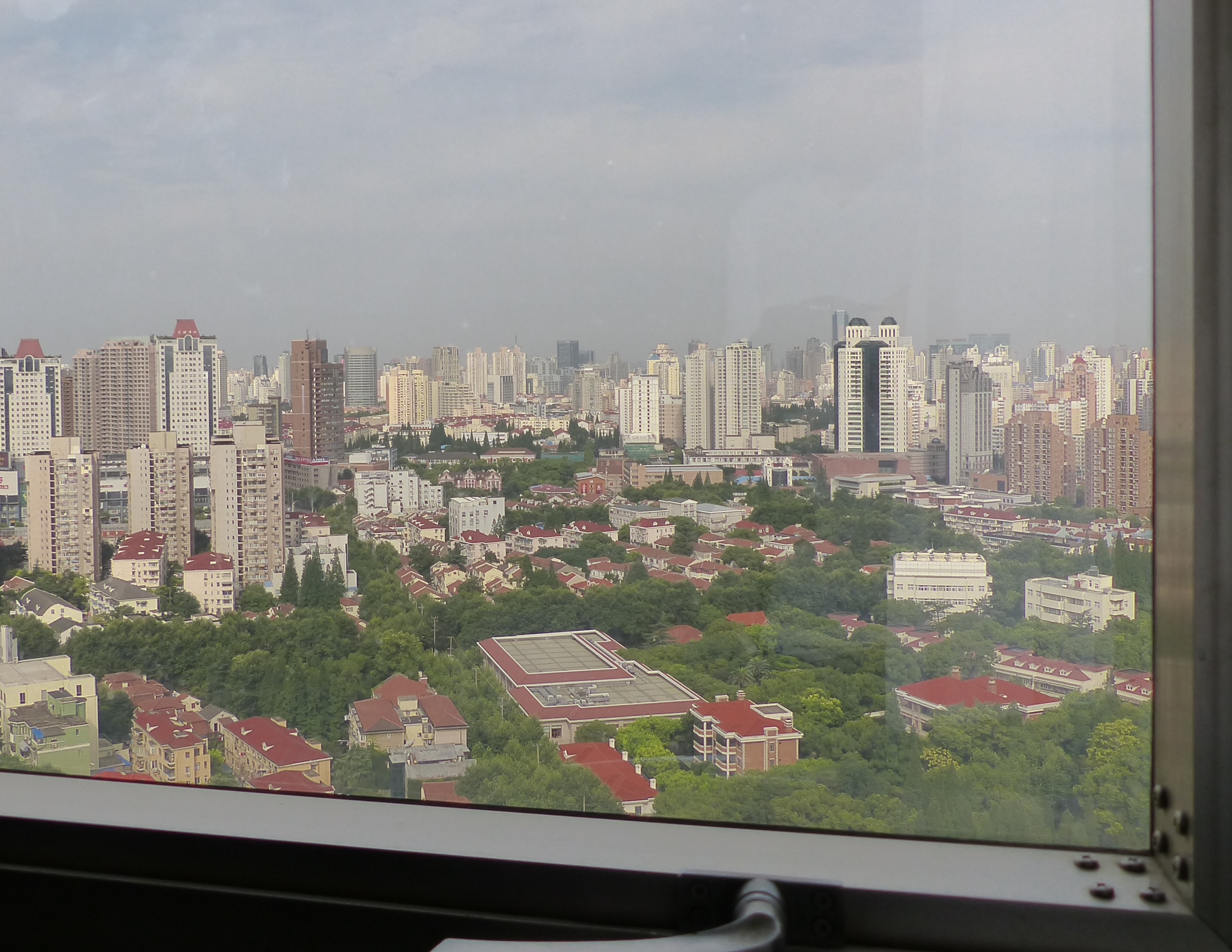
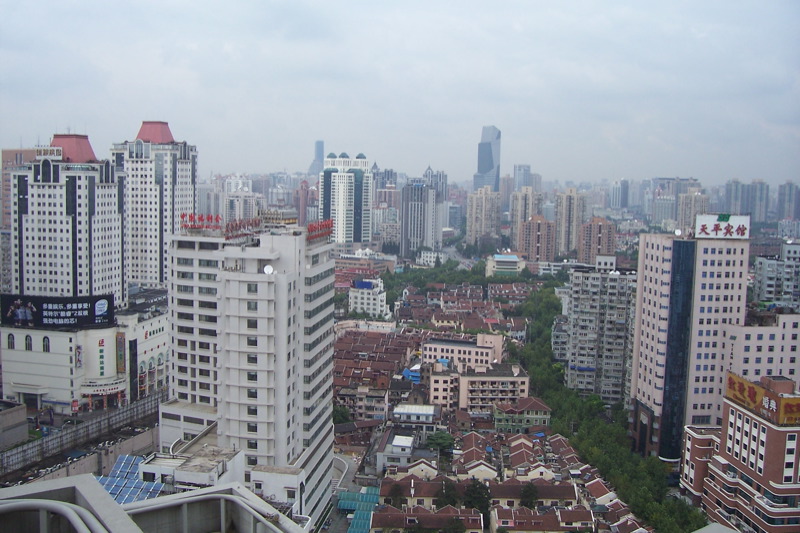
VFYWC_216

A reader starts us off with an enviable recent vacation:

Sao Paulo, Brazil. Was just there for the World Cup, and the view seems exactly like it – perhaps the green areas are part of Jardins or Jardim Paulista, and the high rises and skyscrapers are coming up near Avenida Paulista on the right of the photo. The building in the right side, middleground of the photo with two white towers, capped by black pyramids are definitely in Berrini district, or Morumbi just adjacent. I’m positive I was able to see them, while in Berrini district. I could be wrong, but this feels so like Sao Paulo.

Another:

This one was frustrating. It seemed simple but did not turn out to be (at least for me.)  I kept wanting it to be Kuala Lumpur, but couldn’t make it fit.  The language uses characters, so this should be somewhere in Asia.  There is the tower in the background, which looks somewhat like the tower in Macau.  It also looks a tiny bit like the one in Harbin, but this does not look like Harbin’s climate as I see some little palm trees down there.  The tower also resembles Kyoto’s, but the rest of the city doesn’t.  So I’m going with Macau.  No clue which window, and no more time to put into this.  Gah.

Another player is also wrong but more cheerful:

It’s Milan! I’ve never played before and I know that some clever Dishhead will produce coordinates, building, room, ambient temperature and a brief review of the grocery just around the corner, but for one fleeting moment I feel like I’m in this thing! Hope I’m not wrong for all the exuberance.

A veteran player of the contest shows off:

Just thought I would send a snap of my Dish t-shirt:
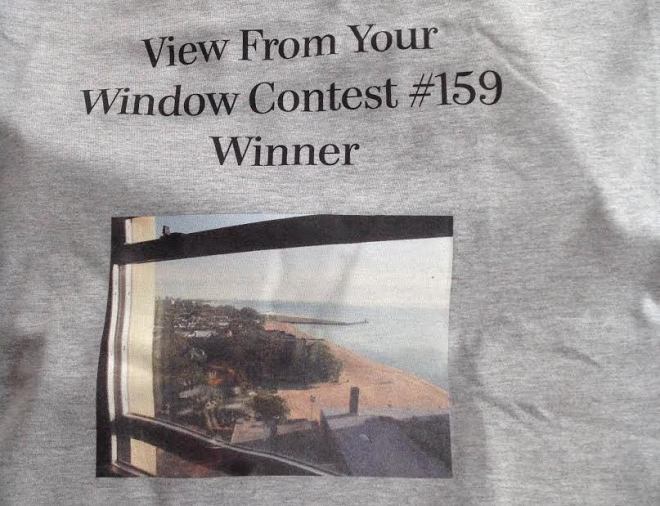
VFYW-shirt

Read his winning entry here. And buy your own official Dish t-shirt or polo here. Back to the contest:

Mexico City, based only on the population density and pollution, plus that church center-right dwarfed by the high-rise apartment building.

Another nearly nails the right country:

This one turned out to be tougher than it looked at first. Everything is so new! It’s got to be one of China’s pop-up cities or a boom area near a more traditional one. Having been to Shanghai and Shenzhen, it looks a little like Shanghai and Shenzhen (but then again, what doesn’t). But it’s all a little subdued for China, and a little bit short on outdoor advertising. And maybe the roadways aren’t quite prominent enough.

Guessing Singapore. Google maps shows a bunch of different neighborhoods that look like they could be right, but as close as I can get is to guess somewhere in the Redhill/Bukit Merah neighborhood.

But most other players did correctly peg the People’s Republic:

The photo immediately says “China” – no where else has such a hodge-podge of skyscrapers. Problem is all the cities have the same hodge-podge. Looks more like a 2nd tier city, so will go for Chengdu.

The skyscrapers weren’t of much use, it seems:

I’m pretty sure we are in China for this week’s contest, given the amount of tall structures, architecture, and what my be Chinese script on some of the buildings.  I also think it is likely not a large city given the absence of super-tall skyscrapers (though perhaps it is just the view).  But otherwise, I am completely stumped.  Despite many hours spent on various skyscraper related forums, Wikipedia, and Google Maps, I can’t narrow things down any further.  I thought either the tall red roofed buildings or the white tower with a black core would be identifiable either through skyline images or the database at skyscraperpage.com, I’ve had no luck.  So I’m guessing Changsha, China.

The key challenge this week was clearly China itself:

How can a city be so simultaneously huge and utterly unfamiliar at the same time? Almost certainly by being in China. The sign on the red peaked roof near the upper left of the photo seems to bear this out. There are some palm trees amongst the foliage in the foreground. Lots of smog. Still, none of the images I look at of Beijing, Shanghai, Guangzhou, etc., seem to match up. Surely this is one of the biggest cities in the world, right? I’m guessing Shenzhen, because why the hell not? Though it feels absurd to be guessing with such a wide view.

There was another difficulty zooming in on China as well:

At +/- 5,000 feet the Google Earth images are crisp. Somewhere around 2,500 feet the images get milky & grainy, plus the buildings also flip orientation making it very hard to make out any details. Then at around 1,000 feet you can’t zoom in any further. This is much higher up than practically anywhere else. Google must have had a very interesting conversation with the Chinese Government.

Another contestant:

I’m pretty sure I’m wrong, but at least it’s one for the heat map! Qingdao, China – Badaguan neighborhood.

Added:

This embed is invalid

Another reader nails down the city:

I have worked on this on and off for three days and I’m getting nowhere. Google is of no help to me.

  • There are highrises on the left with red mansard roofs, one of which seems to contain Chinese characters. This could be a Chinese city. Or it could just be a city with a Chinese company. At least now I know what Palladian windows are.
  • Evergreen coniferous trees – a northern climate?
  • On the left edge, halfway down, there’s a partial logo; the name is blurry, but if it’s the western alphabet, it looks like it ends in -here or -hare or -nere or -nare. I did a slew of Google image searches for the logo and came up empty.
  • In the midground, in front of some conifers, there are Western-looking buildings. One looks vaguely Dutch; is this a former Dutch colony in Asia? Or another city with a former Western presence like Shanghai? Or this is actually a Western city?
  • There are a bunch of short buildings with red roofs.
  • It looks vaguely like an ex-Soviet central Asian republic, one of the -stans. Or somewhere else in Asia. For all I know it could be western Canada. Or I could be completely wrong.

This seems like a place either you know or you don’t. But Shanghai has lots of 19th-century Western architecture, so I’m going with Shanghai.

Another reader:

Lots of newish and modern dense pack high rise residences. A few older ones with external air conditioner units predominant in Asia. Lots of red roofs and what looks like Chinese characters on the top of one building on the left side.  I have never been there but Shanghai is the best I can do with so few distinctive features. Smog is probably obscuring more detail.

My father was a career Army officer and served with the Joint US Military Advisory Group, China in Shanghai during 1948 until being evacuated to Tokyo in January 1949 as the Chinese Nationalist Army was collapsing in the face of Mao’s communist forces.

Another:

Oh, man. The poor folks trying to triangulate the actual window from this week’s view. I’m guessing a lot of people will tease out Shanghai, as it apparently boasts the world’s largest skyline, but that could also make finding the few distinctive buildings in the frame truly difficult. I think I got lucky by tracking it down inside of an hour – some weeks just go like that, and I was owed some luck after last week.

The view overlooks Jiaotong University. Props to this week’s submitter who was clearly angling for a contest view by narrowly clipping the nearby Grand Gate towers, just out of frame to the left and somewhat of a giveaway.

Another thinks he’s got the hotel:

I think this week’s content will prove to be a challenge. There are Chinese characters on one of the buildings. So, this must be an urban area in China. But which one? My initial guess is that this is Shanghai. But we see none of the iconic Shanghai skyscrapers. Making things more difficult, Shanghai does not have StreetView. On top of that, Google’s aerial view of Shanghai of a bit offset from the underlying base map. After looking around the city for a while, I happened on a rooftop that matched the building in the lower center of the view.

This week’s view comes from the Hengshan Picardie Hotel in Shanghai, China. The view is looking west-southwest towards Jiaotong University. Here is the layout of the view:
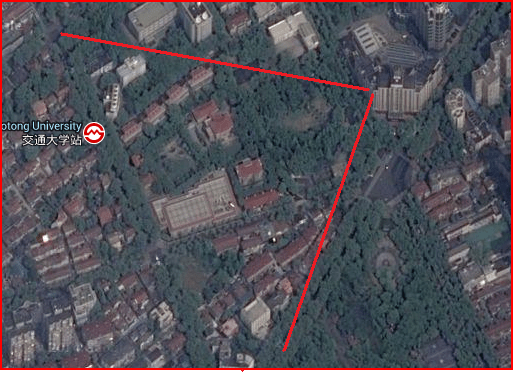
image001

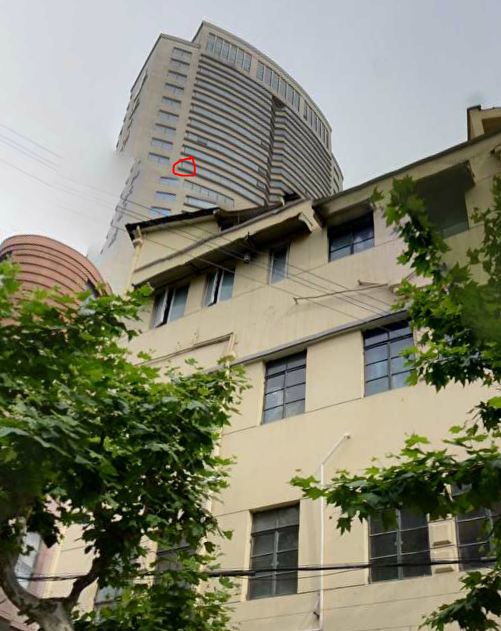
And here is my guess for the window:

image004

Nope. But our favorite (and only) GIF-making player nails it:
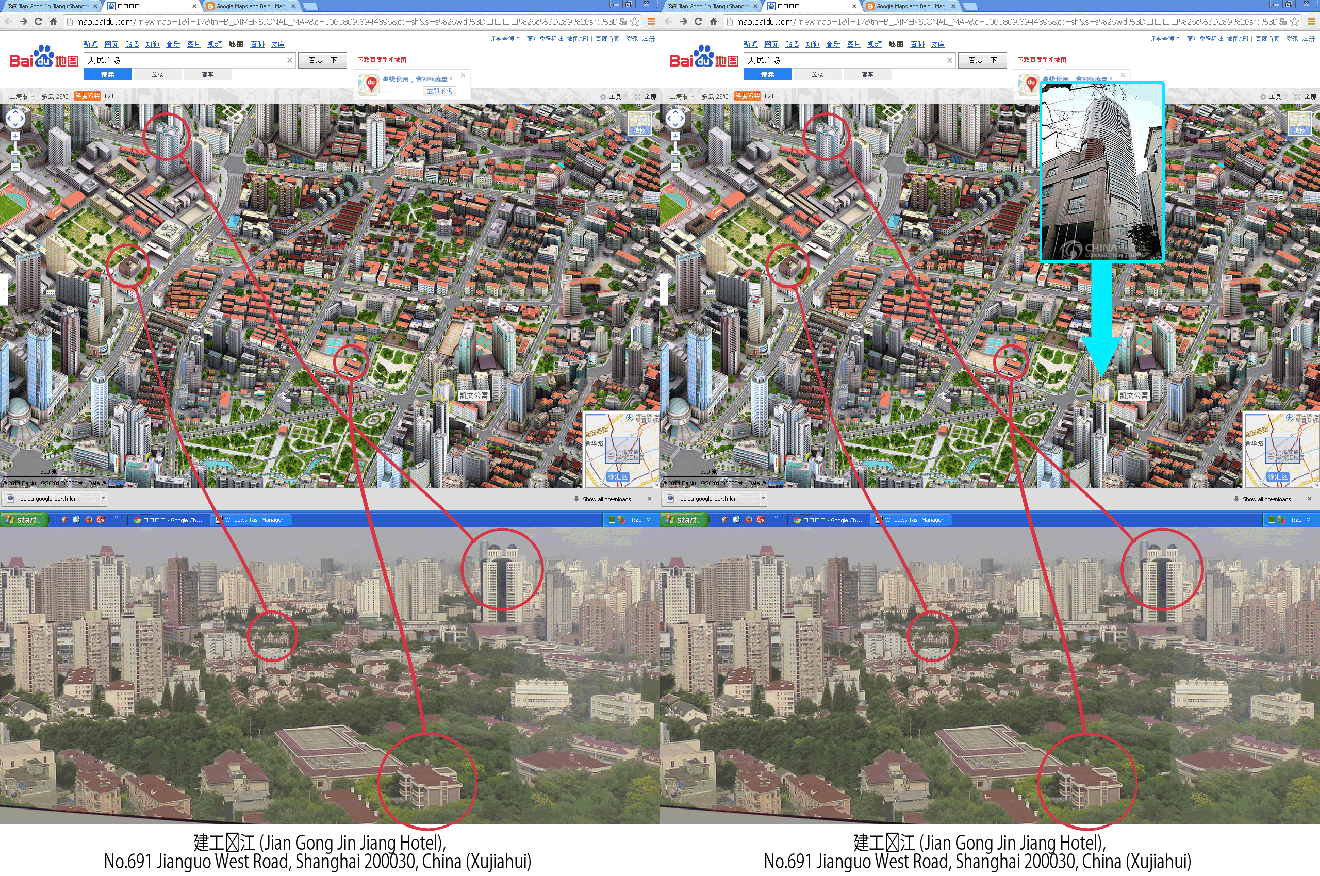
jian-gong-jin-jiang-bitch

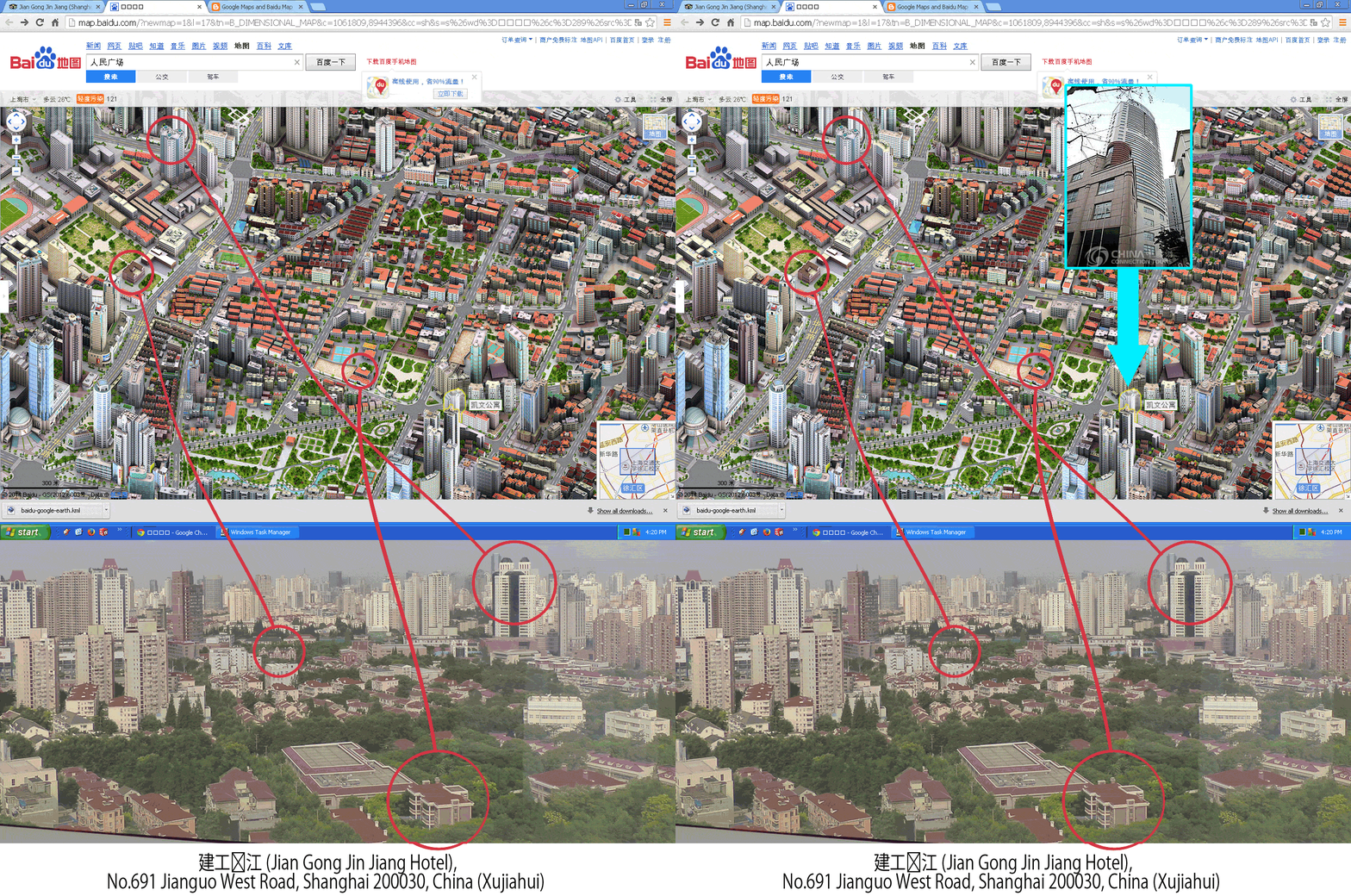
Found it by Google Mapping the top twenty universities in China. Shanghai Jiaotong University was number seven. In trying to find a good image of the building, I discovered Baidu, China’s google. Their 3D maps look like Sim City! I’ll guess the 20th floor for no reason at all.

A veteran contestant has another angle:

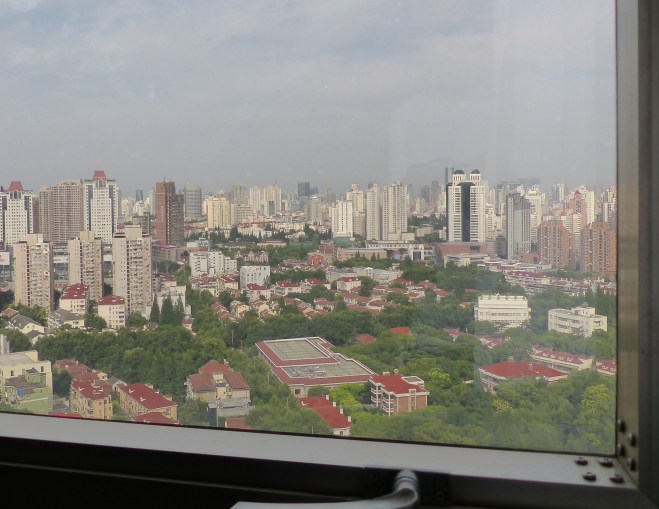
This week’s picture was taken in Shanghai, China, from the west side of the Jian Gong Jin Jiang Hotel, in the Xuhui district; as for the floor, let’s say the 28th (the floor under the penthouse). Here is the same view, from a different angle:
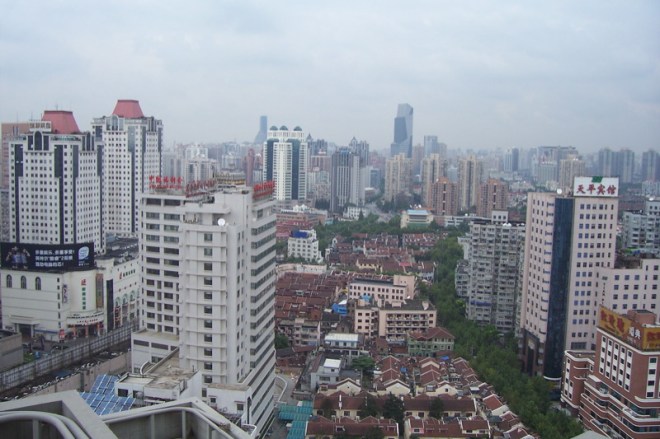
other_angle

This one was tough but doable; ideally suited to rebuild a little self-confidence in your contestants after last week’s débâcle, isn’t it?

Debacle? They can’t all be easy! A VFYW team:

At first we thought … awe crap, a massive skyline with millions of tall buildings and some Shanghaivaguely Chinese looking writing.  There are over 100 cities in China with more than one million people! This is going to be impossible.  But the buildings in the foreground had a vaguely university-esque feel. From there, some Google searching and the university (and then the hotel) were identified. However, unfortunately China is not included in the Google Street View database. So we learned about and tinkered with map.qq.com which, while being a good substitute for Google Maps, unfortunately is only in Chinese. Anyways, after some fumbling through the map we identified the best possible street view of the Jiangong Jinjiang Hotel Shanghai.  Let’s say its the 23rd floor.

Chini had to take a deep breath this week:

VFYW Shanghai Overhead Marked - Copy

I’ve been worried that we’d get one like this for a while. Normally when you narrow it down to a city finding the viewer’s location isn’t too much trouble. But with certain developing cities, like Sao Paulo for example, the sheer number of high-rises means that finding one specific building can take a lot of work. So when this one popped up I was really hoping that we were somewhere else in China; Wuhan, Tianjin, anywhere with a more modest skyline. But nope, we’re in the biggest one of them all.
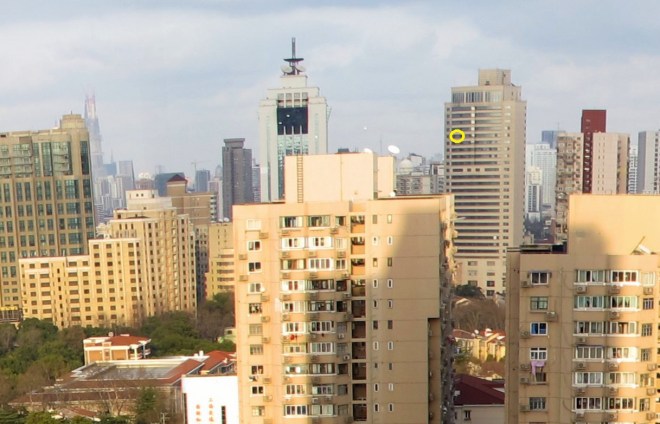
VFYW Shanghai Actual Window Marked - Copy

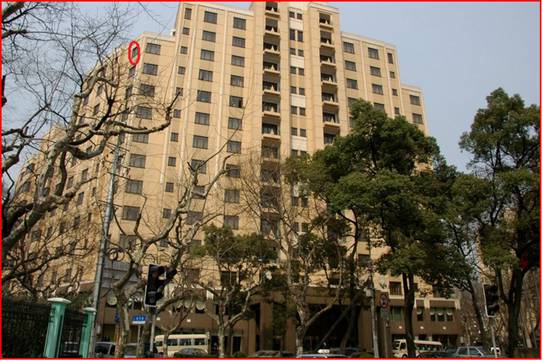
This week’s view comes from the Xujiahui neighborhood of Shanghai, China. The picture was taken on roughly the 23rd story of the Jian Gong Jin Jiang Hotel and looks almost due west along a heading of 267.03 degrees over the roofs of the former French Concession.

Only one player, a former winner, correctly guesses the right floor of the hotel:

This week’s photo comes from the Jin Jiang Hotel in Xuhui district of Shanghai, China, located at 691 Jianguo West Rd.  I’ll guess the 27th floor.  It took a while to find the hotel, but this picture displaying some of the distinctive skyscrapers in the contest photo greatly helped find the location.
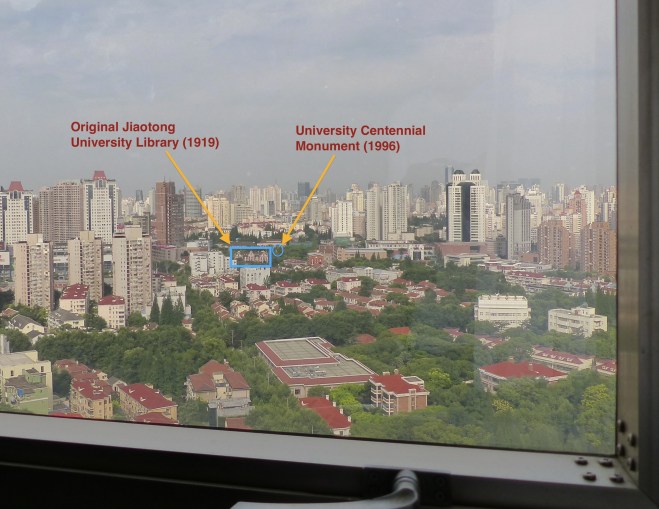
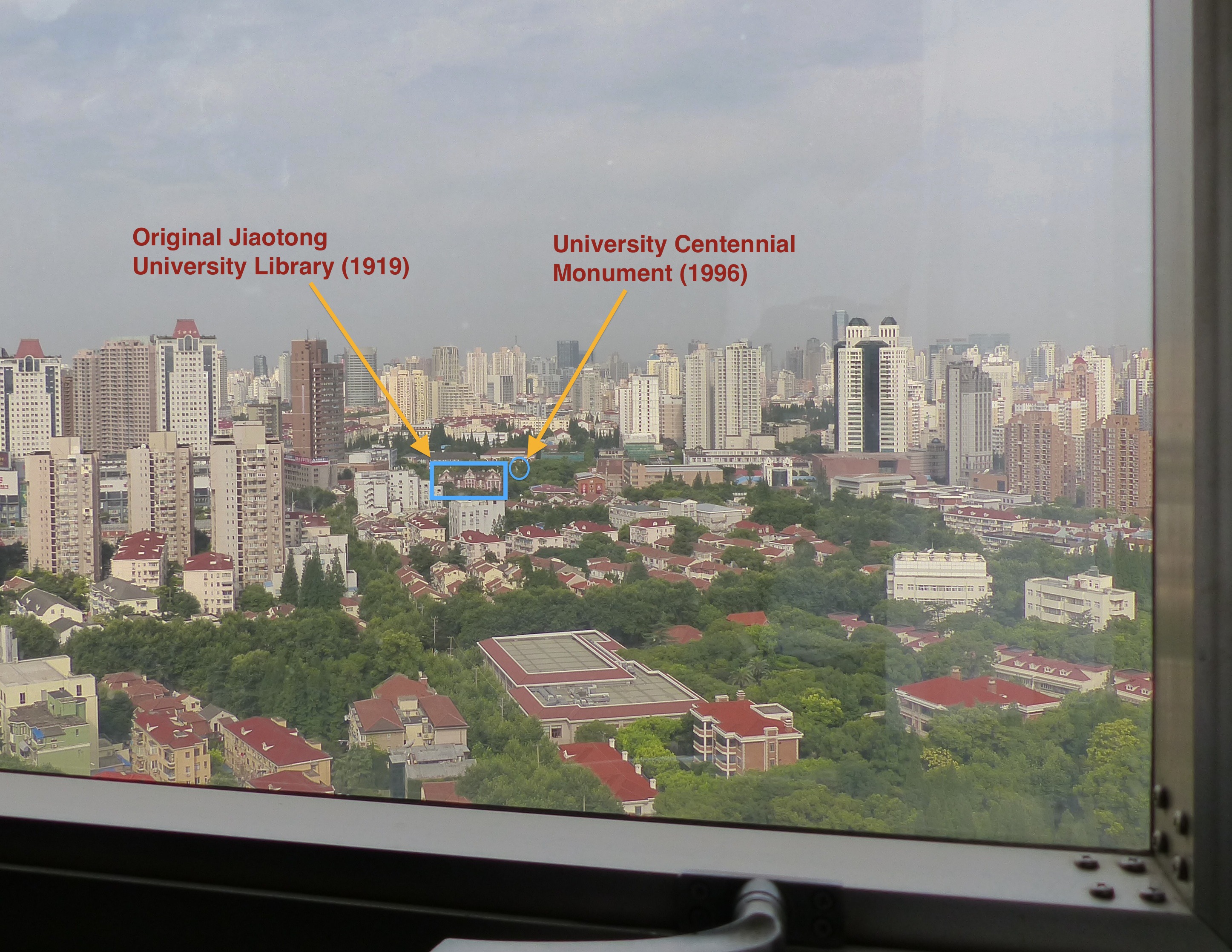
vfywc_216 with labels

In the photo, we are looking west over the Xuhui campus of the Shanghai Jiao Tong University. The university’s original library building and more recent centennial monument are visible in the middle of the contest picture.  NBA great Yao Ming is currently enrolled at this prestigious university which boasts former leader Jiang Zemin as an alum.  The university excels in technical fields and, allegedly, offers its expertise to assist the People Liberation’s Army spy on U.S. and other western companies.

For some reason, the discussion of the university’s involvement in cyber spying disappeared from its wikipedia page a couple of months after newspapers reported on the matter.  It seems a user named Bwfrank removed the discussion from the page and abruptly stopped revising wikipedia pages.  Prior to that, Bwfrank focused on editing the university’s page, articles on the Chinese and US space programs, and Japanese anime.

This week’s winner, though he doesn’t name the hotel, IDs the building and was one floor off with a long record of correct guesses without a win:
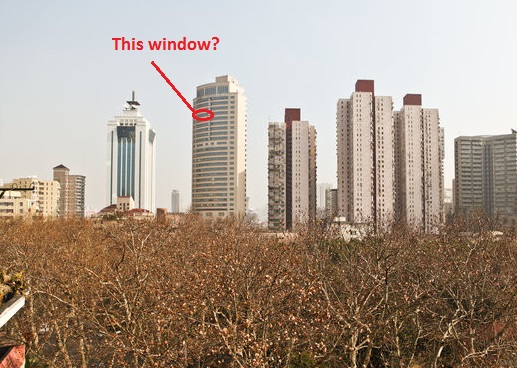
shanghai-176-kang-ping-lu

The occasional bits of writing viewable on the buildings appeared Chinese to my untrained eye, so that was where the search began.  Shanghai, Shenzhen, Guangzhou, Beijing, Tianjin, even Hong Kong. After a lot of frustration I ended up looking around the Pacific Rim:  Phnom Penh, Bangkok, Hanoi, Ho-Chi-Minh City, Manila, Singapore, Kuala Lumpur, Jakarta.  At this point all I had really learned was that Southeast Asia has a crapload of tall buildings, and after a while they all start to look the same.

Fortunately my wife is more astute than I am and found a similar view from a hotel near Jiaotong University in Shanghai: the place I had searched first and long since given up on.  The lack of Google Street View makes it hard to be precise, but this was taken from around the 26th floor of a building across the street from the Hengshan Picardie Hotel.  It looks like an office building.  The view is looking west-by-southwest over the university campus.

It seemed at first like it should be an easy one, but not being able to read Chinese was (unsurprisingly) a big handicap when searching.  I’ll be curious to see how difficult other people found this.

Congrats! Details from the photo’s submitter:

The view is of French Concession West, Shanghai. Taken at 8am from room 82707 on the 27th floor of Jian Gong Jin Jiang Hotel.

I thought when I took this shot it would be a great VFYW contest: before seeing this view I don’t think I’d have even guessed the right continent, and I suspect there are plenty of people familiar with Shanghai who wouldn’t be able to place it either.

This was my first visit to Asia. I was a tourist in Shanghai for nine days, spending much of my time walking around and seeing the city up close. It’s a wonderful city and I can’t wait to go back. I live in New York, so being in a megacity wasn’t a novelty, and Shanghai’s culture and architecture are heavily European influenced, so I didn’t experience too much culture shock. What DID shock me, though, was the fact that I never once felt the slightest bit threatened, physically or materially (although I always take proper precautions against pickpocketing), even in the grittier parts of town. I don’t know if that’s peculiar to Shanghai or if it’s the same elsewhere in China, but I have never felt safer anywhere else in the world.

(Archive: Text|Gallery)
The Last And First Temptation Of Israel

Palestinian Dina in difficulty opening her eyes

What is one to make of the fact that the deputy speaker of the Knesset has called for ethnic cleansing in Gaza?

He’s not an obscure blogger for the Times of Israel. He is a luminary of the Likud – a man who got 23 percent of the vote in a contest for the Likud Party leadership. He was appointed to his current high position by Benjamin Netanyahu. And this is his proposal for Gaza:

a) The IDF [Israeli army] shall designate certain open areas on the Sinai border, adjacent to the sea, in which the civilian population will be concentrated, far from the built-up areas that are used for launches and tunneling. In these areas, tent encampments will be established, until relevant emigration destinations are determined. The supply of electricity and water to the formerly populated areas will be disconnected.

b) The formerly populated areas will be shelled with maximum fire power. The entire civilian and military infrastructure of Hamas, its means of communication and of logistics, will be destroyed entirely, down to their foundations.

c) The IDF will divide the Gaza Strip laterally and crosswise, significantly expand the corridors, occupy commanding positions, and exterminate nests of resistance, in the event that any should remain.

You read that right. There will be temporary “camps” where the Gaza population will be “concentrated”; they will be expelled with subsidies; basic supplies of water and electricity will be cut off for those who remain. The war-time ethics he recommends are: “Woe to the evildoer, and woe to his neighbor.” He backs the “annihiliation” of Hamas and all their supporters. His strategic goal is to “turn Gaza into Jaffa, a flourishing Israeli city with a minimum number of hostile civilians.” (Modern Jaffa, of course, was built on the ethnic cleansing of most of its Palestinian inhabitants in 1948.)

The usual response to this kind of thing among the lockstep pro-Israel community is that it is a tiny fringe opinion. And I can only hope they’re right. But what concerns me is that this racist, genocidal bigot was appointed deputy speaker of the Knesset by the current prime minister. What concerns me are the statements of Ayelet Shaked, the telegenic young protege of Naftali Bennett, who is touted as a future prime minister. This is from a Facebook post she wrote the day before the gruesome lynching of an Arab teen who was forced to drink gasoline and then burned to death by Jewish extremists. Note that her call for war came before any Hamas rocket was fired:

Behind every terrorist stand dozens of men and women, without whom he could not engage in terrorism. They are all enemy combatants, and their blood shall be on all their heads. Now this also includes the mothers of the martyrs, who send them to hell with flowers and kisses. They should follow their sons, nothing would be more just. They should go, as should the physical homes in which they raised the snakes. Otherwise, more little snakes will be raised there.

Again, she and Feiglin dispense with the distinction between civilians and militants in Gaza. So too did the president of the New York Board of Rabbis, David-Seth Kirshner, at a recent 10,000 strong rally for Israel in New York. Kirshner’s precise words?

When you are part of an election process that asks for a terrorist organization which proclaims in word and in deed that their primary objective is to destroy their neighboring country and not to build schools or commerce or jobs, you are complicit and you are not a civilian casualty.

In Israel, this theme is intensifying:

The statements of Ovadia Yosef, whose recent passing was met with flattering memorials both in Israel and the US, are legendary. The former Chief Rabbi of Israel and spiritual leader of many Middle Eastern Jews, said, among other things, that Palestinians “should perish from the world” and that “it is forbidden to be merciful to them”; of non-Jews in general, he declared that “Goyim were born only to serve us.” Despite comments like these, his funeral last October was the largest in the country’s history, with 800,000 Israelis attending.

In the past month, Rabbi Noam Perel, head of Bnei Akiva, the largest Jewish religious youth group in the world, called for the mass-murder of Palestinians and for their foreskins to be scalped and brought back as trophies, alluding to an episode in the Book of Samuel; and a Jerusalem city councillor, in charge of security, encouraged a crowd to mimic the Biblical character of Phineas (Pinchas in Hebrew), who murdered a fellow Israelite and his Midianite lover for the “crime” of miscegenation…

One local chief rabbi ruled that bombing Palestinian civilians is permissible, while another, considered a “liberal” by Israeli standards, declared the assault on Gaza to be a holy war mandated by the Torah–one which must be merciless.

Today, the former head of Israel’s National Security Council, Giora Eiland, called for treating all Gazans, including women, as enemy combatants:

We are seeing now that despite the IDF’s impressive fighting, despite the absolute military supremacy, we are in a sort of “strategic tie.” What would have been the right thing to do? We should have declared war against the state of Gaza (rather than against the Hamas organization), and in a war as in a war. The moment it begins, the right thing to do is to shut down the crossings, prevent the entry of any goods, including food, and definitely prevent the supply of gas and electricity … why should Gaza’s residents suffer? Well, they are to blame for this situation just like Germany’s residents were to blame for electing Hitler as their leader and paid a heavy price for that, and rightfully so.

I suppose someone will claim that the deputy speaker of the Knesset, and the former head of the National Security Council or the former chief  rabbi in Israel or the head of the largest Jewish youth group in the world are fringe figures. But I note that, so far as I have been able to find, there have been no consequences for their statements for any of them. And I have to ask a simple question: which leader of another American ally has appointed a man who favors genocide and ethnic cleansing as the deputy speaker of the legislature? Which other democracy has legitimate political parties in the governing coalition calling for permanent occupation of a neighboring state – and deliberate social engineering to create a new demographic ethnic reality in that conquered land? Putin’s Russia has not sunk that low.

And we are not merely talking about a hypothetical situation. The grotesque death toll from Gaza is a distillation of this mindset – revealing at best a chilling contempt for Arab life and at worst, with the shelling of schools and shelters, a policy of indiscriminate hatred and revenge. Yes, killing women and children in shelters is about as low as you can get in wartime. As the State Department, in a rare moment of public candor, noted, it is appalling and disgraceful.

To see in front of one’s nose is a constant struggle. But I see evil in front of noses here – and evil that is gaining strength because of willful American blindness.

(Photo:  9-year-old Dina wounded when shrapnel pieces hit her eyes in an Israeli strike in Gaza, is treated at the Shifa Hospital in Gaza city on August 5, 2014. Palestinian Dina has difficulty in opening her eyes due to the flames and poisoned gas she has exposed in the strike. Update: She’s apparently doing much better. By Mohammed Talatene/Anadolu Agency/Getty Images.)

The Odds Of A GOP Senate

Nate Silver updated his Senate forecast yesterday:

It’s still early, and we should not rule out the possibility that one party could win most or all of the competitive races.

It can be tempting, if you cover politics for a living, to check your calendar, see that it’s already August, and conclude that if there were a wave election coming we would have seen more signs of it by now. But political time is nonlinear and a lot of waves are late-breaking, especially in midterm years. Most forecasts issued at this point in the cycle would have considerably underestimated Republican gains in the House in 1994 or 2010, for instance, or Democratic gains in the Senate in 2006. (These late shifts don’t always work to the benefit of the minority party; in 2012, the Democrats’ standing in Senate races improved considerably after Labor Day.) A late swing toward Republicans this year could result in their winning as many as 10 or 11 Senate seats. Democrats, alternatively, could limit the damage to as few as one or two races. These remain plausible scenarios — not “Black Swan” cases.

Still, the most likely outcome involves the Republicans winning about the six seats they need to take over the Senate, give or take a couple.

Last week, Nate Cohn saw no electoral waves on the horizon:

The Republicans have a great opportunity to take back the Senate, even without an anti-Democratic wave. This year’s Senate contests are being fought on Republican-leaning turf. There are seven Democratic-held Senate seats in states won by Mitt Romney, more than the six needed to retake the chamber. There are also a handful of competitive races in presidential battlegrounds. These are contests the Republicans could win under neutral or even Democratic-leaning conditions.

But the Republican task will become much more difficult if there isn’t a G.O.P. wave. The distinguishing feature of this year’s Senate battleground is a broad and competitive playing field where, so far, the Republicans haven’t broken through. They haven’t yet locked down seats like Arkansas or Louisiana, where Democratic incumbents remain doggedly competitive in places where Mr. Romney won by around 20 points in 2012.

If there isn’t a Republican wave, this year’s Senate contest will devolve into the electoral version of trench warfare.

Sam Wang downplays Silver’s forecast:

At this point, Senate control comes down to as few as five* races: AK, CO, IA, KY, and LA. Think of these races as coin tosses. Then Democrats have to win 3 out of these 5 tosses to retain control. (I’m simplifying matters, but not by much.) These coins are not perfectly fair, and the overall situation is a little unfavorable to Democrats. That is basically the amount of uncertainty expressed in Silver’s probability.

Fundamentally, any probability in the 40-60% range is a numerical way of saying “I don’t know.” (Just to poke at the scar a bit, “I don’t know” is what Silver should have said when he intimated that Brazil would probably beat Germany in the World Cup. We all know how that turned out.)

Bernstein reacts to Silver’s forecast by emphasizing that “every seat counts in the Senate”:

[A] 51-49 Republican advantage is a very different situation than a 55-45 advantage (which is possible if everything breaks right for them). Similarly, a 50-50 Senate with Vice President Joe Biden breaking ties isn’t the same as he 53-47 advantage that strategists for the Democrats are still hoping for. Some of this is obvious: Getting one defection from the other party to win a vote is a lot easier than getting three. We know there are many things that Ted Cruz and Tim Scott enthusiastically support that would draw a dissent from fellow Republican Susan Collins. And there are plenty of things that Joe Manchin won’t join on no matter how much his fellow Democrats Barbara Mikulski or Tammy Baldwin want them.

The Walls That Support Hamas

Support

Michael Robbins and Amaney Jamal discuss how Israel’s blockade of the Gaza Strip has completely failed at its intended goal of wearing down the Islamist group:

[N]ot only has the blockade failed to stem the tide of rockets falling into the hands of Hamas, but it has also failed to weaken Hamas as a movement. If anything, Hamas appears to be stronger and have a broader base of support in Gaza than before the blockade was put in place. Despite the widespread suffering of many Gazans – particularly opponents of the movement – this outcome should not be unexpected. Hamas leaders readily admit that their popularity derives from Palestinian anger at Israeli policies. In a 2008 interview with one of the authors, a senior Hamas official said that his movement’s electoral success boiled down to a single question the movement posed to Palestinians during the 2006 campaign: “Israel and the U.S. say no to Hamas – what do you say?”

Israel’s direct attempts to confront Hamas ultimately benefit the movement and, insofar as Israel seeks to weaken Hamas, the ongoing blockade is a self-defeating strategy. Given domestic political constraints, it will be difficult if not impossible for Prime Minister Benjamin Netanyahu’s government to lift the blockade, which could be seen as appeasing Hamas. Its lifting would also be a major victory for Hamas, at least in the short term. Yet if history is any guide, its continuation will not serve to weaken or isolate Hamas, but to help maintain its strength as a movement.

Jimmy Carter and Mary Robinson want Hamas recognized rather than bombed, arguing that this is the only way to ever get them to disarm:

The international community’s initial goal should be the full restoration of the free movement of people and goods to and from Gaza through Israel, Egypt, and the sea. Concurrently, the United States and EU should recognize that Hamas is not just a military but also a political force. Hamas cannot be wished away, nor will it cooperate in its own demise. Only by recognizing its legitimacy as a political actor — one that represents a substantial portion of the Palestinian people — can the West begin to provide the right incentives for Hamas to lay down its weapons. Ever since the internationally monitored 2006 elections that brought Hamas to power in Palestine, the West’s approach has manifestly contributed to the opposite result.