A Poem For Friday

9704375553_cf0b7d022c_k

“What the Pencil Writes” by James Laughlin:

Often when I go out I
put in my coat pocket

some paper and a pen-
cil in case I want to

write something down
well there they are

wherever I go and as
my coat moves the pen-

cil writes by itself
a kind of gibberish

hieroglyphic which I
often think as I un-

dress at night & take
out those papers with

nothing written on
them but strange and

meaningless marks is
the story of my life.

(From The Collected Poems of James Laughlin, 1935-1997, edited with an introduction and notes by Peter Glassgold © 1995 by James Laughlin. Used by permission of New Directions Publishing Corporation. Photo by Oscar Cortez)

Will Ukraine Vote West?

Ukrainian president Petro Poroshenko is looking forward to a handy victory in Sunday’s elections, despite security concerns and the fact that most residents of separatist-held areas in the east will not be voting:

Poroshenko is seeking a mandate to press ahead with a plan for ending the conflict with separatists in Ukraine’s Russian-speaking eastern regions and establishing an understanding with Moscow while pursuing a course of European integration. Interfax news agency quoted him as saying on Thursday that he expected to be able to begin forming a new coalition by early next week that would be “pro-European, anti-corruption, without liars and populists.”

Stephen Sestanovich also predicts that mainstream, pro-Europe parties allied with Poroshenko will take a plurality or even a majority of seats, while the Communists and right-wing nationalist parties will be marginalized:

Recent polls show President Petro Poroshenko’s bloc likely to get 30% or so of the vote for party lists. (Half of the new Rada, or parliament, will be elected proportionally; the rest will be chosen in single-member districts.) Prime Minister Arseniy Yatsenyuk’s People’s Front may get around 11%, and it’s possible that together he and President Poroshenko will command a majority of seats.

On both the left and right, parties hoping to collect protest votes are being disappointed.

This could be the first election anywhere in the former Soviet Union in which the Communist Party falls below the 5% minimum required to win a bloc of seats. Russian spokesmen have spent months screaming about the “fascist” nature of two Ukrainian parties, Freedom and Right Sector, that were prominent in last winter’s big demonstrations in Kiev. Both of these seem likely to get less than 5% too.

Robert Coalson expects the vote to “shatter the old paradigm of a country hopelessly divided between a pro-European west and a Russia-leaning east”:

It is not that the elections will produce a dominant party, but they will produce a solid bloc in favor of European integration and wary of Moscow’s intentions. And Moscow’s old appeals for ethnic solidarity with Ukraine’s Russophone population are increasingly ringing hollow. “The issue of language and identity has been used and misused and abused in Ukraine for many, many years,” says Natalya Churikova, senior editor of RFE/RL’s Ukrainian Service. “Ukrainians are much more united in issues of security — and I think the security issue is No. 1 now.”

But Balázs Jarábik has a less sanguine take on the likely outcome:

The mixed electoral system – half of MPs will be elected from single-member district and half from party lists – and the fact that one major party (the Poroshenko bloc) is likely to control the new Rada means that the parliament will be more split than ever, as party blocs will be able to assert less “centralised” will.

It is becoming clear that radicals will hold a significant number of seats in the new Rada. Polls suggest six other parties may enter, including the Radical party, which is composed of celebrities, fighters, singers, civic activists, sportsmen, and lesser-known businessmen. Like [Oleh] Lyashko’s [Radical] party, Batkyvshchyna is highly populist and pro-war: captured Ukrainian female pilot Nadia Savchenko is number one on Batkivshchyna’s candidate list. Her sister is running, too, emphasising the lengths to which Tymoshenko will go to drum up popular support. The right wing Svoboda will also likely to get in as turnout in western Ukraine, where the party’s support is mainly based, is expected to be higher than elsewhere in the country.

And Lucian Kim stresses the risks of holding a vote in the midst of a civil conflict that remains unresolved:

While the elections should help Poroshenko’s ability to push his pro-Western agenda, they will also solidify the division between the regions under Kiev’s control and those now under Moscow’s. The elections won’t take place in Crimea, which Russian President Vladimir Putin annexed in March, as well as large parts of rebel-held areas of the Donetsk and Luhansk regions. The separatists have called their own elections for Nov. 2 to lend a whiff of legitimacy to their shadowy, self-proclaimed leaders.

The cease-fire hammered out between Poroshenko and Putin in early September exists in name only, as the rebels try to wrest strategic Ukrainian holdouts, such as the Donetsk Airport, before a more lasting peace takes hold. Civilians continue to get killed in the crossfire. Paradoxically, the more the cease-fire line is respected by the combatants and monitored by international observers, the greater the risk it will become the de facto border of a frozen conflict.

Where America Eats

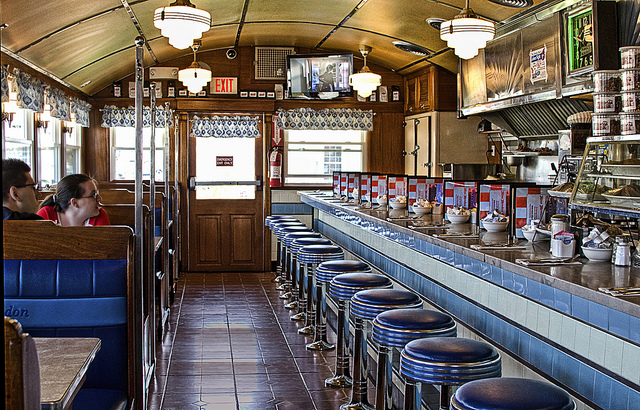
dish_diner

John Leavitt pens an ode to the True American Diner:

[N]ot all diners are exactly alike. There are vintage sleek bullet diners, modern silver-and-neon highway beacons, converted farmhouses, dusty desert truck stops, low-slung ranch-styles attached to motels, and mansard roof shoeboxes full of fake grapevines that resemble suburbian banks. Somewhere, there is neon. There are always leather or leather-ish clad booths in a True American Diner; without them, it’s just a breakfast joint. …

True American Diners exist in a bubble of no-nonsense egalitarianism; they exist outside socioeconomic distinctions, because there is something for everyone. There are always at least two retired people at the counter; they will never speak to each other or anyone else. Someone is on the run from the law; someone is the law. There are always at least two teenagers in a True American Diner and they are simultaneously talking about nothing and having The Most Important Conversation Of Their Lives. You wouldn’t go there for a special occasion, but you can always go there after one: proms, weddings, or funerals.

Without diners, where would outlaws stop to discuss bank robberies over coffee? Where would strippers go when they get off work? Where would covert agents talk about business with waffles or lovers arrange clandestine meetings? Without diners, are you even sure you’re in America?

(Hat tip: The Browser. Photo by liz west)

Ebola Reaches NYC, Ctd

Noam Scheiber contends that NYC officials clearly lied when insisting “Dr. Spencer acted entirely appropriately and responsibly”:

Despite the fact that Dr. Spencer presented a miniscule risk to anyone around him when he decided to ride the subway, go bowling, and frolic at the High Line Park on Wednesday, he obviously should not have been out and about. His decision to do those things forced the city to shut down and extensively clean the bowling alley in question and dispatch its “medical detectives” all over the city to figure out whom he may have come into contact with. Spencer’s wanderings probably also put a crimp in all the retail establishments along his Wednesday route. And they have generally required the city to manage the suddenly tormented psyches of millions of New Yorkers. It doesn’t seem like asking a guy to hang out in his apartment for a few weeks would have been too much to ask in order to avoid this mess. (On top of which, it’s become our policy in this country to quarantine anyone who had direct contact with an Ebola patient, as Dr. Spencer did repeatedly. Why should someone be exempt from this rule just because the contact happened outside the country?)

So, as I say, we were some lies told last night.

But, he admits, “I kinda think Cuomo et al were right to lie”:

[P]ublicly calling out Dr. Spencer for his failure to self-quarantine could have turned into its own minor disaster. Cuomo, de Blasio, and Bassett were generally pretty effective: They correctly assured people that it’s very difficult to contract Ebola, that all the relevant protocols were followed once Dr. Spencer came forward with his symptoms, that the city had thoroughly war-gamed this scenario. Had they taken the additional step of criticizing Spencer for not isolating himself beforehand, you can imagine that dominating the headlines, drowning out most of what they said, and generally contributing to the very panic they were trying to defuse.

Sarah Kliff, on the other hand, defends Spencer:

Doctors Without Borders has a five-point procedure for doctors returning from West Africa, to monitor for signs of Ebola.

guidelines

There is no evidence that Spencer failed to follow these guidelines. Nor is there evidence that requiring doctors to quarantine for three weeks, if they are non-symptomatic, would do anything to stop the disease’s spread. “It’s completely unnecessary,” says Harvard University’s Ashish Jha, who has been studying the outbreak. “I’m a believer in an abundance of caution but I’m not a believer of an abundance of idiocy.”

Tell that to Jason Koebler, who visited the same bowling ally as Spencer on Wednesday night:

I know how Ebola is spread. I’ve spent lots of time writing about it and researching it and on calls with the Centers for Disease Control and watching press conferences and interviewing doctors. I know I don’t have Ebola. And still, all I could think about was whether or not I had touched or even seen this guy—only part of it being morbid curiosity. Maybe that’s the power of this thing. I’m a (relatively) rational and highly informed person (on this issue), and still I’d be lying if I said I wasn’t at least a little bit worried.

A reader lays into Spencer:

Why is it that some in the media and public health circles are calling Dr. Craig Spencer a “hero” and celebrating his “brave mission”?  MSF [Médecins Sans Frontières] is an amazing organization that does incredible work – but it doesn’t follow that everyone who volunteers for MSF workers is a hero. And we shouldn’t assume that doing good work is always driven by some deep self-less, altruistic, humanitarian motive. Being an MSF volunteer doesn’t make someone Mother Theresa.

Spencer is a physician, who after spending a month volunteering for MSF in Guinea treating Ebola patients then traipsed around New York City. He used public transportation after the outcry and panic at nurse Amber Vinson’s airline flights. (Vinson, by the way, had called the CDC to get permission for her flights.) He went out to a restaurant/bowling alley/dance floor after the very public backlash against ABC Medical Correspondent Nancy Snyderman for leaving the house and sitting in a car while her companion picked up some takeout. (Snyderman never treated any patients for Ebola.)

Maybe he justified this because he had always been careful when treating patients and knew he was not going to get Ebola. Maybe he justified it because he knew that he couldn’t transmit the virus until he was symptomatic. Maybe he thought no one would know. Whatever his justification was really doesn’t matter; at the end of the day, he simply didn’t think the rules applied to him, so he didn’t follow a 21-day quarantine. And he got Ebola.

The result of his hubris is going to be a public health crisis – not rampant Ebola infection, but already overcrowded emergency rooms and doctors offices overrun by nervous A-train commuters who have come down with a fever. A medical professional who incites a public health crisis isn’t a hero; he’s an arrogant narcissist. The kind of narcissist who posts a smug picture on Facebook wearing protective clothing to humble-brag his forthcoming humanitarian trip to West Africa masked as a plea to support MSF.

I hope he gets better, but I’m not going to celebrate his bravery or heroism.

Update from a reader:

The guy risked his life to volunteer for MSF. He willfully chose to expose himself to danger in order to ease the suffering of others. What’s happening now shows how real and serious the danger was. And as a doctor, he knew exactly what was he risking. If that doesn’t make him a hero, what would? We should all pray for him.

One word from a critic jumped out at me: frolic. He was frolicking on the High Line. Like, c’mon dude, try to butch it up a bit.

I ride around on the trains to read. It’s strange, but it’s what I do. I was on the A train on Wednesday night. I rode it to Lefferts Blvd, then back up to 207th st, and then down to 42nd street. So I spent a lot of time on the A train on Wednesday night. It’s a good train for reading, because it runs for a long time and it’s not too crowded.

I don’t think I’m going to get Ebola. Instead, I think: the odds of my getting Ebola are close to zero. But it would be truly awful to die because I wanted to read Robopocalypse. If I do die I hope my family will lie for me. “He just loved Joseph Roth, he talked about him all the time. And now he’s dead because that selfish doctor just had to go out frolicking.”

An ISIS “Lone Wolf” In New York?

The NYPD is trying to determine whether a man who attacked four rookie police officers with a hatchet yesterday afternoon has links to terrorist organizations:

Police obtained a warrant to search Zale Thompson’s computer for clues about Thursday’s daytime assault in Queens, which left one officer with a serious head injury. Thompson’s activity on social media indicated he was a convert to Islam and included rants about injustices in American society and oppression abroad but offered no clear evidence of any affiliation with terror groups, police said. Thompson charged a group of four officers with the 18-inch hatchet as they posed for a picture by a freelance photographer on a Jamaica streetcorner, striking one officer in the head and another in the arm, authorities said.

But the anti-American sentiments found in Thompson’s social media postings may also be rooted in militant black nationalism:

One law enforcement official said that the investigation, which is in its early stages, has uncovered rants by Mr. Thompson about the United States, along with statements expressing anger about the role of the United States military in the Middle East. But the official said that Mr. Thompson appeared to be more of what he called “a throwback to the old black radical groups in the 1970s” rather than a traditional jihadist, though the investigation has uncovered writings or statements expressing “hatred of America, the need for revolution and the need to punish America.”

Thompson’s Facebook profile has been held up as evidence of his inclinations:

Screen Shot 2014-10-24 at 3.27.59 PM

The text in the background is Surat al-Fatiha, the first chapter of the Quran, which Muslims recite regularly in prayer. A reminder from an earlier Dish post today:

ISIS has specifically called for “lone-wolf” attacks against Western countries, and it seems entirely possible that [Canadian assailants] Zehaf-Bibeau and Couture-Rouleau, both reportedly active in jihadist web forums, could have hatched these not-particularly-sophisticated plots on their own. This certainly isn’t cause for comfort, though. Self-starting terrorists are a lot more difficult to track than those with direct ties to international networks.

A Shot At Democracy For Tunisia

Noah Feldman previews the upcoming legislative elections, the country’s first since ratifying its new constitution in January. The main contenders are the ruling Ennahda party, which espouses a moderate form of political Islam, and Nidaa Tounes, a secular party whose main appeal to many voters “is that it isn’t Ennahda”:

What will happen Sunday? Polls are relatively unreliable, but in general they have the two parties running close with Nidaa perhaps somewhat ahead. For Ennahda, the best result would be to win a plurality, then form a governing coalition with Nidaa or smaller secularist parties. … If Ennahda does win a plurality, expect the party to keep its promise of not running a presidential candidate. Ennahda knows that with a legislative plurality and the president from his own party, it would be too powerful and might well provoke a response.

If Nidaa wins a plurality, however, the situation will become more complicated.

Nidaa might well believe that it could form a coalition without Ennahda. Nidaa would have significant momentum to win the presidential contest — at which point [Nidaa leader Beji Caid] Essebsi would find himself an 88-year-old with a serious secular mandate. The temptation to use undemocratic means and get rid of Ennahda as a viable political force could be hard to resist. The result would be a disaster for Tunisia’s hopes of becoming a functioning democracy.

While the country has made great strides in democratization, the Arab Spring’s only genuine success story isn’t without its blemishes, David Kirkpatrick reports, at least not when it comes to combating radicalism:

[I]nstead of sapping the appeal of militant extremism, the new freedom that came with the Arab Spring revolt has allowed militants to preach and recruit more openly than ever before. At the same time, many young Tunisians say that the new freedoms and elections have done little to improve their daily lives, create jobs or rein in a brutal police force that many here still refer to as “the ruler,” or, among ultraconservative Islamists, “the tyrant.” Although Tunisia’s steps toward democracy have enabled young people to express their dissident views, impatience and skepticism have evidently led a disgruntled minority to embrace the Islamic State’s radically theocratic alternative. Tunisian officials say that at least 2,400 Tunisians have traveled to Syria and Iraq to join the group — other studies say as many as 3,000 — while thousands more have been blocked in the attempt.

Walter Russell Mead isn’t surprised by that:

For the most part, the Western media met the Arab Spring with unbridled enthusiasm, envisioning a sudden joining of the path to development, democracy, and peace that much of the world has been on since 1991, or sooner. But whether in 17th century England or late 19th-early 20th century Eastern Europe, the path to prosperity and modernity has been anything but smooth and easy, and democracy and religious extremism have often gone hand in hand. Contrary to the facile understanding of the world which seemed to undergird a lot of the reporting on the Arab Spring, not all violence is the result of misunderstandings, repression, or poverty, not all poverty is the result of just having the ‘wrong’ political system in place, and sometimes, especially for religious reasons, people really and earnestly want to kill each other.

Dalibor Rohac connects extremism in Tunisia to the country’s economy:

The political violence may have multiple roots, but Tunisia’s poor economic performance is clearly one of them. In recent years, many strikes and protests over economic conditions have taken a violent turn and led to attacks on local police stations, for example. …

Because of a vibrant tourism sector and economic links with Europe, Tunisia has relied less on government ownership and industrial planning than other Arab countries and has long enjoyed the presence of many foreign investors. Still, its economy faces significant barriers to competition and market activity. Tunisia ranks 87th on the most recent World Economic Forum’s Global Competitiveness Report, compared to 32nd in the 2010–2011 edition. Its poor performance is driven mainly by its underdeveloped goods, financial, and labor markets, which are paralyzed by heavy-handed regulation.

Lastly, back to the election, Asma Ghribi is concerned that many Tunisian voters won’t turn out Sunday:

Despite voter registration campaigns and efforts by the High Electoral Commission, known by its French acronym ISIE, voter registration has been relatively low. Samira Marai, a former member of the National Constituent Assembly (NCA), the elected legislative body that drafted Tunisia’s constitution, said people have lost faith and confidence in politicians.

“I get people telling me all political parties are only eager to serve their own interests and not their constituents,” added Marai, who is affiliated with the secular Afek Tounes party. “There is a crisis of trust.” According to her, a major reason for the sense of disillusionment among many Tunisans is the failure of progressive parties to unite, leaving the secular political camp fragmented and chaotic. “We [secular parties] should have come together under the leadership of one party. We could have done it. But the problem in Tunisia is that every political party thinks it is strong enough to win enough votes.”

She’s probably right.

Epistemic Closure Watch, Ctd

A recent Pew survey showed a sharp ideological divide in media consumption. Nyhan disputes these findings:

[H]ave the predictions of widespread media echo chambers really come true? It’s hard to tell using questions like Pew’s, which ask people to self-report where they get their news. People can be biased in what outlets they choose to name or forgetful of the media they did consume in different settings and contexts. In particular, liberals or conservatives may be prone to exaggerating their exposure to ideologically consistent news outlets. Naming Fox or MSNBC in response to a question like the one Pew used may thus be more of a marker of tribal affiliation than a direct measure of news consumption.

The picture looks a lot brighter when social scientists have analyzed measures of people’s news consumption in the real world. It turns out that the media people are actually exposed to both online and offline is much more diverse and heterogeneous than people’s self-reports suggest.

Acid Burns In Isfahan

A series of acid attacks on women in Iran’s third-largest city prompted thousands to protest on Wednesday, denouncing the attackers and demanding that authorities take action. The attacks “had coincided with the passage of a law designed to protect those who correct people deemed to be acting in an ‘un-Islamic’ way”:

A local official said on Wednesday that “eight to nine” women had been attacked over the past three weeks by men on motorcycles who splashed them with acid in Isfahan, one of Iran’s largest urban centers and the country’s chief tourist destination. Some of the women were blinded or disfigured. The protesters — more than 2,000, according to the semiofficial news agency Fars — gathered in front of the local judiciary office and shouted slogans against extremists whom the protesters likened to supporters of Islamic State militants. They also called for the city’s Friday Prayer leader and the prosecutor to step down, witnesses said. Critics have long accused the Iranian authorities of playing down episodes that could embarrass leaders rather than investigating the cases.

Acid attacks on women are depressingly familiar events in Pakistan and Afghanistan, but rare in Iran. Rick Noack focuses on the new law, to which President Rouhani has come out in opposition:

“It is upon all Muslims to exhort love, respect for others and human dignity,” Rouhani reportedly said Wednesday, a comment that was widely perceived as being in support of the protesters. Although Rouhani did not mention the protests or the acid attacks, the statement was remarkable, and it could be the latest public acknowledgement of an internal fight between Rouhani’s government and other, more conservative Iranian institutions. …

The passage of the new law, pursued by religious hardliners, represented a setback for Rouhani’s government. Although the details of the law are unclear, it is expected to empower citizens and government officials to correct Iranians who fail to follow rules defined by the country’s religious leaders. Given that some of those strict Iranian norms seem to have motivated the acid attacks, the law has drawn criticism from more liberal voices. They fear that the law could legitimize violence against women for minor rule violations like wearing inappropriate clothes.

Shima Shahrabi suspects the attacks may be connected to threats by extremists to revive their role as vigilante morals police:

The attacks follow a September announcement by Ansar-e Hezbollah or the “Supporters of the Party of God, a paramilitary fundamentalist group, that it would resume vigilante-style moral policing, couched in the Islamic notion of “enjoining good and forbidding wrong.” Through much of the 1980s and 1990s, the group terrorized Iranians by attacking civic gatherings, lectures by progressive academics, and women on the street deemed insufficiently covered. The group’s re-emergence marks a new strategy in the hardline assault on President Rouhani’s efforts to moderate Iranian society. 

In Isfahan, people are speaking about an organized campaign to enforce strict Islamic moral and social codes, lending credence to the link between the acid attacks and Ansar-e Hezbollah’s announced resurgence. But officials in Tehran are pushing back against these perceptions. “These acid attacks have nothing to do with people’s hejab,” Ahmad Salek, an Isfahahn MP, told IranWire. “One of the targets of the attack was wearing full hejab and chador. These rumors are made up by the mercenaries who live in the West and want to weaken the regime.”

Reza HaghighatNejad observes how Iran’s hardline conservatives are reacting to the protests:

Many hardliners claim that protests against the acid attacks were planned by enemies of the regime, an attempt to discredit Iran’s most committed religious forces. For them, the West and other regime enemies are to blame for growing discontent in Iran, which explains how a hardliner MP could state that the acid attacks in Isfahan were potentially started by intelligence agencies belonging to Israel and the West. Though it might seem that recent moves to clamp down on social freedoms strengthen the regime, a further polarization within society and widening social divides are probably closer to the truth. And with these rifts come wider reaching pockets of anger and distrust. For many, what has happened in Isfahan signals just how out of control the regime actually is: what started as a campaign for morality has now led to vicious attacks on innocent, law abiding citizens.

Smells Like Teen Misdemeanor

Gary Fields and John R. Emshwiller report on a shift in how adolescent misbehavior gets punished:

In Texas, a student got a misdemeanor ticket for wearing too much perfume. In Wisconsin, a teen was charged with theft after sharing the chicken nuggets from a classmate’s meal—the classmate was on lunch assistance and sharing it meant the teen had violated the law, authorities said. In Florida, a student conducted a science experiment before the authorization of her teacher; when it went awry she received a felony weapons charge.

Over the past 20 years, prompted by changing police tactics and a zero-tolerance attitude toward small crimes, authorities have made more than a quarter of a billion arrests, the Federal Bureau of Investigation estimates. Nearly one out of every three American adults are on file in the FBI’s master criminal database. This arrest wave, in many ways, starts at school.

Concern by parents and school officials over drug use and a spate of shootings prompted a rapid buildup of police officers on campus and led to school administrators referring minor infractions to local authorities. That has turned traditional school discipline, memorialized in Hollywood coming-of-age movies such as “The Breakfast Club,” into something that looks more like the adult criminal-justice system.

Robby Soave comments:

It’s worth mentioning that violence in schools did decline dramatically over the last two decades. I’m not certain how much of that should actually be attributed to police omnipresence, given that violence declined nationwide, not just in schools. But it would be reasonable to think some amount of policing had a positive impact on the extreme end.

That does not justify what’s happening now. Today, schools are relatively safe environments for kids; there’s no excuse for treating students like prisoners of war. Students are being educated in an environment of absolute non-freedom and petty authoritarianism. Administrators have all the power to ruin their lives over arbitrary enforcement of stupid rules.

Josh Marshall adds some analysis:

[W]e now have a system in which lots of kids end up in the hands of police for things that seem to be obviously things schools should handle on their own – as part of the socialization process that is a key aspect of the school system – rather than calling in the cops. As with the militarization of policing, the trend falls disproportionately and hardest on blacks and other minorities. But it’s notable that it is not restricted to non-whites. It’s general.

But one of of Josh’s readers focuses on race:

In the decades since Brown v. Board, there’s been a massive nationwide exodus of more affluent whites from our public schools. That’s resulted in resegregation, as whites and more well-off families of color tend to send their kids to a parallel school system of private and parochial schools, or to charters and “magnet” schools within the public school system designed to screen out undesirables (though the segregation at most charters runs the other way). So our schools in cities large and small chiefly serve students of color, mostly low- and lower-middle income kids. And as recent research has shown, those kids come in for much harsher punishment for stupidly minor infractions than do white kids — horrifyingly, even in preschool. This is actually something de Blasio’s DoE has been promising to address through revision of the discipline code.

Anyway, I think this accounts for why you don’t see this kind of stuff so much at white private and parochial schools (where neither do you see grueling testing regimens, or homework, or even, a few old-school nuns aside, the kind of wild fetishism of classroom order and discipline that inner city charter schools market themselves with). Fear of a black student.