An especially good reason why we post these at 4.2o pm:
Month: October 2014
Verse Before Vows?
In a review of Poets in Their Youth, Eileen Simpson’s 1982 memoir of her marriage to John Berryman, Lisa Levy contemplates what inspired the poet and his contemporaries Robert Lowell and Delmore Schwartz – and what drove them apart from their spouses:
To get an idea about how important poetry was to these men — not their wives, who significantly seemed to tolerate the poetry talk rather than participate in it — it’s best to think about if the World Series, the Superbowl, the Stanley Cup, and the NBA Playoffs all happened at the same time with teams like Milton, Yeats, Eliot, and Shakespeare competing.
Randall Jarrell was fond of a game called The Best Three, which he made his fellow poets play obsessively — the best three lines of Milton, of the “The Waste Land,” of Lear, etc. Reading about it in Simpson reminded me of how my friends and I were about music in the 1980s: What’s the best live band you’ve ever seen? Best Stones record? Best UK Punk band before the Clash? Current band from Minneapolis? Band to ever play CBGBs? But while we were obsessed with the new, the poets were wildly concerned with lineages, through lines from the Elizabethans to the Romantics to the Moderns to themselves. The theory is that the generation before — Yeats, Eliot, Pound — would be sure to overshadow this one, no matter how hard Berryman, Schwartz, Jarrell, and Lowell wrote. But that was wrong. If they wrote hard, though, they lived harder, and were extremely hard to live with. It’s not shocking that they took mistresses and to the bottle: poetry was the only thing they could be faithful to.
This was a pivotal time in poetry, and they were the first generation of “professional poets,” a class made possible by MFA programs, generous fellowships, and an actual reading public (as well as popular public readings). Yet despite all of this machinery, the idea of the poet maudit, roaming the streets composing verse about lost loves and sad lives, possessed them. Does it follow that they were then cursed with lost loves and sad lives? One of their constant arguments was about poetry as a vocation versus poetry as work, which seems a false dichotomy. Doesn’t it have to be both?
Oh Baby, He’s A Wilde One
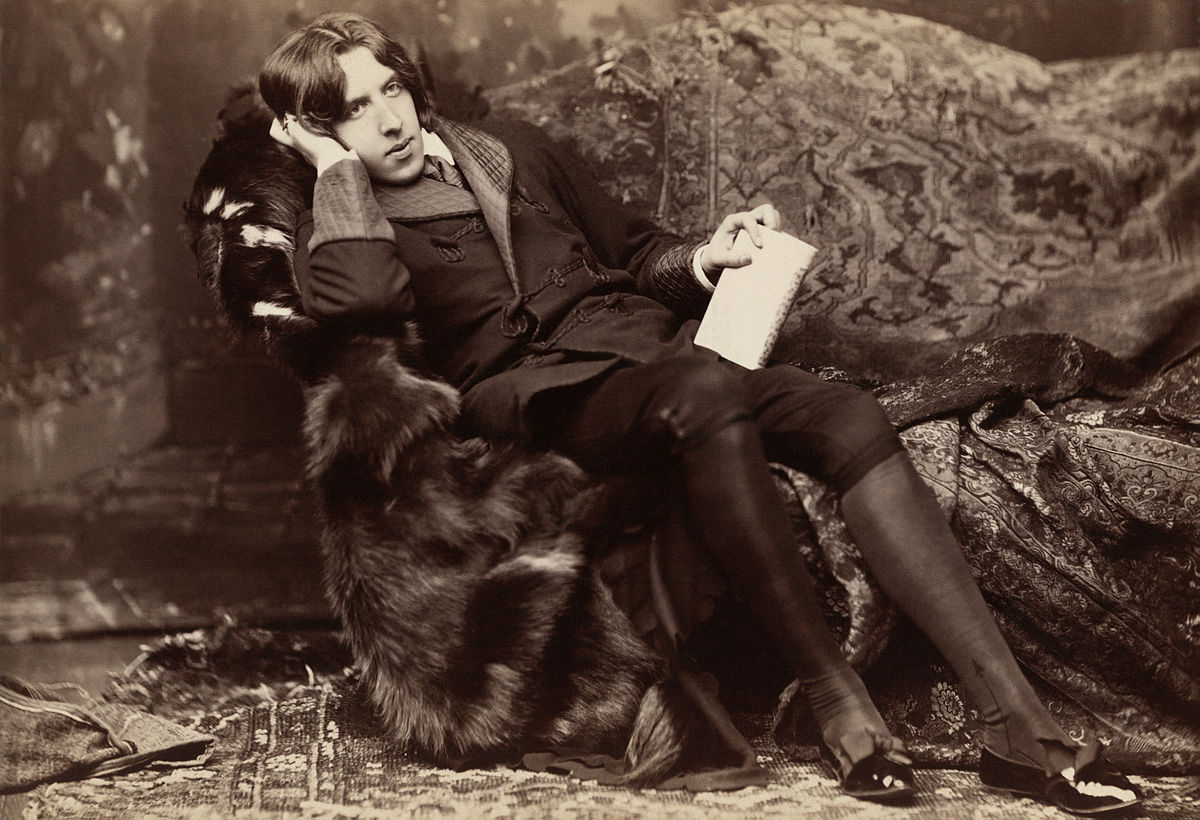
Thursday marked the 160th birthday of Oscar Wilde. To celebrate, TNR republished a classic essay from their archives by George Woodcock, who pondered the writer’s enduring appeal:
Wilde’s broadest appeal lies in the mood of daring thought and enthusiasm from which such insights emerged. It is significant that he had always attracted the adolescent, and in this way has influenced the literary and intellectual awakening of each generation that has followed his own. “I have met no one who made me so aware of the possibilities latent in myself,” said William Rothenstein, remembering his own youth, and many young people who have met Wilde only through his writings have found there an invaluable stimulus at certain stages of their development. This peculiar appeal to the young arises not only from the romantic iconoclasm of Wilde’s ideas, but also from the almost adolescent zeal with which he champions them. … “Disobedience,” he reminds us, “is man’s original virtue. It is through disobedience that progress has been made, through disobedience and through rebellion.” Here the best of the nineteenth century speaks through its most wayward representative.
Richard Ellmann, who wrote a Pulitzer Prize-winning biography of Wilde, details a bit of that rebelliousness in an account of his years as a student at Oxford:
Wilde seems to have enjoyed subverting authorities.
At the examination in Divinity which he had to take at the end of his second year, he went up to the proctor to obtain the examination paper. The proctor inquired, “Are you taking Divinity or Substituted Matter?” (The substituted matter was for non-Anglicans.) “Oh, the Forty-Nine Articles,” Wilde replied indifferently. “The Thirty-Nine, you mean, Mr. Wilde,” said the proctor. “Oh, is it really?” asked Wilde in his weariest manner. (He would talk later of the Twenty Commandments; by miscounting them he discounted them.) The examiner on this occasion was W.H. Spooner, later Warden of New College. Spooner reproved Wilde for being late, to which Wilde replied airily, “You must excuse me. I have no experience of these pass examinations,” meaning that an examination where one simply passed or failed was beneath his notice.
Spooner, himself in orders and a nephew of the Archbishop of Canterbury, reprimanded him by telling him to copy out the twenty-sixth chapter of Acts in Greek. After a time, seeing that Wilde was toiling away industriously, Spooner relented, “You have done enough.” But Wilde continued to write. Spooner said, “Did you hear me tell you, Mr. Wilde, that you needn’t write any more?” “Oh yes, I heard,” said Wilde, “but I was so interested in what I was copying that I could not leave off. It was all about a man named Paul, who went on a voyage and was caught in a terrible storm, and I was afraid that he would be drowned; but do you know, Mr. Spooner, he was saved; and when I found that he was saved, I thought of coming to tell you.”
And of course, it’s hard to mention Wilde without noting his sexuality. Maria highlights his love letters to Lord Alfred Douglas, including this one:
My Own Boy,
Your sonnet is quite lovely, and it is a marvel that those red rose-leaf lips of yours should be made no less for the madness of music and song than for the madness of kissing. Your slim gilt soul walks between passion and poetry. I know Hyacinthus, whom Apollo loved so madly, was you in Greek days.
Why are you alone in London, and when do you go to Salisbury? Do go there to cool your hands in the grey twilight of Gothic things, and come here whenever you like. It is a lovely place and lacks only you; but go to Salisbury first.
Always, with undying love, yours,
Oscar
For more Dish on Wilde, check out this post on the time he (almost certainly) had sex with Walt Whitman.
(Image: Oscar Wilde in New York in 1882, via Wikimedia Commons)
Rembrandt At Last
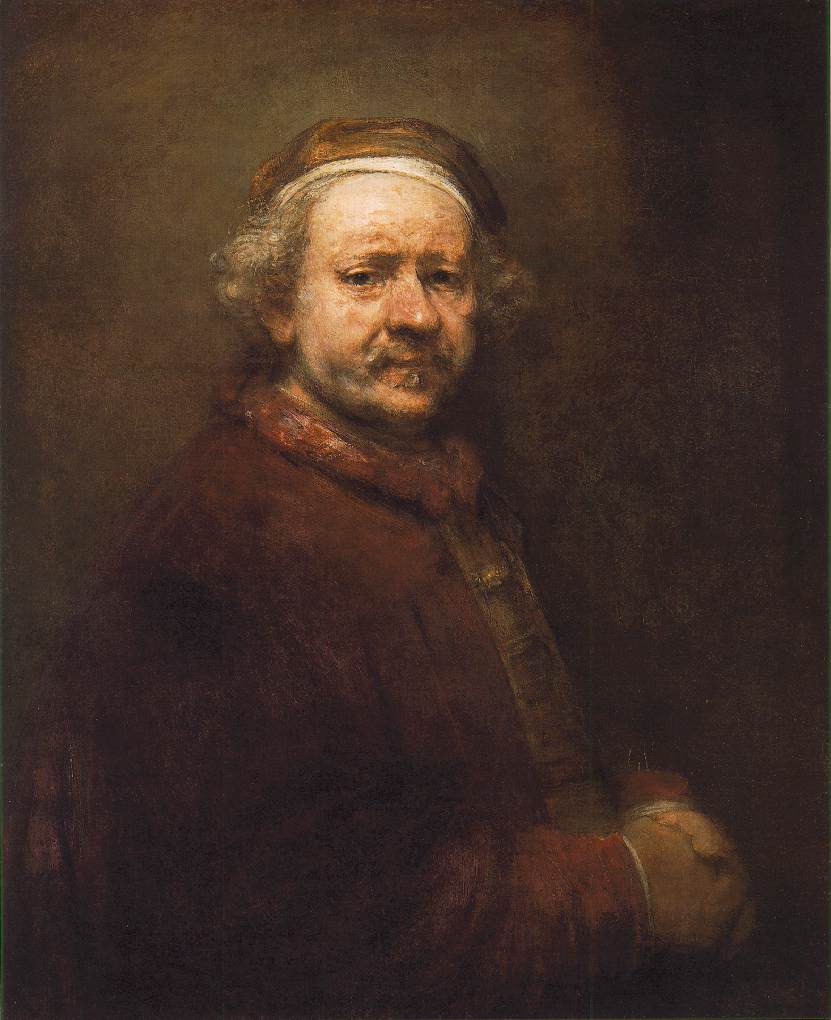
Critics are raving about the show featuring Rembrandt’s later works at London’s National Gallery:
This show is a blockbuster, make no mistake. You know it from the instant you step into the first room, housing four spectacular self-portraits. Dark, lit only by the soft spotlights that illuminate the canvases, it’s as if you’ve walked into a Dutch painting. This room, in which Rembrandts stare unblinkingly out at the spectator—painted between the ages of 53 and 63 (the final year of his life)—boldly proclaim the painter’s unwavering belief in portraying nature in all her pocked, wrinkled, hoary, fragile, unadulterated glory. …
[I]t is the emotional acuity that shines through all these works that makes your heart sing.
Jacob blessing the Sons of Joseph (1656) is such a tender depiction of age and frailty, the hesitant reach of the elderly man for the young child will be recognizable to anyone who has ever known a grandparent. Lucretia (1666), her knife in her hand and blood beginning to stain her shift, rings on a bell to call her family, to alert them to what she has done—she has stabbed herself following her rape by the Roman king Tarquin, rather than live with the shame. Her pallid young face, brow sweating with fear and pain, yet resolute and stiff with sorrow, makes you want to cry.
J.W. at The Economist maintains that “at the heart of everything were, of course, the self-portraits”:
Rembrandt painted himself throughout his career. In his late period he worked repeatedly to catch varying moods of stress and resignation. One self-portrait … done in the final year of his life, shows a man who has lived and knows suffering, who gazes at us with some irony, but with contentment too: sadness leavened by the absolute conviction that this painter knows himself and that only he is able to depict the fact.
It is this that makes late, self-reflective Rembrandt elusive. There was no commercial imperative to paint himself and questions remain. Why did he do it so often? What was he trying to find? Some answers will surely lie in this magisterial National Gallery display. At this stage of his career Rembrandt was often painting, from inside himself, what it is to be human.
In other Rembrandt news, Bendor Grosvernor recently recounted how the number of authentic Rembrandt works has plummeted – from an estimated 600-650 in the first half of the 20th century to around 250 in recent decades:
In 1968, the Rembrandt Research Project (RRP) was established with an admirable objective – to say definitively what was and was not a Rembrandt. But two key factors doomed the RRP’s approach. First, it tried to make attributions by committee, thus allowing indecision and groupthink to reign. It is easier and less risky to say “no” to a picture than to say “yes”. In such situations, the hardest-to-please scholars gain kudos for being “disciplined”, and influence others.
Second, connoisseurship itself fell out of fashion. “New art history” (which became dominant from the late 1970s onwards) believed that connoisseurship was a redundant, elitist practice, and was no longer taught as a key skill for art historians and curators. Social, economic and philosophical generalisation was the order of the day. As a result, the wide and informed debate that should have taken place every time a Rembrandt attribution was questioned didn’t happen. Few ever came to Rembrandt’s defence. As the RRP began to wield its attributional axe, others joined in too, including major museum curators. Rembrandt scholarship became gripped by doubt – if picture X was no longer “right”, then surely pictures Y and Z, which were painted in a similar manner, must be “wrong”.
(Image: Self-portrait at the age of 63 by Rembrandt, 1669, via Wikipedia)
Fake Limbs That Work Like Real Ones, Ctd
Last weekend’s post about mind-controlled artificial limbs left a reader his shaking head:
It frankly drives me crazy to watch videos about developments in myoelectric upper-extremity prosthetics like the one you posted and to read commentators like Victoria Turk “herald this breakthrough.” Yes, I can choose not to watch or read, but I’m an upper-extremity amputee, and I’ve worn a body-powered prosthesis most of my life. So why wouldn’t I let my curiosity reign?
Reports like this are crazy-making because for me, the products they tout inevitably disappoint. Indeed, I probably wouldn’t wear the prosthetic device with implanted electrodes, even in the very unlikely event that I were offered the opportunity. They evoke the hoary sci-fi cliché of the melding of man and machine, and while mildly interesting, they aren’t the answer for the everyday, prosthesis-wearing amputee.
I once tried a myoelectric arm with surface electrodes.
I promptly went back to my body-powered prosthesis, which is fitted with a hook for a terminal device. It’s far lighter, easier to manipulate, more dexterous, and more robust, and it’s not subject to the involuntary opening and closing of the surface electrode prosthesis. It also doesn’t discolor in the sun (that ‘hand’ is a silicon glove, of course) or run out of power.
Look at the video and see what the terminal device (the hand itself) can do: open and close. The end. It’s gross motor movement, at best. Dexterity at the individual finger level is coming, but it’s still a long, long way off (decades, if you ask me) from what you, the ‘handed’ majority, enjoy and take completely for granted. As it is, given the prosthetic hands in this video, give me a hook any day.
Then, there’s the bottom line: price. Who pays for these fantastically expensive myoelectric limbs? My new arm cost $7,500 and is as basic as they come. A myoelectric starts in the tens of thousands of dollars. One with implants? Few know, but I imagine that we’d likely start the conversation at $100,000. Impractical, in other words, for anyone but the well-off or those lucky enough to live where the state funds their prostheses (I live in Canada, and the state paid 65 percent of my artificial-limb cost. My supplementary, work-paid health plan covered the rest, but it would have capped at $3g).
For the working man, the poor, those who live in countries where state health care is weak, or in other words, likely for the majority of upper-extremity amputees in the world, simple, body-powered prostheses are the past and for the moment, also the future.
Forgive the rant, but this touched a nerve, as it were.
The View From Your Window Contest

You have until noon on Tuesday to guess it. City and/or state first, then country. Please put the location in the subject heading, along with any description within the email. If no one guesses the exact location, proximity counts. Be sure to email entries to contest@andrewsullivan.com. Winner gets a free The View From Your Window book or two free gift subscriptions to the Dish. Have at it.
Browse our previous 226 window view contests here.
Martin Amis’ Auschwitz
Martin Amis’ new novel, The Zone of Interest, takes place in the death camps at Auschwitz. Sophie Gilbert provides an overview:
The Zone of Interest is a strange book, indeed; a grim satire, part office comedy, part romance, part lyrical dissection of civilization gone very, very wrong (the sky over the camp one day, we are told, is “a vulgar dark pink, the color of café blancmange”); part visceral, oozing, pestilent horror. The comic interchanges are no less funny for being interspersed among the brutal renderings of depravity, but they do, conversely, make that horror even more jarring. They also remind us of our most basic and familiar impulse when faced with the bleak despair of existence. Amis isn’t making Auschwitz funny—he’s making it human.
The novel weaves between three different narrators. Angelus “Golo” Thomsen is a womanizing “desk murderer” with Aryan good looks who has a clerical position at the camp, but whose Uncle Martin (later revealed to be Martin Bormann, Hitler’s powerful private secretary), grants him a degree of privilege beyond his rank. Paul Doll, colloquially known among officers as “the Old Boozer,” is the ghastly, sociopathically pompous commander, styled after Rudolf Höss and very much in the model of the classic Amis grotesque (his “spongy red chest hair is dotted with beads of sweat”). The last voice belongs to Szmul, one of “the saddest men in the history of the world.” As a Sonderkommando, one of the Jews charged with disposing of the remains of murdered prisoners, Szmul justifies his brazen ability to go on living by listing his three motivations: to bear witness, to seek revenge, and to save a life, “at the rate of one per transport.”
Amis spoke about the idea of Auschwitz as a “mirror of the soul” in a recent interview:
[Y]ou say that Auschwitz, that experience, would tell people who they were. Could you talk about that?
It’s actually a terrifying notion that many survivors say. It’s a real theme of survivor testimony, which is often of astounding quality. Amazing eloquence. But they all said that during peace and civilization you only ever see 5 percent of someone’s character. And you should dread seeing it all, because you find out whether you’re brave, adaptable, determined, immune to despair, and that sort of thing. That’s for the victims. And for the perpetrators, you find the terrible potentialities … But the banality of evil, Robert Jay Lifton said the best thing about that: “Well, they might have been banal when they started out, but they weren’t banal once they started killing people.”
In a review, Ruth Franklin pronounces Amis more a master of words than concepts:
Amis is one of the most inventive users of language currently at work in English — his sentences cannot help crackling — as well as a uniquely talented satirist. But when it comes to the deeper problems of the Nazi pathology that gave rise to the jargon he so brilliantly parodies, he does not have much to offer. Is the brutal Paul Doll correct in his repeated insistence that he is “completely normal”? Is Golo Thomsen, as he claims, one of “hundreds of thousands . . . maybe millions” of Nazis who passively tried to obstruct the regime? Was Auschwitz truly a mirror of the soul that reflected people as they really were? Such questions may be unanswerable. Still, a novel that raises them should at least make an attempt at grappling with them.
But, in a damning assessment, Michael Hofman finds even Amis’ style overwrought:
It elicits not one but both types of unwelcome reaction from the reader: both the ‘so what?’ and the ‘I don’t believe you’ and sometimes both together, as in many of the weather sentences (in The Zone of Interest the weather ends up having to stand in for reality). ‘The grey sky went from oyster to mackerel’: it’s a pretty notion and catchpenny-clever, but really not. The big and medium-sized things in it – the vision thing – almost completely don’t work. At one stage, Thomsen writes:
I walked on for another ten minutes; then I turned and looked. The Buna-Werke – the size of a city. Like Magnetigorsk (a city called Sparkplug) in the USSR. It was due to become the largest and most advanced factory in Europe. When the whole operation came on line, said Burckl, it would need more electricity than Berlin.
I can’t be persuaded here that anyone is seeing anything. First the stray Soviet comparison (and – mainly authorial – explanatory, as it were, self-basting gibe), then the slither (‘due to become’) in time, then the switch of person to Burckl. There’s nothing here, not even a placeholder, a piece of cardboard with ‘Forest’ on it. Or take a swank Berlin government room in 1942 or 1943: ‘The air was full of tobacco smoke and existential unhappiness.’ Surely not! One might as well say it was full of low-hanging zeugmas. I can’t imagine a contemporary speaker (‘I liaise’ or not) for these lines from a departing train: ‘And now Berlin started off on its journey, westward – Friedrichshain with its blocked sebaceous glands and pestilential cafeterias, the Ahnenerbe with its skeletons and skulls, its scurf and snot, the Potsdamer Platz with its smashed faces and half-empty uniforms.’ They are just magniloquent and omniscient like any other third-generation synthesised Isherwood.
Reviewing the book last month, Joyce Carol Oates also found Amis’ style an awkward match for his subject:
“The Zone of Interest,” like “Time’s Arrow,” focusses upon the vicissitudes of personality and situation, and does not take up such larger questions, except fleetingly. The author’s rage at Holocaust horrors is portioned into scenes and sentences; it does not gather into a powerful swell, to overwhelm or terrify. Is it inherent in postmodernism that, no matter the subject, such emotions are likely to be held at bay? “To produce a mighty book, you must choose a mighty theme,” as Melville declares in “Moby-Dick”; but such mightiness may be precluded by a mode of writing whose ground bass is irony rather than empathy. In the afterword, Amis cites the famous passage in Primo Levi’s Auschwitz memoir in which Levi asks a German guard, “Warum?,” and is told by the guard, “Hier ist kein warum”—“There is no why here.” Perhaps that terse reply is the only adequate response to all questions of “Why?” relating to the Holocaust.
Your Saturday Morning Cartoon
This weekend, we present Oktapodi, an Oscar-nominated animation featuring a couple of creatures close to the Dish’s heart:
While away your Saturday by checking out previous cartoons featured on the Dish here.
The Rise Of The LitBots
Liam O’Brien entertainingly surveys the history of computer-generated literature:
Vonnegut made up a computer that wrote love poems in 1950 – and the Brits did the same thing, but IRL. The reason why you don’t have a bunch of computer-written books on your shelf is because they’re traditionally looked on as novelties. A few years back a Russian computer wrote a Tolstoy homage in the style of Murakami, but unless McSweeney’s has hired this program on the sly, this is the first and last we’ve heard of it. And this isn’t new – over thirty years ago, a program called “Racter” allegedly composed an entire book called The Policeman’s Beard Is Half Constructed. A decade later, another programmer and his creation composed a apparently-not-bad Jacqueline Susann knockoff. Seven years later, someone managed to create the automated equivalent of a tiresome MFA student.
Zooming out, O’Brien suggests contemporary novelists have little to fear:
[A]lgorithms are fairly good at making and collating content, but not literature. The Associated Press and Forbes uses bots to author articles; Penguin Random House doesn’t have the same option. (Though I do have a very convincing theory that James Michener was in fact a clockwork automaton.) Which brings us to the story of Philip Parker, who created a program that’s effectively allowed him to “write” over 100,000 books – granted, they’re books that nobody would ever buy, esoteric (and expensive) market research and industry study titles like The 2007-2012 World Outlook for Wood Toilet Seats. The program is a content compiler rather than a composer – though Parker claims to be able to write poetry and fiction with it – and Parker has posed it as a crucial element in getting textbooks and other types of educational content to poor areas, all because it cuts out the author.
But in a review of Peter Swirski’s From Literature to Biterature, Jennifer Howard notes that not everyone is confident that humans have a definite literary advantage:
Inspired in part by the work of Stanisław Lem, Swirski analyses the prospects for “computhors” as he calls these imagined but (he believes) soon-to-be-real machine entities. His focus zigzags across the fields of artificial intelligence, computing history, cognitive science, narrative theory, the evolution of men and machines, and post-Turing attempts to figure out how to identify computer intelligence if (Swirski would say when) it arises. “Underlying my explorations is the premise that, at a certain point in the already foreseeable future, computers will be able to create works of literature in and of themselves”, he writes.
The trick will be recognizing that we have arrived at that point: “There will never be a moment of epiphany, a discontinuous rupture, a sudden awakening” – no “equivalent of a burning bush”, Swirski writes. It might not even matter whether humans will be able to recognize true autonomous intelligence in a machine. More important is whether we are ready to believe it’s possible. … The “computhors” themselves may well not care whether we fully appreciate what they create, Swirski speculates. They’ll be too busy doing their own thing.
Map Of The Day

Leaf peepers, rejoice – above is a chronological data map that shows when and where fall brings peak foliage. Click here for the interactive version.
 The Dish

