Quote For The Day

US-POLITICS-CLINTON

“The GOP has withheld cooperation from every major element of President Obama’s agenda, beginning with the stimulus, through health-care reform, financial regulation, the environment, long-term debt reduction, and so on. That stance has worked extremely well as a political strategy. Most people pay little attention to politics and tend to hold the president responsible for outcomes. If Republicans turn every issue into an intractable partisan scrum, people get frustrated with the status quo and take out their frustration on the president’s party. It’s a formula, but it works.

The formula only fails to work if the president happens to have an easy and legal way to act on the issue in question without Congress. Obama can’t do that on infrastructure, or the grand bargain, and he couldn’t do it on health care. But he could do it on immigration. So Republicans were stuck carrying out a strategy whose endgame would normally be “bill fails, public blames Obama” that instead wound up “Obama acts unilaterally, claims credit, forces Republicans to take poisonous stance in opposition.” They had grown so accustomed to holding all the legislative leverage, they couldn’t adapt to a circumstance where they had none,” – Jon Chait, cutting through the chatter as usual.

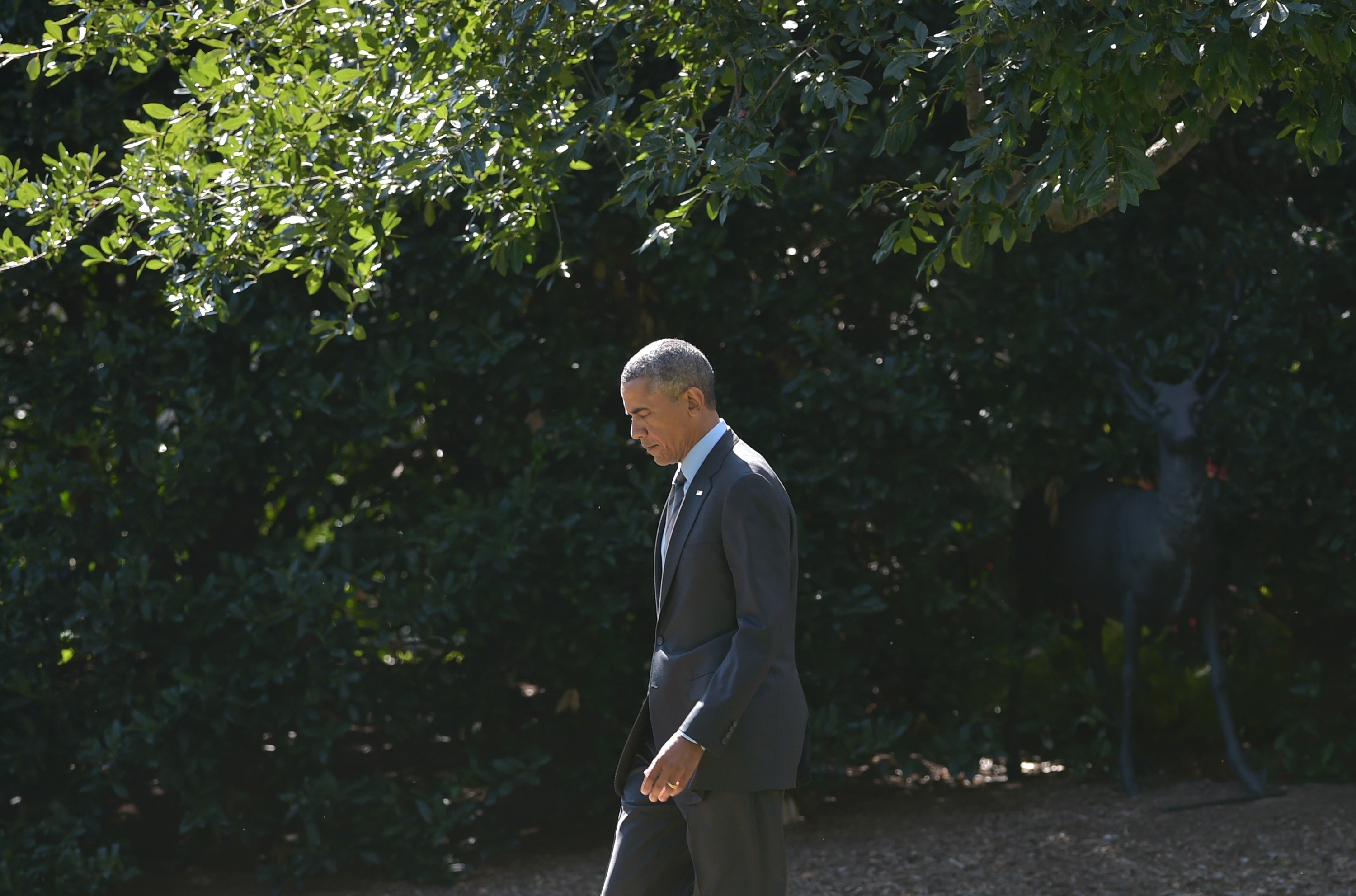
I still don’t like the executive action here – in an area appropriate for legislation. But as politics, it seems to me more successful than I expected. What Obama has done – rightly or wrongly – is break out of the zone he’s been placed in since 2010. The absolute obstructionism of the House GOP against anything the president might want to do could have rendered him utterly side-lined in his last two, critical years. In fact, that was their smug expectation. Instead the pressure has been ju-jitsued right back on them. The failure of the GOP to respond except in a succession of splutters and outrage has revealed one core reason for gridlock: the deep divide within the GOP that is now, on a critical issue like immigration, threatening to throw their future into doubt. I don’t know where this dynamic will take us. But it sure is more interesting than watching another two years of Congressional deadlock.

Meep meep?

(Photo: Mandel Ngan/AFP/Getty)

What Is A Grand Jury For?

Toobin blasts McCulloch for misusing the grand jury:

[T]he goal of criminal law is to be fair—to treat similarly situated people similarly—as well as to reach just results. McCulloch gave Wilson’s case special treatment. He turned it over to the grand jury, a rarity itself, and then used the investigation as a document dump, an approach that is virtually without precedent in the law of Missouri or anywhere else. Buried underneath every scrap of evidence McCulloch could find, the grand jury threw up its hands and said that a crime could not be proved. This is the opposite of the customary ham-sandwich approach, in which the jurors are explicitly steered to the prosecutor’s preferred conclusion. Some might suggest that all cases should be treated the way McCulloch handled Wilson before the grand jury, with a full-fledged mini-trial of all the incriminating and exculpatory evidence presented at this preliminary stage. Of course, the cost of such an approach, in both time and money, would be prohibitive, and there is no guarantee that the ultimate resolutions of most cases would be any more just. In any event, reserving this kind of special treatment for white police officers charged with killing black suspects cannot be an appropriate resolution.

Noam Scheiber is on the same page:

Politically, I understand the advantage of this for McCulloch. He gets to wrap his preference for not indicting Wilson in the legitimacy of a trial-like process, whereas simply declining to indict Wilson without the support of a grand jury would have left him badly exposed. It would have triggered an enormous political backlash, rather than the relatively minor uproar we witnessed Monday night. But as a basic matter of justice, it’s outrageous. As I noted yesterday, the only way to earn the legitimacy of a trial is to actually have a trial, in which both positions are given a fair hearing.

Allahpundit asks, “What should McCulloch have done instead?”:

If he thought, as seems likely, based on the evidence that there was no chance a trial jury would convict Wilson even if he ended up being indicted, it would have been dubious of him to try to obtain the indictment in the first place. See David French’s point on prosecutorial abuse for more on that. A system where the D.A. is encouraged to charge someone in the full expectation that that charge will lead to acquittal is a bad system. Doing so also would have been irresponsible given the red-hot politics of the case. If he had gotten Wilson indicted for, say, manslaughter and then Wilson had been acquitted at trial a year from now, the criticism would be just the same — the system is biased, it doesn’t work, it doesn’t care about black lives — except that the city would have endured 12 more months of anxiety and paralysis while it waited for the verdict. If Wilson’s not going to prison, why not break that news sooner rather than later?

Rich Lowry echoes:

[W]e don’t try people for crimes they almost certainly didn’t commit just to satisfy a mob that will throw things at the police and burn down local businesses if it doesn’t get its way. If the grand jury had given into the pressure from the streets and indicted as an act of appeasement, the mayhem most likely would have only been delayed until the inevitable acquittal in a trial.

Jacob Sullum pushes back:

McCulloch clearly thought an elaborate grand jury process, coupled with public release of all the evidence presented to the jurors, would help keep the peace and mollify critics who feared that Wilson would get away with murder. But a real trial, even one ending in acquittal, would have been much more effective at achieving those goals. A public airing of the evidence, with ample opportunity for advocates on both sides to present and probe it, is what Brown’s family has been demanding all along. McCulloch took extraordinary steps to deny them that trial, thereby reinforcing the impression that the legal system is rigged against young black men and in favor of the white cops who shoot them.

Ezra Klein reads through the testimony of Dorian Johnson, Michael Brown’s friend who was with him when he died. Erza uses it to argue for a trial:

[W]here Wilson’s account presents Brown as completely irrational and borderline suicidal, Johnson’s account is more recognizable. It isn’t a blameless, kindly beat cop who gets set upon by a rampaging Michael Brown. And nor is it a blameless, kindly Michael Brown who gets set upon by a cold-blooded murderer with a badge.

It’s a cop who feels provoked by these two young black men who won’t get out of the street, and who tries to teach them a lesson, to put them in their place. His actions escalate the situation, and then the adrenaline floods, and then there’s a struggle, and the situation escalates, and escalates, and escalates, and then Darren Wilson shoots Michael Brown and Michael Brown dies.

All this happened in less than two minutes. The fight happened in even less than that. And so there’s also room for both accounts to be subjectively right. With the adrenaline pumping Wilson might really have grabbed Brown first, but then thought Brown was trying to grab his gun, or beat him to a pulp, even as he was really trying to get away. Brown might have sworn at the cop who almost clipped him with a truck, but after that, he might have really been trying to simply survive the altercation.

Indeed, we might never get to the truth of what happened in those two minutes on August. But the point of a trial would have been to get us closer.

Clive Crook considers the grand jury fracas a condemnation of the justice system as a whole:

A jury may well have found Wilson innocent. Much of the evidence, so far as one can tell, leans in his favor. But there should unquestionably have been a trial. If you ask me, probable cause to indict him for unlawful killing resided in the single word “unarmed” — and that’s to say nothing of the conflicting testimony about whether an already wounded Michael Brown was about to attack Wilson when the fatal shots were fired.

The larger issue — and in this system I see no way to address it — is that in cases such as these, the law-enforcement complex is judging its own conduct. Police and prosecutors seem to get bigger guns and more powers every time policymakers turn their attention to the subject; the trend never seems to go the other way. With this growing and potentially tyrannical power goes the vital necessity of ensuring that officers of the law are held properly to account. And they aren’t. It’s as simple as that.
Marijuana On Trial

Sullum doesn’t buy the argument that drugs led to Michael Brown’s death:

One challenge for anyone pushing a pharmacological explanation of Brown’s alleged behavior: Despite speculation that he was on PCP, marijuana is the only drug that was detected in his blood. Kathi Alizadeh and Sheila Whirley, the assistant county prosecutors who presented evidence to the grand jury, did what they could with pot, raising the possibility that Brown had smoked enough to experience “paranoia,” “hallucinations,” and maybe even a “psychotic episode.” They planted that idea in jurors’ heads mainly by presenting a toxicologist’s misleading testimony about the amount of THC in Brown’s blood and the possible effects of large doses.

The toxicologist testified that Brown’s blood contained 12 nanograms of active THC per milliliter, a level that he said indicated Brown had consumed cannabis in the previous two or three hours. That contradicted testimony by Dorian Johnson, the friend who was with Brown when Wilson shot him. Johnson, who said he was with Brown all day, testified that they had planned to get high (hence the cigarillos that Brown stole from a convenience store) but never got around to it. Despite the blood test results, Johnson could be telling the truth. Daily marijuana users have been known to register 12 nanograms or more when they get up in the morning, and they may even perform competently on driving tests at that level.

German Lopez reviews the literature on pot and aggression:

While some research suggests marijuana users are more likely to be aggressive, multiple studies have found the connection between marijuana use and aggression fades away when controlling for other variables such as alcohol and hard drug use. Marijuana use, in other words, doesn’t appear to lead to more violence, and higher pot use doesn’t even correlate with more violence if other factors are taken into account.

A recent study on the topic, from researchers at the University of Tennessee in Knoxville, found that there’s no connection between domestic abuse and marijuana. The Knoxville researchers acknowledged that the issue needs more study, especially given the conflicting findings in previous studies. But the study shows that a link between pot and aggression is, at the very least, nowhere close to established.

Making Up For Lost Time

Nina MacLaughlin explains what happened when, as an adult, she started wearing makeup:

I was experimenting at age 30 the way I never had as a kid. In middle school, all my pals had bright, colored Caboodles full of makeup, like tackle boxes for black-cherry lip gloss, cotton balls, and squares of eye shadow in various shades of blue. I was never into it — not disdainful, just unmoved, the lot of it lost against more pressing concerns: crushes on boys, playing soccer. Plus, I had no one to model the behavior after. My mother wore no makeup. There were no lipsticks to smear, age 6, standing on a stool in the bathroom mirror. No eye shadow to smudge above the lids. My mother looked forward to going gray; to dye your hair, she believed, signaled a lack of confidence, a cowardly rejection of nature. … The message she conveyed to me from an early age was that beauty needed no adornment. I absorbed it, deeply, without knowing I had.

In some ways it’s a positive message to send to a girl: You don’t need this stuff to be attractive. And I’m relieved not to suffer the stress and time-consumption of having to manage my face with products every time I walk out the door. But a subtle strain of judgment exists at its base: If you need to use makeup, then you are not naturally beautiful. Red lips, blushed cheeks, lined eyes — they run the risk of making a woman look clownish, whorish, or — worst of all — like she was trying too hard.

Stacia L. Brown, seen above, recalls undergoing a similar change of heart around the same age:

New motherhood was exhausting, but I didn’t expect it to age me. I come from deep brown women, a grandmother routinely mistaken for 10 or more years younger than her age and a mother more often assumed to be my sister than my parent.

They each gave birth to one girl, but they were much younger than I was when they did so. At 17 and 19, respectively, their sexiest years were ahead of them. Even now, in their seventies and fifties, they shore up the veracity of the saying, “Black don’t crack.” Not only did I inherit too little of their melanin, I also got pregnant a few weeks before turning 30. I had no precedent for the hastened aging to come. …

Mothering alone has been a double-edge sword, sloughing off my vanity, but also wounding my sense of my own beauty. Often, I can’t really care too much how I look; there’s no time, everything else is more pressing, and most of it falls to me. For a while, this felt transcendent, like a flouting of beauty conventions, empowering and deeply feminist — even if it wasn’t quite intentional. But as soon as I was able to come up for air, I noticed the pitying glances at the dried milk and drool on the maternity shirts. Acquaintances leaned in with concern, their palms firmly planted on the back of my hand, and said, “But how are you?”

And Jessica Grose recently shared her own makeup trajectory:

“They didn’t teach me how to do hair at Harvard,” my doctor mom would sniff. She had a stylish pixie (Madonna, circa the “Rain” video) that she methodically maintained with visits to the hairdresser once every four weeks. She cared about her clothes, but she always used a minimal amount of makeup and had no skill with a curling iron. And while she would take me shopping when I was a kid, she never taught me how to do anything beauty-wise. When I asked her recently why she never imparted any of these skills, first she said, “It never occurred to me,” and then she added, “At least I taught you to shave your legs.”

My mother also always said that you don’t need makeup when you’re young: In your 20s, you have the best skin and hair you’ll ever have, so why gussy that up? In my experience, that was true. I never had acne until my late 20s, which is also when I started getting wrinkles (this seems like a cosmic joke). My hair got weird and stringy when I was pregnant with my daughter at 30. I came to a point where if I didn’t start learning how to do basic hair and makeup, like my friends had learned when we were teenagers, I was at risk of going out in public looking like a bridge troll.

Beard Of The Week

A reader writes:

The recent discussions on The Dish on Gamergate, Dr. Matt Taylor’s shirt, and the the vaguely generalized anxiety over the decline of male culture, has been exhilarating, exasperating, unnamed (19)and maddening!  I can honestly say it’s the single issue where I feel a viscerally negative reaction to parts of your stated opinion.  But, as a bright blue dot in the midst of the deep red state of Texas, I’ve long ago had to learn to look past a few points of disagreement for the sake of a friendship.  And we are still friends, aren’t we?  I hope so.
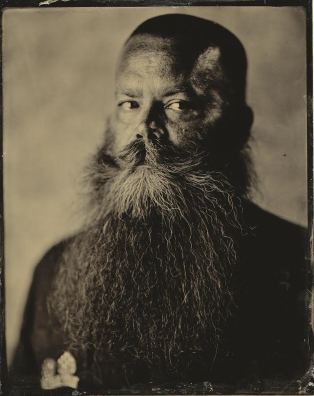
This debate, along with your long-standing interest in the beard as a quintessential symbol of masculinity and your commitment to highlighting contemporary portrait photography, has actually had a significant impact on my work as a visual artist.  I’m a photographer who works using the technologically obsolete, hand-made process known as Wet Collodion, or Tintype, first invented in 1851.  This is the process that was used by the British photographer Roger Fenton, whose work during the Crimean War was likely influential in the popularization of the long beard for British men in the mid-19th century, as you mention in this post.

My colleague Bryan Wing and I are the team Project Barbatype.

We photograph the men (and women) who compete in Beard and Moustache competitions, mostly in our Texas region, with plans to attend the World Championships in Austria next year.  There is actually an international governing body for this, the World Beard and Moustache Association.

These competitions are usually held in bars and are often fundraisers for various charities, and are, as you may imagine, raucous affairs fueled by much drinking of beer and shouting of obscenities.  They are a total blast!  Coming from the very staid and stuffy art world (which likes to pretend it’s far more subversive than it actually is), it’s refreshing to make work in an environment where crowds gather to greet an image as it magically emerges in the chemical bath with high-fives and cheers of “THAT’S TOTALLY BADASS!!”

The whole phenomenon of the Beard Competition is, as you say and as I hope our Tintype project seeks to emphasize, “a little cultural balancing of the high-tech 21st Century by the mores of the low-tech 19th.”  Many of the competitors dress the part for their turn on the stage, sometimes in very impressive hand-tailored period clothes, others in ironically inspired blue-collar work outfits.  All of them take great pride in the care, maintenance, and presentation of their facial hair.  One of our guiding principles of the project is to produce photographs that reflect that level of handiwork and committed craft.

I have heard criticism from some Art-world colleagues who think our Project, and the whole phenomenon of the contemporary Beardsmen, is simple and frivolous fluff, best dismissed as a backlash against feminism.  But as I see it, there is a very supple and subversive message at work here about the nature of post-feminist masculinity, both hetero- and homo-.  By taking a traditional and easily recognizable symbol of manliness and exaggerating it to the point of absurdity, these folks are simultaneously satirizing and celebrating the arbitrariness of all markers of gender identity. “We men are creatures of pompous posturing,” they seem to say.  “It’s stupid and we know it.  But what the fuck, it’s fun! Look at me! Look at my beard!!”  What could be more male than that?

The competitions have all the hallmarks of an eye-roll-inducing “boys will be boys” permissiveness, but divorced from any malicious intent. Which is not to say that there are no rude comments or drunken exaltations flying around the bar – far from it.  These are guys out drinking after all, and I certainly am not going to start spouting off about “post-feminist masculinity” while at one of the events, for fear of being (appropriately as I see it) run out as a killjoy.

But these competitions are essentially men in drag, as MEN – MANLY MASCULINE HAIRY MEN’S MEN.  As an artsy-fartsy academe who has always felt queasy with unrepentant expressions of male vigor, this is a flavor of masculine identity that I can celebrate without guilt.  And I have to admit, that feels nice.

I have attached a few examples of the tintypes from Project Barbatype to this email, but there are more in the Facebook group, and at my personal website.  We have signed model releases for each of them, and should you care to publish any, we would certainly welcome the publicity!

An Object Lesson In Knowing Your Audience

Speaking at an international women’s justice summit on Monday, Turkey’s president violated a cardinal rule of public speaking, telling a room full of women’s rights activists that gender equality is unnatural:

Certain work, Erdogan said, goes against women’s “delicate nature,” and “their characters, habits, and physiques are different” from men’s. “Our religion [Islam] has defined a position for women: motherhood,” he said. He then went on to blast feminists, accusing them of not understanding their role in society. “Some people can understand this, while others can’t,” he said. “You cannot explain this to feminists because they don’t accept the concept of motherhood.”

Erdogan tried using the Quran to advance his point, saying, “Paradise lies at the feet of mothers,” which ended up just turning into an awkward reflection on the role of his mother in his own family. “I would kiss my mother’s feet because they smelled of paradise,” he said. “She would glance coyly and cry sometimes.”

Alev Scott puts her finger on why this speech was so frightening:

Erdoğan is neither a lone madman in a padded cell, nor a Victorian uncle caught in a time warp.

He’s the president of a country of 75 million people where only 28% of women are in legal employment, an estimated 40% of women suffer domestic violence at least once in their lives, and where millions of girls are forced into under-age marriage every year (incidentally, Erdoğan’s predecessor, Abdullah Gül, married his wife when she was 15). Exact figures on domestic abuse and rape are hard to come by because it is socially frowned upon to complain about husbands, and police often tell women and girls who have been threatened with murder by their partners to go home and “talk it over”.

During his speech this week, Erdoğan implied such widespread abuse is the work of the unhinged: “How could a believer – I’m not talking about perverts – how could someone who understands our religion commit violence against a woman? How could he kill her?”

Elahe Izadi notes that Erdogan doesn’t have a great track record when it comes to women’s issues:

In 2012, Erdogan, who was prime minister at the time, called abortion murder and came out against birth by Caesarean section. He’s also called for women to have at least three children and pushed for laws that encourage people to marry young. In 2013, Erdogan’s government lifted a head-scarf ban for women working in government offices. Turkey ranked 120 out of 136 on the World Economic Forum’s 2013 gender gap index, which includes economic, political and educational measures. …

In a report in September, Human Rights Watch said that “perpetrators of violence against women, most commonly male partners, ex-partners, and family members, often enjoy impunity” in Turkey and that authorities have failed to implement a 2012 law to protect women from violence.

The Democrats’ Infighting Over Obamacare

https://twitter.com/jonfavs/status/537372051195977728

Chuck Schumer is second-guessing the Dems’ decision to prioritize the ACA:

In his harshest assessment of the Obama presidency to date, Schumer argued that the White House and congressional Democrats erred by focusing on the Affordable Care Act throughout most of 2009 and early 2010 rather than following the passage of the economic stimulus with other targeted economic legislation that would directly help more people. He said voters had given the party a mandate in 2008 to stop the financial crisis and reverse the economic damage done to the middle class, and while he supported the substance of Obamacare, it was a political loser because it offered its most tangible benefit—access to coverage for the uninsured—to just 5 percent of the voting public.

Beutler disputes Schumer’s version of history:

The health care reform process didn’t begin in earnest until after the Recovery Act had already passed, at which point Congress’ willingness and ability to pass another big deficit-financed stimulus bill had been maxed out. Maybe Schumer has other ideas in mindlabor rights? Housing policy? A different entitlement?but he’s never laid out what the achievable alternative was, and how the middle-class and Democratic Party would’ve been better off as a result.

That’s because there never really was an alternative. Not that Democrats couldn’t have done a better job helping the economy recoverI believe they could havebut that the One Big Thing they cashed their capital in on wasn’t really up to them. Health care reform was basically pre-packaged, and ready to go because that’s where the consensus was. If after such a decisive victory and once-in-a-generation majorities, Obama announced he would go small on health care reform, or put it off for another time (like he did with immigration reform) the backlash would’ve been severe. It would’ve been his first major elective move as president, and it would’ve splintered his coalition very badly.

Weigel argues along the same lines:

There’s an alternative history of the Obama years in which the administration, like some time traveller sent back to fight Skynet, prevented the Tea Party from ever being born. It governed from the populist left; it owned the fight against “Wall Street” and denied the right the ability to side with the proles by opposing TARP. It’s a widely held belief on the left that this really could have been done, with smarter hires and less concern for the financial world that was going to turn against Obama anyway. Obama could have, like FDR, “welcomed their hatred.”

The small problem with this argument is that it’s bonkers. The Republican opposition to the new Obama presidency did not begin with the ACA. It began with the economic stimulus bill, which Democrats had hoped to get as many as 80 Senate votes for, and ended up scraping through with only three Republican votes in the Senate and none in the House.

Steve M. disagrees:

But Obama, even after the stimulus fight and the rise of the tea party, had enough juice to get the health care bill passed, because that’s what he’d saved the rest of his political capital for. That was the make-or-break agenda item for him.  And of course he was going to prioritize that rather than a larger stimulus — he was an ambitious president with an eye to the history books. A bigger stimulus wasn’t going to be the accomplishment that made his name as a president — for that he needed a big piece of legislation.

Except that what Obama is going to be known for is failing to help the middle class enough in the wake of the crash. I favor the health care law, but it’s porous — it doesn’t help enough people, and there are many people it doesn’t help at all.  What if stimulus and debt relief had gotten the make-or-break treatment from the White House?

Waldman is unimpressed by such arguments:

[T]o say that Democrats shouldn’t have bothered on the off chance that they could have passed some more stimulus and maybe minimized their losses in 2010 makes one wonder what the point of electing Democrats is.

Schumer would reply, “To help the middle class!” But when he got to the point in his speech where he was ready to offer all his terrific ideas for doing so, he punted, saying, “I’d like to outline not WHAT policies Democrats will propose but rather HOW we should build our party’s platform to appeal directly to the middle-class and convince them that government is on their side.” What followed was some mundane PR advice.

That’s something there’s no shortage of, and, to put it in Schumer’s terms, the voters didn’t hire him to dispense messaging tips. If he really wants to help his party, he ought to get moving on those middle-class proposals he keeps talking about. When do we get to see them?

Being A Cop Has Never Been Safer

Shackford reflects on the revelation that last year was an all-time low for killings of police and a 20-year high for killings by police:

It’s an important reminder when Cleveland police kill a 12-year-old boy carrying a toy gun. It’s an important reminder when we see stories that police have killed more people in Utah over the past five years than any other form of violence outside of domestic conflict. Police have killed more people in Utah since 2010 than gangs or drug dealers. Obviously, it’s a positive that fewer officers are being killed in the line of duty, just as it’s a positive that crime trends are heading down. We should be worried, though, if police internalize the idea that this increase in their own shootings is what is keeping them safe in the field and not the general drop in crime.

Nick Wing adds that “Bureau of Labor Statistics list of the 10 most-dangerous professions doesn’t include law enforcement officer”:

The BLS said law enforcement accounted for 2 percent of total U.S. fatal on-the-job injuries in 2013, with 31 percent of those injuries caused by homicide. Other studies on the deaths of officers in the line of duty also showed police were far less likely to be killed in 2013 than they had been in decades. According to a count by the Officer Down Memorial Page, which collects data on line-of-duty incidents, there were far fewer deaths last year than in more than 40 years.

A 2013 tally by the National Law Enforcement Memorial Fund showed 100 officers died in the line of duty last year, the fewest since 1944. Traffic-related fatalities were the leading cause of officer deaths in 2013. The report found that “firearms-related fatalities reached a 126-year low … with 31 officers shot and killed, the lowest since 1887 when 27 officers were shot and killed.”

Ingraham points out that the true number of individuals killed by police is unknown:

It’s particularly worth noting that the FBI data on justifiable homicides is widely understood to be substantially undercounted — some states don’t participate in the FBI’s data-gathering programs at all, and others don’t tally justifiable homicides separately. So while the figures above are useful for generating a trend, the actual national numbers are considerably higher.

Ellen Nakashima provides more details on the subject:

Federal officials allow the nation’s more than 17,000 law enforcement agencies to self-report officer shootings. That figure, [Wes] Lowery reported, hovers around 400 “justifiable homicides” by law enforcement each year. Several independent trackers, primarily journalists and academics who study criminal justice, insist the accurate number of people shot and killed by police officers each year is consistently upwards of 1,000 each year, Lowery reported.

Update from a reader:

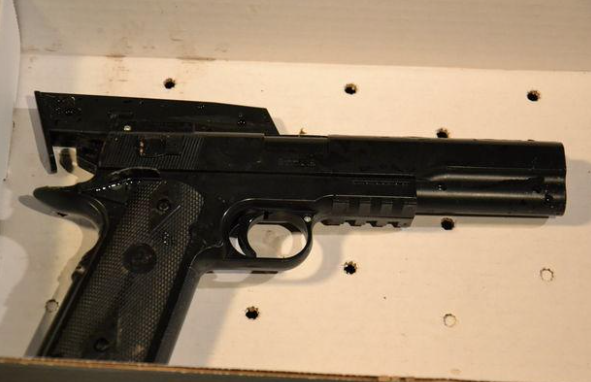
Please stop writing, or allowing people to write, that the gun the boy in Cleveland was carrying was a “toy” gun or a “fake” gun. It was a BB gun that looked very much like a semiautomatic pistol.  Maybe you can post this picture and let readers decide:

cleveland-gun

The Best Of The Dish Today

Seal Pup Season Continues At Donna Nook Reserve

So it looks as if we’re going to have a showdown between the citizens of the District of Columbia who have just voted by an overwhelming margin to legalize possession of weed and a congressman from Maryland, Andy Harris:

Rep. Andy Harris said he “absolutely” intends to launch a push to dismantle the new law when Congress returns with an empowered GOP majority in the 114th Congress. The Maryland Republican, who led the GOP’s charge this year against a separate D.C. law decriminalizing the drug, said the newer legalization statute poses an even greater health risk for young people in the nation’s capital. “It’s obviously even worse for D.C.’s teenagers and young adults than the decriminalization,” Harris said Thursday.

Really? and what evidence does he have for that? What’s staggering to me is that he doesn’t feel the need even to advance the evidence. We can vote 65 – 27 percent and for some reason, we need to be “educated” by this person from another state entirely. If he tries this, he should explain why he opposes the principle of democratic self-government. It’s really that simple.

Today, we were all over Ferguson. My take is here; yours is here and here. John McWhorter’s sanity is here. Some other topics: the racial discrimination against Asian-Americans at Harvard; the teetering talks with Iran; and the ism police now targeting art critics for the usual sins. Liberalism is under siege from the left again. Plus: a mental health break for pyromaniacs. My favorite post of the day? This window view from Alcatraz.

The most popular post of the day was Yes, Obama Is A Phony On Torture; followed by What To Make Of Ferguson?

Many of today’s posts were updated with your emails – read them all here.  You can always leave your unfiltered comments at our Facebook page and @sullydish. 22 more readers became subscribers today. You can join them here – and get access to all the readons and Deep Dish – for a little as $1.99 month. Gift subscriptions are available here. Dish t-shirts are for sale here and our new mugs here.

On a personal “Who’s Honoring Me Now?” note, I was given the Editorial Intelligence Award in London today for my Sunday Times column on America. It was an impressive list of winners to be counted among. I’m sorry I was unable to make the ceremony.

See you in the morning.

(Photo: A Grey Seal pup lies in the grass at the Lincolnshire Wildlife Trust’s Donna Nook nature reserve on November 24, 2014 in Grimsby, England. Seal pup numbers have increased on last year with over 800 pups born at the reserve so far. The Donna Nook reserve is the UK’s premier destination to see Grey Seals and thousands of visitors from across the country come to see the wildlife spectacle every year. By Dan Kitwood/Getty Images.)