A Poem From The Year

7313560214_b59cc14868_k

“Summer Moods” by John Clare (1793-1864):

I love at eventide to walk alone
Down narrow lanes o’erhung with dewy thorn
Where, from the long grass underneath, the snail
Jet black creeps out and sprouts his timid horn.
I love to muse o’er meadows newly mown
Where withering grass perfumes the sultry air,
Where bees search round with sad and weary drone
In vain for flowers that bloomed but newly there,
While in the juicy corn the hidden quail
Cries “wet my foot” and hid as thoughts unborn
The fairylike and seldom-seen landrail
Utters “craik craik” like voices underground,
Right glad to meet the evening’s dewy veil
And see the light fade into glooms around.

Please consider supporting the work of The Poetry Society of America here.

(From “I Am”: The Selected Poetry of John Clare, edited by Jonathan Bate © 2003 by Jonathan Bate. Reprinted by permission of Farrar, Straus & Giroux. Photo by Tom Marsh)

What Happens At Ayn Rand Conferences Stays At Ayn Rand Conferences

John Paul Rollert, who braved a recent Objectivist conference held in Las Vegas, understands both the philosophy and the city to be escapes from reality. As an example, he cites the response of Yaron Brooks, the executive director of the Ayn Rand Institute, to an attendee’s question about the homelessness and poverty he saw all along the Strip:

Brook’s response began unevenly, detouring through an observation about the malice of minimum-wage laws and a presentist history of the progressive era before turning to the young man’s question. “None of these phenomena that you’re seeing out there, homeless people and so on, are phenomena of capitalism,” he declared. The people outside the gates of The Venetian, hustling in the 111-degree heat, their fates are the “phenomena of mixed economy,” the side-effects of social welfare policies and regulations. They exist despite capitalism, not because of it.

The young man did not seem entirely satisfied with the answer, and Brook, himself, seemed hesitant.

By and large, when it comes to questions about the structural shortcomings of capitalism, the most persuasive answers will be of a dry and technical nature. They won’t savor of the sulfurous clash between the forces of good and evil, an ideological battle to which Objectivists might not only contribute, but one which (if you take their word for it) they are destined to lead. “There is nobody out there who can talk about self-esteem, about individualism, and about capitalism with the moral certainty and the moral fervor we can,” Brook declared. “Objectivism is the only bulwark to what the Left is doing. The fate of Western Civilization depends on what we do.”

This is the familiar pledge of a radical philosophy. To the unaccustomed ear, it can sometimes sound like a clarion call, piercing, at last, the din of confusion. Otherwise, it can seem like the unnerving pitch of the card-clicker, an invitation to a strange and sinister world that one is very relieved to escape.

On a lighter note, Mallory Ortberg offers a number of movie reviews written as if she were Ayn Rand. One favorite? This take on Willie Wonka & the Chocolate Factory:

An excellent movie. The obviously unfit individuals are winnowed out through a series of entrepreneurial tests and, in the end, an enterprising young boy receives a factory. I believe more movies should be made about enterprising young boys who are given factories. —Three and a half stars. (Half a star off for the grandparents, who are sponging off the labor of Charlie and his mother. If Grandpa Joe can dance, Grandpa Joe can work.)

Face Of The Day

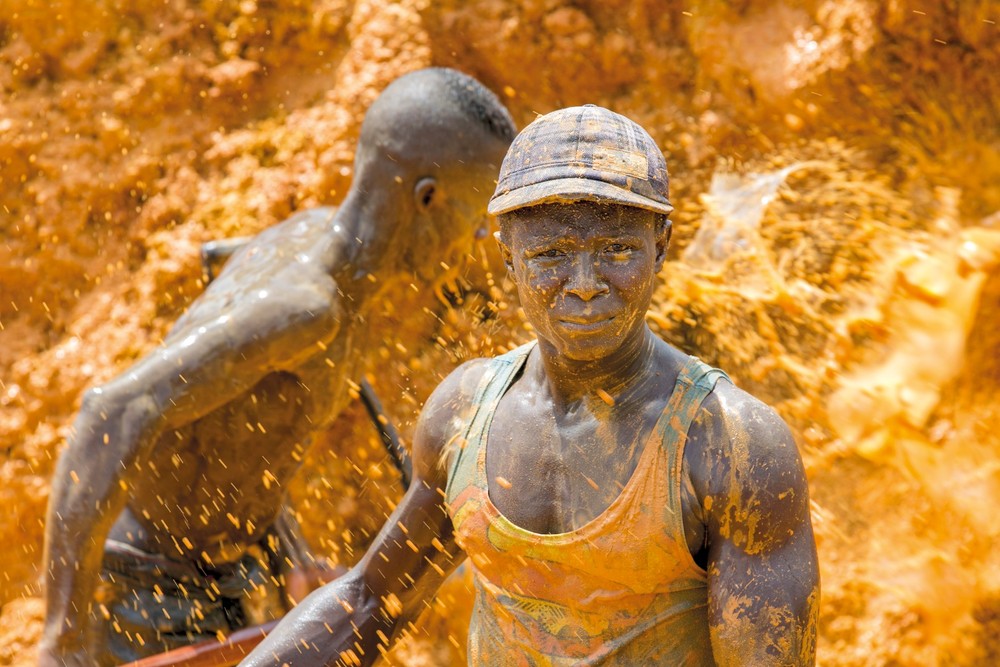
Heidi Woodman‘s project Gold Fever examines the Ghanaian gold industry. She describes the country’s relationship with gold as “complex and paradoxical”:

On the one hand, the industry is crucial to the health of the country’s formal economy. But on the other, production of the precious metal has had devastating long-term effects on the environment. This in turn has both direct and indirect adverse socio-economic repercussions, especially since an estimated 70%-80% of the population rely on the land for their livelihoods in one form or another. As such, Ghana’s health and success as a country and as a population is inextricably linked to its environment. So, the relentless pursuit of gold, while profitable in the short-term, is ultimately destroying the things that are most precious to Ghana.

Are Pathogens Passé?

Writing in Nature, Arturo Casadevall and Liise-Anne Pirofski urge microbiologists to retire the pathogen paradigm, arguing that “the focus on microbes is hindering research into treatments”:

The term pathogen started to be used in the late 1880s to mean a microbe that can cause disease. Ever since, scientists have been searching for properties in bacteria, fungi, viruses and parasites that account for their ability to make us ill. Some seminal discoveries have resulted — such as the roles of various bacterial and fungal toxins in disease. Indeed, our oldest and most reliable vaccines, such as those for diphtheria and tetanus, work by prompting the body to produce antibodies that neutralize bacterial toxins.

Yet a microbe cannot cause disease without a host.

What actually kills people with diphtheria, for example, is the strong inflammatory response that the diphtheria toxin triggers, including a thick grey coating on the throat that can obstruct breathing. Likewise, it is the massive activation of white blood cells triggered by certain strains of Staphylococcus and Streptococcus bacteria that can lead to toxic-shock syndrome. Disease is one of several possible outcomes of an interaction between a host and a microbe.

It sounds obvious spelled out in this way. But the issue here is more than just semantics: the use of the term pathogen sustains an unhelpful focus among researchers and clinicians on microbes that could be hindering the discovery of treatments. In the current Ebola epidemic in West Africa, for instance, much attention has been focused on the ill and the dead, even though crucial clues to curbing the outbreak may be found in those who remain healthy despite being exposed to the virus.

Lessons From The Digital Revolution

Reviewing Walter Isaacson’s The Innovators, James Surowiecki notices an important one – we shouldn’t romanticize the role of lone geniuses:

That may sound odd, since the story of invention is usually told as a story of great inventors. But as Isaacson reveals, the true engine of innovation is collaboration. The pairing of a creative visionary and a more practical engineer (such as John Mauchly and J. Presper Eckert, who created ENIAC, or Steve Jobs and Steve Wozniak at Apple) can be enormously productive. And it isn’t just strong pairs, either; the organizations that have done best at innovating have typically been those that have relied on strong teams made up of diverse thinkers from lots of different disciplines. …

One of the reasons diverse teams have tended to be more successful is that they have done a better job of turning ideas into actual products.

This is an important theme in Isaacson’s book: genuine innovations are not just about brilliant insights. They’re the result of taking those insights and turning them into things that people will actually use and then finding a way to get those products into people’s hands. One of the more interesting sections of The Innovators is Isaacson’s account of John Atanasoff’s quixotic quest to build a general-purpose computer by himself in the early 1940s. Atanasoff anticipated important aspects of what would become ENIAC and constructed a prototype. But because he worked alone, in Iowa, rather than in a lab with other scientists and engineers, his computer never became fully functional, and he became a footnote to history, eclipsed by Mauchly and Eckert. Isaacson takes Atanasoff’s efforts seriously, but he notes that “we shouldn’t in fact romanticize such loners.” Real innovation isn’t just about an invention. As Eckert put it, “You have to have a whole system that works.” And that’s hard to do when you’re all by yourself.

Everybody Loves Edmund

Reviewing David Bromwich’s The Intellectual Life of Edmund Burke, David Marquand examines why the 18th century British statesman resists tidy ideological labels:

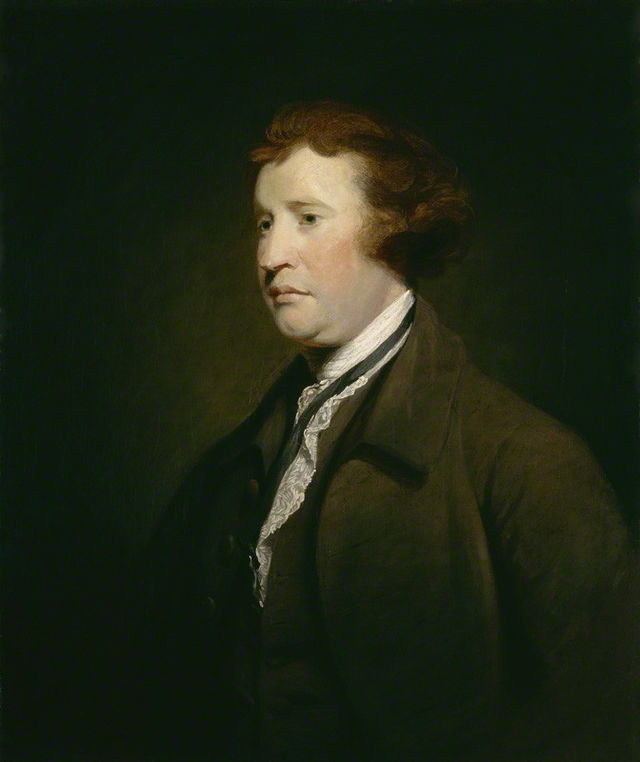
He was too original to classify in his own day or to fit the pigeonholes of academe in ours. The American political theorist Russell Kirk called him the EdmundBurke1771 (1) “father of conservatism” and this has become the conventional wisdom. There is something in it. Burke certainly believed in property, hierarchy and tradition and defended them with passion and occasional savagery.

However, typecasting him as a conservative makes his legacy banal and obscures its subtleties. Burke, the believer in hierarchy and tradition, was also Burke, the champion of the voiceless millions of Bengal; Burke, the friend of the liberty-loving American colonists in their dispute with the British crown; and Burke, the hammer of the grasping Protestant landlords of his native Ireland and their cruel penal laws.

For Lord Acton, the 19th-century historian and Gladstone protégé, Burke was one of the three greatest liberals in British history, along with Gladstone and Macaulay. Macaulay, too, considered him the greatest man since Milton. Gladstone thought his writings on Ireland a “magazine of wisdom”. Woodrow Wilson saw him as a paramount interpreter of English liberty. John Morley, Gladstone’s disciple and eventual biographer, wrote an admiring study of Burke while making it clear that he differed with him over the French Revolution.

Previous Dish on Bromwich’s book here and here.

(Image: Joshua Reynold’s portrait of Burke, circa 1767-69, via Wikimedia Commons)

Emails Of The Day

A handful of your photos especially warmed our hearts this Christmas:

unnamed (26)

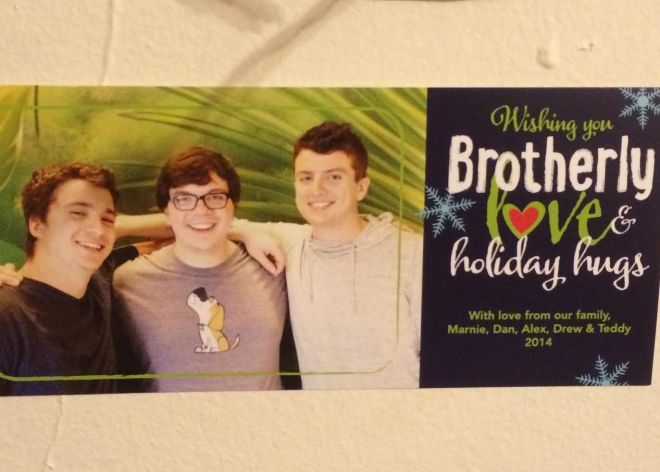
Hey Andrew and company! On a recent family vacation to Las Vegas, I brought along my Dish t-shirt. My mother, desperate for post-empty nest family photos, snapped pictures at every conceivable opportunity in the hopes of getting something for our family Christmas card. Lo and behold, the photo that made the cut featured yours truly donning the now-iconic howling beagle. Now dozens upon dozens of my parents’ friends will get some not-so-subtle Dish advertising beamed into their mailboxes this December; I hope I can help drive up the subscription numbers (I bought my dad a gift membership for starters)!

Another subscriber:

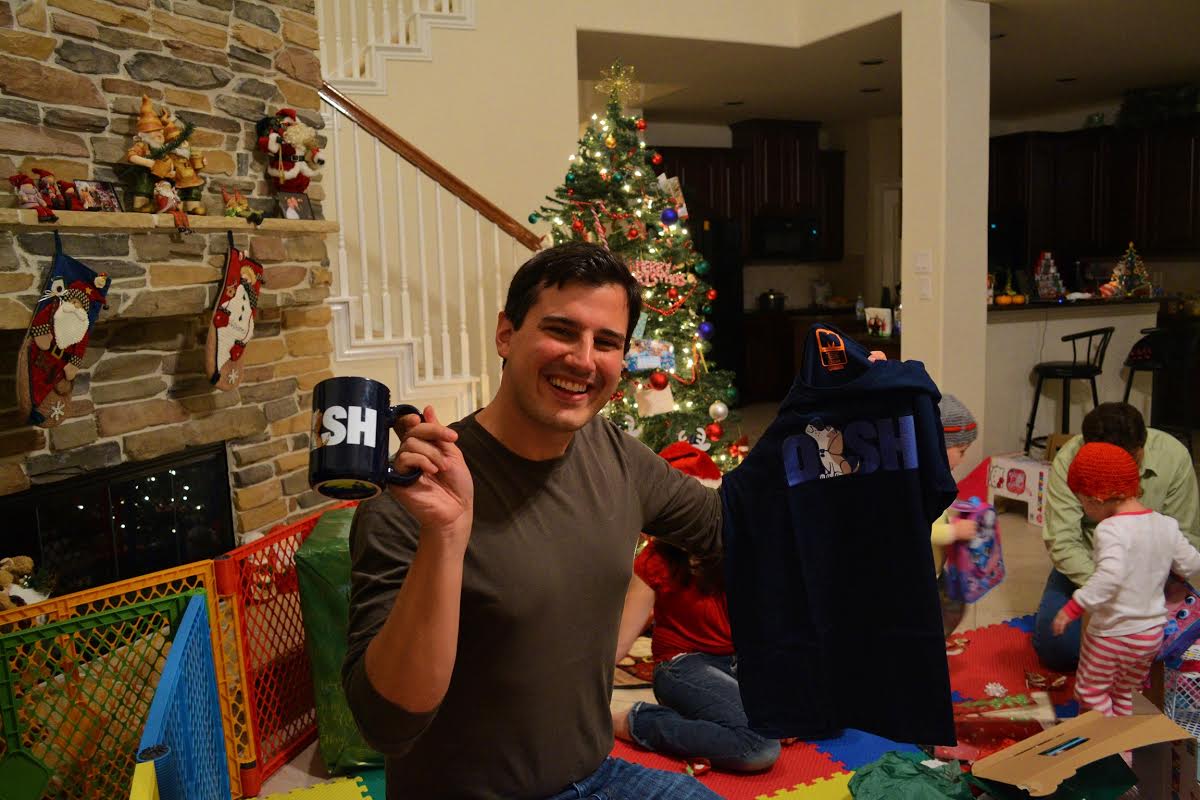
IMG_0684My soon-to-be-husband correctly picked up on my not-too-subtle hints, and gave me my very own Dish mug for an early Christmas present!  I am a thoroughly delighted Dish head, and enjoyed the inaugural cup o’ joe just this morning.

I’ve given Dish subscriptions as holiday gifts – selectively, to certain friends and family members – for several years now, often explaining that I certainly don’t agree with every opinion or perspective contained at the Dish, but that I always find it lively, engaging, and thought-provoking.

So I raise a cup of kindness and gratitude to you, Andrew and Team Dish. Here’s wishing you all health, happiness, and stamina for the year ahead.

P.S. Yes, that’s a fabulous, glittery rainbow flag ornament in the background on the tree!

And another:

I’m sure you’ll be inundated with these on the 25th, but as a Hispanic celebrating Noche Buena, I have a one-day headstart to boast about my amazing wife’s gift-giving abilities. She knew just how to make this Dish-head happy this year, with a double whammy:

unnamed (27)

I love her. And I love you guys. Merry Christmas, and here’s to a very happy, Dish-filled New Year.

And speaking of 2015:

Has The Dish ever thought of doing some kind of gathering of Dishheads? It would be awesome to be able to chat with the whole team as well as with each other. Not sure exactly what the format would be, but it might a great way to further the Dish community, as well as provide some in-person recognition for you guys. Mainly, I suggest it for selfish reasons: I don’t know any other Dishheads, but would like to!

Events are very much on our agenda for the new year, so stay tuned. And thanks again for your support in 2014. We’ll have a year-end update soon.

A Story About Surviving The War On Christmas Decorations

Simon Doonan explains what happens when window dressing the White House turns into the country’s first découpage-centered political controversy:

[youtube https://www.youtube.com/watch?v=2ydctzEhDeI]

Doonan is the Creative Ambassador for Barney’s New York as well as a Slate columnist, fashion commentator and professional window dresser. His latest book is Asylum: A Collage of Couture Reminiscences…and Hysteria. Previously featured storytelling on the Dish here. Learn more about The Moth here.

The Menace Of Mistletoe

Helen Thompson characterizes the holiday plant as “basically a vampire,” calling it “a parasite that spends its days sucking the ‘lifeforce’ from trees round the globe”:

Mistletoe’s parasitism starts with poop and exploding berries. Mistletoe bushes clump on branches like something out of a Dr. Seuss book. Their parasitism is airborne. Birds eat their berries, which are coated in gluey material called viscin. The birds poop all over the forest, and thanks to the viscin, the mistletoe seeds in said poop stick to branches. Once firmly attached to the branch, mistletoe sprouts and drills down into the branch until it reaches the tree’s veins. It sticks a haustorium (basically a straw) in and sips the tree’s mineral and water cocktail.

Another group of mistletoes, dwarf mistletoes, does things a bit differently. In a dramatic twist on mistletoe reproduction, their seeds explode, literally. The blast zone can reach up to 15 feet. Seeds stick to saplings and wedge themselves into the tree’s innards, infecting the entire tree, and sprouting sometimes years later. These guys are full parasites, taking sugar, water, and minerals from the tree. “Dwarf mistletoe is freaky, freaky, freaky stuff,” says David Watson, an ecologist at Charles Sturt University in Australia. “Its [shoots] look like miniature asparagus.”

Eventually, the mistletoe bush grows, blooms, and forms berries, and the cycle begins anew.

For a more festive take on the plant, check out the below Broad City webisode, which follows Abbi’s pursuit of her first below-the-mistletoe kiss: