
Astoria, Oregon, 8.41 am
Astoria, Oregon, 8.41 am
Rivka Galchen reviews two volumes of Reiner Stach’s three-volume biography of Kafka, and finds that at times the author “seems to be living in a situation comedy”:
When he goes to the countryside to write, he finds it ‘extraordinarily beautiful’ at first, but by the second day he can’t work because he’s troubled by a child practising the French horn, by the din from a sawmill and by happy children playing outside, whom he eventually yells at: ‘Why don’t you go and pick mushrooms?’ He then discovers that the children belong to his neighbour, a sleep-deprived shift worker at the local mill who sends his seven children out so that he can get some sleep. At a sanatorium for his TB, Kafka and his friend Klopstock play a practical joke on another resident, a high-ranking Czech officer who conspicuously practises the flute and sketches and paints outdoors. The officer puts on a show of his work; Klopstock and Kafka write up pseudonymous reviews of it, one published in Czech, the other in Hungarian; the mocked officer then comes to Klopstock (in his room with a fever and kept company by Kafka) for a translation of the review. After this successful prank, Kafka sends his sister a spoof article about how Einstein’s theory of relativity is pointing the way to a cure for TB; his whole family celebrates the good news, of which he then has to disabuse them.
Both these anecdotes from Kafka’s life, of which there are many of a similar genre, are at once antic and death-haunted, illuminating and opaque. We might ask ourselves why we would read a biography of Kafka when we could instead just read Kafka. Why make breakfast, when you can just read Kafka? Why watch television or trim your fingernails when you could just read Kafka?
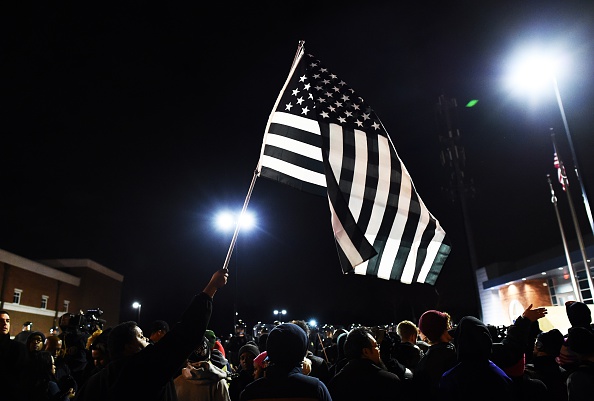
All of our coverage of Eric Garner this week can be read here. Readers aren’t buying these arguments over the nanny state:
This is NOT about taxes. This is about a guy being an unlicensed middle man. For people who are poor, paying $1 for cigarette might be doable even though that’s double the price they’d pay per unit if they bought a pack. If the pack only cost $2, someone could still pull a profit selling loosies at 25 cents each. People would still buy them, people would still sell them. People sold loosies even when cigarettes were cheaper.
I live in California, in a few convenience stores (poor neighborhoods) I’ve seen a cup set up with “loosies” for sale. It’s against the law. I haven’t heard of any big arrests.
Another focuses on class:
So this is basically a guy who was trying to avoid paying taxes. How many people in suits are walking around free who do just that? I’m not even sure this is a race thing but more a class thing. Al Sharpton owes millions, but there are no cops throwing him down in chokeholds.
Another goes on a tear:
The non-indictment in the Eric Garner case makes me furious. People responding to it by claiming that cigarette taxes are the problem might make me even more furious.
It makes no difference whether we agree with the law Garner was breaking or not. It is the law, and he was breaking it (allegedly). The problem is not that the cops were trying to arrest him. The problem is that he died. If Garner had shoplifted and the cops had then confronted and killed him in this way, would that make it okay? The arguments of the conservative bloggers you quote seem to imply that it would. Which makes me want to vomit.
A friend suggested to me that maybe the people complaining about cigarette taxes could be a good thing, as it might be the only way to get white conservatives to pay attention to dead black men. Actually, I think it’s exactly the opposite of getting white conservatives to pay attention to dead black men. It’s a way for them to ignore that problem and pretend that the real problem here is “nanny state” taxes. “If we just get rid of those taxes, the whole issue goes away! Problem solved! Good job, guys! What, you think there’s still a problem? You think the problem is unchecked racism and brutality by the police? What a pathetic liberal loser, get out of here, all we need to do is get rid of cigarette taxes.”
On the other side, my own representative, Keith Ellison (I’m a huge fan generally), has been sort of hijacking this police racism/brutality/unaccountability conversation to talk about his own pet issues of poverty, inequality and raising the minimum wage. To the extent that he falls back on these issues as a way of avoiding addressing the real issue of police reform, I’m equally bothered by this response.
However, I think Ellison has more ground to stand on here, because the issues of economic inequality and inequality of treatment by law enforcement are undeniably intertwined. As Ellison points out, a lot of the same people are protesting both low wages and police injustices right now, which makes sense, because a lot of the same people are most negatively impacted by both of those things. That interconnection isn’t there with cigarette tax policy. If it wasn’t selling untaxed cigarettes, Garner could have been harassed/arrested/killed for a million other petty offenses. Like carrying an airsoft gun. The specific offense he was arrested for was not the issue.
Another points out:
The UK and many other European countries are far more of a nanny state. On just about every aspect of US life, there are dozens of examples of countries that are more regulated. But it is uniquely in the US that those interactions between citizen and enforcer of the law ends up with a dead citizen.
This guy is selling loose cigarettes? Write him a ticket. Issue a misdemeanor citation. Require him to show up in court in five days to answer the charge at a preliminary hearing.
The cop instead went for an illegal – illegal and forbidden by policy! – chokehold. And Staten Island gave him the ok. It is the relationship between the enforcer and citizen that is fundamentally flawed, not that laws exist. Someone trying to make it about taxes is frankly insulting; they are butting in to the conversation to talk about an unrelated hobby horse.
Another diverges from the others:
The bigger story in the Eric Garner case is one of Freedom, or lack thereof. Why the hell is it “illegal” to sell a fucking loosey? Quit taxing so much shit already. Quit making so many fucking things illegal. Dismantle the damn regulatory state. Without the pretense of so many government regulations and laws, Eric Garner would never have been harassed in the first place.
Live and let live and leave us the fuck alone! Let us enjoy some of the “freedom” that America supposedly promises to us! That’s a message the white and black community should get behind. But of course the Politicians would never allow it because there isn’t enough room for graft, power and corruption.
(Photo by Jewel Samad/AFP/Getty Images)
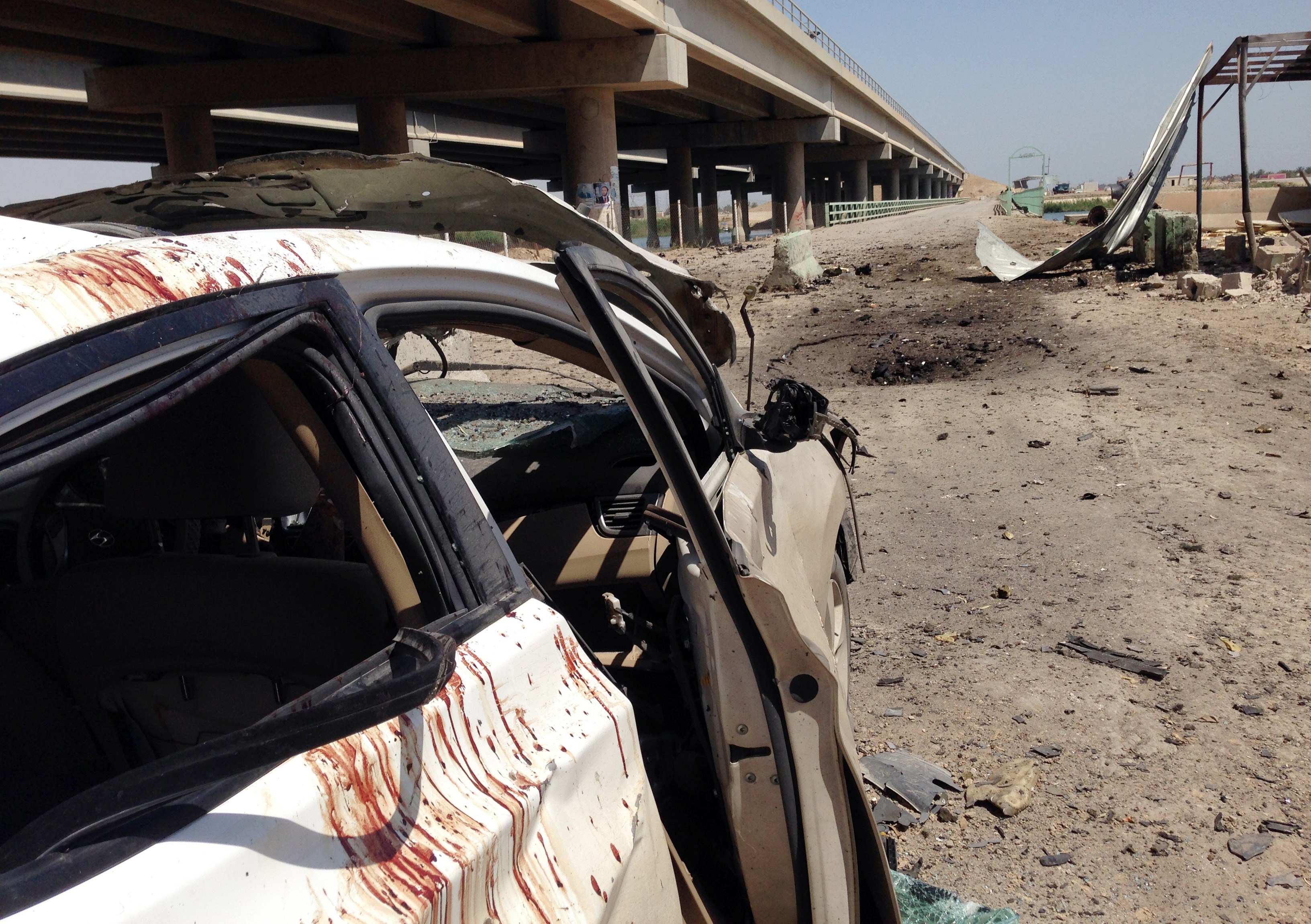
Tom Ricks writes hauntingly of what the Iraq War did to him – and even more to to countless others:
Iraq and its aftermath ran my life for several more years. I wrote another book on the subject, titled “The Gamble.” I consumed too much alcohol, and still do. I think I was a bit numb at times. For several years, until about 2010, my nights were spent in a mental box. My dreams were almost always of confrontation and frustration. Then there were those “black dreams”—I would sometimes jolt awake at night, dripping in sweat, fingernails digging into my palms, yet never be able to remember the nightmare. I grew to hate being in the same room as a loud television, especially if it was playing cable news or reality shows—it just felt like having shit thrown at me from across the room. I had long loved watching baseball, but I stopped going to Major League Baseball games because I had begun to find the stadium din, especially the blare of the loudspeakers, to be exhausting. In fact, I was always exhausted. I craved bland food—mashed potatoes, pasta, yogurt—to calm my churning stomach.
Time came and went. I knew that my wife and two children, now adults, would pay a price for my changed behavior.
We sometimes allow ourselves to believe that the trauma of those years is now over. But for countless people, the night-sweats remain.
(Photo: A damaged car with blood trails is seen next to a crater at the site of twin suicide bombing the western Iraqi city of Ramadi, the provincial capital of Anbar province, on April 16, 2014. The attacks targeted two checkpoints killing five people and injuring 12 according to police and medical reports. By Azhar Shallal AFP/Getty Images)
Last Saturday, the Pulitzer Prize-winner and former US poet laureate died at the age of 80. William Grimes looks back to his early work:
His first poetry collection, “Sleeping With One Eye Open,” published in 1964, set the tone. … Echoes of Wallace Stevens and Elizabeth Bishop could be heard in his compressed, highly specific language and wintry cast of mind, as could painters like Giorgio de Chirico, René Magritte and Edward Hopper, whose moody clarity and mysterious shadows dovetailed with Strand’s own sensibility.
“He is not a religious poet on the face of it, but he fits into a long tradition of meditation and contemplation,” said David Kirby, the author of “Mark Strand and the Poet’s Place in Contemporary Culture” and a professor of English at Florida State University. “He makes you see how trivial the things of this world are, and how expansive the self is, once you unhook it from flat-screen TVs and iPhones.” Reading Mr. Strand, he said, “We learn what a big party solitude is.”
Dan Chiasson asserts that Strand’s poems were “often about the inner life’s methods of processing its social manifestations”:
At least since “Reasons For Moving” (1968), his second volume, Strand surveyed his outward circumstances—relative health and prosperity, growing fame, the undeniable good fortune of being alive—from a peephole cut into the exterior wall of his solitude. The weirdness was all out there, where a suave and handsome man named Strand moved among other columns of flesh and bone; in here, alone with the moods, the mind, our memories of childhood and love, we found what Strand called, in his book-length poem of this name, “The Continuous Life.” It could be harrowing, but it was never proprietary: we all shared the same secret; Strand’s poems of the inner life were sometimes like expressions of our own: “some shy event, some secret of the light that falls upon the deep/Some source of sorrow that does not wish to be discovered yet.” (“Our Masterpiece Is the Private Life.”)
“The Continuous Life” continues after death, whose abrupt appearance, breaking up the party, Strand often described. Life is a waltz, a “Delirium Waltz,” as he called it in his greatest poem—collected in his best book, one of the finest of the past fifty years, “Blizzard of One”—which ends when the music ends. It is in the nature of waltzes that we cannot foretell their duration ahead of time. Waltzing to delirium, we might think that they never end. And then the music stops. It happened on Saturday for Strand, a great poet and a kind man.
In a 2012 interview, Strand considered poetry’s place in contemporary society:
It’s not going to change the world, but I believe if every head of state and every government official spent an hour a day reading poetry we’d live in a much more humane and decent world. Poetry has a humanizing influence. Poetry delivers an inner life that is articulated to the reader. People have inner lives, but they are poorly expressed and rarely known. They have no language by which to bring it out into the open. Two people deeply in love can look at each other and not have much to say except “I love you.” It gets kind of boring after awhile—after the first ten or twenty years. I don’t expect that from heads of state; I don’t expect them to look at each other after reading a lot of poetry and say “I love you,” but it reminds us that we have inner lives.
When we read poems from the past we realize that human beings have always been the way we are. We have technological advancements undreamt of a couple thousand years ago, but the way people felt then is pretty much the way people feel now. We can read those poems with pleasure because we recognize ourselves in them. Poetry helps us imagine what it’s like to be human. I wish more politicians and heads of state would begin to imagine what it’s like to be human. They’ve forgotten, and it leads to bad things. If you can’t empathize, it’s hard to be decent; it’s hard to know what the other guy’s feeling. They talk from such a distance that they don’t see differences; they don’t see the little things that make up a life. They see numbers; they see generalities. They deal in sound bytes and vacuous speeches; when you read them again, they don’t mean anything.
Strand had this to say about death, one of the great themes of his work, in his Paris Review interview:
It’s inevitable. I feel myself inching towards it. So there it is in my poems. And sometimes people will think of me as a kind of gloomy guy. But I don’t think of myself as gloomy at all. I say ha ha to death all the time in my poems.
We’ll be featuring Strand’s poetry all weekend.

A 3D-printed 1:1 scale mask of President Barack Obama is on display at the Smithsonian Castle in Washington, DC on December 5, 2014. By Alex Wong/Getty Images.
A rare sentiment from the in-tray:
I am having trouble understanding why you and many of my friends are so exercised about this case. Yes, it is a tragic accident, but, when I watch the video, I don’t see a murder, or even manslaughter. What I see is a big man resisting arrest and a police officer trying to restrain him. It is hard to tell from the video, but it does not appear to me that the officer continued to apply the “chokehold” (a label that may have been inaccurately applied to this case) after Garner said he could not breathe. It looks to me as if that officer grabs him around the neck for only a few seconds, and then, while Garner is still conscious and speaking, tries to restrain him by holding his head in place.
There have been a lot of comments online about whether the officer should have been trying to arrest someone for selling “loosies” on the street. The fault for that doesn’t lie with the officer, but the politicians who wrote the law and the officer’s superiors who insist that the law be enforced in this particular way. Imagine you’re that officer, and your job is to arrest someone twice your size who is resisting arrest. How would you do it? Pepper spray or a taser? We know how controversial that is. Is it fair to send this guy to jail for honestly trying to do his job? I don’t think so.
Another reader quotes me:
But there was no way to interpret [Megyn] Kelly’s coverage as anything but the baldest racism I’ve seen in a while on cable news. Her idea of balance was to interview two, white, bald, bull-necked men to defend the cops, explain away any concerns about police treatment and to minimize the entire thing. Truly, deeply disgusting.
I didn’t see Kelly that day. But I caught her show yesterday and she was very forthright in condemning the police. The only point she made is that she didn’t see proof that the excessive force used against Garner was motivated by racism. I tend to agree with her.
The police made clear their intent to arrest Garner for legitimate, albeit minor reasons. At that point Garner started arguing loudly, and he clearly had no intention of submitting. If he was going to be arrested, it was going to involve a struggle. He pretty much said exactly that.
I don’t know what the law is regarding the rights of people about arrested to quarrel with the cops, or physically resist. But I do know, from a purely common sense standpoint, that there’s no way to win that fight. You can’t argue with cops. Talk yes, argue no. If you argue like Garner did, you’re going to jail no matter what race you are.
I believe a white, Asian, or Hispanic male (of his size) would have been treated the same way. Maybe that’s wrong, but that’s the way it is. Everyone knows it. I’ve never understood why a lot of black men don’t get this fairly ordinary bit of common sense. Given the minor nature of the charges, Garner might have been able to talk his way out of arrest. But the minute he raised his voice, he was headed for the station. Most likely he would have been i-bonded out soon after arrival.
Of course, nothing excuses the subsequent use of clearly excessive force.
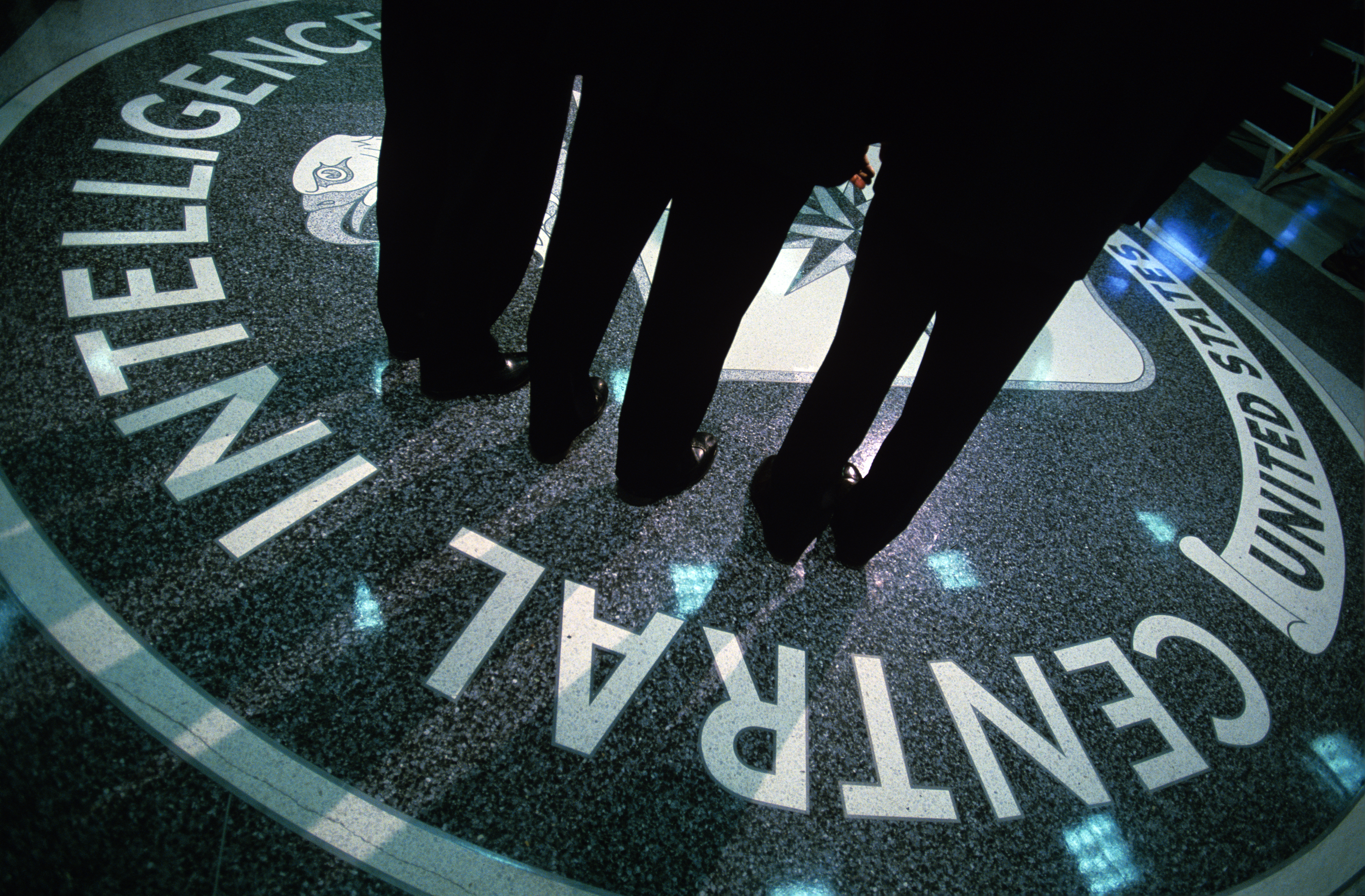
This is an outrage:
Secretary of State John Kerry personally phoned Dianne Feinstein, chairman of the Senate Select Committee on Intelligence, Friday morning to ask her to delay the imminent release of her committee’s report on CIA torture and rendition during the George W. Bush administration, according to administration and Congressional officials. Kerry was not going rogue — his call came after an interagency process that decided the release of the report early next week, as Feinstein had been planning, could complicate relationships with foreign countries at a sensitive time and posed an unacceptable risk to U.S. personnel and facilities abroad.
First, the Obama administration set up a white-wash, in the form of the Durham investigation; then they sat back as the CIA tried to sabotage the Senate Select Committee on Intelligence; then Obama’s chief of staff prevented the report’s publication for months, by insisting on redactions of the report to the point of it being near-unintelligible; and now, with mere days to go, the administration suddenly concludes that a factual accounting of this country’s descent into barbarism poses “an unacceptable risk” to US personnel abroad. Now, after this report has been stymied for two years; now, just days before its scheduled publication; now, because if the administration can prevent its publication this month, they know full well that the Republicans who will control the committee in January will bury the evidence of grotesque and widespread torture by the US for ever.
Of course this complicates relationships with foreign countries; of course it guts any remaining credibility on human rights the US has; of course the staggering brutality endorsed by the highest echelons in American government will inflame American enemies and provoke disbelief across the civilized world. But that’s not the fault of the report; it’s the fault of the torture regime and its architects, many of whom have continued to operate with total impunity under president Obama.
Make no mistake about it: if this report is buried, it will be this president who made that call, and this president who has allowed this vital and minimal piece of accountability to be slow-walked to death and burial, and backed the CIA every inch of the way. But notice also the way in which Kerry’s phone-call effectively cuts the report off at its knees. If it is released, Obama will be able to say he tried to stop it, and to prevent the purported damage to US interests and personnel abroad. He will have found a way to distance himself from the core task of releasing this essential accounting. And he will have ensured that the debate over it will be about whether the report is endangering Americans, just as the Republican talking points have spelled out, rather than a first step to come to terms with the appalling, devastating truth of what the American government has done.
I’m genuinely shocked by this last-minute attempt to bury the truth. Does anyone doubt that one agency in that inter-agency review is the CIA itself? And can anyone seriously believe that if this moment passes, we will ever know what happened? I have confidence in Senator Feinstein’s backbone on this. I wish I had confidence in the president’s.
So let me make one last appeal: Mr President, make the right call. Release the report. Let the facts be in the sunlight. It’s what you promised. And it’s the least this country deserves.
Update from a reader:
I think you may be interested in what Democratic Senator Mark Udall told Esquire in an interview conducted on November 21 and scheduled to run in the January 2015 issue. Esquire decided to release a portion of it today:
… obviously, if it’s not released, then I’m gonna use every power I have, because it’s too important. It’s too historic. And we can’t afford to repeat the mistakes to let this slide.
(Photo by Charles Ommanney/Getty Images)
Well ok, New York isn’t always shitty:
Though, for the record, that’s Brooklyn.
A reader shifts the focus away from the risk of HIV among gay Americans:
What about the ban on British blood, due to fears of mad cow disease? I’ve not been able to give blood for over 10 years due to this ridiculous ban.
Another is also barred:
It’s annual Xmas blood drive time, and I’m again reminded that I can’t give, because I lived in the UK for more than three months between 1980 and 1996. (Hard not to have done so, since I was born there.) The reason is Variant Creutzfeldt-Jakob Disease, better known as mad cow – a scourge which has affected 229 people in all of recorded history. British beef appears to be the vector. The net cast to prevent vCJD transmission is extremely wide, and among things it rules out just about every adult European now living in the U.S. and just about every American servicemember who was stationed in Europe during the last decade of the Cold War. That’s surely millions of people.
It really seems – on vCJD, gay sex, and other risk factors – the Red Cross uses an awfully big hammer to bury some awfully small nails. With all our medical advances, there must be better tools available today than these blanket bans.
Relatedly, Brian Resnick explains the importance of veterinarians in preventing disease in humans:
“Often, infectious diseases circulate in animals for a long time before they cause outbreaks in humans,” says Wondwossen Gebreyes, the director of Global-Health Programs and a professor of molecular epidemiology at Ohio State University. “To prevent disease in humans, we should be able to address what’s happening in the animal world and what is happening in the environment,” Gebreyes says. Human and animal health are irrevocably linked. As a veterinarian, he says, “I’ve always been interested in saving human lives.”
Seventy-five percent of newly emerging diseases are zoonotic, meaning they can be spread between animals and humans. And they wreak havoc: People fall ill having no natural defenses, and there is often no medicine to fill the gap. It’s estimated that between 1997 and 2009, the cost of these diseases amounted to $80 billion worldwide. Every year, there are 2.5 billion cases of zoonotic illnesses in humans, resulting in 2.7 million deaths.
This concept – connecting human medical and veterinary science – is called One Health. And in this framework veterinarians are the sentinels, monitoring the animal kingdom for potential threats to humans.
 The Dish