Why, Exactly, Is Rubio Running?

Rubio is assembling a campaign. Larison fails to see the logic of his candidacy:

I still think there is no room for him in the nomination contest, and it doesn’t make much sense for him to launch a bid that has no realistic chance of succeeding. But just as a Romney candidacy would siphon off support from Bush, a Rubio candidacy would also pull away some votes from Bush, because they appeal to the same kinds of voters and donors. All of that makes it more likely that an insurgent candidate may be able to sneak through and win the nomination, and it further splits the hawkish vote.

Jazz Shaw confesses “to being a least a little surprised by this”:

The longer Rubio waited, the more I thought he might just decide to give this a pass. He’ll be all of 45 years old when the next president is sworn in, and even if it’s a Republican who serves two terms, he’ll still be in his early fifties for the 2024 election. He would have plenty of time to season himself and let the current crop of heavy hitters beat each other up.

Waldman thinks Rubio is running for VP:

[W]hat if the whole idea is for Rubio to be this election’s John Edwards? He runs a respectable presidential campaign, being careful not to be too mean to the guy who wins, and then he gets chosen as that person’s running mate. After all, he must know that he’d be a terrific VP pick. Youthful, Hispanic, from a key swing state—it’s hard to think of a Republican who checks more boxes. So while he may have only a 20 percent chance of getting the nomination, he’s probably got a 50 percent chance of being the running mate.

Cillizza declares that “a near-certainty that the 2016 field will be the biggest in modern history of Republican nominating fights”:

The biggest impact will be on fundraising. A race with Jeb, Romney, Christie, Walker and Rubio would put enormous pressure on the party’s major donor class to choose sides among candidates they know and like. And, although the party establishment and its major donors have lots and lots of money — it’s by far the biggest money pot on the GOP side — it’s hard to see all five of those candidates being able to raise the $75 million or more each probably needs to run a serious campaign in Iowa, New Hampshire, South Carolina and beyond.

Jennifer Rubin, who takes Rubio seriously, admits that “the race may become a multi-car pileup in which candidates pilfer each other’s donors and bases of support”:

In any event, the race will be engrossing and unpredictable. Execution — the candidates’ ability to raise money, avoid errors, project gravitas and stand out in a cluttered field — is likely to decide the race. Wow, what a battle we are about to witness.

Book Club: Should Even Heroin Be Legal? Ctd

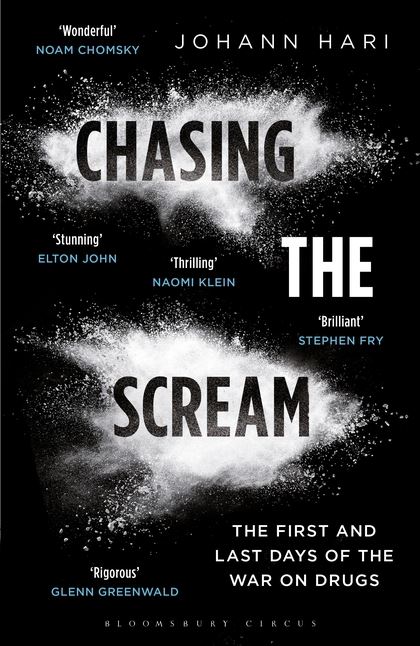
Head here if you missed our big roundup of commentary on Johann Hari’s excellent new book, Chasing the Scream: The First and Last Days of the War on Drugs, which the Dish will be discussing and debating for our Book Club next month. You can join by buying the hardcover here or e-version here and emailing your thoughts to bookclub@andrewsullivan.com.

In a mega-viral HuffPo post, Johann describes one of more fascinating discoveries from his book:

If you had asked me what causes drug addiction at the start, I would have looked at you as if you were an idiot, and said: “Drugs. Duh.” It’s not difficult to grasp. I thought I had seen it in my own life. We can all explain it. Imagine if you and I and the next twenty people to pass us on the street take a really potent drug for twenty days. There are strong chemical hooks in these drugs, so if we stopped on day twenty-one, our bodies would need the chemical. We would have a ferocious craving. We would be addicted. That’s what addiction means.

One of the ways this theory was first established is chasing-screamthrough rat experiments — ones that were injected into the American psyche in the 1980s, in a famous advert by the Partnership for a Drug-Free America [seen above]. You may remember it. The experiment is simple. Put a rat in a cage, alone, with two water bottles. One is just water. The other is water laced with heroin or cocaine. Almost every time you run this experiment, the rat will become obsessed with the drugged water, and keep coming back for more and more, until it kills itself. The advert explains: “Only one drug is so addictive, nine out of ten laboratory rats will use it. And use it. And use it. Until dead. It’s called cocaine. And it can do the same thing to you.”

But in the 1970s, a professor of Psychology in Vancouver called Bruce Alexander noticed something odd about this experiment.

The rat is put in the cage all alone. It has nothing to do but take the drugs. What would happen, he wondered, if we tried this differently? So Professor Alexander built Rat Park. It is a lush cage where the rats would have colored balls and the best rat-food and tunnels to scamper down and plenty of friends: everything a rat about town could want. What, Alexander wanted to know, will happen then?

In Rat Park, all the rats obviously tried both water bottles, because they didn’t know what was in them. But what happened next was startling. The rats with good lives didn’t like the drugged water. They mostly shunned it, consuming less than a quarter of the drugs the isolated rats used. None of them died. While all the rats who were alone and unhappy became heavy users, none of the rats who had a happy environment did.

At first, I thought this was merely a quirk of rats, until I discovered that there was — at the same time as the Rat Park experiment — a helpful human equivalent taking place. It was called the Vietnam War. Time magazine reported using heroin was “as common as chewing gum” among U.S. soldiers, and there is solid evidence to back this up: some 20 percent of U.S. soldiers had become addicted to heroin there, according to a study published in the Archives of General Psychiatry. Many people were understandably terrified; they believed a huge number of addicts were about to head home when the war ended.

But in fact some 95 percent of the addicted soldiers — according to the same study — simply stopped. Very few had rehab. They shifted from a terrifying cage back to a pleasant one, so didn’t want the drug any more. Professor Alexander argues this discovery is a profound challenge both to the right-wing view that addiction is a moral failing caused by too much hedonistic partying, and the liberal view that addiction is a disease taking place in a chemically hijacked brain. In fact, he argues, addiction is an adaptation. It’s not you. It’s your cage.

A reminder that Johann will be in DC talking about his book at Politics and Prose on January 29, then in NYC at the 92nd Street Y on the 30th, then in Baltimore at Red Emma’s on the 4th of February. If you can’t hear him in person, this is a great interview he just did. He also chatted with Russell Brand about addiction:

So Who Exactly Is For New Sanctions Against Iran?

The Mossad believes that enacting AIPAC’s sanctions would be like throwing a grenade into the negotiating process. The British prime minister and all the big powers negotiating with Iran want to keep the talks going and believe new sanctions would bring about their collapse. The Iranian public overwhelmingly wants to retain a nuclear power program:

A near-unanimous majority (94%) of Iranians say that it is essential for Iran to make peaceful use of nuclear energy. Large majorities would oppose dismantling half of Iran’s centrifuge capability (70%) or accepting limits on nuclear research (75%). We found no significant difference depending on political preferences. In fact, those respondents who were more highly educated were more negative towards measures that would treat Iran differently from other NPT members that have promised not to develop nuclear weapons.

Our own foreign policy heavyweights want to have the talks run their course:

“[New sanctions] will break the talks,” said Brent Scowcroft, who served as national security adviser under Republican Presidents Gerald Ford and George H.W. Bush. “I think we should see them out and not take steps which would destroy the negotiations.” “I have a similar perspective,” said Zbigniew Brzezinski, who served as national security adviser under Democratic President Jimmy Carter. “Iran is beginning to evolve.”

More to the point, if a sanctions bill were passed and it did break the talks, what then? Iran will have every incentive to intensify its nuclear weapon program, the forces for reform and democracy in that country will be dealt a huge blow, the sanctions regime that has worked so far would disintegrate … and the US would be blamed and the Iranians left off the hook. The alternative at that point is war, forced upon an unwilling president and a very jittery public, war against a de facto ally in the attempt to contain ISIS.

So who wants to break the talks and go to war? Bibi Netanyahu, Ron Dermer, AIPAC and the bulk of the GOP, but especially the neocons. They want another war in the Middle East, know they can’t persuade the public, and so are trying to force it by wrecking the talks with Iran. It seems perfectly obvious to me that if these talks break down, it must be because the Iranians finally balked. Not the Americans. We still have some months to go. Let this process play itself out. And leave a so-far-successful strategy toward Iran alone.

The Legacy Of King Abdullah

Greenwald is disgusted by the tributes to the late Saudi king:

The effusive praise being heaped on the brutal Saudi despot by western media and political figures has been nothing short of nauseating; the UK Government, which arouses itself on a daily basis by issuing self-consciously eloquent lectures to the world about democracy, actually ordered flags flown all day at half-mast to honor this repulsive monarch.

Murtaza Hussain piles on:

It’s not often that the unelected leader of a country which publicly flogs dissidents and beheads people for sorcery wins such glowing praise from American officials. Even more perplexing, perhaps, have been the fawning obituaries in the mainstream press which have faithfully echoed this characterization of Abdullah as a benign and well-intentioned man of peace.

Andrew Brown likewise takes the Saudis to task:

Saudi’s influence on the outside world is almost wholly malign. The young men it sent to fight in Afghanistan turned into al-Qaida. The Sunni jihadis whom Saudis have funded in Iraq and Syria turned into Isis. It has spread a poisonous form ofIslam throughout Europe with its subsidies, and corrupted western politicians and businessmen with its culture of bribery. The Saudis have always appealed to the worst forms of western imperialism: their contempt for other Muslims is as great as any American nationalist’s.

Juan Cole remarked recently that “the very efforts of the Saudi regime to make the region safe for absolute monarchy and hard-line Wahhabi fundamentalism have boomeranged on the House of Saud”:

It probably is not the case that Riyadh ever directly supported Daesh, but it has supported rebels in Syria, and likely Iraq, that differ little from the latter in religious ideology. The Saudi princes are used to a domestic situation where ultraconservative religion is a pillar of support for the status quo and the monarchy. They seem not to realize that similar religious puritanism, when rebranded as “Salafism” in Sunni republics, has a tendency to turn radical and revolutionary, even to turn to terrorism. Martin Luther, after all, had not intended to provoke peasant revolts, and he ultimately denounced the Protestant revolutionaries.

Human Rights Watch finds Abdullah’s reforms wanting:

Over King Abdullah’s fourteen-and-a-half year reign, reform manifested itself chiefly in greater tolerance for a marginally expanded public role for women, but royal initiatives were largely symbolic and produced extremely modest concrete gains. The spread of internet and social media empowered Saudi citizens to speak openly about controversial social and political issues, creating a broader social awareness of Saudi Arabia’s human rights shortcomings, but after 2011, Saudi authorities sought to halt online criticism through intimidation, arrests, prosecutions, and lengthy prison sentences.

Despite all that, Paul R. Pillar argues that the “people of Saudi Arabia are probably better off for having had Abdullah as king than would have been their lot with most other rulers”:

He recognized the need for the country’s society to modernize and moved in that direction about as much as he could within the severe limits posed by tradition, the religious establishment, and the necessity for consensus. This was particularly true regarding the role of women, however painfully slow progress in this area has been by the standards of those of us in the West who do not have to deal with those same limits. Probably the clearest manifestations of Abdullah’s intentions in this regard are to be found at the mixed-gender university for science and technology that bears his name.

With regard to the US-Saudi relationship, Dickey doesn’t expect much to change:

But apart from the oil-defense nexus, there really is no tie that binds. Forget democracy. Forget human rights. Forget freedom of expression. Forget women’s rights. Those all are laudable objectives, but if, as the Saudi elite seems to believe, they can be used directly or indirectly to challenge the regime, then they are luxuries too costly even for the richest monarchs on earth.

Abdullah’s predecessor, King Fahd, once warned a protégé he was sending to work with the Americans, “We have no cultural connection with them … no ethnic connection to them … no religious connection … no language connection … no political connection.” And anyone arguing today that western-style freedoms will bring long-term stability and prosperity to the Arabian Peninsula will have to explain why the grim fate of those countries that experienced the “Arab Spring” wouldn’t befall the Saudis if they went in that direction.

Hey, Hey, It’s The Clintons!

And you thought the media control freakery was in the past? Not exactly:

Mr. Scorsese’s partly finished documentary about Mr. Clinton — which once seemed likely to be released as Hillary Rodham Clinton was navigating a presidential run — has stalled over disagreements about control, people briefed on the project said. Though parts of the film were shot over the last two years as Mr. Clinton made a philanthropic visit to Africa and elsewhere, the project is now indefinitely shelved, partly because Mr. Clinton insisted on more control over the interview questions and final version than Mr. Scorsese was willing to give, those people said.

This – even though Scorsese is a total fanboy:

Mr. Scorsese clearly had a soft spot for the Clinton project. In a 2012 statement, he said the film would “provide greater insight into this transcendent figure.” Mr. Clinton at the time said he was pleased to become the subject of a “legendary director.” … Clearly, the film carried the risk that an unflattering camera angle, unwelcome question or even an obvious omission by Mr. Scorsese would become a blemish to Mr. Clinton’s legacy or provide fodder for Clinton critics as the 2016 campaign approaches. Apparently to avoid such problems, people close to Mr. Clinton sought to approve questions he would be asked in the film, and went so far as to demand final cut, a privilege generally reserved for directors of Mr. Scorsese’s stature. Mr. Scorsese’s camp rejected those suggestions and the project was shelved.

Gotta police those camera angles – even in a hagiography by a giant of cinema! Then this, from Gawker with a headline also seemingly ripped from the early 1990s:

Clinton

As Jon Stewart might say: Go on:

Bill Clinton took repeated trips on the “Lolita Express”—the private passenger jet owned by billionaire pedophile Jeffrey Epstein—with an actress in softcore porn movies whose name appears in Epstein’s address book under an entry for “massages,” according to flight logbooks obtained by Gawker and published today for the first time. The logs also show that Clinton shared more than a dozen flights with a woman who federal prosecutors believe procured underage girls to sexually service Epstein and his friends and acted as a “potential co-conspirator” in his crimes.

I do not care for a second who Bill Clinton or Alan Dershowitz want to hang out with. Or what they do. I just hope this stuff is dead dead dead by the time they run again for president. Just because it’s a horrible distraction, and will feed the right-wing noise machine (and Gawker-fueled social media) like nothing else. It could also, of course, rebound – again – to the Clintons’ advantage. Perhaps. But do we really want that kind of melodrama again? And the control freakery that makes such melodrama continue ad infinitum? Or do we have to accept the Clintons as they are – with immense abilities and profound flaws – and hope for the best?

We’ll miss Obama. Of that I’m pretty sure.

The Geriatric Saudi Royal Family

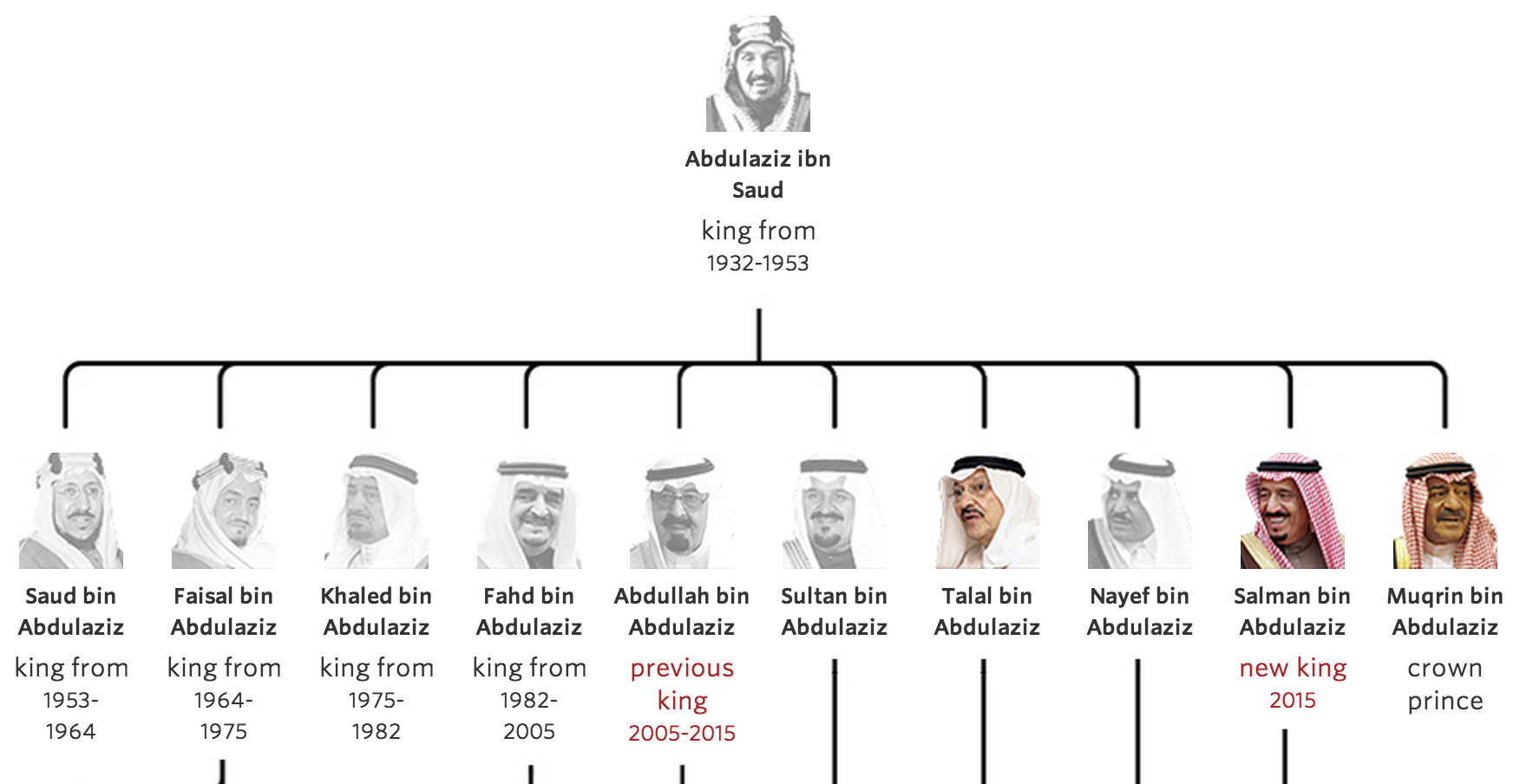
King Abdullah, Saudi Arabia’s ruler, died yesterday. The WSJ has a useful Saudi dynasty family tree (full interactive version here):

Saudi Arabia

Dan Stewart introduces us to the new king:

A longtime governor of the capital, Riyadh, Salman has a reputation as a progressive and practical prince similar in bearing to his late brother. The transition is expected to be a smooth one, with little instability and no long-term policy changes. But the 79-year-old has reportedly been in poor health in recent years, and is perhaps unlikely to rule for as long as his elder sibling.

Josh Marshall marvels at how “every Saudi head of state who has governed this pivotal, brittle and profoundly influential petro-state during the years of its ascendency since 1953 has been the son of a man born only a decade after the US Civil War.” But, he notes, “they are coming to the end of the line”:

[Salman’s] successor will be Crown Prince Muqrin. But he’s it – the last surviving son of ibn Saud at a youngish 69. After Muqrin dies, assuming he outlives Salman, the family will move on to the grandsons of ibn Saud, with a council of princes of some sort who will choose who succeeds who. We will see then just how much the legitimacy of ibn Saud and the longevity of his sons was the key to holding the tightly wound edifice together.

Michael Kelley focuses on the royal now second-in-line:

“Given that there are scores of princes in [the third generation], the potential for discord is high,” Liz Sly of The Washington Post explained last year. “Whoever inherits the throne is likely to anoint his own brothers as future heirs, thereby cutting out multiple cousins from access to the throne and the patronage it provides.”

However, Saudi Arabia’s new king is moving swiftly to make sure that a looming succession crisis — driven by chaotic jostling for power — does not happen. King Salman has named his nephew Prince Mohammed bin Nayef as deputy crown prince, making him the second-in-line to the throne behind Muqrin. Mohammed, believed to be in his 30s, is currently the country’s interior minister.

David Ignatius looks ahead:

The next generation of Saudi leaders, symbolized for American officials by Prince Mohammed bin Nayef, the minister of the interior, is talented and modern. But the paradox of Saudi Arabia is that the Western-facing kingdom has depended for its legitimacy on a pact with conservative Muslim religious leaders. Frightened now by the power of the Islamic State’s extremism, Saudi leaders may be tempted to repeat that bargain — and govern through the repressive power of the Muslim conservatives.

Many Western analysts believe that doubling down now on Muslim conservatism would be a mistake. But decades have shown that the West’s ability to influence the royal family in moments like this is limited, to put it mildly.

Born To Overeat

Kim Tingley covers Prader-­Willi syndrome:

In 1981, researchers at the Baylor College of Medicine made a significant discovery: Errors on the chromosome 15 segment — which occur at conception and for which there are no clear risk factors, except in a fraction of cases — produce the syndrome, making it one of few known genetic causes of obesity. No other genetic disorder incites the same extreme lack of satiety or urge to obtain food. Researchers now know that the damaged stretch of chromosome affects at least a dozen genes, but which of those genes govern hunger and fullness — and how — is still a mystery. What is certain is that Prader-­Willi disrupts the functioning of the hypothalamus, a region of the brain that is involved in appetite control.

One result is a heightened, permanent sensation of hunger. “They describe it as physical pain,” Jennifer Miller, an endocrinologist at the University of Florida who treats children with Prader-­Willi, told me. “They feel like they’re going to die if they don’t get food. They’re starving.” Parents must lock their pantries, refrigerators and trash cans, and their children frequently lie and steal to get something to eat.

The syndrome “could offer universal truths about the biology of hunger and fullness”:

Researchers believe that hundreds of genes, combined with environmental factors, have the potential to influence whether a person in the general population overeats and how easily he or she gains weight. But in almost all cases of obesity, the body eventually fails to properly process leptin, a hormone produced by fat cells. Leptin and other hormones signal the hypothalamus to prompt you to eat or alert you that you’re full, but in obese people these systems break down, preventing them from feeling sated. In some cases, including Prader-­Willi, resistance to leptin appears to come first, leading to insatiability and weight gain. In others, the reverse happens: Weight gain causes resistance to leptin, which increases appetite and perpetuates the cycle. “As people gain weight, they inflict a chronic injury to the hypothalamus — to the cells in the brain that sense whether their body weight is appropriate,” says Rachel Wevrick, a professor of medical genetics at the University of Alberta who studies Prader-­Willi. …

Robert Nicholls, a geneticist at the Children’s Hospital of Pittsburgh who studies Prader-­Willi, believes it is “very unlikely” that our species evolved multiple, separate systems to govern eating. Understanding why people with Prader-­Willi switch in early childhood from an extreme lack of interest in food to insatiability could offer clues about the nature of appetite — which might eventually help scientists minister to a person’s specific type of overeating or prevent it altogether. It’s possible that it could do the same for conditions of undereating and malnutrition, like anorexia. Whether damage to the hypothalamus can be undone at all, regardless of its cause, is still an open question, but one that a successful treatment for Prader-­Willi could answer.

Big Brother For Books?

Late last year, an article appeared in The Guardian about the info that e-book seller Kobo collected about the habits of their readers:

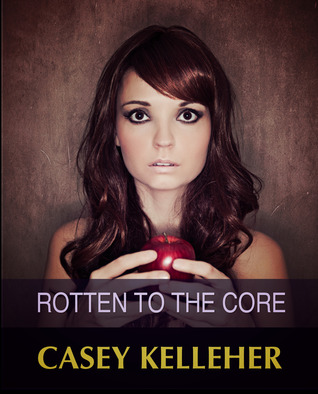
After collecting data between January and November 2014 from more than 21m users, in 13624974countries including Canada, the US, the UK, France, Italy and the Netherlands, Kobo found that its most completed book of 2014 in the UK was not a Man Booker or Baileys prize winner. Instead, readers were most keen to finish Casey Kelleher’s self-published thriller Rotten to the Core, which doesn’t even feature on the overall bestseller list – although Kelleher has gone on to win a book deal with Amazon’s UK publishing imprint Thomas & Mercer after selling nearly 150,000 copies of her three self-published novels. “Rotten to The Core by Casey Kelleher was the most completed book in the UK, with 83% of people reading it cover to cover,” said Kobo, “whereas the number one bestselling ebook in the UK, One Cold Night by Katia Lief [also a thriller] was only completed by 69% of those who read it.”

Francine Prose frets about the implications of collecting such data:

For the time being, the data being gathered concerns general patterns of behavior rather than what happens between each of us and our personal E-readers. But we have come to live with the fact that anything can be found out. Today “the information” is anonymous; tomorrow it may well be just about us. Will readers who feel guilty when they fail to finish a book now feel doubly ashamed because abandoning a novel is no longer a private but a public act? Will it ever happen that someone can be convicted of a crime because of a passage that he is found to have read, many times, on his e-book? Could this become a more streamlined and sophisticated equivalent of that provision of the Patriot Act that allowed government officials to demand and seize the reading records of public library patrons?

As disturbing may be the implications for writers themselves. Since Kobo is apparently sharing its data with publishers, writers (and their editors) could soon be facing meetings in which the marketing department informs them that 82 percent of readers lost interest in their memoir on page 272. And if they want to be published in the future, whatever happens on that page should never be repeated.

Will authors be urged to write the sorts of books that the highest percentage of readers read to the end? Or shorter books? Are readers less likely to finish longer books? We’ll definitely know that.

What’s In A Black Name? Ctd

Readers ramp up the thread:

About the discussion on discriminating against black names, there is also this research, where the researchers sent out emails to professors from many disciplines seeking help/information about their PhD programs. The emails were signed by generic White, Black, Hispanic, Indian, and Chinese male/female names. Then they measured the response rate: how fast the professors responded and how willing they were to help the student. Regardless of the professors’ discipline, sex, race, White males had it the best, and the Asians the worst. This only changed with Chinese professors responding to Chinese students. So, there you go.

A few readers also point to a study entitled “Are Emily and Greg More Employable Than Lakisha and Jamal?” The abstract conclusion states, “White names receive 50 percent more callbacks for interviews.” Another redirects to the real world:

I read your post and thought perhaps employers need to institute anonymous application processes. A quick search online revealed that some organizations (and governments) have done just that with positive results.

Here is a link to a recent article summarizing the efforts of the City of Celle, which is in Germany. I find it encouraging that the data suggests that hiring process becomes fairer when applications are judged only on their work histories, levels of education, skills, and accomplishments. Seems like a strategy we could all embrace, does it not?

Another makes a broader point:

I think there’s something off about the post about how employers are making “not an entirely unreasonable assumption” when discounting the educational achievements of black applicants. The evidence presented is that of SAT scores, that black students scored less on average than the mean scores accepted to universities. The implication being, universities are accepting less-than-optimal students for the sake of affirmative action. And, ok, there may be some argument or debate there.

However, the purpose of SAT scores are as a predictive measure of how students will do in college. Beyond the college application, they have absolutely no relevance. Why not? Affirmative action as a policy may help students with lower SAT scores get into college, but it doesn’t go to class for them, or write their papers, or take their final exams. Graduating college is an achievement that is mostly up to the student. So, a college degree on a resume stands on its own. My point is, affirmative action is actually not a plausible explanation for discrimination, at least not where education is concerned. If it was, then employers would ask for SAT scores on resumes. Guess what? They don’t.

Another shares an anecdote:

Many years ago I was a state civil rights investigator.  I remember one college-educated long-time head teller at a bank who was finally upset enough about the young white guys with no college and no experience heading straight into management tracks that she filed a complaint.  I talked to the branch manager about it.  He told me that the young guy he’d just hired reminded him of himself when he was just starting out and he wanted to give the new guy the same chance someone had given him.  He would have sworn on a stack of Bibles that he didn’t have a racist bone in his body.  He thought the world of his head teller.  He relied on her to train all the new staff.  But in his unconscious world view, black women were tellers, white men were management.

Another attests to the often fickle nature of hiring:

I’m a hiring manager at a software company. I receive dozens or hundreds of applications for every open position. Generally I skip cover letters altogether and spend somewhere between 20 and 30 seconds scanning resumes to come to an initial decision of whether to reject or follow-up. Even if there weren’t all sorts of academic studies telling us so, it’s pretty freaking clear to any even marginally self-aware person that this process is fraught with implicit biases. Have I heard of your college? Did I go to your college? Do I wonder whether you’ll “fit in” with our other employees? Do I want to drink beer with you? Is your job experience as impressive as it seems, or did you benefit from being a “diversity hire?”

This stuff sucks, but it’s the reality of the hiring process in good old meritocratic Silicon Valley. Other industries are probably even worse.

Update from a reader, who quotes a previous one:

So, a college degree on a resume stands on its own. My point is, affirmative action is actually not a plausible explanation for discrimination, at least not where education is concerned. If it was, then employers would ask for SAT scores on resumes. Guess what? They don’t.

ummm … actually … yes they do!

Big-name consulting firms such as McKinsey and Bain, as well as banks like Goldman Sachs, are among the companies that ask newly minted college grads for their scores in job applications, …Some other companies request scores even from candidates in their 40s and 50s. Jeff Bezos, the billionaire founder and CEO of Amazon, is one of the most famous proponents of using SAT scores in hiring decisions. Bezos scored highly on a standardized IQ test when he was only 8 years old, and in his early days as a manager, he liked to ask candidates for their SAT results in interviews he conducted. He has said that “hiring only the best and brightest was key to Amazon’s success.”

The Hierarchy Of Innovation

hierarchy of innovation

Nick Carr theorizes that there “has been no decline in innovation; there has just been a shift in its focus.” His idea is that “there’s a hierarchy of innovation that runs in parallel with Abraham Maslow’s famous hierarchy of needs”:

If progress is shaped by human needs, then general shifts in needs would also bring shifts in the nature of technological innovation. The tools we invent would move through the hierarchy of needs, from tools that help safeguard our bodies on up to tools that allow us to modify our internal states, from tools of survival to tools of the self. … The focus, or emphasis, of innovation moves up through five stages, propelled by shifts in the needs we seek to fulfill. In the beginning come Technologies of Survival (think fire), then Technologies of Social Organization (think cathedral), then Technologies of Prosperity (think steam engine), then technologies of leisure (think TV), and finally Technologies of the Self (think Facebook, or Prozac).

As with Maslow’s hierarchy, you shouldn’t look at my hierarchy as a rigid one. Innovation today continues at all five levels. But the rewards, both monetary and reputational, are greatest at the highest level (Technologies of the Self), which has the effect of shunting investment, attention, and activity in that direction.