Slaughtered For Satire, Ctd

After their accomplice turned himself in, “reportedly after he saw his name circulating on social media,” the gunmen have been identified – but they remain at large. Their affiliation with terrorist organizations, if any, remains unclear:

On at least one jihadist website, the group calling itself the Islamic State, but more widely known as ISIS or Da’esh, appeared to claim responsibility for the shooting, which also injured 11 people, four of them seriously. But many jihadist groups have grievances against France because of its leadership in the war against them in Mali, its participation in the coalition fighting ISIS in Iraq, its laws imposing secularism in public offices and schools, and the ban on full-face veils, known as niqabs or burqas, on Muslim women.

The Kouachi brothers may be linked to Al Qaeda in the Arabian Peninsula, the branch of the organization active in Yemen. Noah Feldman thinks through the implications:

If indeed the Paris attack is the work of al-Qaeda in the Arabian Peninsula, the franchise that includes Yemen, then its purpose is almost certainly to regain public attention from Islamic State and remind the world, Muslims and non-Muslims alike, that the old jihadi terrorist paradigm is still effective. France has no troops in the Middle East right now, so the attack needed another excuse. A satirical magazine that has made fun of the Prophet was just a convenient reason to get the al-Qaeda approach back in the headlines.

Of course, it’s possible that an Islamic State connection may still be found to this attack. If it is, that would be evidence that the group wanted capture the traditional al-Qaeda terrorism market for its own brand. That would be important and interesting, because it would mean Islamic State was trying to monopolize the global terrorism franchise.

Josh Rogin points to a recent ISIS video that urged followers to attack targets in France:

“If you are unable to come to Syria or Iraq, then pledge allegiance in your place — pledge allegiance in France,” a French jihadi identified as Abu Salman al-Faranci says in the video. “Operate within France. Terrorize them and do not allow them to sleep due to fear and horror.” He then offers more practical advice, implying that there were IS assets already in place to aid in such attacks. “There are weapons and cars available and targets ready to be hit,” he said. “Even poison is available, so poison the water and food of at least one of the enemies of Allah. Kill them and spit in their faces and run over them with your cars.”

But it’s not clear whether the Kouachi brothers were acting on specific orders from above or on their own, but Allahpundit finds it hard to believe that an attack this well-executed was the work of lone wolves:

It’s possible, I guess, that two French Muslim amateur terrorists fancied themselves members of the group in spirit, if not in fact, and wanted to do something sensational to earn their jihadi stripes. In that case, though, why didn’t they go to Syria to fight with ISIS as so many budding western mujahedeen do? And if they’re amateurs, they’re awfully precocious — taking time to learn the Hebdo publication schedule and keeping cool while executing staff members, all the while knowing that police could descend on the building at any moment, demonstrates a degree of poise you wouldn’t expect to find in a rookie. …

These two degenerates not only assassinated their targets individually, like ISIS does in lining up Shiites and noncompliant Sunnis to be shot, they had the balls and skills to leave the building and get away. When was the last time there was a major terror in the west that didn’t end up with the perpetrators splattered on the ground when it was over? And where exactly did these guys get AKs and a rocket launcher?

Juan Cole notes how the brothers were radicalized:

[I]n early 2003 at the age of 20, Sharif Kouashi and his brother Said started attending the al-Dawa Mosque in the Stalingrad quarter. They had showed up with long hair, smoking, and lots of bad habits. The mosque gave them a sense of purpose. Sharif told his later lawyer, “Before, I was a delinquent.”

One member of the congregation at the al-Dawa Mosque was Farid Benyettou. He was only a year older than Sharif, but was learned in Muslim texts, and taught informal classes at his apartment after prayers at the mosque. The boys began spending time with Benyettou. They stopped smoking, stopped getting high. At his apartment, Benyettou took them on the internet, and showed them images from Bush’s invasion and occupation of Iraq. Sharif said, “It was everything I saw on the television, the torture at Abu Ghraib prison, all that, which motivated me.” …

Without Bush’s invasion and occupation of Iraq, it is not at all clear that Sharif Kouachi would have gotten involved in fundamentalist vigilanteism. And if he hadn’t, he would not have gone on to be a point man in murdering out the staff of Charlie Hebdo along with two policemen.

Joshua Keating points out that “recent days have also seen a series of smaller attacks in France”:

On Dec. 20, French police shot dead a man who had shouted “Allahu Akbar” while stabbing three officers in a police station near the city of Tours. Just before Christmas, the country saw two attacks, one in Nantes and another in Dijon, involving cars hitting pedestrians, which fit a pattern of similar recent attacks around the world. In the car attacks, prosecutors specifically said the men were mentally unbalanced and that these were not instances of political or religious terrorism, though that definition seems a little hard to parse given that the Dijon driver was a recent convert to Islam who was reportedly upset over the treatment of Chechen children.

And today, there was another shooting in Paris, this time of a policewoman, which authorities believe may be linked to yesterday’s slaughter:

Officials described Thursday’s shooting as another terrorist attack. Paris Deputy Mayor Patrick Klugman said they were braced for a “wave” of terrorism. “It’s probably not the end,” he said. “We are ready to face it. We will fight.” Heavily armored commando units were deployed at the southern edge of Paris as a second major manhunt got underway on what was supposed to be an official day of mourning. Interior Minister Bernard Cazeneuve, who rushed out of an emergency cabinet meeting about the previous attack, arrived in the suburb of Malakoff to say that the gunman had escaped. Three armed killers are now at large.

Follow all Dish coverage of the terrorism in France here.

One Way Obamacare Is Clearly Working

The uninsured rate keeps ticking down:

Uninsured

Kliff captions:

There are lots of ways to judge Obamacare is working: whether its helping lower health care costs, if its improving our access to doctors, and (perhaps the holy grail) if its making Americans health care. (The New York Times has an excellent package working through many of these issues). This graph shows that Obamacare is accomplishing at least one of its main goals: expanding health insurance coverage to millions of Americans.

Drum cheers:

The uninsurance rate has dropped the most among blacks, Hispanics, the young, and the poor. It’s dropped by only a small amount among the middle classes, since they’re mostly insured already by their employers. But even right smack in the middle, uninsurance rates have dropped by three percentage points. Obamacare just keeps on working, and it’s working for everyone.

Sargent notes that “the uninsured rate has fallen by 6.9 percentage points among those making less than $36,000″:

McConnell and other leaders of the incoming GOP Senate majority are openly looking to the Supreme Court to gut Obamacare subsidies as a means to accomplish what Republicans failed to do legislatively and politically.

Whether or not you think the consequences of a SCOTUS decision against the law should weigh on the Justices, the declining insurance rate — among lower income Americans in particular — should theoretically increase pressure on Republicans to think about how they will respond if such a decision does come down (such as a fix or an alternative). Indeed, even some diehard opponents of the law, and someGOP Senators, agree with this. Of course, it’s an open question as to whether this will actually happen in any meaningful sense: One alternative possibility is that Republicans will float the general idea that they’re interested in a fix solely in order to make the consequences of a SCOTUS decision against the law appear less dire.

A Million To Be Kicked Off Food Stamps

It’s happening next year:

Roughly 1 million of the nation’s poorest people will be cut off SNAP (formerly known as the Food Stamp Program) over the course of 2016, due to the return in many areas of a three-month limit on SNAP benefits for unemployed adults aged 18-50 who aren’t disabled or raising minor children.  These individuals will lose their food assistance benefits after three months regardless of how hard they are looking for work.

This will cause some serious hardship:

As our new report explains, the affected people will lose an average of $150 to $200 per person per month.  For this group, that’s a dramatic loss.  People subject to the three-month limit have average monthly income of about 19 percent of the poverty line (about $2,200 per year for a household of one in 2014), and they typically don’t qualify for other income support.

Part of the 1996 welfare law, the three-month limit hasn’t been in effect in most states in recent years because states can waive it temporarily in areas with high unemployment.  But as unemployment rates fall, fewer areas will qualify for waivers, even though many people —including many lower-skilled workers — who want to work still can’t find jobs.  People subject to the three-month limit generally have limited education and skills and limited job prospects.

Joan McCarter points out that there’s “another way that the law allows for this population to keep the benefit—if they spend 20 hours a week in job training, workfare, or another work program”:

But here’s the kicker; states weren’t required to create these job training programs for the unemployed, and so very few do. In most areas, private job training programs just don’t have the resources to extend to the entire population who would need them.

Slaughtered For Satire, Ctd

A reader writes:

I’m a former Muslim who grew up in Saudi Arabia as the daughter of Pakistani expatriates. I left everything to come to the US and created a wonderful life that has involved practicing as an 10899542_1531240417130999_737500267_nattorney. Several years ago, I worked out my Islamic demons via a blog focusing on my apostasy – still a capital crime in Saudi Arabia – but Islam has become largely irrelevant to my life in recent years. That is, until something like the Charlie Hebdo attack happens.
I found myself thinking that I don’t want them to win, and they win so much, everyday. I grew up in a country that bans philosophy books because they might encourage free thought. When people are killed for speech, speech is silenced. I can‘t stand the thought that fewer people might draw silly cartoons because of Islamism.

So I created drawingislam.com, which will post drawings, cartoons and sketches sent in by anyone who has anything to say about Islam and Muhammad. I’m hoping it will generate enough material that the best of it can be published in a book that Saudi Arabia will have to ban.

I was one of your earliest readers, back in Saudi as a teenager. Thank you for your honesty about Islam. I’m a socialist-level liberal, and I find the liberal cowardice around speaking out about Islamism disgusting. Here’s to speaking the truth, even if it’s in the form of satirical cartoons.

Another counters Chait:

“One cannot defend the right without defending the practice.” I’m sorry – what? As an atheist who personally has no problem with blasphemy, I still don’t think this statement makes any sense.

In a liberal society, we routinely “defend the right” to express all sorts of awful opinions – racist, homophobic, etc. My guess is that Chait would defend the rights of groups like the Westboro Baptist Church or even the Klan to express their vile views. Does that mean that he also defends the practice? That there is no room to say that such views have no place in a civilized society, but that at the same time we will allow people to express them? (And in fact that we must allow them to, or risk repression of vital and valuable discourse as well.)

I am not familiar enough with Charlie Hebdo to know whether their publications warrant the same sort of public contempt as those of hate groups. My guess is that they do not. It could well be that I would defend their practices as well as their rights. But it’s a question of degree, and it does not follow from defending their right to publish that we must also defend their practices.

Another isn’t alone:

I’m missing Hitch. His voice is needed regarding France. His words regarding Denmark will have to make the point:

Hitch’s words – about how religious fundamentalists of all stripes defend each other when it comes to secular free speech – prove prescient:

Bill Donohue, president of the Catholic League, a U.S. organization that “defends the rights of Catholics,” issued a statement [yesterday] titled “Muslims are right to be angry.” In it, Donohue criticized the publication’s history of offending the world’s religiously devout, including non-Muslims. The murdered Charlie Hebdo editor Stephane Charbonnier “didn’t understand the role he played in his [own] tragic death,” the statement reads. “Had [Charbonnier] not been so narcissistic, he may still be alive,” Donohue says, in what must be one of the more offensive and insensitive comments made on this tragic day.

Another reader flags a much longer video from Hitch on free speech. Another shifts gears and wildly speculates about the motives of the massacre:

In thinking about the horrible attack today, the typically dormant conspiracy theorist part of me wondered if this really was an act of Islamic Fundamentalist terror, or if it was only intended to look like one. You posted a snippet of Juan Cole’s message, saying that that this played into the hands of both Al-Qaeda and the “Islamophobic French Right wing.”  Why are we so sure it wasn’t some hardcore nationalists who wanted to create the very kind of backlash the attack is likely to create?

Now, obviously the likeliest scenario is that it was, in fact, perpetrated by three (including the driver) Islamic Fundamentalist terrorists, but two things have made me question it apart from the multiple parties who had motive.

First, the terrorists told the woman opening the door for them that they were Al-Qaeda, in unaccented French, and then they started screaming Allahu Akbar as they perpetrated their assault.  It all seemed too stereotypically like Islamic Fundamentalist terror.  Of course, maybe that’s a stereotype because that’s how it happens, but it made me question things a bit. Second, and this is very tenuous, the skin of the attackers under their masks look very white.  (Yes, there are obviously also light-skinned and/or white Islamic Fundamentalists).

Anyway, that’s my conspiracy theory for the year.  I wish it had to do with something far less sad and horrible.

Follow all Dish coverage of the Charlie Hebdo attack here. Update from a reader:

The discussion around the attack has focused around freedom of speech, and whether or not we should lionize the magazine despite its baiting tactics. Some voices emphasize the need to defend freedom of speech at all costs. The others say that Charlie Hebdo was a little over the top – their cartoons weren’t critiques so much as racist slurs. The problem with both stances is they still limit this attack to an attack on free speech. And while I think that’s a part of this cultural tension, I don’t think it’s the whole story, or even the central one.

Maybe Charlie Hebdo wasn’t attacked because of its cartoons but instead because of larger political forces at work. Maybe people don’t become radicalized because of ideas or teachers, but rather because of living conditions and/or identity politics.  Few commentators have mentioned how European Muslims are statistically poorer and less culturally integrated than Muslim Americans. I haven’t seen any of the write ups discuss the 2010 banning of face coverings, the strict anti-immigration policies that are common throughout Europe, or the lack of Muslim representation in European governments.

Do crazies pick up guns and shoot people sometimes? Of course. But if this is terrorism (and not simply a killing spree), we can not stick our heads in the sand and retreat to cliches like “They hate us for our freedom.” Not only is that an oversimplified approach, it also prevents us from healing the wounds that continue to haunt us. Political violence cannot exist in a vacuum. Talking about this awful crime like it’s simply the product of a few cartoons is unproductive, and leads to deeper lines drawn in the sand.

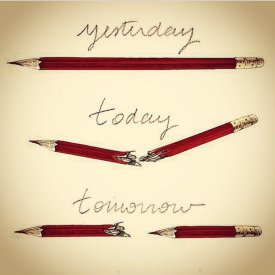
(Illustration details here)

Geotagging Genghis Khan

1420481244494136

Among archaeologists, the burial place of Genghis Khan is akin to the Holy Grail: a secret lost to time that would be a history-making find if discovered. When the Mongol leader died in 1227, his body was buried in accordance with custom in an unmarked grave. Unfortunately, nobody knows where it is, as everyone who witnessed the burial was killed to protect the secret of his gravesite. A vast area surrounding the probable location, known as Ikh Khorig or “the Great Taboo”, was declared sacred and sealed off to outsiders for nearly 800 years until archaeologists were finally allowed to start excavating there in 1989. Ben Richmond highlights one researcher who is taking a novel approach to the search by crowdsourcing the task to armchair archaeologists working from satellite images:

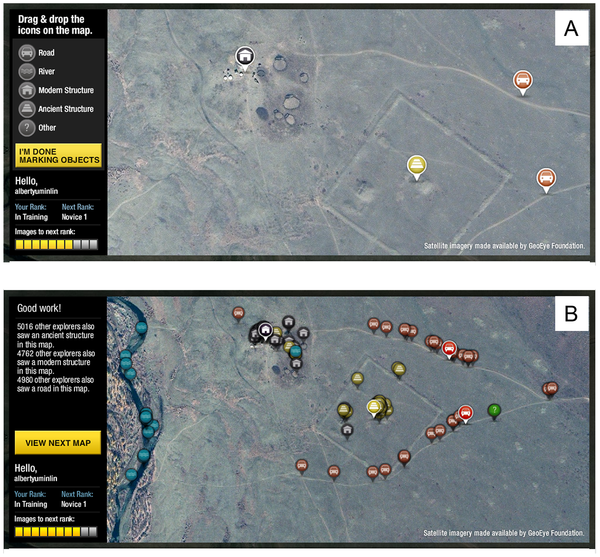
Albert Yu-Min Lin, from the Center for Interdisciplinary Science in Art, Architecture, and Archaeology at the University of California, San Diego, devised a way to hunt for Genghis Khan’s tomb without touching or toppling anything: Have anyone who’s interested in doing so tag potential sites of investigation from the comfort of their own homes, on images taken from the respectful distance of satellite orbit.

“Explorers” were welcome to map rivers and roads, and flag modern structures, as well as potentially ancient structures on thousands of ultra-high resolution satellite images of the region. There was a lot of ground to cover—6,000 square kilometers, but there were also a lot of volunteers. The system was launched in June 2010, and in just its first 90 days, 5,838 people had contributed more than 1.2 million tags. By the end of the year, over 10,000 participants had generated 2.3 million tags—contributing a total of 30,000 hours of human visual analytics to the images, according to the study’s initial results, just published in the journal PLOS One.

Anthropologist Jack Weatherford touches on this mystery in his 2005 book Genghis Khan and the Making of the Modern World, an eminently readable narrative account of the great Khan’s life and its aftermath, based primarily on The Secret History of the Mongols, a near-contemporary folkloric biography.

“Take Your Medicine” Taken To An Extreme

A 17-year-old in Connecticut is fighting for the right to refuse cancer treatment:

Known as “Cassandra C.” in court papers, the teenager has Hodgkin lymphoma. Doctors say her survival rate is 80-85 percent with chemotherapy, and she will die without it. Cassandra says she believes chemo is “poison,” and wants to discontinue treatment. Her mother, Jackie Fortin, supports her decision, telling NBC News: “My daughter does not want to poison her body. This is her constitutional right as a human being.” … [C]hild protective services became involved after [Cassandra] missed several doctor’s appointments and stopped going to tests. She was removed from her home, and is now in a monitored room at Connecticut Children’s Medical Center.

In the process, she was forced to undergo two chemo sessions. Nicholas St. Fleur provides context to the “legal battle over whether a 17-year-old can make medical decisions about her own body”:

In the U.S., adults have the right to bodily integrity, meaning they can refuse life-saving medical treatment. … Only a few states allow the “mature minor doctrine” which lets 16 and 17-year-olds argue in court whether they are mature enough to make medical decisions. In 1989, Illinois had a case where a 17-year old Jehovah’s Witness with leukemia who was allowed to refuse life-saving blood transfusions. Normally this doctrine is used when children want to receive treatment that their parents are refusing, but in this case the girl’s parents also agreed in accordance with their religious beliefs. The court decided in favor of her right to refuse treatment under the mature minor doctrine.

Ironically, the girl survived her bout with leukemia because she had already received a transfusion before the court made its decision. It’s unclear if Cassandra’s appeal, which will be Connecticut’s first case calling for the “mature-minor doctrine,” will face similar judicial impediments.

Update from a reader:

This story recalls a somewhat different one in Canada recently, where the aboriginal parents of a young girl (pre-teen, if I remember) refused the chemo that doctors said was necessary and would be successful in favour of traditional aboriginal medicine. The judge in the case sided with the parents on the basis of constitutional aboriginal rights. The parents brought their child to a holistic treatment centre in Florida (one which did not provide particularly aboriginal therapies), but made it clear subsequently that if her condition deteriorated they would agree to a more “Western” medical approach. Needless to say, despite the differences with the case you discuss, it generated considerable debate in the country.

Is The Antibiotic Discovery Void Finally Over?

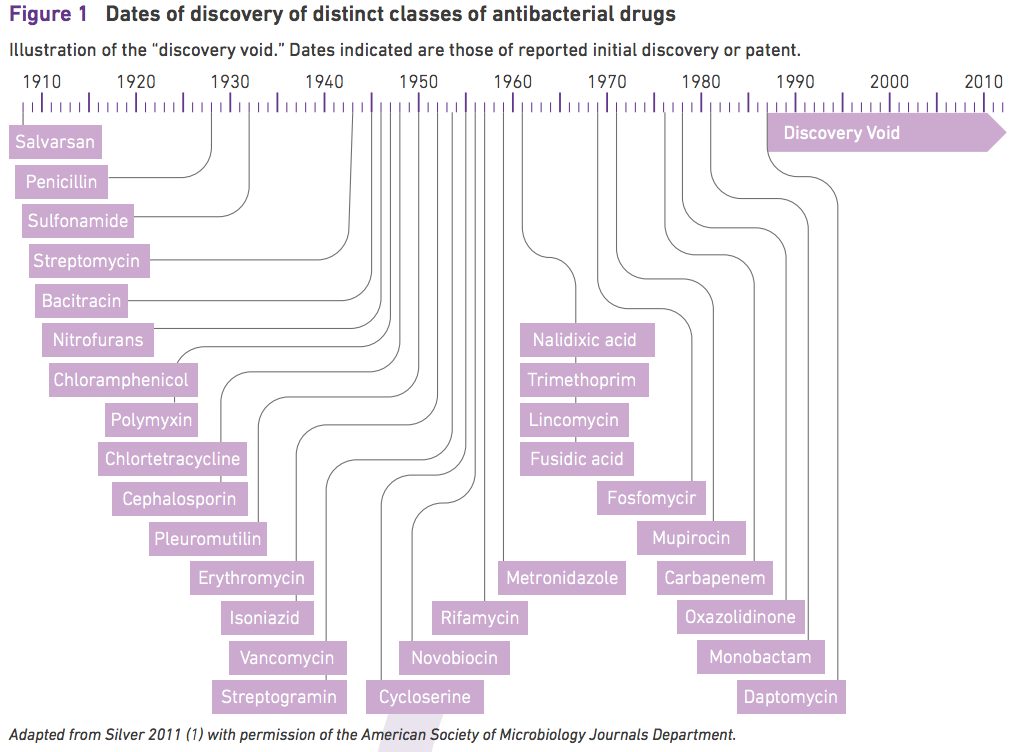
We hadn’t found a new class of antibiotics in decades:

antibiotics-discoveries

Which is what makes this news so exciting:

A new antibiotic – the first in nearly 30 years – has been discovered by scientists who claim it appears to be as good, or even better, than many existing drugs with the potential to work against a broad range of fatal infections such as pneumonia and tuberculosis. Laboratory tests have shown the new antibiotic, called teixobactin, can kill some bacteria as quickly as established antibiotics and can cure laboratory mice suffering from bacterial infections with no toxic side-effects.

How teixobactin was discovered is likely to be more important than the drug itself. Heidi Ledford explains:

Many of the most successful antibiotics were found in the mid-twentieth century by scientists who trawled microbial communities for bacteria capable of killing their brethren. But the researchers missed the type that produces teixobactin, Eleftheria terrae, plus many other potential candidates — known collectively as microbial ‘dark matter’ — because of their reluctance to adapt to life on a petri dish.

[Kim] Lewis and his Northeastern colleague Slava Epstein discovered E. terrae’s potential with a device they call the iChip. It works by sorting individual bacterial cells harvested from soil into single chambers. The device is then buried back in the ground. Several molecules in that environment are able to diffuse into the iChip, allowing the bacteria to thrive in a more natural setting than a petri dish. Typically, only about 1% of microbes in a soil sample are able to grow in the lab. The iChip expands that fraction to 50%.

Ed Yong is enthusiastic about iChip:

Teixobactin is a fish; the iChip is the rod. Having the rod guarantees that we’ll get more fish—and we desperately need more.

Bacteria have been fighting each other for billions of years before we arrived, so environmental microbes are a rich source of potential new antibiotics. The problem is that 99 percent of them won’t grow in lab conditions. So, why not bring the environment into the lab?

That’s what the iChip does.

Sarah Zhang takes a closer look at teixobactin:

As for teixobactin, it’s promising, but don’t expect it to be a game-changer all by itself. It works by inhibiting the growth the cell walls in bacteria, a mechanism that is difficult (but not impossible!) for bacteria to evolve resistance against. But that also means teixobactin only works against bacteria without another membrane around those cell walls. That includes bacteria like MRSA and TB, but not other worrisome ones like Klebsiella and E. coli, which have evolved a lot of resistance to existing antibiotics.

Teixobactin will still have to be tested in humans for safety and efficacy. It will have to be easy to synthesize in large quantities and ideally ingestible rather than only injectable. There are many characteristics of a good antibiotic beyond just being able to kill bacteria. Don’t expectteixobactin to be available for several years, and that’s assuming it pans out.

Arielle Duhaime-Ross puts the discovery in context:

Henry Chambers, an infectious disease researcher at the University of California, San Francisco, who didn’t participate in the study, thinks the researchers’ new approach is interesting. But the fact that the antibiotic isn’t effective against most Gram-negative bacteria is slightly disappointing. “There are now plenty of drugs for infections caused by Gram-positive,” he said, “and the more pressing need is for resistant Gram-negatives.”

Chambers also cautions against getting too excited about the idea of a new antibiotic. It’s “too early to get excited for yet to be proven clinical utility,” Chambers says. And even if the drug is approved for human use, it won’t solve the current problem of widespread antibiotic resistance — a problem that stems from overuse in both medicine and food production. “If an antibiotic is used enough, resistance ultimately will emerge.” For example, although it took 40 years for resistance to develop against vancomycin — another antibiotic that works in a similar way — resistance did eventually occur. Still, if teixobactin is approved for human use in a few years, that will be good news, Chambers says. “New potent and effective antibiotics belonging to a novel class are welcome, even for Gram-positives.”

The researchers believe it will take decades for bacteria to become resistant to teixobactin:

While widespread resistance to new drugs typically takes anywhere from weeks to years, Lewis anticipates that resistance to teixobacitn may take decades to develop, citing vancomycin, a drug often used to treat MRSA infections, and considered a drug of last resort—one typically saved unless there are no other options. Developed in England in the 1960s, vancomycin, which also targets a bacterial cell-wall polymer rather than a protein, only began to encounter resistance in the 1990s. “So that gives us an idea of how long it will take for resistance to develop to teixobactin,” he says. “It should take more than 30 years.” 

Judy Stone is skeptical of such claims:

The researchers are too glowingly optimistic about the likelihood of resistance emerging, I believe. In fact, the compound is being touted as “resistant to resistance” based on lab testing. Bacteria are always smarter than the people who develop and use them. While it may have taken 30+ years for Vancomycin resistance to develop, in part that is likely because we didn’t use that much of it until the last decade. …

My biggest concern, should Teixobactin make it to market, is that it will be squandered as every other good new antibiotic has been, and so resistance will rapidly emerge as the drug is overused. I have particularly been disappointed to see this with the other novel antibiotics developed during my career—Linezolid (Pfizer) and Daptomycin. I see both marketed irresponsibly (including promoting use to Social Service case workers) because they are convenient to use. Medicare has not been willing to pay for home IV antibiotics, so many of us use Daptomycin, which can be given once-daily in an outpatient clinic, so that our patients won’t have to go to a nursing home to receive antibiotics. As a result, we’re creating bacteria resistant to one of our few remaining effective antibiotics. Similarly, Linezolid is wasted for convenience, since it can be given orally; it has also been promoted for inappropriate uses, as treating colonization in wounds or in nursing home patients, rather than infection.

A Mother Who Can’t Pick Up Her Child

Sarah Erdreich shares how her chronic pain has made parenting nearly impossible:

My daughter is healthy and happy, but my own health has gotten much worse. The early months of changing diapers and clothes, nursing, and lifting her in and out of her crib caused irreparable damage to my wrist and shoulders. I can’t push her stroller much farther than the three blocks between home and day care. I can’t dress her by myself, or tie her shoes. I can’t make the appropriate hand motions to accompany “Itsy Bitsy Spider,” write out the alphabet, or brush her hair. But all that feels like mere window dressing for what I really can’t do: feel at all confident that I can take care of my child alone for more than an hour. On the few occasions that I’ve had to, the time passed in a blur that left me incapacitated and in tears. …

If I had known how tough this would be before getting pregnant, would I have made the same choice? I want to say yes without hesitation or qualification, but that’s not the honest answer. The honest answer is, I don’t know. I love my daughter. That has never been in doubt. But I hate what a toxic combination motherhood and chronic pain are for me. Perhaps the best way to answer that question is to say this: My daughter will never have siblings. Both my husband and I do, and I wish that she could know what that relationship is like. But raising another child would take a much greater toll on my health than I am willing to accept.

The View From Your Window

paris-654pm

Paris, France, 6.54 pm. The reader adds:

The people in the street are all on their way to Place de la République to stand in solidarity with Charlie Hebdo. People have been walking past for a good hour, all in one direction. On a day like this, even more than ever, please don’t stop asking difficult questions and looking for those truths in front of your noses.

What We Want Data Trackers To Tell Us

Anne Helen Petersen identifies a major reason why tracking devices have taken off:

The future will be quantified … because these devices promise the latest iteration of what we’ve always sought: happiness. Which, at least in the 21st century, doubles as simplicity. A life in which your heartbeat and respiration and location dictate when your house turns off and on; a life in which the guesswork of eating and exercising and the mysteries of our bodies could be eliminated. That promise of ultimate, seamless simplicity — and the happiness that supposedly accompanies it — will be too much, even for the most suspicious and privacy-conscious among us, to resist.

That presumes, however, that happiness is rooted in transparency. That knowledge is a source of peace; that being able to see and send every heartbeat is the ultimate in intimacy. That a life made of data — a life that is readable and, as such, changeable — is life at its most optimized.