A man smells a sex toy at the Asia Adult Expo and Intimate Lingerie expo in Hong Kong on August 29, 2013. After failing to take place in Hong Kong over the years, the event opened in the former British colony and will run from August 29 to 31. By Philippe Lopez/AFP/Getty Images.
You have until noon on Tuesday to guess it. City and/or state first, then country. Please put the location in the subject heading, along with any description within the email. If no one guesses the exact location, proximity counts. Be sure to email entries to contest@andrewsullivan.com. Winner gets a free The View From Your Window book or two free gift subscriptions to the Dish. Have at it.
Allison Yarrow fills us in on a new form of Internet literature:
Thousands of young writers are playing god with the real lives of the famous and the notorious in an outgrowth of fan fiction called real person fiction (RPF). Most stories build complex plots around actors or pop stars, including the members of One Direction, Chris Brown and Selena Gomez, and can attract tens of millions of readers to a new genre that melds fan fiction with tabloid news. And while fan-fiction writers rework hit novels — extending Harry Potter’s wizarding long after the books ended, or uprooting Alice from Wonderland and introducing her to Dorothy in Oz — RPF reinterprets the escapades of celebrities, culling inspiration and plotlines from Twitter, rumor and news. This fictional frontier is exploding online, boosted by the massive growth of user-friendly blogging platforms over the past three years.
In previous decades, sexual fantasies about leading men, like David Cassidy or Kirk Cameron, were relegated to private diaries, racy fan mail or intimate whispers among friends. Now, young women can live sex, dating and rejection scenarios out loud online, and draw instant comments. These authors cast themselves as Taylor Swift’s bestie or Justin Bieber’s girlfriend, reimagine the volatile Chris Brown as a gentle hero and transform the accused murderer Tsarnaev into a paramour.
(Image: The cover of Oh My Love (A Chris Brown Love Story), a RPF by 17-year-old Adriana Brooks, who “recasted Brown – who pled guilty in 2009 to a felony assault of his then girlfriend and fellow pop star, Rihanna – as a savior who rescues Audri (Brooks’ fictional stand-in) from her abusive boyfriend Kyle.”)
In Syrian coverage, we looked at the implications of the UK’s refusal to get involved, wondered where the anti-war protesters are, gawked at the Obama administration’s bumbling of the crisis, and underscored how decisively the American public wants the president to go to Congress. Brendan’s two cents on the looming war here.
Two other big stories we covered were the Treasury’s decision to treat all same-sex couples equally and the DOJ’sdecision to stay out of the way of Washington and Colorado on cannabis. Readers chipped in more on childhoodclassics and Chinese tourists. And the many faces of an incoming baseball surged on Facebook.
Andrew will be back on the blog Tuesday. Have a great Labor Day weekend.
I thought I’d add to the discussion a bafflingly homophobic portrayal in a far more recent film: School of Rock. The “gay” (well, gender non-conforming) kid in that movie was ridiculed and undermined at every turn. His love of Liza Minelli – an extremely lazy joke – was presented as a mark of bad taste by Jack Black’s character, the hero of the film. All the other kids “get” rock, while the sad gay kid doesn’t. In the end, the costumes he creates (because naturally, right?) are summarily ditched in favor of the school uniforms. The kid is the only one in the movie who is not redeemed or transformed by his experience in the band.
I remember coming out of that movie thinking the filmmakers would be embarrassed by this portrayal in a decade or so. I hope they are.
Another circles back:
Your reader who recalled Billy Crystal’s Sammy Davis, Jr. impression may have forgotten that Crystal reprised the role when he hosted the Oscars in 2012. Did he get away with it? That depends who you ask: there were certainly many who expressed offense. On the other hand, Davis’ daughter defended Crystal. I think it’s plausible to argue that there’s a reasonable distinction to be made between blackface that is a generalized portrayal of a race and by definition insulting, and the portrayal of a specific person by a person who isn’t of the same ethnicity (or gender – was Will Farrell’s Janet Reno out-of-bounds?).
Anyway, as a fan of old movies who has been occasionally floored by the horrifyingly casual racism often found in them (the already mentioned Breakfast at Tiffany’s being the best example of this in my experience), I’ve enjoyed following this thread.
Another adds, “The reader who brought up Billy Crystal playing Sammy Davis Jr. 30 years ago probably hasn’t seen Robert Downey Jr. in the 2008 movie Tropic Thunder“:
Another:
Your reader is incorrect in writing that Billy Crystal wearing black makeup to play Sammy Davis, Jr. would never get away with it today. Fred Armisen wore black makeup to play Senator and then President Obama on Saturday Night Live from 2008 through the 2012-13 season. After some initial criticism, which was largely based on a why an African-American actor was not playing Obama, no one seemed to care.
Another returns to the theme of childhood classics:
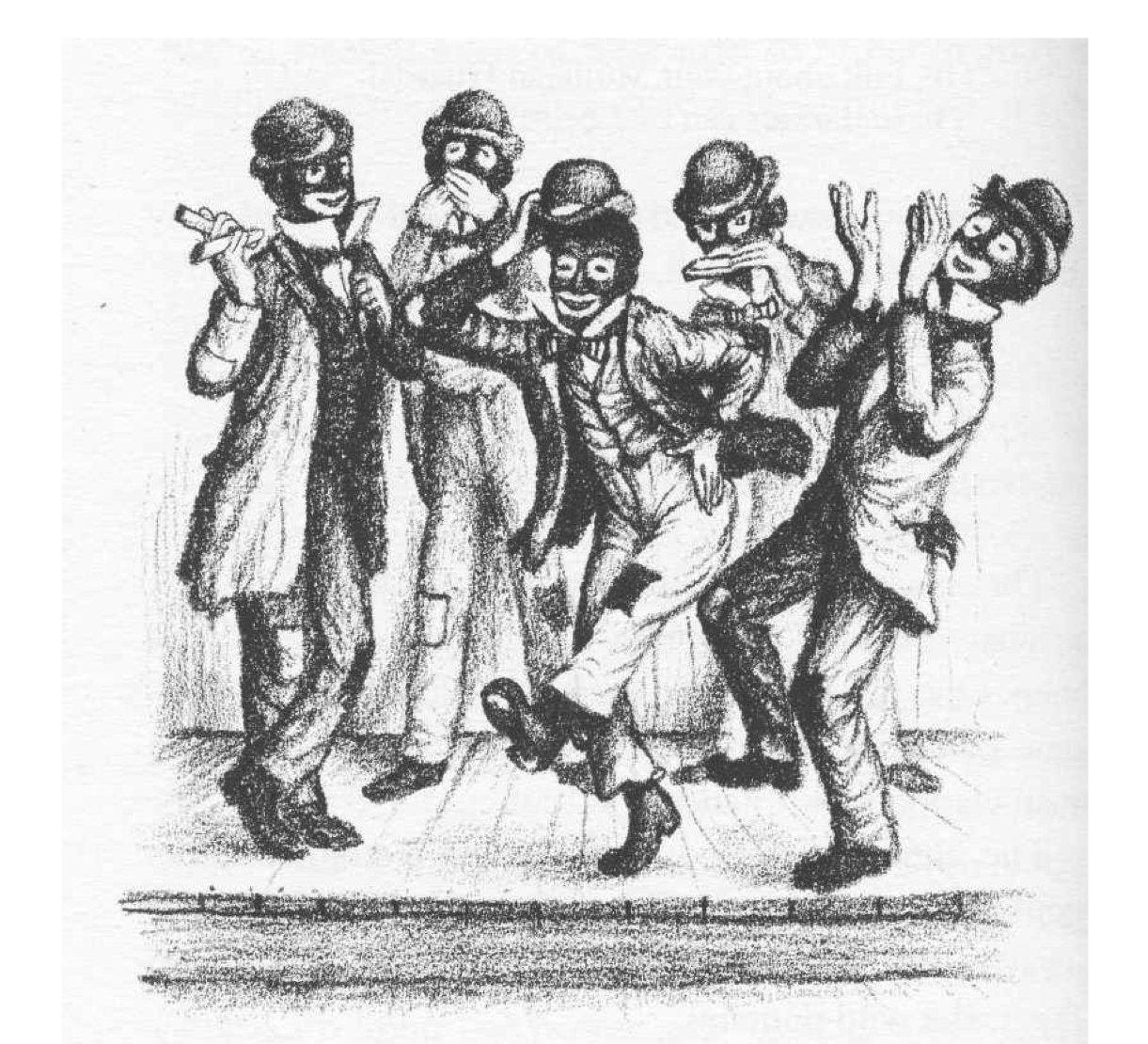
Having grown up in Wisconsin, I read Laura Ingalls Wilder’s classic series to my young daughter and discovered numerous passages that challenged me to stop reading, skip over, or explain. First, and astonishingly, Pa and Ma built the “Little House on the Prairie” in Indian Territory with the explicit intent of forcing the U.S. Army at Fort Gibson and Fort Dodge to expel the natives in favor of the white settlers. Then there is Ma’s constant racism and hatred of the Indians. And a schoolteacher whipping a child, Willie Oleson. And a fire-and-brimstone sermon threatening all with everlasting torture. And, in what must be one of the most amazing passages in children’s literature, Pa’s blackface minstrel show presented to the fulsome delight of the town and his family, singing:
Oh talk about your Mulligan Guards!
These darkies can’t be beat!
We march in time and cut a shine!
Just watch these darkies’ feet!
Throughout all this, I decided to read the text as written and answer any questions as they came. These episodes are offset by the deathly sick Ingalls family being saved by a black doctor, by Laura’s laughter at the sermon, by the individual and collective dignity of the Indians, and by the matter-of-fact truthfulness that all this was really a part of Laura’s world. But I drew the line at showing this illustration of Pa in blackface:
One more reader:
I’d like to offer a limited defense of Dumbo’s crows. No one should dismiss genuine hurt, even if the filmmakers achieve it by ignorance and carelessness rather than malice. Privileged white filmmakers, particularly those working for Walt Disney, do not deserve the benefit of the doubt.
But I do think the depiction of the crows in Dumbo is more complicated. These are highly sympathetic characters. They are smart – much smarter than the childish Dumbo, smarter than the “bad” elephants and circus-master, and even smarter than wisecracking Timothy J. Mouse. It is the crows after all who devise the “magic feather” that allows Dumbo to realize his potential. It is not at all a coincidence that Dumbo, who has been judged by his appearance, consistently terrorized and humiliated, and separated from his only source of genuine love can only find true allies at society’s margins – these put-upon black crows understand his plight all too well. At the film’s finale Dumbo is flying triumphantly with these crows – his friends and most trusted supporters.
They are of course explicitly coded as African-American. It is painfully clumsy at times (but no clumsier than the revered “Porgy and Bess”). Their musical number is not minstrelsy but a fairly faithful song in the style of popular black acts like The Mills Brothers. The singers are African-American – Hall Johnson’s Chorus – and they perform earnestly, not mocking the style. The crows are a bit silly during the song (it is a children’s film) but none of the humor has any racial logic like the awful Native-American sequence in Peter Pan. The worst aspect is the dialect, which is clearly written by writers unfamiliar (or uninterested) with the way black people actually speak.
I think parents showing this film to kids need to spotlight the depiction and explain how it misses the mark. But I think we deprive today’s kids by censoring the film outright. A film ultimately about love and understanding of those who look different than us is too rare to abandon.
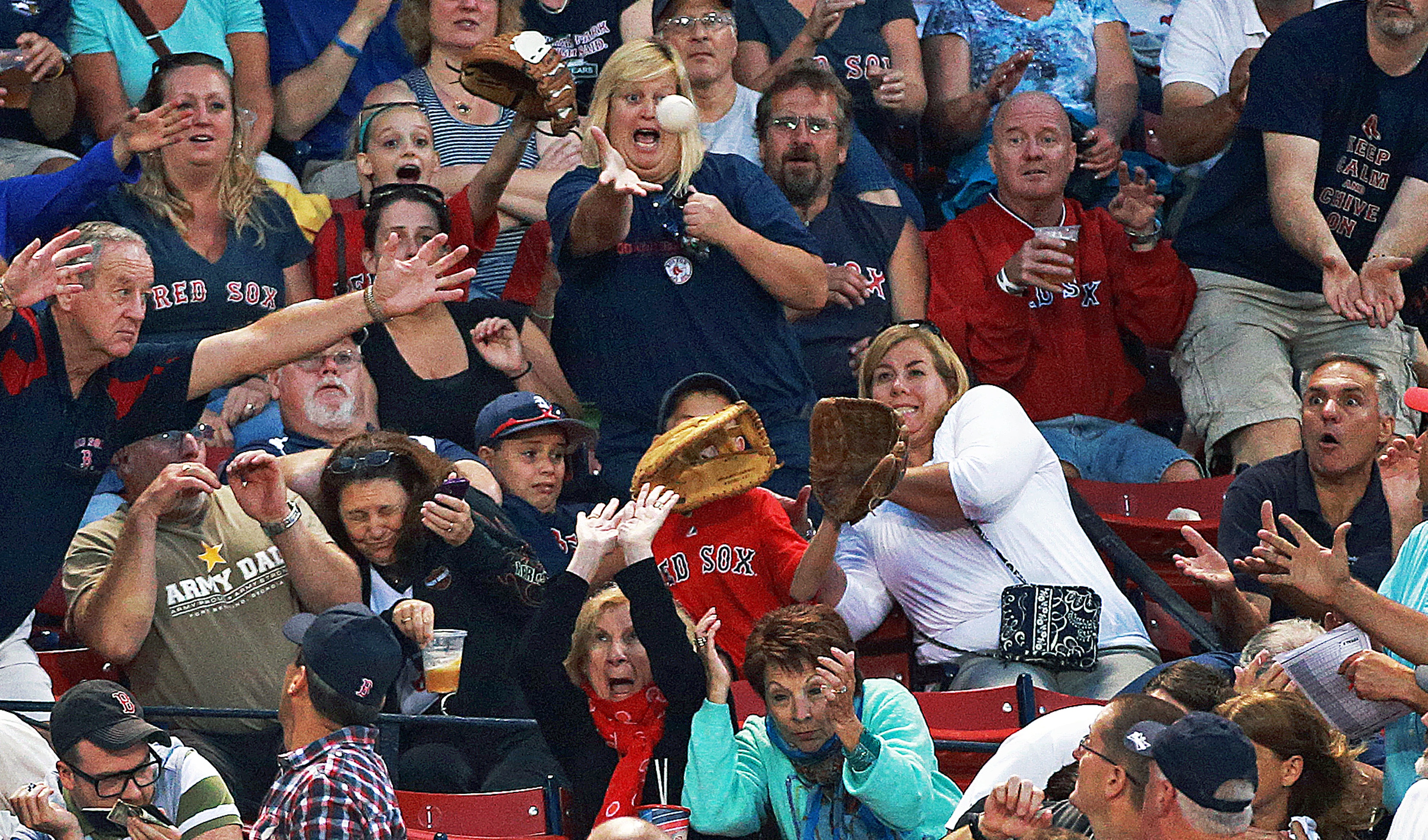
Fans wear many different looks as a first-inning foul ball heads their way. The Boston Red Sox hosted the Baltimore Orioles in an MLB regular season game at Fenway Park on August 28, 2013. By Jim Davis/The Boston Globe via Getty Images. A reader flagged it:
Whether or not you’re a baseball fan, you have to love this image.
Spurred by Dave Roberts’ year-long hiatus from the Internet, Dan Savage vents about the demands of his readers to comment on every issue:
It’s not that I don’t care about Manning or about the issues raised by her actions and her prosecution and her transition. It’s just that I don’t feel I have anything of value to add to the conversation. And it’s not just Manning: I haven’t had much to say about the ban on gay blood donors (serious issue!) or Miley Cyrus’ performance at the VMAs (unserious issue!) or what the hell is going on in Syria (serious issue, yes, but one that I am disqualified from having opinions about in public). And I have been angrily called out again and again for my failure to tweet about Manning and blood bans and Miley, etc. It’s as if my failure to have a take on absolutely everything somehow violates the terms of a contract I don’t recall signing.
To my fellow writers I say…
We don’t have to have a take on everything. Yes, if we fail to comment on something—if we fail to have a take—small e-mobs gather under our e-windows demanding comment and waving our failure to comment over their heads like a bloody shirt. But fuck ’em. Don’t let the Mark Kackstetters get inside your head. It’s okay to sit some shit out. Sometimes writers get to be readers too.
That pressure to have an opinion about everything is something Andrew struggles with constantly, and every day in the inbox I see the demands of readers who can’t believe the Dish hasn’t posted on a particular story already. The flagging of stories by readers is often essential and always appreciated, but a pushy tone can be grating sometimes, especially since the Dish is already such a demanding job. From one reader a few days ago:
Seriously guys, I can’t believe you still haven’t mentioned this [the issuing of marriage licenses in five counties in New Mexico]. The Dish noted the potential for marriage equality in New Mexico only a month ago, and this is the most grassroots, organic progress on this issue I’ve ever seen. Since my email last week, two more NM counties have started licensing same-sex marriage and it’s unlikely to stop because (1) NM marriage laws are not gender-specific, but (2) the state constitution DOES prohibit sex discrimination and (3) maybe most importantly, here in New Mexico there has been virtually NO objection to this. The NM Attorney General announced early that he’s not going to challenge it, our (Republican) governor is silent so far, and there has been absolute silence as best I can tell from regular citizens and the church crowd.
Of course, a couple dozen state GOP legislators have asked for IMMEDIATE state supreme court action to stop this new evil. But that ain’t gonna fly here; New Mexico is a VERY cool state and this is a big story. Dan Savage and others are on it already and my favorite blog should be too.
On it. Update from a reader over Labor Day weekend:
Enough with the fluff, sidebar, back-of-the-book features. Where the hell is the coverage about Syria? I didn’t subscribe for crap like that at time like this. This is a disgrace





 The Dish