Rubio Retreats

He is backing off from his previous support for comprehensive immigration reform. Issac Chotiner sees this as proof of Rubio’s “political cluelessness”:

This leads to the larger question of what exactly Rubio was thinking when he decided to support the Senate bill in the first place. I have argued previouslythat it was political suicide for him to get behind the comprehensive approach: if such a bill had passed, Rubio would have been tarred as the most visible supporter of Obama’s biggest second term achievement. (Good luck running on that). And if it fails, as now appears likely, what did he gain by pissing off a bunch of the voters he will need for 2016?

Chotiner expects no movement on immigration reform before the midterms:

Pretend you are a House Republican, and thus in almost all cases are from a very conservative district. What is your incentive to pass an immigration bill before November 2014? Not only would it make you vulnerable to a primary challenge, but it isn’t even obvious that it would strengthen your position in the general election, especially considering the way House districts are drawn, and that non-presidential election years tend to have older and whiter electorates.

Chait, meanwhile, tries to make sense of the GOP’s latest immigration reform spin.

Revving Up The Fight For Equal Rights

Max Fisher covers a renewed push among Saudi women for expanded civil rights:

Saudi Arabian women are subject to some of the most severe legal restrictions in the world, of which the de facto driving ban is perhaps the best-known — and it has become the focus of a campaign by Saudi women for broader rights. The campaign has grown dramatically since it began, in May 2011, with a single drive. A 32-year-old information technology consultant named Manal al-Sharif was filmed by women’s rights activist Wajeha al-Huwaider driving around and reeling off arguments for dropping the ban. The two posted the video to YouTube, and police arrested Sharif the next day, charging her with disturbing public order. Sharif was released after a week in prison, but that video, and her passionate message, had already spread among the country’s increasingly well-educated and well-connected women.

Juan Cole rips the country after political pressure forced many women to abandon their driving protests, which were scheduled for Saturday:

It is about the most pitiful thing one can imagine– a state that disallows protest altogether as a means of enforcing a brutal patriarchal order that deprives women of the basic right of mobility. Inability to drive limits women’s ability to pursue not just their careers (Saudi women have high rates of literacy and education) but even just hobbies. Wealthy women have chauffeurs, but contrary to stereotypes not all Saudi families are rich or can afford to hire drivers. Supportive Saudi husbands sometimes have to spend a lot of their time driving family members around.

Saudi comedian Hisham Fageeh made the video above to coincide with the protests:

While the video has a light-hearted vibe, the ironic satire is sharp, and because the reasons given by ultra-conservative Saudis for keeping women away from the driver’s seat are so surreal, they do make easy targets. There’s the claim, for instance, that driving might damage women’s reproductive organs. “Ovaries, so safe and well,” Fageeh intones, “so you can make lots and lots of babies.”

“Your feet is your only carriage, but only inside the house. And when I say it I mean it,” Fageeh sings in another line, addressing Saudi Arabia’s male guardianship law which strictly limits a woman’s ability to travel, work, open a bank account, marry, or undergo certain medical procedures without the consent of a male guardian. In some cases, this guardian could be a young son.

And, finally, Caitlin Dewey reminds us that Saudi Arabia is just one of a number of countries that maintain severe restrictions on women’s rights:

According to one measurement, though, there are actually several countries that rank lower on women’s rights than Saudi Arabia. The World Economic Forum, which publishes the preeminent ranking on gender gap issues, ranked Saudi Arabia 10th from the bottom in its 2013 report – ahead of Mali, Morocco, Iran, Cote d’Ivoire, Mauritania, Syria, Chad, Pakistan and Yemen. Women’s rights abuses are by no means limited to North Africa, West Africa or the Middle East, though that’s where we tend to hear such stories most frequently.


Keller vs Greenwald: Why Not Both? Ctd

PM Carpenter is on a very similar page as I am, but with a different conclusion:

Who, in my opinion, is right? Both Greenwald and Keller, for both men make claims based on assumptions of honorable, professional behavior and genuine intent. Perhaps this is that element of this democratic socialist’s ineradicable conservatism peeping out–that is, my belief that some traditions are worthy traditions merely by virtue of their proven serviceability and violent collapse of other approaches–but I’d give the edge to Keller, for one simple, and for me primal, reason: Greenwald’s moralism scares the hell out of me.

Coverage You Can’t Keep, Ctd

Cohn explains why insurance companies are terminating policies:

One of Obamacare’s primary goals is to make sure everybody has a decent health insurance policy. Under the law, every plan should include a comprehensive set of benefits and put some limits on what people pay out-of-pocket. The policies now available in the non-group market frequently don’t meet those standards. They might leave out benefits like maternity or mental health—or they might have truly exorbitant deductibles. Starting next year, insurers can’t sell new policies unless they meet Obamacare’s standards. That will tend to make insurance more expensive.

A TPM reader provides a positive personal perspective on these terminations:

I’ve been self-employed for 13 years. Most of that time, I’ve had an HSA with a high-deductible policy; the deductible has ranged from $3,000 to $5,500. A traditional individual policy would be cost-prohibitive because–although I have low blood pressure, heart rate, and cholesterol, work out regularly, take no prescriptions, and have no chronic conditions–I’m deemed to have preexisting conditions, basically because I’ve dared seek medical attention in the past. I was once rejected by an insurer based on a single episode of sciatica five years earlier. I don’t think people who have had employer-provided coverage have any idea what the individual health insurance market has been like.

Anyway, you may have seen in the past couple of days how some insurers are being forced to drop thousands of individual policies because they’re not ACA-compliant. My current policy is among those, so I’ve looked for a new policy with my insurer (Anthem). And, thanks to the ACA, I can finally get a more traditional policy because the insurer has to offer ACA-compliant plans and can’t exclude for preexisting conditions. As a result, I’m switching to a Silver level plan with a $2,000 deductible, free preventive care, reasonable co-pays ($30-$45) for doctors’ visits pre-deductible and reasonable co-insurance (25%) post-deductible, all for a premium that’s only $20 more than what I was paying. Significantly better coverage, in other words, for about $240 more per year. The media, however, are depicting the end of those policies as a bad thing, apparently because insureds may have to pay more now. But they don’t mention that these insureds will be getting much better coverage. It’s not an apples-to-apples comparison.

A Meh Bargain

The budget negotiators have stopped pretending that a major deal is doable:

Congressional leaders are already ruling out a big breakthrough in what amounts to the first budget conference in four years, and the eighth major budget commission in three years. It will not lead to a “grand bargain,” according to Senate majority leader Harry Reid and House Budget Committee chairman Paul Ryan. Indeed, the two Congressmen required for any deal that would reform the tax code — House Ways and Means Committee chairman Dave Camp and Senate Finance Committee chairman Max Baucus — have not been appointed to join the group.

So what will the conference do? The 28 members are required to send a report of recommendations to the full chambers by Dec. 13. The conference will likely focus on crafting a small deal to avert the next fiscal crisis early next year.

How Chait will evaluate the results:

If you want to judge whether any agreement makes sense, the best guide is not whether Democrats win revenue, but whether they win permanent changes in policy. The domestic appropriations budget gets written year by year. Trading away permanent changes to Social Security or Medicare in return for temporary increases in the discretionary budget is a bad deal — it would boost the recovery, but at the cost of handing conservatives a one-sided victory over the scope of government. If Obama gives Republicans permanent changes in return for temporary concessions, it will be clear Republicans out-negotiated him on sequestration. If Obama can get other permanent policy victories — different (and more regressive) forms of taxation, or funding for early childhood education — that is the sort of victory that could be traded for long-term entitlement cuts.

I have to say I don’t agree. To get some infrastructure stimulus now while cutting entitlements in the future would be perfectly acceptable to me. I want more boost to get out of this recession, as well as credible entitlement and defense cuts for the future. Collender’s advice to me and other onlookers:

The bottom line is that its important not to overreact to anything the budget conference committee does this week. Not only will the meetings be very preliminary; they almost certainly will be virtually insignificant.

The Church Of Lou Reed

Yesterday the legendary rocker died at the age of 71. Alex Abramovich pays tribute to his influence as a founding member of the Velvet Underground:

For Reed, rock and roll was not a religion; it was religion itself. Repetitions, drones: these were the ways into trance states, and Reed’s way around an ‘all right!’ was rooted in the old Pentecostal church, where the words ‘I feel all right!’ signalled your readiness to receive the Holy Spirit. In his self-reflexive masterpiece, ‘Rock and Roll’, music promised answers that religion could no longer provide. … Over the years, the Velvet Underground became a kind of church in which teenage pilgrims found one another.

Jody Rosen remembers Reed as “a pop star for adults”:

His vocal phrasing was modeled on Bob Dylan’s, but unlike Dylan and other songwriters steeped in folk, Reed never came on like Methuselah—never tried to sound like the old-as-the-hills Voice of the American Musical Unconscious. Instead, Reed did something novel: he wrote and sang rock songs like a grownup. In an interview in the mid-eighties, Reed said: “My interest—all the way back with the Velvets—[has] been in one really simple guiding-light idea: take rock & roll, the pop format, and make it for adults. With subject matter written for adults so adults, like myself, could listen to it.”

Michael Musto eulogizes the artist as a “NYC original” and “cool personified”:

The godfather of punk, with a heavy dose of glam, Lou collaborated with all the right people, and always seemed to eventually make up with them in time to collaborate with them some more.

I thought Lou would be around forever—not only to keep creating, but as a walking reminder of New York’s days of skinny ties and colorful nihilism. He was rock and roll royalty, as photographer/director Timothy Greenfield-Sanders, a longtime friend of Lou’s, just noted to me. Said Greenfield-Sanders:

“I remember standing onstage at Madison Square Garden for David Bowie’s 50th birthday in 1997, getting ready to photograph Lou, who was about to play with his old friend from the Transformer days. Bowie announced the upcoming performance by saying, ‘And now, the king of New York, Lou Reed.’ Lou was the king of New York. Lou represented what we all loved about New York, what was cool, edgy, transgressive. Lou was why we came to New York.”

From Marc Campbell’s tribute:

It has been said that The Velvet Underground spawned more bands than it sold albums. It’s true. Lou opened up the field for millions of us. There are few modern singer/songwriters that haven’t been influenced by his direct way of telling a story in song without hyped-up sentiment or maudlin platitudes. His hard-edged, cynical style, shot through with harsh beauty and tenderness, created a new level of sophistication and adultness in rock that hadn’t much been heard before him. He cut through the cute shit and talked about the raw side of city life like Cole Porter on a cocktail of crystal meth and Seconal. … The shit he wrote about, the shit he lived, could kill you. But you can’t write with the insight he did about the darker side of life, the lost souls and broken hearts, without having an incredible sense of empathy and love.

Chal Ravens’s obituary quotes from Reed’s own recent review of Kanye West’s Yeezus:

“I have never thought of music as a challenge,” he offered. “You always figure the audience is at least as smart as you are. You do this because you like it, you think what you’re making is beautiful. And if you think it’s beautiful, maybe they’ll think it’s beautiful.”

Listen to some of his best songs here.

Keller vs Greenwald: Why Not Both?

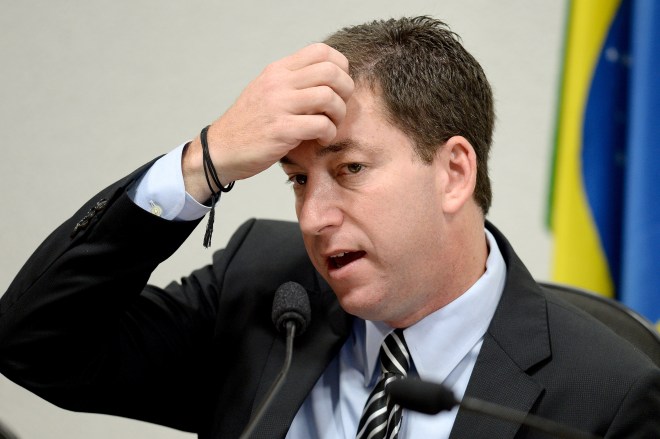
BRAZIL-US-ESPIONAGE-GREENWALD

Their exchange is one of the high moments of debate as journalism evolves in the digital era. If you haven’t, do yourself a favor and read it. I come down in favor of both approaches, i.e. alleged “objectivity” or an attempt at impartiality in competition with a press more open about its own biases and point of view. I think readers deserve both. In Britain – though it is far from working perfectly – the biases of the papers make more sense because of the massive resources of the BBC aspiring to impartiality.

But on the basis of this exchange, I think Glenn has the advantage. And that’s because his idea of journalism is inherently more honest – declaring your biases is always more transparent than concealing them. That’s why, I think, the web has rewarded individual stars who report and write but make no bones about where they are coming from. In the end, they seem more reliable and accountable because of their biases than institutions pretending to be above it all. In the NYT, the hidden biases are pretty obvious: an embedded liberal mindset in choosing what to cover, and how; and a self-understanding as a responsible and deeply connected institution in an American system of governance. These things sometimes coexist easily – as a liberal paper covering the Obama administration, for example, with sympathetic toughness. And sometimes, they don’t – as a liberal paper covering the Bush administration, for example, and becoming implicit with its newspeak.

On the latter, Glenn’s strongest point is about the NYT’s decision not to call torture torture when reporting on the torture regime of Bush and Cheney.  Keller still has no good answer here – except, quite obviously, his desire not to burn bridges with an administration and not become a lightning rod for right-wing press critics. Trying to appear objective, in other words, by appeasing both sides in a dispute, is not actually being objective or impartial. It’s enabling war crimes – which I think the New York Times did under Bill Keller’s leadership. No one ever hesitated to use the word torture to describe waterboarding in the past, and the NYT itself did so when other countries were guilty. So hiding your biases, and trying to appear objective, can mean the opposite of honest. That’s why, up there, the Dish has a simple motto: biased and balanced. You know where I’m coming from; and you can also judge if we fairly provide counter-points and dissent. The Dish evolved toward the “biased and balanced” mindset out of a desire to get things right, after I had proven myself all-too able to get things wrong.

Of course, I’m not running (as of yet) original reporting. But reporting, to me, is about finding stuff out, and publishing it without fear, and being accountable for it.

That means publishing without fear of being called leftist by the right, or of being called fascist by the left; publishing without fear of unsettling and even enraging governments; without fear of upsetting, offending, or even boring, readers because some difficult truths need to be gotten out there; and without fear of being called unpatriotic, or biased. That requires enormous discipline, constant tough judgment calls, brass balls, and discriminating restraint. Withholding the truth – unless for fear of risking others’ lives – is something you only do in extraordinarily rare circumstances. So, to take an obvious example, reporting about Iran’s nuclear program without noting Israel’s nuclear and chemical weapons – a key piece of context the NYT routinely refuses to note – is not impartial. And bias is best concealed within an allegedly unbiased news outlet.

Equally, it means matching revelations from democratic societies with revelations from autocracies. A press that constantly make the US government unable to keep secrets reliably needs to put in a lot of effort to do the same with far less porous regimes. It means careful consideration of internal government documents before publishing; it means eschewing excess zeal in revealing secrets, in favor of measured and responsible explanation of the broader issues involved. That’s called balance.

We have yet to see what Glenn and his future colleagues will produce under much more strenuous institutional boundaries. But we need him. And with any luck, the competition will sharpen the NYT as well. There is a golden mean here – one which the NYT aspires to but often fails to achieve. It will only do better with Glenn nipping at their heels.

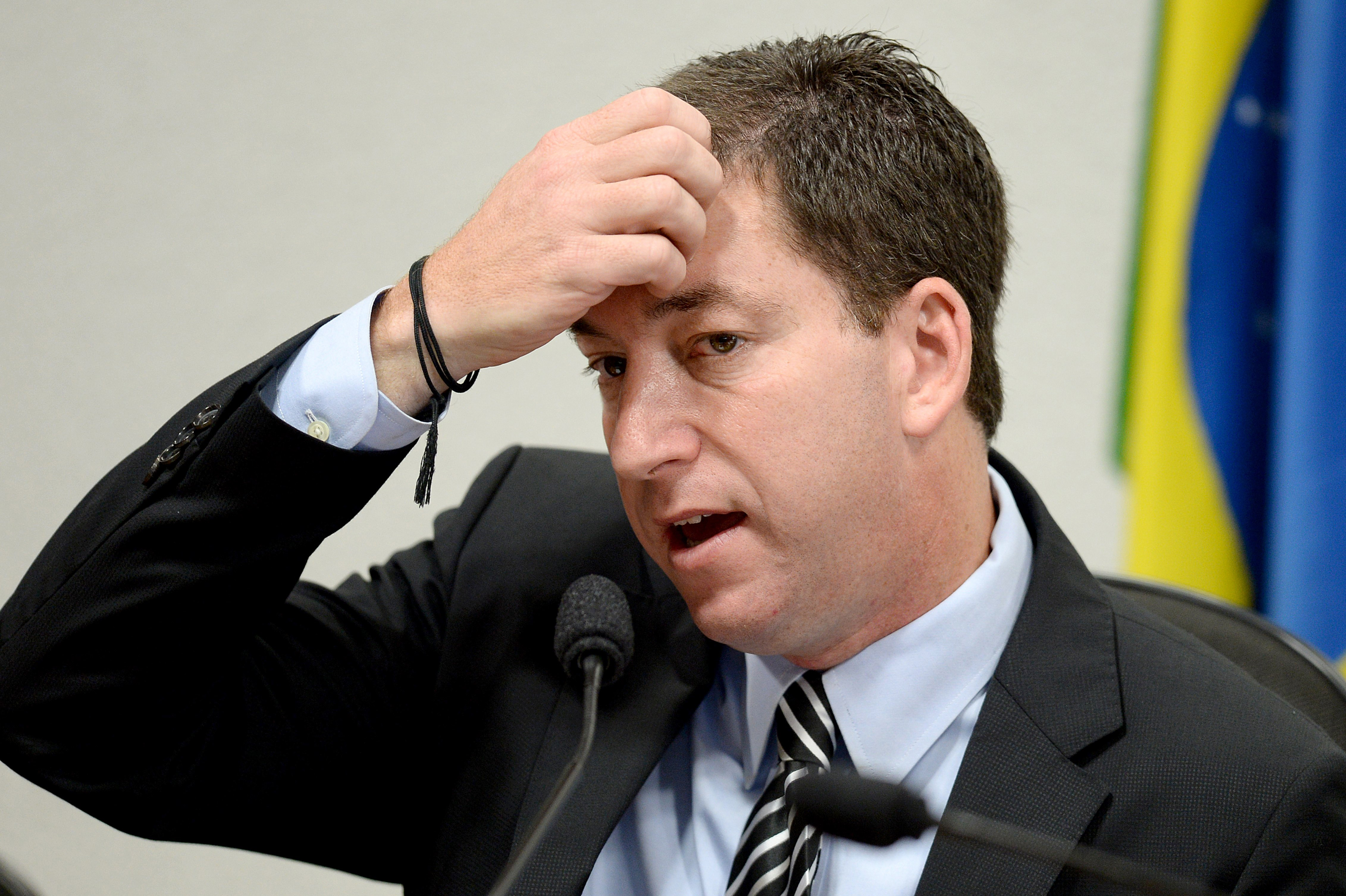
(Photo: The Guardian’s Brazil-based reporter Glenn Greenwald, who was among the first to reveal Washington’s vast electronic surveillance program, testifies before the investigative committee of the Brazilian Senate that examines charges of espionage by the United States in Brasilia on October 9, 2013. By Evaristo Sa, AFP/Getty Images.)

Why Does Sebelius Still Have A Job?

The head of HHS recently brushed off calls for her resignation:

Isaac Chotiner credits the GOP for Sebelius’s job security:

Just imagine for a moment that Obama fired Sebelius and was forced to appoint a new head of the HHS, who would of course need Senate confirmation. This person would almost automatically be labeled the new “Obamacare czar” and would be unlikely to win confirmation unless he or she promised to push for, say, the repeal of Obamacare and the imprisonment of everyone who voted for it. When the Senate goes to unprecedented lengths to block executive branch appointments, it creates a situation where the president is highly unlikely to make personnel changes. Holder undoubtedly remains in his job largely for this reason. Any new appointee for Attorney General would be forced to disown Holder’s record entirely and declare the necessity of investigating what Darrell Issa called ”the most corrupt government in history.”

Earlier Dish on firing Sebelius here and here.