For Lady Things, Toronto-based photographer Robyn Cumming creates surreal portraits of femininity, replacing the heads and faces of her female subjects with soft, delicate objects. Against quaint patterned wallpapers, frilly curtains, or ominous blackness, the stiffly posed figures are veiled like strange brides in flower petals, luxurious fabrics, and a flock of doves. Though observably of varying ages, the women become uncannily interchangeable with one another.
Tarfia Faizullah’s first book of poems, Seam, centers on the experiences of Bangladesh’s Birangona – the roughly 200,000 women who were raped and tortured during that country’s war of independence. Jonathan Farmer lauds the book:
The beauty of these poems does not redeem tragedy; at times, in fact, it seems to sully it. But that sullying—the humid tangle of lives, Faizullah’s own losses pressing in alongside the stories of the Birangona, her sexual desires flaring up back at her hotel room, her feelings of shame, her disquiet in the streets of Dhaka, the company of Western authors (Tomas Tranströmer, Paul Celan, Willa Cather) amid everyone else’s words—offers an unusually persuasive image of the ways old tragedies persist. They remain pressed in among the living and preserved by a hunger that is not always and not only for them, including a poet who might, in the midst of all these interviews, “reach for anyone // willing to wrap his good arm tight / around me for as long as the ribboned / darkness allows.” In a society still unable to make sense of the lives engendered by such an atrocity, that dark vitality seems to register more than purity ever could.
Dan Colman recommends the above short film, which tells the story of Oedipus using stop-motion veggies:
Sophocles and Aeschylus may be spinning in their graves. Or, who knows, they may be taking some delight in this bizarre twist on the Oedipus myth. Running 8 minutes, Jason Wishnow’s 2004 film puts vegetables in the starring roles. One of the first stop-motion films shot with a digital still camera, Oedipus took two years to make with a volunteer staff of 100. But the hard work paid off.
The film’s director, Jason Wishnow, has recently been working on a 10-minute sci-fi flick starring Ai Weiwei:
The team shot in cold and smoggy conditions in Beijing (the pollution index hit a record 800 during production). Because of Ai Weiwei’s status with the Chinese government (one early meeting saw him whisked away for interrogation by police), the film was shot largely in secret, with code-names and various forms of communication. (Though, as Wishnow points out on the project’s Kickstarter page, Ai Weiwei did Instagram a photo from [the] set.) Because of the secretive nature of the project, the Kickstarter campaign was launched after the film was in the can, to recoup costs and help out with VFX, music, subtitles, and other finishing touches.
Ian Crouch, reviewing the notes and early drafts included in a new edition of The Sun Also Rises, dishes on the back-and-forth about the novel between Hemingway and his friend, F. Scott Fitzgerald:
F. Scott Fitzgerald … after reading the version that Hemingway had sent to [editor Maxwell] Perkins, wrote a long, dismayed-sounding letter to Hemingway, in which he said, “I think that there are about 24 sneers, superiorities, and nose-thumbings-at-nothing that mar the whole narrative up to P. 29 where (after a false start on the introduction of [character Robert] Cohn) it really gets going.” Though Hemingway would later downplay Fitzgerald’s editorial influence, the published novel begins with the sentence: “Robert Cohn was once middleweight boxing champion of Princeton.”
In the letter, Fitzgerald also criticized Hemingway for injecting his own writerly persona into the text: “That biography from you, who [always] believed in the superiority (the preferability) of the imagined to the seen not to say to the merely recounted.” With this fragment of a sentence, Fitzgerald gives Hemingway the familiar writing-class advice—show, don’t tell; less is more; and what is left out can sometimes be more meaningful than what is included. Earlier versions of the novel contained even more of this “biography”; Fitzgerald had caught the remnants of nervous self-consciousness that Hemingway himself had curtailed as he wrote.
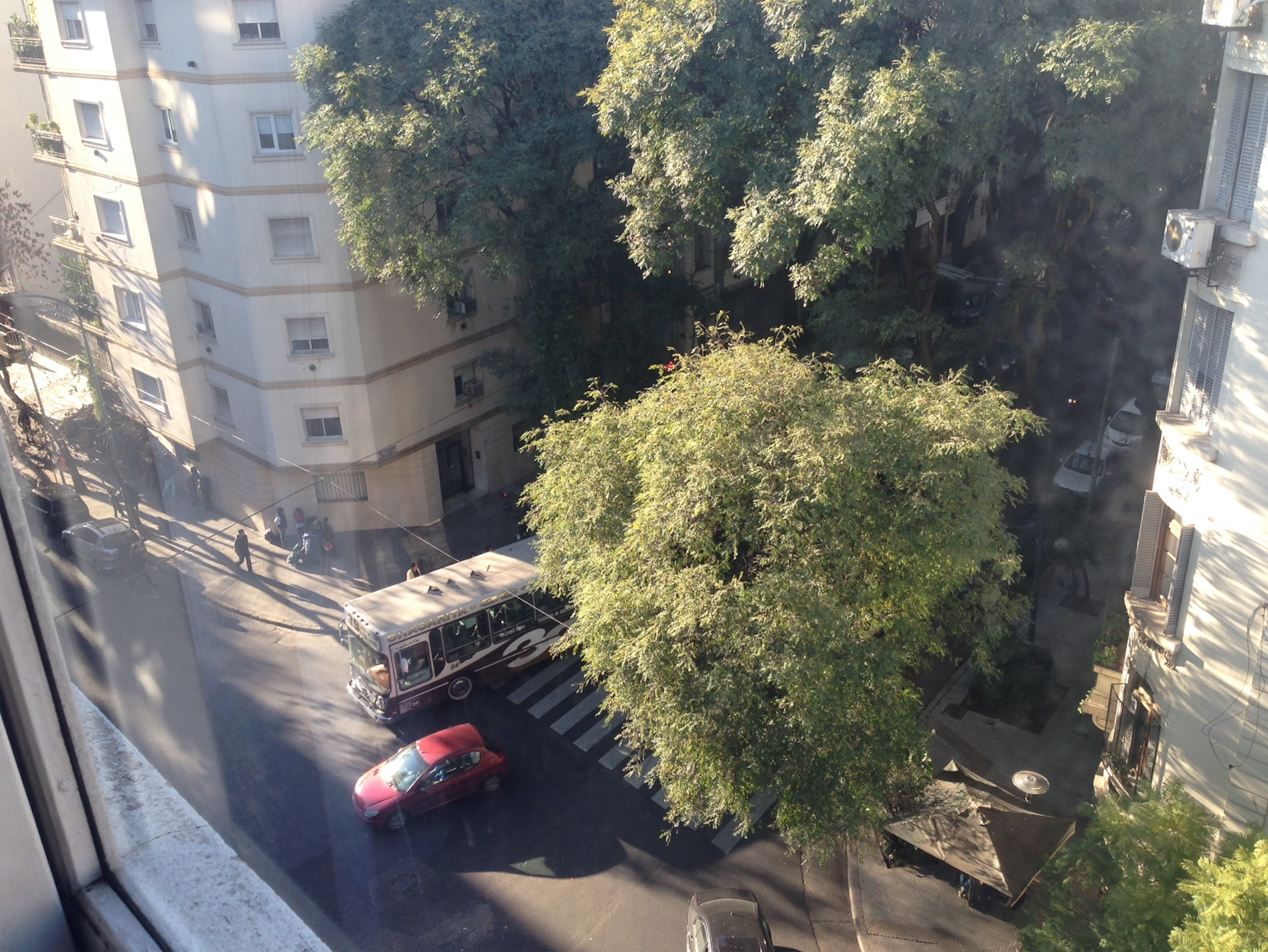
You have until noon on Tuesday to guess it. City and/or state first, then country. Please put the location in the subject heading, along with any description within the email. If no one guesses the exact location, proximity counts. Be sure to email entries tocontest@andrewsullivan.com. Winner gets a free The View From Your Window book or two free gift subscriptions to the Dish. Have at it.
Jed Perl makes that case in TNR, arguing that the “erosion of art’s imaginative ground, often blamed on demagogues of the left and the right, is taking place in the very heart of the liberal, educated, cultivated audience — the audience that arts professionals always imagined they could count on”:
It is relatively easy to point to the deformations of art at the hands of politically correct left-wingers and cheap-shot moralists on the right, as the late Robert Hughes did in the fast-paced, witty series of lectures that he published as Culture of Complaint in 1993. It is far more difficult to explain why people who pride themselves on their carefully reasoned view of the world want to argue that art is not a value in and of itself, but rather a vehicle or a medium or a vessel through which some other human value or values are expressed. That these thoughts are often voiced indirectly makes them no less significant. Indeed, such thoughts may be all the more significant because they are being expressed by critics and scholars who would deny that they are in any way discomfited by the unique powers of the arts. An illiberal view of art is gaining ground, even among the liberal audience.
I sometimes find myself heaving sighs at pieces I once might have written myself, like Vox’s recent offering “The Bachelor franchise is sexist and needs to go,” from reporter Kelsey McKinney. Of course “The Bachelor” franchise is grotesquely, bizarrely sexist. The entire conceit involves generating drama by making its cast go through intensified versions of antiquated courtship rituals and making them feel bad for themselves if those rituals do not produce a happy result. But in keeping with Perl’s objection, I think we ought to be a bit more careful about declaring that culture “ought to go” on the grounds of its politics. …
[T]here is something suspiciously anti-competitive about the idea that something should go away just because it has bad values. It is an impulse akin to the hope that a politician you dislike will be indicted or caught with a person not their legal spouse, eliminating the need to actually beat them at the polls. This is an end run around figuring out why people like what they like. It suggests a lack of confidence that liberal values will be compelling and a wish to ignore the reasons that something retrograde can also be extremely popular.
Perl is addressing liberals in a liberal magazine, but his point is universal. True art cannot be reduced to the sum of its creator’s parts. It comes from somewhere particular, but it will have achieved the quality of universality that allows it to stand alone from its creator. Your understanding of Dante’s verse is far richer if you understand the historical, theological, and philosophical sources of his vision. But his lines are no less beautiful and true absent that understanding.
But Mostafa Heddaya sighs that Perl “seems, as usual, to be at war with straw men”:
Like much of his criticism, Perl here seems to be talking to no one in particular, bellowing at the present from an oblique angle. And for someone drawing from the ambered debates of modernism, it seems deeply strange for him to blindly assert that emotions are not political, or that politics cannot be emotional. And without getting into an intellectual history of art criticism and history (a subject intelligently surveyed in a recent article by Ingrid Rowland in The New Republic), which might explain a turn away from the belle-lettristic art discourse he seems to advocate but not adhere to, Perl’s recycling of antique arguments under the guise of contrarian thought is tiresome.
Rebecca Smithers flags new findings about the salt levels in various cheeses:
Halloumi and imported blue cheese such as Roquefort contained the most salt – more than sea water – while cottage cheese contained the least, according to a major new research study carried out by Cash (Consensus Action on Salt & Health) and published in the British Medical Journal…. [The study] is based on an extensive survey of 612 British and imported cheese products sold in UK supermarkets in 2012, using data on the labels to analyse the salt content (g/100g). It looked at the salt reduction targets for ten popular cheeses set by the Food Standards Agency watchdog and implemented by the Department of Health, to be achieved by 2012. While 85% (333 of the 394) of cheeses have already met their targets, 81% (318 of 394) would still get a red (which means ‘high’) colour rating under the so-called ‘traffic light’ labelling scheme.
A Daily Mail headline reminds that the saltiest cheeses are “foreign” in origin. Meanwhile, James Ramsden stands up for the high-sodium dairy products:
This latest study, which brings little new information to the table, reckons salt content to be considerably lower in supermarket own-brand cheddar and “cheddar-style” cheeses than in their branded equivalents. This, they inform us with the sort of dreary lack of appetite you’d expect from a group such as Cash, “demonstrates that it is technically possible to produce cheese with less salt in it”.
Sure. Just as it’s technically possible to make decaffeinated coffee, alcohol-free beer and vegan sausages. But that’s kind of missing the point. And cheese needs salt. Sarah Hampton, who makes goat’s cheese at Brock Hall farm in Shropshire, says: “The effect of salt in cheesemaking performs an essential function in the casein matrix, creates texture and flavour, and affects protein hydration in the cheese body.”
Should more cheeses be made with less salt? “I personally like to be quite sparing with salt quantities,” Hampton says. “For the kinds of semi-soft and semi-hard cheeses I make, too much salt can foreshorten the flavour. But some cheeses need that saltiness. Feta, for example, is more salty than a fresh goat’s cheese, but that level of salinity constitutes the character of the cheese. An unsalted feta would be horrendous.”
While on vacation, I’ve been listening to Natalie Merchant’s arrangements of traditional American folk music on her album entitled The House Carpenter’s Daughter.
They turned my mind to the selections of anonymous lyrics and songs from the 13th through the 15th centuries, chosen by W.H. Auden and Norman Holmes Pearson for their incomparable five-volume anthology, Poets of the English Language, published in the Viking Portable Library in 1950. (Sets of these can be found in good used bookstores all over the country and, of course, online.)
This is one of my favorites.
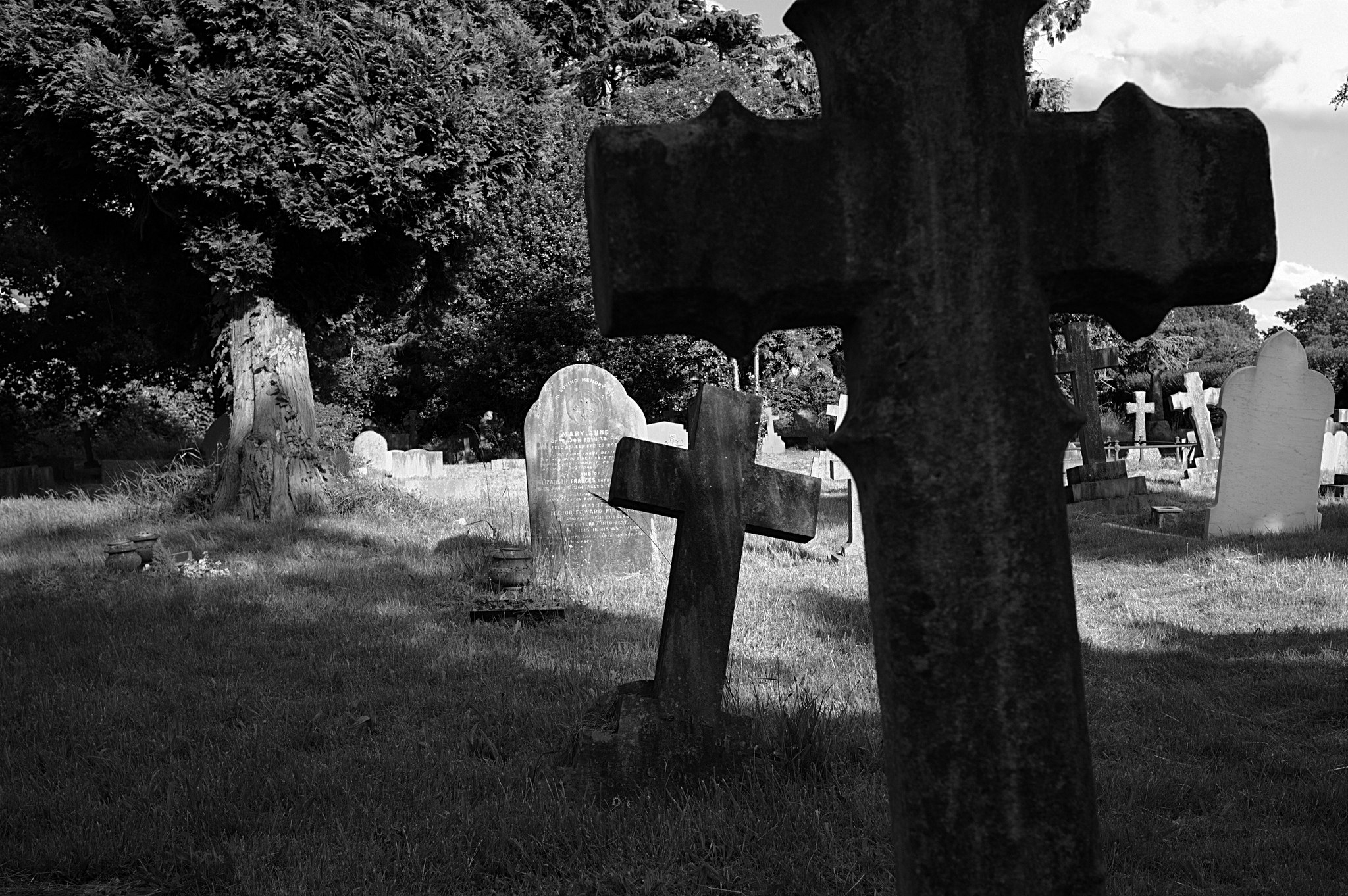
“The Unquiet Grave”:
“The wind doth blow today, my love,
And a few small drops of rain;
I never had but one true-love,
In cold grave she was lain.
“I’ll do as much for my true-love
As any young man may;
I’ll sit and mourn all at her grave
For a twelvemonth and a day.”
The twelvemonth and a day being up,
The dead began to speak:
“Oh who sits weeping on my grave,
And will not let me sleep?”
“‘Tis I, my love, sits on your grave,
And will not let you sleep;
For I crave one kiss of your clay-cold lips,
And that is all I seek.”
“You crave one kiss of my clay-cold lips;
But my breath smells earthy strong;
If you have one kiss of my clay-cold lips,
Your time will not be long.
“‘Tis down in yonder garden green,
Love, where we used to walk,
The finest flower that e’er was seen
Is withered to a stalk.
“The stalk is withered dry, my love,
So will our hearts decay;
So make yourself content, my love,
Till God calls you away.”
The Dish staff provides a lot of great fodder for the popular reader thread. Dish editor Matt writes:
What do you get when a country legend hits the studio with an aging punk star to record a Bob Marley song? You get this version of “Redemption Song” by Johnny Cash and The Clash’s Joe Strummer, found on the former’s posthumously-released collection of rarities, alternative takes, and covers, Unearthed:
While not as famous as Cash’s cover of “Hurt,” I’ve always loved this recording’s spiritual power, made all the more striking by the fact that both men would be dead by the time the world would hear it. It’s also a fitting song for these low-down times, a kind of protest song marked by Marley’s prophetic religion – and who better to sing about deliverance by “the hand of the Almighty” than a man with the voice of God?
If we’re going to talk about great cover songs, then we have to talk about jazz trio The Bad Plus. They include at least one cover on every album, using brilliant arrangements that are often distant departures from the source material. Notable examples include Black Sabbath’s Iron Man, Rush’s Tom Sawyer and Blondie’s Heart of Glass, but my favorite is their version of Vangelis’ Chariots Of Fire Theme (and I don’t even like the original song):
And while we’re on jazz, be sure to check out Brad Mehldau’s freakin’ incredible cover of Radiohead’s Paranoid Android.
Also, on the off chance anyone hasn’t mentioned it yet, this really popular podcast only plays covers and the few times I’ve listened to it I’ve been pretty impressed.
Wainwright and Cohen are now family, which is part of what makes the cover special, but it’s also a great song and cover. And Wainwright’s sparkly shirt in the video, also great.
And from Dish staffer Brian, a talented banjo player who performs around Brooklyn:
The overwhelming support for Jimi’s version of All Along the Watchtower provides an opportunity to point out that Hendrix had some of his own work reinvented in the bluegrass world. While we’ll never see the likes of Hendrix again, it could be argued that Jerry Douglas has done for the dobro what Jimi did for the Stratocaster:
Tony Rice’s cover of Norman Blake’s Church Street Blues speaks for itself. It’s probably my favorite thing on the internet, aside from the Dish:
And while we’re on the subject of bluegrass guitar covers, here’s Doc Watson shredding House of the Rising Sun:
Dish editor Jonah writes:
The piano reduction was the original cover song. It’s how Franz Liszt, the greatest pop star of the 19th century, covered Beethoven’s symphonies, and it’s how this anonymous YouTuber covers Radiohead’s “Paranoid Android”:
I stumbled across this video while searching for the better-known rendition by jazz pianist Brad Mehldau, but found that in some ways, I liked this one better. It’s a shorter, more approachable spin on Mehldau’s interpretation, albeit not quite as polished, and adds some flourishes that classical piano fans will appreciate. Plus, the bird’s eye view of the hands is a great way to watch a talented pianist in action.
Dish editor Jessie offers several great ones:
Ok, not exactly deep cuts here, but surprised no one’s mentioned: Tina & Ike covering CCR’s “Proud Mary”, Otis Redding covering the Rolling Stones “Satisfaction”, Devo doing the same, Aretha Franklin covering Otis Redding’s “Respect”:
… more Aretha Franklin covering “The Weight” by The Band, and Marvin Gaye covering Gladys Knight & the Pips’ “I Heard It Through The Grapevine.” And this guy:
And lastly, Dish editor Chris writes:
I’ve been responsible for curating the cover thread, so many of my own favorites are already mentioned. (And you can blame me for the bias towards Girl Talk and Cartman – though the Christopher Walken twist is even better.) But one great cover that I haven’t seen among the thousands of emails is Antony Hegarty’s tribute to Leonard Cohen’s “If It Be Your Will”:
I first heard that song in the Film Forum premiere of the Leonard Cohen documentary, I’m Your Man, whose soundtrack is a font of great covers, including the Wainwright one Phoebe mentions above. (Teddy Thompson’s take on “Tonight Will Be Fine” is another.) But circling back to Antony, if the goal is to jump genres, don’t miss his warbling rendition of Beyonce’s “Crazy In Love”:
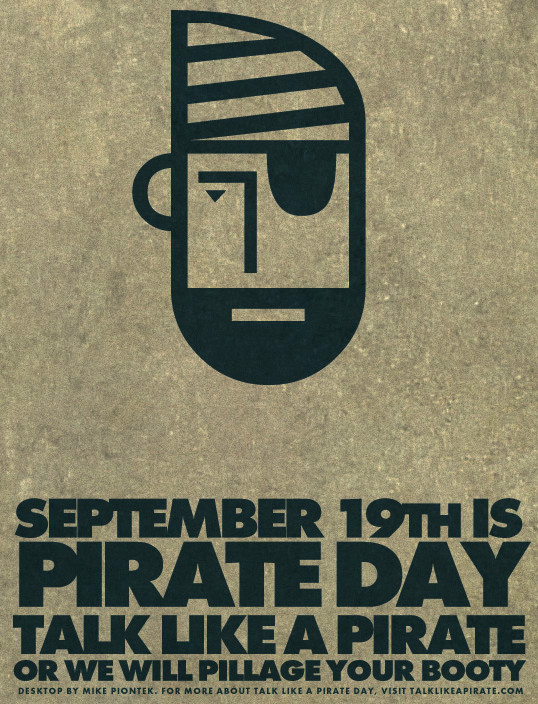
Micro-holidays, which teeter somewhere in the center of the continuum between universality and irrelevancy, are political. They do what all holidays will, in the end: convene our attention around a cause. But they are different from official holidays in one crucial way: They are opt-in.
In that, they are in some ways the temporized equivalent of all those “What Kind of Person Are You?” Internet quizzes, or of those “You Know You Grew Up in the ’90s” demolisticles: They’re about finding communities of like minds within the social chaos of the Internet. Every year, people will discover delightfully nerdy new ways to celebrate National Grammar Day – and they will do that in part because they are self-identified grammar nerds. Who are sharing a thing with other self-identified grammar nerds. The exchanging of grammar-mistake pet peeves and the starting of heated fights about the Oxford comma – some traditional ways of celebrating the day – say something about who they are as people. It says something, also, about what they want to share as people. It suggests the thing that has been true all along, but that the Internet is reminding us of anew: that being and sharing are often the same thing.