“We Are Of The World, After All”

Reviewing John Williams’ recently reissued novel, Augustus – which tells the story of the famed Roman Emperor whose rise to power began when he was adopted by Julius Caesar – Daniel Mendelsohn ponders what connects it to Williams’ other two novels – Stoner, about an English professor, and Butcher’s Crossing, a Western:

The main theme at play in all three of Williams’s mature novels is in fact rather larger: it’s the discovery that, as Stoner puts it to the mistress he must abandon for the sake of his family and his job, “we are of the world, after all.” All of Williams’s work is preoccupied by the way in which, whatever our characters or desires may be, the lives we end up with are the often unexpected products of the friction between us and the world itself—whether that world is nature or culture, the deceptively Edenic expanses of the Colorado Territory or the narrow halls of a state university, the carnage of a buffalo hunt or the proscriptions of the Roman Senate. At one point in Augustus a visitor to Rome asks Octavian’s boyhood tutor what the young leader is like, and the elderly Greek sage replies, “He will become what he will become, out of the force of his person and the accident of his fate.”

An inescapable and sober conclusion of all three novels is that the friction between “force of person” and “accident of fate” becomes, more often than not, erosion: a process that can blur the image we had of who we are, revealing in its place a stranger.

Beauty As Investment

Autumn Whitefield-Madrano muses:

The more I think about it, the more I wonder whether beauty work is coded similarly to other forms of inconspicuous consumption. Education is a prime example of inconspicuous consumption—higher education costs money, and while financial aid makes it possible for plenty of bright, poor high school seniors to go to Ivy League schools, you’re also unlikely to run across a whole lot of Rockefellers at the local community college. And going to the sort of schools where you do find Rockefellers gives you a level of cultural capital you’re going to have a harder time finding in other ways—you pick up on certain language patterns, cultural references, experiences, and fashions that mark you as having access to a certain social class, regardless of what your paycheck says.

Prestigious education is a long-term investment, in other words, and we understand such forms of investment as being correlated with wealth, even more so than we correlate it with being merely rich. (As Chris Rock puts it on wealthy vs. rich: “Here’s the difference: Shaq is rich. The white man who signs his checks is wealthy.”)

I don’t want to lapse into stereotypes about Upper East Side housewives with their plastic surgery and expensive hairdos. But the fact is, there is a marked difference in the faces of women walking down East 86th Street in Manhattan and 86th Street in Queens, you know? Wealth enables you not to buy expensive foundation, but to buy the kind of skin creams, personalized skin care and access to the world’s best dermatologists, and long-term know-how that enables a wealthy older woman to have the sort of look that marks her as a wealthy older woman. That is: Wealth enables you to treat beauty as a long-term investment.

Women At War

6a00d83451c45669e20168e767e500970c-800wi

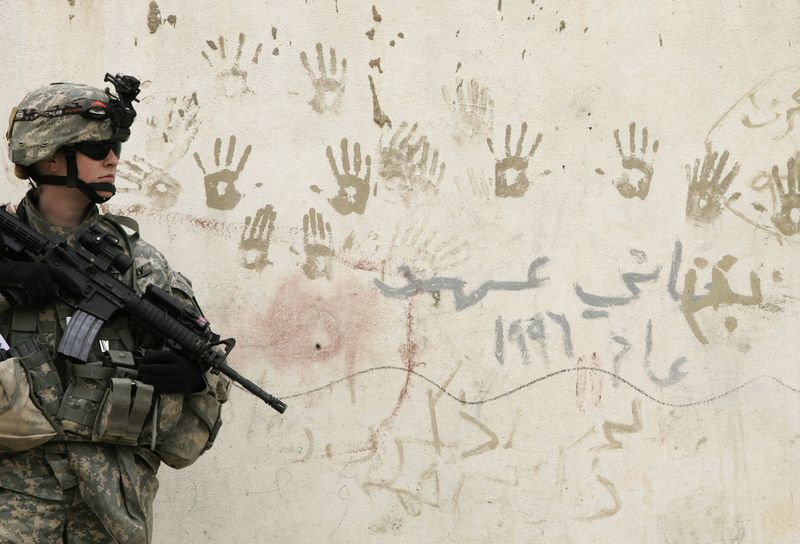
“The stories of women in war remain woefully undertold by journalists—as well as by the women who lived them,” writes Vanessa M. Gezari in a review of Helen Thorpe’s Soldier Girls. Gezari calls the book a “welcome corrective”:

The book follows three women serving in the Indiana National Guard through deployments in Iraq and Afghanistan—and, upon their return to Middle America, chronicles their difficult readjustments to civilian life. Thorpe’s narrative inevitably addresses large, systemic issues such as women’s changing roles in war and the ever-present danger of sexual assault. But her book is laudable for its clear focus on individuals and their idiosyncratic life stories. Her subjects are real women, sometimes likable, sometimes less so, who grapple with many of the challenges their male counterparts face, such as alcoholism and post-traumatic stress disorder. Thorpe’s subjects also struggle with more gender-specific dilemmas, such as reacclimating to motherhood after deployment and mollifying boyfriends who feel occasionally unnerved by the close bonds the women have formed with male soldiers who served alongside them. …

The three women at the heart of Thorpe’s story share a tender, familial bond that, like so much else in war literature, is generally ascribed to men. When Desma Brooks gets back from Afghanistan, neither her boyfriend nor her children greet her in the crowded gym filled with balloons and flags; instead, Michelle Fischer and another guardswoman have become her closest kin: “‘Let’s get the fuck out of here,’ Desma said. They drove to a hotel and they ordered take out food and they did nothing but watch movies on TV for two whole days.” This homecoming scene, short on conventional family sentiment, is an eloquent reminder of how women’s experiences are transforming military lore. Like the rest of the tale recounted in Soldier Girls, it also suggests how much of their story remains to be told.

Much more Dish on women in the military here.

(Photo: A US female soldier from Alpha Company, 2nd Battalion, 7th Cavalry Regiment secures the area during a joint house-to-house search operation between Iraqi and US forces, in the northern Iraqi city of Mosul, on April 15, 2007. By Mauricio Lima/AFP/Getty Images)

The View From Your Window Contest

VFYWC_216

You have until noon on Tuesday to guess it. City and/or state first, then country. Please put the location in the subject heading, along with any description within the email. If no one guesses the exact location, proximity counts.  Be sure to email entries to contest@andrewsullivan.com. Winner gets a free The View From Your Window book or two free gift subscriptions to the Dish. Have at it.

A Short Story For Saturday

Given that The New Yorker has made their archives, going back to 2007, available all summer, now seems like a good opportunity to dip into their fiction. Here’s the beginning of a short story they published in July of 2012, Junot Díaz’s “The Cheater’s Guide to Love“:

Your girl catches you cheating. (Well, actually she’s your fiancée, but hey, in a bit it so won’t matter.) She could have caught you with one sucia, she could have caught you with two, but because you’re a totally batshit cuero who never empties his e-mail trash can, she caught you with fifty! Sure, over a six-year period, but still. Fifty fucking girls? God damn! Maybe if you’d been engaged to a super-open-minded blanquita you could have survived it—but you’re not engaged to a super-open-minded blanquita. Your girl is a bad-ass salcedense who doesn’t believe in open anything; in fact, the one thing she warned you about, that she swore she would never forgive, was cheating. I’ll put a machete in you, she promised. And, of course, you swore you wouldn’t do it. You swore you wouldn’t. You swore you wouldn’t.

And you did.

Read the rest here. For more of Díaz’s work, check out his latest novel, This is How You Loser Her. Isaac Fitzgerald has a good round-up of New Yorker fiction you should read while their archives are open, including the above selection, here. Previous SSFSs here.

Can You Grin And Bear It?

David Berry gets to the root of our dentist phobia:

Most people’s fears have less to do with the cultural history of dentistry, though, than their own personal history. Sometimes that just means they’ve seen Marathon Man [see clip above], but usually it has to do with a bad experience in their past. Occasionally that means a botched procedure of some kind—true to the fascination of fear, people supposedly terrified of dentists can and do recount these experiences at some length while explaining their current discomfort… —but shame tends to be just as powerful a progenitor of dread. Phobics are not the most fabulously reliable self-reporters, but studies have suggested that up to half of even serious phobics, and more among the merely uncomfortable, have experienced nothing more traumatic than a dentist being a weapons-grade dick about how often they floss.

This is actually kind of a double-edged sword for dentists, insomuch as the longer you go without professional care, generally, the worse things get, and attempts to correct the behaviour can often just inflame the insecurity and fear. There are ways of getting you into the chair—most dentists are happy to provide either laughing gas or anti-anxiety medication, and some even specialize in just knocking you right out even for routine cleanings—but there isn’t really a way to make you floss regularly or show up ever again (at least if you’re only a dentist: cognitive behavioural therapy has been shown to be fairly effective…).

About the only saving grace to any of this is that, on the whole, people’s fear of dentists tends to decrease while they age. Although, going back to that shame thing, children are as a group less afraid of the dentist than middle-aged adults; it’s only once you start to reach retirement age that your fears begin to lessen.

For more, check out the delightful little Dish thread “Deranged Dentist Names“. Update from a reader:

Our current dentist is Dr. Pullen. In our previous city we never made it to the dentist, but the one recommended to us by our real-estate agent was a Dr. Grinder. Prior to that I went to a dentist who shared his name with a bruising right-wing for the Chicago Blackhawks, Brian Noonan, who in the early ’90s was often seen performing free amateur dental work on members of the Detroit Red Wings.

A Poem For Saturday

5602727271_57d1602d5a_b

Dish poetry editor Alice Quinn writes:

Twenty five years ago, the poet Nicholas Christopher edited an influential anthology featuring thirty seven poets who were then (as the title declared) Under 35: The New Generation of American Poets. In the years since, his talent for choosing poets whose work would grow increasingly important has been roundly confirmed.  It was there that I was introduced to the wit, gravity, and highly individualistic slant of the work of Vijay Seshadri, America’s newest Pulitzer Prize winner in Poetry.

Summer often turns our thoughts and hearts to love. We’ll feature some love poems from this landmark book in the days ahead, beginning with Seshadri’s poem dedicated to his wife Suzanne Khuri.

“My Esmeralda” by Vijay Seshadri:

 for S.O.K.

Some people like each other and are therefore like each other,
but I like you and therefore I’m
so original a burden on my time
that all the lifeguards ring their bells
when I rise from my exclusive underneath
to wash in your England of seaside hotels,

climb my perch and send off, over the panorama
of what’s most yours—those glowing herds
of prehistoric bison, sunk in clear light
up to the eyes, browsing elsewhere
extinct skyhigh ferns—
my messenger birds,
speckled and superfine,
to soar the asymptotic line
that touches you at infinity. Big mama!

Not once in any of the meretricious annals
I’m forced to read, have I read
of you, nor through the maps
I have to make sense of
have I ever watched you pass.
Among words, you’re the meaning of ‘glass,’
and you as a river will cut your own channels.

(From Wild Kingdom © 1996 by Vijay Seshadri. Reprinted with permission of Graywolf Press. Photo of the town of Hastings, on the English coast, by Luton Anderson)

Perceiving The Kindness Of Strangers

dish_faces

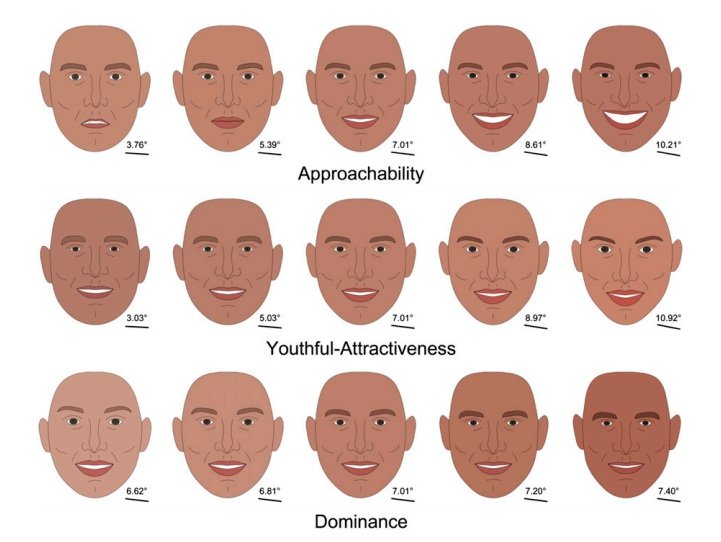
A new study investigated how facial features play into our initial social judgments:

Each subject rated the faces on most-to-least scales for 16 traits, such as attractiveness and trustworthiness. The social traits were then evaluated in terms of three measures: approachability, youthful attractiveness and dominance.

For approachability, facial features concerning the mouth, such as mouth shape, were the most important. As seen in the image of model-generated faces (above), the corners of the mouth point slightly downward in the less approachable faces and turn upward in the visages that were scored as more approachable. …

In terms of youthfulness and attractiveness, characteristics of the eye and eyebrows were most strongly linked with the measure. For example, in the illustration above, the face farthest to the right features larger eyes and eyebrows with a more dramatic arch. As for dominance, that measure was most associated with facial features that may be construed as stereotypically masculine.

The study’s lead researcher, Dr. Tom Harley, is cautious about the results:

“Lots of the features of the face tend to vary together,” he explained. “So it’s very difficult for us to pin down with certainty that a given feature of the face is contributing to a certain social impression.”

There are some obvious trends however – including the tendency for masculine faces to be perceived as dominant, or for a broadly smiling face to seem more approachable and trustworthy. This points to a potentially worrying implication: brief facial expressions can make a big difference to how we are received by strangers.

“It might be problematic if we’re forming these kind of judgements based on these rather fleeting impressions,” Dr Hartley said, “particularly in today’s world where we only might see one picture of a face, on social media, and have to form our impression based on that.”

It’s So Hard Playing Famous

Alex Pappademas, whose “tolerance for Kardashian-related bullshit is pretty much limitless,” describes playing the mobile game Kim Kardashian: Hollywood. “If this game were a person it would be a horrible sociopath,” he concludes, explaining that gameplay led him to question notions of work ethic:

Although she recorded voice-overs for her avatar (“Bible — I love that on you!”), it’s unclear how involved Kim Kardashian was with the conceptualization of this game. But the gameplay itself is an extension of the compensatory mythology of hard work that the Ks have created around their body of industrious nonwork. About once per Keeping Up With the Kardashians episode, you will hear one of the Ks use the word “work” to describe activities (having their photograph taken, drinking iced coffee while walking around a potential retail space, looking at pictures of bathing suits and saying “super cute”) that no one who actually works at a job, even an easy job, would refer to as such. I love the Kardashians and I believe they’ve sustained themselves as famous people through resourcefulness and even personal sacrifice, but them saying the word “work” is always, always funny to me. They need to come up with another word to describe what they do, like “gork.” A hypothetical Khloe quote from a world where this is the case: “I’ve just really been trying to focus on gork.”

So the Kardashian game isn’t just about providing you and me with the opportunity to vicariously live the life of a professional celebrity.

It’s propaganda designed to remind us at every turn that the life of a professional celebrity isn’t easy. That it takes gork. The most important resource in the Kardashian game isn’t fake money or the sparkly “K” stars you accumulate for successfully completing a mission; it’s “energy,” represented by little Gatorade-blue lightning bolts. Every task you do in a professional context in the game takes energy, even “Grab a drink,” which, strictly speaking, isn’t even a task.

Jessica Winter is on board:

That is the genius of Kim Kardashian: Hollywood: It perfectly captures the hollow-eyed compliant monotony of the very lifestyle it’s espousing. You absorb its value system into your bloodstream on contact.

The first big dilemma my avatar faced was deciding whether or not to spend precious Adderall-bolts of energy flirting with a D-list social worker at an overlit and underpopulated party (I didn’t, and shall therefore never know if he was the nephew of a TV executive). Her first major regret was leaving a big tip for a bartender on the hunch that he had “information” (he did not, because he was just a lowly bartender). After a few hours of play, you start to understand how, if you’d been forged in this crucible like Kim and her sisters, you, too, might have turned out just like these sad, tiny people inside your phone. In miniaturizing and cartoon-izing Kim Kardashian and her brethren, KK:H renders them as less cartoonish and more empathetic than they seem in real life. Making millions to stand around doing nothing, saying nothing, thinking nothing—it’s harder than it looks.