Cruz Missile Shoots Down Border Bill

The House’s modest emergency spending bill to address the child migrant crisis was scuttled yesterday after the GOP leadership failed to convince the Tea Party caucus to vote for it. I harrumphed about it last night. Cillizza breaks down how it happened, for anyone who can’t already guess:

The failure of the GOP leadership’s immigration solution fits a now-familiar pattern for congressional Republicans. Led by Boehner, the party’s top brass fight with President Obama on the parameters of a legislative solution to a problem in the country.  In hopes of answering the “do nothing” charges leveled at them by Democrats, those same GOP leaders put a proposal on the table that offers a handful of concessions but nowhere near the number the White House is demanding. The tea party faction in the House — led by Sen. Ted Cruz (yes, you read that right) — balks, demanding that the GOP make no concessions of any sort to the president. The party leaders whip support for the bill but, ultimately, find that 20 (or so) of their conference will not be for it under any circumstances. That means Boehner either has to a) pass legislation with Democratic votes or b) pull proposals off the House floor to avoid embarrassing losses.

The issues change — tax increases, immigration, the farm bill and so on and so forth — but the underlying reality remains the same: House Republicans simply cannot be led.

Chait, too, has seen this show before:

The House is a highly autocratic chamber that traditionally passes basically anything the leadership of its majority party wants to pass. The Tea Party has changed all that, by bringing to Washington a large enough bloc of Republicans who don’t want to vote for anything that they can bring down even bills that are far too conservative to be passed into law. That’s why House Republicans have had to pull bills to lift the debt ceilingextend tax cutsextend farm subsidies, and reopen the government. In Boehner’s House, failure is always an option.

This particular bill pitted the GOP’s desire to actually stop waves of illegal immigration children from streaming across the border — theoretically a point of bipartisan agreement — against their distrust of Obama in particular and legislation in general. Republicans dealt with the problem, as they often do, by crafting the most conservative possible bill — thus losing all Democratic support — yet still not often to win support from enough Republicans.

Vinik looks at the role Cruz played:

Since his election in 2012, Cruz has angered a number of his Senate colleagues. He was the architect of the “defund Obamacare” movement last year that ended in a politically toxic government shutdown and eventual Republican capitulation. In February, Cruz forced some of his Republican colleagues to take a politically-damaging vote to raise the debt ceiling. In all of these situations, Cruz has been focused on his own political future, staking out a position as far to the right as he can. He didn’t care that his antics damaged the party. They were good for Ted Cruzand that’s what mattered.

That’s what happened again on Thursday with the House GOP’s bill to address the border crisis. And it’s going to continue happening in the future, particularly on immigration-related issues where Cruz has always taken a hard line position.

Ben Jacobs remarks on what a blow this is to the party leadership:

The failure of the vote, which comes just before Congress’s August recess, means it is unlikely that any additional funds will be allocated to deal with the border crisis until September at the earliest—and also signals the official death of the Senate comprehensive immigration reform bill. It also marks yet another political defeat for Boehner and House leadership in what was the first test of new Majority Whip Steve Scalise, who recently took over the position when former Whip Kevin McCarthy ascended to Majority Leader. McCarthy replaced Eric Cantor, who stepped down after losing his primary last month to anti-immigration candidate Dave Brat.

Scalise, as whip, is responsible for party discipline and making sure that Boehner has an accurate sense of how many votes he has within the GOP caucus on a particular bill. This was the first controversial vote that the Louisiana conservative had to organize Republicans for in his new position, and it’s clear that he wasn’t able to rally as much support among GOP backbenchers as he initially thought.

After the bill failed, Boehner and his deputies suggested that the president take executive action on the crisis instead, which was pure political gold for Democrats, and pretty rich at that:

Democrats got plenty of yuks out of the House GOP’s response to the failure. In a joint statement, the party’s four House leaders attempts to move blame and the buck back over to Barack Obama. “There are numerous steps the president can and should be taking right now, without the need for congressional action,” they wrote, “to secure our borders and ensure these children are returned swiftly and safely to their countries.” Faiz Shakir, an adviser for Harry Reid, immediately tweeted the punchline: “The same people who are suing the president for taking exec action are calling on him to take exec action.” A little cute, maybe, but for the umpteenth time—the first day of a new leadership team!—the House GOP leadership has stepped on a rake.

Noah Rothman is disappointed for reasons of politics, not policy:

Lacking the authority to resolve the border crisis on their own, the House GOP sought an advantageous position for the summer in order to put the onus back on the president. That effort failed and, unless the House Republicans’ emergency scramble to craft and pass some border measure is fruitful, GOP members will spend the summer explaining to the press why they did nothing on a “crisis” but were perfectly united when it came to suing the president. And the average Democratic base voter will be that much more energized for it. …

This was an unforced error. One which serves to elevate the careers of a few while diminishing the party’s overall chances for success in November. The House Republicans may yet correct this mistake, and the damage might be mitigated if they do. But if they do not, this is going to be one long August recess.

But the Bloomberg View editors refocus on the fact that the child migrant crisis is, y’know, a crisis:

The protection of refugees — legitimate and otherwise — is both a moral crisis and a policy challenge. These children are a genuine strain on the immigration system, and adjudicating their cases will cost money. At the same time, many have fled violence and deserve a chance to make their case for asylum. Meanwhile, House leaders have delayed a planned recess, in the apparent hope that they can still achieve the goal of appearing to do something. When members return, Election Day will be that much closer. It’s not easy to imagine that this Congress could reach new lows. But it may.

Best Cover Song Ever?

The contest keeps going and going:

I hope I’m not too late for this one. My nomination is Wilson Pickett‘s cover (with Duane Allman) of the Beatles’ “Hey Jude”:

Normally, I’m a Beatles purist – the idea of a cover simply offended me. Why mess with perfection? Then I heard the Pickett cover on the radio a few months ago and I’ve been totally hooked. Dare I say he “made it better” by speeding up the tempo and getting rid of the “na-na-na-na’s,” which can get tiresome. The horn section that replaces the latter section along with Allman’s guitar riffs transport the song to another dimension.

Another points out, “The Pickett/Allman cover is merely great until about the 2:40 mark, when the two of them decide to put the accelerator to the floor.” Several more submissions after the jump:

The Clash did some amazing reggae covers, especially “Police and Thieves“:

Another throws a curveball:

Miley Cyrus cover of Dylan’s “You’re Gonna Make Me Lonesome When You Go“. She might be batshit crazy, but man if she isn’t an incredibly talented and versatile singer:

Another panders:

You can go ahead and end the contest now (I’ll take a white polo, size small), because I have by far the best cover song of all time.  I nominate Pet Shop Boys’ “Always On My Mind”, a song previously covered by Elvis Presley and Willie Nelson, among many others:

I have to say though, the Pet Shop Boys version is definitely the best one out there and there is no way you won’t declare this one a winner. Plus, this music video is just wonderful with a hilarious performance by Joss Ackland.

It’s hard to beat that Willie version.

Who Wants To Tell A Kid He’s Fat?

Not pediatricians, according to Russell Saunders, who admits, “I absolutely hate talking to patients about being overweight”:

Reading the results of a new study from the Centers for Disease Control (PDF), I couldn’t help but wonder if other medical providers are even more reluctant to talk about weight with their patients than I am. Using survey data collected from children ages 8-15 from 2005-2012, the study finds that roughly a third of children and adolescents misperceive their body status. Only 23 percent of overweight children knew they were heavier than was healthy, and 41 percent of obese respondents thought their weight was about right. …

When overweight children are roughly similar in appearance to many of their peers, it takes someone telling them their weight is unhealthy for them to realize it. Though the study does not report on the reasons for the rate of body status misperception among overweight children, I strongly suspect it’s that those conversations simply aren’t happening. Further, I suspect they’re not happening because they are so challenging. Trying to tell little girls and boys that their weight is too high without making them feel bad about themselves or their appearance is a daunting task. It’s relatively easy to give across-the-board recommendations about what comprises a healthy diet and getting enough physical activity. Discussing what changes a specific child might need to make to get back into a healthy weight range is trickier, and clearly isn’t happening nearly as often as it needs to be.

As important as fostering self-esteem in children is, medical providers cannot be so afraid of damaging it that they sidestep sensitive but clear conversations with patients and their parents when the child’s weight is unhealthily high.

One medical provider who doesn’t have such qualms:

Killing Them Loudly

Joe Zadeh explores the history of sound as a weapon of war:

The incorporation of sound into warfare may sound like a modern tactic, but the first reports have their roots in history. Back in 1944, as World War II slipped through Germany’s fingertips, it was rumoured that Hitler’s chief architect Albert Speer had set up research to explore his own theories of sonic warfare, with the intention of creating tools of death. An episode of  the History Channel’s Weird Weapons claimed that his device, dubbed an acoustic cannon, was intended to work by igniting a mixture of methane and oxygen in a resonant chamber, and could create a series of over 1,000 explosions per second.

This sent out a deafening and focused beam of sound which was magnified by huge parabolic reflector dishes. The idea, apparently, was that by repeatedly compressing and releasing particular organs in the human body, the cannon could potentially kill someone standing within a 100-yard radius in around thirty seconds. Fortunately, the weapon was never actually used in battle. The actual volume of sound frequency isn’t the only way sound has been used in war. In his  2009 book Sonic Warfare, a key body of research in the understanding of contemporary sonic thought, Goodman included a chapter titled “Project Jericho,” which explored the US PSYOPS campaigns during the Vietnam War. Goodman described a particular campaign known as Operation Wandering Soul. The Curdler, a helicopter-mounted sonic device, produced the “voodoo effects of Wandering Soul, in which haunting sounds said to represent the souls of the dead were played in order to perturb the superstitious snipers, who, while recognizing the artificial source of the wailing noises, could not help but dread what they were hearing was a premonition of their own postdeath dislocated soul.”

The Best Place To Weather Climate Change

Cliff Mass nominates the Pacific Northwest:

  • Temperatures will rise more slowly than most of the nation due to the Pacific Ocean …
  • We will have plenty of precipitation, although the amount falling as snow will decline (will fall as rain instead).  But we can deal with that by building more reservoir and dam capacity (and some folks on the eastern slopes of the Cascades have proposed to do exactly that).
  • The Pacific Ocean will keep heat waves in check and we don’t get hurricanes.
  • Sea level rise is less of a problem for us due to our substantial terrain and the general elevation rise of our shorelines.  Furthermore, some of our land is actually RISING relatively to the sea level because we are still recovering from the last ice age (the heavy ice sheets pushed the land down and now it is still rebounding)
  • There is no indication that our major storms…cyclone-based winds (like the Columbus Day Storm)… will increase under global warming.
  • Increased precipitation may produce more flooding, but that will be limited to river valleys and can be planned for with better river management and zoning.

(Hat tip: Ted Alvarez)

Chart Of The Day

Wealth Gap

Josh Marshall highlights a depressing one:

The chart illustrates a pattern that most of us probably do not find surprising. But the sheer chasm separating single white men from Black and Hispanic single women is still shocking to see visualized so clearly. Single white men have 438 times the assets as single Black women and 365 times that of single Hispanic women. As we can see, marriage is a huge determinant of wealth – but mainly if you’re not white, and especially if you’re a woman.

Note that the chart provides data for wealth with and without vehicles (in most cases, cars). Here I’ve referenced the latter statistic. As the report notes, owning a car is an important way to access more employment opportunities among other things. But that wealth is not easily accessible in dollar terms, which is highly relevant for the following reason. Great disparities of wealth not only have a huge impact on life opportunities and the prospects for wealth accumulation. They are hugely important factor in the precariousness of economic life experienced by different demographic groups.

Kurdistan’s Petro-Politics

The US has been pressuring governments and private companies not to buy Kurdish oil, out of fear that oil sales will make it easier for the Kurdistan Regional Government to declare independence from Iraq. But this strategy, Dov Friedman posits, is actually having the opposite of its intended effect:

The U.S.’s logic is clear. KRG oil sales provide the Kurds a financial base with which to stabilize a potential fledging independent state. If the Kurds are unable to sell oil, they will have to parlay with Baghdad to solve the budgetary dispute. However, the U.S. misjudges the Kurdsboth their likely steps after independent oil sales and their response to interference with oil revenues. Distinct Kurdish oil sales have always been more likely to bring the KRG to the Iraqi bargaining table. They seek concessions from the central government, and the threat posed by independent revenue streams may be more valuable than the ability to declare national independence.

First, Kurdistan benefits greatly from its access to the greater Iraqi market.

Kurdish businesses of all sizes are bolstered by a market size of 30 million people, and these businesses would suffer from an independence bid thatat least in the near termslashed the market size by five-sixths. A fledgling independent Kurdistan with a hobbled private sector would rely even more heavily on oil revenuesintensifying the oil-fueled Dutch disease and jeopardizing the nascent country’s economic health.

Second, the Kurds have historicallyand to this daylooked for opportunities to strike bargains with their Arab co-nationalists to the south. … Once in control of Kirkuk’s oil establishments, the KRG initially demanded an increase in its share of the national budget from 17 to 25 percent, to account for increases in the population servedand energy resources controlledby the KRG. Having just taken control of one of the largest, highest quality oil fields in the world, the Kurds spoke not of an independence bid but of renegotiating terms with Baghdad.

Previous Dish on the prospects for Kurdish independence here.

The STD We Snicker At

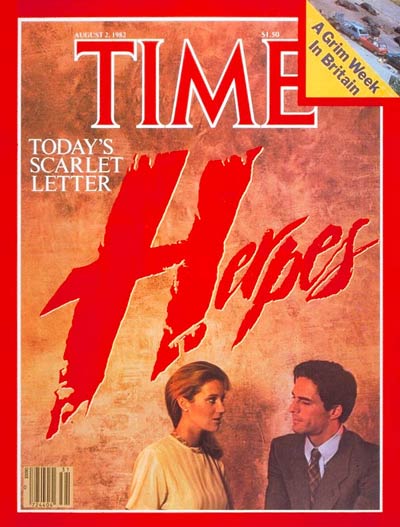
Jon Fortenbury resents herpes’ reputation as both shameful condition and punchline:

Herpes has a unique stigma among sexually transmitted diseases. HIV/AIDS is stigmatized, but few laugh at people who have it because it’s a serious illness. HPV can lead to cancer, on occasion, and women get tested TIme Herpesregularly for it, making it no joke to most. Chlamydia, syphilis, crabs, scabies, and gonorrhea are sometimes the target of jokes, but these STDS are typically curable, so people won’t have to endure the annoyance for too long. Genital herpes, though, isn’t curable, is thought of as a disease only the promiscuous and cheating-types get, and is a popular joke topic.

Despite the fact that herpes has been around since the time of the Ancient Greeks, according to Stanford University, the widespread stigma seems to be just decades old. …  [F]ilm and TV no doubt keep it alive. Leah Berkenwald pointed out in an article for Scarleteen that almost every Judd Apatow movie includes a joke about herpes. Living Sphere has a large list of films, TV shows, and books that mention genital herpes, with many of the films and TV shows poking fun at people who have it. Sometimes the jokes directly suggest people with genital herpes are whores or cheaters or they indirectly make the connection, such as the classic Hangover line, “What happens in Vegas, stays in Vegas. Except for herpes.”

Update from a reader:

As your friend Dan Savage would attest, herpes is shameful only to Americans. Justine Henin, when she was the #1 tennis player on the world, was asked why she lost a match. She very matter of factly said she had a herpes outbreak. Americans attend support groups for herpes, can you imagine an American treating herpes like the flu, something you have, not something to be ashamed of?

Another:

Reader and subscriber here. In your post about herpes, you quoted another reader who argued that “herpes” is not a shameful condition in Europe, since “Justine Henin, when she was the #1 tennis player on the world, was asked why she lost a match. She very matter of factly said she had a herpes outbreak.”

A common misconception. Americans call herpes on the lips ‘cold sores’, reserving the term ‘herpes’ only for genital herpes. Most Europeans don’t – they call the lip blisters herpes too, since they’re caused by a herpes virus. So Henin was almost certainly talking about an outbreak of cold sores, not a sexually-transmitted disease. If you type the word ‘herpes’ into European google, you will get 98% links to cold-sore treatments. I can assure you that the attitude toward genital herpes in Europe is not very different from that in America.

(Image from Time’s Aug. 2, 1982 issue)

The Ever-Expanding Novel

Jeremy Anderberg notes that the average “popular and prize-winning novel” has consistently passed the 400-page mark for the past 40 years, while the average turn-of-the-century read was nearly half that length. He speculates:

I think it’s largely the changing nature of consumers. Hardcover books are often expensive, regardless of length. As a consumer, I almost instinctively buy paper books that are meatier, because I feel like I’m getting my money’s worth. It’s also never been easier to lug around huge books with us at all times in our digital devices, so why not make ‘em longer. A publisher a hundred years ago might have scoffed at the cost of printing a long book, but now with e-books, the cost of publishing a 1,000-page book vs. a 150-page book is virtually the same (obviously it’s still different with print versions…).

Our lifestyle may also play a part. This is completely just conjecture, so bear with me. We, as a people, are far more sedentary than we were a hundred years ago. Does our tendency to sit on the couch for more and more hours a day play a part in how we consume media? Absolutely. Look at the phenomenon of Netflix binge watching. Could the same effect take place with books? We are into bingeing our media, and the bigger the binge the better, so we eat our hearts out with giant books that can completely remove us from reality and how sedentary we really are. If books were shorter, our escapes from reality wouldn’t last so long.

The Best Of The Dish Today

This embed is invalid

The articles Lisa Goldman refers to above are as follows: “Beautiful Dream of Israel Has Become A Nightmare” by Gabor Mate; Liberal Zionism After Gaza, and The Liberal Zionists, by Jonathan Freedland; and Zionism And Its Discontents, by Roger Cohen. Here’s another decent human being and a friend, the legendary newsman, Jon Snow:

We can all heave a sigh of relief that a humanitarian cease-fire appears to be imminent.

On another matter related to the welfare of stranded children, I’m trying to get something straight. For the last couple of months, the right-wing noise machine has described the surge of refugee children at the border as a crisis of Biblical proportions. They have also excoriated all of president Obama’s executive actions on immigration. So now, after dismissing Obama’s request for $3.7 billion to deal with the refugee children, they cannot pass a bill to authorize even $659 million to take care of the crisis. And what do they urge president Obama to do instead? To take executive action to handle it! I swear I am not making this up. In Boehner’s words:

There are numerous steps the president can and should be taking right now, without the need for congressional action, to secure our borders and ensure these children are returned swiftly and safely to their countries.

So, yes, the president is once again damned if he does use his executive powers and damned if he doesn’t. And the Republican Congress has shown that it can pass nothing – even in the midst of what it has described as an epic crisis – because it is so divided within itself. The idea that these shambolic excuses for legislators should actually be rewarded with more seats this fall tells you something is deeply awry with the political system. This is a party fit for cable news and not for government.

Today, I engaged my friend Sam Harris on Israel, Hamas and Jihadism; noted new shifts in the Israel debate – not in Israel’s favor; had a frank and frisky conversation with Rich Juzwiak about sex, gay men and the Truvada future; and marveled once again at the seriously unsafe sex life of the octopus.

The most popular post of the day was Why Sam Harris Won’t Criticize Israel; followed by Deep Dish’s Andrew Asks Anything: Rich Juzwiak.

Many of today’s posts were updated with your emails – read them all here.  You can always leave your unfiltered comments at our Facebook page and @sullydish. 23 more readers became subscribers today to make our running total 29,843 – so close to 30,000 we can smell it. You can help us get there by subscribing instantly here – and get access to all the readons and Deep Dish – for a little as $1.99 month. Gift subscriptions are available here. Dish t-shirts and polos are for sale here. One new customer writes:

I have been a reader for longer than I can remember and an early subscriber, but I have never written in before. I enjoy reading the debate without ever feeling a need to jump in and add my views.  However, with the excitement of buying a polo, I couldn’t help myself.  We are meant to be on a strict budget at the moment, due to building work at home and holidays, but the suggestion that the next batch of shirts may not be such good quality has forced my hand – quite happily I should add.  I look forward to being able to proudly wear my polo around Seattle and being able to identify myself to those in the know.

Keep up the good work please.  The blog is great and goes from strength to strength.

See you in the morning.