The Appeal Of Brokeback Homos

Now science has stumbled upon it:

In the December issue of the journal Archives of Pediatric and Adolescent Medicine, Bulgarian doctors report results of a 6,200-boy survey showing “a modest though significant difference … with respect to penile size between urban and rural populations.” Country boys were born with longer ones and the disparity continued as the boys grew.

(Hat tip: Dodai Stewart)

The Courage To Speak Truth

Mark Vernon salutes and compares the recently passed Reverend Colin Slee and Christopher Hitchens:

What both men have, or had, is a kind of personal, as opposed to political, freedom – an inner freedom that allows them to speak of what they see to be true. It's a great gift and stands out, I guess, not just because of the courage it requires, but because of another rare quality both have displayed: clear convictions about what is good and true. (This is not the same as having clear convictions about what is bad and false, an easier set of opinions to hold. You also have to be prepared to take the risks of being proven wrong.)

Harry Potter: The Aristocrat

Elizabeth Minkel takes issue with Maria Bustillos’s take on class in the Harry Potter series, and this sentence in particular:

It is a horrible thing to be teaching children, that you have to be ‘chosen’; that the highest places in this world are gained by celestial fiat, rather than by working out how to get there yourself and then busting tail until you succeed.

Minkel rebuts:

My only serious qualm with the article is its conclusion, because for all of the moralizing, the only prescription seems to be, ‘Yank that Potter book out of your child’s hands and give them something by Philip Pullman.’ It feels tacked on—Pullman is championed without enough explanation—and it left me wondering how Bustillo feels about just about every other work of British children’s literature, fantasy or otherwise, reflections of a society in which class is an entrenched construction.

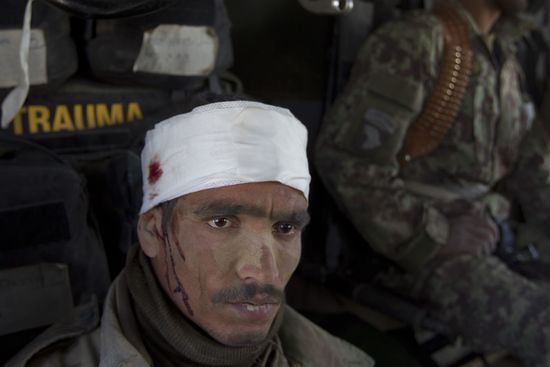
Face Of The Day

KANDAHARPaulaBronstein:Getty

Wounded Afghan National Army (ANA) soldiers on board a Blackhawk UH-60A helicopter are transported to a local hospital during an air mission in Kandahar December 12, 2010 in Kandahar province, Afghanistan. According to sources a large Improvised Explosive device (I.E.D) caused casualties amongst both U.S and A.N.A forces as well as over a dozen wounded. The horrible story can be read here. It appears that six US soldiers were killed. Tyler Hicks has an amazing slide-show of the horror here. This haunting image by Paula Bronstein /Getty Images.

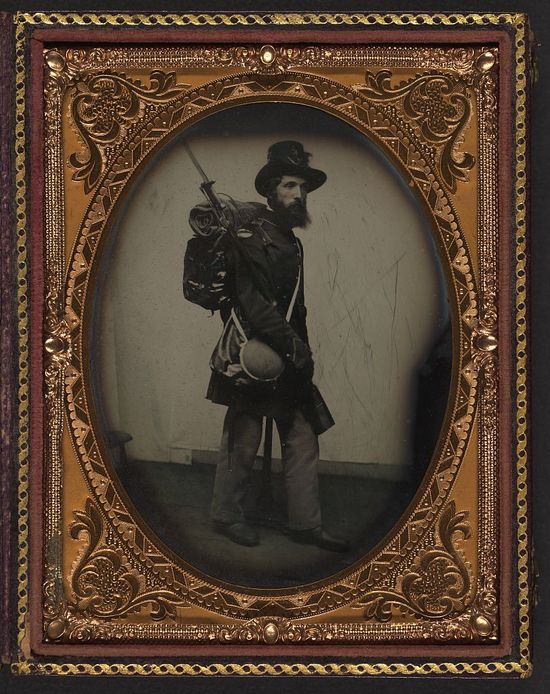
We’re All Archivists Now

5229147884_3ed1105559_o

Alexis Madrigal responds to the release of  700 Civil War portraits from The Library of Congress and sees the bigger picture:

The digital age continues to refashion what we want and expect from our cultural preservationists. The vaults at places like the Library of Congress and Smithsonian have long contained far more than could be displayed or appreciated in physical space. Curators cut a narrow path through all that information; they told tell stories. That part of the job hasn't gone away, but now we also want to be able to tell our own stories.

Cultural preservation institutions now have to enable a much broader group of individuals to use their collections, not just professionals and dedicated researchers. And I love that the Library of Congress and other repositories of knowledge are beginning to open their archives to us digital travelers.

(Image of Private Albert H. Davis of Company K, 6th New Hampshire Infantry Regiment from between 1861 and 1865)

The Authorial Mask

Jonathan Franzen describes how he used his own experiences to fuel his writing:

What made direct revelation impossible was partly my sense of shame and partly a wish to protect third parties, but it was mostly because the material was so hot that it deformed the writing whenever I came at it directly. And so, layer by layer, I built up the masks. Like with papier-mâché, strip after strip, molding ever more lifelike features, in order to perform the otherwise unperformable personal drama.

Over at the Book Bench, Macy Halford watches Franzen on Oprah and reports back: "oy."

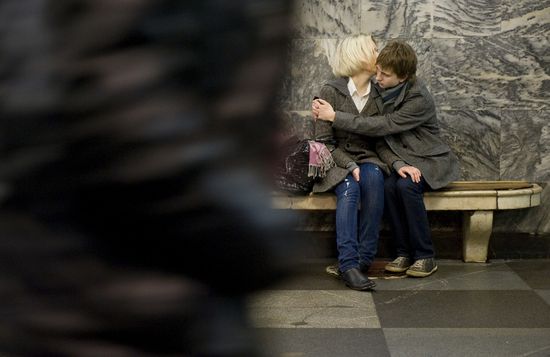
Confessions Of A Cuddler

BUNDLENataliaKolesnikova:Getty

Dave Johns explores his own propensities for snuggling, what it says about masculinity, and our long national battle with the non-sexual cuddle:

In fact, this very conundrum weighed on the minds of certain early American purity experts—the Puritans—who practiced an odd form of nonsexual snuggling known as "bundling." Bundling occurred when a courting young man wound up at his love interest's home in the evening, and was invited to spend the night in bed with her. They were given separate blankets, and sometimes placed on either side of a "bundling board" that ran along the mattress from head to toe, so as to impede hanky-panky. If the bundling board did yield, and pregnancy occurred, the couple was expected to marry.

The British mocked bundling as a tawdry American tradition, but in fact there is evidence it came from Europe and was practiced from Britain to Holland to Switzerland, perhaps dating as far back as Roman times.

(Photo: A young Russian couple embraces while waiting for a train at a metro station in Moscow on February 4, 2010. By Natalia Kolesnikova/AFP/Getty.)