Brendan Tapley has written one of the stranger defenses of DADT:
As recently as 100 years ago, men talked about their love for each other freely. In fact, the desire for intimate fraternity was considered more than just normal for a male life; it was believed to be essential. Men acted on this desire without fearing prejudice or ridicule. Here's a fairly common example from the 1830s, taken from the journal of Albert Dodd, a Yale student, about his friend John:
"I regard him, I esteem, I love him more than all the rest… it is not friendship merely which I feel for him, or it is friendship of the strongest kind. It is heart-felt, a manly, a pure, deep, and fervent love."
As open homosexuality emerged, however, it became masculinity's foil, its antithesis. Men grew skittish about wanting to express sentiments like Dodd's or participate in environments where fraternization was now equated with gayness. And so men stopped acting on their fraternal impulses, in spite of the fact that they did not go away. In fact, quite the opposite happened: The fear of being gay, effeminate, the anti-male—take your pick—has created a more intense, if repressed, longing in men to find and experience those rare environments where men can be close to other men without "forfeiting" their masculinity.
Tapley later claims that repealing DADT "threatens this [sort of brotherhood] because in bringing even a hint of homosexuality into this community, a man must once more lead that paranoid, self-conscious existence."
I sympathize with Tapley's general point, but think he's gotten things exactly the wrong way round. Yes, when categories such as homosexuality and heterosexuality did not exist, a kind of exuberant, 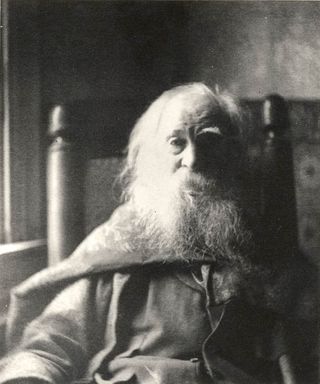 manly affection was more possible – and benefited everyone. But just because those categories did not exist in the public consciousness doesn't mean that homosexuality didn't exist at all. It just meant that this kind of male-bonding was premised on gays' lying about who they were – with all the Brokeback pain and deception and mixed messages that entailed.
So how to regain male intimacy without the "taint" of homosexuality, while accepting that the closet has been effectively abolished? I don't think artificially recreating the closet via fantasies like DADT is an answer. The answer is to have more interaction and honesty between openly gay men and straight men, and a willingness to move past these boundaries to areas where male bonding is perfectly possible.
It's possible, in my view, because gender is much more powerful a force than orientation – and because homosexuality spans the gamut of behavior, from hyper-feminine to hyper-masculine and every variety in between. Those gay men able and willing to bond with straight guys – even while joking about their own gayness – are perfectly capable of this kind of camaraderie. That's especially true in the military. It's how you can come up with a quote like the classic from the Pentagon report:
“We have a gay guy [in the unit]. He’s big, he’s mean, and he kills lots of bad guys. No one cared that he was gay.”
And once you acknowledge it and don't care about it, that heartfelt, manly love becomes possible again – but on the basis of reality and candor, not oppression and deceit.
I know the transition can be tough. But I'm equally sure it's doable. A dose of self-deprecating humor on both sides is particularly helpful in this respect.
The hope is that the great exception to the reality of more publicly embraced and appreciated male-male love will one day be seen as the era we have just gone through – in which homosexuality was uniquely both recognized as a category and stigmatized. We cannot remove the category because it is true and cannot be unthought. But we can remove the stigma if we want to return to a more durable and honest form of the nineteenth century homosociality. Remove the prejudice, add a little discretion, mix in an amount of deference to majority straight culture, and we can all move forward – in sports, the workplace, and the military. As, in fact, we already have.
(Photo: Walt Whitman by Thomas Eakins, 1891.)

 The Dish