Rooting Out The Sissy Priests

The New Oxford Review is on the case:

Fr. James E. Mason is a priest in the Diocese of Sioux Falls, South Dakota. He is Vice Chancellor of the Diocese and Director of Vocations. In an article in Homiletic & Pastoral Review (May), he says it's a "rare seminary or diocese that will recognize the vice…[of] effeminacy." St. Thomas Aquinas said that effeminacy is the vice of delicacy and is opposed to perseverance.

Says Fr. Mason: "Many bishops, seminary faculty and priests…suffer under this vice and are therefore unwilling or unable to recognize it as a vice and address it…. Does the seminary deal with a seminarian that sways when he walks, who has limp wrists, who acts like a drama queen or who lisps? It must."

Er, has anyone seen the Pope lately? I mean, if you can find him behind his jewels, outfits, personally manufactured hats, Prada slippers, gorgeous personal assistant and incense?

When They Can Leak Our Psyches …

Modern life-UPBRINGING 1-thumb

John Holbo imagines the Wikileaks mentality applied to a sci-fi future where computers predict and store our internet searches:

Google (or whoever) has figured out that internet searching goes much better if the machine can read you raw at every level and log all that stuff. People go along with it. Of course, privacy is assured.

Julian Assange (Assange’s envatted brain, or whoever) stages a massive, Wikileaks-style intelligence release: Psycheleaks. Everyone gets up one morning and finds, to their horror, that in the night have sprung up public ‘Psykis’, consisting of everyone’s logged-and-now-leaked thoughts – down to every last little Underground Man-style private fantasy. And the New York Times, the Guardian, and Der Spiegel got to read the dreams earlier than everyone else, etc.

(Image of Modern Life-UPBRINGING by KD)

Examining The Mindblind

Andy Martin explores whether Wittgenstein, among other philosophers, was autistic, and whether it might have made him a better philosopher:

What do we make of those dense, elegiac and perhaps incomprehensible final lines, sometimes translated as “Whereof one cannot speak thereof one must remain silent”? Positioned as it is right at the end of the book (like “the rest is silence” at the end of “Hamlet”), proposition number 7 is apt to be associated with death or the afterlife. But translating it yet again into the sort of terms a psychologist would readily grasp, perhaps Wittgenstein is also hinting: “I am autistic” or “I am mindblind.” Or, to put it another way, autism is not some exotic anomaly but rather a constant. …

One implication of what a psychologist might say about autism goes something like this: you, a philosopher, are mindblind and liable to take up philosophy precisely because you don’t “get” what other people are saying to you. You, like Wittgenstein, have a habit of hearing and seeing propositions, but feeling that they say nothing (as if they were rendered in Chinese). In other words, philosophy would be a tendency to interpret what people say as a puzzle of some kind, a machine that may or may not work.

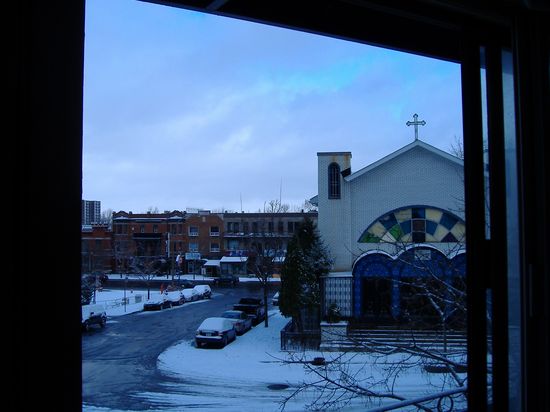
The Church And Time

Ryan Hamm describes what he has learned from the church about how to engage the passage of time:

It was a subtle, but meaningful shift when I began to learn about the church calendar. I saw how our everyday lives were, in fact, framed by a way of thinking that meant more than eight hours of work. And the church calendar instructed me that each part of life was savored and used, not discarded in favor of something more palatable.

To a great extent, the church calendar is the reason I learned to sit in mourning (though never hopelessly) instead of demanding that everything be fixed right away. It’s why I learned that Easter is so much richer when you’ve gone though the joy of Palm Sunday, the reflective servanthood of Maundy Thursday, the ache and horror of Good Friday and the weird in-between of Holy Saturday. It’s why I came to treasure the Sunday liturgy that takes us through confession to absolution to the receiving of Christ’s body broken for us and his blood shed for us.

And it’s why my December turned into Advent..

But Advent is also dramatic irony. Because we have to pretend to wait for something that we know has already happened. We know the end of the story. So it's even more ritualistic a waiting, which means an even more contingent relationship with time. And in a way, because the church's calendar follows the same path, in slightly different ways, each year every year, all of it is about waiting, living in time in expectation of something out of time.Which is why it's all, in the end, ritual – the only way of living on earth that has any real approximation of existing out of time.

Longtime readers know how much I can't stand Christmas. A lot of it has to do with bad memories/traumas growing up that are best left between me and my therapist. But some of it has to do with the gap between the meaning of Christmas in a Christian as opposed to a pagan sense. What we are supposed to be waiting for in Advent is the intervention of the force behind the entire universe into human history. I find this idea – the Incarnation – so fantastic a doctrine, so immense and profound a concept that the whole idea of celebrating it by eating, drinking, visiting airports, watching TV and giving presents is just, well, weird.

Of course, I'm not sure how one can adequately celebrate God's sudden appearance on the edge of the Milky Way two millennia ago. But Advent seems much more doable than Christmas to me.

When Less Freedom Is More

Mark Vernon on marriage:

Think of the business of falling in love. In a city like London, the choice of potential lovers is almost infinite. And yet, the proliferation of online dating sites suggests that anxiety about finding a partner is booming. Why is there this contradiction? [Philosopher Ivan] Illich would diagnose that we’re trapped in a cultural confusion: we’re encouraged to think relationships are about making the right choice, when actually they’re about making a commitment.

The Future Of Online Ads?

David Zax reports on a new type of YouTube ad that allows you to skip or fast forward:

Viewers were presented with a pop-up video featuring a large "fast-forward" button. Click it once, and the ad accelerates rapidly, while a hurried voice gives an elevator-pitch version of the message the ad intends to communicate. … The future of online video advertising, then, may look something like the the typical Tivo experience: more minutes of ads, all seen in a rushed blur–though this time around, with branded audio to make sure the viewers catch at least some of the content they're trying to skip.

The Myth Of Tokyo Rose

Vorjack responds to Hemant Mehta's challenge to find another historical figure (besides Jesus in his estimation) that may not have existed. Vorjack recounts the history of Tokyo Rose, the "siren of the Pacific, calling out to the lonely American servicemen in a sultry voice, carried by Japanese radio waves … [who] taunted them, insulted them and foretold their eventual demise":

[W]hat interests me is the way in which memory was constructed. Somehow, in the pressure-cooker atmosphere of the war, rumors had become reported facts. The stories told by the GIs were picked up by the media, and Tokyo Rose became a real character to the American public.