“Love the Way You Lie”

by Conor Friedersdorf

The video above is quite popular, and generating some controversy in the blogosphere. Here's Joe Carter denouncing it at First Things, The Last Psychiatrist defending its message, and Alyssa Rosenberg panning it as art elsewhere at The Atlantic.

I've long been vexed by Eminem, a tremendous talent whose narrow range, stubborn repetition of theme and sub par album tracks caused me to steadily lose interest in his career. Imagine if Dave Eggers had written A Heartbreaking Work of Staggering Genius, and then included extended laments about the premature death of his mother in 75 percent of all his subsequent writing. Beyond it being tiresome, we'd all have missed out on the impeccably paced You Shall Know Our Velocity, What is the What, etc. 

So I credit Marshal Mathers with stretching himself somewhat here. Domestic violence isn't a new theme for him, exactly, but here we're at least confronting a different aspect of it: as The Last Psychiatrist puts it, "The song isn't about Domestic Violence (capital letters, you are in the presence of a construct) but about a kind of love that substitutes magnitude of emotions for quality of emotions." In the same blog post the author goes on to write:

Why does the song have to be about "Domestic Violence" anyway?  Why can't it just be about two screwed up people, one of whom is a soccer hooligan?  Because there are certain themes that are not allowed to be merely depictions– they have to be about "awareness" and "sending a positive message."  Domestic violence is one of those things, and before you say anything observe that homicide is not one of those things.  Neither is adultery or cannibalism.  We choose our causes based on something other than the cause.

Domestic violence is treated differently because its perpetrators believe themselves to be engaging in normal behavior, as do many of its victims. It's desirable to disabuse them of that notion, whereas no one thinks that homicide is normal or okay, cannibalism isn't even a societal problem, and adultery is hardly a problem comparable to any of those other things.

This isn't to say that domestic violence shouldn't ever be portrayed artistically. But the video above doesn't render the reality of mutually abusive relationships — doesn't help us access the truth about them — so much as it shamelessly romanticizes them. In a way, the problem is that the portrayal is insufficiently violent: a pretend world where punching through a wall doesn't hurt your hand, shattering a mirror doesn't cut you, drunken altercations that come to blows escalate only far enough to make the throws-of-passion sex that much hotter, and punching your girlfriend doesn't result in ever seeing her with a broken, bloodied nose or swollen black eye or concussion or worse.

While we're on this subject, I highly recommend this post by Hilzoy, who the blogosphere is still missing very much.

Keeping His Promise

by Patrick Appel

Marc Lynch thinks it "somewhat surprising how little attention has been paid to the steady drawdown of U.S. forces from Iraq":

Obama deserves the credit he is likely to claim for drawing down troops on schedule and moving towards a vastly reduced U.S. role in Iraq.  No, the war inside Iraq isn't over yet and American forces aren't all gone yet.  And I'm perfectly willing to give credit to the Bush administration for the SOFA it eventually negotiated (which I've previously called Bush's finest moment in Iraq), which created the bipartisan framework to make the drawdown possible.   But it took Obama's determination to actually draw down to actually make it happen — had McCain won, for instance, I'm quite sure that excuses would have been found to keep many more troops there for far longer.  There are plenty of things which I would have liked to have seen done differently, including a continuation of former Ambassador Ryan Crocker's quiet dialogues with the Iranians and more of an effort to deal with Iraq within its broader regional context.   But overall, meeting the campaign commitment to draw down U.S. forces in Iraq is a real accomplishment which should be acknowledged.

Over the weekend, Bernstein asked liberals how they grade Obama on Iraq and asked conservatives how they currently view the war. Ambinder previews Obama's address to the nation tonight:

[W]ill [Obama] take the bait dangling from Republican hooks and give President Bush credit for the surge? He will telephone President Bush earlier in the day, presumably to thank the president for his judgment in a way that does not acknowledge that his own opposition to the surge was (in retrospect) incorrect. Officials make the argument that people read a lot into the surge, and that a number of different factors, some of them independent of the surge, contributed to the taming of the insurgency.  Obama won't get into those arguments there, but it will be interesting to see how he deals with the historical narrative that has President Bush mistakenly choosing to go to war in Iraq and then supporting a strategy that brought about its close more quickly.

The View From Your Contest, Ctd

by Chris Bodenner

Recently I asked readers if they had any good ideas for presenting the VFYW guesses in a cool and dynamic way.  We have received a ton of really great suggestions – thanks!  I am still testing several of them to see which works best with the Dish.  Below are some of the leading contenders.  Hopefully one might be useful for a project of your own.  A reader writes:

Not that I ever have any luck at guessing, but I do love the VFYW contests and I think I have an idea for your map. Why not get together with the great folk at WorldMapper (or even do it yourselves if you have the know-how) to develop a map that expands the area devoted based on guesses? Since I hope that you get more “close” guesses than not, the region around the correct spot would be blown up and allow people to more easily see all the close guesses. Besides, who really wants to waste all that space on the map to those of us who couldn’t even get the right hemisphere.

Another:

OpenHeatMap might fit your needs. All you need to do is create a Google spreadsheet containing your guesses, and it handles the rest. (Here’s a two-minute guide for journalists.) As a long-time Dish reader, I’m happy to customize it if it doesn’t do exactly what you want.

Another:

I’m a longtime reader of the blog and a big fan of the VFYW contests. I work as a product manager at a web/search company and I’m a computer scientist by training. Here’s one way to dynamically create markers on the map:

1. I can build you a JavaScript widget that you insert into these contest result posts.
2. The JavaScript analyzes the page’s content on the fly and identifies all the place names on the page (this is not foolproof but quite easy to do)
3. It geocodes each place down to lat/long using the Google Maps API
4. It draws the map on the fly, directly into the page.

I’ve got a similar service that does this for food bloggers (identifies restaurant names in content and converts them to points on the map), I’d be happy to customize it for this use case if you are interested.

Another:

Apple’s iMovie has a mapping tool which creates animated “flight tracks” between geographic points you specify that you can intercut with the window photos in each location.  Of course, it’s not very interactive.  Perhaps check out a geomapping program like ArcMap, where you can tag each location with the corresponding photo.  I’m pretty sure that ArcMap now has a web creation utility.

Another:

Why not save the guesses in a file readers can simply download from your website and then overlay on Google Earth?  I don’t know if The Atlantic would be able to support that, but a host site shouldn’t be too hard to come by.  For my job I’m always using Google Earth and have multiple files I can simply open and close at will so the map doesn’t get too crowded.  You can even color code the markers if you want to get really fancy.  It takes a little work (but is not that hard once you get the hang of it) and it’s an easy way those of us at home can get a good first hand feel for the guesses that week.

Another:

Google Earth is an obvious choice. You can create “virtual trips” and embed each picture at the actual point it was taken, with any added textual comments you wanted. (Here are some examples related to literature.) Then save it as a kmz file, and people could upload it to their desktop Google Earth. Though that might be more work than you (or your readers) want to do.

Another:

Use Google Charts with world maps. It is a little more work, but here is what you could do:

1. You can mark the countries with most guesses in a different color. Or use darker and lighter shades for more guesses.
2. You can still mark the locations which people guessed.
3. You can mark out different regions within the same country.

Another:

Tableau Public. This is a great, free visualization system aimed at web publishing, and for something so sophisticated it’s fairly easy to use.  I think it’d be a good choice for showing geographical data like this.

Another:

There is a tool called Map Builder that lets you add markers on a map and add information on each pointer. You can see it in action here. We have also occasionally used BathGeo, which lets you paste in data from a spreadsheet and spits out a map. The former is a bit cumbersome, but useful if you want to display the various windows featured in VFYW. (For instance, if you want to link to the window.) The latter is better for a quick map.

Another:

Ushahidi builds tools for democratizing information, increasing transparency, and lowering the barriers for individuals to share their stories. It’s currently used for crisis mapping and election monitoring, but can be used for anything.

On a somewhat related note:

A couple weeks ago someone explained how they had created a VFYW fantasy league, and I was wondering if you guys have had others who’ve mentioned the same thing – have created leagues, were looking for other participants, etc.  I’m contemplating creating a VFYW Facebook page, but as a semi-slacker I was hoping someone else has gotten around to doing it first. In case I do create the FB page, do I have (or need) your permission do it?

No permission needed! And a quick search of Facebook shows this group that has already started (though it appears closed to the public). Send us a link at vfywcontest@theatlantic.com if you end up creating something – on Facebook or elsewhere.

Cool Ad Watch

Tumblr_l7z41hspld1qzpwi0o1_500

by Chris Bodenner

How do you get American kids to eat their carrots? Make them look like cheetos. Neetzan Zimmerman has details:

Ad agency Crispin Porter + Bogusky were recently hired by Big Carrot to update the packaging of baby carrots with an eye toward appealing to the junk food generation. The $25 million campaign is set to include such innovations as: Doritos-like package designs; carrot vending machines; seasonal tie-ins (e.g., Halloween “scarrots”); and even an iPhone app “powered by the sound of folks munching carrots in real time.”

Whatever works.

About My Job: The Attorneys at Law

by Conor Friedersdorf

On death row:

I am a capital habeas lawyer; I represent people who have been sentenced to death.  People who have not done this work almost always fail to understand that my clients are human beings.  People chose to believe the myth that each of my clients is Hannibal Lecter–the devious mastermind who has no soul, no capacity to have feelings for other people–but I've been doing this a while and I've yet to meet that guy.  Instead, I've met human beings.

In the world of finance:

I'm a big-firm, Wall Street lawyer and have been doing corporate finance transactions for Fortune 100 companies for 15 years.  People hear I am a Wall Street lawyer and say things like "wow, so you get to see all the conniving and the stealing."  Um, no, actually, never.  Quite the opposite.  In my experience BigLaw lives by a code of excellence, honor, truthfulness in disclosure, reasonable due diligence and fairness.  From my seat, the law is still the noble profession that my grandfather told me it was.

A defense attorney:

Being a Public Defender is a spiritual practice. I’m a criminal defense attorney for the Office of the Public Defender.  I defend people charged with everything from a second marijuana conviction, all the way to murder, robbery, and sex crimes( including rape and child molestation.)

When people find out what I do, the first thing they ask is, “What do you do if you know that your client is guilty?” Most of my clients are guilty.  But they still deserve a defense.  I don’t do this work just for the Constitution; although, I love that document like only a lawyer can.  For me, being a public defender is a spiritual practice.

When people need my help, my answer is always, “Yes.  I will help you.”  It doesn’t matter who they are or what they are charged with.  It doesn’t matter if they are guilty or innocent.  It doesn’t matter if this is their first felony or their twentieth felony.  I will help.  Period.

I’m not a Christian in the traditional sense.  But I consider this attitude of service to be in line with Christ, who loved and aided without regard for the past action of the sinners in front of Him. Most of the prosecutors in our town are Southern Baptist, or some variation on that. But if Jesus had lived today, and if He had been a lawyer, He wouldn’t would not be a district attorney, putting people into prison.  Jesus would have been a Public Defender.

A prosecutor speaking on behalf of defense attorneys:

I am a career prosecutor having worked for nearly 30 years in the field of criminal law.  I  have been a federal prosecutor for the last 22 years.  During that time I have worked with, and against, hundreds of criminal defense attorneys.

Two myths about criminal defense attorneys persist in popular culture.  First, most people outside “the system” believe criminal defense attorneys are barely better than their clients.  The perception is that defense lawyers lie, cheat, and generally game the system aiming to turn dangerous criminals loose on society.  That has not been my experience over the last three decades.  Most criminal defense conscientiously carry out the often unpleasant task of convincing a criminal defendant that he is hosed and needs to plead guilty.   I cannot emphasize how important that task is to the proper functioning of the criminal justice system.  To put it simply, the system would break down if someone did not make sure the government has dotted its “I’s” and crossed its “t’s” and then went to work on the client to make sure he is one of the over 90% of criminal defendants who plead guilty.

The second myth  concerns a specific subset of criminal defense attorneys known as public defenders.  The perception is that public defenders are fresh out of law school losers who cannot get a real job.  There is some truth to “fresh out of law school” observation.  However, most public defenders’ office, (like most prosecutors’s offices), place their inexperienced lawyers in arenas where they can accumulate experience without unduly harming the legal interests of their clients.  It is unusual for young public defenders to be representing defendants charged with extremely serious crimes.  Public defenders pick up trial experience at a rate that FAR surpasses that of private practitioners and rapidly become experts in the field of criminal law.  I cannot tell you how many times I have seen criminal defendants fire able, seasoned public defenders so they can hire a “real lawyer” to represent them.  Almost without exception, the private practitioner will have far less trial experience than the public defender who was originally appointed to represent him or her.

The criminal justice system has many problems and needs many improvements.  But as someone who has spent his entire career facing off against defense attorneys I can tell you that crooked, corrupt and dishonest defense lawyers are not a primary problem.

In private practice:

I am a lawyer, in private practice, representing disabled people trying to get Social Security disability benefits. Things that surprise people about the Social Security disability system:

1. How long it takes. Appeal periods of three to five years are common. Yes, you can lose everything while waiting–cars, home, health insurance.

2. The Kafkaesque randomness. Your case could be assigned to adjudicators who are smart, hardworking, and humane. Or it could be assigned to adjudicators who are dumb, lazy, and convinced every applicant and her doctors are frauds. If you draw the latter kind of adjudicators, it doesn't matter how thoroughly your doctors document your disability–you'll be denied, and will have to appeal and hope for a better draw on appeal.

People assume that as citizens and taxpayers, they will be treated by their government with basic respect and decency. They are shocked to find that in many cases, it ain't so.

A civil trial lawyer:

I am a civil trial lawyer. I handle all manner of cases from personal injury to commercial litigation. I work for myself and  the vast majority of my client base are regular people, not giant corporations. Without lawyers like me who feel an obligation to represent regular people and small businesses inexpensively, the system does not work. Legal aid is relatively ineffective, in that, it does not help the middle class (I know, what middle class? It is all but disappearing). Without lawyers who sacrifice huge salaries and security by not working in major firms with large corporate clients, the system becomes much like the rest of America: he with the money can avail himself of the advantages it provides. We do our best to keep that in check, though sometimes unsuccessfully. We are sometimes outspent. We often barter with clients to help defray legal fees, but we have families to take care of ourselves and must get paid at some point.

Another defense attorney:

I am a criminal defense attorney. There is a widespread belief that our society is too "soft" on crime and that criminals get off on "technicalities. People tend to believe these myths until their loved ones get caught up in the system. My client's families are always horrified at just how brutal the criminal justice system is and how uncaring the prosecutors and judges can be.

And those "technicalities?" First, few people escape punishment for that reason.

Second, those are our constitutional rights that we are talking about–the right to be free from illegal search and arrest and to not be forced to confess. Frequently it is those screaming for less government who are willing to throw us all under the bus of criminalization and long term incarceration. Meanwhile I am just trying to help individual citizens have some opportunity to get just a little fairness.

A clerk for an appellate judge:

I am an attorney and I work as a career clerk for an appellate judge.  My list is a mile long.  My number one: An appeal is not a do-over.  I hear people say, "he's just going to appeal it" all the time as if a trial court's decision is meaningless. Appellate courts are concerned, mainly, with issues of law and do not reverse factual findings made in a trial court except in very exceptional circumstances.
 
Yes, the appellate process can take a long time. Yes, there are numerous avenues for criminal defendants to appeal their conviction and their sentence. All of these systems are there to protect the innocent.  But appeals are rarely successful and criminal appeals even less so since most criminal trials are jury trials and appellate courts hate reversing a jury verdict.

A former prosecutor:

I hate the fact that there is a false meme out there: because so many women are now attorneys there is no discrimination in the legal profession, especially state jobs, particularly as prosecutors.

I worked as a prosecutor for the state, and almost 80% of the women whom I started out with are gone from their state jobs, myself included – gone because the males were getting quicker promotions, and quicker pay raises. Female prosecutors are also relegated to the domestic violence and sexual assault crimes, while the male prosecutors get the homicides, burglaries, drug, and property crimes.

The judges even have a name for it for certain District Attorney offices – the "girl ghettos".

Individual Politicians Don’t Matter?

by Patrick Appel

Ezra Klein shrewdly observes:

Campaigns are built to fool us into thinking that we're voting for individuals. We learn about the candidate's family, her job, her background — even her dog. But we're primarily voting for parties. The parties have just learned we're more likely to vote for them if they disguise themselves as individuals. And American politics would work better if we understood that.

This is one reason why I typically don't trust profiles. How can a journalist accurately represent a politician, CEO, or celebrity? Famous people are selling a certain version of themselves for personal gain. Most profiles end up reflecting that manufactured identity instead of deconstructing it.

(Hat tip: MR)

The View From Your Window Contest: Winner #13

Vfyw-contest_8-28

by Chris Bodenner

A reader writes:

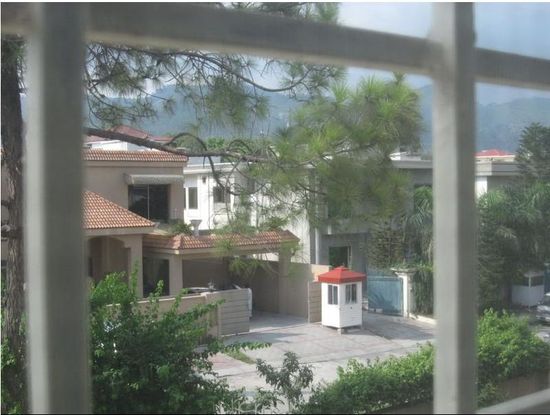
Now you guys are getting your act together.  This view will get guesses on all continents I imagine.  I’ll have to go with Malaysia, Kuala Lumpur.  Reason is, I have friends from India and China.  They have spoken to me about how they have personal drivers for their cars, as many people do there.  The little booth in the picture in front of the house would seem to serve this purpose.  But, I’m caught at a crossroads … China or India?  I”ll split the difference and say Indonesia.  Looking forward to the guesses.  They will be varied in global scope.

Quite prescient. Another writes:

This is San Francisco’s Seacliff neighborhood, on El Camino del Mar. That’s the Marin Headlands in the background. San Francisco Bay is hidden behind the houses.

Another:

At first glance, the picture looks so much like Southern California that it seems too obvious.  It must be one of the Inland Empire suburban developments that helped fuel the housing boom and bust.  But wait a minute – are those bars on the windows? A guard shack? That car isn’t American.  So I don’t think this is So Cal. But the mountains and perhaps Norfolk pines make me think the climate and typography are similar. Cape Town, South Africa would fit the mountains, climate, and car.  That’s my guess.

Another:

I’m going to go out on a limb and guess the Observation Neighborhood in Cape Town.  After my heartbreak last week at finally being successful at identifying the exact location of the towers in the picture, only to find out it was the easiest contest yet, I don’t have the heart to scour the globe finding the exact locale.  I’m going only with my gut. Hats off to those who discern the exact locale.  I will console myself with the knowledge that I am continually outdone by some of the most well-read and well-traveled blog readers on the internet.

Another:

I’m so intimidated by this contest. I wouldn’t know the first things about how to research this picture, but it reminds of of the summer I lived in Guadalajara, Jalisco, Mexico. I lived in a nice neighborhood, Colonia Providencia, and all the houses had gates like the ones seen in the picture. (With my luck, it’s probably from New Zealand.)

None from New Zealand this week. Another:

The houses and the pine trees in which they are nestled all remind me of a high-class neighborhood in Tunis, Tunisia. If this guess is correct, the mountain in the background is Mount Ressas. The only detail that throws me off is the little guard tower in front of the house; I don’t remember seeing those on my visit, so I am probably totally wrong.

Could I have the book anyway, please!? Two contests ago I mentally guessed the one from Sardinia, without writing an email. Does that count?

Nope, sorry (though the reader’s address is from Sardinia). Another:

This picture reminds me of diplomats row in Shihlin, Taiwan, north of Taipei.  I remember walking along several similar streets going door-to-door as a missionary back in 1999.  The National Palace Museum is nearby and there was a great noodle place along the way.

Another:

I have seen neighborhoods like this one in Lagos, Nigeria and Kigali, Rwanda — places where privileged classes are building (but not always completing) gaudy villas, while at the same time becoming more fearful of where they came from (as evidenced by the guard post). But the residents of this street do not perceive themselves as in quite so much physical danger as in Kingston, Jamaica, or Johannesburg, South Africa, where the fences would be higher or sharper and the gates closed shut. Also, the absence of palm trees suggests a more northern climate. Almaty, Kazakhstan?

Another:

This is Arab – by the architecture, and the guard boxes in front. Based on the mountains and the Mediterranean pines, I would say Lebanon. The guard boxes would say the diplomatic quarter of Beirut. However, the wealthy in Lebanon also have guard boxes, equally empty, so it could also be Jbeil. I’ll stick with Beirut.

Another:

It looks like Ankara, Turkey. I stayed in the Cankaya District for two weeks and saw a few of those guard shacks while walking some very steep roads in that area.

Another:

First, thanks for doing these.  Like a good crossword, they’re hard.  But if you stare at it long enough the clues start to show themselves. That’s the best kind of puzzle.  Anyway, my guess: I’ve narrowed it down to the Malaysian suburbs somewhere in the mountains.  Beyond that it’s a proverbial dart at the Google map, which landed here: 2-42 Jalan Selasih Taman Cheras, 56100 Kuala Lumpur, Federal Territory of Kuala Lumpur, Malaysia. I assume your knowledge of Malaysian geography is as bad as mine, so here’s a link.

Another:

My guess is an eastern “suburb” of Mandalay, Myanmar. The hills in the background would be the Shan Hills; both vehicles are white, a common colour choice for cars there, and the license plate is black. The guard houses and walled compounds are also familiar. The person in the driveway also appears to be wearing a longyi, normal dress for Burmese males. That said, the longyi is white, not a common colour, so perhaps this is from Pakistan or somewhere in Northern India.

On the right track. Another:

Tropical flora, but also pine trees; flat landscape with steep mountains in the background.  Person appears to be wearing all white (cotton?).  My guess — northern India; specifically, Chandigarh (since a le corbusier designed city seems like something the Dish would lean towards), looking north east towards the Himalayan foothills.

Getting really warm. Another:

Normally I zero in on details in the photos, like everyone else, and scrutinize the tiny hints to narrow down a guess.  For this scene, it popped up and I instantly thought, “Kabul, Afghanistan – probably the neighborhood of Wazir Akbar Khan.”  The guard posts outside the houses were a give away, plus the familiar rugged mountains in the background, which section up the city.  Also the seemingly new construction (the house in the middle with unpainted masonry).  Perhaps the small figure in white is wearing a salwar kameez.  I spent time a few years ago working at Kabul University, which is pretty far from “Wazir” where I spent limited time, but enough to feel pretty confident about this one.  Until recently Wazir was one of the safest parts of town, where a lot of internationals live.

Closer still. Another:

The homes look made for security and privacy, which suggests to me a predominantly Muslim country with perpetual security angst, plus green luscious mountains.  Pakistan was my first thought.  There’s also the guy wearing the white kurti. Probably a city, because it looks pretty affluent, and Karachi doesn’t have the mountains, so: Islamabad, Pakistan.  I’m guessing somewhere on the northern part of the city looking north at Margalla Hills National Park.

Correct! But which sector of the city? Another:

This week I’m convinced the VFYW is of Islamabad. The houses at first appeared very South Asian to me, and the glimpse of the cars and the man appearing to wear a kurta made me sure of it. Islamabad is among the few well-developed South Asian cities nestled among the mountains, and the pine tree gives away the alpine location of the city. I imagine the hills in this picture are the Margalla Hills. Finally, to narrow down on the neighborhoods in which this photo could be taken, I think the photo is either from the posh sectors E or F, especially evidenced by the little security guard kiosks located just outside each gate.

But is it E or F? Another:

This is my first submission, but I think I have a shot. Initial key things I noticed were the license plate (there are black ones in Pakistan), and what appears to be a fellow in a shalwar khamis.  The topography and foliage remind me of Islamabad, along with the architecture and the little guard houses. The view is looking toward Margalla Hills and the Faisal Mosque, possibly from the E-7 section of town – but I cannot find the houses or view on Google Earth (I am sure someone will, but I have to go walk the dog).

You can blame this loss on the dog then. The winner:

Here goes my shtick for why I think the pic is possibly a rich suburb or neighborhood in Islamabad. (By the way, such a nice view compared to the horrors of the flooding happening elsewhere in the country.)

The style of construction seems like what I’ve seen in the area, as well as the security huts and gates. Checking the Google terrain and some pics in the area, I would say it’s near the area called Christian colony, possibly near the Danish embassy. The hills appear to be the Margalla hills seen from F-6 area of Islamabad. Ok, that’s my guess.

The house in the photo is specifically located on Street 40 in Sector F-7/1 – which is just a hair closer to F-6 than E-7:

Islamabad, pakistan - Google Maps_1283243295764

Congrats to the winner, who gets a free VFYW book. Below are a few more of my favorite Islamabad guessers (who numbered 12 out of about 150 overall guessers). One writes:

So far as I know, those stupid little security booths are not found anywhere else and the mountains in the background look just like the Margallas. Also, the guy in the picture looks like he is wearing a shalwar kameez. And finally, the completely eclectic/random mix of architecture is oh so Islamabad.

Another:

My name is Mark and I’m a VFYW addict (when will we get a midweek fix?).  This is definitely … possibly … probably not … Islamabad. The small guard houses, the chap standing in the driveway wearing a shalwar kameez, the hilly topography, the Chir pine tree, the black number plate on the left-hand drive vehicle and what appears to be minarets in the background (though I might be seeing things – it’s part of my addiction). Today I’ve spared myself the “joys” of Google Earth. Nothing like scouring a city for an hour only to discover that you were a continent away.

If it’s any consolation to the near-winners, we keep track of people who have guessed correctly. In a close tie, victory goes to a correct guesser in the past.

By the way, I just spent more than a half-hour plugging all 150-odd locations into Google Maps, only to have Safari refuse to accept my screenshot software (Safari sucks in general; use Firefox) and then delete all the locations when I tried to log in through Firefox. I may get a burst of energy to do it all over again and post the map, but here is a rough rundown: the most common locations were Cape Town and Beirut; a notable number from Kuala Lumpur and Bogota; an inordinate amount from southern California; a good number from Mexico; a smattering from South America; a handful from Europe … you get the idea – scattered all over the world. My favorite was Schenectady, New York.

When You Don’t Learn From History…

by Conor Friedersdorf

The Los Angeles Times reports:

About 3,200 Mexican federal police officers, nearly a tenth of the force, have been fired this year under new rules designed to weed out crooked cops and modernize law enforcement, officials said Monday.

The housecleaning is part of President Felipe Calderon's crackdown on drug cartels, which includes overhauling the 34,500-strong federal police force.

An additional 465 federal officers have been charged with breaking the law, and 1,020 others face disciplinary action after failing screening tests, officials said. Facundo Rosas, a senior federal police official, said in a radio interview that the 3,200 dismissed officers were removed for substandard performance.

Gee, I wonder if any of these suddenly unemployed police officers with ties to drug cartels will wind up working for them directly. It's almost as if keeping them on the force and firing them are both terrible options, especially since their replacements will presumably be just as corruptible. There is a bizarre consensus among elected officials on both sides of the border that escalating a decades old drug war is preferable to ending it. The evidence for that proposition? 

There isn't any.

An Atrophied Sense of Charity

by Conor Friedersdorf

Big Questions Online, a new Web site published under the always thoughtful stewardship of Rod Dreher (author of Crunchy Cons and a favorite contributor to Culture11), has led me to delve into a lot of the interesting work being done over at The Templeton Foundation, an organization I'd never taken the time to get to know before.

Thus far the site is refreshingly focused on writing that transcends the angry back-and-forth so prevalent elsewhere online.

Example the latest: a gem of reflection from Alan Jacobs, who writes:

I have thought a lot about why people get so hostile online, and I have come to believe it is primarily because we live in a society with a hypertrophied sense of justice and an atrophied sense of humility and charity, to put the matter in terms of the classic virtues.

The whole piece is worth reading — I'll need more time to figure out what exactly I disagree with in it, but I think a lot of its insights are sound, and all are thought-provoking. Professor Jacobs is an occasional contributor to another place I write, The American Scene, and as his essay makes clear, heated confrontations online sometimes cause him to withdraw from debate (overcoming the impulse felt by that man in the famous cartoon about someone being wrong on the Internet). It's a strategy that works well for him, and I'm glad: the stuff he writes is what I want to read.

In my work, I've tried to engage even my most hostile critics, sometimes with good results, though other times I fear that I'm either getting sucked into fruitless exchanges, or worse still, participating in needlessly hostile discourse myself. As a friend recently put it, "I have to say, you keep trying to have a Lincoln-Douglas debate with feces-hurling howler monkeys, eventually you start looking silly too."

If there is a good way strike the appropriate balance I don't know it, though I hope that age and experience help me to have more wisdom than I do now. As yet, I often can't predict how a given exchange will play out until it's too late. Political discourse requires forceful disagreements and calling out destructive interlocutors if it's to function well. But sometimes refraining from comment or ignoring certain people is the best policy. I am still figuring all this out.