First Impressions

Jonah Lehrer believes our responses to the BP spill and the Icelandic ash cloud were sabotaged by the wiring of our brains:

I think we simply need to be more aware that our initial beliefs about a crisis – those opinions that are most shrouded in ignorance and uncertainty – will exert an irrational influence on our subsequent actions, even after we have more (and more reliable) information. The end result is a kind of epistemic stubbornness, in which we're irrationally anchored to an outmoded assumption.

The Daily Wrap

97831501

Today on the Dish, the House voted to end DADT and a key Senate committee did as well. Joyner questioned the public opposition to it, lesbians harmed by the policy told their stories here and here, and we glanced at the dregs of the debate here and here. The oil leak appeared to be plugged, bloggers debated its similarity to Katrina, more images of the damage emerged, and we looked back at another big spill in the Gulf. The Dish also did due diligence on the Korean crisis.

In Palin coverage, she erected a fence to fend off McGinniss but not convicted criminals, Jack Shafer shielded the journalist, Kate Pickert partially backed Palin, and readers more so. Bernstein insisted on scrutinizing her, Timothy Egan pwned her, Ben Smith reported more juicy details, a reader requested a view from McGinniss' window, Andrew doubted Bristol, and Pareene put it best.

Rand Paul updates here and here. Noah Millman queried the paleocons, Douthat doubted their relevance, Wehner marveled at the lack of crime, Massie covered Clegg, and Friedersdorf manhandled McCarthy. More on the Israel debate here.

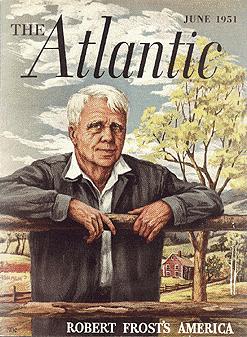
Critical Ralph updates here and here. Kaus campaign coverage here. Recession view from a reader here. Early Christian discussion here and Robert Frost in the Atlantic here. More on 24 here and here. Beard-blogging here and metrosexual-blogging here and here.

— C.B.

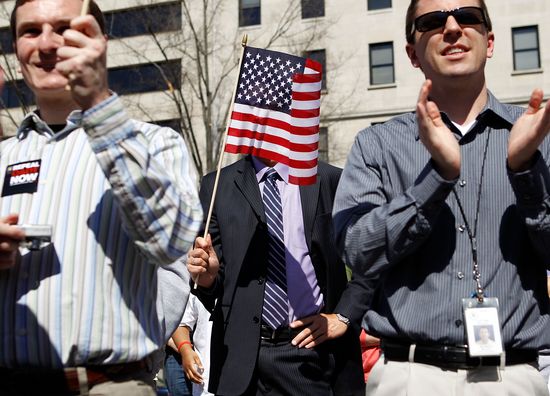
(A man covers up his face with a U.S. flag as he participates in a rally in support of a repeal of the 'Don't Ask, Don't Tell' policy March 18, 2010 at the Freedom Plaza in Washington, DC. The policy is currently under review by the Pentagon and Democrats in the House and the Senate have unveiled legislation to repeal the policy. By Alex Wong/Getty Images.)
The Oil Spill vs Katrina

Yuval Levin posits:

I think it’s actually right to say that the BP oil spill is something like Obama’s Katrina, but not in the sense in which most critics seem to mean it. It’s like Katrina in that many people’s attitudes regarding the response to it reveal completely unreasonable expectations of government. The fact is, accidents (not to mention storms) happen. We can work to prepare for them, we can have various preventive rules and measures in place. We can build the capacity for response and recovery in advance. But these things happen, and sometimes they happen on a scale that is just too great to be easily addressed. It is totally unreasonable to expect the government to be able to easily address them — and the kind of government that would be capable of that is not the kind of government that we should want.

Drum demurs, writing that “Katrina was an example of the type of disaster that the federal government is specifically tasked with handling” while there “is no federal expertise in capping oil blowouts” and there “is no federal agency tasked with repairing oil spills.” I find those point pretty dispositive, although I take Yuval’s argument about government’s capacity in general. Clive Crook adds:

The notion that the government should be directing, as opposed to merely supervising, the effort to stop the leak — BP should be pushed aside; bring in the military — is absurd. So far as that side of the operations goes, all that matters is who has more technical expertise: the company or the administration? (If your house was burning down, would you want the White House directing the fire crews, or maybe calling in air strikes, as a sign of how seriously Obama takes your problem?)

I think you can and should excoriate BP for cost-cutting, and the MMS for inadequate supervision. But I see no reason to blame the feds for how hard it is to stop one of these. In 1979, it took ten months.

16 – 12

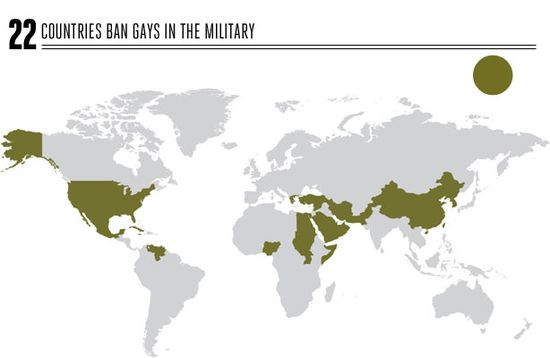
Gays-banned-countries-map-lg

DADT legislative repeal passed a huge hurdle. Now for the full Senate vote, where many Republicans are pledging to vote against funding the military if it stops persecuting gay service-members. The Republicans, John McCain disgustingly in the lead, will apparently filibuster to prevent passage. I must say that the following notion from Congressman Franks is bizarre:

“We’re going to say, ‘No. We don’t care what you say. You can die for us on the battlefield, but you have no input into this process.’ That’s a disgrace to this institution and it’s an insult to the men and women who pour out their blood on foreign battlefields for the country that we all love so much.”

The military will have a great deal of input into this process, and will have all the time they need to implement it smoothly. That's what the year-long review is about. But the policy question is not up to the service-members. It is up to the Congress and the civilians who control the military in a free country.

A large majority of the country favors this move. And yet the current GOP is prepared to filibuster to prevent it. That means that if they gain seats this fall, they will keep gay service-members in the brutal vice of discrimination for a long time to come. That's how deep the fear goes.

(Map from Esquire which has several more on those lines.)

Buying Stock In The Companies You Hate

Scott Adams has an unusual view of the world:

I bought some BP stock recently because I liked the odds that the top engineers and scientists in the solar system, with unlimited funding, presumably somewhat freed from management meddling, could plug a hole…I also assumed that the liberal media's coverage of the oil damage would depress the stock more than necessary. It's a catastrophe, no doubt, but even catastrophes have levels. I'm betting the financial damage will be very, very, very bad and not very, very, very, very bad.

This is also a test of my theory that you should buy stocks in the companies that you hate the most. In general, you hate the companies that have the most power. And BP is the frickin' Death Star of companies. They're in the process of destroying an entire region of the world and there's still no talk of cutting their next dividend. I admire them in the same way I admire the work ethic of serial killers. There's an undeniable awesomeness about BP. I hate BP, but I still want to have their baby.

The Legacy Of 24, Ctd

The Museum of the Moving Image puts the show in a historical context:

Four more installments here.  EW interviewed Kiefer Sutherland on the eve of the final episode. Money quote:

In the second season, we worked with the Muslim community, and I know we did a PSA. But, if you want to just take a look at 9/11, they were Muslims. Deal with it. It’s a fact, and Muslim extremists exist, and we have also done Christian right extremists, and we have also done political, Eastern block terrorists, and those who had financial and religious motives — all kinds. We weren’t going to pretend that the 22 hijackers in 9/11 weren’t Muslim. By the same token, I do believe you have a responsibility to say that this is a show about extremes. And I think you have to do whatever you can to make sure that people understand that this is not a commentary on what you believe people of the Muslim faith are doing.

Frost And The Atlantic

The poet was a contributor back in the day. Though they got off to a rocky start:

Sometime in 1912, before Robert Frost made his famous leap to "live under thatch" in England, where he would become known as a poet, he sent some of his poems to Ellery Sedgwick, the editor of The Atlantic Monthly, and in due course received a personal reply that Robert Frost's America - 51.06_1274893349630read, "We are sorry that we have no place in The Atlantic Monthly for your vigorous verse." Frost's submission included some of his finest early poems — "Reluctance," for example.

Sedgwick's ambiguous snub rankled in Frost's memory. During the two and a half years he lived in England his first two books of poetry, A Boy's Will (1913) and North of Boston (1914),  were published there, though not yet in the United States. Thanks partly to Ezra Pound, Amy Lowell, and Harriet Monroe's Poetry magazine, Frost's poems were hailed in advance of U.S. publication as representing a new American voice. In February, 1915, North of Boston was published in New York, just as the Frost family set foot back in the United States.

Response to this new book of poems about New England was nearly immediate, and Frost was quickly in demand for public appearances. On May 5, 1915, he came to Boston from his new home in Franconia, New Hampshire, to be heard at Tufts University, where he read three of his as yet unpublished poems: "Birches," "The Road Not Taken," and "The Sound of Trees." The day after his Tufts appearance, he called on Ellery Sedgwick at the Atlantic offices, which the magazine shared with Houghton Mifflin Company at 4 Park Street. Sedgwick had just received a letter from the noted English editor and critic Edward Garnett (also the discoverer of Joseph Conrad and D. H. Lawrence), in which Garnett wrote that "since Whitman's death, no American poet has appeared, of so unique a quality, as Mr. Frost." It's not surprising that Sedgwick received Frost with a warm welcome and began by asking if Frost had any new poems for The Atlantic.

Listen to three of his published poems here (and a rejected one here). Read Edward Garnett's 1915 essay "A New American Poet" here. Check out Mark Van Doren's 1951 cover story here.