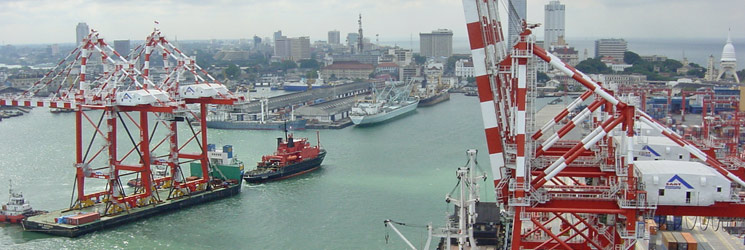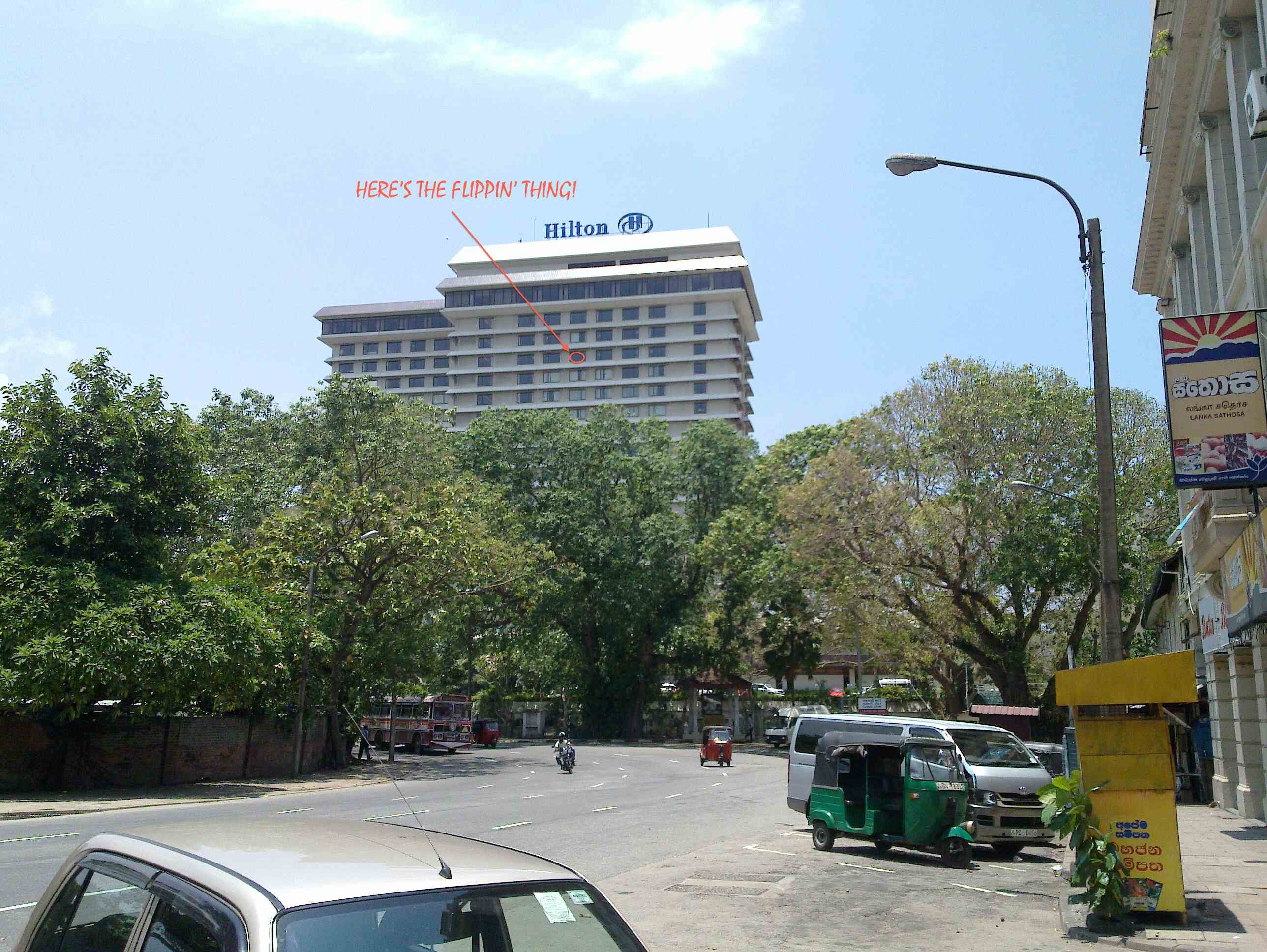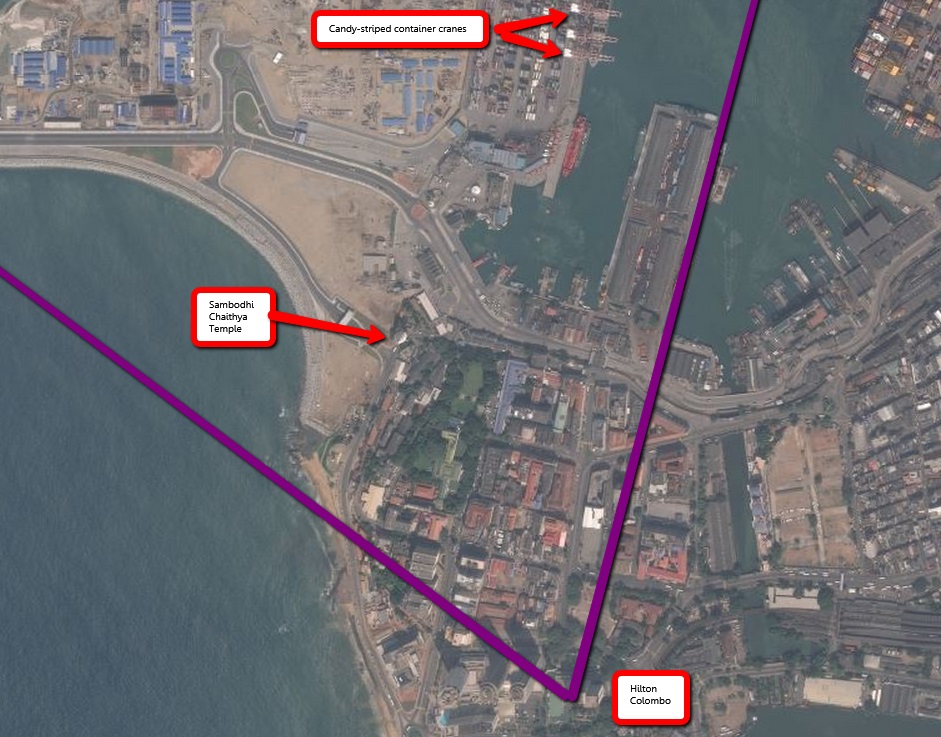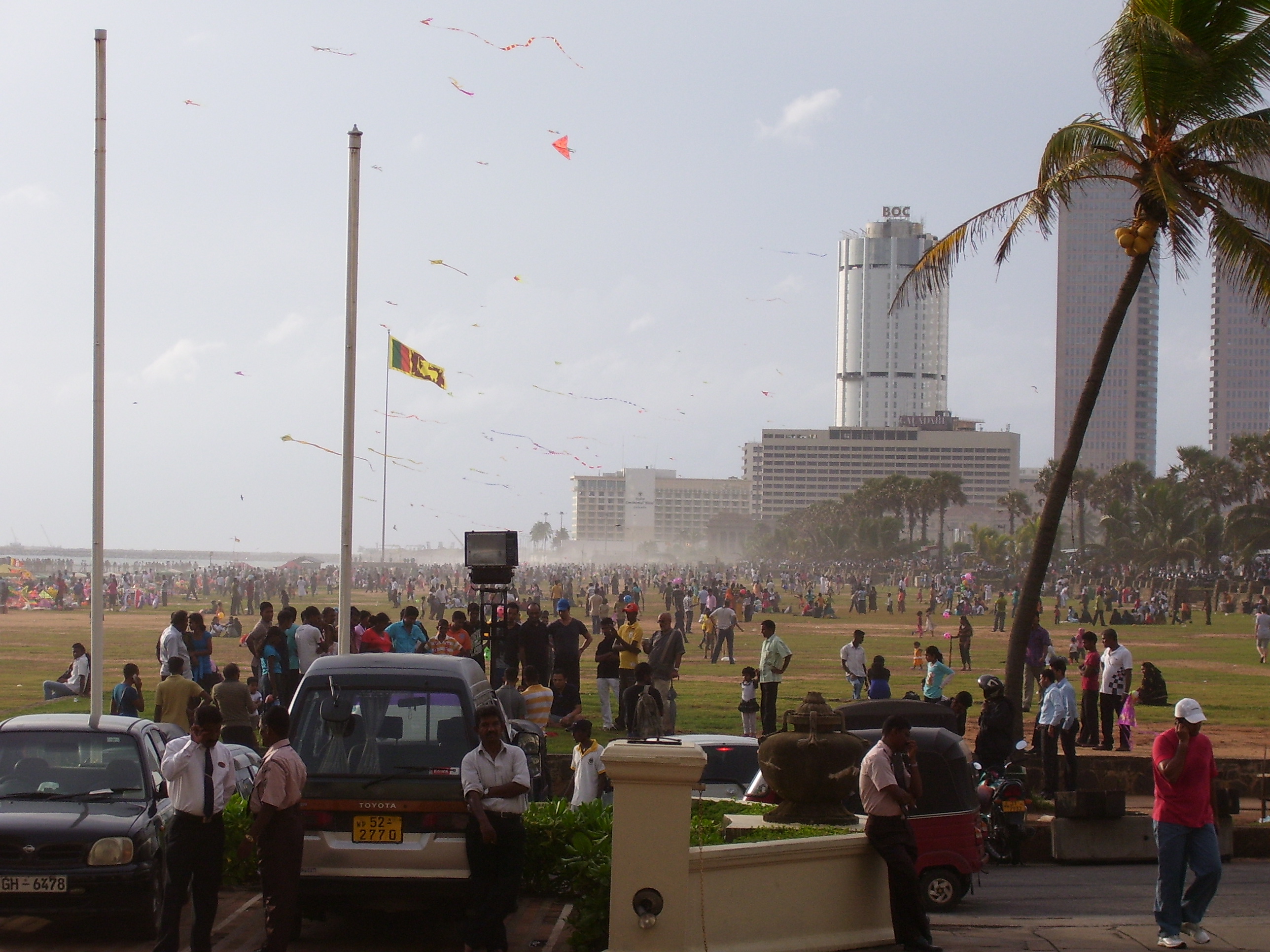
Book Club #2: “On Looking,” Hosted By Maria Popova

When I asked Maria Popova of Brain Pickings which book she’d like to pick for our second book club, her eyes widened a little. They do that a lot. It didn’t take long for her to settle on Alexandra Horowitz’s On Looking: Eleven Walks with Expert Eyes (alternatively subtitled “A Walker’s Guide to the Art of Observation”). In her work as a professor of cognitive science at Barnard, Horowitz is “currently testing the olfactory acuity of the domestic dog, through experiments in natural settings, and examining dog-human dyadic play behavior.” From the publisher’s description of the book Maria chose:

From the author of the giant #1 New York Times bestseller Inside Of A Dog comes an equally smart, delightful, and startling exploration of how we perceive and discover our world. Alexandra horowitz-onlookingHorowitz’s On Looking: Eleven Walks with Expert Eyes shows us how to see the spectacle of the ordinary—to practice, as Sir Arthur Conan Doyle put it, “the observation of trifles.”

On Looking is structured around a series of eleven walks the author takes, mostly in her Manhattan neighborhood, with experts on a diverse range of subjects, including an urban sociologist, the artist Maira Kalman, a geologist, a physician, and a sound designer. She also walks with a child and a dog to see the world as they perceive it. What they see, how they see it, and why most of us do not see the same things reveal the startling power of human attention and the cognitive aspects of what it means to be an expert observer.

On Looking is nutrition for the considered life, serving as a provocative response to our relentlessly virtual consciousness. So turn off the phone and other electronic devices and be in the real world—where strangers communicate by geometry as they walk toward one another, where sounds reveal shadows, where posture can display humility, and the underside of a leaf unveils a Lilliputian universe—where, indeed, there are worlds within worlds within worlds.

From Maria’s extensively excerpted review:

[Horowitz’s] approach is based on two osmotic human tendencies: our shared capacity to truly see what is in front of us, despite our conditioned concentration that obscures it, and the power of individual bias in perception — or what we call “expertise,” acquired by passion or training or both — in bringing orwell-2attention to elements that elude the rest of us. What follows is a whirlwind of endlessly captivating exercises in attentive bias as Horowitz, with her archetypal New Yorker’s “special fascination with the humming life-form that is an urban street,” and her diverse companions take to the city. …

It is undoubtedly one of the most stimulating books of the year, if not the decade, and the most enchanting thing I’ve read in ages.  In a way, it’s the opposite but equally delightful mirror image of Christoph Niemann’s Abstract City — a concrete, immersive examination of urbanity — blending the mindfulness of Sherlock Holmes with the expansive sensitivity of Thoreau.

It struck all of us as a great book to enter summer with, as we get outside more and try to turn down the digital noise in our heads. Less dense than the Ehrman book, it also covers a whole variety of ways of looking at the world – geology, physics, and the genius of dogs – ways many readers might be interested in or knowledgeable about. And, yes, it’s not about religion. I know that’s a niche topic. This one is literally everything on your block.

We’ll do the second Book Club exactly as we did the first – beginning the reader discussion, guided by Maria, after Memorial Day weekend. As with the Erhman book on early Christianity, the author will also show up at the end of the discussion, like Marshall MacLuhan, to tell us that we know nothing of her work. So buy the book through this link and get cracking. We’ll start the conversation as summer begins.

The Use And Abuse Of Ukrainian Nationalism

In a long and deep look at the history of national identity, fascism, and Russian imperialism in Ukraine, Timothy Snyder examines the role of nationalist parties in Ukrainian politics today:

Of course, there is some basis for concern about the far right in Ukraine. Svoboda, which was Yanukovych’s house opposition, now holds three of 20 ministerial portfolios in the current government. This overstates its electoral support, which is down to about 2 percent. Some of the people who fought the police during the revolution, although by no means a majority, were from a new group called Right Sector, some of whose members are radical nationalists. Its presidential candidate is polling at below 1 percent, and the group itself has something like 300 members. There is support for the far right in Ukraine, although less than in most members of the European Union.

A revolutionary situation always favors extremists, and watchfulness is certainly in order. It is quite striking, however, that Kiev returned to order immediately after the revolution and that the new government has taken an almost unbelievably calm stance in the face of Russian invasion. There are very real political differences of opinion in Ukraine today, but violence occurs in areas that are under the control of pro-Russian separatists. The only scenario in which Ukrainian extremists actually come to the fore is one in which Russia actually tries to invade the rest of the country. If presidential elections proceed as planned in May, then the unpopularity and weakness of the Ukrainian far right will be revealed. This is one of the reasons that Moscow opposes those elections.

Anne Applebaum argues that Ukraine needs more nationalism, not less:

Ukraine’s oligarchs—the real beneficiaries of two decades of independence—don’t necessarily feel any loyalty to their countrymen either. Some have sided with “Ukraine” or “Europe” in the current conflict, but others will side with “Russia.” Their decisions have nothing to do with the welfare of ordinary Ukrainians at all.

The result can be seen right now in eastern Ukraine. For this—Donetsk, Slavyansk, Kramatorsk—is what a land without nationalism actually looks like: corrupt, anarchic, full of rent-a-mobs and mercenaries. For the most part, the men in balaclavas who have assaulted Ukrainian state institutions under the leadership of Russian commandos are not nationalists; they are people who will do the bidding of whichever political force pays best or promises most. And although they are a small minority, the majority does not oppose them. On the contrary, the majority is watching the battle passively and seems prepared to take whichever government they get. Like my friends in L’viv, these are people who live where they do by accident, whose parents or grandparents arrived by the whim of a Soviet bureaucrat, who have no attachment to any nation or any state at all.

Thus do the tiny group of nationalists in Ukraine, whom perhaps we can now agree to call patriots, represent the country’s only hope of escaping apathy, rapacious corruption, and, eventually, dismemberment.

The View From Your Window Contest: Winner #204

VFYWC-204

A reader writes:

I am certain someone else will win and get closer, but I just saw something familiar and wanted to at least get the city right with Oakland, CA. I see the San Francisco Ferry in the background, so I have to at least be within 5 miles of the window, right?

Give or take 9,023 miles. Another US guess:

I’m pretty sure that this week’s entry is the Port of Galveston, Texas. The combination of the cruise-ship, cranes, pick up trucks in the foreground and urban/spanish roofs lead me there.

Western Europe?

Reminds me of pictures from my mother’s cruise several years ago of the Hanseatic League ports. Hamburg looks about right, but it has blue tower cranes instead of red.

Or North Africa?

In all the years I’ve been following the contest, I’ve only known two locations correctly and never guessed because I questioned myself. I’m going with my gut – for a third time: Casablanca, Morocco. Something about it looks very familiar, although don’t even ask me where in the city the picture was taken from – I’m clueless.

Another runs through several clues:

The architecture, to me, looks so much like Amsterdam or Rotterdam, and the presence of the single sikh (?) temple in the middle wouldn’t necessarily sway that belief. However, the architecture of the white building near the water with domed corners throws me for a loop. I can understand one such example in a pic of this scope in Europe, but two in such close proximity seemed unlikely. And the deciduous trees in the foreground suggest it could not be the Middle East. I’ve not been there, so maybe they’re as plentiful as sand.

Then I think I have the temples wrong to begin with, and they’re actually Russian Orthodox. Ugh. And I searched for busy ports of course, but then realized I was assuming the port kept going for miles outside the pic. But it could be a small port. Ugh 2x.

Bottom line is I had a choice: (1) look through G-Earth for days scrolling through pics of all of Europe, Russia, and northern Middle East searching, or (2) succumb to the beckon of the 78 degree day outside.

Samsun, Turkey.

If any readers feel like they need a VFYWC support group, give this guy a call:

Lately, my guesses have fallen into two categories: (1) the guesses I have not e-mailed in to you because I was sure they were wrong, but which turned out to be correct (Bangkok; Orlando); and (2) the guesses I have e-mailed to you because I was sure they were right, but which turned out to be the most popular incorrect guess (Gibraltar; Oman). So this week I’m entering a guess I’m sure is wrong: Vancouver, Canada. Let’s see if I’m right.

Another gets closer:

Port Louis, Mauritius. I’m not sure why I thought immediately of a port city in Africa. Somewhere with a sizable Muslim population, because I do see a small masjid in the picture. It doesn’t look particularly prosperous, but there is a large cruise ship in the bay. The gantries at the port are loading or offloading a ship piled high with containers, and I rather suspect these are being imported as opposed to exported. First time participating in this contest, I really hope I’m at least somewhere in the right latitude …

Almost. Another gets on the right continent:

Penang, Malaysia. Probably wrong, but I least I guessed this week.

The following reader nails the right city and country, and he also points out the coincidental significance of today’s date:

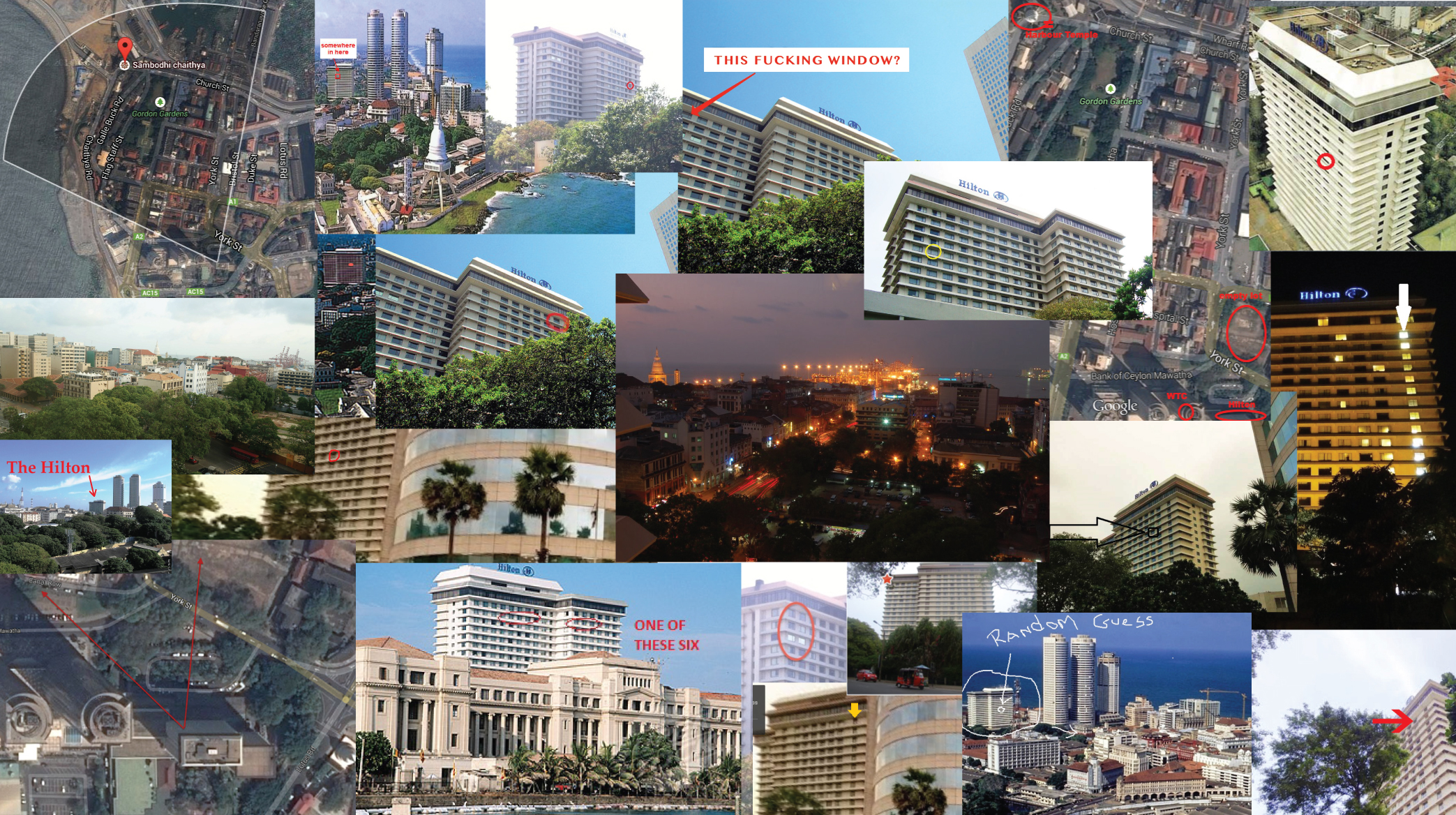
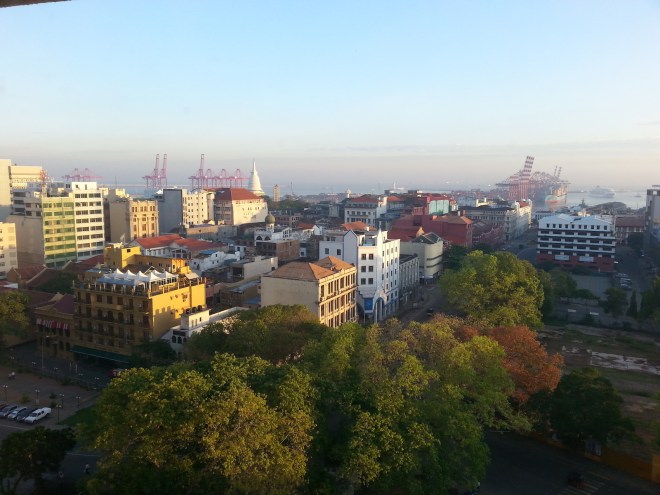
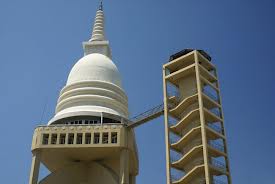
This appears to be a northwesterly view of the Buddha Jayanthi Stupa in Colombo, Sri Lanka, also known as the Harbour Stupa, probably taken from one of the high rises along Lotus Road – 10th floor? My guess would be near the intersection of Lotus Road and York Street.

My guess for choosing this view to run this week is because Tuesday 13 May is Vesak Day in the Buddhist world, a day on which we celebrate the Buddha’s birth, awakening and passing into Nibbāna/Nirvana. This also marks the beginning of the Buddhist New Year 2558. The stupa’s construction began in 1956, the year marking the 2500th year of Buddhism.

Here are this week’s guesses as an OpenHeatMap (zoom in by double-clicking an area of interest, or drag your cursor up and down the slide):

This embed is invalid

Shown another way, a whopping 86.4% of contestants guessed correctly this week:
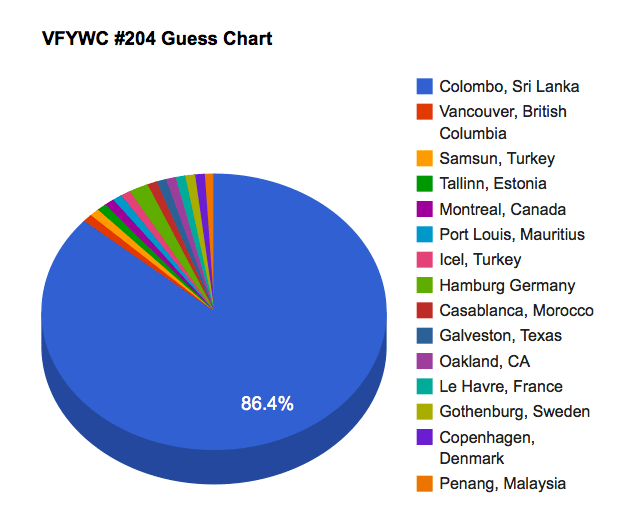
vfywc-204-piechart

Another Colombo guesser:

First time participant here. The photo seems to be taken from a high vantage point somewhere on York Street. Maybe the Hilton?

Indeed it is. A regular player takes everything in:

What did we have to go on, here? A large port, but not a megaport. A reasonably prosperous-looking city. A cruise ship. In the foreground, a mosque? That prominent white building? It looks like a Buddhist temple. Eventually, looking for “Buddhist temple port” we discover that this is a picture of Colombo, Sri Lanka. The Buddhist temple is the Sambodhi Chaithya Dagoba, known as a stupa. The temple straddles Chaithya Road and was built as a landmark for ships. The photo was taken from the north side of the Hilton Colombo. Here is a view from the port looking toward the hotel – notice the Sambodhi Chaithya Dagoba in the foreground:
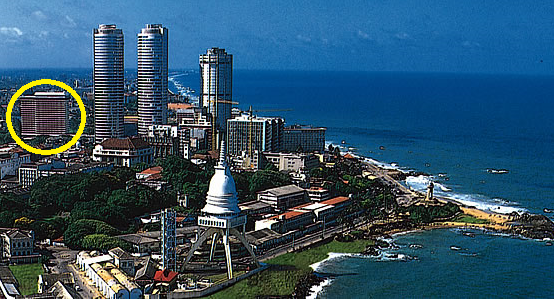
sri lanka2

As to which window the photo was taken from … as always, I’ll guess. 18th floor, northwest corner.

Another uses TripAdvisor to help narrow down his guess:

One TripAdvisor contributor, who provided a view from his window, stayed on the same side of the hotel although on a slightly higher floor, and a good bit further east, so our view is from the west wing. Another Tripadvisor user’s photo from his 7th floor room, while not the same view, provides a similar angle over the trees and buildings, but I think your submitter was a bit higher. Hence, my guess of the 9th floor, far west room, looking north.

Another, like many others, focused on the cranes:

Really fun one this week. Immediately thought Denmark, but then realized it’s a little too run down. Next thought was Indonesia, but no ports checked out at first glance. I Googled “Indonesia port crane” looking for the red and white stripes, and by luck, a picture of that big pier in the middle appeared, with the white dome at left in the contest photo off to the right:
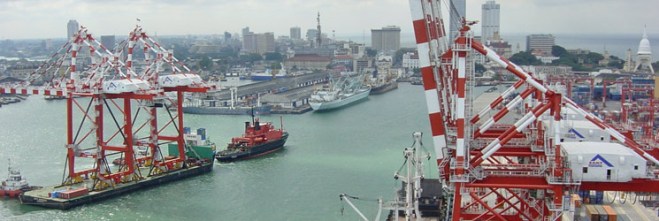
image-content-sri-lanka

The cranes themselves are from Indonesia, but the picture is in Sri Lanka, which was my next guess as Indonesia wasn’t working out. You can see the contest building in the back center of this photo, just to the left of the cranes: The Colombo Hilton hotel.

A rookie correct guesser:

I am so excited, this is my first VFYW entry ever, despite many weekends spent pouring over Google Earth and ending up with nothing. This is also the first contest that my husband has IMG_0181helped with, which I am sure contributed to my success. He has worked with shipping containers for a long time and is my expert consultant on port cities.
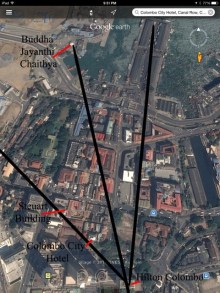
The area has changed a lot in a few years – here is a picture from 2010 from the same hotel (although I am thinking this shot is from the east side of the hotel, and the VFYW is from the west side or center because the Panoramio picture does not show the Colombo City Hotel).

Attached is my attempt to explain: the black lines are the center and outer edges of the picture, with buildings labeled.

Another adds some historical context to the city:

At first glance, this image shows the diversity of South Asia.  A Buddhist temple, a mosque, an Islamic cultural center, colonial era buildings, commerce, and western culture (there’s TGI Fridays in the foreground) all mix together.

Yet the image is also about a rising China. Colombo’s significance as a port city took off under the Portuguese in the early 16th century and continued to be an important trading center through Dutch, British, and independent rule. Today, it is China’s turn to influence trade here. It has invested in a string of ports around the rim of the Indian ocean, including at Gwadar in Pakistan, Chittagong, Lamu in Kenya, and Kyaukpyu in Burma. The contest picture shows Colombo’s South Container Terminal on the left hand side that China invested $500 million to build.  And Colombo may soon be eclipsed by China’s reported $1 billion investment to build a new port on Sri Lanka’s south coast at Hambantota.

A former winner offers a tip for guessing windows:

Boy, you weren’t kidding when you said this week’s contest would be an easy one. Never before have I identified the correct city so quickly!

view-204

A note on methodology: As you can see, I have chosen a window in the middle. Why? Because proximity counts, and being in the middle gives me the highest probability of being close to the actual window in a case like this where I just have to guess. I’m always surprised when people choose windows on the edges, thereby minimizing their chance of being closest. Choosing the middle window this way won me contest #199 :) Thanks for another fun contest!

Many readers seemed to have had a great time this week:

Just about the easiest one so far. It was the candy-striped container cranes in that busy port that gave the game away in just a moment or two spent consulting Google image search: Colombo, Sri Lanka. We’re in the district called Fort, looking north from a low floor in the Hilton Colombo.
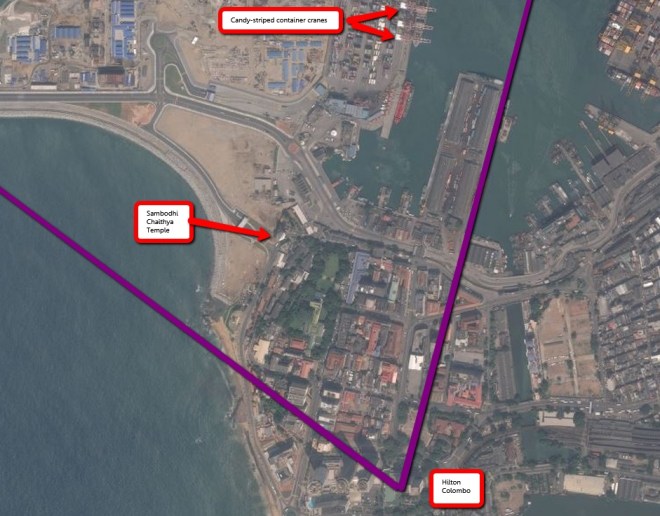
Colombo_Sri_Lanka_map

Out of frame to the left might have been seen the twin towers of Sri Lanka’s own World Trade Center; in the background, that intriguing white bell of a temple would have appeared even more intriguing if our photographer’s room had been on a higher floor: it’s the Sambodhi Chaithya, Sambhodi_Chaithya_multia Buddhist temple built high over Chaithya Road, straddling it on arches that are unhinted at in this photo. Between the temple and the Hilton is the small dome of Fort Jumma Mosque. In the foreground to the left, the yellow building lit by all that early morning sun is the Colombo City Hotel, and next door to it, Ta Da! that’s a TGI Fridays in the two-story yellow building with the red-and-white awning … my god they’re everywhere.

A reader who’s been to Colombo:

This picture was taken near the Pettah marketplace. The water is the Indian Ocean to the west of the city. The roadway in the middle of the picture goes past a colorful old department store and ends at the Grand Oriental Hotel. The Galle Face Green, a huge park along the shore, is just off the left edge of the picture:
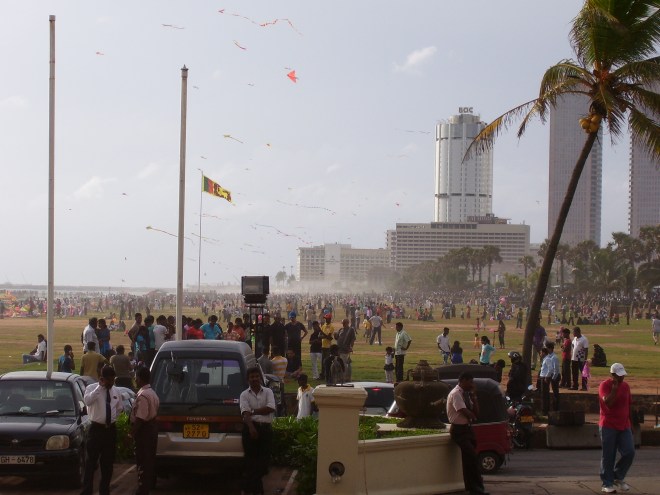
100_0668 Galle Face Green

I’ve been waiting for a long time to see if a picture from Sri Lanka would appear as the view from a reader’s window.

We actually featured Sri Lankan window views before – here, here and here. Another reader:

I’ve been lucky to visit Sri Lanka several times lately – I’m just winding up a three-year assignment in Bangalore, and Colombo is just over an hour’s flight away. It’s a beautiful and very chilled out place to visit, from the jungles, tea-covered mountains and temples inland to the beaches and historical colonial forts on the south coast. Colombo’s fun too, although last time we were there it was Sri Lankan New Year so no alcohol was available anywhere. We struggled through those three days, only to get back to Bangalore where no alcohol was available for another two days due to the Indian elections. In retrospect it was probably good for us.

A real-life contest got this reader a little sauced before playing this week:

Short entry this week as I took to the gin after my son’s little league team (which I coach) lost in extra innings in the playoffs. Father of the year. This week you’re all up in Columbo, Sri Lanka. Specifically at a Hilton on the Fuck That I Already Got My Book floor. Some weeks you just win by being awesome at Google, and I image searched candy-stripe shipping cranes against terms like Middle East and mosque and eventually, pow! Some dude’s travel blog.

Get your shirts ready already, Father’s Day is coming soon.

We are aiming to release merch by then. Last week’s victor swaggers in:

As reigning champ I probably field five queries a day about blurry auto-rickshaws. “Is it black and scarlet?” I’ve learned to interrupt, generally before the second “tuk” of “tuk tuk”. “Cause you know that means Sri Lanka, yeah?”

Guys we are, obviously, looking North-North-West from the Hilton hotel in Colombo, Sri Lanka. Guests at the Hilton can dine at any of a not-too-shabby nine (9) specialty restaurants, including the (Asian-themed?) Emperor’s Wok, then belt out some oldies in the Stella Karaoke lounge and repair tired-but-happy to their air-conditioned suite from which, if it’s Room 1714 – and I believe that is the case here – they can look out at what my research informs me is a body of water, some red cranes, and a weird white dome.

No, the only challenge here was getting a shot of the hotel’s rarely photographed north side, but thanks to my friends (and future sponsors??) at Travel-Images.com, I finally found one:

colomboVFYW

I shall see you again next week.

Wrong on the room and floor number though. Incredibly, even with more than 90 correct guesses this week, only one player got the right floor of the Hilton. Less incredible? It was Chini:

Last week’s view took ’til Monday night to track down; this one took fewer than ten minutes. So it was a weekend off. This week’s view comes from Colombo, Sri Lanka and looks north by northwest along a heading of 340.75 degrees. The picture was taken from a room on the 13th floor of the Colombo Hilton, at approximately 6:27 a.m. (local time) on the morning of April 7th, 2014:
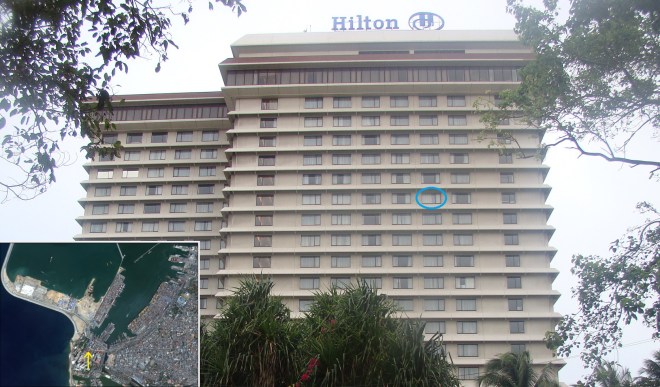
Chini-204-composite

Per the view’s submitter, the actual room number was 1322. Here is a collage of many of this week’s guesses:
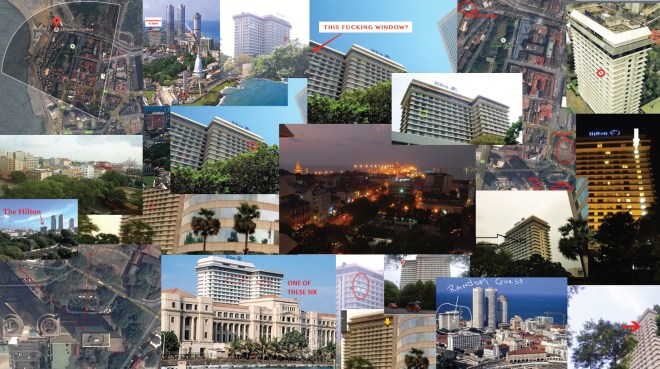
vfywc-guess-collage-204

Our winner this week is a longtime player with the best overall guessing record among the several readers who guessed either the 12th or 14th floor:

Wow… you sure un-dropped the hammer on this one. Googling “stupa port” for images returned four images of a guy wearing a yellow shirt selling something followed by this image [to the right]. Bingo!

This week’s view is of the Fort Colombo District and port of Fort Colombo, Sri Lanka. It was stupataken from the Hilton Colombo hotel, a tall rectangular blight on the otherwise stately Colombo skyline (otherwise, I’m sure the hotel is lovely). It was taken from the north side of the building, near the western end, and a bit more than halfway up. I’ll take a stab at a guess of the 12th floor.
(Archive: Text|Gallery)

The Know Nothing Party

White House Climate Maps

It’s not just Rubio who rejects climate science. Waldman looks at where all the major Republican presidential contenders stand on global warming:

Last time around, almost all the 2012 candidates had embarrassing flirtations with climate realism in their pasts. Just a few years prior, the common Republican position had been that 1) climate change is occurring, and 2) the best way to deal with it is not through heavy-handed government regulation, but by harnessing the power of free markets in a “cap and trade” system, which worked so well to reduce acid rain. Mitt Romney, Newt Gingrich, Tim Pawlenty, and John Huntsman had all previously endorsed cap and trade.

But the current crop of potential nominees have purer records when it comes to climate denialism.

His bottom line is that only “one of the potential contenders (Chris Christie) seems willing to say that human activity is a significant cause of climate change.” MacGillis tackles Rubio for declining to “speak out against something that is not only threatening a home-state industry but the actual state itself“:

This would seem like something the voters of Florida might want to take note of when they encounter Rubio on the ballot in 2016—whether for reelection as a senator or as a presidential candidate. It’s hard for elected officials in Washington to show their regard for their constituents in this post-earmark era of ours, but one of the minimal requirements would seem to be making even rhetorical feints toward worrying about the permanent flooding of said constituents’ largest cities.

Good luck with that. Rubio needs to get the Christianist vote, and I’m not sure they’d be too upset if Miami Beach sank beneath the waves. Brian Merchant highlights places likely to get flooded:

99.5 percent of the population of Louisiana, as if they haven’t suffered enough, will again find themselves underwater when the seas rise 10 feet. Thirty percent of all of the homes in Florida will be submerged; that’s 5.6 million people. [Fort] Lauderdale, for one, will be nearly below the waves. Only 9 percent of New York City will have to relocate in the face of rising tides, but then, that means 700,000 people will have to find new homes—twice as many as New Orleans.

Even if you don’t live at or near sea level in one of those vulnerable areas, the crisis the rise will bring will impact you too; it will either cost heady sums to shore up the flood-walls and prepare the dikes, or chaos and misfortune will reign when a disaster—a hurricane, for instance—hits. Either way, rising seas are a hugely destabilizing force.

Like A Gay Sonic Boom, Ctd

A couple of thoughts: yes, the double standards are not subtle; but no, it isn’t crazy that some people reacted to the black-white gay smooch with a little discomfort or even recoil. Even Comrade Stern is able to distinguish between a member of the KKK and someone who just goes “eww” when seeing something he doesn’t usually see and that involves tongues and tonsils and dudes. Not everyone, it appears, who still has that Al-Tipper moment in our scarred subconscious is a raging bigot. For this staggering act of empathy for the otherwise hate-filled masses, we thank Mr Stern. And let me heartily endorse his basic advice: go kiss on the mountain, fellas.

Yes, you can overdo it. When I was flush with out-of-the-closet freshness in my early twenties, I’d occasionally take a date or fling down to the Washington Monument. There was usually a line to get in, full of regular folks, and it made for a perfect audience. So – and yes, I know it’s obnoxious in retrospect – but we’d hang out affectionately and occasionally make out. It wasn’t a kiss-in. But it was a very early 1990s fusion of politics and sex. Friends of mine told me I’d get beaten up – but I figured that wasn’t going to happen smack dab on the Mall. And anyway, fuck it. I’ve obviously long since moved on, but I wonder, looking back, if somebody’s glimpse of us in their peripheral vision may have shifted someone’s perspective on the world just a little. A little discretion goes a long way, but it seems to me vital we do not censor ourselves for fear of reaction or propriety. If people are going to understand us, they have to see us as we are. Even if, as Vito and Michael revealed, it is in a moment of unrestrained joy. Perhaps especially then.

Book Club: Ask Bart Ehrman Anything I

As the first Dish book club draws to a close, the author of How Jesus Became God was gracious enough to answer your questions about his book. Below is the first installment of his responses:

Has changing your mind about a major question, like when Christians believed Jesus to be divine, caused you to rethink any of your other positions about the historical Jesus or early Christianity?

My views of the historical Jesus have not changed at all. Ever since graduate school I have thought that Albert Schweitzer was basically right (though wrong in the details) in understanding Jesus as a Jewish apocalyptic prophet who anticipated that God was soon going to intervene in history in order to overthrow the forces of evil and bring in a good how-jesus-became-godkingdom on earth. That continues to be the most widely held view among critical scholars in Europe and North America. Understanding that Jesus was this kind of teacher/preacher is important for my book, since Jesus almost certainly did not teach his disciples that he was God, but that God’s kingdom was soon to arrive and they needed to prepare for it.

Where my views have changed involves the key question of what Jesus’ followers thought about him after his death. The view I held for many years was that the earliest Christians did not think of Jesus as truly God until late in the first century, when the Gospel of John portrays him as declaring himself to be divine. In doing my research for How Jesus Became God, I became convinced that this was absolutely wrong. The followers of Jesus declared that Jesus was God as soon as they came to believe that he had been raised from the dead. Already at that point they maintained that God had made him a divine being. And that was the beginning of Christology.

Eventually some Christians came to think that it was not at his resurrection that he had been made God, but at his baptism; some came to think that it was earlier, at his conception; and some then came to think that he had been a pre-existent divine being before coming into the world. But it all started not in later decades, but at the very beginning, in the belief that he had been raised from the dead.

You firmly put Jesus in his context as first century Jewish apocalyptic preacher, but are there any ways in which he was different from the other would-be messiahs most of us have never heard of?

Yes indeed! Jesus was certainly different from other ones, for no other reason than that all of us is different from everyone else. So he must, virtually by definition, have been different. His bookclub-beagle-troverarching message was not radically different from the one proclaimed by others (e.g., John the Baptist). But what made him especially different in my judgment is two things. First, he taught that he would be the king of the kingdom that was soon to come (John the Baptist never said any such thing about himself) and that those who followed his specific teachings would be the ones who would enter that kingdom. And second, unlike every other alleged messiah from antiquity, Jesus alone was thought by his disciples to have been raised from the dead. That changed everything, as I try to show in my book.

If the Gospels are as unreliable and contradictory as you make them out to be, why trust any parts of them for information about the historical Jesus?

In many respects the Gospels are like any other historical source for any historical event or person – whether a source from the 50s or the 1950s. Every source has problems, and historians when using sources have to determine what those problems are and how to get around them in order to use the sources to establish what most probably happened in the past. So I don’t believe in having any different approach to the Gospels from that which you would have to any other ancient source – for example, Plutarch, or Suetonius, or Philostratus, or … choose your author!

Scholars have methods for dealing with sources that are contradictory and filled with non-historical information. They are pretty much the methods you yourself use when trying to figure out what really happened when several people tell you different things and sometimes tell you versions of what happened that are obviously biased. You look for elements of their accounts that are consistent with each other (especially if they haven’t conferred to get their stories straight) and that do not reflect the biases they have and that are plausible given everything else you know about the events (general plausibility). That, in rough form, is what historians do when dealing with the Gospels. I should stress that the problem with the Gospels isn’t simply a problem that I have, and these methods for approaching the Gospels are not ones I came up with. All of this is standard material for anyone working in the field of New Testament studies.

Why does the Gospel writer refer to ‘the beloved disciple’ without mentioning his name? Is there a deeper meaning?

That’s been a very long-standing question. Some interpreters have argued that the Beloved Disciple of the Fourth Gospel is someone that we know of otherwise – e.g., John the son of Zebedee, or Lazarus, or Mary Magdalene, and so on. None of these identifications is overly persuasive. It is sometimes thought that he is a symbolic figure who is meant to stand over-against Peter in the Gospel (with whom he is often teamed). Others have thought that he is the source of the author’s information for the Gospel, a disciple known to the community in which the Gospel was written who knew Jesus and was the guarantor of the information found in the Gospel, who did not need to be named because he was well known and was simply called, by his own followers, “the one whom Jesus loved.” I’m not convinced by any of the proposals myself, but don’t have a better one to suggest.

Would it be worthwhile to compose a spare, modern “gospel,” focusing squarely on the historical Jesus, including only the best-attested material, and eliminating some of the more dubious content from the later synoptics?

Yes, that has been tried a number of times – most notably by Thomas Jefferson in the Jefferson Bible (still widely available) and, possibly less notably, and in a different way, by the modern-day Jesus seminar in its book The Five Gospels, which indicates the passages that, in the opinion of the scholars in the seminar, are more likely to be historically authentic.

Could some of the difficulties Islam is having right now be mitigated by textual criticism of Islamic scripture similar to the kind that you engage in?

I wish I knew the answer to that one! But I’m not an expert in Islam, I’m afraid.

What did you think of Reza Aslan’s Zealot, another book on the historical Jesus that’s been in the news?

Aslan is a professor of creative writing, and as a result, and as you would respect, he writes extremely well. Zealot is a real pleasure to read. Unfortunately, Aslan is not trained at the advanced level in the New Testament, classics, ancient history, the history of early Christianity, or any other field of relevance for discussing, authoritatively, the life and teachings of Jesus. And I’m afraid that this shows rather glaringly in his book, as he makes many, many mistakes both about historical detail (e.g, involving Roman history or the history of the early followers of Jesus) and about the Gospels of the New Testament and about Jesus himself. I give lots of examples on my blog in a series of posts that I gave in December (see one example here). The other thing to say is that his overarching thesis is not new, even though he more or less intimates it is. The first scholar of the Enlightenment to write about the historical Jesus (H. Reimarus) had a very similar thesis. I.e., it’s been around since the end of the 18th century and the vast majority of scholars have found in unconvincing, for reasons I lay out, again, at length in my blog.

The second part of his responses will be posted soon. Read the entire Book Club discussion on Ehrman’s book here.

Is Anti-Obamacare Fervor Waning?

Obamacare

Jed Lewison finds that Fox News’s coverage of Obamacare has ticked down:

I mean, I guess you could argue that the only reason that Republicans are talking about Benghazi and not Obamacare is that Benghazi is the biggest scandal in American history—but only if you’re delusional. If you’re grounded in reality, the real reason couldn’t be more obvious: Even the GOP understands that repealing health care coverage for millions of Americans is a terrible campaign message, and Benghazi is a shiny object with which to distract their gullible base.

Sargent reviews recent polling on the law:

new CNN poll illustrates the situation nicely: It finds that far more Americans want to keep Obamacare than repeal it. At the same time, only majorities of Republicans want repeal and only majorities of Republicans think the law is already a failure.

The CNN poll finds that 49 percent of Americans want to keep the law with some changes, while another 12 percent want to keep it as is — a total of 61 percent. Meanwhile, only 18 percent want to repeal and replace the law, and another 20 percent want to repeal it, full stop — a total of 38 percent.  That’s 61-38 for keeping rather than repealing the law. Among independents, that’s 55-44.

Jaime Fuller examines the same poll:

There’s another question that was asked in the CNN poll that goes a long way in explaining in how complex and mercurial opinions in Obamacare can seem. When respondents were asked whether they thought the health-care law was a success or a failure, 49 percent said it was too soon to tell. Last November, 53 percent said it was too soon to definitively say how the Affordable Care Act will be written about in the history books.

Barefoot Running Hits A Wall

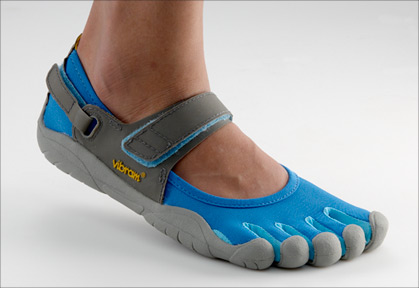
Vibram has settled a lawsuit over its barefoot shoes:

The company will put $3.75 million into an escrow account to pay out settlements to class vibrammembers and will remove all claims that its products either strengthen muscles or reduce injuries—unless it comes up with proof. … Whether running barefoot is actually superior to using normal running shoes has been increasingly called into question over the last few years. While early studies showed that the barefoot style could reduce impact in areas like knees that are prone to strain, later studies found that the strain simply shifted to other parts of the leg and foot. Barefoot running is not necessarily better—just different. In response, Valerie Bezdek filed her class-action suit against Vibram in Massachusetts in March 2012.

Sarah Kliff explains the science:

Vibram has attached a laundry list of health claims to its shoes, detailed in a February 2013 legal complaint:

(1) strengthen muscles in the feet and lower
legs, (2) improve range of motion in the ankles, feet, and toes,
(3) stimulate neural function important to balance and agility,
(4) eliminate heel lift to align the spine and improve posture,
and (5) allow the foot and body to move naturally. At various
times, defendants’ website added that wearing FiveFingers would
improve proprioception and body awareness, reduce lower back pain
and injury, and generally improve foot health.

Podiatrists beg to differ. The American Podiatric Medicine Association put out a policy statement back in November 2009 — which they still stand by today — saying that “research has not yet adequately shed light on the immediate and long-term effects of this practice.”

But Fallows won’t be claiming his refund:

[A]s I shifted to Vibram shoes, I also shifted to what has been (again miraculously) a multi-year stint of injury-free running. True, my change of footwear coincided with some other injury-buffering changes: Always taking at least a day off between runs. Opting for rubberized tracks rather than hard paved roads. Stopping as soon as something started to hurt, rather than “running through” the distress; and generally acting like a senior-status wimp.

All of these amounted to a blow to the pride, perhaps—one of many as the years roll on. But, for now, through the Vibram age nothing has gone physically wrong with my running infrastructure.

Nevertheless, Peter Vigneron thinks “the market for minimalist shoes has bottomed out”:

According to the Journal, sales in that category are down 47 percent this year even as the rest of the shoe industry has grown. What for several years looked like a trend with staying power now looks pretty clearly like a fad.

That’s unfortunate, because I’m mostly convinced that minimalist shoes are in fact better than normal shoes. Why? Even though the evidence for minimalism is weak and contradictory, it’s no weaker than the evidence for traditional shoes, which are probably over-cushioned and over-supported.

Fighting Cartels? There’s An App For That Too.

c42c015bb

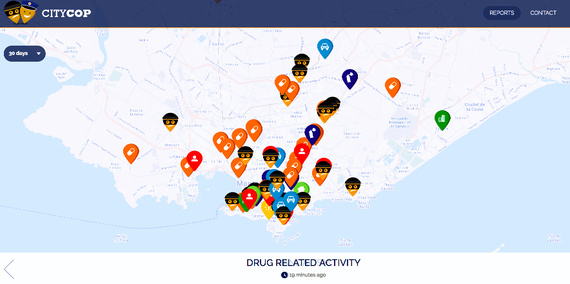
Uri Friedman charts the rise of web applications that crowdsource crime reporting:

In the last three months, Guatemala has witnessed 356 homicides, 202 armed attacks, 44 illegal drug sales, 11 kidnappings, and six cases of “extortion by cell phone.” These numbers come courtesy not of Guatemalan law-enforcement but of Alertos.org, a new platform that recruits citizens to report crimes. And they’ve enlisted in the effort, using email, Twitter, Facebook, mobile apps, and text messaging to chronicle thousands of criminal activities since last year – in a country where a hobbled police force is struggling to address the fifth-highest murder rate in the world.

In recent years, police have courted cell phone-toting citizens as crime “sensors everywhere from Washington, D.C. to the tiny Kenyan village of Lanet Umoja. But the practice has gained particular traction in Latin America, which, as the UN reported in April, has the highest rate of criminal violence on the planet (the region accounts for 8 percent of the world’s population and a third of its murders). The criminal syndicates and drug cartels behind this bloodshed have overwhelmed, crippled, and corrupted national police forces, resulting in the highest levels of impunity in the world as well. In these countries, criminals literally get away with murder, again and again. Amateur crime-mapping has emerged as a parallel law-enforcement mechanism – in part owing to the popularity of cell phones in the region.

(Screenshot of Uruguay’s new CityCop.org platform)