How A Fruit Fly Could Save Your Life

Researchers are exploring how the sensitive olfactory systems of insects might help detect cancer in humans:

[P]erhaps the most promising method for using insects to diagnose tumors comes from a recent experiment carried out by researchers from the University of Konstanz in dish_fruitfly Germany and the University La Sapienza in Italy, which demonstrated that fruit flies can be genetically modified to glow the moment they come in contact with these volatile molecules.

It doesn’t get more straightforward than that. A fruit fly possesses less than half as many odor-sensing receptors as a bee, but its olfactory system is apparently still sensitive enough to distinguish cancerous cells from healthy ones, according to the team’s report. Moreover, the researchers found that the receptor neurons on the flies’ antennae were able to differentiate between five types of breast cancer.

For the study, detailed in the journal Nature, the investigators devised a machine that blew the odor emitted from five different strains of lab-grown breast cancer cells, along with healthy in vitro human breast tissue, over an area containing the flies. They then used a microscope to examine the fluorescent patterns that became visible on the flies’ antennae as their receptor neurons detected the odors.

(Photo of orange fruit fly by Chun Xing Wong)
Unfriending Facebook

A decade after the social network’s launch, Nicholas Tufnell has given up on the site, explaining that “there’s something about the relentless happiness of people on Facebook that I find monstrous”:

Everyone is apparently always somewhere better than I am and what’s more, they’re having a brilliant time.  My life is not like that. In reality, no one’s life is like that, these are of course constructed narratives, our “best ofs” — but sometimes it’s hard to reason to yourself that these people aren’t having fun all the time when all you ever see of them is pictures of them having fun all the time. I suddenly start to feel pangs of inadequacy and jealousy… and these people are supposed to be my friends. In this regard, Facebook is truly poisonous.

Some research indicates that Facebook may really lower the spirits of users:

[L]ast summer, a team of psychologists from the University of Michigan in Ann Arbor and the University of Leuven in Belgium decided to drill a bit deeper by evaluating how life satisfaction changes over time with Facebook use. Ethan Kross and colleagues questioned a group of people five times a day over two weeks about their emotional state. They asked questions such as “how do you feel right now?”, “how lonely do you feel right now?”, “how much have you used Facebook since we last asked?” and so on. This gave them a snapshot of each individual’s well-being and Facebook usage throughout the day.

The team found that Facebook use correlated with a low sense of well-being. “The more people used Facebook over two-weeks, the more their life satisfaction levels declined over time,” they said. “Rather than enhancing well-being … these findings suggest that Facebook may undermine it.”

Maria Konnikova examines common motivations for quitting Facebook:

At the University of Texas at Austin, [psychologist Sam] Gosling and one of his graduate students, Gabriella Harari, have been examining why people decide to leave Facebook. They have found three broad themes: people see Facebook as pointless and unnecessary, they see it as a problematic distraction, and they are worried about privacy. As you experience a constant stream of updates from more people, the possibilities for distraction or frustration at a pointless update (did I really need to know that her baby is now teething?) rise apace. And as you share more information with more people, it all becomes a window into who you are—even the parts you might prefer to keep private. The more publicly we form and affirm social bonds—and the more people we form and affirm them with—the more likely we are to see our mental bandwidth filled and our privacy eroded.

Peanut Portraits

Screen shot 2014-02-05 at 5.20.30 PM

Steve Casino creates them:

To begin, Casino studies images of the person he will paint. The next step is finding the peanut — the artist may sift through hundreds of nuts before he finds the perfect one. Once the perfectly-shaped peanut is found, the nut inside is extracted, and the shell is glued back together. A shell of wood filler is that spread onto the front, making for a smooth painting surface. Legs and  a stand are added, followed by the arms once the painting is completed.

How he got started:

Steve Casino became the “Painter of Nuts” on a snack-time whim. He sketched a quick self-portrait on a shelled peanut that he thought matched his shape, and his legume likeness cracked up his coworkers. Casino, a former New Yorker, then hurried to enshrine hometown heroes The Ramones, adding paint and limbs to peanut bodies. After a minor social-media explosion, Casino set about cashing in on the attention.

See more images from the series on the artist’s Facebook page.

(Photo by Steve Casino)

Profiting From Less Pollution

Cleaner air correlates with greater cashflow:

new paper suggests [one] measure to curb pollution that may have had beneficial long-term economic impacts for individuals. The paper’s authors, Adam Isen, Maya Rossin-Slater and Reed Walker, compared the adult labour-market outcomes of those born in counties in America where air pollution decreased as the result of the 1970 Clean Air Act to those born in areas where pollution did not fall in this period. They found that those who were born in counties that were forced to cut air pollution as a result of the legislation earned more by their thirties than they would have otherwise: gaining approximately $4,300 each in extra income over their lives.

At first, this result may seem a little strange. As dirty industries closed in many affected areas as a result of the Clean Air Act, one would expect incomes to fall as the result of increased unemployment. Yet the authors of the paper found the opposite: the long-term benefits of better childhood health on adult incomes outweighed the other negative immediate economic effects that may have resulted from the legislation.

Our Online Afterlives

In a recently unlocked essay, Alexander Landfair traces the history of Facebook’s policies on deceased users. He contemplates the digital afterlife more broadly:

Death is a problem not only for Facebook but also for all the major landmarks of the Internet landscape: Google, Twitter, Amazon and Yahoo, the last of these being the only company in that list to include a death clause in its “terms of service.” Though the U.S. government encourages every citizen to create a “social media will,” the concept of digital executors is a legal gray area generally not recognized by law. Only one state, Oklahoma, has passed legislation allowing one’s legal executor to lawfully access one’s online accounts. And even for Oklahomans, to bequeath your Flickr password to your next of kin, for example, is technically illegal—as it violates Yahoo’s terms of service contract. Though criminal, it is currently the only way to preserve your online photo albums after death. Across the pond, Europe’s highest courts are currently hearing important cases regarding le droit à l’oubli—or the “right of oblivion”—that will decide the extent to which individuals determine the fate of their online identities. More broadly, the legislation will help the world determine what it means to “be online” and whether one can ever leave the Internet once one steps foot inside.

Previous Dish on the subject here.

(Hat tip: Tess Malone)

The Best Of The Dish This Weekend

IMG_1311

Philip Roth is not a Jewish writer. Meditation for prisoners. Primates through the looking glass. How Richard Dawkins is more utterly certain about his beliefs than Sean Hannity. Hotter cyclists win. And Cinderella on Tinder (genius).

Oh, and the habits of straight guys on dating and hook-up apps:

With a lot of guys I could just, I wrote gibberish, just pounded on keyboard for a minute and sent it and the vast majority of them responded with that sounds great, what are you doing on Friday?

Not that gay guys are any better.

The most popular post of the weekend was The Language Of Certainty In Atheism, followed by “With My Daddy In The Attic.

See you in the morning.

Quote For The Day II

Missouri v Mississippi

 
“Once I became official to my teammates, I knew who I was. I knew that I was gay. And I knew that I was Michael Sam, who’s a Mizzou football player who happens to be gay. I was so proud of myself and I just didn’t care who knew. If someone on the street would have asked me, ‘Hey, Mike, I heard you were gay. Is that true?’ I would have said yes. But no one asked. I guess they don’t want to ask a 6-3, 260-pound defensive lineman if he was gay or not,” – Michael Sam, New York Times. There’s a great video interview with him here.

What’s so encouraging here is not just that he’s African-American but that he was already out among his team-mates. So there’s no shock in the team, and what seems like a really adjusted, virtually normal life. He’s also really good – and yes, I infer that solely from the fact that the AP named him their SEC Defensive Player of the Year.

This is the next gay generation. You cannot stop their self-esteem. And you cannot pigeon-hole them into any category. You just have to get out the way.

(Photo: Michael Sam #52 of the Missouri Tigers celebrates with fans following a game against the Ole Miss Rebels at Vaught-Hemingway Stadium on November 23, 2013 in Oxford, Mississippi. Missouri defeated Ole Miss 24-10. By Stacy Revere/Getty Images.)

A Poem For Sunday

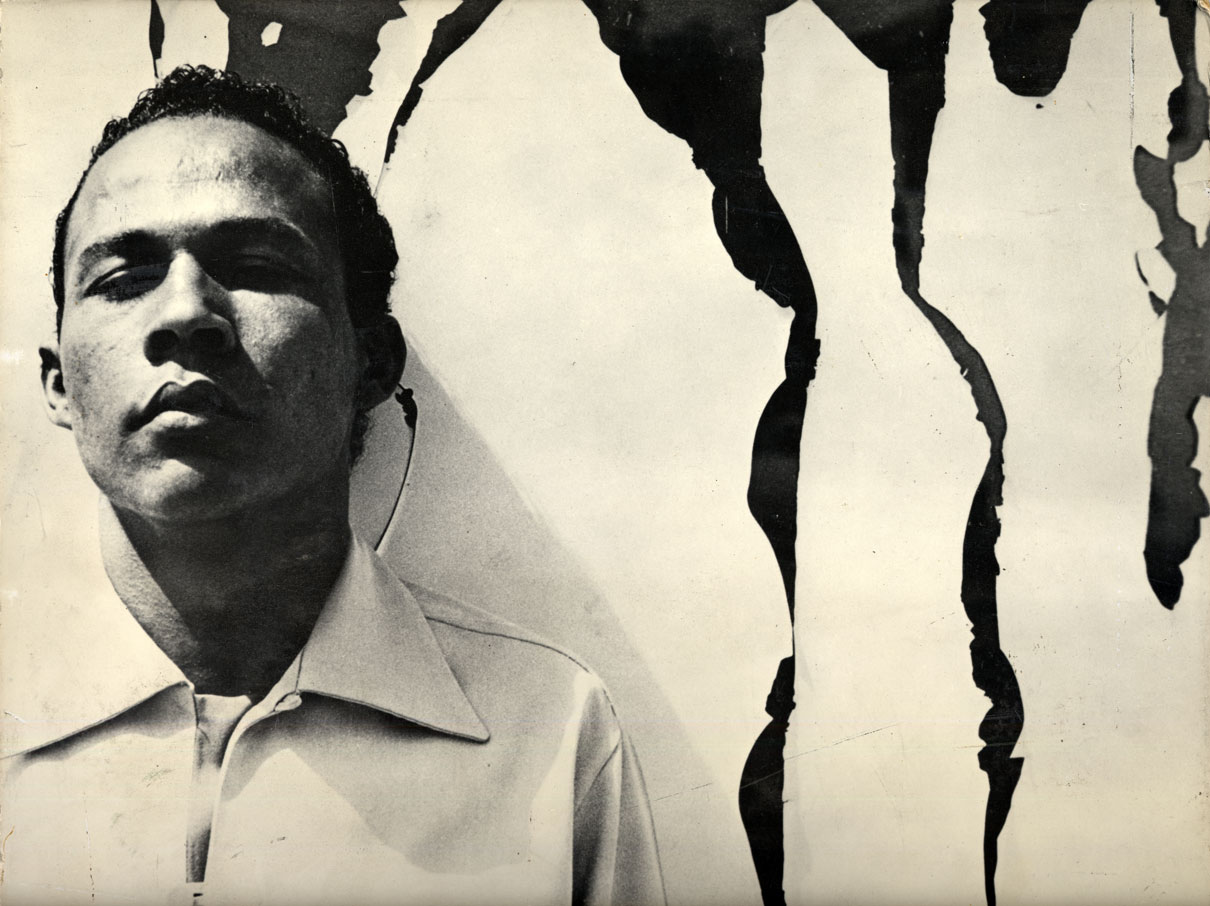
Bob_Kaufman

From “Jail Poems” by Bob Kaufman (1925-1986):

I am sitting in a cell with a view of evil parallels,
Waiting thunder to splinter me into a thousand me’s.
It is not enough to be in one cage with one self;
I want to sit opposite every prisoner in every hole.
Doors roll and bang, every slam a finality, bang!
The junkie disappeared into a red noise, stoning out his hell.
The odored wino congratulates himself on not smoking,
Fingerprints left lying on black inky gravestones,
Noises of pain seeping through steel walls crashing
Reach my own hurt. I become part of someone forever.
Wild accents of criminals are sweeter to me than hum of cops,
Busy battening down hatches of human souls; cargo
Destined for ports of accusations, harbors of guilt.
What do policemen eat, Socrates, still prisoner, old one?

(Reprinted from Angles of Ascent: A Norton Anthology of Contemporary African American Poetry, edited by Charles Henry Rowell © 2013 by Charles Henry Rowell. Used by kind permission of New Directions Publishing Corporation. Photo of Kaufman in San Francisco, circa the 1950s, via the City Lights blog)