You have until noon on Tuesday to guess it. City and/or state first, then country. Please put the location in the subject heading, along with any description within the email. If no one guesses the exact location, proximity counts. Be sure to email entries to contest@andrewsullivan.com. Winner gets a free The View From Your Window book or two free gift subscriptions to the Dish. Have at it.
Author: Andrew Sullivan
The Beauty Of Better Bikers
Bill Andrews points to a study that “shows statistically that attractiveness correlated positively with performance among cyclists who completed the 2012 Tour de France.” The idea behind the study:
Just get headshots of 80 male cyclists who finished the grueling Tour de France, put them up on www.fluidsurveys.com, and have people rate them on a scale of 1–5 (5 being the dreamiest). Then, compare the cyclists’ hot-or-not ratings with how they did in the race. Sole author Erik Postma also asked the participants to rate the man’s masculinity and likeability, and asked whether the rater, if female, was on hormonal contraception.
The results were clear. The most attractive men were also, unbeknownst to raters, the riders that performed best. This correlation was strongest in women not on the pill. (The effect was about the same for women on it and men, interestingly enough.) A rider’s perceived masculinity didn’t seem to have anything to do with his performance; there was a positive relationship between performance and likeability but it, too, was mostly dependent on the guy’s looks.
A Poem For Saturday
Dish poetry editor Alice Quinn writes:
Here at the Dish we continuously post poems from a wide range of poets and eras, but February is Black History Month, and in this moment of such an extraordinary flowering of achievement among black poets in our country, presenting a slew of marvelous poems by writers in this tradition all throughout the month is happily irresistible.
This also gives us a chance to honor the book from which these poems are drawn, Angles of Ascent: A Norton Anthology of Contemporary African American Poetry, edited by Charles Henry Rowell and praised by Edward Hirsch, poet, essayist, and President of the John Simon Guggenheim Foundation, as “the most thoroughly engaging and inclusive anthology of contemporary African American poetry to date.”
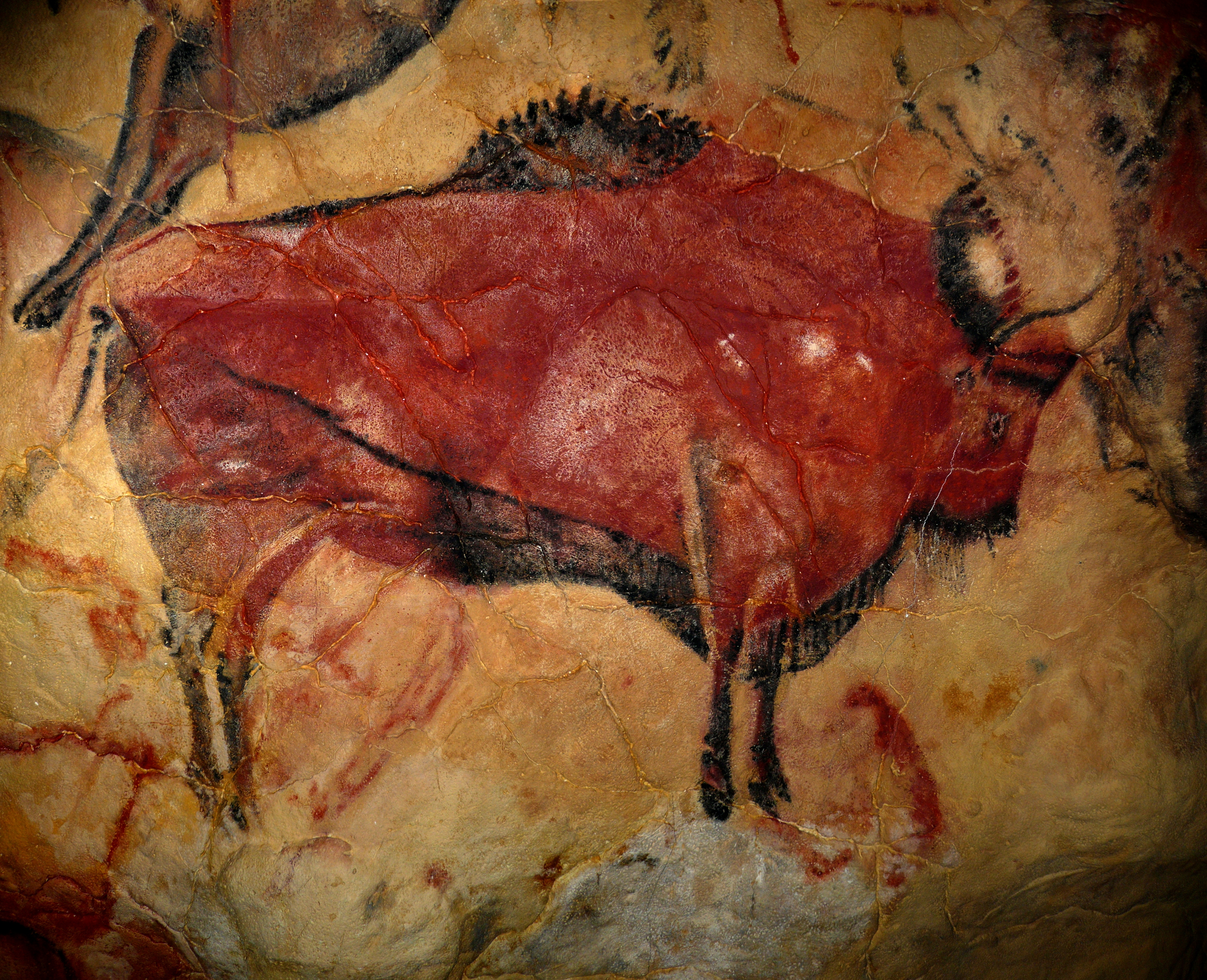
Our first selection is “Clay Bison in a Cave” by Clarence Major:
Clay-tan, eyeless,
voiceless, even in a sense weightless,
in motion yet motionless still
for centuries and centuries,
stuck in this motion
of climbing, perhaps lost, these
two Paleolithic bison,
heads lifted, strained back
to the black endless sky,
as they climb toward sunny grass.
Which black sky? Which grass?
Rock-step by rock-step,
up they go, on up and up.
The black sky at the top of the cave.
The grass that is always
more a promise in a dream
than that sweet kiss
blown by water-colored wind.
(Reprinted from Angles of Ascent: A Norton Anthology of Contemporary African American Poetry, edited by Charles Henry Rowell © 2013 by Charles Henry Rowell. Used by kind permission of Coffee House Press. Painting of a bison in the cave of Altamira, Spain, via Wikimedia Commons)

The View From Your Window
Revenge Isn’t Sweet
Vaughan Bell highlights a study finding that “taking revenge is rare, but when it happens, it is not only remarkably unsatisfying but counter-productive in terms of dispelling the desire for retribution”:
Empirical research by Crombag, Rassin, and Horselenberg (2003) showed that most people do not actually take revenge but merely have thoughts, feelings, and fantasies about it (see also Crombag, 2003). … [T]he group of people who took revenge even after a period of time still struggled with more vengeful feelings than the people who did not take revenge. Although 58% experienced satisfaction and 16% experienced triumph, only 19% reported their vengeful feelings to be completely gone, compared with 40% of the people who did not take revenge.
Gender Equality Takes A Jump Forward
This year, women’s ski jumping debuts as an official Olympic sport. Tony Manfred notes that the “gender disparity that exists in some other sports doesn’t in exist ski jumping”:
Let’s use this season’s World Cup event in Lillehammer as an example. The men and women both jumped on the same hill on the same day in the same conditions. The men, on average, were slightly better than women in both the distance metric and the style metric. But the difference is so small as to make the two groups fairly comparable. In addition, several female jumpers outscored the majority of male jumpers. On average, the top-20 male finishers were only a little bit better than the top-20 female finishers. The men jumped 0.85 meters further, earned 2.35 more style points from the judges, and scored 6.18 more points than their female counterparts overall.
Ian Crouch suggests that such competitive male and female scoring could lead to more mixed-gender events at future Olympics:
Why shouldn’t there be mixed curling or bobsled teams? The Summer Games already have men and women competing against each other in the equestrian events; why not reintegrate some sailing events (which fielded mixed-gender teams until 1988, when women’s categories were added) or else add team golf, archery, or shooting? Such events would not only be fresh and entertaining spectacles but an expression of the “principle of equality of men and women” as demanded in the Olympic Charter.
It’s Not All Jenny McCarthy’s Fault
Amanda Schaffer provides details on the rise of whooping cough in the US:
Early on, the whooping-cough vaccine was considered an unambiguous success story. Over time, though, scientists—as well as crusading vaccine skeptics—raised concerns about the shots’ side effects, which could include high fever and, occasionally, seizures. In the late nineteen-nineties, the U.S. switched to a new formulation, made not from dead, whole cells of bacteria (as the original had been) but from selected components of the bug that would trigger an immune response more safely. Unfortunately, though, the effectiveness of the updated vaccine waned far faster than the old version had, and faster than researchers had expected. This is probably the main reason that whooping cough has surged recently in older children: those who received the newer vaccine as babies became vulnerable again as the doses that they received between ages four and six, and the boosters that they received between eleven and twelve, wore off. (Parents who refuse to vaccinate their children undoubtedly make the problem worse.)
Higher levels of circulating disease, including among people who had received the shots, meant that the bacteria may have had, in essence, a chance to sniff around.
Face Of The Day
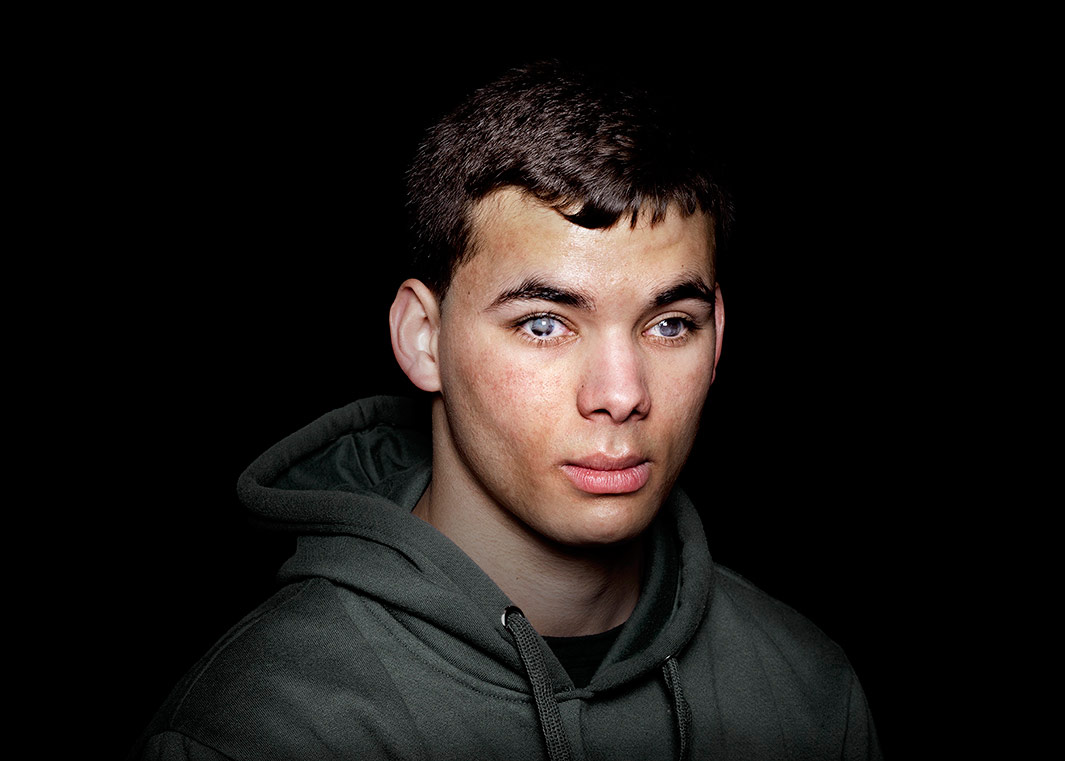
David Rosenberg sums up a series by Rubén Plasencia Canino:
While the power of the gaze is often admired in portraiture, there is still a mystery, or perhaps a fear, of trying to capture the gaze of the blind. In January 2013, photographer Rubén Plasencia Canino had an idea of photographing blind people, focusing specifically on their gaze, for a project he titled “Obscure.” To begin the project, he connected with ONCE, Spain’s national organization for the blind that helps create social benefits for blind and visually impaired people around the world. ONCE agreed to help out, and for two months Plasencia worked on a project he said was challenging but also one that “opened my eyes, and my heart, to a whole new world of sensations.” Plasencia said the project that forces the viewer to look directly into the eyes of the blind is similar to having an open book in front of you. “It’s an open window that looks out onto an unknown world,” he said via email. “If you look just a bit deeper, you can discover countless stories.”
What Good Is Foreign Aid? Ctd
A reader with 20 years of development experience urges us to expand the terms of the debate:
The fact is, Bill Gates and William Easterly are both right – to a point. In health, aid has made enormous difference on many fronts, not least of all HIV. The rapid resurgence of drug-resistant TB is incredibly scary, and aid’s role is essential. That said, you can find lots of waste and programs that don’t improve things, at least for very long.
Still, the debate really misses the point. This is a rich time in the development world, where people are asking very hard questions about what works and doesn’t work, rather than merely defending aid money. There are, of course, the randomnistas using randomized controlled trials to test whether development projects have caused quantifiable change. And thinkers like Owen Barder are among many promoting complex, adaptive approaches to projects (based on the evolutionary idea that each community/organism succeeds by trial and error and making adaptations suitable for its circumstances) in reaction to linear, command-and-control,”best practices” (logframe) approaches of aid donors. Others are looking at whether just giving cash to poor people is effective, and under what circumstances. I‘m just scratching the surface, but the “Is aid good or bad?” debate is stale.
The Things We Carry
For the short documentary Pockets, director James Lees asked Londoners to reveal their cargo to the camera. Natalie Rose Obank praises the film’s style:
The sound edit … plays quite a nice part to the film. The music itself is quite light-hearted but noticeable. It creates an atmosphere for the audiences, just as to the setting of the work – where these people are, just out on a street. The background atmos track is plain and simple, this doesn’t distract the view from the main purpose of the film, which is what each person in the shot presents. In the edit, I noticed that throughout, the interviews don’t always show a full face, but focus on a particular feature of that person (if it’s important) sometimes it would jump cut from a standard documentary set up and then only show the side of a face. … [I]t almost gives the audience a surprise as the styles of shots change. It keeps the film interesting throughout and also promotes people’s individuality.
(Hat tip: Aeon Film)