America Doesn’t Care About Caring

In a meditation on the low esteem afforded caregivers in the US, Anne Marie Slaughter calls for a new emphasis on care:

I imagine a new America in which citizens recognize that providers of physical, intellectual, emotional, and spiritual care are as indispensable to our society and our economy as providers of income. If we truly valued breadwinning and caregiving equally—as equal components of the American promise of equal opportunity—then we would value male caregivers as much as we value female breadwinners and every permutation and combination in between. But we would also recognize that single parents—who must be sole breadwinners and caregivers in families that often include elder relatives, as well as children—need special help and support. We would embrace marriage for everyone and support policies that would strengthen long-term commitments among family members, however these families might be constructed.

As we strive for equality, we must also redefine and reprioritize the pursuit of happiness, the most personal of America’s founding values. Happiness can certainly be achieved through individual achievement, through winning the competition. But it is equally reached through a web of strong and fulfilling relationships—the warp and woof of connectedness and care.

A Better Banksy

dish_spy

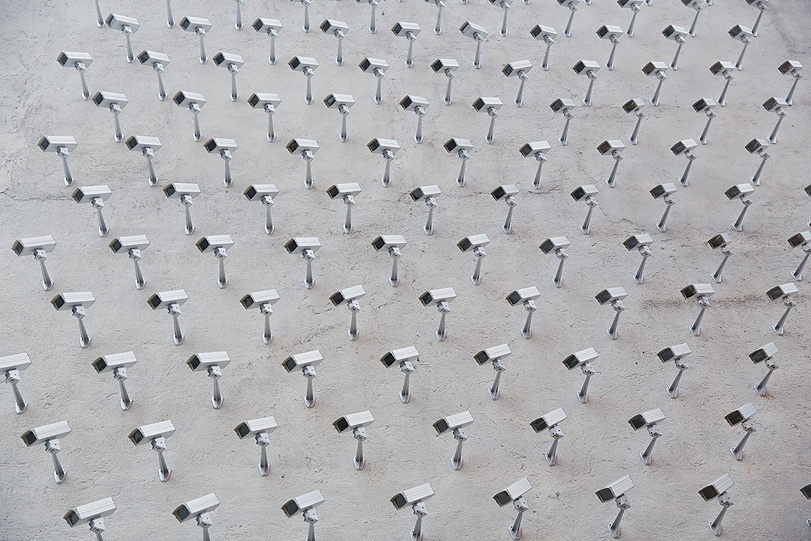
A street artist known as the “Spanish Banksy” installed 150 cameras on the side of a building in Madrid to start a conversation about the surveillance state. Zach Sokol praises Cameras as “less obnoxious than any street art by Banksy”:

Yes, this public art could be called “obvious” as well, but the choice to put the cameras on the plain wall of a plain building on a side street makes this work more interesting than when Banksy put a truck full of “screaming” stuffed farm animals in the Meatpacking District. It’s melodramatic and trite to put the USDA Organic x Build-A-Bear work in the area of Manhattan that includes both the literal meat packers and the luxury brands and upper echelon of material and consumer culture. The installation was one huge wink that ended in an even bigger sigh. The smoke and mirrors spectacle was enthralling for all of five minutes–a bottle rocket, disguised a 4th of July fireworks extravaganza.

SpY, on the other hand, picked a spot where no one might notice his work. It’d be one thing if he put the cameras in Madrid’s Plaza Mayor, or another place with heavy foot traffic, but this tucked-away side street adds more layers to his work: Who exactly would be watched on this side street? Do places and urban spaces suddenly become “important” if they are being watched? Could the information gathered by the NSA and privacy-invading groups actually be useless and nothing to sweat over? Maybe our tracked phone calls and emails are about as relevant as a dusty side street in a slow-paced city. Cameras also complements other manipulations of security cameras, including the Insecurity Camera built at the School for Poetic Computation.

Previous Dish on Banksy here, here, and here.

(Photo by SpY. More here, here, and here.)

What The Needy Really Need

Marc F. Bellemare argues that “[w]hen development agencies and nongovernmental organizations try to do too many different things, not only do they suffer from the policy equivalent of attention deficit disorder; they also spread their already scarce resources ever more thinly”:

Instead of being a mile wide and an inch deep, the practice of development should be narrower and deeper by focusing on those things that matter most to the poor. The political scientist Kim Yi Dionne has found that in Malawi, people who are HIV-positive or who have lost a loved one to HIV/AIDS ranked improved HIV/AIDS services very low among their priorities. They were much more concerned about access to clean water, followed by agricultural development. Yet most public donors don’t seem to care. And private donors, often heralded by free-market proponents as knowing better than public donors, are not much better: in August, Facebook founder Mark Zuckerberg announced plans to deliver Internet access to the five billion people who are not yet online — a priority that Bill Gates called “a joke” when compared to eradicating malaria.

In the spirit of Abraham Maslow’s hierarchy of needs, ensuring that basic needs are met by focusing on boosting incomes would be a good place to start. Many of the things promoted nowadays by development — breastfeeding, the use of cookstoves, gender equality, environmental sustainability, an independent media, Internet access, and so on — fall into place naturally once people have met their basic needs, such as clean water, plentiful and nutritious food, and found a steady source of income. In other words, many conditions targeted by idealistic development goals arose in wealthier countries as byproducts of higher incomes, and trying to provide them at the same time as more fundamental things puts the cart before the horse.

The Best Of The Dish This Weekend

Pantless Sunday Call Draws Participants In Berlin

Several readers found one post today to be, well, aggravating:

I looked for one of your awards to nominate “The Foundations of Morality” for, as it contained discussions worthy of some award. Since none of the awards fit, I’ll just nominate the whole thing as bullshit. Is that an award?

Not quite. But it was annoy-an-atheist day at the Dish. Damon Linker’s thoughts on God were dismissed thus:

It’s substance-free ass gas like this that makes me throw up a little whenever I hear the phrase “sophisticated theology.”

Make your own mind up. We came across some exquisite expressions of grief; and the crucifixion of the ego; the blogger who offers aesthetic critiques of dick selfies explained herself (not that she needs to); more readers spoke of divorcing members of their families (a thread of intermittent sadness and uplift); and someone turned T.S. Eliot into a comic strip.  I have to say I don’t care that this photograph was photo-shopped; and loved the fact that Walt Whitman had a ninth century alter ego.

As for “epiphanies“, a reader writes:

I hope you don’t think this is flippant, after your thoughtful post, but it’s a joke I shared with my boyfriend who died 20 years ago, and he’s been on my mind lately.

Driving back from the beach, on a two-lane bridge, we came up on two pickup trucks who were stopped, one going each way, and the drivers were talking. (It’s a pretty sleepy little Florida panhandle town, so this was probably par for the course.) I said, “I wonder what they’re doing?” and my boyfriend said, “Maybe they’re having an epiphany,” which gave us the giggles. “That one guy is definitely starting to epiph around the edges there,” he added, sending us into fits of laughter. I still find myself saying that, “you’re starting to epiph around the edges there,” and no one ever knows what I mean.

It sucks when you have an in-joke with someone who dies and then you don’t have anyone to be in on the joke with anymore. I’m sure you know what I mean.

As a matter of fact, I do.

The most popular post of the day was Tumblr of the Day (dick pics, natch); second up was on male insecurities about our wing-wangs. None of that content was sponsored, I swear.

See you in the morning.

(Photo: A participant of the No Pants Subway Ride types on an Apple iPhone while riding a train on January 12, 2014 in Berlin, Germany. The annual event, in which participants board a subway car in January while not wearing any pants while behaving as though they do not know each other, began as a joke by the public prank group Improv Everywhere in New York City and has since spread around the world, with enthusiasts in around 60 cities and 29 countries across the globe, according to the organization’s site. By Adam Berry/Getty Images.)

Teetering Between Peace And War

Javad Zarif

The striking thing about the long and delicate rapprochement with newly empowered moderate forces in Iran is how far from the national conversation it is. There are few heated TV debates; Twitter is relatively quiet; the blogosphere sits in two camps of near calcified intellectual hostility; only AIPAC slouches forth from time to time to threaten negotiation-ending new sanctions in the Senate.

And yet we have had two breakthroughs since the last elections in Iran: first the actual interim agreement between the major powers and Iran, and now a secondary practical deal to begin ramping down Iran’s nuclear program starting January 20. That second deal was announced around lunchtime today. All of it appears to be reversible at any point if one of the parties does not appear to be living up to its side of the bargain:

Giving details about the deal, Deputy Foreign Minister Araqchi told state television that each party’s commitments would be implemented “in one day”. “After the first step is taken, then in a short period of time we will again start our contacts for resumption of negotiations for the implementation of the final step.” He added: “We don’t trust them. … Each step has been designed in a way that allows us to stop carrying out our commitments if we see the other party is not fulfilling its commitments.”

It would be foolish to try and glean clues from nuances in public statements, but I don’t find the lack of trust to be a deal-breaker. The honesty about such a lack of trust is what gives the deal a chance to work. But the more fearful and reactionary factions in both countries’ legislatures are doing their best to unravel the detente. In Iran, a big majority of the parliament appears recklessly willing to sanction new uranium enrichment of up to 90 percent (allegedly for powering submarines); in the US, the Senate is also brandishing possible new sanctions that would end the detente if enacted, and require humiliating concessions Iran will never agree to. But neither legislature has yet acted – and the positioning and jockeying may be an inevitable part of what president Obama has claimed is only a 50-50 chance of success.

I don’t have any illusions about parts of the Iranian regime, or about Israeli hopes to scuttle any accord in favor of another unpredictable and polarizing war in the Middle East.

But I do think that this opening – if it is handled right – could avoid an avoidable conflict, open up many new options for US foreign policy in the Middle East, and empower pragmatism in both the US and Iran to mutual advantage. From Afghanistan to Iraq, the US and Iran have cooperated before and can cooperate again. The two peoples are natural allies; and the more the people of Iran get to taste the benefits of ending the brinksmanship and polarization and terror-mongering of their religious extremists, the more possibility there will be for more engagement.

There should be no permanent enemies in world affairs; just the pursuit of permanent interests. This time, we’re close to a rare alignment between Washington and Tehran, Obama and Rouhani. The only serious alternative to this deal, if containment has been ruled out by Obama, is a war. We’d be crazy not to hope it doesn’t come to that.

(Photo: Iranian FM Javad Zarif holds a press conference upon his arrival in Beirut, Lebanon, January 12,2014. By Bilal Jawich/Anadolu Agency/Getty Images.)

Suck-Up Of The Day

“When I asked Ms. Abramson what stamp she wants to put on The Times during her editorship, she answered succinctly and with no hesitation: ‘Journalism of depth, creativity and purpose that is found only in The New York Times.’ There’s little question that she is succeeding on that score, and many others,” – Margaret Sullivan, the NYT’s Public Editor, taking on the boss.

Why Are So Many Haitians Still Living In Tents?

HAITI-QUAKE-POVERTY-HEALTH

Today is the four-year anniversary of the devastating earthquake. Vijaya Ramachandran and Sneha Raghavan wonder what happened to the global community’s $9 billion in aid:

I can think of at least two reasons why we should still care about what happened in Haiti. The first reason is that despite the fact that a sum of money almost equivalent to the GDP of Haiti was disbursed to non-governmental organizations, for-profit contractors and other agencies, most Haitians live without a reliable supply of electricity, clean water, or paved roads. Several thousand Haitians still live in (now tattered) tents provided as part of the relief effort.

The second reason is that understanding what happened in Haiti is critical if we want to do a better job with relief and reconstruction efforts in the aftermath of future natural disasters. Despite commitments made by rich country governments and non-governmental organizations towards greater aid transparency, and the availability of easy-to-use tools such as the International Aid Transparency Initiative (IATI) and UN OCHA’s Financial Tracking Service, it is impossible to trace how the money was spent, how many Haitians were served, and what kinds of projects succeeded or failed.

Previous Dish on the relief effort here. Our coverage of the UN’s “deadly incompetence” in Haiti here and here.

(Photo: A young woman prepares food at Camp Acra in Pétion-Ville, Haiti, where victims of the January 2010 earthquake are living in makeshift tents. As of November 2013, when this photo was taken, more than 170,000 Haitian earthquake victims were still living in makeshift shelters in extremely precarious conditions. By Louis-Joseph Olivier/AFP/Getty Images)

(Hat tip: Mike Dang)

Medieval Mental Healthcare

The Belgian town Geel has been known as a refuge for the mentally ill for over 700 years. Mike Jay describes how the town’s “family care” treatment tradition developed:

Among the people of Geel, the term ‘mentally ill’ is never heard: even words such as ‘psychiatric’ and ‘patient’ are carefully hedged with finger-waggling and scare quotes. The family care system, as it’s known, is resolutely non-medical. … [T]he most common collective term is simply ‘boarders’, which defines them at the most pragmatic level by their social, not mental, condition. These are people who, whatever their diagnosis, have come here because they’re unable to cope on their own, and because they have no family or friends who can look after them. …

During the Renaissance, Geel became famous as a place of sanctuary for the mad, who arrived and stayed for reasons both spiritual and opportunistic. Some pilgrims came in hope of a cure. In other cases, it seems that families from local villages took the chance to abandon troublesome relatives whom they couldn’t afford to keep. The people of Geel absorbed them all as an act of charity and Christian piety, but also put them to work as free labour on their farms.

Today, the system continues along much the same lines. A boarder is treated as a member of the family:

involved in everything, and particularly encouraged to form a strong bond with the children, a relationship that is seen as beneficial to both parties. The boarder’s conduct is expected to meet the same basic standards as everybody else’s, though it’s also understood that he or she might not have the same coping resources as others. Odd behaviour is ignored where possible, and when necessary dealt with discreetly. Those who meet these standards are ‘good’; others can be described as ‘difficult’, but never ‘bad’, ‘dumb’ or ‘crazy’. Boarders who are unable to cope on this basis will be readmitted to the hospital: this is inevitably seen as a punishment, and everyone hopes the stay ‘inside’ will be as brief as possible.

The people of Geel don’t regard any of this as therapy: it’s simply ‘family care’. But throughout the town’s long history, many both inside and outside the psychiatric profession have wondered whether this is not only a form of therapy in itself, but perhaps the best form there is.

Faces Of The Day

dish_fotdsun12

Cute but controversial:

Four days ago, Indonesia-based photographer Tri Joko put up an extremely adorable photo called Snoop on photo sharing site 500px. Not only did 10,000 people view that photo in one day, it raised a storm of controversy as fellow photographers started to call “foul,” or in other words, “this is photoshopped.” Two days after the photo went up, Joko answered back to the criticism with a blog post on his website that stated that he had placed the photo in the “Fine Art” category for a reason and that it was, indeed, a combination of two separate images. The 16-month-old child and the cat were placed together, looking as if they were spying on the same thing.

Here were a few negative and positive comments from 500px:

“Cool idea, but this is heavily photoshopped, right? The paw somehow looks misplaced to me.” – Lukas Grumet

“It’s interesting and controversial to say that photos can’t be retouched, even be photoshopped. Retrospectively, all the traditional paintings are all artificial work, aren’t they? So how do we define an art work? I believe that the beauty of this picture should be more profound in the scene instead of how it is made.” – Lanny Yeh

(Image courtesy of Tri Joko)