Marijuana On The Menu

by Dish Staff

Marijuana Edibles

Vogue’s Jeffrey Steingarten educates his readers on the finer points of cooking with cannabis. A snippet from the conclusion:

Our host, Kip, and a few of his friends greeted us. The kitchen was enviable, lacking nothing. There were even two stone mortars and two stone pestles for the cannabis. More friends drifted in for the next few hours while, using the medicated oil and butter we had brought, Pieter prepared a hundred or so savory gnocchi with rosemary, and Laurent pan-fried fresh local trout and made a sabayon for dessert. One friend of Kip’s who makes cannabis edibles for sale in Boulder, brought a tray of scrumptious medicated chocolate fudge. Kip supplied bottles of good wine. Somebody suggested that the bhang would make a lighter, more delicious substitute for eggnog at New Year’s. A few guests smoked joints. Unlike the folks in downtown Boulder, nobody recoiled from the smoke.

The 50 guests thus had a wide choice of intoxicants, and nearly everybody seemed mellow and happy and chill. Nobody fell asleep or acted out or had a bad trip. The newly legalized cannabis was simply another option.

Jon Walker puts Steingarten’s piece in context:

This is how marijuana legalization gains acceptance and goes mainstream. The more places that legalize it the more different journalists, politicians, writers, and media outlets are willing to talk about it. This in turn makes it easier for others to talk about openly, and it provides a look at legalization from a variety of perspectives. This self-feeding cycle enables the issue to move beyond a narrow political debate to the broader culture.

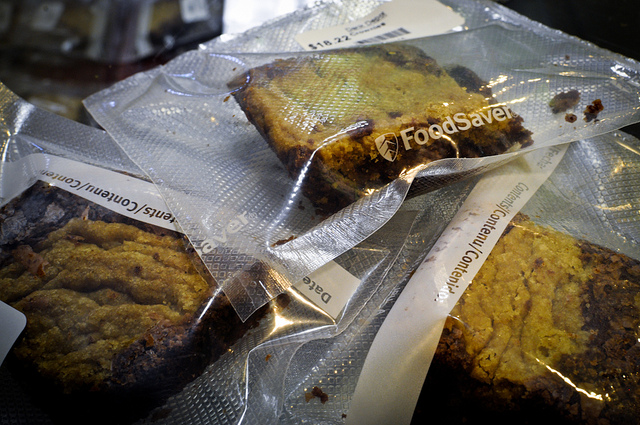
(Photo by Dank Depot)


Grover Gone Wild

by Dish Staff

https://twitter.com/ouchytheclown/status/507222137443082240

The legendary Reaganite doesn’t see why loving Burning Man should affect his conservative cred:

Some self-professed “progressives” whined at the thought of my attending what they believed was a ghetto for liberal hippies. Yes, there was a gentleman who skateboarded without elbow or kneepads – or any knickers whatsover. Yes, I rode in cars dressed-up as cats, bees and spiders; I watched trucks carrying pirate ships and 30 dancers. I drank absinthe. But anyone complaining about a Washington wonk like me at Burning Man is not a Burner himself: The first principle of Burning Man is “radical inclusiveness”, which pretty much rules out the nobody-here-but-us liberals “gated community” nonsense. …

You hear that Burning Man is full of less-than-fully-clad folks and off-label pharmaceuticals. But that’s like saying Bohemian Grove is about peeing on trees or that Chicago is Al Capone territory. Burning Man is cleaner and greener than a rally for solar power. It has more camaraderie and sense of community than a church social. And for a week in the desert, I witnessed more individual expression, alternative lifestyles and imaginative fashion than …. anywhere.

Kevin Roose talked to Norquist at the festival about why it’s “a natural place for free-market libertarians”:

Norquist believes Burning Man’s popularity among “high-tech, pro-growth” elites says something profound about changing attitudes toward state supervision. He also thinks the festival is wrongly caricatured as a hippie drug den.

“The expectation that there’s a cross between absentminded professors and bohemians and that’s what artists are, it’s not true,” he says. He gazes down the road at a gigantic bus that has been decorated to look like a pirate ship. “Look at the amount of work that goes into building something like that! That was not done by lazy people. That was not done by people who think the world owes them a living. Or people who say, ‘Let’s pass a law to build a boat.’”

In the long run, Norquist thinks that the high-profile regulatory struggles of tech companies like Uber and Airbnb could help the GOP attract young Silicon Valley voters if it positions itself as the innovation-friendly party.

But Denver Nicks disputes Norquist’s takeaway that Burning Man operates “on the principle of self-reliance without a lot of government intrusion and with few rules”:

H]ere Norquist’s understanding of Burning Man falls apart. You’re only really self-reliant insomuch as you bring in enough water and food (likely purified and inspected for safety by U.S. government agencies) to last for a week or so. And the government is everywhere at Burning Man, since the whole time you’re dancing or body painting or riding an enormous flame-spitting octopus or whatever in a landscape protected from spoilage by the Bureau of Land Management. And Black Rock City actually has lots of really important rules, like not dumping water on the ground and not driving. There aren’t persnickety rent-a-cops running around staking out potential litter bugs, but rules are enforced by Burning Man Rangers and more directly by the community itself through feelings like shame, withholding participation in taco night at camp or giving you a terrible “playa name” like Moophole or something.

The Logic Of Reverse Racism

by Dish Staff

Nicholas Hune-Brown attempts to understand it, looking to a study published earlier this year by professor Nolan Cabrera. Cabrera interviewed white male students at two large, public universities, which he calls “Southwest University” (65% white) and “Western University” (35% white):

He found that many students at WU, who were part of a diverse campus, were angry about race. WU does not practice affirmative action, yet many white students still felt that their skin colour had somehow made them victims of race-based policies at the competitive university. … The interviewees from SWU were far less aggressive when talking about race. Living in a predominantly white environment, they weren’t confronted with it. Thinking about race was a nuisance more than anything. “[It’s] just that I wish it didn’t even have to be a subject at all,” one student sighed. There was also a tendency to equate race-consciousness with racism itself. “I [grew up] in a very [racially] neutral household in that sense,” explained one student. “We didn’t really discuss race a lot, which I don’t think it necessarily should be discussed a great deal. It shouldn’t be over-emphasized because that’s what leads to racism.”

As Cabrera himself notes, the study is too small to make any broad generalizations about The State of White People Today. But studies like these are attempts to understand some of the emotions that underpin today’s systemic racism—the feeling of victimization beneath white supremacy, the way that a self-professed “colour-blindness” acts as a denial of discrimination. Because the attitude at SWU, while less outwardly angry, is in some ways more insidious. Downplaying the significance of racism—acting like the enlightened, rational one in the room while those who dwell on race are a little whiny and perhaps even racist themselves—is a remarkable [sleight] of hand. It goes a little way towards explaining why so many white Americans could possibly believe that “reverse racism” is a dangerous scourge.

No Privacy For The Dead?

by Dish Staff

In his book The Lobotomist, Jack El-Hai published the names and identifying characteristics of some of some of the deceased lobotomy patients whose medical records he uncovered in his research. He explains why he concluded that “after death, nobody’s life should be off limits to researchers”:

Here’s the remarkable thing about literature, factual or fictional: readers imagine characters in their mind’s eye and identify with subtle aspects of the characterisations. Small, specific details transform into universally felt feelings. That’s what gives great writing its power. A detail untruthfully presented changes the reader’s experience and the magical chemistry of the narrative. I steadfastly believe that the dogged adherence to fact – not to be confused with maintaining an impossible pose of objectivity – is the only way to allow nonfiction narratives to resonate with readers. …

Maybe this is why I was never interested in a medical career, but for me public interest will nearly always trump personal privacy. I agree with Allan G Bogue, former president of the Social Science History Association, who years ago sparked controversy by declaring that knowledge advances best when researchers have unrestricted access to private historical records, including medical files. ‘Open’ should be the default status of these records after the decades pass and the subjects die.

Taking The Air Out Of Balloon Dogs

by Dish Staff

dish_koons

The current Jeff Koons retrospective at the Whitney is leaving many critics cold. Jed Perl describes the exhibit as “a succession of pop culture trophies so emotionally dead that museumgoers appear a little dazed as they dutifully take out their iPhones and produce their selfies”:

Presented against stark white walls under bright white light, Koons’s floating basketballs, Plexiglas-boxed household appliances, and elaborately produced jumbo-sized versions of sundry knickknacks, souvenirs, toys, and backyard pool paraphernalia have a chilly chic arrogance. The sculptures and paintings of this fifty-nine-year-old artist are so meticulously, mechanically polished and groomed that they rebuff any attempt to look at them, much less feel anything about them.

Perl argues that Koons has failed a tradition of anti-art pioneered by Duchamp:

The Koons retrospective is … a multimillion-dollar mausoleum in which everything that was ever lively and challenging about avant-gardism and Dada and Duchamp has gone to die. I am aware that some people embrace Koons because they believe his armor-plated work is a necessary evil, the tougher and cleverer product that art must become if it is to survive. Of course they see that Koons has put the readymade on steroids. But that, so the argument goes, is what is needed to give Duchamp’s nerdy anti-art a fighting chance in our media-mad world. However persuasive it may seem to some, this argument, which is pure art world realpolitik, has the effect of shutting down the discussion we really need to have, which is about the ideas and (dare I say it?) the ideals of the Dadaists, and the significance of anti-art a hundred years ago and its potential significance today. Frankly, I wonder if those who hail Koons as the high-gloss reincarnation of anti-art really know what anti-art is all about.

Eric Gibson, harsher still, suggests “too little attention has been paid to Koons’s five-year career selling mutual funds and commodities on Wall Street in the 1980s. It is the key to understanding his art”:

[I]t is Koons’s signal achievement to have created a wholly new kind of art, one immune to all forms of judgment save that of the marketplace. Trashy? Sure, but it sells for millions—sometimes tens of millions—and there’s no reason to suppose it won’t continue to do so. That’s all that counts. Koons has succeeded by emptying his images of everything except the cheesy, the easy, the sweetly appealing, and the familiar. His works are big, they’re cute, they’re shiny, and they make no demands. What do they mean? What do you want them to mean? Something for everyone. They aren’t there to be pondered or engaged with in any significant way. They exist solely as emblems of value.

This, in the end, is why Koons’s work looks so out of place at the Whitney; it doesn’t belong in an art museum. Its proper venue is the sale room, the commercial gallery, or even the Museum of American Finance on Wall Street in Lower Manhattan, places where, with all aesthetic pretense cast aside, it can stand forth fully and unequivocally in its true nature as a high-priced, tradable commodity.

Barry Schwabsky also sees an artist suited to the current economy:

Scott Rothkopf, the curator of the exhibition, points out that the first review of Koons’s work had already pegged it as “a commentary on the glamour of conspicuous consumption.” This is what separates Koons from Warhol, who, in an era when CEOs made about twenty times the average worker’s salary (rather than nearly 300 times, as today), saw consumerism as a force that leveled social distinctions. “The richest consumers buy essentially the same things as the poorest,” he said. “You can be watching TV and see Coca-Cola, and you know that the President drinks Coke, Liz Taylor drinks Coke, and just think, you can drink Coke, too. A Coke is a Coke and no amount of money can get you a better Coke than the one the bum on the corner is drinking.” Koons, by contrast, has perfected the art of taking the same crap on offer at a big-box store—be it an ordinary pail or kitschy figurines—and making it better than anything you could ever own, so that the buyers of his art might feel superior to the plebs without having better taste than they do. “True, this might be possible only in an era of increasing inequality,” Rothkopf admits—but forget it, just enjoy, have a slice of gilded cake.

(Photo by Flickr user Kim)

Taking Misery Too Seriously

by Dish Staff

Maybe it’s time to rethink the idea that misery and profundity go hand in hand:

David Hume is without doubt one of the greatest philosophers of all time, yet even as he lay on his deathbed his friend Adam Smith observed that “his cheerfulness was so great, and his conversation and amusements run so much in their usual strain, that, notwithstanding all bad symptoms, many people could not believe he was dying”. Hume is not alone and even if it is true that there are more depressives among intellectuals and creative people than the population as a whole, the idea that gloom is a prerequisite for serious thought is patently false.

In contrast to the optimism bias that infects most people’s thinking about their own futures, we also seem to have a pessimism bias that lends more credence to miserable prognoses for the world. Those who claim that, far from going to hell in a handcart, the world is getting better are pilloried. Think of the scorn heaped on Matt Ridley’s The Rational Optimist and Steven Pinker’s The Better Angels of Our Nature.

The conclusion seems clear: gloominess may not help you think deeper thoughts but it could get you taken more seriously.

Face Of The Day

by Dish Staff

dish_fotdsep6

Sara Barnes provides context:

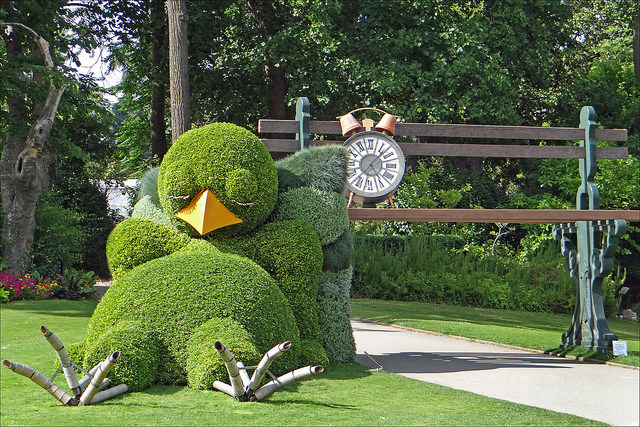
If you happen to find yourself in Nantes, France, be sure to head to Jardin des Plantes, a large botanical garden. There, you’ll find this adorable topiary sculpture titled Poussin endormi (Sleepy Chick) by French artist Claude Ponti. It features a larger-than-life baby bird whose relaxed pose looks like it’s in the middle of a nap.

The delightful work showcases Ponti’s great skill in crafting a topiary. He makes evenly-textured, rounded forms that are punctuated with metal details like long, thin legs and a bright yellow beak. There are even tiny eyelashes that dot the bird’s closed eyes!

The exhibition runs through October 20th.

(Photo by Jean-Pierre Dalbéra)

A “Meta-Fictional Masterpiece”

by Dish Staff

Critics are raving about Ben Lerner’s new book, 10:04:

Like Lerner’s first novel, Leaving the Atocha Station, 10:04 is a conceptual novel of sorts, by which I mean that it takes what it wants from any number of genres (fiction, poetry, art criticism, autobiography) and corrals the results under the roof of “novel.” Readers and critics less familiar with this approach may spend time wondering about the novel’s taxonomy; those who regularly read and love writers such as Édouard Levé, Hervé Guibert, Violette Leduc, Eileen Myles, Marguerite Duras, W. G. Sebald, Lydia Davis, Fernando Pessoa, Karl Ove Knausgaard, and Roberto Bolaño will likely take 10:04 on its own terms, and appreciate its autofictions, its elegant structure (its action is bracketed by two superstorms, 2011’s Irene and 2012’s Sandy), its meticulously constructed sentences, its deployment of poetic tropes (parataxis, refrain, dialogue that floats and rushes, semantic and syntactical leaps that treat the reader like a grown-up), and its facility in analyzing a wide range of political, cultural, and aesthetic artifacts, from Ronald Reagan’s speeches to artist Christian Marclay’s The Clock to Donald Judd’s sculptures to the ’80s hit comedy Back to the Future (from which the novel’s title derives).

Maureen Corrigan calls the novel “mind-blowing,” appreciating that the plot “is way out of the box”:

When 10:04 opens, our narrator and his agent are celebrating at an expensive restaurant in Manhattan. There, they ingest baby octopuses that have been literally massaged to death by the chef. Our narrator tells his agent that he plans to expand his story into a novel by “project[ing] myself into several futures simultaneously … [by working] my way from irony to sincerity in the sinking city. …”

That, of course, is also an overview of 10:04 itself, the hyper-aware novel Lerner writes for us. Bookended by two historic hurricanes that threatened New York City (Irene and Sandy), 10:04 projects our narrator into several possible plotlines. For instance, he receives a diagnosis of a serious aortic heart valve problem as he also consents to be the sperm donor for a close friend who yearns to have a baby while he also leaves town for a writers’ retreat in Texas. Lerner’s dazzling writing connects and collapses all these storylines into one.

The effect is thoroughly contemporary:

If fiction, as William H. Gass once wrote, is in the business of creating a reality rather than reflecting one, the reality Lerner creates takes the form of collage, a collection of moments that, in combination and repetition, are recuperated by narrative almost accidentally. It’s like the phenomenon of pareidolia, he suggests: the brain’s tendency to make meaning even among randomness, seeing faces in the clouds.  At one point, Alex and the protagonist view Christian Marclay’s The Clock — a twenty-four-hour video montage composed of found footage involving time, by means of which “fictional time [is] synchronized with nonfictional duration.” In its assemblage of “found” text, 10:04 too is written, as it were, in “real time,” both fiercely contemporary — global warming, iPhones, and Wikipedia articles as more than just set-dressing — and a form of time travel, fusing the now of the reading onto the now of the text.

Admitting that “it’s hard to describe a Ben Lerner novel to someone without it sounding kind of terrible,” Emily Temple hails the book as a “meta-fictional masterpiece”:

This novel, which is so much about literary creation and reflection, also feels like the way the mind works: in patterns, in dialogue, in mirrors. Lerner returns again and again to the idea of the world “rearranging itself” around him to allow for new information, new perspectives. We return again and again to certain moments, viewing them through various veils of fiction, of fraudulence. Lerner’s narrator meditates on time flux or lack thereof (the title refers both to Christian Marclay’s The Clock and Back to the Future). The book swirls in on itself, like our minds do. It gets stuck on things. It gets unstuck. It worries. You may not think you need a book to worry for you, but it’s a surprisingly pleasant feeling.

Christian Lorentzen is on the same page:

This is a beautiful and original novel. Lerner’s book is marked by many reminders of death and dying: Ben’s faulty aorta, the ecological turmoil suggested by two superstorms. But 10:04’s prime theme is regeneration, biological and artistic, and it signals a new direction in American fiction, perhaps a fertile one.