
Provincetown, Massachusetts, 7.50 pm
Provincetown, Massachusetts, 7.50 pm
ResearchGate is “essentially a scholarly version of Facebook or LinkedIn” that allows members “a place to create profile pages, share papers, track views and downloads, and discuss research.” It’s certainly gaining traction with researchers:
More than 4.5 million researchers have signed up for ResearchGate, and another 10,000 arrive every day, says Madisch. That is a pittance compared with Facebook’s 1.3 billion active users, but astonishing for a network that only researchers can join. And [co-founder Ijad] Madisch has grand goals for the site: he hopes that it will become a key venue for scientists wanting to engage in collaborative discussion, peer review papers, share negative results that might never otherwise be published, and even upload raw data sets. “With ResearchGate we’re changing science in a way that’s not entirely foreseeable,” he says, telling investors and the media that his aim for the site is to win a Nobel prize.
Though the project has attracted support – and counts Bill Gates among its investors – some have voiced criticism:
[M]any wonder why researchers would deposit their data sets and reviews on these new social networks, rather than elsewhere online — on their own websites, for example, in university repositories, or on dedicated data-storage sites such as Dryad or figshare…. To Madisch, the answer lies with the social sites’ burgeoning communities of users — the famed ‘network’ effect. “If you post on ResearchGate, you are reaching the people who matter,” he says. But Titus Brown, a computational scientist at Michigan State University in East Lansing, is concerned about the sites’ business plans as they seek to survive. “What worries me is that at some point ResearchGate will use their information to make a profit in ways that we are uncomfortable with — or they will be bought by someone who will do that,” he says.
One academic who signed up had more pointed criticism of the “RG score” assigned to users, described as “a metric that measures scientific reputation based on how all of your research is received by your peers”:
The current score is, not to put a too fine point on it, totally useless. There is a more or less universally agreed on ranking of scholars which is based on CVs and the offers they get. There is also a correct ranking based on the originality and quality of research. These two rankings are typically very different. The RG score is similar to neither.
If the score is the most useless feature of RG, the most annoying feature is the aggressive way in which they try to force you to update your site. First, their minions search the web for every old version of your papers, and once they find it they will suggest that you add it you your profile. I say `suggest’ but it’s not like you can refuse. You can choose between `yes’ and `maybe later’. And by `later’ they mean next time you log in. In the end you either surrender or accidentally click yes.

Gabrielle Walker, 5, protests the killing of teenager Michael Brown in Ferguson, Missouri on August 17, 2014. Despite the Brown family’s continued call for peaceful demonstrations, violent protests have erupted nearly every night in Ferguson since his death. By Scott Olson/Getty Images.
J.J. Goldberg is growing more pessimistic about the negotiations taking place in Cairo:
Early reports were that the two sides were close to agreement on an Egyptian compromise proposal for a long-term cease-fire. On Friday and Saturday, however, declarations on both sides indicated that positions were hardening as fierce internal divisions emerged, pulling the leaderships on both sides away from the center. The Palestinian side appears to be stymied by the refusal of the organization’s Qatar-based political secretary, Khaled Meshaal, and the head of its military wing, Mohammed Deif, to go along with the compromise proposals laid out by the Egyptians and mostly accepted by both delegations.
On the Israeli side, meanwhile, chaos appears to be reigning. Prime Minister Netanyahu, who rode a wave of popularity during the military operation, has been facing a tsunami of criticism over the past week from the left, the right, the residents of Gaza-adjacent communities and his top coalition ministers. Two of his senior coalition partners, foreign minister Avigdor Liberman of the Yisrael Beiteinu party and economics minister Naftali Bennett of the Jewish Home party, have repeatedly attacked the prime minister’s management of the Gaza conflict from the right, demanding a continuing assault until Gaza has been taken over and Hamas disarmed or dismantled. Broad circles on the right accuse him of giving away the store (i.e. lifting the blockade) in return for “nothing” (i.e. Hamas-Jihad agreement not to shoot, bombard or tunnel).
David Kenner examines one of the key sticking points, namely whether, how, and by whom Gaza will be rebuilt:
In his remarks on Wednesday, Aug. 13, announcing a five-day extension to the cease-fire, Palestinian delegation chief Azzam al-Ahmed said that there had been significant progress in efforts to lift the Israeli economic blockade on Gaza — but that there were still disagreements over reconstruction issues. These debates will not only determine whether residents can rebuild after the war, they also promise to be an important tool in Israeli efforts to weaken Hamas’s hold on the territory. As Finance Minister Yair Lapid put it, Israel would demand that “there is no rehabilitation without some sort of demilitarization [of Gaza].” …
The importing of building materials to rebuild Gaza’s tens of thousands of destroyed homes is one of the most potentially fraught issues. Hamas used large quantities of cement, allegedly smuggled in across the border with Egypt during the presidencies of Hosni Mubarak and Mohamed Morsi, to build its extensive tunnel network, which posed one of the most deadly threats to Israel during the current war. For that reason, Jerusalem has only allowed U.N. agencies to import cement — and is going to be loath to ease restrictions on construction material that could be used by the Palestinian Islamist group to rebuild its tunnel network.
On another major point of contention—lifting the Gaza blockade—the EU is willing to step in and help monitor border crossings in order to make that happen:
The EU has offered to resume its operations at Gaza’s Rafah crossing with Egypt, and to train Palestinian Authority officials who are supposed to take over the bulk of operational work at the crossings. At the U.N. Security Council’s request, it would also expand its operations to other checkpoints. (The EU previously monitored the Rafah crossing between 2005 and Israel’s withdrawal in 2007.)
According to the AP, EU officials said that lifting the blockade is needed for “a fundamental improvement in the living conditions for the Palestinian people in Gaza.” This is one of many outside expressions of disapproval at Israel’s conduct during the latest Gaza operation. The United States recently decided that Israel’s new weapons requests would need individual approval from the presidential administration, rather than going through military channels.

Jeffrey A. Stacey and John Herbst argue that the international community needs to do more to combat Putin’s aggressive behavior:
The time has come for the West to make a decisive move to counter Putin’s irregular war against Ukraine. The Russian president has introduced a perilous new norm into the international system, namely that it is legitimate to violate the borders of other countries in order to “protect” not just ethnic Russians, but “Russian speakers” — with military means if necessary. Putin has notoriously threatened to annex Transnistria, the Russian-speaking territory of Moldova, inter alia. The Putin Doctrine represents a serious transgression of the status quo that has guaranteed the continent’s security since the end of World War II; moreover, it violates the most essential tenet of the post-1945 international order.
They recommend a comprehensive approach to increase the cost of Putin’s meddling in Ukraine, including “even tougher economic sanctions; military armaments to Ukraine; and an updated NATO strategy.” But Eugene Rumer thinks the situation may be hopeless:
With force off the table, the West’s response to Putin’s actions in Ukraine has been sanctions and more sanctions. They have failed to dissuade and deter Russian support for the separatists. Yet, the West is threatening more sanctions if Russia attacks. Albert Einstein supposedly described insanity as doing the same thing over and over again and expecting different results.
The West can double down on sanctions and threaten more of the same, but the result is also going to be the same. The United States and its allies have made it clear that Ukraine is not as important to them as it is to Russia. Russia is prepared to go to war for it. They are not. It is tempting to say that all parties need to talk and reach a reasonable, mutually acceptable compromise. But it looks less and less likely or feasible at this stage of the conflict. Kyiv senses victory and appears poised to go for it. Putin fears defeat and is not prepared to accept it.
Masha Gessen is chagrined at how far Putin’s lies have gotten him so far:
Bald-faced lying is the one tactic Putin has used consistently through the six months of his Ukrainian incursion. It works every time, precisely because he and his Western counterparts are playing by different sets of rules: Every time, the West has to accept Putin’s version of events until it can be disproved beyond a reasonable doubt, and even then he gets to claim any area that remains gray.
He got to annex Crimea before his assertion that the Russian military was not there was exposed as the lie it was. Because his claim that the Russian military is not in eastern Ukraine has not been definitively disproved, Western media and politicians continue to call the fighters “separatist rebels” or “pro-Russian” or “Russian-backed separatists.” We all know that these are armies formed and armed by Russian military and intelligence officers, but we know this the same way we know the “humanitarian convoy” is a lie: without being able to prove it. So the strongest term Western media or politicians have applied to these fighters is terrorists, which is not strong enough—calling these people terrorists defines them as nonstate actors. Nor is the suggestion that Russia should be labeled a state sponsor of terrorism strong enough. Russia is not sponsoring other people’s terrorism; it is waging an illegal war against a neighboring country.
(Photo by Sasha Mordovets/Getty Images)
Tomasky examines the potential jury pool in the Michael Brown case:
Now let’s get to the matter at hand in Ferguson: criminal justice. The specific issue is this that juries in the United States are drawn from county-wide population pools. This means, as the criminologist William Stuntz has observed, that people from large counties with exurbs and farms are often sitting in judgment of urban kids…. Will a St. Louis County jury be likely to look sympathetically upon Michael Brown? Quite unlike the two-thirds black Ferguson, the county is 70 percent white.
Alex Tabarrok reads through a study on the racial composition of juries:
The authors have data on the race, gender, and age of each member of the jury pool as well as each member of the ultimate jury. The authors also know the race and gender of the defendant and the charges. What the authors discover is that all white juries are 16% more likely to convict black defendants than white defendants but the presence of just a single black person in the jury pool equalizes conviction rates by race. The effect is large and remarkably it occurs even when the black person is not picked for the jury. The latter may not seem possible but the authors develop an elegant model of voir dire that shows how using up a veto on a black member of the pool shifts the characteristics of remaining pool members from which the lawyers must pick; that is, a diverse jury pool can make for a more “ideologically” balanced jury even when the jury is not racially balanced.
Ken White worries that the release of the robbery video will bias a jury against Michael Brown:
Whether or not they released the surveillance video in response to a public records request, as they claim, the Ferguson Police Department undoubtedly knew that the news would reach the pool of prospective jurors in any criminal or civil case against Officer Wilson, telling them facts that they might not hear in court. They knew that the media would run with the story, and that the media would run with it multiple times: first to report it, then to ask why the police released it, and possibly a third time in a mock-self-critical analysis of whether they were played. The effect in the public’s mind is to emphasize the point Mike Brown was a robber, with the subtext so he probably had it coming. …
I don’t care that Mike Brown apparently robbed the convenience store. I don’t give a shit if Mike Brown was a career thug or a saint destined for a Rhodes scholarship. The question is the same: did Officer Wilson him have cause to believe that Mike Brown posed a serious physical threat at the moment Wilson pulled the trigger?
Everyone has rights, or nobody has rights.
Bird songs for Burning Man:
Christopher Jobson explains:
Australian artist Andy Thomas creates what he describes as “audio life forms,” specifically 3D animations that respond to audio input. For these latest pieces he used archival bird recordings from the Netherlands Institute for Sound and Vision (in addition to one of his own recordings) to create these new digital sound sculptures that animate in different ways in reaction to the songs of each bird. Thomas uses more software tools than we could reasonably share here, but you can learn a bit more over on his website.
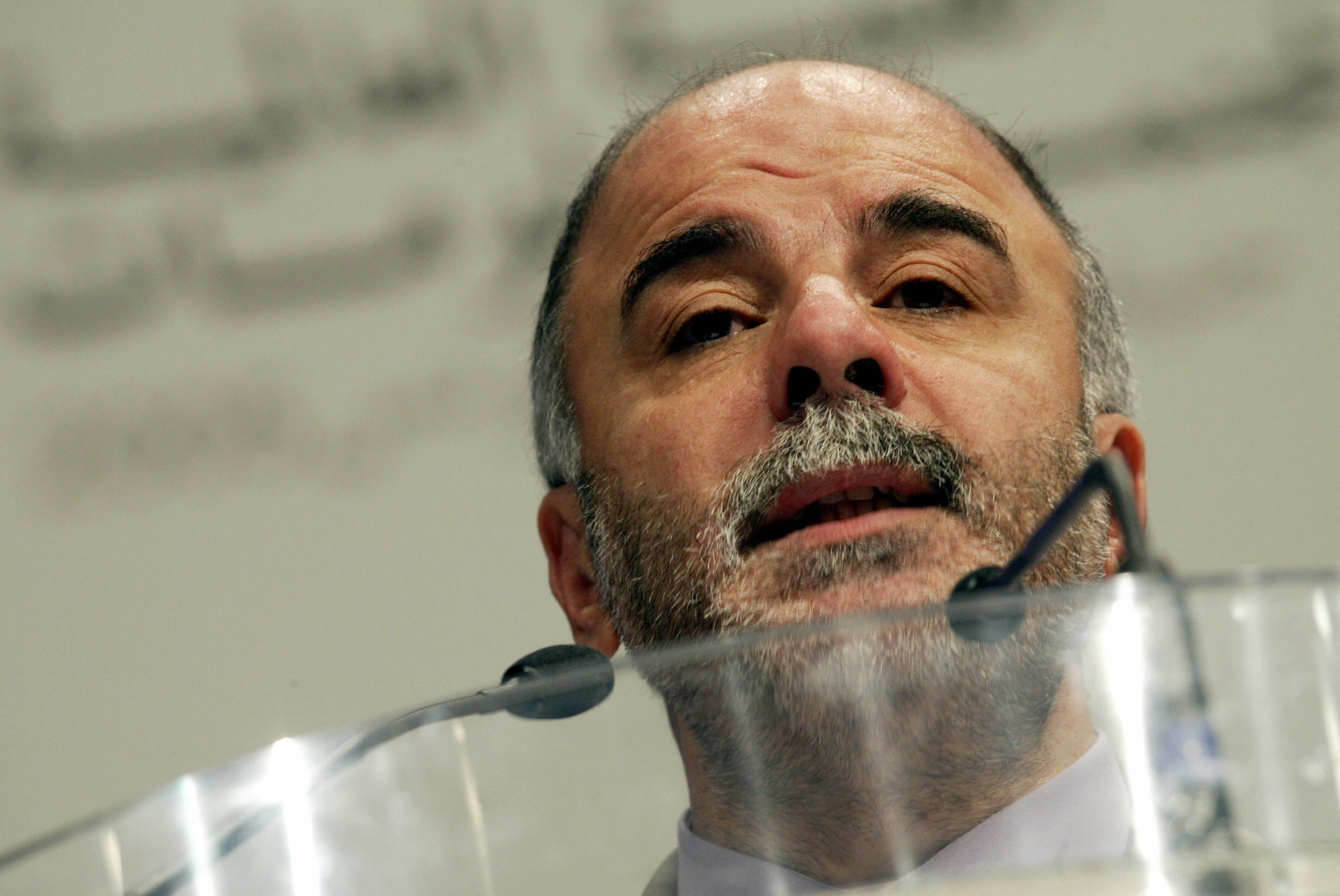
David F. Schmitz hopes the US government has finally learned a thing or two from its experience at trying and failing to manage clients like Nouri al-Maliki and won’t make the same mistakes with his successor, Haider al-Abadi. There’s a broader lesson to be learned here, he argues, about the limits of our superpowers as a superpower:
Now that Iraq has a new leader who is said to be an amiable technocrat without Maliki’s overriding partisan agenda, can the United States escape its past as a poor puppeteer? Can Washington find a way to help Abadi rather than hinder him, empowering his government to take on the Islamic State without seeming to dictate its choices ? The Obama administration says it supports Abadi because it wants to see the democratic process upheld, and there is nothing wrong with this position. There’s no reason to think the Obama administration, no matter how many hundreds of advisers it sends or airstrikes it launches, will have any more success than the Bush administration did in stabilizing Iraq, because the underlying problem remains: It’s almost possible to get a foreign leader to do what is best for you, rather than what he believes is best for him, no matter how much money you throw his way or how hard you twist his arm.
The United States can still play a positive role, but instead of the business of building puppets, we should be more in the business of cultivation—helping good leaders to grow. Success in Iraq or Afghanistan can only come if an indigenous force and leader emerges with local support, and then only if the United States doesn’t demand that they reflect the will of Washington and the goals of the United States in all of their actions and policies.
Christopher Preble is on the same page. Abadi’s problems are many and daunting, he writes, but making them our problems won’t help solve them:
Abadi will need to find a way to form an inclusive coalition government, one that protects the rights of Sunnis and appeases the Kurds’ desire for autonomy, while maintaining support from Iraqi Shiites. This is a tall order. … Americans should wish Iraq’s new leader well, but policymakers should resist the urge to try to micromanage political events in Iraq. Even the appearance of U.S. influence over Abadi will undermine his legitimacy and thus could be counterproductive. Besides, it isn’t obvious that U.S. action—and only U.S. action—is essential to turning things around in Iraq.
Taking a closer look at those problems, Martin Chulov argues that bridging Iraq’s sectarian divide will be Abadi’s most daunting challenge:
Abadi has told followers his first job as prime minister will be to convince those Sunnis who have endorsed Isis in its attempt to establish a caliphate across Syria and Iraq that an Iraqi nation within its current borders remains a better option. Regional and Iraqi officials have encouraged Abadi to start by revitalising the demoralised national military and overhauling state institutions that have been co-opted by warlords and political blocs over the past decade. Many barely function. Abadi also aims to revive relations with Sunni Arab neighbours, including Saudi Arabia and the Gulf States, which boycotted Maliki’s government for close to seven years. Maliki, in turn, had accused Riyadh of bankrolling extremism in Iraq.
“He was such a divisive, polarising figure,” said one senior Saudi official of the ousted leader. “A new start was essential to even beginning to sort out this mess.”
But Ghaith Abdul Ahad resists the temptation to blame Maliki, and only Maliki, for running Iraq into the ground. At least to some extent, the problem is structural:
Maliki was not alone in his corruption, nepotism and oppression. In Iraq’s national unity government, ministries run by Maliki’s opponents are as corrupt as ministries run by his allies. Yes, he dominated the army, but every other party and sect had its own share of positions that were sold to the highest bidder. Detainees were freed by bribing officials who belonged to different parties. Ministers who publicly opposed Maliki never left his government because it generated so much wealth and power. Iraq’s division into fiefdoms, where each party greedily consumed its spoils, has created a country in which an oligarchy of a few thousand ministers, government officials, generals, militia commanders and all those people blessed with much-sought-after green zone badges – Sunnis, Shias and Kurds – have a monopoly on resources, leaving the rest of the nation with nothing much but the blame game.
Meanwhile, Ali Hashem spotlights Iran’s role in Abadi’s designation as prime minister, which suggests the level of interest with which Tehran is engaging the Iraq crisis:
During the weeks of talks, Iran’s secretary of national security, Adm. Ali Shamkhani, led the Iranian efforts on the ground. He visited Iraq on July 18 and met main leaders in Baghdad, Najaf and Erbil. Shamkhani was given a green light from Khamenei to try to end the crisis at any price. He was aware that the situation isn’t the same as before: Iran is no longer defending its regional security borders, but rather its direct borders; the Islamic State (IS) is now in Diyala, which borders Iran; and the last city that fell under IS control is Jalawla, less than 40 kilometers (25 miles) from the Iranian border.
In Tehran, the murmurs that Shamkhani will oversee the Iraq file have gotten louder. This is an indication that Iran is about to adopt a new policy, given Shamkhani’s historic relations with the Gulf countries and Iraq, his wide experience in dealing politically with regional conflicts and his closeness to Khamenei, all without ignoring the fact that he’s an Iranian of Arab origins.
(Photo: Haider al-Abadi by Jean-Philippe Kziazek/AFP/Getty Images)
https://twitter.com/aterkel/statuses/501191846920740864
Anna Feigenbaum provides a brief history of tear gas. Her bottom line:
In the 100 years since it was first developed, tear gas, advertised as a harmless substance, has often proven fatal, asphyxiating children and adults, causing miscarriages, and injuring many. The human-rights organization Amnesty International has listed tear gas as part of the international trade in tools of torture, and Turkey’s medical association has condemned it.
Yet while tear gas remains banned from warfare under the Chemical Weapons Convention, its use in civilian policing grows. Tear gas remains as effective today at demoralizing and dispersing crowds as it was a century ago, turning the street from a place of protest into toxic chaos. It clogs the air, the one communication channel that even the most powerless can use to voice their grievances.
In this way, tear gas offers the police a cheap solution for social unrest. But rather than resolve tensions, it deepens them. This week in Ferguson, police fired tear gas into people’s backyards, set it off near children, and launched it directly at journalists.
With regards to containing the outbreak, Stephen Mihm describes a medieval approach called “cordon sanitaire” that’s currently being used in Liberia, Guinea, and Sierra Leone:
The problem, then as now, is the logistical challenge of completely eliminating any movement in or out of a large territory. One critic, writing in the 1880s about cholera outbreaks in Europe, observed that officials could “close every railroad line and every Alpine wheel route,” but refugees “would improvise a hundred footpaths through the mountains to find a way home.”
Moreover, the use of a cordon sanitaire in the past, while ostensibly aimed at restricting the movement of people, often had the opposite effect. In the Egyptian cholera epidemics of the late 19th century, imperial administrators used the cordon sanitaire, only to find that it panicked the populace. Many people fled the area out of fear that they would perish if left behind.
The practice can, notes Mihm, even cause further deaths: “It is perhaps not surprising that by the late 19th century many people came to denounce the practice as a relic of the Dark Ages.” Meanwhile, Dr. Philip Rosoff questions the use of experimental drugs:
If you read the WHO release on the ethics of using these drugs, they emphasize a couple of points: it should be okay to use them, but informed consent should be gotten. That seems to be self-evident but I’m not sure what informed consent means under situations of such desperation when a drug that’s never been used in people is held out as a life saver.
And he adds that this type of scenario makes good science unlikely:
[T]he WHO talks about collecting data but that’s going to be almost impossible to do. It’ll be impossible to decide whether it’s effective or not because it’s not going to be used under controlled circumstances. When people get better, we’ll have no idea whether it was because people are using the drug, or if somebody dies after getting the drug you don’t know whether it’s the disease or the drug. Because these patients are so sick, it may not be possible to detect side effects that you could under more controlled circumstances.
And then there are the entirely fake treatments, like Garcinia Cambogia powder, being marketed to the paranoid. Michael Byrne notes a silver-based dietary supplement which may have already scammed its way into Nigeria:
Of particular concern is a product called NanoSilver, sold by the Natural Solutions Foundation. The product is basically a solution of tiny silver particles, and purports to be something of a cure-all for infections of any stripe. Silver has demonstrated antimicrobal properties and, in the hands of the supplement industry, this can only mean that it treats whatever disease is handy. And while indeed silver is effective in surface antibiotic applications—as a disinfectant coating for medical devices, or a antimicrobal protectant utilized around public spaces—it is also fairly toxic to humans. And despite the howling chorus of natural heath boosters (just Google “silver particles cure”) the concept hasn’t really been shown to cure or treat anything once it’s inside the human body.
Previous Dish coverage of the Ebola outbreak here.
 The Dish