Losing The Long Game?

US-POLITICS-OBAMA-ECONOMY

Yuval Levin notes that Obama’s announcement yesterday “makes it more likely that the exchanges will not be able to achieve the volume and the risk-balance necessary for them to function.” He suspects the administration thinks “the risk is worth it not just because the immediate political danger is so great but also because the chances of the exchanges actually functioning anyway seem lower and lower all the time”:

That, to my mind, is what Thursday’s announcement really signals, and why I think it’s so significant. Prior instances of reckless presidential expediency in the debate over Obamacare have involved efforts to get past some immediate obstacle and just get the system into place, in the hope that once it was working the criticisms would fade away. This latest instance, however, involves roughly the opposite impulse: to sacrifice the prospects of the new system itself in the service of avoiding immediate political pain and embarrassment and without some larger goal in view.

It suggests that the administration is giving up on the long game of doing what it takes to get the system into place and then trusting that the public will come around and is adopting instead the mentality of a political war of attrition, fought news cycle by news cycle, in which the goal is to survive and gain some momentary advantage rather than to achieve a large and well-defined objective. It suggests, in other words, that the administration is coming to the view that Obamacare as they have envisioned it is not really going to happen, that they don’t know quite what is going to happen (and no one else does either), and that they need above all to keep their coalition together and keep the public from abandoning them so they can regroup when the dust clears.

That’s a very sobering thought, although I very much doubt the administration is as bearish on the law as Yuval. For my part, I thought the president should take the deserved hit but not tweak the law. Bill Clinton made that a lot harder – and boxed Obama into a classic Clinton triangulation: allowing insurance companies to restore their current clients’ canceled plans, and shifting the onus onto them. But Obama should have resisted it. For the sake of the entire law – which will be a core part of his legacy in history – he should have done a Reagan Iran-Contra Oval Office address, candidly confessing that the fact is he misled people, and is sorry. To regain that kind of credibility, you have to be one-on-one. A presser, even though I thought he showed calm and grace in it, keeps the feeding frenzy going.

It seems particularly unwise to me to weaken the law’s momentum roadrunner-midair and coherence when it is already beleaguered by the malfunctioning website, which may make a death spiral more likely next year anyway. Could he have survived the short-term political nightmare? Not without serious damage. But he is not George H W Bush, who faced re-election after breaking his No New Taxes pledge – for honorable reasons. He’s president for the next three years. If the Democrats bolted and the Congress united in trying to over-rule him, he has a veto. He may well use it anyway, to stop the Upton bill. He could have used it against any temporary fix to the law, taken all the blame, allowed Dems to defect, and then engaged on a real, actual campaign to sell the ACA to the American public. In other words: show true political conviction and finally make the unabashed moral and fiscal case for the reform he and the Democrats have so far shied from, for fear of political damage.

The great flaw of Democrats is their cowardice, which they sometimes mistake for caution.

I saw it up close in the long fight for marriage equality. For a decade, instead of actively making the case for marriage equality, they ran from it. They thought somehow they might be able to advance gay rights quietly. The gay lobby kept wanting to effectively bribe the Democrats to pass various bits and bobs which could be disguised or somehow kept from the public. I can’t tell you how many times I was effectively told: “Shhh.  The American people are too bigoted to accept this openly, so we’ll try to advance it legislatively on the downlow.” But did they really think the American people wouldn’t notice if we tried to get gay marriage by stealth? Please.

Ditto with healthcare reform. The assumption was you could not make the case that there will be winners and losers in this reform – and still pass the law. If you mentioned the losers, you’d be dead in the water. If you acknowledged the risks, you’d be done for. And so the Democrats have long been on the defensive – and their utter lack of conviction couldn’t be better illustrated by their sudden flight for the hills this week. They never truly went on the offensive – lacerating the past, touting the hugely popular aspects of the reform (pre-existing conditions, stable insurance policies, and end to free riders, etc.). And so when the going got rough, they were marooned on their own defensive island. Since they told us no one would ever lose anything with this, since they never really sold the law aggressively, since they hadn’t built popular legitimacy around it, any flaws or costs now seem like a form of deceit or failure, rather than the inevitable costs of a huge and necessary reform.

I don’t think the president can win this struggle defensively. Yet that is how he has begun it. He needs to regain the initiative and offensive or wither under a constant assault of nay-sayers, spitballs, and no-alternative opportunists. It can still happen. This is the law – and a return to the past is not feasible. Maybe this is the beginning of the real debate rather than the end. Only now are the costs as well as the benefits being revealed. Maybe in the forthcoming struggle over the law, we will finally cone to grips with the real crisis in healthcare, and the opposition will finally actually have to take some responsibility for it, and propose a genuine alternative. That may not happen until the presidential primaries take place. But if this law unravels, it will not just be brutal for Obama. It will force the Republicans at some point to say what they are for, rather than simply what they are against. And that is the real long game. And it has barely begun.

(Photo: Jim Watson/Getty.)
Obama’s Iran-Contra Moment

Listening closely to the president’s noontime presser, I couldn’t help but be reminded of Ronald Reagan’s famous address to the nation in March 1987. Reagan had been caught in a lie – his declaration that he had never traded arms for hostages in his attempt to reach out to Iran (yes, neocons – he was trying to reach out to Iran!). For months, he languished as investigations revealed that he had indeed done such a thing, and his credibility – long his strong point – was at stake. Here’s the address:

The most famous line – addressing his clear statement to the American people that he “did not trade arms for hostages” – was the following:

My heart and my best intentions still tell me that’s true. But the facts and the evidence tell me it is not.

Today, Obama said something very similar about his statement that “if you like your plan, you can keep it, period.” I love the guy, as I loved Reagan, even though I have not exactly held back when I thought he was screwing things up. And the yawning discrepancy between that unequivocal statement and the “facts and the evidence” of the cancellation of individual market insurance policies these past few weeks was startling, to say the least. Had I misjudged the man? Had he unequivocally peddled a focus-group line that he perfectly well knew was untrue, in order to overcome resistance to healthcare reform? Was he a bullshitter – or something worse, a liar?

As I heard him today, he explained it this way. He says he was focused on the large majority of Americans who get their insurance policies through their employer. And for them, the statement is true, even though, of course, insurance policies are fluid and subject to change. What he ignored was the 5 percent of people in the individual market, whose plans did not meet the standards of the ACA. He said he believed that the grandfather clause would help the majority of those people and that those whose policies could be canceled would see, once the website was up and running, that they now had access to better plans at a similar cost. He also says he believed that the constant churn in the individual market – which cancels or changes policies dramatically and unpredictably all the time – would make cancellations due to the ACA seem like business as usual. He now says he realizes his statement was wrong and irresponsible but that he didn’t fully grasp that at the time, as focused as he was on the 95 percent, and as he believed the grandfather clause would help the rest.

So the key question remains: Is this plausible?

I can’t answer that for you. But it was to me, just as it was plausible to me that Reagan basically did not absorb the full consequences of what he was doing in the Iran-Contra affair, and so lied without really meaning to lie. I think that’s what Obama is trying to say as well: he lied without really meaning to lie. In both cases, the two presidents had to come clean at some point in a very messy situation. Many dismissed the Reagan line as hooey, and a further deception. I didn’t and still don’t. But the important fact is that both Reagan and Obama took ultimate responsibility for the de facto deception. “It’s on me,” the president said today. Reagan, of course, couldn’t do much to redress it, except cooperate in investigations. Obama has offered a temporary administrative fix for a year to retroactively make his promise valid, while retaining the core of the ACA.

The other difference? Reagan had a better grasp of theater. His speech was intimate, direct, and his confession not mediated by a journalist or a press conference. Obama – under acute pressure from the Congress – had to act quickly. But in my view, his mea culpa would have been better served by exactly the kind of personal televised address that Reagan made. Americans are ready to forgive presidents who cop to their mistakes. To break through the chatter, Obama should, in my view, have used the Reagan approach – and still can, of course.

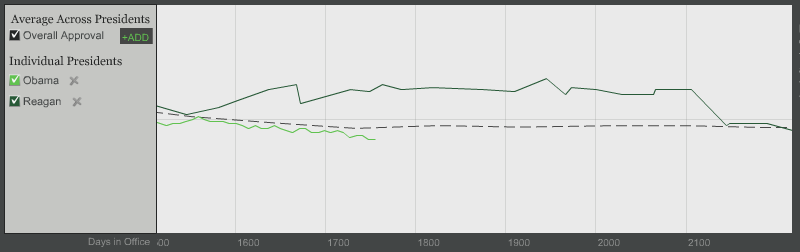
But some other context. Obama’s approval ratings have tumbled because of this credibility gap. They have declined, in Gallup’s measurement, from 45 percent approval to 41 percent in a few weeks. What people forget is that Reagan’s slide was much more dramatic. His approval rating collapsed from 63 percent to 47 percent in one month. That’s the biggest collapse in approval for any president since Gallup began polling. And after that, Reagan came back to the historical average approval rating for all presidents, which is where Obama now is as well. That dotted line is the average for all presidents:

Screen Shot 2013-11-14 at 1.28.13 PM

Obama now is where Reagan was – but sooner in his second term. But Obama, unlike Reagan, can still do something tangible to improve his position: he can make the ACA work and he should soon begin to make a much more aggressive, positive case for the reform. He has an administrative task right now. But he must soon also engage in a critical political task: to get off the defensive and onto the offensive; to make the case for the good things the ACA can do, and is doing; to remind people of the radical uncertainty of the past, and to demand that the Republicans offer more than just cynical, partisan spitballs to address the unfair, unjust and grotesquely inefficient mess that the ACA was designed to reform. That was the gist of his presser today. It needs to become a stump-speech. He needs to get out of his White House administrative mode as soon as he gets a grip on the reform, and launch a campaign mode against a return to the wild west of the past in healthcare and to expose the Republicans as cynical, opportunist critics who refuse to offer any alternative and any constructive reform.

But soon he needs to channel the core argument of this presser into a face-to-face talk with Americans. He needs to be as crisp and candid as Reagan was:

“I screwed up. I’m sorry. I didn’t think it was a lie, but it was. And I’ve changed the law to address the false promise. Now let’s make this reform work.”

Yes, he can.

The Necessary Contradictions Of A Conservative

Sorry for missing the Best of the Dish Today deadline last night. I was giving a speech on conservatism at Eastern Michigan University, and the conversation didn’t stop.

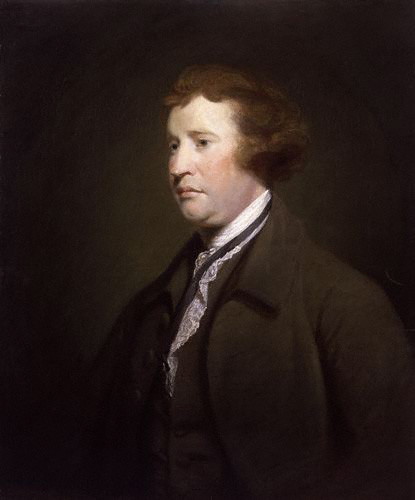
I prepped by re-reading parts of my friend Jesse Norman’s terrific book on Edmund Burke: The First Conservative. I was reminded again of NPG 655,Edmund Burke,studio of Sir Joshua Reynoldshow routinely and extravagantly Burke was ridiculed and mocked in his time for his alleged contradictions: supporting the American colonists then unleashing a barrage of brio against the French revolution, a British MP defending the rights of Catholics in Ireland, a patriot obsessed with colonial abuses of power, and an enemy of empire .

He was not a reactionary and yet remained a skeptic of unbridled liberal aspirations to improve society. He was a conservative Whig, and a liberal conservative. It’s that prudential balance – partaking of both traditions in Anglo-American thought and practice, and tacking toward one or to the other depending on the specific circumstances of time, people and place that makes him, in my mind, a conservative.

For a conservative should not be implacably hostile to liberalism (let alone demonize it), but should be alert to its insights, and deeply aware of the need to change laws and government in response to unstoppable change in human society. Equally, a liberal can learn a lot from conservatism’s doubts about utopia, from the conservative concern with history, tradition and the centrality of culture in making human beings, and from conservatism’s love and enjoyment of the world as-it-is, even as it challenges the statesman or woman to nudge it toward the future. The goal should not be some new country or a new world order or even a return to a pristine past that never existed: but to adapt to necessary social and cultural change by trying as hard as one can to make it coherent with what the country has long been; to recognize, as Orwell did, that a country, even if it is to change quite markedly, should always be trying somehow to remain the same.

That is rooted simply in a love of one’s own, in feelings of pride in one’s country or family or tradition. And unlike liberalism, conservatism does not shy from these sub-rational parts of what being human is. They are not to be conquered by sweet reason, because they cannot be. They need to be channeled, not extinguished, guided not fetishized. A conservative will be a patriot, but not a nationalist. He will be proud of his own country but never tempted to argue that it is a model for all humankind, or that it can be exported to distant, different places with vastly different histories.

This means a true conservative – who is, above all, an anti-ideologue – will often be attacked for alleged inconsistency, for changing positions, for promising change but not a radical break with the past, for pursuing two objectives – like liberty and authority, or change and continuity  – that seem to all ideologues as completely contradictory.

But they aren’t. Churchill, in his great essay, “Consistency in Politics” wrote of Burke:

On the one hand [Burke] is revealed as a foremost apostle of Liberty, on the other as the redoubtable champion of Authority. But a charge of political inconsistency applied to this life appears a mean and petty thing.

History easily discerns the reasons and forces which actuated him, and the immense changes in the problems he was facing which evoked from the same profound mind and sincere spirit these entirely contrary manifestations. His soul revolted against tyranny, whether it appeared in the aspect of a domineering Monarch and a corrupt Court and Parliamentary system, or whether, mouthing the watch-words of a non-existent liberty, it towered up against him in the dictation of a brutal mob and wicked sect.

No one can read the Burke of Liberty and the Burke of Authority without feeling that here was the same man pursuing the same ends, seeking the same ideals of society and Government, and defending them from assaults, now from one extreme, now from the other.

And the same, of course, can be said of Churchill, a member at one time of both the Liberal and the Conservative parties in Britain, often misunderstood, even now somewhat disdained in his own country as a necessary blowhard. But a true conservative will defy the label of party and of ideology as well as a foolish consistency, when times shift.

In trying to figure out where American conservatism can now go, reading Jesse’s book, and thinking about Burke, would be a little more productive than constructing new amendments to the Constitution, or figuring out how to repeal the New Deal, or declaring too precipitous a lurch toward non-interventionism. The First Conservative would, I suspect, look at the current Tea Party, for example, with the same baffled disdain that he viewed all reactionary, radical populisms. And he would urge a new moderation and pragmatism in tackling the specific problems of 2013 – not 1980, let alone 1780 – and finding a way to solve them that makes America more like America – because he loves America – and not less.

A Word On Israel And Iran

Life Continues In The Havat Gilad, West Bank Outpost

On the very sensitive issue of Israel, there is often little middle ground that isn’t swamped by angry rhetoric on either side of the debate. So, as the critical talks with Iran proceed, I want to clarify a couple of things.

My dismay at Israel’s rightward lurch, its refusal to freeze settlement construction on the West Bank and East Jerusalem, and its apocalyptic fear-mongering about Iran does not and should not mean that I couldn’t care less about the Jewish state. I can understand how, in the rough and tumble of daily blogging, many reflexive – and some thoughtful – supporters of Israel might infer that I harbor some disdain for the Zionist project, or indifference to the dangers Israel confronts on a daily basis. I don’t. For an Irish-Catholic Englishman, I have long been passionate about Israel’s security and success. It was one of the first foreign countries I ever visited, and for many years (shaped, of course, by my time at The New Republic), I completely sympathized with successive Israeli governments’ frustration at the lack of a decent negotiating partner and the continued, foul incitement to anti-Semitism of much of Palestinian culture.

Things changed for me during my unsentimental education about the world-as-it-is during the Iraq War catastrophe. That war was the defining event for me and my own political understanding of the 21st Century world. For others, it was an error or a failing, but their broader worldview remained intact. Mine didn’t. It didn’t make me an isolationist, but it sure radically tempered my belief in the ability of American power to remake the world in our own image – however well-meant that remaking may have been. It became clear to me that a global conflict between fundamentalist Islam and fundamentalist Judaism and fundamentalist Christianity could become apocalyptic, especially in the Middle East. What was urgently required was a move to pragmatism, toward defusing the most polarizing rhetoric, toward healing the wounds of Iraq, and a calmer, if clear-eyed, engagement with Muslim humankind.

I noticed during this period that, post-Arafat, the Palestinians were no longer an unreliable partner in negotiations. Abbas and Fayyad were ahmadinejadbehrouzmehriafpgetty.jpgabout as good as we were ever going to get, and the Obama presidency was the perfect reagent for a compromise that would defuse some of fundamentalism’s power and return us to the art of the possible. The way in which Israel’s leadership responded – contemptuously – signaled that we were dealing within a very different Israeli government than, say, Rabin’s. Their Gaza war, their hyperbolic rhetoric on Iran, their continued settlement of the West Bank, their constant apartment-grabs in East Jerusalem, and the increasingly extremist tone of Israeli political culture: all this made me see them as the current arrogant problem, and not the Palestinians. The way Netanyahu intervened in American domestic politics to undermine the president also appalled me.

Obviously I am not alone. Someone far more knowledgeable about the country whose views I had long shared – Peter Beinart – also shifted. Many others have among American Jews of the younger generations. And the motive for the shift is not to demonize Israel, but to assert America’s national interest first and foremost, and secondly to save Israel from becoming a pariah state that was hellbent on becoming a permanent occupying power, with all the moral corrosion that occupation implies. It is tempting to say that the moment for a two-state solution is past. But I want to resist that temptation – because without a two-state solution, Greater Israel is not a country the West can support with such largesse indefinitely. And I want to support an Israel that lives up to the best aspirations of its founders.

My support for an agreement with Iran that grants it the right to enrich uranium at low levels and subject to routine, tough inspection regimens is also a function of dealing with the world as-it-is and not as I would like it to be.

The fact is that Iran is a great country with deserved pride, but it’s been run into the ground by fundamentalist fanatics, fascistic in their extreme factions, who spout foul rhetoric and conduct themselves in ways that warrant profound suspicion. The crippling sanctions regime was a proper response to that. But when the Iranian response to years of sanctions is the emergence of a pragmatic faction given legitimacy by support in Iran’s highly constrained elections, and when that faction sends signals it is desperate to end sanctions and eager to rejoin the international community, we have an opportunity, as with Abbas and Fayyad, to defuse the tension.

For me, the emotions of June 2009 affect this too. The Green movement proved that Iran’s younger generation is on the side of freedom, not theocracy. And yet that movement, like the regime, also insists that the country has a right to enrich uranium. On this, all of Iran is united. It is not just foolish but impossible to somehow end that fact by making the end of uranium enrichment our non-negotiable stance. It guarantees failure.

Nor can we erase the fact that Iran has developed the capacity to enrich uranium, even under the most brutal of sanctions, and it is seen as a matter of national pride to retain that capacity. As Roger Cohen notes:

Although Western intelligence agencies believe the Islamic Republic has not taken the decision to make a bomb, Iran’s nuclear program has advanced far enough for the country to have the relevant knowledge. Destroying this know-how is near impossible. Iran knows how to produce weapons-grade fissile material; it may not yet be able to make a deliverable weapon. So, as Stephen Heintz, the president of the Rockefeller Brothers Fund, put it to me, “The key for the international community is to put all that capability in a box where it is verifiable, contained and controlled. That is what the deal is about.”

Indeed it is. Given its past behavior, the regime has to meet more exacting standards for a deal than might otherwise be the case. But without a deal, Iran will increase its nuclear activity, Israel will be tempted to pre-empt it, an arms race with the Saudis might follow, and the cycle of green-peacefundamentalist violence would be ratcheted up a notch. It’s the kind of cycle that can lead to catastrophe. Avoiding this – creating a space for hardheaded relations with Iran and a deep commitment to Israel’s security – seems to me easily the most practical move in the global war on fundamentalist terror by defusing it with pragmatism. Winning that war will make Israel more secure, enhance American policy options in the Middle East, bring down the price of oil, and give Iran’s silent pro-Western majority an opportunity to change the country from within.

That’s what I want to see. I know it’s tough, given the history of the Tehran regime. I know that hope is no longer as powerful an emotion as it was five years ago. But I see this moment of opportunity as similar to the one we faced in the late 1980s with the emergence of glasnost and perestroika in the Soviet Union, and for the same reasons of economic desperation, and pent-up popular frustration. Russia too is a great nation whose fundamentalist atheists had also driven into the ground. We found a way to rescue the country from its regime, by engagement after a ramping up of opposition. I hope Obama and Rouhani can become the Reagan and Gorbachev of this moment. Because the alternative is war at some point – sooner or later – and a tragedy for the Iranian people and for Israel’s core security.

Who really wants that? I mean: really? And what other options do we actually have, apart from the last resort of war – which the American people would not, in my view, support? We are in about the sweetest spot history will hand to us. If we squander this opportunity, the world will darken measurably.

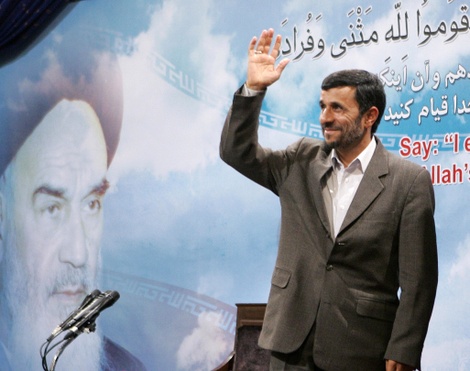
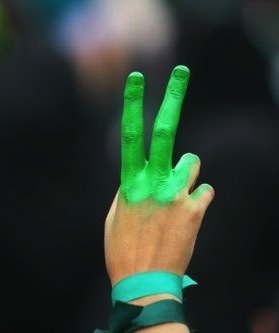
(Photos: A Jewish settler boy swims in a pool near the Jewish outpost Settlement of Har Bracha, West Bank on July 22, 2013. By Uriel Sinai/Getty Images. Mahmoud Ahmadinejad and the Green victory sign by Getty Images.)

Falling In Love Again

bowie3

So this weekend I spent upstate with close friends and a three-legged beagle called Bowie. It’s a very Dish story. A Dish reader – and, oddly enough, a writer for AC360 Later – emailed me a few weeks ago. His girlfriend was taking care of three dogs (and a few birds) and one of the creatures – a rescued beagle – was proving a little too much on top of the menagerie, work, and life. She was trying to find a new home for the dog, and he recalled how I had lost one only this summer. It was a long shot but I was intrigued. So we agreed to meet the little scamp at the neighboring dog park, and then to take her for a weekend away. As I write this, she has coiled herself around my feet in a bedroom near Livingston Manor, New York.

She was given the name Bowie – after David – and it seems as good a name as any. She’s a small beagle – only 15 pounds – and still young for a survivor, at 18 months. The trip, alas, didn’t start that well. I fed her a calming treat that, an hour later, gave her awful gas in the backseat; and then she peed on my bed almost as soon as we got there. Smelled like Dusty. I crated her the first night, because of peeing worries, but at dawn, she woke me with whimpers. I took her out for a wee and then back to bed, where I left the crate behind and let her snuggle up against me, as I wheezed myself back to sleep (bad asthma lately). She woke me again a few hours later to kisses all over the beard. After breakfast, we went for an old-fashioned English country walk.

She came alive – her nose dragging us all forward, backward, up and down, the white tip of her tail a frenzy of white at the end of a long leash. She has a petite little beagle face, a perky, skittish mischievous streak, and, of course, a stump where her right hind leg used to be. She had been part of a hunting pack, I was told, and one day she’d been hit by a car. Rather than euthanize her, she was rescued and had her leg photo(5)amputated. I mention this because it is, of course, the first thing you notice about her, but it is also the first thing you forget. She runs like the wind, she pulls like a terrier, and she seems utterly oblivious to her handicap. Peeing can be a little tough, since a girl dog has to squat – and one-legged-squats can be tricky. Squeezing one out might seem a little odd too, but she manages it rather efficiently. The rest of the time, she loves playing with a tennis ball, and smelling everything in her vicinity. She has that beagle nose and that beagle curiosity.

Which included the resident cat, a large, Cartmanesque male called Bob. From the get-go, it was clear Bob was pissed off. He inhabited a neighboring house but is used to living in my friend’s place in the winter. He wasn’t too happy to see a three-legged dog enjoy his master’s company, while he was shut out – because of my allergies. So he got his revenge. After a few near-skirmishes, we thought we were out of the woods, literally and figuratively, and then we got home and somehow, he got inside. I was upstairs when I heard a snarl and then howls of panic and anguish from Bowie. I scooped her up and tended to her slightly bloody nose and a heartbeat faster than humming bird’s. Life-lesson number one: don’t mess with a fat cat. The rest of the weekend, united in fear of the creature, we were inseparable.

So we’re getting a new dog, via a Dish reader no less, and I have to say this weekend was a bit of a love affair. There is so much about her that reminds me of Dusty as a puppy – the pathological wolfing of the food, the constant interest in every smell, scent and sight, the sheer constant energy. But unlike Dusty, she’s extremely affectionate. And even obedient. By the end of the weekend, she had perfected “sit” and “stay” and (almost) “down” – and there were no more accidents. We didn’t use her crate after the first night. If I didn’t see her, all I had to do was say “Bowie” and she would come scampering around the corner to shower me with love.

Just when you least expect it … just what you least expect. I think the grieving is done now.

Obama’s Crucial Six Months

President Obama Speaks On The Government Shutdown In The Rose Garden

In many ways, his entire term as president has been leading up to this winter and spring. This will be when his core advancements in domestic and foreign policy will be tested as never before. This will be when we see whether the Affordable Care Act can gain traction and legitimacy as a reform that is far better than the chaos and inefficiency of the past; and when we see if the West can bring the great nation of Iran back into the fold of the world economy, with clear restrictions on its nuclear program.

The ACA has gotten off to a really rocky start, with the debacle of the website and the chorus of complaints from those whose health insurance plans will experience disruption. But it’s worth recalling that this law has always had a rocky history. It nearly got swallowed up by the urgent need to wrest the country out of a potential Second Great Depression; it wallowed in Senate inertia for months, as Max Baucus hemmed and hawed; it was pummeled by the summer of Tea Party rage; it nearly came undone when Ted Kennedy’s seat was lost to a Republican; it caused a huge loss in the 2010 Congressional elections, which in turn, helped the GOP gerrymander the House even more to their advantage, and block much of the president’s agenda since. It was the casus belli of the government shutdown and the debt ceiling crisis of this fall. When you look back, you realize why every previous president who tried to get this done failed – from Nixon to Clinton.

And yet it’s still alive, even as it’s enduring severe labor pains as it makes its way into the world. As I noted yesterday, support for it has actually risen recently; and, because of the website’s malfunction, the winners are much less vocal now than the losers. But if the process grinds on, that balance may change. The president should not be let off the hook for his previous overly-broad promises or for the clusterfuck of the site. He may need to adjust again a little. But the odds of the core of this law surviving – particularly the principle of universal coverage and the end of denials of insurance for pre-existing conditions – are solid. It may well need further reform, but it has created a framework for both Republican reform (if they can get out of their ideological mania) and even, perhaps, a single-payer system, if the Democrats want to move left. It’s messy, its future could go in several directions, but it’s now entrenched. The president can take the hit for the problems in the next three years, and he should. Because he’s not up for re-election and can veto any attempts to destroy it.

But in some ways, the outreach to Iran is just as important and critical. Again, the policy arc has been long and brutal. We witnessed – and this blog will never forget – the Green Revolution that emerged only months after Obama’s first election, propelled by the same online, youthful hopes that brought this president to office. We then saw the hopes of Obama’s Cairo speech destroyed by the brutal repression of Ahmadinejad and Khamenei. The sanctions that were then imposed were everything a neocon could ask for – except for the war or regime change they still want. Again, it took four more years for the Iranian elites to fully digest how damaging the sanctions were, but in the last elections, Rouhani emerged as a pragmatic interlocutor. During all this, Obama managed to create a truly durable and powerful international coalition for sanctions, and prevent the Israelis from doing the unthinkable and starting a religious war in the Middle East that could have metastasized into a global terror wave, with all the collateral damage in human life and civil liberties that would have entailed.

Much could still go wrong. But there’s no doubt in my mind that both Rouhani and Obama want a deal.

Both have to keep their war factions – the AIPAC-dominated Congress and the Revolutionary Guards respectively – in check, while also using the threat of war or more sanctions from these groups to make the case for a deal in the center. For months now, the Iranian government and the Obama administration have been talking, slowly building trust, with Obama not removing but slightly loosening some of the financial restrictions on the country:

In the six weeks prior to the Iranian elections in June, the Treasury Department issued seven notices of designations of sanctions violators that included more than 100 new people, companies, aircraft, and sea vessels. Since June 14, however, when Rouhani was elected, the Treasury Department has only issued two designation notices that have identified six people and four companies as violating the Iran sanctions.

A six month freeze of nuclear activity would give the talks more time to succeed, without bringing the Iranians closer to the ability to make an actual bomb. It’s not done yet, but it looks close. If the result is a new detente or even a thaw in relations between the West and Iran, it would transform global politics in a way not seen since the end of the Cold War. Because this is the other Cold War that has been going on since 1979. Such a breakthrough would help us ease away from our dependence on the Saudis for oil (along with fracking and discoveries like the massive Australian shale field), and would also give us far more leverage over Israel in the pursuit of a two-state solution.

All this may come crashing down, which is why the next six months will indeed be the critical ones. But let us be clear what the stakes would be for the Obama presidency. It would mean that this president ended the wars in Iraq and Afghanistan, devastated al Qaeda in the region 9/11 came from, killed bin Laden, and ended torture. At home, his legacy would be an avoidance of a second Great Depression, the revival of the US auto industry, a drastic reduction in the deficit, tough executive branch decisions to rein in carbon emissions, a civil rights revolution for gay people and universal healthcare. And as the establishment of the GOP slowly moves against the radicals and extremists that have run its brand into the ground, Obama will have done something else as well. By refusing to blink in the debt ceiling crisis, he may well have done what all truly transformative political leaders do: reform his opposition by making it more responsible in opposition and more pragmatic in government.

I once spoke of him as a potential liberal Reagan. For all the nay-sayers out there, it’s still possible.

(Photo: Chip Somodevilla/Getty.)

The Long Game Of Obamacare

President Obama Visits Boston To Talk About Health Care

The current conventional wisdom is that the ACA is a disaster. Democrats up for re-election in 2014 are running away from it, there remain, according to Sebelius, hundreds of fixes still to be made to the website, the stories of canceled policies have dominated the headlines and the president has rightly been lambasted for grotesque mismanagement of the federal government. He had one core domestic goal for his second term, it seems to me, and he flunked it. Worse, he cannot even admit that he simplified the sale so badly he repeated something untrue. If the website’s functionality is not substantially fixed by December 1, all bets are off.

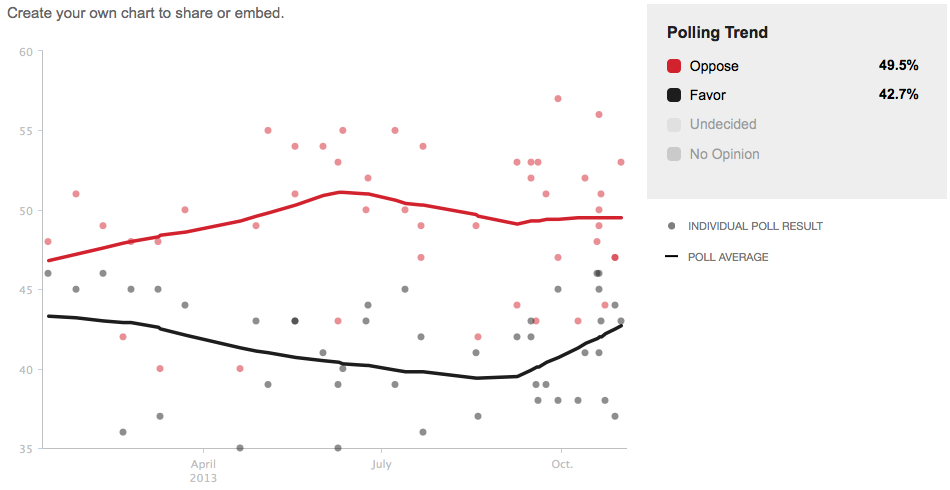
And yet … Americans have not changed their minds on the ACA much over the last few months. Here’s the poll of polls on it since January of this year:

Screen Shot 2013-11-07 at 12.43.21 PM

Since September, support has actually risen, while opposition has remained flat. Given the fiasco of the website, that’s a surprise. This week’s elections also didn’t prove that it is a huge liability. Opposition to the ACA remains very strong in the GOP base, which doubtless helped Cuccinelli in the final week. But McAuliffe ran explicitly on Medicaid expansion and won. Then there’s the calculation of Ohio governor John Kasich in embracing Medicaid expansion. Consider too the relative success of the law so far in a state like Kentucky of all places. Now along comes a poll from Reuters-Ipsos:

The uninsured view the 2010 Patient Protection and Affordable Care Act, commonly known as Obamacare, more favorably since online marketplaces opened – 44 percent compared with 37 percent in September. It found that 56 percent oppose the program compared with 63 percent in September. A higher proportion of the uninsured also said they are interested in buying insurance on the exchanges, with 42 percent in October, saying they were likely to enroll compared with 37 percent in September.

I don’t want to overstate the case but I think it’s also foolish to understate the impact on many people who will get health insurance for the first time in their lives. This reality will matter politically in the end. See Byron York’s take on the number of winners versus the number of losers in pure monetary terms – and Ed Kilgore’s response. People are also not dumb enough to think that cancellation of their policies or sudden premium hikes started with the ACA. It was a constant in the private sector for years. Yes, disruption will tick a lot of people off. But Obama still has three years to get this entrenched – and once in place, it will be mighty hard to remove for the exact reasons that people are so upset right now. Disruption is always unnerving, especially in an area like your health.

We all take this issue personally, as we should. And I’ve been very lucky to have had excellent employer-based healthcare for years. But always at the back of my mind was the fear that I might leave a job with that kind of security, like at TNR or the Atlantic and the Beast, and be stranded and bankrupted by my pre-existing condition, HIV. We’re looking into our own health insurance plan right now for the Dish in the next year, and I’ll let you know how the process goes. But like many, we haven’t been in a mad rush, we have an insurance broker to help us through the process, and it is hard to express the relief I feel that I cannot be denied coverage because I am a survivor of the plague. If we have to pay more, it’s well worth the relief.

I can’t believe I’m the only one who feels this way.

It’s not the health insurance reform I would have wanted – I’d prefer ending the employer subsidy, mandating no exclusion because of pre-existing conditions and creating a more vibrant individual market, including the option of catastrophic insurance. But the GOP never offered that and are still not offering it.

I also feel – call me a squish if you want – that baseline health security, while not a right, is an enormous social good, and that social insurance against the random vicissitudes of life in no way compromises free market principles. I also realized when I started a small business that I could not personally employ anyone and not provide insurance, without violating my conscience. The step from that to embracing universal care is obvious.

So count me among those who suspect the current fiasco is just the beginning of this story. To listen to the Republican critics, you’d think the previous system was wonderful – whereas we all know it wasn’t, that the private health sector was grotesquely inefficient, and that its costs kept soaring, and free-riders were undermining the entire enterprise. At some point – especially when the GOP has to find a nominee who can appeal beyond the base – the Republicans will have to shut up or put up. And I suspect a platform of repealing what Obama is constructing without replacing it with something very similar will be a big vote-loser.

I may be wrong, of course. I have been in the past. But the long game is always worth keeping in mind.

(Photo: By Yoon S. Byun/The Boston Globe via Getty Images)

Marijuana And Moralism

.jpg

Last night, we had a spirited discussion of legalizing marijuana on AC360 Later. I’d post a clip but CNN’s clips don’t work when embedded. For a taste, go here. David Frum repeated Ross Douthat’s recent equation of marijuana and gambling legalization:

Both have been made possible by the same trend in American attitudes: the rise of a live-and-let-live social libertarianism, the weakening influence of both religious conservatism and liberal communitarianism, the growing suspicion of moralism in public policy.

Like Conor Friedersdorf, I think that’s too crude an argument. I don’t think human beings will ever see law as entirely amoral, even as we try to account for real differences of opinion over what is moral and reach a workable, neutral-as-possible compromise. As Conor notes, our society has shifted toward new moralisms – “mandates to recycle, laws against dog-fighting, marital-rape statutes, trans-fat bans” – and away from old ones, rather than a move away from moralism altogether. Our sensitivity to the abuse of children is perhaps the greatest sign of a heightened sense of moralism, especially when one looks back and sees how appallingly blind so many were to it for so long. I know Ross will differ on the substance, but I doubt he will argue that my support for marriage equality stemmed from mere libertarianism (which would have led me to oppose all such marital benefits for everyone) but from a deep moral sense that we were (and are) violating the dignity of the homosexual person and perpetuating enormous pain for no obvious reason.

Now, the argument for legalizing marijuana is not quite the same. It’s much more based on the simple argument of personal liberty. But it has Kush_closeits moral components as well. The grotesquely disproportionate impact of Prohibition on African-Americans is an affront to any sense of morality and fairness, just as the refusal to research cannabis for its potential medical uses – to prevent seizures in children, for example – seems immoral to me. Some might argue that the right response to this is decriminalization, not legalization. But keeping marijuana illegal profoundly constrains the potential for medical research on it, sustains a growing and increasingly lucrative criminal industry, and does nothing to keep it from the sole cohort for whom it could do harm: teenagers.

Right now, teens can get it very easily – but because it is illegal, they have to be in contact with criminal elements. Last night, David Frum argued that legalizing it would increase the smoking of weed among the poor and socially marginalized, especially in the inner city, thereby blighting their prospects for advancement in society. It’s an important point to which I would provide several responses.

First off, of all the factors holding those kids back, marijuana-use is trivial, compared with family breakdown, shitty schools, and gang violence. And given the already endemic presence of the plant in the inner city, I doubt legalizing it would increase use in those neighborhoods – as opposed to middle-class areas where the stigma still exists as a major force. What it would do is sever the link between criminal gangs and a recreational pleasure that so many already enjoy. It would cripple the livelihoods of many drug dealers, which is why they would be very happy to join David in his campaign for decriminalization but no further. That’s a very sweet spot for the cartels.

weeed1.jpgThere’s also a premise buried in there that I would question: that weed always makes people lethargic or unmotivated or lacking in initiative. Sure, it does for many. But knowledge of the increasing sophistication of the drug – achieved during the last decade or so – has changed this. Sativa strains, for example, don’t make you sleepy; they can make you very alert and highly creative. Strains that are very high in CBD and low in THC don’t make you high at all. The complexity of the drug’s impact on the many human cannabinoid receptors renders its impact far more variable than crude Cheech and Chong mythology would suggest. And one must recall that the last three presidents all smoked marijuana in the past – the current one being a true enthusiast in Hawaii in the 1970s. Sometimes marijuana can unleash creative potential that would otherwise be buried for life. I’m not arguing that this is always the case, or that weed doesn’t harm many people’s lives. I am arguing that the weed-makes-you-a-failure argument is far too crude for today’s more sophisticated drug and that, besides, it inflicts far less harm than alcohol and tobacco.

I also start from an empirical fact. 23 million Americans smoke marijuana regularly, according to the latest survey. I don’t think the rule of law is well served when 23 million Americans do something that is both pragmatically condoned yet illegal.

It reminds me of the sodomy statutes that David also once defended on exactly the same grounds. In most states they were barely enforced. But millions of gay Americans were de facto committing crimes in their bedrooms. At some point the contradictions mount to such heights a resolution is essential. Anthony Kennedy cut that knot.

I take Ross’s point that we should not inherently distrust the contingent, if somewhat irrational, double standards that history has bequeathed to us. Our difference lies in two strains of conservatism – that which seeks to stand athwart history and yell “Stop!” and that which sees society as constantly changing and the conservative task is to manage that change prudently. There are times for both impulses. But in determining what we should do in any contingent moment requires understanding why the change is happening and how to shape it for the good.

Ross doesn’t explain why he thinks the polls on marijuana legalization have shown such dramatic change in so little time. Or he does so by a general reference to more permissiveness. But when I think of a permissive period, the late 1960s seems like such a moment to me. It was the crucible that created neoconservatism, that turned Ratzinger from a reformist to a reactionary, that created so much of the conservative movement that defined the 1980s and ever since. And guess what? Legalizing pot back then was regarded as anathema:

gv32bf6ay0gwmjp1rv5otq

As Conor notes, the key comparison here is support for legal abortion, a profound moral issue if ever there was one. That graph is very different:

b1tknbxezu-afxekhpvmta

Why would Americans change very little on one issue that is obviously related to morality but shift dramatically on another? I propose the reason is because people have seen marijuana use in their own lives and those of others, see its relative harmlessness, see its benefits (medical and recreational) and have changed their minds based on the accumulating evidence. I wonder what Ross’s explanation is?

(Photo: A picture taken on October 31, 2011 in center Amsterdam, shows cannabis seeds displayed in a tourist shop. By Nathalie Magniez/AFP/Getty.)

The Case Against ENDA

No Child Left Behind

The federal bill banning workplace discrimination against gays, lesbians and transgenders is up for a vote tomorrow. Gay dad Wally Olson makes the case against it – and perhaps his strongest point is on whether it will ever be used:

Statistics from the many states and municipalities that have passed similar bills (“mini-ENDAs”) indicate that they do not serve in practice as a basis for litigation as often as one might expect. This may arise from the simple circumstance that most employees with other options prefer to move on rather than sue when an employment relationship turns unsatisfactory, all the more so if suing might require rehashing details of their personal life in a grueling, protracted, and public process.

To take a similar point on the federal hate crimes law, since it was passed in 2009, there have been two successful prosecutions under the act for anti-gay bias, so far as I can find. One was in March, 2012, in Kentucky, and the second was in Georgia last June. It may well be that neither would have been pursued without the federal law, but still. If I’ve missed any, please let me know. But two successful prosecutions in four years does not suggest a problem so vast that the federal government must be involved. If you care at all about economic liberty, it seems to me you virtually-normalhave to weigh the costs as well as the benefits.

At the same time, the private sector has forged ahead of government, acting rationally to get the best set of employees possible. The Human Rights Campaign annual report (pdf) on voluntary corporate anti-discrimination policies gives us the latest: 88 percent of Fortune 500 companies have non-discrimination policies with respect to homosexuality, and 57 percent also include gender identity in their policies. The progress in the private sector over the last ten years has been remarkable, and HRC can rightly feel proud of their work engaging corporations. But that, of course, suggests that government itself may not be the best way to protect gay employees.

I used to be opposed tout court to such laws on libertarian grounds (and not just for gays but for everyone apart from those subjected to the unique historical burden of slavery and segregation). Virtually Normal also makes the case that the government has no right to compel private citizens not to discriminate against gays when it discriminated so perniciously against gays in civil marriage and military service. But two things have changed my mind over the years.

The first, quite simply, is that the libertarian position on such crimes is largely moot – for good and ill. The sheer weight of anti-discrimination law is so heavy and so entrenched in our legal culture and practice, no conservative would seek to abolish it. It won’t happen. And if such laws exist, and are integral to our legal understanding of minority rights, then to deny protection to one specific minority (which is very often the target of discrimination) while including so many others, becomes bizarre at best, and bigoted at worst. Leaving gays out sends a message, given the full legal context, that they don’t qualify for discrimination protection, while African-Americans and Jews and Catholics and Latinos and almost everyone else is covered by such protections. It’s foolish to stick to a principle, however sincere, in the face of this reality.

Secondly, the federal government has ceased its own discrimination policies in marriage and military service and therefore now has some small sliver of moral standing to lecture private individuals across all states. My objections twenty years ago are now moot.

Put those two developments together and I would not vote against ENDA if I, God help us, were a Senator. But I would vote for it with my eyes open. I don’t think it will make much difference in reality just as I don’t believe hate crime laws make much difference in reality. Of course that’s an empirical question and I promise readers horrified by my luke-warm support of this that I will gladly recant such skepticism if ENDA truly does lead to a flurry of successful suits across the country against anti-gay bias.

But to me, this feels a lot like a) an easy concession to Gay Inc. which has devoted almost its entire existence to this bill, b) an easy vote for a Republican trying to hold onto a marginal seat, c) an even easier way for Democrats to grandstand on the issue, even though it stands a snowball’s chance in Hell of getting through the current House. So I hope it passes. But forgive me for not cheering it on.

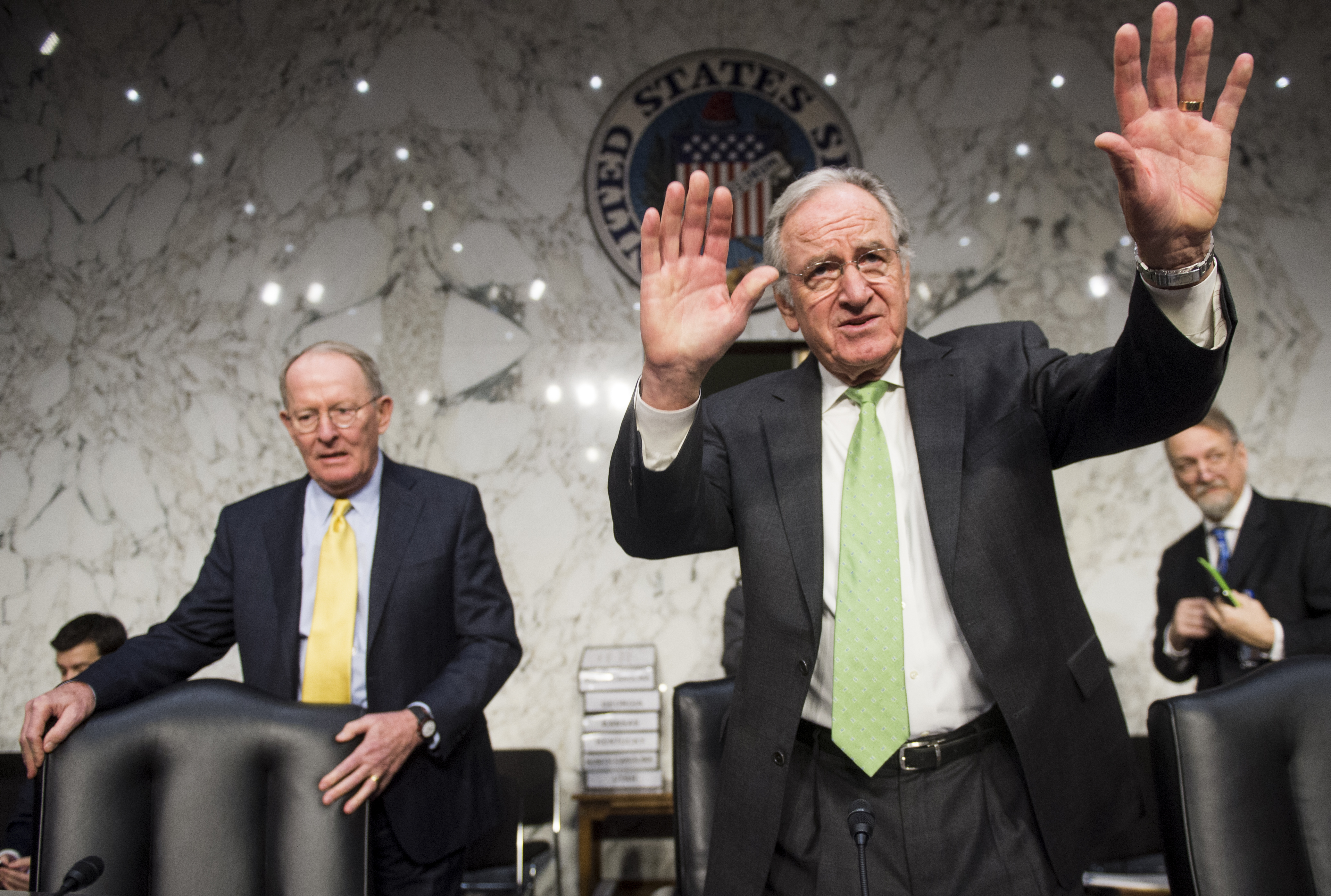
(Photo: Chairman Tom Harkin, D-Iowa, right, tries to quiet a CodePink protester calling for passage of the Employment Non-Discrimination Act on Thursday, Feb. 7, 2013. Sen. Lamar Alexander, R-Tenn., left, takes his seat. By Bill Clark/CQ Roll Call.)

New Dish, New Media Update: 10 Months In

[Re-posted from earlier today]

It’s been a while since we last shared our traffic and revenue data, so here’s the latest. October was a terrible month for the country but a great month for the Dish. Subscription revenue had its biggest surge since March:

Screen Shot 2013-10-31 at 1.10.07 PM

But when you look at that week by week, you see the twin peaks of the big news story (the shutdown and threat of default) and then back to our regular levels of income:

Screen Shot 2013-11-01 at 11.14.11 AM

Traffic was strong:

Screen Shot 2013-10-31 at 1.12.25 PM

October’s final numbers were 1.2 million unique visitors and 7.7 million page-views. That’s the highest number of unique visitors we’ve had since we went independent. More importantly, we now have 30,880 subscribers.

How are we doing in getting toward our announced goal of a gross $900K in revenues for the year – which would keep us at the budget we had in the last year at the Beast? We’re at $791K at ten months. So we have two months to raise $110,000. It’s a tall order, because the average monthly revenue since March has been $18,000. If we keep going at the current pace, we’ll be lucky to make it to $830K by year’s end. Not bad and not fatal, since I’m not taking any salary or profits from the Dish this year. But we’re not quitters – and still want to reach our target. So if you’ve held out for the last ten months, and read us every day, please [tinypass_offer text=”help us”] keep the show on the road. Right now, you’re the only source of income we have.

Over the weekend, we’re also going to add house ads for the first time, aimed solely at getting new subscribers in the next two months. Every other website has them as a constant – and we’d need to do much less begging in posts like this one in future.  For some of you, that will mean a slightly more cluttered Dish, with less white space and more distraction, and a lower signal-to-noise ratio than you’ve been used to.

But only for some of you. The technology exists to ensure that only non-subscribers will see the ads. So subscribers will see no change at all. Membership, I’m happy to report, has its privileges. (If you have subscribed and still see the ads, make sure you’re logged in.) And if you’re still a non-subscriber and dislike the clutter or distraction of the ads, you can easily get rid of them. Just [tinypass_offer text=”subscribe”] and they will all magically disappear! If you like the clean, simple look of the current Dish, keep it. Just [tinypass_offer text=”subscribe”]. It’s that simple.

For us, this “ads-for-non-subscribers, no-ads-for-subscribers” model seems the best of both worlds. It’s an opportunity to both generate new subscriptions through house ads and keep our promise to subscribers to do all we can to provide an ad-free Dish. We’ve updated our Privacy Policy to reflect these changes. And, of course, we’ll keep you appraised of the results. Transparency is a promise we’ll continue to keep.

It’s [tinypass_offer text=”$1.99 a month”], or just [tinypass_offer text=”$19.99 a year”]. Do it today and you won’t see any house ads at all. Do it after the ads have appeared – and you can make them go away at any time. Just subscribe [tinypass_offer text=”here”]!