The Fear News Network

This embed is invalid


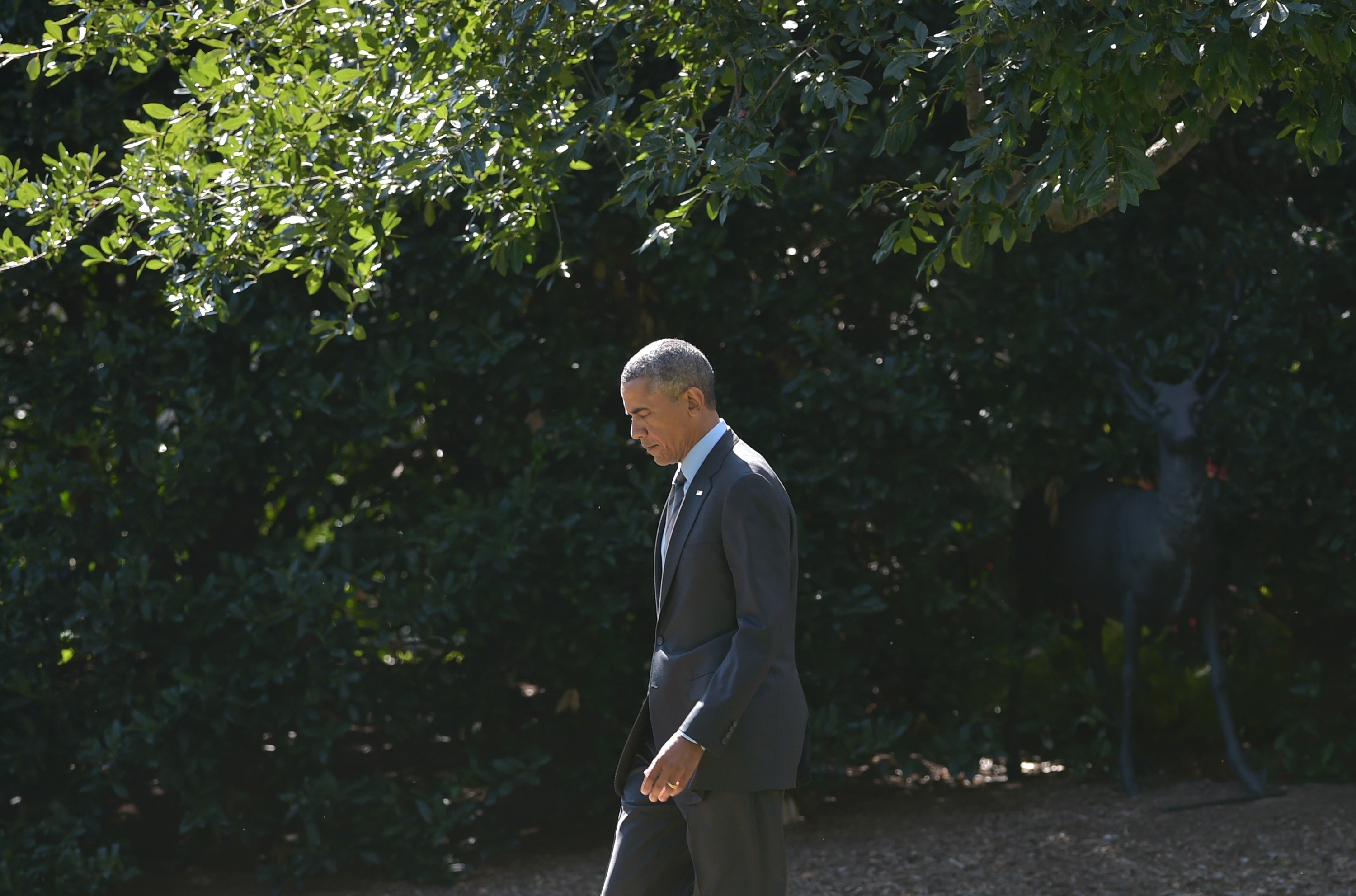
Hotel rooms can occasionally make you watch Fox. It happens. And I know I should be better than this, but it’s still, yes, shocking in its relentless, cynical propaganda. I was watching a foul, smug gabfest headed by Greg Gutfeld late last night and they introduced a segment on the first Ebola case in the US. Immediately, they cut to a graphic of a gloomy looking Obama with the words “Only in Obama’s America.” Seriously. He’s now responsible for Ebola, it seems. And, of course, the subtle insinuation that Ebola is a black disease and Obama is therefore somehow part of this dark menace coming to our shores was the subliminal message.

Then last Friday night, alone in my DC apartment – Aaron and the hounds are still in Provincetown – I also watched the Megyn Kelly show. You should never watch Fox alone. It was, of course, about the horrifying incident in Oklahoma that day where an obviously unstable and deranged worker had been fired and gone on a rampage, yelling Islamic slogans, and actually beheading one of his victims. It was obviously a deeply disturbing incident and certainly deserved coverage. But the coverage was designed not to lay out the facts, but to foment the most widespread fear imaginable. They played the full 911 tape – to accentuate the horror. They spoke of his possible ties to international terror groups. They had photos of him at a local mosque. They implied – in full McCarthy mode – that the authorities were covering up this Muslim in our midst out of political correctness or, in Obama’s America, government support for Islamist terror. Kelly intoned that this was “the first beheading on American soil,” implying that this was the beginning of a campaign to behead Americans all over the country. It was way into the segment before one of the guests, when asked why on earth the authorities weren’t describing this as an act of Islamist terror in the heartland, muttered that, well, in fact, the dude had just been fired at the place he worked, after a heated argument, and maybe that had something to do with it. Kelly immediately pounced and dismissed any such motive – and the segment moved directly from the local police who had called this workplace violence to an assertion that the Obama administration was behind this p.c. move.

The incident happened that day. I understand that breaking news may not have all the facts available to make full sense of it. But to assert he was arguably part of an international Jihadist group, already planning more attacks, to describe what prompted this horrifying act as solely terrorism, to watch Kelly’s widened incredulous, scandalized eyes asking over and over again why the police were still calling this as a preliminary measure an act of workplace violence … well, it was pure fear-mongering.

It turns out now that more facts are in that he’s obviously a deeply disturbed individual, singled out people he had a grievance about, had shown up at a local mosque and asked to have pictures taken (even though he was not a member of it and its members had no idea who he was), and had gotten into his sick head that he was an Islamic warrior, from reading on the Internet and watching the recent ISIS beheadings. He had just “converted” to Islam and was full of racist and misogynist poison. It would not be the first time an unstable individual had grappled with his demons by adopting some new religion and then went on a rampage to avenge those he had a grievance against. His weapon? A kitchen knife he had gone back to his apartment to get after being dismissed.

My point is not that this was not a horrifying act, and he faces the death penalty for it. My point is simply that the way this was covered reveals ever more starkly that we are in a new era now of the kind of paranoia and terror that sees a terrorist conspiracy behind any and every act of violence, that seeks to equate the acts of this disturbed and violent man as somehow indicative of the many Muslims in that community who were as appalled as anyone by this murder, and that is fast becoming national hysteria that shows no sign of abating.

America, my adopted home, is a place of wonder, of energy, of enterprise, of compassion, of risk and diversity. But it is now and always has been a place where deep-seated fear and paranoia have always simmered below the surface – where McCarthyism once stalked the land, where recent hysteria justified the American president authorizing appalling torture of hundreds of people (with complete impunity), where civil liberties were shredded in a period when more people were killed by lightning than by terrorism, where refugee children as young as eight or nine are treated as terrible dangers to the republic, where undocumented immigrants are left in permanent limbo and where legal immigrants are treated as threats first and assets second, and where our leaders, whom one might expect to calm the public, instead fan the flames of panic for short-term political gain.

The great achievement of those maniacs in Iraq and Syria is to have ignited this strain in American life, exploited the PTSD of 9/11, and brilliantly baited this country into another unwinnable, bankrupting war which will only deepen the polarization that leads to more terror – a war in which what’s left of democratic accountability and constitutional norms are once again under threat. I see no one in our elites, including the president, doing anything to calm this down. And I see a Republican landslide coming in the Congress this fall, with all the consequences of more war and more hysteria ahead.

Welcome to America, no longer the land of the free or the brave, but the land of the paranoid and terrified. I haven’t felt this glum since the Bush-Cheney years. Because, it appears, they never really ended.


“Psychological Suspense That No Child Is Equipped To Manage”

A reader shares a harrowing series of stories and insights on corporal punishment, which at times borders on torture:

This email is too long, Andrew. But I don’t know another way to do it. Those last sentences in your post on “The Racial Divide On Spanking Kids” are packed with the stuff I’ve been struggling with all week. I’m sending this because I took so much time to write it. I’ve been close to tears often this week, and I suppose it’s a way of defending that tenderness.

“Discipline”: It was a belt or a switch in my house, except for the handful of times I was slapped. I hail from a poor, white, fundamentalist family in Texas. Sometimes we managed to get a hold of the bottom rung instead – lower-middle class, or is it upper-lower class? – but it wasn’t ever a very firm grip. I think that matters, our economic and social status – how it operated on my parents, their sense of self, their sense of control and agency, their standing, that fuzzy line between “poor” and “trash,” the dependable hierarchy at home of respect and obedience. But I can’t unpack all of that, and I don’t know what it would mean for anyone else if I did.

Whenever I got caught swearing – or if someone told my mother I’d been swearing – I had my mouth washed out with soap. In practice, even this is a stupid and violent thing to do. Really, the logistics of the sink and the soap and the faucet, the mouth and the hands, the gagging and spitting and crying – it’s jammed with aggression. I was six the first time.

Mind you, I never once swore at my parents. Not once. I swore at other kids or my siblings, and as I was the youngest by a decade – this was all mimicry. In truth, I was a freakishly good kid, but only because I wanted, more than anything, to keep out of the way and get through the day unnoticed. As all the evidence shows, this stuff doesn’t work: I’m a committed swearer to this day – but, well, there’s a time and a place. You learn that sort of thing over time, not over a sink.

Before I was tall enough to choose my own switch, my mother would get it herself. And the period of time that marked her absence, waiting for her to return with one, was filled with terror. It is a kind of psychological suspense that no child is equipped to manage. I certainly wasn’t. I remember that waiting period much more vividly than I remember the pain of being struck, repeatedly. (Does anyone “spank” a kid once a session? Isn’t it always part of a series?) I can hear myself crying and screaming, I can see myself touching the welts later, the stippled blood, but it has none of the embodied force of that terrible, terrible waiting.

When I was finally made to get my own switch, it was a kind of relief. Maybe because I felt I had some control? Alone and outside, it was nice to get lost in the concentration required to choose the right switch, the one that might hurt the least. (I’m choking up now, typing this. All week it’s been like that, following the national reactions.)

Anybody who thinks that hitting a kid with a switch is remotely related to “spanking” or “swatting” or “discipline” is full of shit. It’s a violent, strange, lacerating affair. Where the length of the switch lands can’t be controlled; anyone who’s used one – or been hit with one – knows this. Adults don’t get to shrug and claim they didn’t mean to lash a child’s scrotum or face or breasts. A child will automatically jerk and twist and try to shield herself when someone is striking her with a switch. (Whipping posts were useful because they prevented this very dance. One could aim better, land the strike with precision. Become a marksman.)

A child is also typically being grabbed and yanked with the parent’s free hand. It’s chaotic. Shit is going to go wrong. You don’t know where the next blow is going to land. That’s what makes it so terrifying for a kid. And a switch is like a whip – it is a whip: each lash has stages; it curls and snakes and bites. The sound of it, both a rip and whistle – awful.

As a kid, I was not only hit with a switch; I was “paddled” with a board (in school), hit with the belt, and slapped. But nothing had the psychological impact of the switch. Every blow was new and surprising and fresh. A switch is unpredictable. That is its nature. That is its power. Any offending adult who claims not to know that is a liar.

My father never hit me. I don’t know why. He beat the shit out of my brother and sisters. My mother didn’t intervene.  And then one day he stopped. Cold turkey. Later, perhaps motivated by guilt (her other children were his stepchildren), my mother would scream at him to punish me, but he wouldn’t. I can still see him shaking as she screamed, pushing the belt into his hands. I don’t know how I knew it – I was too young – but I did know: he was trying to control himself. He was shaking from the effort required to resist. And I remember perfectly those minutes of fear and confusion: Why does he look afraid? Why does she want him to hurt me? Is he going to? Why does she hate me?

Almost ritualistically, it ended with her grabbing the belt, crying and yelling both, and “spanking” me with all she had. My father always, always, left the room. I feel certain they would tell you, or anyone taking a survey, that they spanked us and disciplined us. Yes. That is was their responsibility, and their right.

I graduated high school in Texas in 1986. Students were still “paddled” in the principal’s office then. It was a long board with three holes drilled into it. It had a handle. We would bend over, knees straight, and put both hands on a chair. For the girls, a secretary was called in to observe. I worked half days my senior year and so was ineligible for detention. After three tardy slips and without the option of detention, I was paddled. I can faithfully report that it didn’t help me get to class on time. I was already a tired kid, overwhelmed and depressed, living in a chaotic house. I couldn’t always get it together or keep it together between work and school and home. Corporal punishment didn’t change that.

I will say that the boys in my high school got hit a lot harder. A lot. I remember leaving class with a bathroom pass once and seeing a boy I didn’t like – he frequently taunted me in front of other students about my small breasts – alone in the hallway, returning to class after a “paddling.” His walk was slow and stiff. He was in real and visible pain. He looked humiliated, and like he’d been crying. And I remember feeling confused because I had the urge to comfort him – him of all people.

Mostly I’ve been wrestling a lot with how all these terms have been conflated in the media and between people lately: “spanking” and “discipline” and “punishment” and, let’s be straight about it, flogging. The bravado and the gallows humor: classic (mal)adaptive coping strategies for all manner of survivors and people living or working in violent, fearful, unpredictable environments – soldiers, the hazed, the bullied, the ostracized or marginalized, ER nurses, cops. I sense it sometimes, how tough I can feel – or toughened. I took it. I made it through. Man, can I take things. There’s something haughty in the feeling. Triumphant. A badge-of-honor quality to it. But I know it’s an overcompensation. I know it’s a coded admission of my vulnerability and my anxiety about feeling helpless, of how my early dependence and vulnerability was exploited.

Maybe it’s transference, but I swear I could see the very same brew on Hannity’s face during this piece. He repeatedly invokes his father and the ways he was punished by his father. He sounds almost like a battered spouse (or, say, an abused child), claiming he deserved what he got, making excuses for his father. There’s even a pleading tone in his voice – do not take away this guy’s career, don’t put him in jail. But who is Hannity really talking about? Who should be spared and protected? Because for almost the entire clip he’s been talking about his father, and himself as his father’s child.

There’s something poignant and terrible about that merry reenactment with his belt. Slapping it against the desk. Even the certified guests seem to be dazed by the simultaneous demonstration and disavowal. But wait, now he’s snapping the belt. And snapping a belt like that at a child is nothing but a calculated form of emotional torture. I remember it well. I remember it physically, everything in my little body starting to rev and jack-knife. Snap. Snap. Snap. It’s nothing to do with discipline; it’s everything to do with domination, control, intimidation. (There’s this, too: Some people just like this shit. Same way some people like making and seeing their dog cower.) Either way, it’s pretty much condoned in our culture.

If you’re the sort of person who needs to idolize your parents your whole adult life; if you can’t navigate the necessary distance from which to admit their inevitable mistakes and weaknesses; if you can’t simultaneously love them and admit your own honest anger or pain, the dark ways you’ve been formed, too; if you need a rationalization for how you also “discipline” your children – well, then, I guess you talk a lot about how fine you are, or how you deserved it, or how harmless and necessary it is and the rights we have to it – all this “spanking” and “discipline” – maybe you brag about it a little, and you take off your belt on live TV and snap it for all the world to see, because, hey, everybody’s all right. The kids are all right. Right?

Obama Is Now Covering Up Alleged Torture

Readers may understandably be concerned by my continued dissent on the new war counter-terrorism operation in Iraq and Syria – which has no chance to roll back a Sunni insurgency that will endure as long as Iraq is still kept as a unitary “state”, huge chances that blowback will bring terror to the US again, and has only token Sunni support in a region where the Shi’a-Sunni war may well continue for years or decades. But I have long argued that we should look at Obama’s long game in assessing results. And with two years to go, the long game can begin to be assessed.

The results in foreign policy? A new open-ended years’ long war in Iraq and an indefinite continuation of thousands of troops in Afghanistan. These were not wars, it turns out. They were operations in which the United States became permanently responsible as a neo-imperial power for two more failed states. More to the point, as ISIS has managed to become the new al Qaeda, Americans have returned to their 2002 mindset, with a new Congress looking as if it will be dominated by Republicans, who are all-too-eager for ever more wars against ever more non-threats to the United States. The last two years of Bush were more hopeful for some kind of unwinding of this war machine. But now a liberal Democrat has given them bipartisan legitimacy – and fueled the fires for a Cheneyite comeback.

Gitmo, of course, remains open. More to the point, even as war criminals have been given total immunity, the Senate Intelligence Committee report remains bottled up, as the CIA is allowed to doctor, redact and openly challenge it, while the president sits back and lets Denis McDonough protect the war criminals we once had some aspiration to at least expose. James Clapper has been revealed as a liar to the Congress and suffers no consequences; he admits he failed to anticipate ISIS’s breakout, and the president retains full confidence in him. John Brennan runs an agency which actually spied on its Congressional over-seers, lies about it in public – and retains the president’s full confidence. And now we discover that a real current issue of mistreatment of detainees in Gitmo is being covered up:

The Obama administration has asked a federal judge to hold a highly anticipated court hearing on its painful force-feedings of Guantánamo Bay detainees almost entirely in secret, prompting suspicions of a cover-up.

Justice Department attorneys argued to district judge Gladys Kessler that allowing the hearings to be open to the public would jeopardize national security through the disclosure of classified information. Should Kessler agree, the first major legal battle over forced feeding in a federal court would be less transparent than the military commissions at Guantánamo Bay.

That’s precisely what we supported Obama for, isn’t it? That allegations of abuse of detainees in Guantanamo Bay be kept completely secret – and that no one will ever be held accountable for it. The actual videotapes of the force-feeding – critical evidence to allow anyone to judge whether these methods are indeed a form of torture – are barred from any public viewing.

The videos exist – just as they did of the brutal water-boarding of terror suspects conducted by a lawless CIA that then destroyed the tapes – again with total impunity. The lawyer for the detainee alleging inhuman treatment has the following to say:

“It’s obvious what is really going on here: the government wants to seal the force-feeding trial for the same reason it is desperate to suppress the tapes of my client being hauled from his cell by the riot squad and force-fed. The truth is just too embarrassing … The Defense Department says force-feeding isn’t torture? Bring it on, I say. Release my client’s force-feeding tapes, and let’s let the American people decide for themselves. DOD [the Defense Department] know full well that if Americans saw the real evidence they would side with the Navy nurse who refused to force-feed my client, and condemn this daily violation of medical ethics.”

But this president won’t allow it. The administration has even ordered a media ban on any reports of hunger-strikes – understandably conducted by prisoners with no recourse ever for a fair trial, release, or anything but a lifetime in legal and political limbo. If this were happening under Bush, it might be prompting an outcry:

The government’s desire for secrecy in the hearings is consistent with the military’s attempts to break the hunger strikes through a media blackout. Guantánamo officials no longer release formerly public information about how many of the 149 detainees are on hunger strike, going so far as to ban the term from its lexicon in favor of “long-term non-religious fasting.”

“Long-term non-religious fasting.” Orwell would be proud. Obama should be ashamed.

Roger Cohen Sees Hitler In The Desert

Well, we all see mirages, I guess. But it says something about the hysteria about the latest incarnation of the Sunni insurgency in Iraq that we’re suddenly comparing them to Nazis and to non-humans. Even as Cohen himself acknowledges that “the Nazi death machine was unique. Facile invocation of it is too frequent, belittling the phenomenon and its victims.”

So why break Godwin’s Law so egregiously? Cohen wants us to believe, channeling Martin Amis and Primo Levi, that there was no “why” in the unconscionable unique act of the Holocaust. And yet, mountains of evidence explain exactly why: it was a function of a vile racism that regarded the Jewish people as vermin that needed to be exterminated in order to allow the master race to flourish. It was not some random act of mass murder; it had a grotesque but clear and constantly trumpeted rationale. Then Cohen seems to endorse the idea that the Nazis were somehow unhumans or “counter-humans”, in Levi’s words. But that too, it seems to me, lets them off the hook. The Holocaust was a deeply human act  – a function of humankind’s capacity, revealed throughout history, of extraordinary levels of hatred and violence, brought to new and unfathomable evil in the age of the industrialized state.

And equally, it is absurd to argue that “there is no why to the barbarism of ISIS.”

This is after Cohen actually produces a long litany of reasons for ISIS’s brutality and evil, mind you, none of which he deems sufficient to explain the ISIS propaganda beheadings he watched on video. But why should we not take the Islamists’ word for it? They are committing slaughter and rape and attempted genocide for one core reason: because God demands that they slaughter infidels. Their mandate is beyond any human one but results in so-very-human evil.

Again, you’d think, reading Cohen, that this has never happened before. You’d think that genocide was invented by the Nazis. You’d think that religious slaughter was invented in the last couple of months. And all of this is designed to hype even further the propaganda behind this war without end, without providing any actual strategy for doing anything that could possibly alter the onslaught, or in some way win it.

And so we have the final cry of the liberal interventionist:

“Leave it to the Arabs, it’s their mess, they can clean it up,” is an inadequate (if understandable) response to ISIS. It would have been the wrong one. President Obama’s coalition in the war to eradicate ISIS may be flimsy but passivity was not an option.

And then he equates them with the Nazis yet again. The point of this facile invocation is simply to scream: Something Must Be Done. No war based on that vague slogan has ever ended in anything but disaster. But here we go again …

Is The HIV Divide Now Over?

What are your options today as a gay man with a sex life in America? You live in a community where a deadly virus has killed hundreds of thousands and is still resilient in the gay male world as a whole. It has no external or visible symptoms most of the time. Many people have no idea they have it. But the virus can be permanently suppressed to a point where it cannot be measured in your bloodstream and to a point where an HIV-positive man cannot transmit the virus to another person. And someone who is HIV-negative can also have access to a daily pill that, if taken conscientiously, all but wipes out the chance of getting infected.

Here are your options: the blue pill or the red pill. Take the one-pill-a-day Truvada (below right) and never get HIV; take the often one-pill anti-retroviral pill (like atripla, below left), and truvadayou will never give someone HIV. To make doubly sure, you can always use a condom. Except almost every man who ever had sex hates condoms – and, unlike a pill you take every day, wearing a condom means making a decision in the middle of sexual desire and passion when your rational self is at its weakest.

For me, this seems obvious – partly because I have been through the HIV mill for my entire adult life. I was dumped by an HIV-positive man when I was HIV-negative; I was dumped by countless HIV-negative men because I was positive; I have had an undetectable viral load for nearly two decades; and I am open about my HIV status – even to the point of risking deportation; I’ve been publicly shamed by HIV-negative gay men for seeking sex only with other HIV-positive men. I have navigated relationships with men on both sides of the divide – and yet the divide remained. These trials-by-fire are mercifully not always the norm any more – but that means that the young generation has fewer psychological resources or experiences with HIV to grapple with the whole issue of getting infected, or avoiding infection, or navigating sex with the issue of HIV menacingly in the way. Which may be partly why the younger generation remains the one most at risk. The trauma of the distant past still echoes in the collective psyche; this is still a disease people feel ashamed of; it is still a disease which other gay men will stigmatize and ostracize you for; it is still a disease that your friends and family regard as terrifying – even though it is no more rationally terrifying at this point than diabetes. It still compels you into denial; or fear; or blame; or ostracism.

imagesAnd so our psyches are lagging behind the science – and behind the epidemic. And one of the most powerful aspects of that traumatized psyche is the division between HIV-positive men and HIV-negative ones. It’s been there from the very beginning – this segregation of fear. But surely, at this point, there is no reason to continue the segregation. What matters is not whether you are HIV-positive or HIV-negative. What matters is whether you know your status and are on one medication or the other. Once that is true, sex can cross the bridge once more. The pills can erase the stigma and the divide – if we really want them to.

There’s a terrific new piece in Poz magazine that explores much of this territory. It weighs some of the risks of the Truvada revolution, but it also illuminates the liberation of it as well, the amazing promise that the viral Jim Crow can be dismantled at last:

Out of the dozens (nearly all of them gay men) who shared their stories about being on PrEP for this article, many described life-altering sexual and personal renaissances as, for the first time ever, they discovered what it was like to have sex without fear.

“PrEP makes me feel good about being gay,” says Evan (some of those interviewed preferred to use their first names only), a 22-year-old full-time sex worker living in Washington, DC. “Growing up gay is still really hard. The first things that we learn about our sexuality are that some people aren’t going to like us, and that we are probably going to get HIV. Taking PrEP has allowed me to step into my sexuality and feel empowered.” PrEP, he adds, “has led me to accept all gay men as a potential friend, sex partner or life partner regardless of their HIV status.”

Another man, dogged by the threat of HIV his whole life, expresses how he feels about taking Truvada this way: “I felt free, finally. For the first time since I was a kid, I know my sexuality is not going to be the cause of my death.”

The discourse around this new breakthrough has long been about risks and expense and compliance and how to make sure men don’t get too promiscuous again. And all that has its place. But we fail to understand this moment if we do not understand the liberation that comes with ridding gay sex of the terror and stink of death, the liberation that comes with leaving a world where another man – before he can be anything to you – has to be put in a “positive” or “negative” box. Or to put it another way:

If life is worth living
it’s got to be run
as a means of giving
not as a race to be won
Many roads will run through many lives
but somehow we’ll arrive
Many roads will run through many lives
but somewhere we’ll survive

Sex is about intimacy; it is about love; it is about relief. And for the first time since the early 1980s, we have a chance to rid it of fear. Why are we not rushing to embrace this? What is still preventing us from becoming collectively a force for love and friendship that is no longer limned with terror?

Is John Oliver A Journalist?

I have to agree with Asawin Suebsaeng: of course he is.

On some critical public issues – take the scourge of “native advertising” – he has done more to bring the question to light than any other media source (I try but the Dish doesn’t have the mega-reach of a “comedy” show on HBO). That story was almost quintessentially journalism: it took on established interests – the whoring media industry – and called them out on it. It shamed the New York Times for their “re-purposed bovine waste”. That it did so with humor and wit and jokes is neither here nor there. Great journalism should be entertaining. It doesn’t all have to be vegetables. Was Mark Twain merely a humorist? Is Michael Lewis not our finest contemporary non-fiction writer?

Jon Stewart comes close – but the one frustrating aspect of his show is his meek interviewing. It’s as if once he has to enter a more conventional interactive piece of journalism, he panics and turns it into light comedic banter. Or he recoils when he needs to put the boot in – and apologizes for being too mean. Colbert pulls it all off through irony – he plays a fake journalist, but nonetheless exposes real truths and real phonies. But Oliver has taken all this a step further. His extra eight minutes give him a chance for relatively long-form investigative journalism – such as the wonderful bit on the Miss America pageant and its bullshit claim that it grants fellowships to far more women than it does. Yes, it’s funny; yes, it ended with a live comedy skit with Oliver as a losing pageant contestant. But its methods – tracking down massive amounts of documents to prove that Miss America is full of it – were classically journalistic.

And Oliver has a position each time: sponsored content is a massive scam betraying every ethical principle of journalism; the Miss America pageant is an utterly preposterous dinosaur engaged in comedic attempts to cover up its fathomless sexism. It’s opinion journalism at its entertaining best. The closest to it is arguably Real Time with Bill Maher – a comedy show that contains a serious broadcast about current events and ideas.

My own view is that Americans seem unlikely to tune into a weekly, lively show about the week’s events or news – of the kind you get in Britain. They want to be entertained – especially if the show is about the news. But what the brilliance of Maher and Oliver suggests is that there might be room for shows not unlike theirs’ but with less of an escape clause to claim it’s all jokes, never mind, move on … Why not a show that does what Oliver does but a few inches closer to opinionated and witty journalism? A show in which the punchlines are not always jokes but also key arguments to shift the public debate? I suspect Oliver and Maher and Colbert and Stewart have opened a door. Who will go through it?

Why Are We Suddenly At War Again?

US-POLITICS-CLINTON

Maybe it’s worth tackling one more time. Dougherty, channeling my own thoughts, thinks it’s basically on an emotion-driven whim:

Barack Obama’s exit from Iraq was as popular as his re-entry. America is against war in Iraq and then for it with the same non-committal “Um, okay.” The nation was founded by a people who made vows, who would “pledge to each other our Lives, our Fortunes, and our sacred Honor.” Now its wars are are on and off like a proposed take-out order: “Chinese or pizza? I mean, whatever you want.”

The pundits who say that President Obama has failed to demonstrate leadership have never considered whether the public is capable of following him, or even their own train of thought. The American public is not even capable of not following him in any recognizable way. We might have been dropping bombs in Syria against Assad to the benefit of ISIS a year ago had it not been for the hearty “No” vote in the British Parliament that denied Obama the fig leaf of multilateralism. A democratic people should be bewildered that their president was urging them to join one side of a civil war a year ago, and now joins them to another. But the American people are as responsive to this stimulus as a cattle herd is to the conclusion of a Dostoyevsky novel.

My own view is that any circumspection about this – indeed any sign of a working collective memory at all – can be suddenly driven from the American mind by the obvious fact of seriously foul actors doing horrifying things to Westerners. 200,000 Syrians died in a brutal civil war and there was no groundswell for intervention. And yet a handful of beheadings of white dudes in the desert (even by another Westerner!) provokes an immediate, Jacksonian rush to war.

But I don’t want to be reductionist here, and I’ve absorbed many good points from your emails. Other factors are clearly at work. Americans do not want to be the policeman of the world, but they like and are reassured by America’s untrammeled military might. And in the last couple of years, as the US has retrenched (only slightly) from its post-9/11 posture of offensive defense, there was a sense that other powers were filling the vacuum – especially Russia. This has spooked Americans, and they are conflicted about it. The resumed disintegration of Iraq – begun in 2003 – provoked further anxiety. Was this not becoming a classic Jihadist enclave from which terrorists could launch attacks on the US?

On the right, there was also a desire to pummel the president for anything and everything. So when he is not being a lawless tyrant, he is a total wuss and loser in foreign policy. And so the re-emergence of the decade-old Sunni insurgency in Iraq was too-perfect a bludgeon for them to resist. They got to trash Obama for “weakness”, cast the Iraq war as some kind of “victory” that Obama managed to turn into “defeat”, and generally use bad news from Mesopotamia as another brick to throw at the man’s head. Total American amnesia about the horrors and futility of the Iraq war helped matters – even as Obama refused to force the GOP to confront head-on the question of ground troops yet again in Iraq.

Then there is the utterly understandable revulsion at the moral abyss that ISIS represents. Fighting against evil has always stirred American hearts – even if we have come to learn that fighting it with brute force can sometimes make it stronger. And the cumulative effect of so many depressing developments – from Crimea to Donetsk to Erbil and Mosul – led to an impression of American drift and disengagement. So a call to action against evil was the natural response to the summer of our discontent.

And one also senses that the administration began to believe this summer that ISIS could actually take down the Baghdad government. They haven’t said this much in public, because it would be damaging. But John Kerry recently gaffed to Christiane Amanpour that “Baghdad could well have fallen.” Others have bruited that the situation in Iraq had approached a potential tipping point in the summer, as the uselessness of the Iraqi army in Sunni neighborhoods became clearer. For Obama, watching Baghdad fall – or be convulsed by serious sectarian urban warfare – was intolerable. So he has done what he often does: fashioned a reasonable, needle-threading strategy to prevent the worst from happening, forestall as much mission creep as possible, and attempt to rally the regional actors into action.

He has not done something obviously stupid. And I may simply be under-estimating the pressures on a president facing mid-terms when such a huge public consensus emerges that Something Must Be Done.

He has tried to do it in coalition with the Sunni Arab dictatorships – and is, in his usual way, trying to thread the needle with the other actors in the region, especially Iran. There is a good chance it might do some good in the very short term, although there is a stronger chance that it will generate ever-more unintended consequences in the long term, something the president openly conceded would be left to his successor.

My concerns are based on the notion that ISIS cannot be defeated in this manner; that the root cause is the irreparable disintegration of Iraq and the Sunni-Shiite struggle; that interposing the US in the middle of a Muslim civil war is likely to increase Jihadist terrorism against the West, without being able to remedy the situation; and that the way in which the US has had to corral the Arab dictatorships into defending themselves does nothing but perpetuate the dysfunctional relationship between the US and the Middle East – in which we are held responsible for everything and despised as a result.

But I’ve said my piece. Maybe I should end by saying that, of course, I hope I’m wrong and that Obama manages to pull off an extraordinary military and diplomatic coup over the next two years. I hope his newfound moxie against evil-doers ends up in a different place than his predecessor’s. I hope this doesn’t upend the negotiations with Iran. I hope it helps his party retain control of the Senate in November. And I hope his precedent doesn’t further empower the war machine, the CIA shadow government and the imperial presidency that drives so much of this. All I can promise readers is that I will be open to all those hopeful possibilities, even as I fear a much darker time ahead.

(Photo: Mandel Ngan/AFP/Getty.)

War Without End

That’s what Jack Shafer fears Obama has launched:

A war with a conclusion that its participants can’t see or can’t imagine is a war without end. None of the dig-in parties in Syria and Iraq look like pushovers, but neither do any of them look like sure bets. Without American intervention, the current war will likely rage on. With regard to American intervention, not even the Pentagon dares to predict an end.

For Americans, at least so far, this war is rumbling on like background noise. The usual markers of military victory—body-counts tabulated, territories seized and banked, no-fly zones established, governments-in-waiting imposed, and elections supervised—don’t apply to the Syria war. The borders, combatants, allegiances, and military objectives in the Syrian war are too fluid to conform to our usual expectations. Nor do the usual markers of peace seem to exist. There are no peace talks taking shape, no shuttle diplomacy, no evidence of a dominant power about to exert its might to create a lasting peace by flattening everybody.

One way of looking at this is to ask: what should we call this war? Is it, as the Obama administration ludicrously argues, merely an extension of the war against al Qaeda, begin in 2001? Is it a new war on Syria – a sovereign state we have now bombed with no UN authorization? Is it a continuation of the 2003 Iraq War? Or was the 2003 war effectively a continuation of the Gulf War in 1991? I cannot decide. When you have so many over-lapping wars, most without any understanding of “victory”, and when the CIA launches covert wars all over the world all the time anyway, and when a conservative Republican president and his liberal Democratic successor both agree on the necessity of an endless war that creates the terrorism that justifies more war, it’s bewildering. One is reduced to quoting the Onion:

Declaring that the terrorist organization’s actions can no longer be ignored, President Obama vowed Wednesday that the United States would use precision airstrikes for as long as needed to ensure that ISIS is divided into dozens of extremist splinter groups. “ISIS poses a significant threat to U.S. interests both overseas and at home, and that is why we are committed to a limited military engagement that will fracture the terrorist network’s leadership and consequently create a myriad of smaller cells, each with its own violent, radical agenda,” said Obama during a primetime address to the nation.

Gitmo remains open; we are still at war in Afghanistan; we are still at war in Iraq; and all this is true despite a president elected explicitly and clearly to end the failed wars he inherited. This comes perilously close to proving that our democracy doesn’t really have much of a say in whether this perpetual war should continue or not. The public just wants “something to be done” in response to videos of beheadings, and seems to have little interest in carefully processing the pros and cons or unintended consequences – even after the catastrophe of the Iraq War under Bush! And here’s what happened when the Senate “debated” the authorization for military force against ISIS … and it’s not from the Onion:

The Senate debate did not fill up the allotted time, so at one point a senator devoted time to praising the Baltimore Orioles for their successful baseball season.

Those who argue that the US is in terminal decline, its democracy attenuated, its leaders interchangeable in a perpetual war based on no threats to the United States, have some more evidence on their side from the last couple of months. We are told, in response, that we live in a new world, in which these amorphous threats really do require a forever war to pre-empt and forestall them. But we can never know exactly what those threats really are – because it’s all classified.

I feel, I have to confess, helpless in the face of this – and my job requires me to understand these issues as well as anyone. What of other Americans, going on with their lives, struggling to make ends meet much of the time, barely able to digest what’s left of the news? It’s a recipe for passivity and acceptance, as the CIA and the Pentagon and their myriad lobbyists and fear-mongers do what they want – with no accountability even for war crimes, let alone policy mistakes.

I listened to the president yesterday – unrecognizable from the past. His embrace of the forever war paradigm is a real moment in American history. It is the moment when we must come to the realization that there really is no going back now. This is for ever.

Is Obama Pulling A Bush?

United Nations Hosts World Leaders For Annual General Assembly

Tomasky insists no:

The first and most important difference, plainly and simply: Obama didn’t lie us into this war. It’s worth emphasizing this point, I think, during this week when Obama is at the United Nations trying to redouble international support to fight ISIS, and as we think back on Colin Powell’s infamous February 2003 snow job to Security Council. Obama didn’t tell us any nightmarish fairy tales about weapons of mass destruction that had already been destroyed or never existed. He didn’t trot his loyalists out there to tell fantastical stories about smoking guns and mushroom clouds.

The evidence for the nature of the threat posed by the Islamic State is, in contrast, as non-fabricated as evidence can be and was handed right to us by ISIS itself: the beheading videos, and spokesmen’s own statements from recruitment videos about the group’s goal being the establishment of a reactionary fundamentalist state over Iraq, Syria, Jordan, and Lebanon. That’s all quite real.

The in-tray has been full of similar sentiments. My response is: sure, so far as it goes. But Tomasky’s argument doesn’t go very far. And the way in which Obama supporters have lamely acquiesced to this reckless war fomented by a dangerous executive power-grab is more than a little depressing. It strikes me as uncomfortably close to pure partisanship. I can’t imagine them downplaying the folly of this if a Republican president were in charge.

Sure, we are indeed not being grotesquely misled this time about non-existent WMDs. But we are going to war despite the fact that ISIS is no more a direct threat to the United States than Saddam was – arguably much less, in fact. We have no answer this time to the unanswered question last time: what if our intervention actually galvanizes Islamist extremism rather than calming it? And the Arab coalition that Tomasky cites as evidence that this war is a far less American-centric one than 2003 has some issues when you confront reality. Here’s the latest:

Jordan said that “a number of Royal Jordanian Air Force fighters destroyed” several targets but did not specify where; the Emirati Ministry of Foreign Affairs said that the air force “launched its first strikes against ISIL targets” on Monday evening, using another acronym for the Islamic State. American officials said that Saudi Arabia and Bahrain also took active part in the strikes, and that Qatar played a “supporting” role.

This may be important window-dressing, but window dressing it still is. It sure isn’t close to the coalition George H W Bush assembled in 1990 – and it’s much smaller than George W Bush’s coalition in 2003. More to the point, the key element of any successful strategy will be the position of the Sunni Arab tribes – and they are still sitting on the sidelines. Turkey is AWOL so far. And the fact that the Arab states do not want their contributions to be broadcast more widely reveals the depth of the problem. Obama has Americanized the problem. Once you do that, the regional actors get even more skittish, because the only common thing for so many of the populations represented by these autocrats is loathing of the United States. This is the Arab world. The US will never get anything but hatred and cynicism and contempt from it.

Then there’s the question of authorization.

George W Bush got a few Security Council resolutions (if not the final, vital one). Obama hasn’t even bothered – he’s bombing a sovereign nation without even feigning a request for formal authorization. GWB – against Cheney’s wishes – procured a clear declaration of war from the Congress. Obama seems to have decided that he is more in line with Cheney’s views of executive power than George W Bush’s – and has blown a hole so wide in any constitutional measures to restrain the war machine that he has now placed future presidential war-making far beyond any constraints. If that isn’t an outright abandonment of almost everything he has said he stands for, what would be?

Bush’s war had a vague and utopian goal: the establishment of a multi-sectarian democratic republic in Mesopotamia. He had close to no plans for the occupation; and no real understanding of how quixotic a project he was promoting. Obama’s goals are just as quixotic – “ultimately destroying” ISIS from the air alone – and he has no Plan B for failure. Bush tried to defeat a Sunni insurgency with a multi-sectarian government in Baghdad. It never happened – and we had to bribe the Anbar tribes instead, and, even then we needed 100,000 troops to keep the lid on the whole thing.

Obama says he is fighting a Sunni insurgency with a broadly based Baghdad government – but replacing Maliki has led to no such thing. There is still paralysis in Baghdad over the interior and defense ministries, no cross-sectarian national entity to take the fight to ISIS, and the real risk of a Shiite government actually reinforcing the Sunnis’ sense that the US and the Shiites are now intent on persecuting them even further. That makes the prospects for this attempt at pacification even worse than in 2006.

And look: I think Obama is sincere in doing what he can with the Baghdad mess; but we have to be crazy to buy this line of argument in counter-insurgency at this point in history. We are fighting a Sunni insurgency on behalf of a Shiite government and a near-independent Kurdistan, a fight which might well empower Iran and even Assad. This is about the worst formulation for this struggle as one could come up with. It does not bring Sunnis into the struggle; it may well keep them out.

Of course I wish I didn’t have to write this. And it is, of course, true that we are not torturing prisoners with the sadism and insanity of the Cheneyites. It is true we are not sending in 140,000 troops into another country. We are sending almost none – but to achieve the same result! To do the same thing we did last time and hope for a better outcome is the definition of insanity. But to do the same thing with even less of a chance to achieve it takes things to a new level of incoherence.

This is an illegal war, chosen by an unaccountable executive branch, based on pure panic about a non-existent threat to the United States, with no achievable end-point. Apart from all that, it’s so much better than Bush, isn’t it?

(Photo: Obama holds a bilateral meeting with Prime Minister of Iraq Haider al-Abadi during the 69th United Nations General Assembly in New York City on September 24, 2014. By Allan Tannenbaum-Pool/Getty Images.)

A Lesbian Genius To Watch Out For

After the travesty of Jo Becker’s alleged history of the marriage equality movement, and after Chad Griffin’s PR attempt to portray himself as Rosa Parks, and after Ted Olson and David Boies’ grandiloquent credit-hogging in their recent book, it comes as something of a massive relief to see one of the true architects of marriage equality finally getting her due. Mary Bonauto was fighting for gay marriage rights as a lawyer and organizer when very few others were. She started at the state level – because that’s where civil marriage is rooted in American politics and law. And she critically understood that it was vital to get a foothold somewhere, to prove we were not just fringe weirdos, and she saw Massachusetts and New England as the most favorable terrain.

And they were. One aspect of marriage equality in America that is sometimes missed is the role New England played. The gay and lesbian community in Boston in the 1980s and 1990s was remarkably advanced and organized. It was a community I was immensely lucky to grow up in. The self-confidence and self-esteem that this community helped spawn in its members broke through the fear and doubt and squabbling that cursed us elsewhere. It was a gay community big enough to make a splash, but small enough not to splinter. And Mary was a central component of that with her remarkably successful group, Gay And Lesbian Advocates And Defenders.

Let’s be clear: there would be no national surge in support of marriage equality without ten years of civil marriage equality in one state, and then several others. There would be none without Mary Bonauto.

Federalism was essential in helping us prove that, with this reform, the sky wouldn’t fall, that lives would actually be immensely improved, that families would be strengthened, and that all the scare tactics of the reactionary right were unfounded. Bonauto – along with Evan Wolfson – was absolutely integral to that strategy.

Both of them also understood that one state would not be enough, that if this issue rose up to the federal courts, it was vital that we would not merely be talking about one lone and allegedly rogue state. Bonauto made that happen. You can see her mild-mannered affect in the above video, but don’t be fooled. She was extraordinarily persistent and a ruthlessly methodical lawyer. She also helped dispel the myth that somehow marriage equality was a function of white male elitists (a charge so often leveled at me in the community at large). Of course it wasn’t. Lesbians had a huge amount at stake – especially in the safety and custody of their children and families – in ensuring that civil marriage could protect them. And lesbians – from Edie Windsor to Robbie Kaplan to Bonauto herself – were absolutely indispensable and central in this fight.

I’m in awe of Mary and the work she did. While some of us were busy writing and speaking and debating the issues, she gave us the actual empirical and legal progress that kept our arguments alive and relevant. Without her, we would be in an utterly different and darker world.

(Thumbnail image: MacArthur Foundation)