A Poem For Saturday

hemdress

“Little Sonnet to Little Friends” by Countee Cullen:

Let not the proud of heart condemn
Me that I mould my ways to hers,
Groping for healing in a hem
No wind of passion ever stirs;
Nor let them sweetly pity me
When I am out of sound and sight;
They waste their time and energy;
No mares encumber me at night.

Always a trifle fond and strange,
And some have said a bit bizarre,
Say, “Here’s the sun,” I would not change
It for my dead and burnt-out-star.
Shine as it will, I have no doubt
Some day the sun, too, may go out.

(From Countee Cullen: Collected Poems, The Library of America, 2013, ed. Major Jackson. Poems © Amistad Research Center, Tulane University. Reprinted by permission. Photo by Brooke Raymond)

A Poem For Friday

800px-Countee_Cullen_Headstone_2009

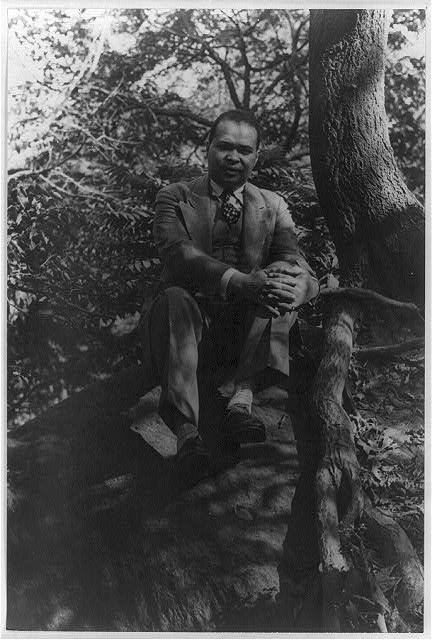
In 1925, Countee Cullen, a young star of the literary movement that came to be known as the Harlem Renaissance, was awarded the Poetry Society of America’s Witter Bynner Undergraduate Award. That same year, he graduated from NYU and published Color, his debut volume of poems. Major Jackson, the editor of the recently published Countee Cullen:  notes in his wonderful introduction that Color sold two thousand copies in its first two years and that “as a result of his resolve to master the high literary tradition of poetry, Cullen emerged in the mid-1920s critically acclaimed by both black and white readers.”

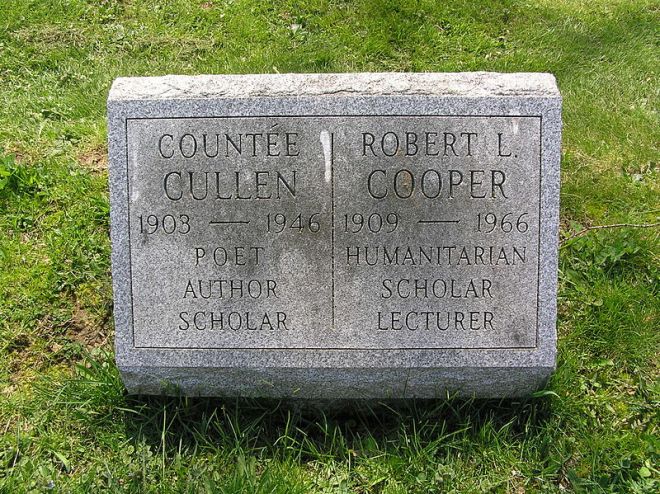
Tomorrow at 3 pm, the Poetry Society of America and the Library of America present Yet Do I Marvel: ATribute to Countee Cullen just steps from Cullen’s grave in the cullencBronx’s Woodlawn Cemetery, also the resting place of such luminaries as Herman Melville, Damon Runyan, Miles Davis, Irving Berlin, W.C. Handy, Judy Garland, and Joseph Pulitzer. The 400-acre rural-style cemetery is also a magnificent urban public park, easily accessible by New York subway at the last stop on the #4 line. Major Jackson, Rowan Ricardo Phillips, and Robin Coste Lewis will read poems in tribute to Cullen, with musical performances by the mezzo-soprano Alicia Hall Moran joined by guitarist Brandon Ross. For more details, check out the PSA’s event page here. We’ll be posting poems from the new volume over the weekend, beginning with his “Yet Do I Marvel”:
I doubt not God is good, well-meaning, kind,
And did He stoop to quibble could tell why
The little buried mole continues blind,
Why flesh that mirrors Him must some day die,
Make plain the reason tortured Tantalus
Is baited by the fickle fruit, declare
If merely brute caprice dooms Sisyphus
To struggle up a never-ending stair.
Inscrutable His ways are, and immune
To catechism by a mind too strewn
With petty cares to slightly understand
What awful brain compels His awful hand.
Yet do I marvel at this curious thing:
To make a poet black, and bid him sing!

(From Countee Cullen: Collected Poems, The Library of America, 2013, ed. Major Jackson. Poems © Amistad Research Center, Tulane University. Reprinted by permission. Photo via Wikimedia Commons)

A Poem For Sunday

2011/365/45 Pretty Roses / Empty Bed

“What I See” by Muriel Rukeyser:

Lie there, in sweat and dream, I do, and “there”
Is here, my bed, on which I dream
You, lying there, on yours, locked, pouring love,
While I tormented here see in my reins
You, perfectly at climax. And the lion strikes.
I want you with whatever obsessions come—
I wanted your obsession to be mine
But if it is that unknown half-suggested strange
Other figure locked in your climax, then
I here, I want you and the other, want your obsession,
want
Whatever is locked into you now while I sweat and
dream.

(From Selected Poems, Library of America, 2004 © 1978 by Muriel Rukeyser. Reprinted by permission of ICM Partners. Photo by Flickr user cogdogblog)

A Poem For Saturday

Muriel Rukeyser was born on December 15, 1913, so this year marks her centennial. While at Vassar College she founded – along with Elizabeth Bishop, Mary McCarthy, and Eleanor Clark – an undergraduate literary magazine called Con Spirito. Rukeyser was in Spain as its civil war erupted, reported on its tumultuous first days, and remained politically committed all of her life, becoming president of the American Center of PEN from 1975-76. Her debut collection Theory of Flight won the Yale Younger Poets Prize in 1935, and subsequent works included her Collected Poems and A Muriel Rukeyser Reader. In an introduction to Selected Poems of Muriel Rukeyser, published in 2004, Adrienne Rich wrote:

Reading Muriel Rukeyser, writing about her as I have from time to time, I have come to feel more and more the power of her work and presence in American literature—the many kinds of lives and issues she touched, the silences she broke, the voices she made audible, the landscapes she covered. In our own time of crisis, when the idea of perpetual war has dropped whatever masks it ever wore, when poetry is still feared yet no longer so marginalized, when a late-1920s schoolgirl’s perception of the ‘grim towers of empire’ and ‘the terrible, murderous differences in the way people lived’ accord with what more and more people around the world are experiencing and naming, this poet has readers waiting for her….

We’re featuring Rukeyser’s poetry all weekend, beginning with “Gift”:

the child, the poems, the child, the poems, the journeys
back and forth across our long country
of opposites,
and through myself, through you, away from you, toward
you, the dreams of madness and of an
impossible complete time—
gift be forgiven.

(From Selected Poems, Library of America © 1978 by Muriel Rukeyser. Reprinted by permission of ICM Partners)

A Poem For Wednesday

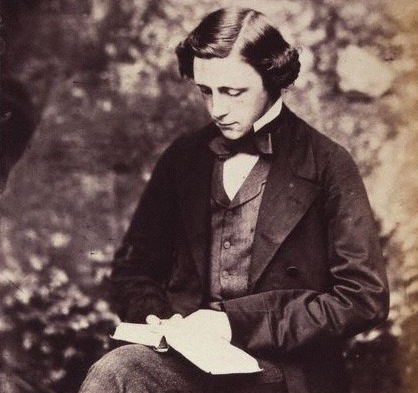
NPG P7(26),Lewis Carroll (Charles Lutwidge Dodgson),by Lewis Carroll (Charles Lutwidge Dodgson)

“The Lobster Quadrille” by Lewis Carroll (1865):

“Will you walk a little faster?” said a whiting to a snail,
“There’s a porpoise close behind us, and he’s treading on my tail.
See how eagerly the lobsters and the turtles all advance!
They are waiting on the shingle—will you come and join the dance?
Will you, wo’n’t you, will you, wo’n’t you, will you join the dance?
Will you, wo’n’t you, will you, wo’n’t you, wo’n’t you join the dance?

“You can really have no notion how delightful it will be
When they take us up and throw us, with the lobsters, out to sea!”
But the snail replied, “Too far, too far!”, and gave a look askance—
Said he thanked the whiting kindly, but he would not join the dance.
Would not, could not, would not, could not, could not join the dance.

“What matters it how far we go?” his scaly friend replied.
“There is another shore, you know, upon the other side.
The further off from England the nearer is to France.
Then turn not pale, beloved snail, but come and join the dance.
Will you, wo’n’t you, will you, wo’n’t you, will you join the dance?
Will you, wo’n’t you, will you, wo’n’t you, wo’n’t you join the dance?”

(Photo: A self-portrait of Carroll in 1856, via Wikimedia Commons)

A Poem For Sunday

Train Tracks

“Rise” by Brenda Shaughnessy:

I can’t believe you’ve come back,
like the train I missed so badly, barely,
which stopped & returned for me. It scared me,
humming backwards along the track.

I rise to make a supper succulent
for the cut of your mouth, your bite of wine
so sharp, you remember you were mine.
You may resist, but you will relent.

At home in desire, desire is bread
whose flour, water, salt, and yeast,
not yet confused, are still, at least,
in the soil, the sea, the mine, the dead.

I have all I longed for, you
in pleasure. You missed me, your body swelling.
Once more, you lie with me, smelling
of almonds, as the poisoned do.

(From Interior with Sudden Joy © 1999 by Brenda Shaughnessy. Used by permission of Farrar, Straus and Giroux, LLC. Photo by Tim Drivas)

A Poem For Saturday

Wigwam

“Medicine Song of an Indian Lover,” from the Ojibwa tribe:

1.

Who, maiden, makes this river flow?
The Spirit—he makes its ripples glow—
But I have a charm that can make thee, dear,
Steal o’er the wave to thy lover here.

2.

Who, maiden, makes this river flow?
The Spirit—he makes its ripples glow—
Yet every blush that my love would hide,
Is mirror’d for me in the tell-tale tide.

3.

And though thou shouldst sleep on the farthest isle,
Round which these dimpling waters smile—
Yet I have a charm that can make thee, dear,
Steal over the wave to thy lover here.

(From Wild Scenes in the Forest and Prairie, Charles Fenno Hoffman, 1839. Reproduced in American Poetry: The Nineteenth Century,Volume Two: Herman Melville to Trumbull Stickney, American Indian Poetry, Folk Songs and Spirituals, edited by John Hollander, published by The Library of America, 1993. Image: Details of Ojibwe Wigwam at Grand Portage by Eastman Johnson, c. 1906, via Wikimedia Commons)

A Poem For Monday

ponsotpoem

“Roundstone Cove” by Marie Ponsot:

The wind rises. The sea snarls in the fog
far from the attentive beaches of childhood—
no picnic, no striped chairs, no sand, no sun.

Here even by day cliffs obstruct the sun;
moonlight miles out mocks this abyss of fog.
I walk big-bellied, lost in motherhood,

hunched in a shell of coat, a blindered hood.
Alone a long time, I remember sun—
poor magic effort to undo the fog.

Fog hoods me. But the hood of fog is sun.

Tonight at the headquarters of the Poetry Foundation in Chicago, Marie Ponsot will accept the 2013 Ruth Lilly Poetry Prize, about as good as it gets for an American poet. For a tour through Ponsot’s remarkable career, check out the Poetry Foundation’s site here and the Poetry Society of America’s site here (the latter by our much-loved poetry editor, Alice Quinn).

(From The Bird Catcher © 1998 by Marie Ponsot. Used by permission of Alfred A. Knopf, a division of Random House, Inc. Photo by Flickr user weegeebored)

A Poem For Sunday

waterpoem

“I want to stay changeless for you.” by Quan Barry:

Where is it written that we should want to be saved?
What did the water feel like?  Where did constancy go?
How did the light fall through the trees?
In serrations?  In flat bands?
What part said, “I don’t want to have to.”
What didn’t you say? How did the earth respond?
When did you realize? Who let loose the shattering?

(From Asylum © 2001 by Quan Barry. Used by kind permission of the University of Pittsburgh Press. Photo by Flickr user laRuth)

A Poem For Saturday

“Three Graces” by William Carlos Williams:

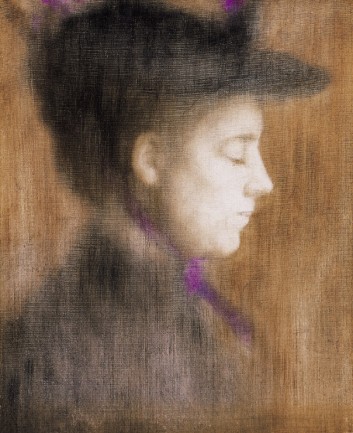
dish_Rippl_Woman_in_Paris_with_Purple_ScarfWe have the picture of you in mind,
when you were young, posturing
(for a photographer) in scarves
(if you could have done it) but now,
for none of you is immortal, ninety-
three, the three, ninety and three,
Mary, Ellen, and Emily, what
beauty is it clings still about you?
Undying? Magical? For here is still
no answer, why we live or why
you will not live longer than I
or that there should be an answer why
any should live and whatever other
should die. Yet you live. You live
and all that can be said is that
you live, time cannot alter it–
and as I write this Mary has died.

(Image: Woman in Paris with Purple Scarf, József Rippl-Rónai, via Wikimedia Commons)