David also makes a good and strong case for the limits of doubt in both politics in general and America in particular. My Oakeshottian strain of conservatism does indeed have a weak lineage in American culture and history, as I concede in the introduction. But it is far more integral to America in ways that David doesn’t fully grasp. Let me take his first point:
Politics is not an effort to find solutions and realize ideals, in [an Oakeshottian] view. It is merely an effort to find practical ways to preserve one’s balance in a complicated world. An Oakeshottian conservative will reject great crusades. He will not try to impose morality or base policy decisions on so-called eternal truths. Of course neither would this kind of conservative write the Declaration of Independence.
The interesting character to think about in this respect, of course, is not Oakeshott, whose twentieth-century conservatism is in part a product of – and therefore had no contribution to – the Declaration of Independence and the American constitution. But Edmund Burke, the first conservative of doubt, was alive at the time of America’s founding – and in Britain, the mother country, for good measure. What did he think of this event?
Burke saw two revolutions in his time – the French and the American. He was appalled by the prospect of the former – and his reflections upon it are the canonical text of Anglo-American conservatism. But he actually  supported the second, even though it was a rebellion against his own country. How could a conservative of doubt support such a treasonous revolution? Because, as I try to explain in detail in the book, the American founding was a brilliant paradox (as Burke himself was). It was a conservative revolution. It occurred fundamentally not because of some great new idea about mankind, but because the colonies felt that a living practical tradition of English liberty had been denied them. They revolted with reluctance at first, but their growing anger was about the betrayal of their inheritance as free people.
Moreover, the constitution they came up with was, in some respects, the ur-text of doubt-based conservatism. You’ll have to read the book to see why because the argument is too long to summarize here. But the concept of separating government into different branches, devolving power to the states, and keeping the federal government out of religion was a deliberate way to disrupt the effectiveness of any faith-based politics or certainty-fueled enthusiasm in government. The entire mechanism of American government was designed to ensure that as little as possible is ever done by government, that doubt is welded into the core system, that certainty is always checked by other powers, and that the great Certainty of Divine Truth is always, always, always kept at bay. That’s one reason Oakeshott loved America – and why increasing numbers of American thinkers are coming to admire his thought, especially in these absolutist, fundamentalist times.
Now to David’s second point:
Oakeshottian conservatism can never prevail in America because the United States was not founded on the basis of custom, but by the assertion of a universal truth — that all men are created equal and are endowed by their creator with certain rights. The United States is a creedal nation, and almost every significant movement in American history has been led by people calling upon us to live up to our creed.
But where did that creed come from? It came from custom, from a political tradition, in a particular place, called Britain, which itself made a creed possible because of its own slow cultural and political evolution toward a free society. Where else could it come from? From heaven? No real Oakeshottian conservative would make such a claim. Yet that is the preposterous argument of the Christianists with whom Brooks has made common cause. And that is why their integration into conservatism is not an enlargement of the tradition, but an attack upon its core meaning.
And what were most of the "creedal" dreamers in subsequent American history basing their arguments on? That the Constitution protected them too. They were not claiming a new dawn for humanity, although their rhetoric inevitably deployed the religious rhetoric of a religious people. They were arguing that the old system that defines America – the Constitution – had somehow forgotten them, or, in the case of African-Americans, obliterated and enslaved them. They were arguing that social change had revealed that its guarantees of freedom had not yet been fully realized for all its people – women, most of all. The African-American civil rights movement was not so much an attempt to revolutionize America, but to 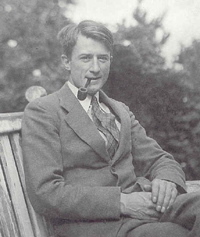 include all Americans in the very system that had been set up at the start. This makes America not a creedal nation, but a Constitutional one. The president takes his oath of office to protect the Constitution, not an ideology or creed. I find it amazing I have to remind alleged conservatives of this basic fact.
Occasionally, other moral enthusiasms emerged that were not of this Constitutional kind, enthusiasms that seriously wanted to enforce new social policies across the entire society or reintroduce God into a political system that had kept theology at bay. Prohibition comes to mind, or the attempt to prevent freedom of speech in flag-burning, or the bigoted attempt to squelch the freedom of gay citizens, as we have slowly come to understand them. But it is no accident that in order to achieve these things, these spuriously religious movements had to amend the Constitution itself to succeed. Which is why the founders made it very hard to do so. Because they were conservatives of doubt. And they knew who the enemy was.
David is absolutely right that America itself – in its sociology and culture – is not a conservative place. It’s full of dreamers and achievers, activists and builders, religious zealots and cultural experimenters. My book ends with a ringing celebration of them – in all their passion and zeal and innovation (another core feature of the book Brooks ignores). But I argue that this is made possible solely because the constitutional system is so conservative in an Oakeshottian sense. Stable government is so constitutionally secure that it unleashes the potential for American vitality, passion, faith and certainty in the private and social and cultural spheres, without the danger of any single strain overwhelming the whole or hijacking the system itself. Without the conservatism of doubt in the Constitution, the enthusiasm and certainty and vitality and passion in the culture could turn into political tyranny and oppression and terrible error. This is echoed in the paradox that a conservative Constitution that took God out of politics precipitated the greatest flourishing of religious faith that the modern West has ever known.
Brooks, in other words, is right that the conservatism of doubt can never prevail in America – for the simple reason that it already has. In the beginning. As the defining moment, and in the enduring and almost miraculous Constitutional structure that is still, mercifully, in place.
What of my own paradoxical passion, which David sees as a contradiction or refutation of my broader case for doubt? On the question of torture, I am passionate because torture so profoundly violates the core principle of the Constitution, which is to protect the individual body from unchecked power; and because it was authorized illegally and was subsequently perpetuated by legislative cowardice and fear. I oppose torture because it violates freedom at its core and because it is the greatest enemy of the conservatism of doubt. The court did its job in Hamdan. The legislature failed. But now the people get to re-elect a new legislature, and if they care about the Constitution, and if they care about freedom, they will vote for representatives who will check this executive’s criminal excesses. On gay equality, my passion is partly because I saw so many of my fellows die and I owe it to them to carry the task on of explaining why they matter as human beings and as citizens. And it is also simply because I believe the Constitution guarantees equality and freedom for all. I don’t think, as David suggests, that my record is one of unmitigated zeal either. I published an anthology half of which was devoted to arguments against mine. I wrote a careful book that respected the arguments of my opponents. I favor state decisions, rather than federal over-reach. And so on. In this new book, I make a conservative case for including gay people in the country they belong to and the families they love. Whatever else it is, it is not a radical manifesto for a new utopia.
To paraphrase Oakeshott, I am a conservative in politics so I – and anyone else – can be a radical in every other activity, if we so choose. And I know no place on earth that allows that more fully than America. Which is why I love it so; and why I am so passionate in defending the system some people seem not to understand or have forgotten. Yes: I am passionate about doubt. And I am passionate about the protections in this Constitution so casually junked by this reckless, arrogant president. And I am passionate about saving the idea of America from those who have not fully understood – and now therefore threaten – its paradoxical strength. That’s the passion that made me write this book – and to defend it as well.
(Photo of Michael Oakeshott courtesy of Simon Oakeshott.)


 The Dish