The Forty-Niners Of The 21st Century

Jonnie, a trucker, struggles with isolation and uncertainty in North Dakota as the economic prospects of the Bakken field fail to live up to the hype:

The NYT captions:

Jonnie’s story calls into question whether hard work and courage can eventually bring a decent living in contemporary America — a longstanding promise this nation makes to its citizens. As it happens, we can’t all be winners. Not even in a boomtown.

Michael Scott notes that the flood of job seekers into the oil-rich region has caused housing costs to skyrocket:

The Bakken Region has seen its working population swell by 70% since 2010. While the economic trend has been a boost to fortunes, a chronic shortage of living accommodations for transient workers has led to a serious imbalance in the housing supply/demand equilibrium. The result: home and rental housing costs that boggle the mind and terrify the wallet, sending many arriving workers into hysterics as they try to find a place to rest their heads at night. There is frequent talk of workers that are forced to live in their cars while earning $100,000 a year. Trailer parking spots can be found for rates that have escalated to $800 a month, and hotel prices are even higher; a one-night stay can be $300, or even more.

When You’re Old And Gay

Responding to an AP story about a new gay-friendly housing complex for low-income seniors in Philly, J. Bryan Lowder touches on the special challenges our gay elders face:

[E]ldercare is also a matter of economic justice. The responsibility that [chairman of the Dr. Magnus Hirschfeld Fund Mark] Segal articulates is easy to forget in the era of gay marriage, in which same-sex couples are increasingly able to consolidate their wealth and plan for their retirements and estates in ways that older generations just couldn’t. And regardless of whether gay elders found life partners or not, the hard truth is that, as Segal mentions, simply being queer and out in previous decades often had severe—and long-term—consequences on an individual’s finances.

But the most unconscionable aspect of this issue—and the one that affordable elder housing is ideally suited to prevent—is the pressure many LGBTQ seniors feel to go back into the closet after a lifetime of openness. This kind of retreat can seem necessary in traditional nursing homes and retirement communities as queer residents are forced to reintegrate with their less tolerant age-group. Imagine the pain of having to police your behavior or refrain from discussing a partner who has passed in your own home—it’s barbaric. Hopefully, other cities will take a cue from Philadelphia and work to create accommodations for our elders that afford them the peace and dignity they deserve.

A Poem For Thursday

camera222

“An Archival Print” by William Stafford:

God snaps your picture—don’t look away—
this room right now, your face tilted
exactly as it is before you can think
or control it. Go ahead, let it betray
all the secret emergencies and still hold
that partial disguise you call your character.

Even your lip, they say, the way it curves
or doesn’t, or can’t decide, will deliver
bales of evidence. The camera, wide open,
stands ready; the exposure is thirty-five years
or so—after that you have become
whatever the veneer is, all the way through.

Now you want to explain. Your mother
was a certain—how to express it?—influence.
Yes. And your father, whatever he was,
you couldn’t change that. No. And your town
of course had its limits. Go on, keep talking—
Hold it. Don’t move. That’s you forever.

(From Ask Me: 100 Essential Poems by William Stafford © the Estate of William Stafford. Reprinted by kind permission of Graywolf Press. Photo by Ethan R.)

Faces Of The Day

UKRAINE-POLITICS-PARLIAMENT

Pro-Russian majority MPs argue with pro-EU opposition MPs during a parliament session to debate the 2014 state budget in Kiev on January 16, 2014. The Ukrainian government approved a programme of cooperation with former Soviet states that have joined the Customs Union, although rapprochement with the Russia-led bloc has fuelled continuing pro-Europe protests in Kiev. By Sergei Supinsky/AFP/Getty Images.

The Football Settlement Gets Blocked

On Tuesday, a federal judge tentatively rejected the NFL’s traumatic brain injury settlement.

She says that even with the NFL promising up to $914 million for compensation, research, and other purposes, the pact could run out of money over the six decades it’s supposed to cover. At a minimum, she wants more economic analysis proving that it’s sufficient.

Lester Munson explains what this means:

[U.S. District Court Judge Anita] Brody’s ruling is significant in two ways. First, it is an embarrassing setback for the players’ attorneys who have submitted the proposal.

These lawyers included in their proposal a request for $112 million in fees for themselves. It is difficult to imagine how the lawyers could have done $112 million in legal work and not submitted the expert reports to the judge. After spending more than four months preparing these legal papers, the player-clients now learn that the lawyers omitted critical materials from the paperwork.

Second, the rejection, even if temporary, will add to the growing skepticism among players and their personal attorneys about the settlement terms. In addition to the demand for enormous fees and delays in preparing paperwork, the judge’s concerns about the adequacy of the settlement funds will fuel player concerns that their representatives have settled for too little. It could add to the number of players who will opt out of the settlement and take their chances in the litigation process.

Marc Tracy thinks the judge made the right decision but for the wrong reason:

One leaps to agree: Yes! It’s far too small! It should be billions and billions! But while Brody indeed left herself room, in her decision, to decide that it should eventually be billions, she would not be sharing the reasoning of an observer who believes the players are not getting a fair shake. Her objection is to whether the settlement amount is consistent with the internal logic of the settlement itself. Specifically, she is concerned that the $675 million that is actually set aside to pay players—according to a complicated, tiered scheme agreed to by both sides—simply will not be enough. “It is difficult to see how the Monetary Award Fund would have the funds available over its lifespan to pay all claimants at these significant award levels,” she wrote.

Is the problem that the players deserve more? No. That the NFL need not admit a scintilla of guilt, culpability, or wrongdoing? Nope. That there won’t be discovery as a result of the settlement? Nunh-unh. Even sniping among various plaintiff factions—ESPN’s Fainauru brothers have a good rundown—has been centered around the question of whether the allotted funds are enough to fulfill the settlement’s own parameters, not whether the settlement’s parameters are all wrong.

Read the whole Dish thread on this case here.

The Right’s New Attack On Obamacare

National Review decries Obamacare’s “bailouts” for insurance companies:

The bailout provisions of Obamacare are found in Sections 1341 and 1342 of the Affordable Care Act, both of which should be repealed. Doing so will be difficult, but it is not impossible. The first provision bails out insurance companies for costs associated with individual patients when they exceed $45,000. Under this so-called reinsurance program, insurers will be able to push off 80 percent of costs between $45,000 and $250,000 onto a fund financed by a fee of $63 per head on customers of insurance companies and workers covered by self-insuring companies. Given that most of the associated costs will almost certainly be passed on to consumers by insurers, that fee is in effect a tax. And in the event that the fund does not generate revenue sufficient to cover its costs — far from an unlikely scenario — then taxpayers will be explicitly on the hook.

This preemptive bailout was included in the law as a deal-sweetener to induce more insurance companies to participate in the program. It is a good deal for insurers, for whom any opportunity to reassign risk to somebody else is a welcome profit opportunity, but it is a terrible deal for consumers and taxpayers.

The second and potentially even more troubling bailout provision is the one for so-called risk corridors, which asks the insurance company to project their total costs and then picks up most of the difference if losses should exceed those targets. The potential for gaming the system here is obvious and dire, and the potential costs are enormous. Senator Marco Rubio already has introduced a bill to repeal this provision, though it is unlikely to pass. At the very least, Republicans should ensure that the provision, scheduled for sunsetting in 2016, dies on schedule.

Cohn pushes back:

Bailouts typically start with companies taking egregiously irresponsible actions and end with the government forking over mind-boggling sums of money to save them. Think of the savings and loans institutions misleading the public about the state of their finances in the 1980s—or the financial industry making those bad home loans and risky investments a decade ago. Each of those involved grievous management errors, frequently skirting the limits of legality. The federal outlays to save those banks were in the hundreds of billions of dollars.

With Obamacare, the situation is different. Projecting future insurance costs inevitably involves a little guesswork. With a brand new program like Obamacare, it inevitably involves a lot of guesswork. Even the smartest, most responsible actuaries might not get the numbers right … Truth is, no insurer will be sure about its beneficiaries for many months, until the open enrollment period ends and the newly insured have a few months in which to file claims. That makes it impossible to know what kinds of losses, if any, insurers will take. But even if the losses are significant, the taxpayers won’t be in for another Wall Street-style bailout.

Ditch The Rock, Ctd

You can catch up on the entire thread on engagement rings here. Readers offer more alternatives to the traditional diamond:

A few years back, I heard a stand-up routine about how women get an expensive ring but men get ryansword 2nothing. The comic (I can’t remember who) suggested a sword as a perfect gift from a wife to her husband. On our wedding day, while I was slapping on my warpaint and my husband-to-be was on the other side of the venue with his retinue, I sent my maid of honor’s husband over with a package. As soon as he saw the long, narrow box he knew exactly what it was.

Let’s just say I won major wife points with the “wedding sword.” It’s currently hanging over our front door, in case of zombie attack.

Another unconventional pick:

My husband and I met in graduate school for forestry. We’re both passionate about our work and have devoted much of our lives to the conservation of forest resources and the responsible use of forest products, so when it came time to get married, I wanted this important part of our lives reflected in our union.

Our engagement was relatively casual, but my husband did give me his mother’s engagement ring. I had the diamond reset in a ring that I happily wore until our wedding. However, since I’m frequently in the woods for work and often working in tropical forests in developing countries, a big diamond ring didn’t fit my everyday life. So for our wedding, I bought us wooden wedding bands. I worked with a carpenter in the US and was able to choose the species of tree for each ring, and ensure the forest of origin was managed to my standards. The rings are gorgeous, reflective of our lives and relationship, and a great conversation piece.

Another reader:

My boyfriend was the marrying type.  I wasn’t.  He went to Japan for a week.  I changed my mind. I realized that because I was the one with the cold feet, I was the one who had to propose. But do you have any idea how hard it is to find a MALE engagement ring?  (Oh wait, I guess you do.)  I finally settled on a silver AIDS bracelet as a “promissory note” and then we could go shopping for a ring later.  Well, he loved being proposed to and loved the bracelet.  He wore the bracelet every single day for years until he lost it when a paragliding line snapped it off of his wrist.

Meanwhile, I have a simple gold wedding band on my finger.  When I see it or play with it, it reminds me of him. I don’t need a big rock to feel sentimental.

Another:

If you really do want a physical symbol of undying affection and joint devotion, how about getting your own rock, and doing it together?

Before getting married, you should take a vacation trip together to western Montana. Near Philipsburg, in beautiful mountain scenery, there is a place called Gem Mountain Sapphire where you can pan for sapphires without much physical effort and with a very high chance of success. They dig up the stream sediments for you, run them through a sluice box to get rid of the muddy stuff, and present you with a big box of fine gravel. You pick through the gravel with a pair of tweezers and pick out the good ones, which are really obvious. It’s a very pleasant activity, and the surroundings are just gorgeous. My wife and I have several stones from our two visits, ranging from pale green to ruby red, all of them far larger than anything we could have afforded at a jewelry store.

Not to go all geological on you here, but contrary to the De Beers slogan, diamonds really aren’t forever. They’re combustible. Sapphires really are forever – they’re made of aluminum oxide, one of the most insoluble and heat-resistant materials known, and only a little bit softer than diamond. Even if the flame of passion fades, and even if real flames claim your house, these stones will survive.

Another did the same thing at “one of those tourist-trap mines that are all over the Georgia/North Carolina border.” Another reader:

Four years ago, I gave my then-partner a ring I had purchased in Provincetown in 1975. I had never removed it from my finger until then. But it was a few months later that I proposed. We sort of thought of that ring as an “engagement” ring.
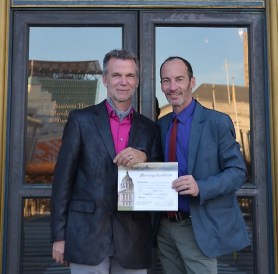
photo 2We were going to get married in Connecticut – he lived in Oklahoma, I in Florida – several months later, but I got a job offer that meant a move to Las Vegas, thwarting that plan (although it did mean he could join me). Work and busyness meant postponing again – to this past August in San Francisco – but then, again, “stuff” got in the way and we had to cancel, losing our money for the license and ceremony we paid up front.

In October, I made new license and ceremony appointments and paid the fees again. We had once found rings online that we both quite liked, but finances didn’t allow their purchase. As this was turning out to be a rather low-budget affair (a good friend was giving us a hotel room for three nights and we were driving to the city from Vegas), I found discount online jeweler and selected only rings on their clearance page. We chose $12 titanium rings which you can see in the picture below, taken in front of San Francisco’s City Hall moments after we were married on December 24, just three weeks ago.

I don’t care one whit about the value of the ring. As a 55-year-old man who grew up never thinking of marriage as ever being a possibility, our $12 rings are priceless.

It will be interesting, however, to see how this evolves, whether younger gay men and women who can imagine marriage for themselves try to fit into the “established” norms of engagement and wedding rings (and other marriage traditions), or if new paths will be forged.

Don’t Count Christie Out?

Ponnuru isn’t:

I’m amazed by how many people are writing off Christie’s chances in 2016. The party establishment still thinks he’s a winner, his defects from the point of view of the conservative base of the party are a lot smaller than those of the last two nominees, and the latest poll numbers suggest this scandal isn’t obsessing voters as much as it is the press. I still think he’s got a better shot than anyone else for the Republican presidential nomination.

The Fix crew agrees:

Our case for Christie as front-runner — or, maybe, more accurately first among almost-equals — is built around the idea that there is no perfect/electable conservative in the race and that Christie has a decent chance of beating out Jindal, Rubio and Walker in the battle to be the establishment candidate. (There is a whole other primary — where Rand Paul is the front-runner — that will pick the outsider candidate to battle the establishment pick.) Of that quartet of credible establishment conservatives, Christie is the one who, at first glance, could most easily put together the tens (and probably hundreds) of millions of dollars needed to run real operations in a series of states in short order.

Yglesias throws cold water:

The relevant things about the 2016 primary are that it’s happening right now and that it’s really hard to win. It’s happening right now in the sense that in order to win, any candidate needs to first gain the allegiance (or at least nonhostility) of a wide range of elites outside his immediate political circle. House members from South Carolina. State senators from Iowa. Anti-abortion activists in New Hampshire. Talk radio hosts. Fox News executives. Donors. Lobbyists. State-level Chamber of Commerce chiefs. These people are paying attention right now, and they’re thinking about who they want to back and who they want to bandwagon against. And there’s just no way this bridge thing is making any of those people more likely to support Christie than they were six months ago. Republican elites are mostly looking to find a candidate who is both conservative, effective, and electable and this makes him look less electable and less effective without making him look more conservative. It’s bad news.

Weigel highlights a new Christie poll, which contradicts the ones we flagged yesterday:

Christie’s strength among Republicans has waned. His overall approval is down, sure, from 68 percent last summer to 55 percent now. Much of the leakage is coming from Democrats (down 5 points) and independents (down 22 points). But he’s lost 15 points among Republicans—down from 96 percent approval to 81 percent approval. Not great.