A Nose For Our Pets

It’s no surprise that dogs can identify their owners by smell, but can people sniff out their pets? Researchers at The Queen’s University of Belfast put the question to the test:

In the study, dog owners smelled two blankets — one that had been infused with the individual odor of their dog, and one that had the smell of an unfamiliar dog. In case you ever want to try this at home, to infuse a dog’s smell in a blanket, the researchers placed the blanket in the dog’s bed for three nights with nothing else in there. Dog owners were blindfolded and then smelled the two blankets. The blindfold prevented owners from noticing, for example, that the blanket was covered with their dog’s hair….

So what happened in the sniff test? Owners rocked! Without the help of visual cues, 88.5% were able to accurately say which blanket smelled like their dog (23 out of 26 owners).
Is The World’s Newest Country Falling Apart? Ctd

SouthSudan

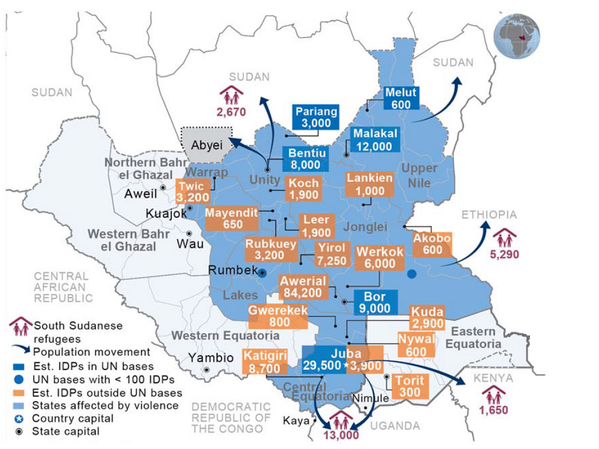
Fisher passes along the above map showing refugee displacement caused by the unrest in South Sudan, noting that “people are getting displaced across huge swathes of the country, suggesting that fighting and instability are spreading wide and fast across the Texas-sized country.” Another ominous observation:

[A]t least a few thousand people have fled into Sudan, the country that the South Sudanese spent decades fighting to break away from, which is not in itself hugely significant except as a depressing symbol of South Sudan’s troubled start as an independent country. South Sudan’s crisis is not yet an all-out ethnic conflict. But there are some awfully worrying signs. That so many people have fled their homes is one indication that people are worried about being targeted for their ethnicity. As NPR’s Gregory Warner reported from the country a few days ago, “People are starting to ask who their neighbors are.” One of the thousand or so people killed so far is Andrew Bith Abui, one of the “Lost boys of Sudan” who had won asylum in the United States but later returned to South Sudan to help build the newly independent country. Abui was killed in what appears to have been ethnic violence in his home town.

Peter Run explains that the conflict is primarily about power politics, not ethnic strife:

Despite its appearance, this conflict is not between the Dinka (South Sudan’s largest ethnic group) and the Nuer (its second largest). In fact, the Nuer are doing most of the strategic and tactical work on both sides. The government’s armed forces, the Sudan People’s Liberation Army (SPLA), is led by a Nuer, General James Hoth. Many of the officers leading the operations in Upper Nile, Unity and Jonglei states are also Nuer. The SPLA has always been an ethnic mix with significant Nuer numbers. Some Nuer soldiers are loyal to commanders who have joined Riek Machar, and others have been with the SPLA since its formation in 1983. The suggestion that this is an ethnic conflict accounts for some facts but leaves out other contradictory ones. For instance, Machar has a lot of non-Nuer support in the ruling Sudan People’s Liberation Movement (SPLM) party, where this conflict began as a political rivalry between him and president Kiir.

When allegations of the attempted coup emerged, those arrested included prominent Dinkas Majak D’Agoot and Chol Tong Mayay. Ethnicity was insignificant at the political level and it does not appear to feature prominently on the military agenda of either the SPLA or the rebels. However, the march of the Nuer White Army rebels to Bor, a city on the Dinka territory, has raised alarm bells. As Sudan researcher Eric Reeves has pointed out, the “White Army” – an ethnic militia, which once threatened to wipe out another ethnic group, the Murle – is unpredictable and indiscriminate.

Josh Rogin wonders what the US could do to help:

The problem for the Obama administration as it tries to influence events in South Sudan is that the United States only has the ability to bring pressure to bear on one side of the dispute—the government that is dependent on hundreds of millions of dollars of U.S. assistance. Experts say the only actor who may have influence over Machar is Omar al Bashir, the indicted war criminal who serves as President of Sudan and has a long history of making deals with Machar. Machar has already indicated he may work with the Khartoum regime to protect oil fields in Unity and Upper Nile states, lands Khartoum has sought to control ever since the country split in 2011.

“Given Riek Machar’s long history of collaboration with the Khartoum regime, it is reasonable to be alert to the potential for reengagement over oilfield security,” said John Prendergast, founder of the Enough Project. “If Khartoum would seek to gain advantage from Juba’s current weakness, it would be like throwing gasoline on a smoldering fire.”

Gregg Zachary wants to revisit the concept of trusteeship for South Sudan:

The best justification for rethinking South Sudan’s sovereignty is the country’s lack of an experienced and effective political elite. Massive corruption in the Kiir government has translated into billions of aid dollars being looted by leaders or (probably to a lesser extent) shared along ethnic lines as a form of political patronage. In 2012, Kiir himself accused government officials of looting $4 billion and (pathetically) asked his colleagues to return the money. Instead of building desperately needed infrastructure and providing crucial services, the South Sudanese government has done little to meet its people’s needs. An assessment by two Brookings Institution scholars in December was blistering. “It is apparent,” they wrote, “that South Sudan, two years after independence, is yet to establish legitimacy as a state with a functioning government that can keep its people safe and provide services to them.”

The solution to these problems is not to send in more peacekeepers to Juba and Bor, or hammer out a power-sharing agreement between the warring parties. Or rather, not only to do these things. The response to South Sudan’s turmoil should be crafted with a set of policy tools that were popular in the 1950s but have been used only selectively in recent years. I am referring to the process known as “trusteeship,” whereby a newly independent nation is granted special forms of assistance and special constraints on sovereignty. In some cases, the former colonial power sought to administer the trusteeship, and in other cases an international coalition or the United Nations did so for a defined period of time. Something along these lines succeeded in the West African country of Ghana, where the British colonial authorities ceded sovereignty to the government of Kwame Nkrumah in stages, culminating in full independence in 1957.

Previous Dish on South Sudan here.

The Math On The Medicaid Expansion

Ezra unpacks the ACA enrollment numbers:

The exchange numbers are solid. You can trust those. … But the Medicaid numbers are more complex. Each state runs its own count, and the data includes people who enrolled in Obamacare’s Medicaid expansion as well as people who were eligible under prior law. To the Obama administration’s annoyance, some states are also counting people who’re simply renewing existing Medicaid policies.

A lot of the 4.4 million people who got coverage under Medicaid in the last few months got it from Obamacare’s Medicaid expansion. Even more would’ve gotten it if all the states were participating in Obamacare’s Medicaid expansion. But some simply got coverage under the preexisting Medicaid program.

By Sean Trende’s rough estimates which, he admits, “may be off by a fair amount (in either direction),” only 190,000 of those 4.4 million were newly eligible:

[S]everal states that expanded Medicaid advertised this fact heavily and probably attracted a disproportionate number of people who were already eligible for Medicaid but didn’t know it. While it’s probably fair to attribute these enrollees to Obamacare, they would keep their coverage in the event of a repeal, and might not figure heavily in November. Regardless, even if you double the estimate — which seems awfully generous — that’s only 380,000 new Medicaid enrollees due to Obamacare, a far cry from 4 million.

This makes intuitive sense. The states that expanded Medicaid were blue states, many of which already had more generous Medicaid programs. In other words, their baselines were higher, so we’d expect the number of newly qualified recipients to be lower than if, say, Texas had participated.

Quote For The Day

“Many of the most successful new content sites –Buzzfeed, Huffington Post, Gawker, Business Insider, and Glam Media, among them – are such an amalgam of aggregated content, partnership sharing agreements, pay per click modules, user generated contributions, and, as well, the blitherings of novice journalists (sometimes heralded as a return to long form), that it’s very hard, if not pointless, to separate real content from phony stuff,” – Michael Wolff.

But that’s the point, innit?

Where They Really, Really Want Gay Marriage

Las Vegas:

The rapid increase in the number of states permitting gay marriages has crushed demand for commitment ceremonies, a legally meaningless alternative many of the resorts and chapels have offered. DeCar and Flint, who has owned the Chapel of the Bells in Reno for 51 years, said such bookings have plummeted since California resumed same-sex marriages following a landmark U.S. Supreme Court decision last June. “We don’t get the same amount of committal ceremonies because the real thing is so available,” Flint said. “It collapsed overnight.”

Some travel agents have tried with little success to take advantage of legal marriage in neighboring states. Terry Wilsey of A Answer On Travel said he gave up on an idea to drive same-sex couples from Las Vegas to the California state line 40 miles away for ceremonies on the California side of a golf course that straddles the state line. Aside from the fact that transportation costs are prohibitive, Wilsey also discovered the closest place to obtain a California marriage license was in Barstow, another 115 miles away.

State Sen. David Parks, Nevada’s first openly gay elected official and someone who has made a career of pushing for pro-gay laws, said an important business opportunity may already have passed. “The train left the station and we’re still standing on the platform,” Parks said. “I don’t see that we’re likely to recover that.”

The View From Your Frozen Window

KONICA MINOLTA DIGITAL CAMERA

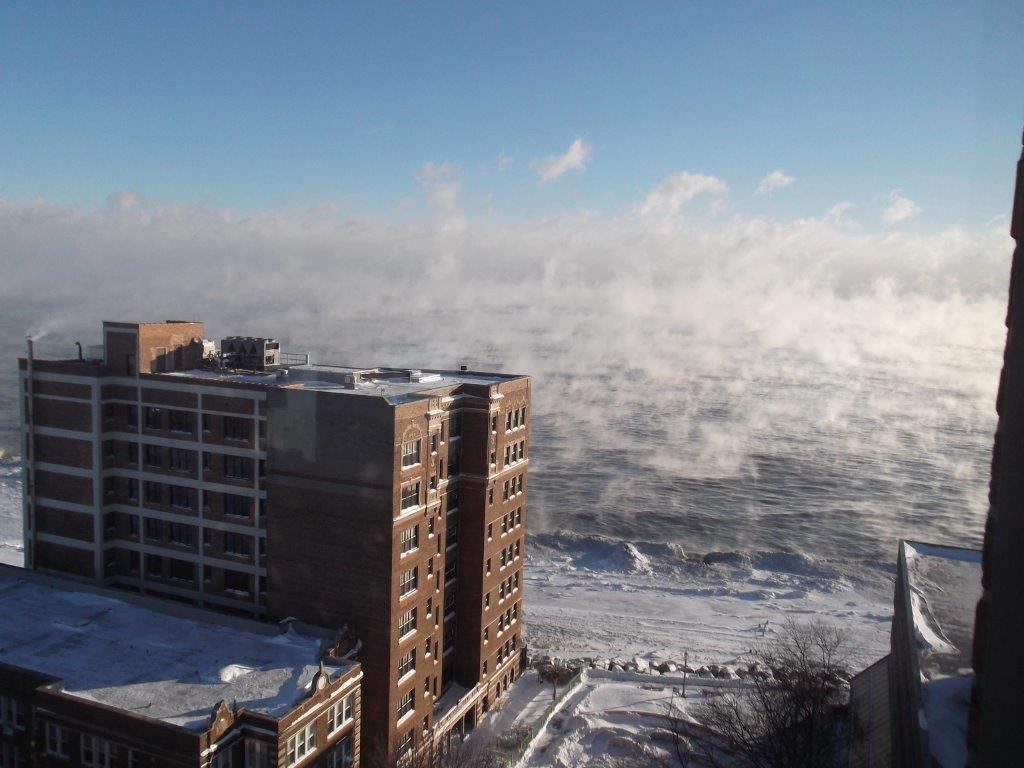
St. Paul, Minnesota, January 6th, 10.05 am, -19°. Many more scenes from the historic week after the jump:

Chiberia 013

“The view from Chi-beria”, Illinois, January 6th, 9.47 am.

unnamed (1)

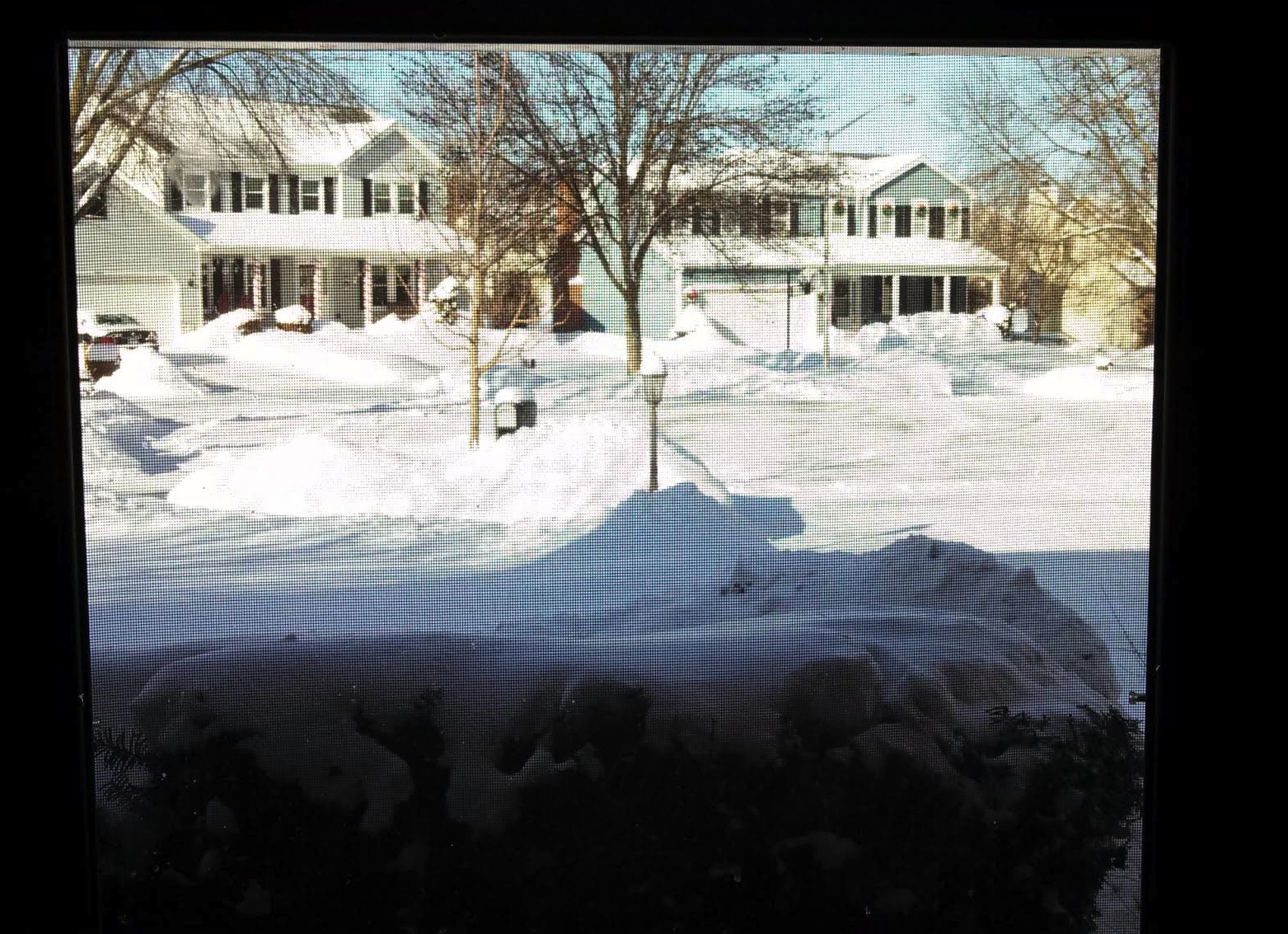
Schaumburg, Illinois, January 6th, 10.15 am. “About 25″ of snow, -14 degrees outside, and a wind chill of ‘I don’t even want to know’ below zero.”

0103141053a

Rochester, New York, January 3rd, 11.18 am, 3°

IMG_1486

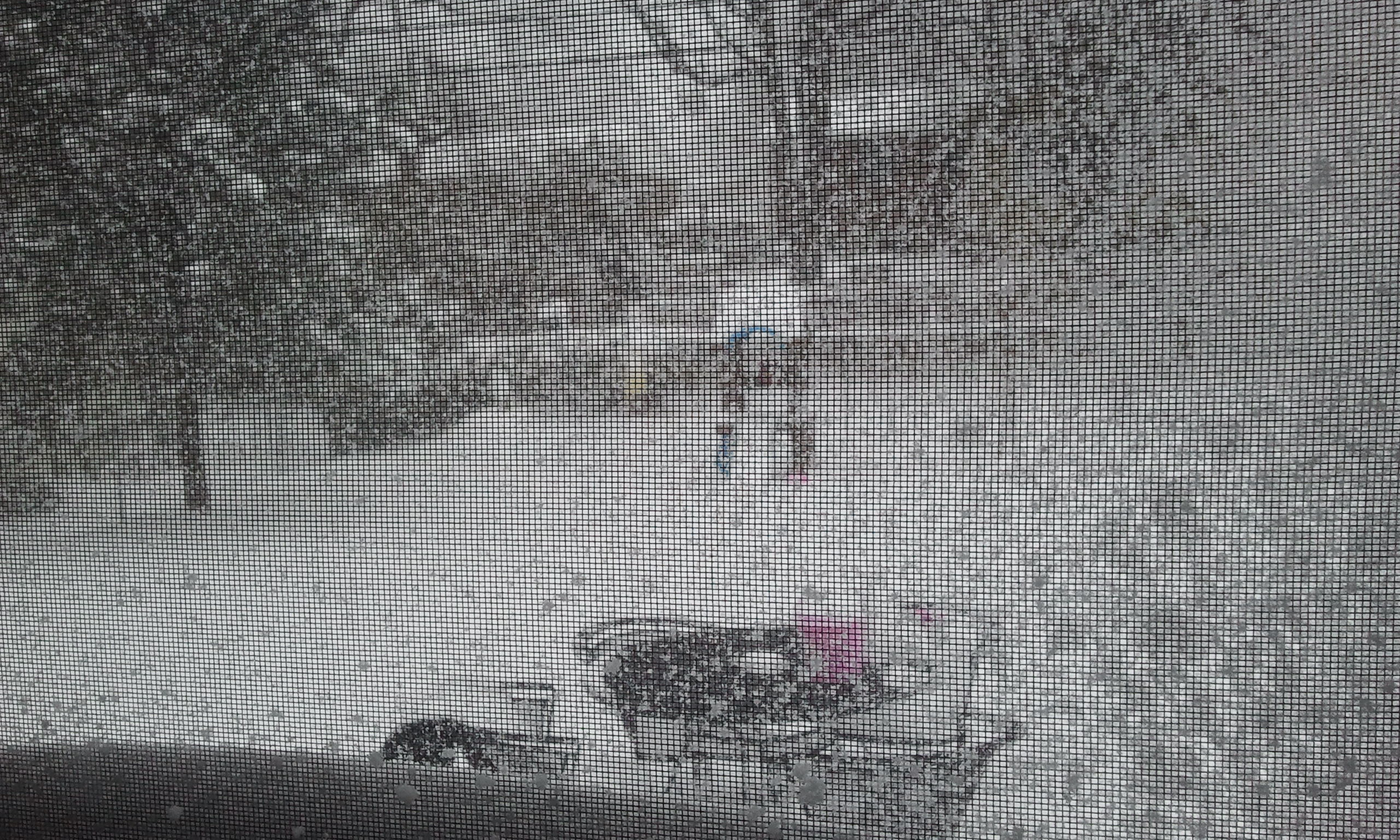
Minneapolis, Minnesota, January 6th, 9.03 am, -20°, -41° with wind chill

chicago-window-ice

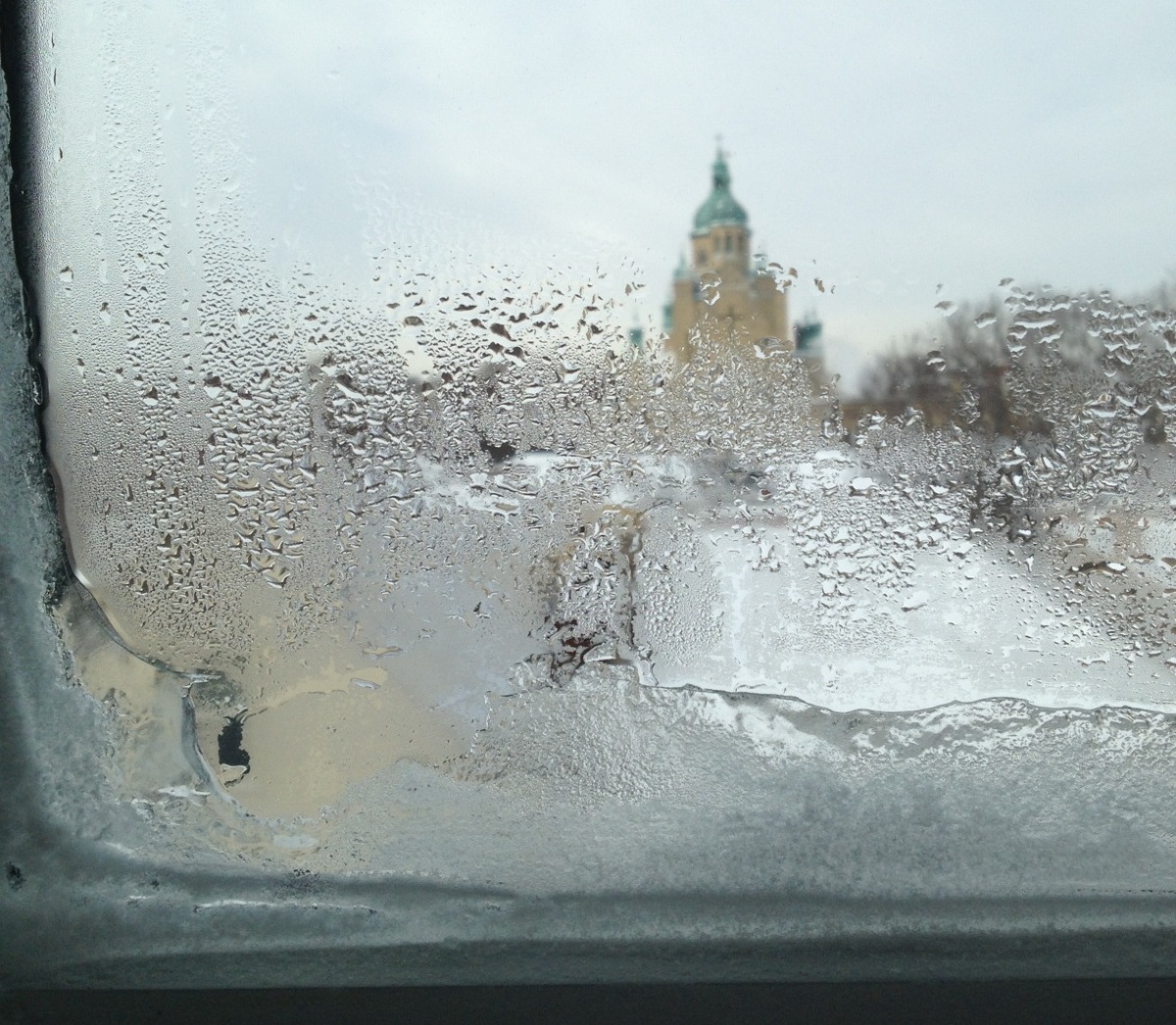
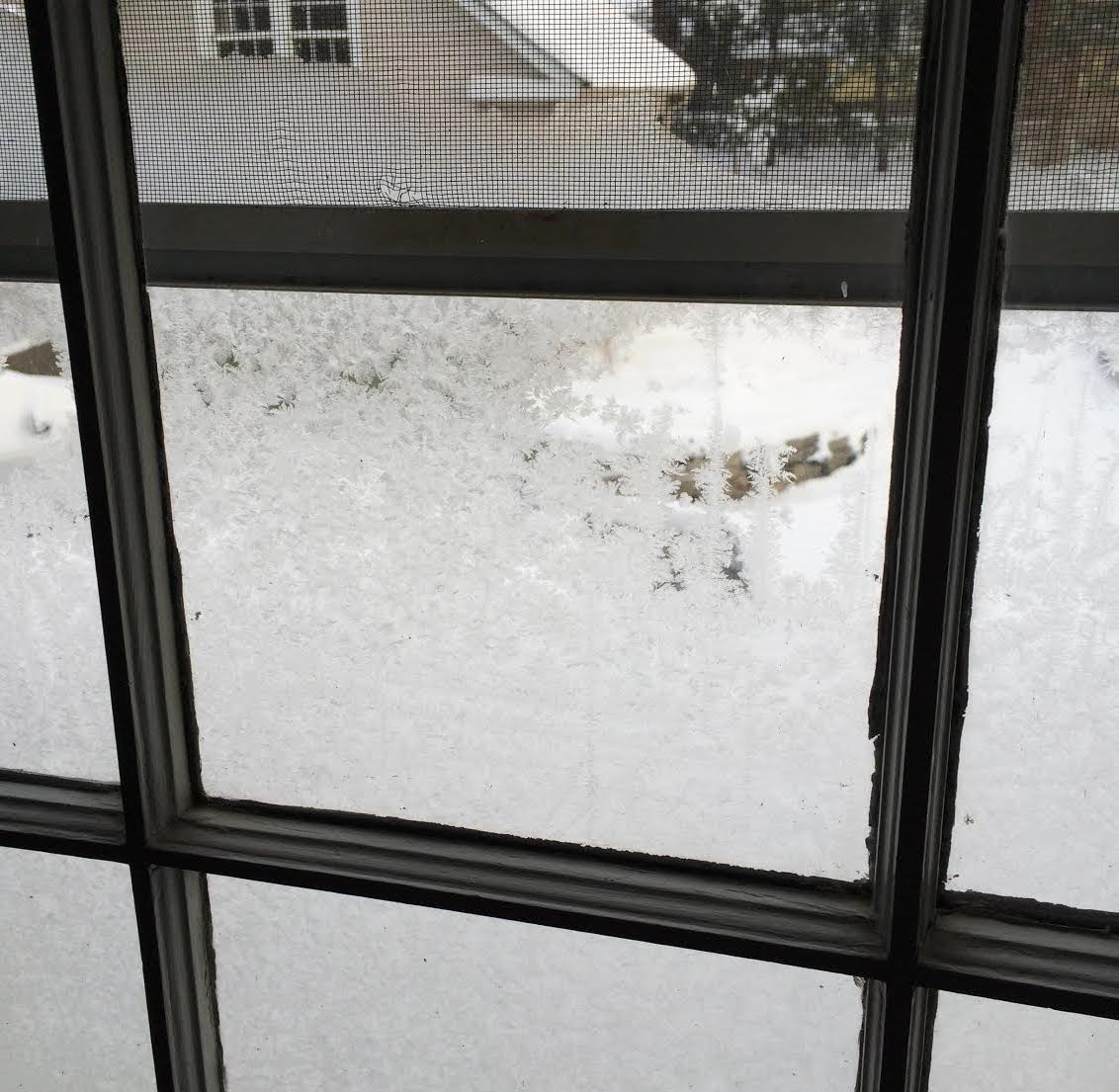
Chicago, Illinois, January 7th, 10.23 am. “Oh, that ice is on the inside.”

philly

Philadelphia, Pennsylvania, January 4th, 10.18 am

DSC_0602

Minneapolis, Minnesota, January 6th, 6.45 am

webster-groves-mo

Webster Groves, Missouri, January 7th, 8.30 am

brooklyn

Brooklyn, New York, January 3rd, 8.30 am

SAMSUNG

St. Louis, Missouri, January 5th, 2.38 pm

IMG_2346

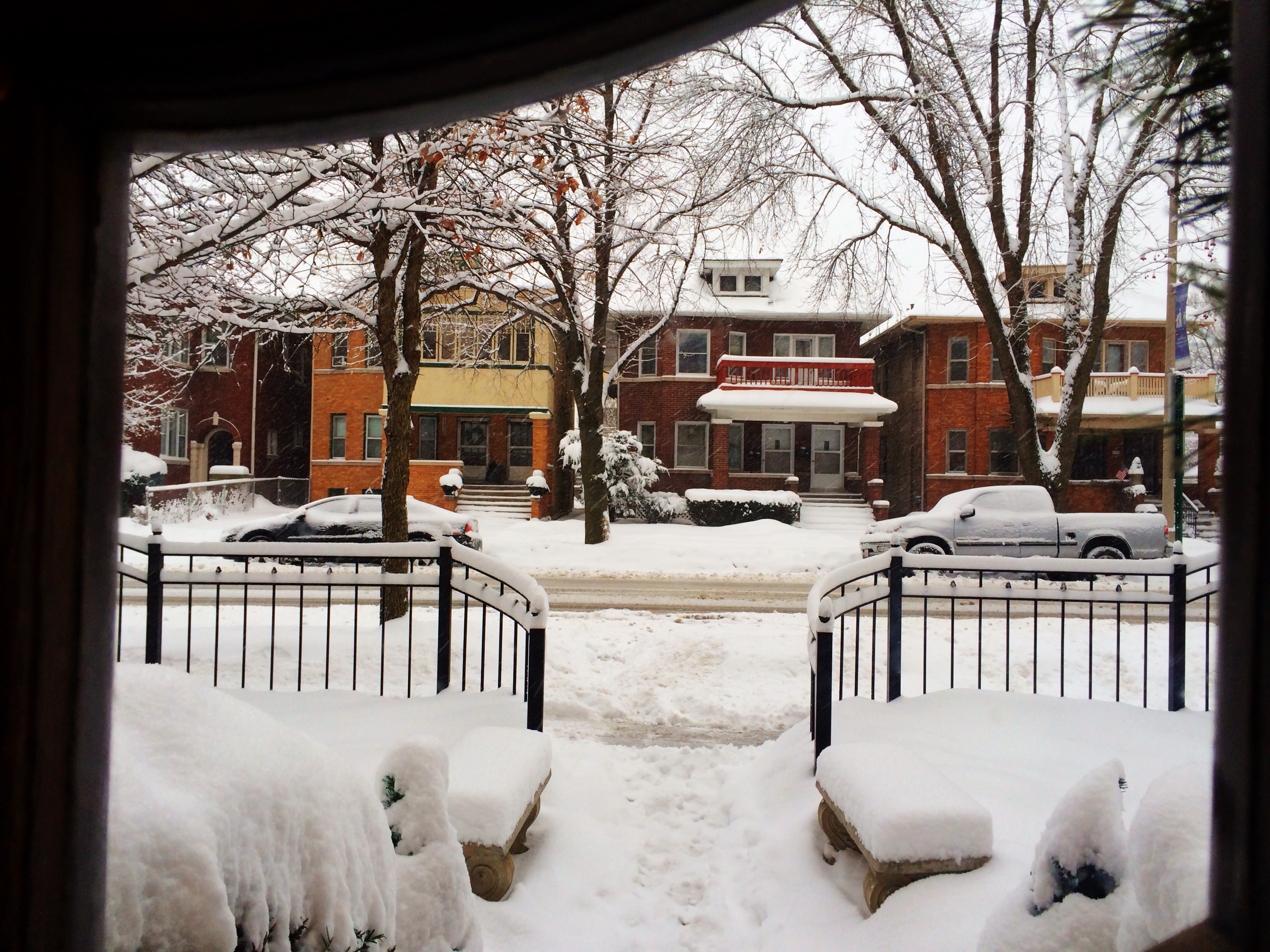
Oak Park, Illinois, Janurary 5th, 7.42 am

P1100856

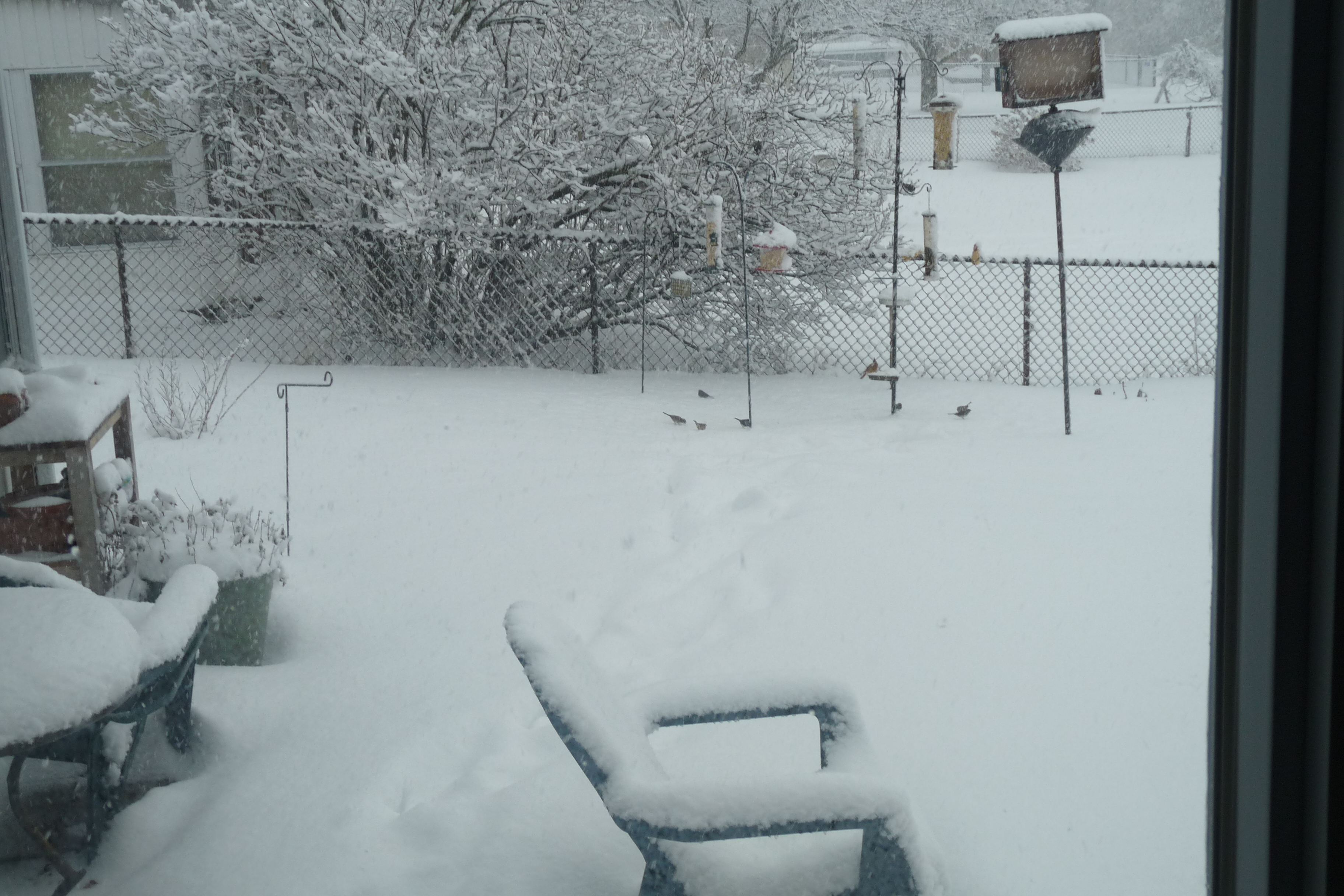
Decatur, Indiana, January 5th, 2.55 pm. “The snow is getting heavier in front of the arctic temperatures set to arrive tonight and tomorrow (-25° to -35° ). I put extra bird feed out for our feathered friends.”

view from front window 1.5.14

Cedar Bluff, Iowa, January 5th, 6.28 pm.  “Wind chill is at -21° and heading down.”

Exit Cheney, Far, Far Right, Ctd

Now that Liz has dropped her primary challenge against Wyoming senator Mike Enzi, citing a family member with health problems, Margaret Carlson hopes she’ll spend her free time mending fences with her sister:

Cheney’s ill-timed race hurt more than her career. Unless she’s made of stone, she has a deeper loss — her relationship with her sister, Mary, a lesbian, who took umbrage at her older sister’s opposition to gay marriage. Every election has one winner and at least one loser, but this one has a family that lost its privacy and comity. When her father, Dick Cheney, weighed in, he took sides, supporting the sister who was running and dissing the other one. Dad clarified that Liz felt sorry for Mary. Although Liz had “compassion” for Mary, he said, that shouldn’t be mistaken for approval. … If Liz has a sick family member, she has everyone’s compassion. This must have been a tough holiday season for the Cheneys; the sisters didn’t spend them together. Now the Cheneys have a year to get it right before the next one.

Suderman paints her as a failed foreign policy hawk:

Cheney dropped out because she had no chance. And she had no chance in part because of the declining influence of the Republican Party’s most hawkish members.

Her run was, as much as anything, intended as a way to make some noise about the foreign policy issues that party hawks thought were getting lost in the shuffle, and to serve as an opposing voice to what is easiest to describe as the Rand Paul wing of the GOP, which is more worried about civil liberties and less interested in overseas adventurism or maximizing defense-sector spending. That Cheney’s campaign gives a sense of the electoral landscape within the GOP. It’s hard out there for a hawk.

Or perhaps, per Mark Joseph Stern, a failed anti-gay candidate:

The takeaway here is not necessarily that the era of anti-gay politicking is entirely over; as Windsor reaches into the states, conservative legislators will undoubtedly continue to score support by stoking homophobic animus. Instead, the undignified collapse of Cheney’s campaign suggests that, in 2014, a candidate cannot simply demonstrate hatred of gay people to pull in conservative votes. Aside from illustrating the depths of her bigotry by betraying her own sister, Cheney presented few coherent policies on the campaign trail. By dint of publicity—publicity she practically demanded—she became known as a hardline anti-gay candidate. And that did absolutely nothing to narrow her humiliatingly low popularity, to boost her fundraising, or to garner conservative support.

Larison thinks the answer is simpler:

Even if she had tried to attack Enzi on foreign policy grounds, there are so few differences between them on these issues that there would be nothing for her to say. The main and fatal weakness of her campaign was that it had no reason to exist: the incumbent she was challenging was popular, he had a reliably conservative voting record, he wasn’t tainted by any scandal, and her only qualification for public office was that she had held a position in the Bush administration with responsibility for the region that saw its greatest errors and failures. If Cheney’s failed campaign has any significance beyond its implications for her own career, it demonstrates that Republican primaries can’t be won on a platform of nothing more than increased combativeness for its own sake.

Alex Altman says there are few tea leaves to read here:

What does her failed campaign tell us about the political landscape in 2014? Not much. Nearly all of the Republican primary scuffles this cycle feature a Establishment-type incumbent trying to fend off a Tea-infused upstart. Cheney’s challenge to Republican Mike Enzi didn’t fit that format. The Tea Party was not a factor. Both are Establishment figures. Neither are squishy moderates by any means. The race drew national attention (and national money) because of Cheney’s name and network, but on the ground it was very much a local affair, flavored by issues like coal.

If there is a lesson to draw from the race, it may be that the Republican grandees with targets painted on their backs this year may be tougher to take out than people think. Pundits will snark about the colossal failure of Cheney’s campaign, but up close she was a strong candidate: smart, polished, and informed. But Enzi had few vulnerabilities. During three terms in the Senate, he’s compiled a deeply conservative voting record. He’s widely praised for constituent service back home. And his low-key, avuncular style plays well with the sparse and spacious frontier state he represents.